Posts Tagged ‘Democracy’

Venezuelan María Corina Machado wins Nobel Peace Prize 2025

October 10, 2025

After persistent speculation about the possibility of the prize going to Donald Trump [see e.g.: https://humanrightsdefenders.blog/2025/07/24/nobel-peace-prize-choice-between-trump-and-albanese/], it was announced today 10 October that the Venezuelan opposition leader María Corina Machado has won the 2025 Nobel Peace Prize, winning more recognition as a woman “who keeps the flame of democracy burning amid a growing darkness.”

The former opposition presidential candidate was lauded for being a “key, unifying figure” in the once deeply divided opposition to President Nicolás Maduro’s government, said Jørgen Watne Frydnes, chair of the Norwegian Nobel committee. “In the past year, Ms. Machado has been forced to live in hiding,” Watne Frydnes said. Despite serious threats against her life, she has remained in the country, a choice that has inspired millions. When authoritarians seize power, it is crucial to recognize courageous defenders of freedom who rise and resist.”

Maria Corina Machado is well known in human rights circles having won previously 6 important human rights awards. See: https://www.trueheroesfilms.org/thedigest/laureates/b353c92c-72dd-418a-908c-9f240acab3be. But neither the Nobel Committee nor the mainstream media seem to be aware of this [as happened before e.g. in 2023″, see https://humanrightsdefenders.blog/2023/10/06/jailed-iranian-human-rights-defender-narges-mohammadi-wins-nobel-peace-prize-2023/]

The Nobel Prize Committee clarified that “Maria Corina Machado meets all three criteria stated in Alfred Nobel’s will for the selection of a Peace Prize laureate. She has brought her country’s opposition together. She has never wavered in resisting the militarisation of Venezuelan society. She has been steadfast in her support for a peaceful transition to democracy.

Maria Corina Machado has shown that the tools of democracy are also the tools of peace. She embodies the hope of a different future, one where the fundamental rights of citizens are protected, and their voices are heard. In this future, people will finally be free to live in peace.”

https://www.nobelprize.org/prizes/peace/2025/press-release/

https://www.theguardian.com/world/live/2025/oct/10/nobel-peace-prize-2025-live-latest-news-updateshttps://www.bbc.com/news/live/c1l80g1qe4gt

https://www.bbc.com/news/live/c1l80g1qe4gt

https://hrf.org/latest/hrf-celebrates-award-of-the-nobel-peace-prize-to-venezuelas-maria-corina-machado/

Repressive Laws Are Increasingly Being Used to Silence Activists Across Asia

July 29, 2025

Josef Benedict and Rajavelu Karunanithi published a piece in the Diplomat of 18 July 2025 describing how from Hong Kong to India, governments are passing and weaponizing new laws to pursue and jail whoever speaks up for human rights.

Four years ago, on the 32nd anniversary of the 1989 Tiananmen Square massacre, plain clothes police arrested human rights lawyer and pro-democracy activist Chow Hang-tung outside her office in Hong Kong. Her alleged crime? Publishing two social media posts advertising a public vigil to remember the notorious crackdown in Tiananmen Square. At the time, Chow was the vice-chair of the now defunct Hong Kong Alliance in Support of the Patriotic Democratic Movement of China, the main organizer of annual Tiananmen vigils…

Sadly, such repression is not unique to Hong Kong. Across Asia, authoritarian and democratic governments alike are passing and weaponizing new laws – in clear violation of international law and standards – to pursue and jail whoever speaks up for human rights. Today, on Nelson Mandela International Day, we call for the release of Chow Hang-tang, who is part of CIVICUS’ Stand As My Witness campaign, as well as other human rights defenders unjustly locked up in Asia around the world.

The CIVICUS Monitor, which tracks civic space conditions across the world, now rates Hong Kong’s civic space as “closed,” the worst possible ranking. Hundreds remain behind bars as police systematically use the new laws to arrest and prosecute people on trumped-up charges. Often, the process itself becomes the punishment as activists spend years in detention before they are even tried…

Meanwhile, Hong Kong authorities are trying to take their repression international, by offering bounties for activists-in-exile charged under the National Security Law and by arresting the father of a prominent U.S.-based activist, Anna Kwok.

..Hong Kong’s National Security Laws have become something of a model for other Asian governments looking to stifle dissent.

Look no further than India, often called the world’s largest democracy, where Prime Minister Narendra Modi’s government resorts to similar laws to consolidate power and silence his critics. Dozens of activists have been jailed under the Unlawful Activities Prevention Act (UAPA), a draconian anti-terror law. Under the UAPA’s provisions, activists remain in pre-trial detention for long periods and are denied bail, including human rights defender Khurram Parvez, who was arrested in November 2021. His trial has yet to start, four years on. [see also: https://www.trueheroesfilms.org/thedigest/laureates/81468931-79AA-24FF-58F7-10351638AFE3]

In neighboring Pakistan, the government also weaponizes anti-terror legislation against activists like Mahrang Baloch, who languishes in prison on terror charges for speaking out against ongoing violations of ethnic minority rights by the Pakistan security forces in Balochistan. [see also: https://humanrightsdefenders.blog/2025/05/28/un-experts-alarmed-by-arbitrary-detention-of-azerbaijani-human-rights-defender-mammadli/]

In Thailand, more than 270 individuals have been arrested or prosecuted under lese-majeste or royal defamation laws since early 2020, many of whom have received long consecutive sentences from the courts. Human rights lawyer Arnon Nampa, for instance, received multiple convictions and 26 years in jail for calling for democratic reforms and reforms of the Thai monarchy. [see also: https://www.trueheroesfilms.org/thedigest/laureates/1e7ce01b-7927-41f1-b7d4-2c563ee235cc]

Meanwhile, Cambodia’s Han Manet regime has used “incitement” laws as their weapon of choice to silence activists, journalists, and members of the opposition.

With legal repression spreading across Asia, the international community must do more to push back and stand with these brave activists. Foreign governments must not only speak out when activists are convicted, but step in much earlier when these human rights defenders are arrested. Diplomats should visit wrongly arrested activists in detention, monitor their trials, and engage with their families. Foreign governments must also use international platforms like the United Nations Human Rights Council and bilateral meetings to highlight their cases and call for their release. 

Activists-in-exile also need support and assistance, especially when they face transnational repression. The recent G-7 Leaders’ Statement on Transnational Repression was a good start, but strong rhetoric must now turn into serious action. Failure to undertake such actions will see a further regression of democracy and repression of civic freedoms in Asia and elsewhere.

https://thediplomat.com/2025/07/repressive-laws-are-increasingly-being-used-to-silence-activists-across-asia/

EU’s Annual Report on Human Rights and Democracy in the World 2024 is out

May 28, 2025
Low angle of children standing in a circle reaching out to join hands.

© UNFPA

In 2024, we have witnessed extraordinary levels of hostility towards democracy, from rampant disinformation and information manipulation by foreign actors, to the silencing of media and human rights defenders, and a strong pushback against gender equality and diversity, undoing years of progress in many countries across the globe. Today, only 29% of the world’s population live in liberal democracies. At the heart of these challenges lies peace. Peace is not simply the absence of war. It is the active cultivation of justice, the protection of the most vulnerable, the realisation of all human rights and the commitment to dialogue and reconciliation.’ 
– High Representative, Kaja Kallas 

The publication of the EU’s Annual Human Rights Report takes place in the context of multiple and cascading crises, including war on the European continent and the resurgence of conflict in many other areas of the world. These developments underscore the strong links between peace, human rights and democracy. Climate change, digital transformation, and rising inequalities add to the growing human rights challenges worldwide.

The report follows the structure of the EU’s Action Plan on Human Rights and Democracy, particularly the EU’s work on protecting and empowering individuals, building resilient, inclusive and democratic societies, promoting a global system for human rights and democracy, harnessing opportunities and addressing challenges, and ensuring that the EU delivers by working with our partners.

The EU continues to support the strengthening of inclusive, representative and accountable institutions, and promoted a collaborative approach to democracy through the Team Europe Democracy initiative. The fight against information manipulation and interference also continues to be a priority through initiatives such as EUvsDisinfo. Over the past year, the European Endowment for Democracy has kept up its work on fostering democracy and working with free media and civil society in challenging circumstances in Belarus, and Ukraine among others. The EU has carried on supporting and empowering people on the frontlines of human rights advocacy.

While the global outlook is challenging, the EU is steadfastly pursuing deeper international cooperation and stronger early warning and prevention mechanisms. Efforts to ensure accountability for violations and abuses of human rights continue to be a key priority. Together with its partners, the EU is determined to protect the multilateral human rights system and uphold the central role of human rights and democracy in fostering peace, security and sustainable development.

NGOs alarmed by draft law “TRANSPARENCY OF PUBLIC LIFE” in Hungary

May 27, 2025

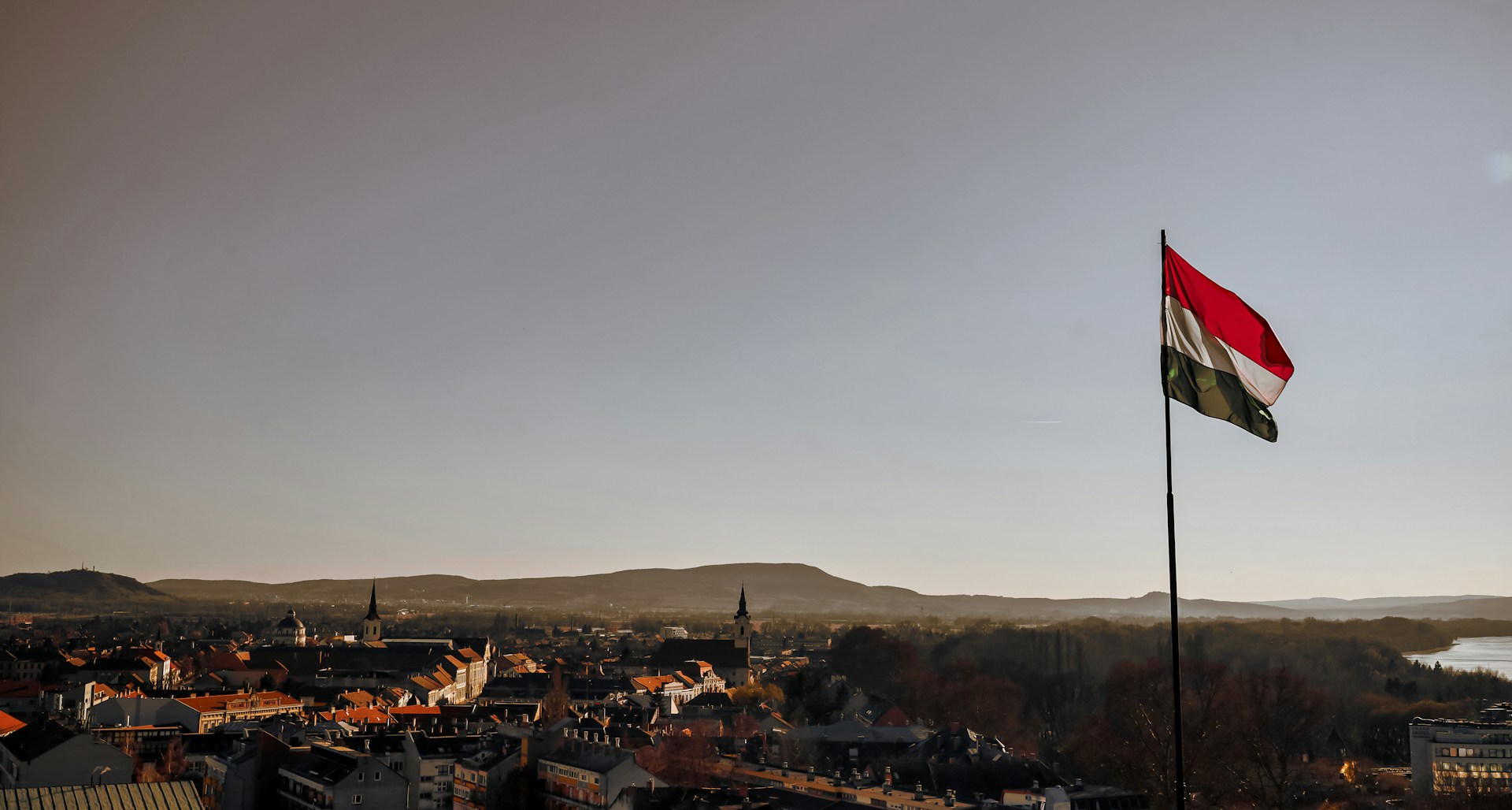
Human Rights Watch, Civil Rights Defenders and many, many other NGOs are deeply alarmed by a new legislative proposal in Hungary that, if passed, would institutionalise sweeping, opaque, and politically motivated repression of independent civil society, the press, and private organisations that receive foreign support or have any kind of income that the Hungarian government feels would threaten the country’s sovereignty. 

The draft law, which is deceptively titled ‘On the Transparency of Public Life’, would give the authorities unchecked powers, allowing it to recommend the registration of organisations deemed to be ‘influencing public life’ with foreign funding in ways that ‘threaten Hungary’s sovereignty’. Because this phrasing is vague and ideologically loaded, it risks including any kind of criticism of government policy, including the promotion of human rights, press freedom, gender equality, and the rule of law. 

Potential disastrous consequences

  • No legal remedy: If the government demands an organisation register itself, the organisation in question would not be able to appeal this decision. Once listed, organisations would have no access to effective legal redress; 
  • Broad definitions: ‘Foreign support’ is defined as any financial input, no matter how small, from practically any international source (including EU institutions and dual citizens) as well as commercial revenue; 
  • Sweeping prohibitions and sanctions: Listed organisations would have to seek permission from the tax authorities to receive foreign support. Financial institutions would be required to report and block transfers, meaning NGOs would effectively be permanently monitored; 
  • Loss of domestic support: Listed organisations would lose access to Hungary’s 1% income tax donation scheme, which would prevent them from receiving support from regular Hungarian citizens; 
  • Political targeting: Leaders of registered organisations would be labelled ‘politically exposed persons’, which would expose their private financial transactions to invasive scrutiny; 
  • Severe penalties: Any violations could lead to fines of up to 25 times the amount received, suspension of the organisation’s advocacy activities, and even forced closure.

EU must speak out against proposed law

Hungary’s draft law is not about transparency: it is a calculated attempt to criminalise dissent, silence watchdogs, and entrench one-party control over the democratic public sphere and civic space. If passed, the law would violate multiple provisions of the EU Charter of Fundamental Rights and the European Convention on Human Rights, including freedom of expression and association and the right to an effective remedy. 

In an open letter to President Ursula von der Leyen and Commissioner Michael McGrath of 22 May 2025, the NGOs urge to take the following immediate steps:

  • Immediately request the Court of Justice of the European Union (CJEU) to grant interim measures in the ongoing infringement procedure on the Law on the Defence of National Sovereignty (Case C-829/24). The Sovereignty Protection Office is crucial to the new bill and therefore this is an imminent and effective way to halt the progress and impact of the bill. Cognizant of the impending danger, the European Parliament and civil society have been calling for this step since 2024. Interim measures are designed to prevent irreparable harm — in this case, the effective paralysis of civil society organisations, independent media and dissenting voices – and with this new development comprehensive interim measures should be requested immediately.
  • At the same time, call on the Hungarian government to withdraw the bill and if unsuccessful, open a new infringement procedure on new violations that are not linked to the ongoing case on the Defence of National Sovereignty.
  • With the forthcoming Article 7 hearing on Hungary on 27 May 2025 and recognising the escalation of a systematic breakdown of the rule of law, support the Council of the EU to move to a vote on Article 7(1).

This new bill represents a severe and existential threat to democratic principles, human rights and the rule of law in Hungary and in the EU as a whole. If the existing tools are not effectively deployed, we risk an unravelling of the rules on which the EU was founded and a clear step towards authoritarian practices. We call on you to stand in solidarity with Hungarian civil society and their counterparts across the region and remain available to provide additional information and support.

https://www.hrw.org/news/2025/05/23/open-letter-hungarian-bill-entitled-transparency-public-life

https://www.coe.int/nb/web/commissioner/-/commissioner-asks-hungary-s-parliament-not-to-adopt-law-that-stifles-civil-society

MEP Sophie Wilmès to ‘defend fundamental values’ as EP vice-president

September 26, 2024
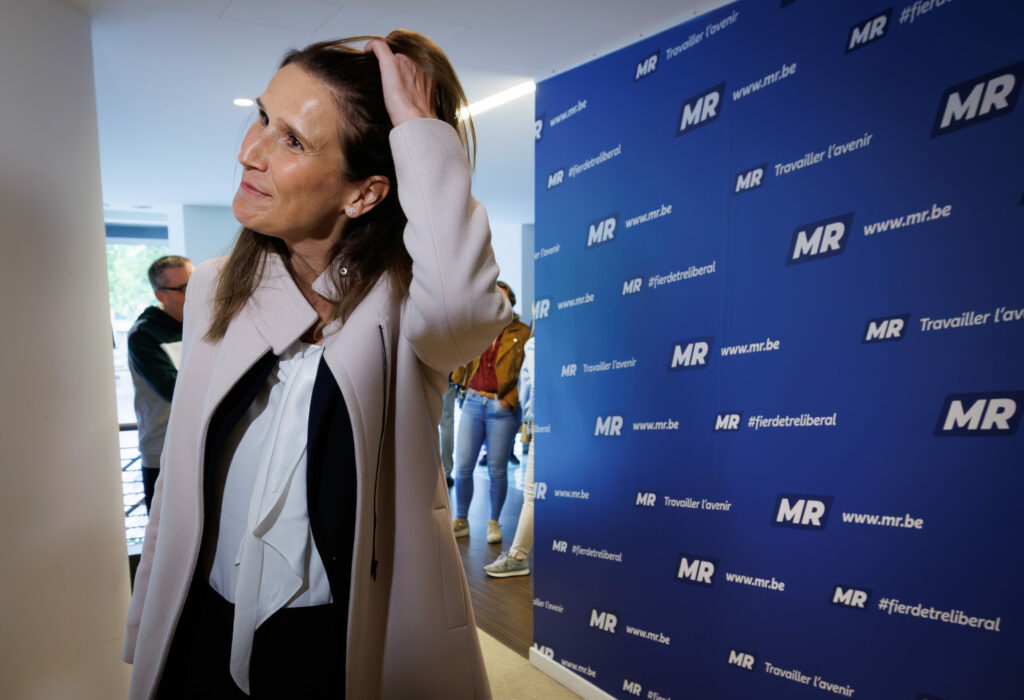
MEP Sophie Wilmès to 'defend fundamental values' as EP vice-president

MR’s Sophie Wilmès (Renew). Credit: Belga/Benoit Doppagne

Human rights, democracy and the rule of law are at the heart of the powers that were delegated to Belgian Vice-President of the European Parliament Sophie Wilmès (Renew), President Roberta Metsola announced during the September plenary session in Strasbourg.

Metsola announced the powers delegated to the different vice-presidents for their two-and-a-half-year mandate. For Belgium’s Wilmès, there was a strong emphasis on human rights, democracy and the rule of law.

Defending our fundamental values is a priority for me. With the democratic model clearly under threat around the world and under attack from all sides in Europe by those who indulge in authoritarian adventures, we democrats must show ourselves combative,” she said. “We are talking about the great inviolable principles that are part of our identity as Europeans. That is non-negotiable.

In practice, Wilmès’ powers will take form in her work within the Democracy Support and Elections Coordination Group, which focuses on election observation and supporting parliaments to strengthen democracy and the rule of law in third countries, especially candidate countries.

She will also develop mediation initiatives to promote a culture of dialogue and support proponents of democratic change and human rights defenders. Additionally, she will represent the European Parliament at the United Nations, where it remains important to raise these issues.

https://www.brusselstimes.com/eu-affairs/1233699/mep-sophie-wilmes-to-defend-fundamental-values-as-ep-vice-president

Election Monitors are Human Rights Defenders!

June 6, 2024

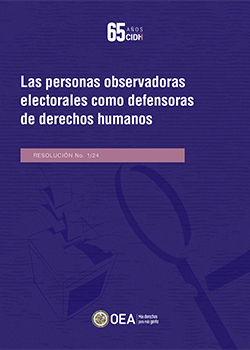
Resolution 01/2024

On 23 May 2024 the IACHR Press Office (cidh-prensa@oas.org) informed us that the Inter-American Commission on Human Rights (IACHR) has issued Resolution 01/2024, recognizing national and international election monitors as human rights defenders based on the intrinsic connection between respecting and protecting human rights and defending democracy.

The Commission highlights the important role of election monitors for the defense of democracy and the rule of law. Through their activities, electoral observers stand up for civil and political rights including the rights to freedom of association, assembly, expression, access to information, equality before the law, and non-discrimination, as well as for the rights to a fair trial and to judicial protection.

The activities of election monitors help to protect the rights held in Article XX of the American Declaration of the Rights and Duties of Man and in Article 23 of the American Convention on Human Rights, both of which mention the right to vote and to be elected by universal suffrage in periodic elections.

In the case of national observers, election monitoring is a form of political participation and a way of exercising political rights by looking after, defending, and fostering the principles that should prevail in election processes, including transparency, certainty, legality, fairness, and universal suffrage by secret ballot among a plurality of political options.

The actions of electoral observers ultimately seek to ensure the integrity of election processes and therefore to preserve expressions of citizens’ sovereign will, which is one of the main tenets of representative democracy according to inter-American and international instruments for the protection of human rights.

In its resolution, the Commission acknowledges the importance of electoral observation missions. The IACHR calls on States to enable suitable conditions for independent and impartial election monitoring and to ensure that election monitors can do their work freely, without retaliation of any kind, and enjoy protection from any risks they may face as a result of their efforts.

https://www.oas.org/en/iachr/jsForm/?File=/en/iachr/media_center/preleases/2024/112.asp

India – not satisfied with its ranking – planning to develop own democracy index

April 2, 2024

The New Indian Express of 22 March 2024 reports (based on Al Jazeera) that Prime Minister Narendra Modi government has approached a major Indian think tank to develop its own democracy ratings index that could help it counter recent downgrades in rankings issued by international groups that New Delhi fears could affect the country’s credit rating. The Observer Research Foundation (ORF), which works closely with the Indian government on multiple initiatives, is preparing the ratings framework,

On June 2023, The Guardian reported that the Indian government has been secretly working to keep its reputation as the “world’s largest democracy” alive after being called out by researchers for serious democratic backsliding under the nationalist rule of the Narendra Modi government, according to internal reports seen by The Guardian.

Despite publicly dismissing several global rankings that suggest the country is on a dangerous downward trajectory, officials from government ministries have been quietly assigned to monitor India’s performance, minutes from meetings show, The Guardian said. Al Jazeera revealed that the Observer Research Foundation (ORF), which works closely with the Indian government on multiple initiatives, is preparing the ratings framework. The new rankings system could be released soon, an official was quoted as saying.

Global human rights NGO Amnesty International has continued to highlight the erosion of civil rights and religious freedom under the Narendra Modi regime.

Amnesty in its India 2022 report noted that arbitrary arrests, prolonged detentions, unlawful attacks and killings, internet shutdowns and intimidation using digital technologies, including unlawful surveillance as major concerns faced by minority groups, human rights defenders, dissenters and critics of the Union government. [see also: https://www.amnesty.org/en/latest/news/2024/03/india-crackdown-on-opposition-reaches-a-crisis-point-ahead-of-national-elections/]

Similarly, Human Rights Watch has also continued to highlight the crackdown on civil society and media under the Modi government citing persecution of activists, journalists, protesters and critics on fabricated counterterrorism and hate speech laws. The vilification of Muslims and other minorities by some BJP leaders and police inaction against government supporters who commit violence are also among HRW’s concerns in India.

Notably, the ‘Democracy Index’, prepared by The Economist Group’s Economist Intelligence Unit, had downgraded India to a “flawed democracy” in its 2022 report due to the serious backsliding of democratic freedom under the Modi government.

Similarly, the US-based non-profit organization Freedom House had lowered India’s standing from a free democracy to a “partly free” democracy in its global freedom and internet freedom ratings, while V-Dem Institute, a Sweden-based independent research institute, had classified India as an “electoral autocracy”, as part of its 2022 Democracy report. for more on ranking, see: https://humanrightsdefenders.blog/tag/ranking/

https://www.newindianexpress.com/nation/2024/Mar/22/centre-planning-its-own-democracy-index-amid-global-rankings-downgrade

Sweden’s new strategy places greater emphasis on Human Rights Defenders

February 13, 2024

On 5 February 2024, the Swedish Government adopted a new five-year strategy for development cooperation for human rights and freedoms, democracy and the rule of law. This strategy is an important part of the implementation of the Government’s new reform agenda for development assistance and contributes to free and inclusive democratic societies built on respect for human rights and freedoms.

Democracy, human rights and freedoms, and the rule of law are essential for freedom, security and the continued development of society. At the same time, we see storm clouds gathering. Democracy is in decline for the seventeenth consecutive year, which gives rise to increased oppression and conflicts. Russia’s full-scale invasion of Ukraine is a clear example of this. 

Another is the way authoritarian states are undermining fundamental human rights and freedoms and using new digital technology for oppression and to spread disinformation.  

With this strategy, the Government is placing greater emphasis on the individuals around the world who fight for their freedom every day. We want to help those living under oppressive systems. Unfortunately, we see that democracy is headed in the wrong direction. That’s why Sweden has to do its part. We will do what we can to support the positive forces that exist,” says Minister for International Development Cooperation and Foreign Trade Johan Forssell.

The strategy outlines the Swedish Government’s increased focus on supporting defenders of human rights and democracy, free elections and independent journalism, in comparison with the previous strategy. The allocated budget for the strategy in 2024 is SEK 900 million. This budget is set out by the Government each year.

https://www.einnews.com/pr_news/686383753/new-development-cooperation-strategy-increases-focus-on-defenders-of-democracy-and-independent-journalists

New, anti-populist media forum “Free America” launched

November 3, 2023
Foro América Libre

A new political space wanting to shape the future of Latin America was born in Mexico City on 1 November 2023. In an unprecedented meeting, more than 30 organisations, leaders and young people from Latin America gave life to the Free America Forum. A space to defend an agenda of Freedom and Democracy, as an alternative to the populism of the Puebla Group and the Sao Paulo Forum.  

Those of us who believe in the ideas of freedom and democracy are more and we are also better,” said Mexican Congresswoman Mariana Gómez del Campo, president of ODCA, when she opened the Free America Forum. 

This group, together with political leaders from 18 Latin American countries, parliamentarians from Ukraine, Germany, the European Parliament, political representatives from the United States, civil society activists and human rights defenders, ratified their commitment to freedom and democracy.

The result of this first meeting was the signing of the Mexican declaration “For a Free America”, which alerts the world to authoritarianism and its consequences in the region, the need for respect for democratic principles such as free elections, the separation of powers, the need for independent justice, limits to the actions of those in power and respect for human rights.  

As part of this declaration, the Free America Forum warns how the conditions of poverty and inequality have been “breeding grounds” for populist alternatives and how we must focus on “the integral development of the people”, guaranteeing a free and competitive economy. In the fight against organised crime, he called for the use of “the full force of the law and the rule of law”, rejecting “radically any negotiation and complicity with those who extort, steal, kidnap, murder and sow terror on the continent”. 

In the face of human rights violations, they expressed their support and solidarity with the peoples of Cuba, Venezuela and Nicaragua as “sister nations that Bolivarian socialism has subjected to atrocious dictatorships and suffering”. The declaration also condemns the “unjustified aggression” of Vladimir Putin’s Russia against Ukraine.  

This new space linking defenders of democracy around the world was created to counterbalance those who venerate and validate dictators and promote authoritarian narratives. 

https://www.atalayar.com/en/articulo/politics/the-free-america-forum-is-born/20231101150000193017.html

Vietnam Frees Australian democracy activist Chau Van Kham

July 12, 2023

On 11 July 2023 EFE reported that Vietnam had released Vietnamese-Australian activist Chau Van Kham, sentenced in 2019 to 12 years in prison for extremism over his ties to the Viet Tan pro-democratic party.

Australian Prime Minister Anthony Albanese said he “very much welcomes the release of Chau,” in remarks Monday from Berlin, through Australian public broadcaster ABC.

Chau’s lawyer Dan Nguyen said in a statement through Amnesty International Australia that the activist, who returned Monday night to Australia, is with his wife and two sons. He also thanked the government’s, organizations and individuals’ efforts that fought for his release.

Chau was arrested in Ho Chi Minh City in January 2019 after being accused of entering the country with a false document and sentenced in an express trial to 12 years in prison for extremism charges 10 months later. See: https://humanrightsdefenders.blog/2020/06/08/chau-van-kham-australian-human-rights-defender-disappeared-inside-vietnams-prison-system/

This was due to Chau, 73, being linked to pro-democratic group Viet Tan, considered an extremist entity in the country but a human rights organization in Australia.

Deputy Australian Prime Minister Richard Marles said Chau was released on “humanitarian” reasons and “in the spirit of friendship which exists between Australia and Vietnam,” according to ABC.

Chau is one of “more than 150 political activists in Vietnam who have been detained for peaceful acts in favor of freedom of expression,” Human Rights Watch Asia Human Rights Director Elaine Pearson said in a statement.

Pearson spoke of journalist Dang Dihn Bach and activists Mai Phan Loi, Dang Dinh Bach, and Hoang Thi Minh Hong among them and urged Australia to continue advocating for their release.

The exact number of political prisoners in Vietnam is unknown, as numbers provided by different human rights organizations have discrepancies.

While Human Rights Watch says the total exceeds 150, Amnesty International said there were 128 political prisoners in the country last year. Dissident organization Defend the Defenders raised the number to more than 250.

https://www.abc.net.au/news/2023-07-26/dan-phuong-nguyen-chau-van-kham-human-rights-vietnam-730/102646526