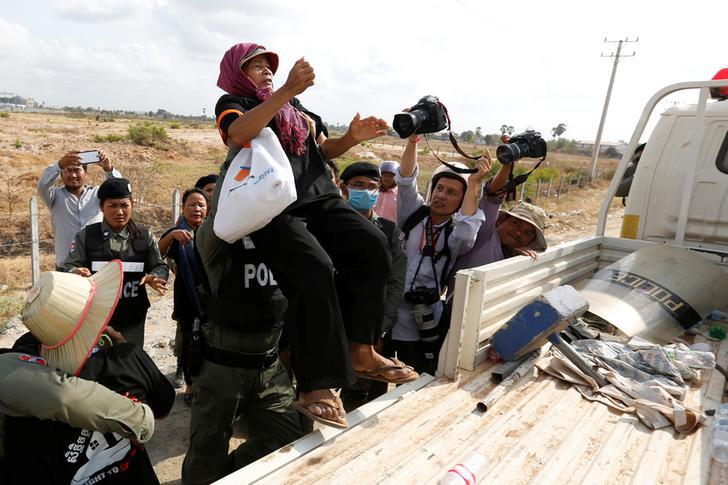
On 30 March ProtectDefenders.eu, the European Union Human Rights Defenders mechanism implemented by international civil society, launched its Index of attacks and threats against Human Rights Defenders, featuring a monitoring of alerts concerning violations perpetrated against individuals promoting Human Rights around the globe. The Index of attacks and threats against Human Rights Defenders is available on: ProtectDefenders.eu website.
It could be a most useful tool as quite a few key information providers coöperate (but not AI, HRW?). However, to be really useful as a single stop for this kind of information it is paramount that the site is as complete as possible (otherwise one would still have to go back to the websites of the individual organizations cooperating in the project). This is apparently not yet the case (or maybe definitions still differ from NGO to NGO). Front Linee.g. in its 2017 report (covering 2016) states that 281 HRDs were killed around the world [https://hrdmemorial.org/front-line-defenders-017-annual-report-highlights-killing-of-281-hrds-in-2016/], while a search on the new site shows only 39 killed in 2016 [https://protectdefenders.eu/en/stats.php?yearFilter=2016®ionFilter=&countryFilter=#mf]. That is 242 killings missing (without checking the annual reports of other cooperating partners) ! This issue is important as the announcement claims that the site wants to become “a source of reliable and updated information that should allow the identification of worrying trends and encourage the coordination of adequate responses by decision-makers and authorities to counter the violations faced by defenders”. Read the rest of this entry »
The Jury has selected human rights defenders from Ukraine, Nicaragua, Vietnam, South Africa and Kuwait as finalists for the 2017 Front Line Defenders Award for Human Rights Defenders at Risk:
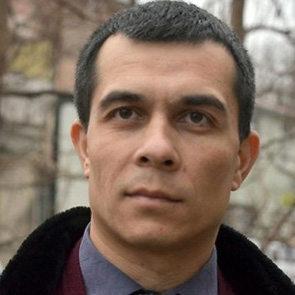
Emil Kurbedinov, Crimea/Ukraine
Emil Kurbedinov is a Crimean Tatar and human rights lawyer. Since the occupation of Crimea by the Russian Federation, Emil has been defending the persecuted Crimean Tatar minority, civil society activists and journalists. He also provides emergency response and documentation of rights violations during raids and searches of activists’ homes. In January 2017, masked representatives from Crimea’s Centre for Counteracting Extremism detained Emil and took him to a local directorate of the Russian Federal Security Service (FSB) for interrogation. A district court found him guilty of “propagandizing for extremist organisations” and sentenced him to ten days in detention.
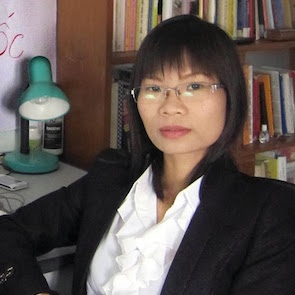
Pham Thanh Nghien, Vietnam
Vietnamese blogger Pham Thanh Nghien spent four years in prison for her work publicising violations against and defending the rights of relatives of fishermen killed by Chinese patrols. Following her release, she was kept under house arrest, during which time she spearheaded numerous human rights campaigns and co-founded the renowned Vietnamese Bloggers’ Network. Nghien has had her home raided, been blocked from attending medical appointments, had a padlock placed on her door from the outside, and been refused a marriage certificate. Nghien has also survived numerous physical assaults aimed at stopping her powerful, peaceful work uncovering and publicising human rights violations in Vietnam.
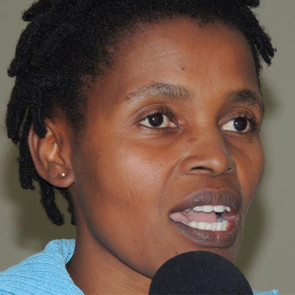
Nonhle Mbuthuma, South Africa
Nonhle Mbuthuma has persisted in her struggle for land and environmental rights in South Africa’s Eastern Cape despite assassination attempts, ongoing death threats and the murder of her colleague. She is a founder and current member of the Executive Committee of the Amadiba Crisis Committee, formed to unite community members in five villages of the Amadiba Tribal Authority region opposing destructive mining projects. In July 2016, Nonhle and other activists successfully forced the biggest shareholder in a titanium mining project to withdraw, but threats to activists continue as the community now fears the project will continue with funding from local “front” companies.
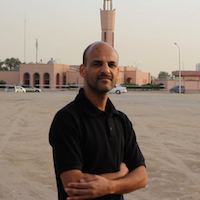
Abdulhakim Al Fadhli, Kuwait
Abdulhakim Al Fadhli is currently imprisoned for his peaceful activism on behalf of Kuwait‘s stateless Bedoon and other minority communities in Kuwait. The term Bedoon, meaning “without” in Arabic, refers to the community of stateless persons, native to Kuwait, who are prohibited from obtaining any official state documents including, but not limited to, birth, death and marriage certificates. Abdulhakim is currently serving a one-year prison sentence and faces deportation upon release. Throughout his imprisonment, he has protested and staged hunger strikes against the inhumane and unsanitary conditions in the Anbar 4 prison facility, where he has also been subjected to solitary confinement. [see also https://humanrightsdefenders.blog/2014/02/27/car-chase-in-kuwait-bedoun-human-rights-defender-the-target/]
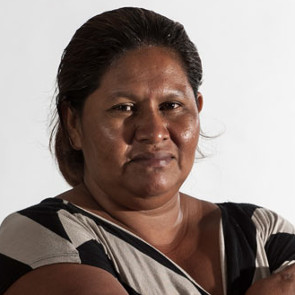
Francisca Ramírez Torres, Nicaragua
Human rights defender Francisca Ramírez Torres‘ children were attacked in attempt to stop her powerful work advocating against a destructive inter-oceanic canal in Nicaragua. Francisca is the coordinator of the Council for the Defence of Land, Lake and Sovereignty, which educates communities on their rights, campaigns for the repeal of laws allowing land-grabbing. The proposed canal would displace thousands of small farmers and indigenous peoples, without respecting their right to free, prior and informed consent. Francisca has been detained, harassed, and had her home and family attacked for her peaceful resistance to this destructive canal project.
The annual Front Line Defenders Award seeks to focus international attention on the human rights defender’s work, thus contributing to the recipient’s personal security, and a cash prize of €15,000 is awarded to the Award recipient and his/her organisation in an effort to support the continuation of this important work.
After my post on Civitas Maxima[https://humanrightsdefenders.blog/2017/03/21/new-magazine-global-geneva-puts-civitas-maxima-in-the-limelight/] I feel that I should complete the picture with a reference to “Make Way for Justice #3” which argues that universal jurisdiction has gathered unprecedented momentum in 2016. In this annual report, ECCHR and its partners FIBGAR, FIDH, REDRESS and TRIAL Internationallook back on its application through 47 recent cases. Five years of conflict, hundreds of thousands of dead. In Syria, large-scale war crimes are committed in all impunity. Effective prosecution has been repeatedly impeded at the international level, yet justice has found a way forward: universal jurisdiction. Thanks to this principle, States can prosecute criminals regardless of their nationality or where the crime was committed. The interest of such procedures for lawless regions is obvious.
2016 alone, five States have brought charges for alleged crimes in Syria. Investigations are ongoing in three others. For victims, these proceedings may be their only chance to obtain justice. Universal jurisdiction has proved a significant tool against impunity in Syria, but it also applies to many more situations: Rwanda, Nepal, Guatemala and Iraq, to name but a few.
To illustrate this breadth, ECCHR, FIBGAR, FIDH, REDRESS and TRIAL International released their annual report on universal jurisdiction, Make way for Justice #3. In 2016 alone, 13 States have made use of this principle in 47 cases – an unprecedented success.
Middle East Eye reported on 31 March 2017 that the Emirates (UAE) had sentenced human rights defender Nasser Bin Ghaith to 10 years for ‘offensive online posts‘ (i.e. that criticised Egypt).
Dr Nasser bin Ghaith speaking at a conference (ADHRB)
After all the attention on the recent arrest of MEA Laureate, Ahmed Mansoor [https://humanrightsdefenders.blog/tag/ahmed-mansoor/], it is good to point out that he is not the only one being silenced in the UAE. On Wednesday Nasser Bin Ghaith was sentenced to 10 years in jail. Ghaith told the court he had been beaten and deprived of sleep for up to a week at a time by prison guards. The court did not specify which social media posts the charge related to or what they said. The authorities said he had published “photos and articles that are offensive to the state’s symbols and values, its internal and foreign policies and its relations with an Arab state,” which is understood to refer to Egypt. Ghaith is an Emirati economist who has lectured at the Abu Dhabi campus of the Paris-based Sorbonne University. He also worked as an economic and legal consultant to the UAE army.”By imposing this ludicrous sentence in response to his peaceful tweets, the authorities have left no room for doubt: those who dare to speak their minds freely in the UAE today risk grave punishment,” declared Lynn Maalouf, deputy director for research at Amnesty International. Amnesty called Ghaith “a prisoner of conscience, imprisoned for the peaceful expression of his conscientiously held beliefs.” See also: https://humanrightsdefenders.blog/2016/05/18/uae-emirates-human-rights-defender-nasser-bin-ghaith-ngos-censorship/
On 24 March 2017 a group of important NGOs that are active at the UN Human Rights Council made a joint statement at the end of the 34th session. These are: International Service for Human Rights, Asian Forum for Human Rights and Development (FORUM ASIA), Global Centre for the Responsibility to Protect, Human Rights House Foundation, CIVICUS, International Lesbian, Gay, Bisexual, Trans and Intersex Association (ILGA), Amnesty International, and Human Rights Watch. They:
….. welcome the renewal of key Special Procedures mandates, and in particular that of the Special Rapporteur on human rights defenders. At a time when defenders are under an unprecedented attack and killings of defenders are on the rise, the united stance of the Human Rights Council is key. While we welcome the restoring of consensus to this key resolution, we deeply regret the fracturing of the same on the right to food resolution, particularly given the increasing interrelationship of food insecurity, conflict and human rights violations.
At the outset of this session, High Commissioner Zeid has described 2017 as a pivotal year for the Council, and has diagnosed an attack on the entire rights-based system. To be a credible part of this system, and rise to the world’s challenges, the Council must – while appropriately engaging the concerned States – respond firmly to human rights violations and victims’ demands for accountability Some actions at this session have struck this balance in part; others – such as the decision hastily ending the mandate on Haiti – have not. The Council still fails to bring needed attention to a range of violations in countries such as Azerbaijan, Bahrain, China, Egypt, Philippines, Turkey and others.
The urgent dispatch of a Fact-Finding Mission [FFM] on Myanmar is a welcome step. We now look to you, President, to consult, including with civil society, on the appointment of the FFM’s members. But we regret the dissociation of Myanmar from the resolution, and call on Myanmar to fully cooperate with the FFM. We look to all States, including in particular those with investment, trade and business relationships with Myanmar, to fully facilitate the work of the FFM. We commend the Council for recognising the fundamental relationship between violations of human rights and the commission of mass atrocities, including by advancing accountability for such crimes in the DPRK, South Sudan, Sri Lanka and Syria.
Finally, Mr President, we are again concerned about allegations of intimidation and reprisals against defenders from Myanmar, Bahrain and Sri Lanka, including during the current session. In line with your legal obligation, we urge you to take these cases seriously, follow-up thoroughly on the allegations, and ensure that all those who engage with the body you preside over can do so safely.
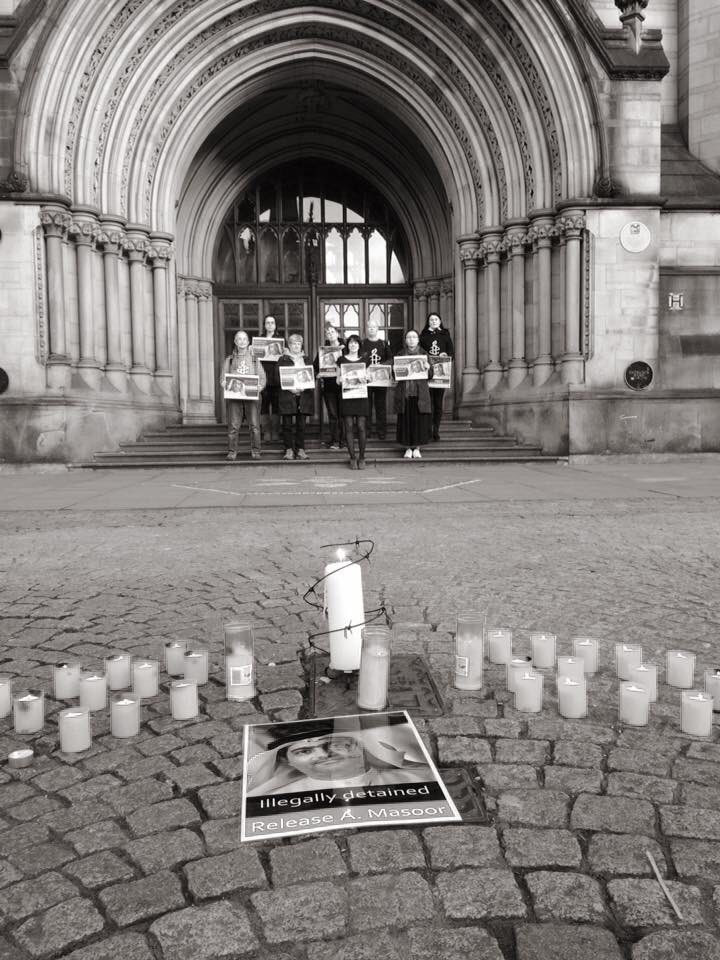
In view of the link between Manchester and UAE airlines (Emirates and Ethiad) it is specially interesting to note that AI Manchester has joined the campaign to free Ahmed Mansoor:
Interesting example of how governments (here the EU) can work together to protect human rights defenders in a specific country (here Uganda). Since a few years there is an annual EU HRD Award to recognise and honour the achievements of an individual Human Rights Defender active in Uganda.
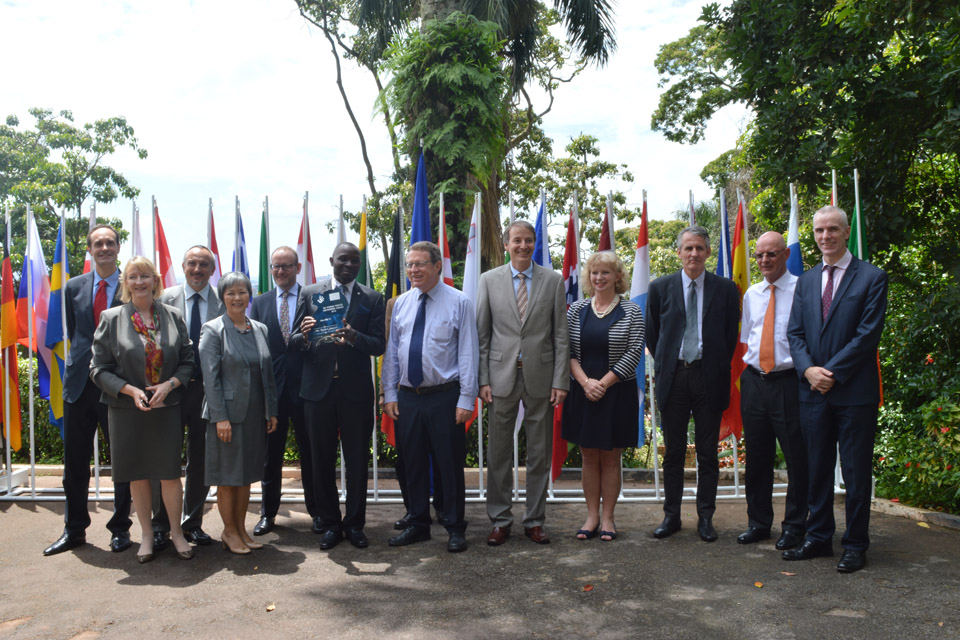
EU Heads of mission with the 2016 EU Human Rights Defender Award recipient, Robert Sempala in May 2016.
Now the British High Commission in Kampala, together with other European Union member states represented in Uganda, is inviting nominations for the 2017 EU Human Rights Defenders Award. The broad range of activities carried out by HRDs can include the following:
documenting human rights violations;
seeking remedies for victims of human rights violations through the provision of legal, psychological, medical or other support;
combating the culture of impunity which can hide systematic and repeated breaches of human rights and fundamental freedoms;
mainstreaming a human rights culture, and transmitting information about HRDs at the national, regional and international levels;
advocacy for the respect of human rights.
Nominations should be sent by e-mail to: Kampala.Reception@fco.gov.uk. Nominations should be a maximum of one page in length, and should use the following nomination form (MS Word Document, 51.5KB). The deadline for nominations is 14 April 2017. The winner will be announced on 25 May 2017 at a ceremony hosted by the Embassy of the Kingdom of the Netherlands in Uganda.
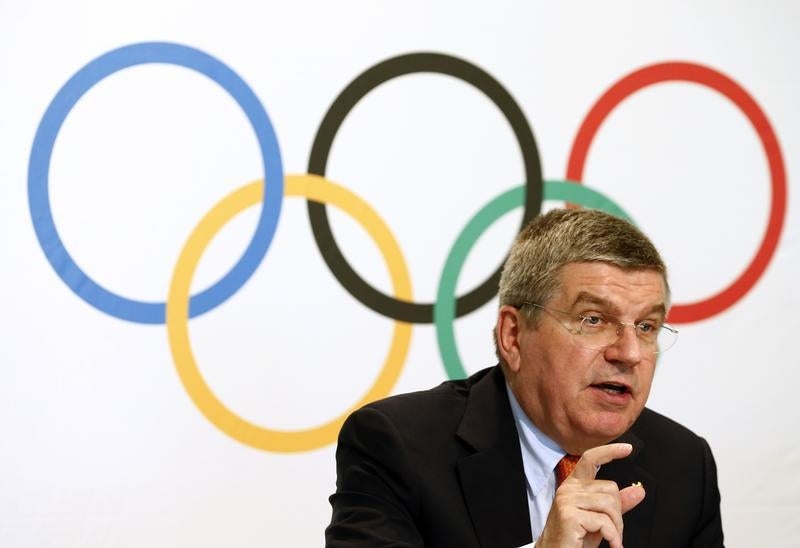
For the first time, the IOC has included explicit reference to the United Nations Guiding Principles on Business and Human Rights (UNGP), which outline the human rights responsibilities of businesses, as well as references to anti-corruption standards. The Guiding Principles explain how commercial enterprises should assess human rights risks, take effective steps to avoid human rights problems, and ensure a remedy for abuses that occur in spite of those efforts.
“This is an important step by the IOC for the future,” said Sharan Burrow, International Trade Union Confederation general secretary. “Implementing the UN Guiding Principles across all major global sporting events could help break the cycle of human rights abuses, and this example from the IOC should be applied to all such events, starting now.”
The SRA’s mission is to ensure that sports bodies and mega-sporting events respect human rights, the environment, and anti-corruption requirements at all stages of the process. “Time after time, Olympic hosts have gotten away with abusing workers building stadiums, and with crushing critics and media who try to report about abuses,” said Minky Worden, director of global initiatives at Human Rights Watch. “The right to host the Olympics needs to come with the responsibility not to abuse basic human rights.”
The revised contract requires host cities to “protect and respect human rights and ensure any violation of human rights is remedied in a manner consistent with international agreements, laws and regulations applicable in the Host Country and in a manner consistent with all internationally-recognized human rights standards and principles, including the United Nations Guiding Principles on Business and Human Rights, applicable in the Host Country.”
“If implemented, the revised Host City Contract will help ensure that Olympic hosts respect ‘human dignity’ as required by the Olympic Charter,” said Brendan Schwab, head of UNI World Athletes. “This should have a ripple effect across all mega-sporting events such as the World Cup, and wherever abuses tied to sport still occur.”
[Key provisions of the revised Olympic Host City Contract include:
13. Respect of the Olympic Charter and promotion of Olympism
13.1. The Host City, the Host NOC and the OCOG undertake to abide by the provisions of the Olympic Charter and the IOC Code of Ethics and agree to conduct their activities related to the organisation of the Games in a manner which promotes and enhances the fundamental principles and values of Olympism, as well as the development of the Olympic Movement.
13.2. Pursuant to their obligations under §13.1, the Host City, the Host NOC and the OCOG shall, in their activities related to the organisation of the Games:
a. prohibit any form of discrimination with regard to a country or a person on grounds of race, colour, sex, sexual orientation, language, religion, political or other opinion, national or social origin, property, birth or other status;
b. protect and respect human rights and ensure any violation of human rights is remedied in a manner consistent with international agreements, laws and regulations applicable in the Host Country and in a manner consistent with all internationally-recognised human rights standards and principles, including the United Nations Guiding Principles on Business and Human Rights, applicable in the Host Country; and
c. refrain from any act involving fraud or corruption, in a manner consistent with any international agreements, laws and regulations applicable in the Host Country and all internationally-recognised anti-corruption standards applicable in the Host Country, including by establishing and maintaining effective reporting and compliance.
13.3. The IOC, through its Coordination Commission referred to in §27, shall establish a reporting mechanism to address the obligations referred to in §13.1 and §13.2 in connection with the activities of the Host City, the Host NOC and the OCOG related to the organisation of the Games.
15. Sustainability and Olympic legacy
15.1. The Host City, the Host NOC and the OCOG undertake to carry out all activities foreseen under the HCC in a manner which embraces sustainable development and contributes to the United Nations’ Sustainable Development Goals.]
I was reading (belatedly) about the UN Special Rapporteur on the situation of human rights in Cambodia, Rhona Smith, who in January 2017 intervened strongly in the case of the 5 Cambodian human rights defenders of ADHOC (#FreeThe5KH) who have been in detention since April last year. [https://humanrightsdefenders.blog/2016/05/04/civil-society-condemns-charges-human-rights-defenders-cambodia/]Only then did I realize that the case had led a few months earlier to a landmark decision by the United Nations Working Group on Arbitrary Detention (WGAD): the first time that any UN body has referred to HRDs as a protected group.
On 21 November 21, 2016, the WGAD ruled that the ongoing detention of Mr. Ny Chakrya, Deputy Secretary-General of the National Election Committee (NEC), and four staff members of the Cambodian Human Rights and Development Association (ADHOC), Messrs. Ny Sokha, Yi Soksan, Nay Vanda, and Ms. Lim Mony, was “arbitrary.” Following a submission made by the Observatory for the Protection of Human Rights Defenders (OMCT-FIDH partnership), the Cambodian Center for Human Rights (CCHR) and the Cambodian League for the Promotion and Defense of Human Rights (LICADHO) in June 2016, the WGAD’s Opinion No. 45/2016 ruled that the five human rights defenders (HRDs) “have been discriminated against based on their status as human rights defenders, and in violation of their right to equality before the law and equal protection of the law under article 26 of the ICCPR.” This is the first time ever that the WGAD – or any other UN mechanism receiving individual complaints – has referred to HRDs as a protected group that is entitled to equal legal protection under Article 26 of the International Covenant on Civil and Political Rights (ICCPR). The ruling also recognised the violation of the five HRDs’ “rights to offer and provide professionally qualified legal assistance and other relevant advice and assistance in defending human rights.”
In addition, the WGAD found that the targeting of ADHOC staff members for having provided “legitimate legal advice and other assistance” violated the five HRDs’ right to freedom of association. It ruled that violations of fair trial rights (including the fact that the five were denied legal counsel from the beginning of their questioning), unjustified pre-trial detention, and statements made by the Cambodian authorities which denied the five the presumption of innocence – all of which contravene Cambodia’s international human rights obligations in respect to the right to a fair trial – are also serious enough to consider their ongoing detention as arbitrary. The WGAD concluded that “the deprivation of liberty ofNy Sokha, Nay Vanda, Yi Soksan, Lim Monyand Ny Chakrya, being in contravention of articles 7, 9, 10, 11 and 20 of the Universal Declaration of Human Rights and of articles 9, 10, 14, 22 and 26 of the International Covenant on Civil and Political Rights, is arbitrary.”
That Cambodian authorities are not impressed is shown by the continued detention of the 5 ADHOC HRDs and by the press release of 7 February 2017 calling for the cessation of the politically motivated criminal investigation of human rights defenders Am Sam-at and Chan Puthisak. Amnesty International, Civil Rights Defenders, Human Rights Watch, and the International Commission of Jurists signed the statement.
Cambodian officials have accused Sam-at, a respected human rights monitor at the Cambodian League for the Promotion and Defense of Human Rights (LICADHO) for nearly 20 years, and Puthisak, a land rights activist from Boeung Kak Lake and former prisoner of conscience, of instigating violence at an October 10, 2016 demonstration. Para-police forces, who are regularly used to suppress demonstrations, violently dispersed what had been a peaceful protest in Phnom Penh. When Puthisak attempted to prevent para-police from confiscating a drum that was being used by a demonstrator, four or five para-police attacked him, repeatedly beating him on the head with their fists, according to a video of the incident. When Sam-at tried to stop the assault, the para-police attacked him, also beating him on the head. Both men sustained injuries that needed medical attention.
“The investigation of Sam-at and Puthisak by the Cambodian authorities is a typically absurd and undisguised case of judicial harassment,” said Champa Patel, Southeast Asia and Pacific director at Amnesty International. “As usual, unnecessary and excessive use of force by the para-police goes unpunished, and those who work to promote and protect human rights find themselves subject to criminal proceedings.”