The Maldives normally create images in our mind of luxury holidays. This is a false image [see also: https://humanrightsdefenders.blog/tag/maldives/]. On Sunday, 23 April 2017, a prominent blogger and social media activist, Yameen Rasheed, was found in the stairwell of his residence in the country’s capital Malé with multiple stab wounds to his head, neck and body. Mr. Rasheed died of his injuries. The UN, Front Line and others expressed deep alarmed by Mr. Rasheed’s killing and urge the authorities to ensure that the investigation into the murder is prompt, thorough and that the perpetrators are brought to justice. Mr. Rasheed had in December reported to the Maldives Police Service that he was receiving targeted death threats following the publication of his photo along with those of others on an anonymous Facebook page, but he complained that he had to follow up for three days just to get a confirmation that his complaint had been registered. Mr. Rasheed’s killing comes in the context of what appears to be an upsurge in arrests and prosecutions of the political opposition.
Yameen Rasheed [see his profile: https://www.frontlinedefenders.org/en/profile/yameen-rasheed] was a prominent human rights defender and social media activist in Maldives. Through his blog The Daily Panic, he was an outspoken critic of government corruption and was vocal against impunity for crimes against journalists and attacks of freedom of expression committed by radical Islamist groups. Yameen Rasheed was a close friend of Ahmed Rilwan Abdulla, another well known Maldivian journalist, blogger and human rights advocate, who was abducted and disappeared in 2014. Since 2014, Yameen Rasheed had been working to obtain justice for Rilwan, and was recently coordinating with Rilwan’s family to file a case against the Maldives police on the investigation of Rilwan’s death. In 2015, he was arrested along with 200 other activists and imprisoned for three weeks after taking part in a pro-democracy rally in the capital.
Maldives has a troubling history of attacks targeting human rights defenders, journalists and bloggers. On 5 June 2012, blogger, LGBT activist and journalist Ismail Khilath Rasheed, also known as Hilath, was stabbed by radical Islamists. On 8 August 2014, prominent HRD Ahmed Rilwan went missing and has not been heard of since then. On 4 September 2015, human rights lawyer Mahfooz Saeed [https://www.frontlinedefenders.org/en/case/case-history-mahfooz-saeed] was brutally attacked by two unidentified men, see: https://humanrightsdefenders.blog/2015/09/07/mahfooz-saeed-lawyer-of-maldives-ex-president-stabbed/.
It would seem therefore that thegroundbreaking legal proceedings (October 2016), which the ISHR has brought to the UN Human Rights Committee have a lot of merit. It was requested to rule that the Maldives violated international law by restricting human rights defenders from submitting information to the UN.
In what is the first case filed with the UN on behalf of former members of a national human rights institution, ISHR has asked the UN Human Rights Committee to authoritatively rule that there is a legal right to submit information, evidence and reports to the UN and that restrictions on this right, or reprisals for exercising this right, amount to serious breaches of international law. The case could have wide-ranging implications, as a number of countries seek to criminalise or prosecute people to prevent them from exposing human rights violations at the UN.
Assisted by ISHR, Ahmed Tholal and Jeehan Mahmood, former Commissioners of the Human Rights Commission of the Maldives (HRCM), have filed a communication with the UN’s Human Rights Committee to highlight the Maldives’ failure to ensure their right to share information freely with the UN without reprisal. The HRCM was prosecuted in 2015 by the Supreme Court in the Maldives following a submission made by the HRCM on human rights in the Maldives to the UN’s Universal Periodic Review….The Court ruled that the HRCM’s report was unlawful, biased and undermined judicial independence, and ordered the HRCM to follow a set of guidelines designed to restrict the HRCM’s work and its ability to communicate with the UN.
Ahmed Tholal and Jeehan Mahmood said they were seeking a ruling from the Committee because they want the HRCM’s right to freely communicate with international human rights mechanisms to be firmly preserved in law and practice. ‘If the HRCM is not able to communicate freely with the UN, its ability to carry out its mandate is severely undermined. This case isn’t just about the HRCM of 2010. Rather it’s about the far reaching implications such reprisals will have on the independence and integrity of NHRI’s everywhere,’ they said.
‘The decision of the Supreme Court to restrict the activities and independence of the Commission is incompatible with the right of safe and unhindered communication with UN bodies, and the prohibition against reprisals for exercising that right. Such a decision by an arm of government is a clear breach of international law,’ Ms Sinclair of ISHR said. Background to the case can be found here.
On 24 April 2017 the ISHR published this interview with Cleopatra KAMBUGU, grants administrator at UHAI EASHRI and transgender activist in Uganda. Cleopatra was featured in “Pearl of Africa“, a movie shown at the Geneva international Film Festival and Human Rights Forum and spoke about the challenges she faces in her struggle to have transgender rights recognised in her country. More information on UHAI-EASHRI: http://www.uhai-eashri.org
The Martin Ennals Award for Human Rights Defenders (MEA) will announce its three Finalists for 2017 on Wednesday 26 April at 11:00 Geneva time. If you want to find out while on the go see: Social media @martinennals
#Ennals 2017 https://www.facebook.com/MartinEnnals/
Nikki Haley, the US ambassador to the UN, with Liu Jieyi, China’s ambassador, before the April 18 Security Council meeting. Rick Bajornas/UN Photo
The United States led on Tuesday 18 April what it (and not many others) dubbed a ‘historic‘ U.N. Security Council meeting on the link between rights abuses and conflict, but it had to drop a push for the broad issue of human rights to become a fixed item of the Security Council’s agenda when it appeared that at least six members would oppose it [Russia, China, Egypt, Ethiopia, Kazakhstan and Bolivia were against the move and Senegal’s support was uncertain]. The United States, council president for April, did not risk the measure being put to a rare procedural vote, which requires nine in favour, and vetoes cannot be used. The opposing council members say rights discussion should be confined to the Geneva-based Human Rights Council – which Washington accuses of being anti-Israel and has threatened to quit – and the 193-member U.N. General Assembly third committee. Here is some of the analysis:
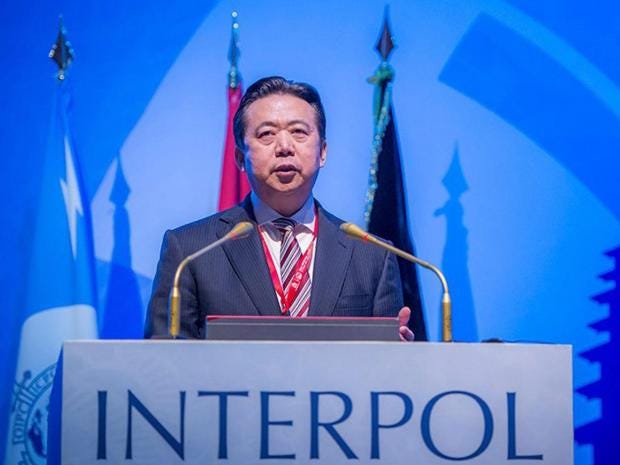
‘Old’ but underreported news is that Meng Hongwei – a top Chinese police official – has been elected president of Interpol, which worries some human rights NGOs. The Independent had an article on 10 November 2016.
Chinese President Xi Jinping has waged a four-year campaign against corruption, which includes a push to return former officials and other suspects who fled abroad. China filed a list of 100 of its most-wanted suspects with Interpol in April 2014, about one third of which have since been repatriated. The country’s police and judicial systems have been routinely criticised for abuses, including eliciting confessions under torture and the disappearance and detention without charges of political dissidents and their family members. Many Western nations have been reluctant to sign extradition treaties with China or return suspects wanted for non-violent crimes.
Given those circumstances, Mr Meng’s election is an “alarming prospect“, said Maya Wang, Hong Kong-based researcher at Human Rights Watch. “While we think it’s important to fight corruption, the campaign has been politicised and undermines judicial independence,” Ms Wang added. Mr Meng’s election “will probably embolden and encourage abuses in the system,” she said, citing recent reports of close Chinese ally Russia’s use of Interpol to attack President Vladimir Putin’s political opponents.
“This is extraordinarily worrying given China’s longstanding practice of trying to use Interpol to arrest dissidents and refugees abroad,” Nicholas Bequelin, east Asia director at Amnesty International wrote on Twitter.
Recently, 5 April 2017, Wei Jingsheng, a well-known human rights defender in exile, said while visiting Lyon (the HQ of Interpol) that the election of Meng Hongwei as chief of the global police organisation could give Beijing new leverage over its critics. “The Chinese government’s message to all political opponents like me or party officials who have fled the country is: ‘Wherever you are, the international police work with us and we will find you’,” “That’s frightening,” he said, adding that Meng “is still vice-minister of public security in China. He has led the secret police.”
While Interpol’s charter officially bars it from undertaking “any intervention or activities of a political, military, religious or racial character,” critics say some governments, primarily Russia and Iran, have abused the system to harass and detain opponents of their regime.
The International Federation for Human Rights (FIDH) is seeking a Program Officer, covering West and South Asia (Iran, Afghanistan, Pakistan, India, and Bangladesh). Although based in Paris, working under the responsibility of the Director of Operations, the Programme Officer comes under the supervision of the Head of Asia Desk (who is based in Bangkok, Thailand). Reference: CP-ASIE-04-17
Deadline for applications: 24 April 2017MAIN RESPONSIBILITIES: Draft reports, press releases, open letters, briefing notes, op-eds and ensure that they are approved by board members and local partners. Organize fact-finding, judicial observation missions, seminars, and trainings. Organize advocacy activities within IGO and visits of human rights defenders to and from the region. Participate in fact-finding missions in the field and activities within IGO and represent occasionally FIDH in meetings with government representatives, media, and donors. Participate in meetings with local, regional, and international partners. Liaise and coordinate with other regional and thematic desks at the FIDH International Secretariat, as well as the press, web, and communication department. Liaise and coordinate with FIDH’s delegations in Geneva, Brussels, New York, and The Hague. Liaise with FIDH member and partner organizations for West and South Asia, with FIDH Board Members in charge of the region or in charge of thematic issues, as well as with other relevant organizations at national, regional and international levels to ensure synergy and complementarity. Contribute to the elaboration of the annual work plan for West and South Asia and propose changes when needed. Contribute to the formulation of funding applications for activities related to West and South Asia. Contribute to the design and implement communication activities, in consultation with the press, web and communication departments; Contribute to monitor, assess and report on activities carried out. Communicate on results achieved. Carry out administrative tasks as needed (hiring and training of interns, hiring and management of consultants, maintaining a database of contacts, printing & dissemination of materials, etc).
EXPERIENCE
Minimum of 3 years work experience in the field of human rights (preferably for a national, regional and/or international NGO). In-depth understanding of the human rights, political, social, and economic context in West and South Asia. Familiarity with UN human rights standards and mechanisms.
COMPETENCE AND SKILLS
A university degree in a relevant field, such as political science, international relations, or human rights law. Excellent writing skills and attention to details. Fluency in oral and written English; basic knowledge of French desirable. Ability to work as part of a team and independently, be rigorous, able to prioritize, and work under pressure and multiple deadlines.
TERMS AND CONDITIONS OF EMPLOYMENT
Gross monthly income: From EUR 2,500 per month (over 13 months), depending on experience. Possibility of recruitment at a different level based on a different job profile.
The Human Rights Council Network (HRCnet) is seeking a Coordinator based at the International Service of Human Rights in Geneva. For details on the post see below:
HRCnetis a 10-year old coalition of national, regional and international NGOs engaging with the UN Human Rights Council. Its current members are:
in Africa: African Centre for Democracy and Human Rights Studies (The Gambia), DefendDefenders (East and Horn of African Human Rights Defenders Network) (Uganda), Southern African Human Rights Defenders Network (Zimbabwe), West African Human Rights Defenders Network (Togo),
in Asia: Asian Legal Resource Centre (Hong Kong, China), Asian Forum for Human Rights and Development (FORUM ASIA) (Thailand), Commonwealth Human Rights Initiative (India),
in Latin America: Centro de Estudios Legales y Sociales (CELS) (Argentina), Conectas Direitos Humanos (Brazil),
in the Middle East and North Africa: Cairo Institute for Human Rights Studies (Egypt), Egyptian Initiative for Personal Rights (Egypt),
and the following International NGOs: Human Rights Watch (USA), International Service for Human Rights (Switzerland), Open Society Foundations (USA).
On 4 April 2017 Nils Muižnieks, the Council of Europe’s Human Rights Commissioner, wrote about “The Shrinking Space for Human Rights Organisations“. The new EU ‘alert site I referred to yesterday [see: https://humanrightsdefenders.blog/2017/04/03/protectdefenders-eu-launches-new-alert-website-but-no-single-stop-yet/] showed in 2016 some 86 reported violations in the European (and Central Asian) region, mostly detention and judicial harassment. Also the recent CIVICUS findings of the narrowing space for civil society points in this direction. An example could be Hungary as illustrated by reports of Human Rights Watch (2016), Human Rights First (2017) and Amnesty International (2016/17); the issue of academic freedom is not directly related but part of the restrictive trend [see links below].
On 30 March ProtectDefenders.eu, the European Union Human Rights Defenders mechanism implemented by international civil society, launched its Index of attacks and threats against Human Rights Defenders, featuring a monitoring of alerts concerning violations perpetrated against individuals promoting Human Rights around the globe. The Index of attacks and threats against Human Rights Defenders is available on: ProtectDefenders.eu website.
It could be a most useful tool as quite a few key information providers coöperate (but not AI, HRW?). However, to be really useful as a single stop for this kind of information it is paramount that the site is as complete as possible (otherwise one would still have to go back to the websites of the individual organizations cooperating in the project). This is apparently not yet the case (or maybe definitions still differ from NGO to NGO). Front Linee.g. in its 2017 report (covering 2016) states that 281 HRDs were killed around the world [https://hrdmemorial.org/front-line-defenders-017-annual-report-highlights-killing-of-281-hrds-in-2016/], while a search on the new site shows only 39 killed in 2016 [https://protectdefenders.eu/en/stats.php?yearFilter=2016®ionFilter=&countryFilter=#mf]. That is 242 killings missing (without checking the annual reports of other cooperating partners) ! This issue is important as the announcement claims that the site wants to become “a source of reliable and updated information that should allow the identification of worrying trends and encourage the coordination of adequate responses by decision-makers and authorities to counter the violations faced by defenders”. Read the rest of this entry »


 Draft reports, press releases, open letters, briefing notes, op-eds and ensure that they are approved by board members and local partners.

