Archive for the 'Amnesty international' Category

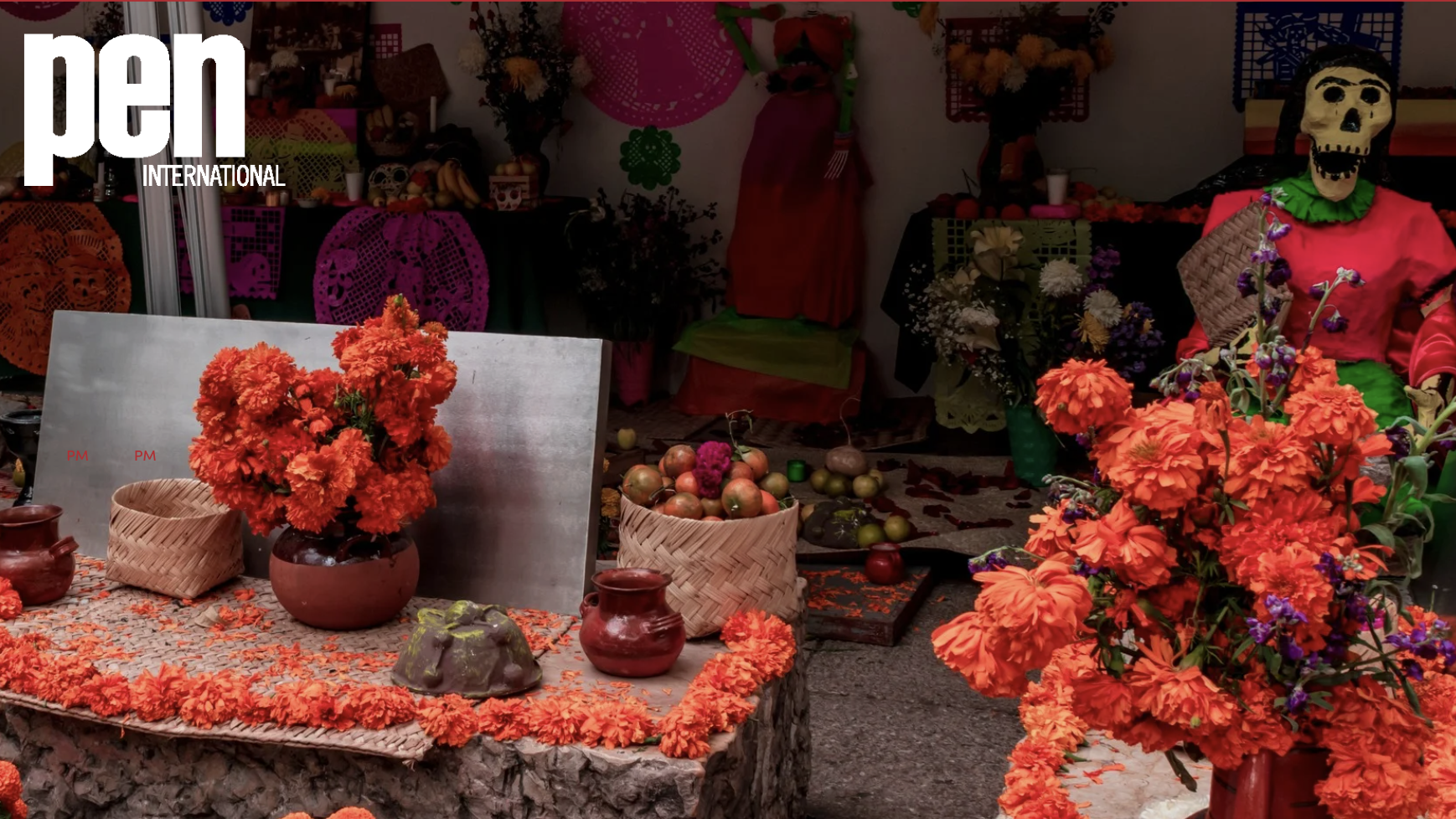
Day of the Dead 2025: PEN International, Amnesty International, ARTICLE 19, and PEN Centres honour journalists killed in Mexico 

November 3, 2025

Every journalist who dares to speak the truth faces danger, yet their courage lights the path for all of us. Remembering those killed is not enough; we must demand justice, protection, and a world where truth can be spoken without fear”. Burhan Sonmez, PEN International President  

31 October 2025: On the Day of the Dead, we the undersigned, honour the journalists  in Mexico who have been killed for their work. This act of remembrance is also an urgent appeal: violence against the press has reached alarming levels in the region. In Mexico, practicing journalism carries deadly risks. The Mexican State must acknowledge this reality and take immediate action. 


PEN International and Article 19’s Mexico and Central America office have documented the killing of at least ten journalists over the past twelve months in Mexico. Seven of these cases are believed to be directly linked to their work, while the motives behind the remaining three killings are still under investigation. The past year,  UNESCO, PEN, CPJ, RSF also recorded the murder of journalists in Brazil (1), Colombia (3), Ecuador (2), Honduras (1), Guatemala (1), Haiti (2), and Peru (2), positioning Mexico once again as the country with the highest number of journalists murdered in the continent. The murders of journalists are closely linked to their reporting on matters of high public interest, including corruption, organised crime, drug trafficking, human rights violations, environmental concerns, and abuses of power. 

The brutality of the attacks, combined with entrenched impunity, has created a perpetual cycle of violence that undermines not only the right to freedom of expression but also the public’s right to be informed. 

Despite its international obligations, the Mexican State continues to fail to ensure the protection of journalists and a safe environment for journalism, and to deliver effective justice for victims and their families. 

This reflects a reality that cannot be ignored: Mexico faces not only a crisis of violence, but also a crisis of structural impunity that enables attacks to continue without consequence. Such impunity creates a chilling effect of self-censorship, restraint, and fear among journalists. 

Emblematic cases 

We remember the journalists Kristian Uriel Martínez Zavala and Calletano de Jesús Guerrero,  killed in Mexico in 2025. …

see also: https://humanrightsdefenders.blog/2020/08/24/killing-of-journalists-in-mexico-juan-carlos-morrugares-the-latest-victim/

Mexico’s ongoing crisis is no accident. It is the result of entrenched impunity and a state either unable or unwilling to protect those who bring truth to light. 

We urge the Mexican State to: 

  1. Take concrete steps to guarantee that journalists in Mexico can exercise their right to freedom of expression without fear of reprisals. 
  2. Review and strengthen the Protection Mechanism for Human Rights Defenders and Journalists, ensuring that effective measures are deployed swiftly. 
  3. Undertake thorough, impartial, and independent investigations into the killings of and attacks on journalists, and deliver effective justice for victims and their families. 

Signed:

PEN International 

Amnesty International 

ARTICLE 19 

https://www.pen-international.org/news/day-of-the-dead-2025-pen-international-amnesty-international-article-19-and-pen-centres-honour-journalists-killed-in-mexico

Egyptian human rights defender Alaa Abdel Fattah finally free!

September 23, 2025

Egyptian media reported on 22 September, 2025, that President Abdel Fattah al-Sisi had issued a presidential pardon for the imprisoned Egyptian-British activist Alaa Abdel Fattah. On 23 September the Guardian, HRW and others reported that the British-Egyptian human rights activist Alaa Abd el-Fattah has indeed been released from jail after serving six years for sharing a Facebook post.

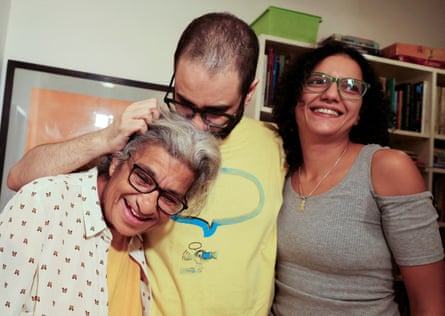
Early on Tuesday morning his campaign said in a statement that Abd el-Fattah was released from Wadi Natron prison and was now in his home in Cairo. “I can’t even describe what I feel,” his mother, Laila Soueif, said from her house in Giza as she stood next to her son surrounded by family and friends. “We’re happy, of course. But our greatest joy will come when there are no [political] prisoners in Egypt,” she added.

Peter Greste, an Australian journalist who was imprisoned alongside Abd el-Fattah, told Australian Associated Press: “It’s absolutely wonderful news, I’m absolutely overjoyed, I think it vindicates all the work and the efforts of the people who lined up behind him. See also: https://humanrightsdefenders.blog/2025/01/19/i-owe-alaa-abd-el-fattah-my-life-which-is-why-i-am-going-on-a-hunger-strike-to-help-free-him/

Alaa Abd el-Fattah stands next to his mother, Laila Soueif, and sister, Sanaa, at their home in Giza.
Alaa Abd el-Fattah stands next to his mother, Laila Soueif, and sister, Sanaa, at their home in Giza. Photograph: Mohamed Abd El Ghany/Reuters

Amnesty International’s Erika Guevara Rosas said the release was welcome but long overdue. “His pardon ends a grave injustice and is a testament to the tireless efforts of his family and lawyers, including his courageous mother Laila Soueif and activists all over the world who have been relentlessly demanding his release,” she said. The following quote can be attributed to Amr Magdi, senior Middle East and North Africa researcher at Human Rights Watch: “President Sisi’s pardon of the imprisoned Egyptian activist Alaa Abdel Fattah is long overdue good news. Though we celebrate his pardon.

The campaign for Abd el-Fattah’s release was led by his family, including his mother, who was admitted to hospital in London twice after going on hunger strikes trying to secure his release. The UK prime minister, Keir Starmer, is also known to have telephoned Sisi three times to lobby for Abd el-Fattah’s release. see: https://humanrightsdefenders.blog/2022/07/07/mona-seifs-letter-a-cry-for-help-for-alaa/

https://www.theguardian.com/world/video/2025/sep/23/egyptian-british-activist-alaa-abd-el-fattah-reunited-with-family-after-release-from-prison-video

https://www.hrw.org/news/2025/09/22/egypt-presidential-pardon-for-activist-alaa-abdel-fattah

https://www.theguardian.com/world/2025/nov/14/british-egyptian-activist-alaa-abd-el-fattah-stopped-from-flying-to-uk-says-family

However, in December 2025 a political storm broke about Alaa Abdel Fattah’s earlier social media posts: https://www.bbc.com/news/articles/cg5mr0gdnmeo

still, see also: https://www.jewishvoiceforlabour.org.uk/article/defend-british-egyptian-human-rights-activist-from-deportation-calls/

Seven International NGOs demand unconditional release of Indian HRD Umar Khalid

September 17, 2025

On 12 September, 2025 the seven rights groups described Khalid’s prolonged imprisonment as a “violation of his rights” and an instance of “selective persecution”, asserting that he was arrested on “politically motivated and spurious charges” on 13 September 2020.

Alongside Amnesty International, the signatories include: CIVICUS, FORUM-ASIA, Front Line Defenders. International Commission of Jurists, International Federation for Human Rights (FIDH) and World Organisation Against Torture (OMCT).

The statement expressed deep concern over the invocation of the anti-terror law UAPA (Unlawful Activities Prevention Act) and the repeated denial of bail to Khalid.

“These repeated bail denials combined with persistent delays, and the continued absence of trial proceedings, amount to a violation of his right to a fair trial, including speedy trial, guaranteed under the International Covenant on Civil and Political Rights (ICCPR), to which India is a state party, as well as under the Constitution of India,” the statement read.

The groups further highlighted the unequal application of bail standards, particularly in cases related to the 2020 Delhi riots and anti-CAA protests, saying:

“We are further concerned about the discriminatory application of bail standards in cases arising from the violence surrounding the CAA protests and more broadly in cases involving the UAPA. While similarly situated accused have been granted bail, Khalid continues to be denied relief. Such unequal treatment violates the principle of equality before the law and sets a deeply troubling precedent.”

The rights organizations also drew attention to the role of the Delhi Police and political leaders during the 2020 Delhi riots, where Khalid and other Muslim activists were implicated.

“Independent investigations, including by Amnesty International India, Human Rights Watch and Delhi Minorities Commission, have documented the role of the Delhi Police in human rights violations during the CAA protests and the ensuing violence,” the statement said.
“Police officers were recorded engaging in beatings, torture and other ill-treatment, and arbitrary arrests, and in some cases standing by as mobs attacked protesters.”

The statement noted that Indian courts have repeatedly criticized the police investigations, describing them as: “Very poor,” “callous,” and “fraught with multiple flaws,” with documented instances of fabricated cases and manipulated records.

It further condemned the role of senior political leaders, who were seen delivering inflammatory hate speeches, branding protesters as “traitors” or “anti-nationals”, and openly inciting violence.

“Despite the existence of video and documentary evidence, no meaningful accountability measures have been taken against implicated political figures or police officials,” the statement added.

The rights groups emphasized that Khalid’s prolonged detention is not an isolated incident, but part of a larger pattern of repression against those exercising their constitutional rights to freedom of expression and association.

“Other students and human rights activists, including Gulfisha Fatima, Sharjeel Imam, Khalid Saifi, Shifa-ur-Rehman and Meeran Haider, also remain in detention for their peaceful opposition to the CAA, while police officials and political leaders responsible for incitement or complicity in violence continue to enjoy impunity,” the groups noted.
“This selective prosecution erodes public trust in the justice system, entrenches impunity for state actors, and criminalises free expression.”

The seven international organizations demand:

The immediate and unconditional release of Umar Khalid

The equal application of bail standards

An end to the discriminatory treatment of human rights defenders

Accountability for police officers and political leaders implicated in incitement and violence

The repeal of the UAPA.

https://www.amnestyusa.org/press-releases/india-umar-khalids-five-year-imprisonment-without-trial-exemplifies-derailment-of-justice/

https://thehindustangazette.com/latest-news/selective-persecution-seven-international-rights-groups-demand-unconditional-release-of-umar-khalid-39661

Brian Dooley awarded the University of Oslo’s Human Rights Award 2025

September 16, 2025

Brian J. Dooley is an Irish human rights activist and author. He is Senior Advisor at Washington DC–based NGO Human Rights First. In October 2023 he was made an Honorary Professor of Practice at the Mitchell Institute, Queen’s University Belfast. He is a visiting scholar at University College, London (UCL). He is a prominent human rights voice on Twitter (@dooley_dooley).

From April 2020 to March 2023 he was Senior Advisor to Mary Lawlor, the United Nations Special Rapporteur on the situation of human rights defenders. He is as an advisory board member of the Gulf Centre for Human Rights, and was a visiting scholar at John Jay College, City University of New York from 2022 to 2023, and at Fordham University Law School in New York from 2019 to 2020.

He receives the award for having dedicated his career to advocating human rights and bringing greater global attention to less visible issues. Congratulations with a big DISCLAIMER : I am a good friend and admirer of Brian [see posts: https://humanrightsdefenders.blog/tag/brian-dooley/] and he has represented Human Rights First on the MEA Jury for years.

For more on the University of Oslo Human Rights Award and its laureates see: https://www.trueheroesfilms.org/thedigest/awards/41A114AE-182E-4EB3-8823-4A5AA6EEEF28

Dooley has written numerous reports on human rights defenders and human rights issues based on research in countries including Bahrain, Egypt, China (Hong Kong), Hungary, Kenya, Lebanon, Northern Ireland, Palestine, Ukraine, the USA (Guantanamo), and the United Arab Emirates.  His efforts have played a crucial role in exposing human rights violations, and he has actively supported justice in conflict areas, including Ukraine and Northern Ireland.

Commenting on the Award, Brian Dooley said: “This is such a great honour for me, and I’m very grateful to the University of Oslo for recognising my work.  I’ve been very lucky over decades that my work with Amnesty International, with The Gulf Centre for Human Rights, with Mary Lawlor – the Special Rapporteur on Human Rights Defenders – and with Human Rights First has enabled me to meet and work with Human Rights Defenders working in some of the most difficult places in the world.  Too often great work by local activists in wars or revolutions, or those living under oppression, goes unseen and unreported.  This award helps bring attention to this work, and to those who do it.

Brian will receive his Award during the Oslo Peace Days this coming December.

https://www.qub.ac.uk/Research/GRI/mitchell-institute/news/15092025-ProfessorBrianDooleyAward.html

https://www.uio.no/english/about/news-and-events/news/2025/uios-human-rights-award-2025.html

Deluge of NGO criticism greets 2024 US State Department Report on human rights

August 20, 2025

The Trump administration’s omission of key sections and manipulation of certain countries’ rights abuses degrade and politicize the 2025 US State Department human rights report, Human Rights Watch, Amnesty International, Human Rights First and many other NGOs concluded .

On August 12, 2025, the State Department released its “Country Reports on Human Rights Practices” covering the year 2024. The report omits several categories of rights violations that were standard in past editions, including women, LGBT people, persons with disabilities, corruption in government, and freedom of peaceful assembly. The administration has also grossly mischaracterized the human rights records of abusive governments with which it has or is currently seeking friendly relations.

By undermining the credibility of the report, the administration puts human rights defenders at risk, weakens protections for asylum seekers, and undercuts the global fight against authoritarianism. 

This year’s human rights report may strictly keep with the minimum statutory requirements but does not acknowledge the reality of widespread human rights violations against whole groups of people in many locations.  As a result, Congress now lacks a widely trusted, comprehensive tool from its own government to appropriately oversee US foreign policy and commit resources. Many of the sections and rights abuses that the report omits are extremely important to understanding the trends and developments of human rights globally, Human Rights Watch said.

On Israel, the State Department disregards the Israeli authorities’ mass forced displacement of Palestinians in Gaza, their use of starvation as a weapon of war, and their deliberate deprivation of water, electricity, medical aid, and other goods necessary for civilians’ survival, actions that amount to war crimes, crimes against humanity, and acts of genocide. The State Department also fails to mention vast damage and destruction to Gaza’s essential infrastructure and the majority of homes, schools, universities, and hospitals.

The report is dishonest about abuses in some third countries to which the US is deporting people, stating that the US found “no credible reports of significant human rights abuses” in El Salvador, although they cite “reports” of extrajudicial executions, enforced disappearance, and mistreatment by police. The administration has transferred to El Salvador’s prisons, despite evidence of torture and other abuses. 

The State Department glosses over the Hungarian government’s escalating efforts to undermine democratic institutions and the rule of law, including severe curbs on civil society and independent media, and abuses against LGBT people and migrants. It also fails to acknowledge that Russian authorities have widely used politically motivated imprisonment as a tool in their crackdown on dissent, and its prosecutions of individuals for “extremism” for their alleged affiliation with the LGBT movement. 

Compare: https://humanrightsdefenders.blog/2024/05/04/us-state-department-2023-country-reports/

https://www.hrw.org/news/2025/08/12/us-rights-report-mixes-facts-deception-political-spin

https://www.amnestyusa.org/press-releases/u-s-state-departments-human-rights-report-puts-politics-above-human-rights/

https://www.state.gov/reports/2024-country-reports-on-human-rights-practices/

https://theweek.com/politics/state-department-stance-human-rights

https://www.bushcenter.org/publications/what-to-know-about-the-state-departments-new-human-rights-reports

Harsh detention conditions of Nasta Loika in Belarus

August 12, 2025

In an update on its website on 6 August 2025, Front Line Defenders in raising alarm over the worsening conditions of detention for prominent Belarusian human rights defender Nasta Loika, currently held in Homel Correctional Facility No. 4. On August 1, independent Belarusian media reported that Loika had been transferred to a secure housing unit under harsher detention conditions — a common punitive tactic used by the Belarusian authorities against political prisoners. [see also; https://humanrightsdefenders.blog/2023/11/07/the-sad-story-of-nasta-loika-human-rights-defender-behind-bars-in-belarus/]

As described in the statement, these stricter conditions mean confinement in a tiny 4-square-meter cell without privacy or proper sanitation:

Loika’s ongoing persecution is part of a broader crackdown on civil society in Belarus. A lawyer and educator, she has long been involved in documenting state abuses, challenging Belarus’s vague and punitive “anti-extremist” legislation, and advocating for migrants and stateless persons. Her organization, Human Constanta, was forcibly dissolved by the state in 2021 as part of an orchestrated campaign against human rights groups. It now operates in exile.

Nasta Loika has been imprisoned since June 2023, when the Minsk City Court sentenced her to seven years in prison, accusing her of “incitement to social enmity.” In a further act of repression, she was later added to the KGB’s list of individuals “involved in terrorist activities.” Her supporters have also been targeted: in May 2025, the Instagram page @let_nasta_go, which calls for her release, was declared “extremist.”

In early July 2025, a pro-government Telegram channel claimed Aliaksandr Lukashenka had pardoned Loika, publishing a photo of a handwritten pardon request. While her colleagues acknowledged the handwriting resembled hers, they could not confirm whether the letter was written freely or under coercion. Later, another Telegram channel associated with the Belarusian police dismissed the report as a hoax.

“Front Line Defenders is deeply appalled by the continued persecution of Nasta Loika,” the organization said in its statement. “The organisation condemns the use of strict conditions of detention as part of the reprisals against her for peaceful and legitimate human rights work. Front Line Defenders expresses grave concern about the inhumane conditions of detention the woman human rights defender is enduring and reiterates its call to the Belarus authorities to quash Nasta Loika’s conviction and facilitate her immediate release.”

https://spring96.org/en/news/118431

on 2 March 2026 Amnesty reported on the human rights defender’s dire health

Palestinian Human Rights Defender Awdah Hathaleen killed by Israeli Settler

August 4, 2025

“Despite it all, I hold onto a small hope—that the future might bring justice, that our voices will eventually be heard, and that one day I can celebrate my birthday again, in peace, with the people I love, free from fear and loss.”  – Awdah Hathaleen, April 2025 Photo by: Emily Glick

An Israeli settler shot dead a Palestinian teacher who helped film Oscar-winning documentary No Other Land, according to the Palestinian education ministry and an Israeli-American activist who was at the scene of the shooting.

No Other Land co-director Yuval Abraham said on X that a settler shot Odeh (also Awdah) Hathaleen in the lungs in Umm Al-Khair village in the occupied West Bank. Residents allege the shooter was Yinon Levy, who is sanctioned by the UK.

Attorney Avichai Hajbi said he was representing a resident “who felt his life was in danger, was forced to fire his weapon into the air” after residents were “attacked by an Arab mob, along with foreign activists, with stones and violence”. Mattan Berner-Kadish, an Israeli-American activist at the scene, told the BBC that at about 17:20 local time (15:20 BST) on Monday, a bulldozer from a nearby Israeli settlement was driven through private Palestinian land, crushing a sewage pipe, multiple olive trees and two fences.

Berner-Kadish and other activists, including Hathaleen’s cousin Ahmad, ran to block the bulldozer. The activist said the driver hit Ahmad in the neck and shoulder with a drill that extended from the bulldozer, with his footage capturing Ahmad falling to the ground. Berner-Kadish did not believe Levy was driving.

While attending to Ahmad’s injuries, Berner-Kadish heard a pop. Running back to the village to get water, he saw Hathaleen lying bleeding from a gunshot wound and Levy, the only settler he saw, holding a gun.

In a video believed to be filmed by a relative of Hathaleen and posted on social media, a man identified as Levy is seen holding a pistol with a bulldozer behind him, as men yell at him. Levy pushes at one man, who pushes back. Levy then raises his pistol and shoots ahead of him, then again into the air.

The clip cuts off when the person filming turns around to run away as women are heard screaming. The footage does not show what or who the shots hit, if anything, and whether anyone else was shooting. There are no other settlers visible. Israeli police said it was investigating the incident in the area of Carmel, an Israeli settlement near Umm Al-Khair.

“As a result of the incident, a Palestinian man was pronounced deceased. His exact involvement is under investigation,” police told the BBC. Police said on Tuesday morning they had detained an Israeli citizen for questioning. Israeli media later reported Levy was released on house arrest.

The Israel Defense Forces (IDF) also detained five Palestinians on suspicion of involvement in the incident, along with two foreign tourists who were present. Berner-Kadish said on Tuesday evening they were still detained. The activist, who began visiting the village in 2021, said Hathaleen was “one of my best friends in the world” and the two were days away from constructing a football field in the village. He added that Hathaleen was a “warm and loving” father of three young children.

The Palestinian education ministry said Hathaleen was a teacher at a local secondary school. US congresswoman Lateefah Simon, a Democrat from California, said she was “heartbroken” over the killing of Hathaleen. He and his cousin, “both holding valid visas”, were detained and deported from San Francisco airport last month while travelling for a multicultural faith dialogue, she said.

Abraham said Hathaleen had helped film No Other Land, the 2025 Oscar winner for best documentary feature that follows the legal fight between the Israeli government and Palestinians over Masafer Yatta, a West Bank community of about 20 villages.

..Levy, a leader of an outpost farm, was sanctioned by the UK in 2024, along with others, because he “used physical aggression, threatened families at gunpoint, and destroyed property as part of a targeted and calculated effort to displace Palestinian communities”.

He was also sanctioned by the US under the Biden administration, along with others, last year, but President Donald Trump lifted those sanctions.

Gilad Kariv, a member of Israel’s Knesset from the Democrats party, said on X in response to the video that “in the territories, armed Jewish militias operate unchecked”.

Settler violence, which has also been on the rise for years, has surged since the outbreak of the war in Gaza. The UN documented at least 27 attacks by settlers against Palestinians that resulted in property damage, casualties or both, between 15 and 21 July, in the West Bank.

see also: https://www.frontlinedefenders.org/en/statement-report/optisrael-statement-solidarity-palestinian-human-rights-defenders-risk-occupied

https://www.bbc.com/news/articles/c776x78517po

https://www.amnesty.org/en/latest/news/2025/

https://en.wikipedia.org/wiki/Killing_of_Awdah_Hathaleen

https://mailchi.mp/2a4342b25255/hrdf-10982507?e=51113b9c0e Read here the words of chairperson of the board, Sahar Vardi.

Reflection on Amnesty International at 64

June 8, 2025

by Paul O’Brien is AIUSA’s Executive Director

On May 28, 1961 -64 years ago today – a British lawyer named Peter Benenson penned a letter for the Observer newspaper in the UK launching the “Appeal for Amnesty 1961,” a campaign calling for the release of people imprisoned around the world because of the peaceful expression of their beliefs. This movement galvanized into what is now Amnesty International, an organization founded on the idea that ordinary people around the world could protect human rights by coming together to take action on behalf of others.

Sixty-four years later, Amnesty is a worldwide movement for human rights with a collective power of 10 million people, each one committed to fighting for justice, equality and freedom everywhere.

Today, Amnesty is needed more than ever to confront a backlash against human rights and increasing authoritarian practices, including right here in the United States.

As a global movement, we have—and continue to—show up in solidarity for communities and across issues and geographies. Caring, compassionate people have powered our movement for decades as we’ve shined a light on injustice and defended human rights. We will raise the political cost of authoritarian practices through direct advocacy, constituent pressure on Congress and other leaders to use their power in the defense of human rights, and other impactful campaigning efforts……

As we mark our anniversary, we are recommitting to our efforts to champion and protect human rights, here in the United States, and around the world.

12 tips from Amnesty International leaders around the world:

  1. Fight hard against early attacks against individuals and institutions, and ask, “If we lose now, who will they come for next.”
  2. Watch for new government agencies and data collection designed for repression. Leaders who embrace authoritarian tactics create “lists” to target effective activists, often using social media. Surveillance is a red flag.
  3. Elections are dangerous flashpoints for accelerators of repression. Crackdowns and laws passed to restrict civic space often spike pre-elections.
  4. Resist the legal system being weaponized. Governments will use trumped up charges, long pretrial detentions and lengthy trials to sideline activists, denying bail and delaying appeals.
  5. Read new “unrelated” laws carefully with an eye on civic space and freedom of expression. Not every attack on rights will be direct and obvious.
  6. Be ready for fake “facts” and smear campaigns to paint human rights defenders as corrupt or criminal. How are you going to get the truth out quickly and widely?
  7. Catch repressive legislative drafts early and fight back hard and publicly. And don’t stop until bills are dead and won’t come back.
  8. Stay inspired about a pro-rights future, but create strategies and stay ready for worsening anti-rights scenarios.
  9. Public narrative matters. Anti-rights actors will reframe human rights as threats, to shrink civic space. Don’t let them. Resist and frame a public narrative that speech, protest and assembly are essential to defend all the other rights.
  10. Protect yourself, your wellbeing and your safety. Threats come in many forms and will be experienced differently by each activist. Do what is right for you.
  11. Be a good partner. Solidarity wins. Build coalitions, share resources, lean on allies and let them lean on you.
  12. Keep an eye on other contexts. Repressive leaders learn from each other. Human rights activists need to do the same.

From Hungary to China to Venezuela, and anywhere else leaders think they can act with impunity—we have fought back at every turn.

https://www.amnestyusa.org/blog/fighting-bad-guys-for-64-years-and-counting/

Amnesty International Australia starts on-line course for Human Rights Defenders skills

June 4, 2025

👋 New to Activism? You’re in the Right Place. 

You don’t need experience to make a difference. You just need the belief that things can be better – and the courage to take that first step. At Amnesty, we’ll support you to get involved in a way that works for you. Whether you’ve got five minutes or a few hours a month, there’s a place for you in our movement. 

….

🌈 Ready to Take Action? Sign up Today. 

Once you sign up, we’ll guide you through a short online induction module that introduces you to who we are, what we do, and how you can help. From there, you’ll be connected with the right support to help you  

https://www.amnesty.org.au/skill-up-2/

NGOs address Pakistan on Afghan journalists and Baloch human rights defenders

May 30, 2025

On 29 May the Committee to Protect Journalists and fourteen other organisations have urged Pakistan to immediately halt deportation of Afghan journalists and other vulnerable Afghan migrants. The fifteen advocacy groups expressed deep concern over Pakistan’s ongoing deportation plan, first announced on 3 October 2023, which targets undocumented Afghan nationals. The joint statement highlights the heightened risks faced by Afghan journalists, writers, artists, human rights defenders, and others who fled Taliban persecution and are now at risk of being forcibly returned.

Among the signatories are prominent international organisations such as PEN Germany, CPJ, Unlimited Free Press, Front Line Defenders, International Cities of Refuge Network (ICORN), Nai – Supporting Open Media in Afghanistan, and Reporters Without Borders (RSF).

The organisations also called on the international community to provide safe resettlement opportunities for these individuals, recognising the dangers they face if returned to Taliban-controlled Afghanistan. Pakistan’s deportation policy has faced sharp criticism from local and international bodies, including the Pakistan Human Rights Commission, the United Nations High Commissioner for Refugees (UNHCR), and the International Organisation for Migration (IOM). These entities have urged Pakistan to uphold its international obligations and provide protection to those fleeing conflict and persecution.

Despite repeated calls for restraint, the Pakistani government has accelerated forced returns in recent months. In April alone, more than 300,000 Afghans were deported, drawing further condemnation from human rights organisations.

——

On 28 May Amnesty International along with four other human rights organizations wrote to the Pakistani prime minister, calling for an end to the “harassment and arbitrary detention” of Baloch human rights defenders (HRDs) exercising their rights to freedom of expression and peaceful assembly, particularly in Balochistan province. 

The letter comes in the wake of Dr. Mahrang Baloch, one of the leading campaigners for the Baloch minority and the leader of the Baloch Yakjehti Committee (BYC), and a number of other activists, being arrested in March on charges of terrorism, sedition and murder. ..

The five organizations — Amnesty International, Asian Forum for Human Rights and Development (FORUM-ASIA), Front Line Defenders, International Federation for Human Rights, World Organization Against Torture — appeal to Pakistan’s Prime Minister to release Baloch human rights defenders and end the crackdown on dissent in line with Pakistan’s international human rights obligations;

A dozen UN experts called on Pakistan in March to immediately release Baloch rights defenders, including Dr. Baloch, and to end the repression of their peaceful protests. UN special rapporteur for human rights defenders Mary Lawlor said she was “disturbed by reports of further mistreatment in prison.”

Balochistan is the site of a long-running separatist movement, with insurgent groups accusing the state of unfairly exploiting Balochistan’s rich gas and mineral resources. The federal and provincial governments deny this, saying they are spending billions of rupees on the uplift of the province’s people. 

see also: https://humanrightsdefenders.blog/2024/10/22/prominent-baluch-human-rights-defender-stopped-from-attending-time-event-in-us-and-then-assaulted/

https://www.afintl.com/en/202505291879

https://www.arabnews.com/node/2602563/amp