CVT’s healing programs in offices in Amman and Zarqa, Jordan, touched the lives of thousands of refugee survivors of torture from the MENA region. Over the years, a large community of Syrian survivors came to CVT’s Jordan clinics, numbering in the thousands over time. As survivors participated in healing programs, CVT clinicians heard about the need for justice and accountability as the Assad regime continued its deadly systems of violence and torture. This led CVT to establish an Amman-based regional office where clinical teams could support Syrian civil society with a focus on detainees, torture survivors and their families.
In 2016, CVT formed a partnership with Syrian civil society organizations and started the Survivors of Torture Initiative (SOTI) or “my voice” (يتوص). The team began its work to strengthen Syrian civil society, advance justice and heal trauma.
SOTI brings together Syrian trauma rehabilitation experts, psychosocial service providers, human rights defenders, journalists, legal advocates, and others fighting for healing and justice in order to promote collaboration and address shared needs.
As a child, Jordan’s Tala Odeh used to ask why the world was so unfair — now she defies injustice.
Jordanian Human Rights Defender, Tala Odeh speaks at the World Democracy Forum in Strasbourg, 2024. For Odeh, speaking on global platforms is about ensuring that voices from her region are no longer sidelined in conversations that shape their future. | Supplied
Tala Odeh is a human rights defender from Jordan in the Middle East and North Africa (MENA) region where civic space is repressed. She has participated at various global platforms, including serving as a Youth Advisor to the UN Human Rights (OHCHR) which forms parts of the Office’s ongoing focus and work with youth and their human rights. In her own words Odeh details her journey to advocacy and explains how working with the OHCHR has allowed her to have greater impact.
I don’t usually like to be called a “young activist.”
Or“nashet shababi” as it is called in Arabic. I don’t like it because, in my region, the title is often overused and claimed without necessarily living the values behind it. Instead, I see myself as a human rights defender, and more simply, as a young person with a vision for humanity.
I co-founded the NAMA Network for Human Rights Defenders, a youth-led regional platform operating in eight Middle East and North African countries (MENA). Through NAMA, we empower young people to engage in conflict resolution, peace mediation, and rights-based advocacy, creating cross-border solidarity even in fragmented contexts.
The focus is on young human rights defenders, not only human rights issues, this is crucial to make sure that those who defend rights are empowered enough.
Young campaigners and defenders need three things to keep going…
…recognition, resources, and protection.
Recognition because too often our voices are dismissed as “inexperienced” or “naïve,” when in fact young people are closest to the realities of our communities. Resources because passion alone cannot sustain human rights defense work; we need access to training, funding, and safe spaces to organize. Protection because defending rights comes with real risks, from harassment to repression, and defenders need to know they are not alone.
UN Human Rights (OHCHR) plays a vital role in meeting these needs. It gives legitimacy to our voices and ensures they are heard in front of governments and international bodies. I remember one moment during my time in the Youth Advisory Group when I felt that global conversations were moving forward without truly reflecting the realities of my region, a region burning with conflict, displacement, and repression but nobody talked about its youth’s struggles.
My focus is on ensuring that human rights are not just words in documents, but lived realities for people.
Instead of overlooking that concern, OHCHR gave me the opportunity to lead that conversation myself. I spoke in front of member states about what human rights mean to young people in the MENA, and what we urgently need as a generation living through conflict.
For me, what matters most is that OHCHR doesn’t just consult young people — it actively involves us in shaping human rights agendas. That kind of partnership gives us strength and sustainability, ensuring that even in repressed environments, young people can continue to fight for dignity, justice, and equality — and they are never left to fight alone.
Growing up in the Middle East meant living with constant conflict and uncertainty.
I cannot remember a time when our region truly had peace. Rights violations were rising, and it seemed as though the world often treated us with double standards, denying our dignity. I used to ask my father, “Why do we always have to see this? Why can’t we live like anyone else in the world?” And he would answer, “Tala, that’s simply because of where you were born — your nationality, your race, even being an Arab. One day you will see that the world is much more complicated than you think.”
His words stayed with me. That deep sense of injustice and marginalization made me promise myself that I would not leave this life without doing something meaningful for my people — to show the world who we really are, to defend our rights, and to bring our voices to every platform I can reach.
Outside of working on furthering human rights at the UN, Tala Odeh is a co-founder of the NAMA Network, which helps young people across the Middle East and North Africa defend rights and build peace. Image: UN Human Rights
My turning point came during my clinical pharmacy training in a diabetes clinic.
One day, a mother came in with her eight-year-old daughter, who had just been diagnosed with diabetes. Instead of feeling a sense of relief that there was treatment, the mother broke down in tears and begged us not to tell the father. She refused to give her daughter the necessary treatment and whispered through her tears, “If people knew, who would marry her?”
A year later, the same girl returned to the clinic with partial loss of vision — something that could have been prevented. That moment shattered me. It showed me that injustice is not only about wars or politics, but also about the silent struggles created by fear, stigma, and inequality.
I remembered the questions I used to ask my father as a child, and I realized I couldn’t just witness this and move on. That girl’s story became my call to action. At first, I only wanted to fight for her right to health, but it grew into something much larger — a promise to defend human rights in all their forms, and to bring the voices of the silenced to every platform I could reach.
Beyond NAMA, I work as an Associate Human Rights Officer with the United Nations in Jordan.
My focus is on ensuring that human rights are not just words in documents, but lived realities for people — especially young people and marginalized communities. My work bridges different areas: I lead initiatives on disability inclusion in climate action, youth participation, SDGs localization, and interaction with human rights mechanisms. For example, I organize trainings that bring together persons with disabilities and climate activists to ensure no one is left behind in shaping climate solutions.
I carried with me the stories, struggles, and hopes of young people from across the MENA.
I am also representing Jordan as one of the youth participants in the Youth Peace Mediators Programme (YPMP), a global initiative co-led by Finland and South Africa. Being part of YPMP has given me the chance to bring the perspectives of MENA youth into peacebuilding spaces that rarely include us. My focus is on ensuring that human rights are not seen as “extras” in peace negotiations but are embedded from the start — because peace without rights is never sustainable.
Through YPMP, I have been able to exchange with young mediators from Africa, Asia, Europe, and beyond, learning how local struggles connect to global patterns of injustice, and contributing to shaping peace processes that recognize dignity and justice as non-negotiable.
In honor of Human Rights Defenders Day on 9 December 2025, Mongabay looks back at The Clearing, a documentary about young Cambodian activists currently jailed for their environmental and social activism. Filmmakers Andy Ball and Marta Kasztelan produced the video for Mongabay with support from the Pulitzer Center.
The film centers around a group of young environmental activists with the Cambodian civil society group Mother Nature Cambodia. The activists have successfully stopped potentially destructive projects, including a major dam and the export of sand from coastal estuaries. They continue to speak out against development projects, which they say hurt both the environment and local communities.
One such project is in Botum Sakor National Park, once Cambodia’s largest national park. “Eighty percent of the park has been handed to private companies,” Ly Chandaravuth, a Mother Nature Cambodia activist, says in the documentary while flying a drone over a deforested area. “We’re filming a video to urge the government to stop giving land concessions inside the national park to corporations. Thousands of families have been evicted because they need to build an airport and casinos.”
Such outspoken activism has drawn the attention of Cambodia’s authoritarian government. Dozens of activists have been arrested over the years and 11 have been jailed. The documentary follows the plight of Chandaravuth, who was arrested in June 2021 then released on bail, as well as four other activists. All five were awaiting trial for their work.
During this time, the activists won the 2023 Right Livelihood award “[f]or their fearless and engaging activism to preserve Cambodia’s natural environment in the context of a highly restricted democratic space.”
Three of the activists traveled to Stockholm, Sweden, to accept the award with the specter of prison hanging over them upon their return. “We face to be in jail again for up to 15 years if the court finds us guilty. And we’re sure that the court will find us guilty,” Sun Ratha, a Mother Nature Cambodia activist, told Right Livelihood officials in Sweden. Ratha and Chandaravuth had already each served five months in jail for their activism, she said. [https://www.trueheroesfilms.org/thedigest/laureates/d41428d8-4b96-4370-975e-f11b36778f51]
In July 2024, 10 Mother Nature Cambodia activists, including Ratha and Chandaravuth, were sentenced to six to eight years in prison for insulting the king and plotting against the government.
A government spokesperson justified the sentencing saying, “How can they describe our leaders as destroyers of the nation? We accept all kinds of constructive criticism but not malicious slander. We must accept the fact that development inevitably has some impacts.”
On Dec. 1, a Cambodian appeals court denied a bail request for five of the activists, UCA News reported. It’s the third time they’ve been denied such a request in the year since they’ve been imprisoned.
Laurent Soucaille wrote on 2 March 2026 for the New African Magazine that “African press cartoonists are making greater use of social media. While this allows them to escape certain forms of censorship, they are still subject to threats.“
These are difficult times for cartoonists and press caricaturists concludes a report published on 2 March 2026 under the authority of UNESCO and compiled by various press freedom organisations, including Cartooning for Peace and Reporters Without Borders. The report highlights violations of the right to caricature, even in countries that were previously considered ‘free’, foremost among them the United States. Of course, the most serious violations are found in the Middle East, Russia and China, not to mention the specific cases of Gaza and Ukraine. The situation has deteriorated particularly badly in Turkey and India, the authors lament.
In Africa, the situation is more mixed: a multitude of online media outlets have emerged in recent years, opening up new space for cartoonists, while opportunities are becoming scarcer in the traditional press. ‘In addition, many cartoonists have been able to use social media as a means of dissemination, notably by creating memes,’ notes Kenyan journalist Patrick Gathara, himself a cartoonist.
However, he acknowledges that over the past two years, the situation for African cartoonists has become tense, particularly in East and Southern Africa. In Kenya, in December 2024, the mysterious disappearance of Kibet Bull, who was released a month later, ‘marked a dangerous escalation in the state’s response to online reaction’. The case of the cartoonist, who was admittedly not very complimentary towards President William Ruto, ‘fits into a broader context of abductions targeting online influencers during a period of heightened political tension’.
Other cases are symptomatic, such as that of Jimmy Spire, known as ‘Ssentongo’, in Uganda. The cartoonist echoed a campaign denouncing the deterioration of public services in Kampala, attracting both the hostility of the authorities and the support of human rights defenders in his country and in the West. The cartoonist became both an influential civil society actor and a journalist vulnerable to pressure and threats.
The report also mentions Congolese cartoonist Kayene, who died in Rwanda in 2024. ‘His case highlights the precarious situation of cartoonists working across borders in a region where protection frameworks for artists at risk remain weak, informal and unreliable,’ comments Patrick Gathara.
In South Africa, legal and institutional pressures are the main threat. In a country where freedom of expression is protected, cartoonists are less exposed to violence but remain vulnerable to defamation lawsuits, political intimidation, editorial caution or ‘fabricated public outrage’.
This phenomenon affects many countries around the world, where the intended effect of cartoons aimed at a select readership is exaggerated and distorted on social media. ‘It takes a lot of determination to be a satirical cartoonist today. It’s no longer enough to have talent and ideas, you also need the energy to defend them and endure being insulted and vilified by thousands of internet users,’ says Riss, editor-in-chief of Charlie Hebdo, the French satirical weekly magazine.
With regard to North Africa, it is not surprising that the report expresses concern about threats to press freedom, and therefore to cartoonists, in Egypt. ‘Pre-trial detention is becoming a new weapon for the regime to silence those who inform and debate, through the abuse of anti-terrorism laws,’ the report states indignantly.
Across the continent, the document – which does not claim to be exhaustive – summarises three major trends that characterise a ‘rapidly changing’ landscape. First, cartoonists are increasingly seen as political actors. From Kenya to Nigeria to Zimbabwe, ‘the majority of political elites view visual satire as a form of mobilisation rather than commentary’.
As online youth movements organise, cartoons often become ‘symbols of rallying, making cartoonists early and visible targets of repression,’ the report summarises.
Secondly, it notes that ‘soft censorship’ is developing more rapidly than open violence; while kidnappings and threats persist, governments and institutions are increasingly turning to bureaucratic or reputation-damaging tools. These threats relate to accreditations, take the form of investigations by professional bodies, bans and suspensions of newspapers, defamation lawsuits and online smear campaigns. Not to mention very broad interpretations of laws relating to ‘insults’ or ‘cybercrime’. As a result, “these more discreet control mechanisms create a climate of fear and self-censorship while avoiding the scrutiny of the rest of the world, which is more sensitive to physical repression. ”
Thirdly, the report points out, digital platforms have both increased the reach and the risks. Most African cartoonists now publish mainly on social media. While this allows them to bypass traditional editorial filters, it also exposes them to direct state surveillance, harassment by bots and political control. In this context, ‘virality promotes influence, but also vulnerability’ for press cartoonists.
By publishing mainly on social media, African cartoonists bypass traditional editorial filters, but are nonetheless exposed to direct state surveillance, harassment by bots and political control.
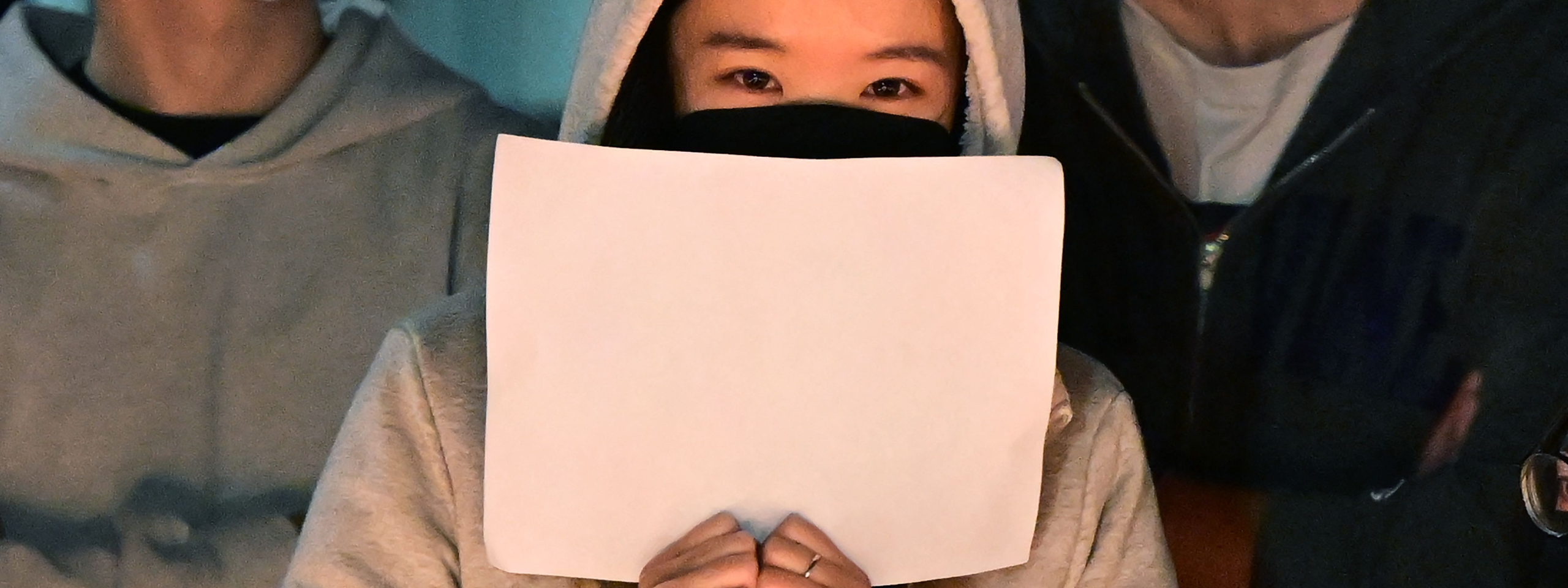
A woman holds up a blank sheet of paper during a demonstration against China’s strict COVID-19 lockdown measures following the deadly apartment fire in Urumqi, Xinjiang. (Photo by Frederic J. BROWN / AFP via Getty Images)
Democracy activists often face arrest, exile, harassment, or retaliation against their families. This essay explains why NED protects sensitive information about grantees, how that duty of care supports the people advancing freedom, and how NED balances discretion with accountability.
Imagine living in a place where a knock at the door in the middle of the night could mean imprisonment, or worse. This is the daily reality for countless democracy and human rights activists around the world. Their bravery makes their work not only meaningful, but also deeply consequential.
The National Endowment for Democracy (NED) supports those working to strengthen fundamental freedoms in transitional and fragile democracies, as well as those bravely advancing freedom in closed societies. Our grantmaking focuses on the building blocks of democratic life—free elections, independent media, and the freedoms of association, speech, and belief. Just as important, however, is our responsibility to protect the individuals who make that work possible.
This primer offers an overview of why NED carefully manages information about its grantees, including what is shared publicly, what is provided to Congressional oversight bodies, and how discretion underpins the safety and viability of those we support. Activists face vastly different risks depending on their location, visibility, and the tactics of the regimes they confront. Supporting democracy means protecting those who fight for it, including respecting their choices about public visibility to ensure their safety.
Why Public Exposure Can Be Dangerous
Speaking out in many parts of the world can mean risking arrest, exile, or death. According to Freedom House, only about one in five countries around the world is rated “free,” while The Economist’s Intelligence Unit has found that only 25 countries today qualify as full democracies. For the vast majority living under authoritarian or hybrid regimes, even symbolic acts of dissent, like holding up a blank piece of paper, can lead to life-disrupting consequences.
Authoritarian regimes understand the power of dissent and the threat posed by those who dare to speak. That’s why they’ve developed increasingly sophisticated methods to target activists, journalists, human rights lawyers, and civil society leaders, both inside their borders and abroad. Their reach extends across continents, threatening those in exile through transnational repression and those at home through direct prosecution.
The following stories from grantees illustrate why NED’s approach to protection must adapt to the risks posed by both transnational repression and direct prosecution.
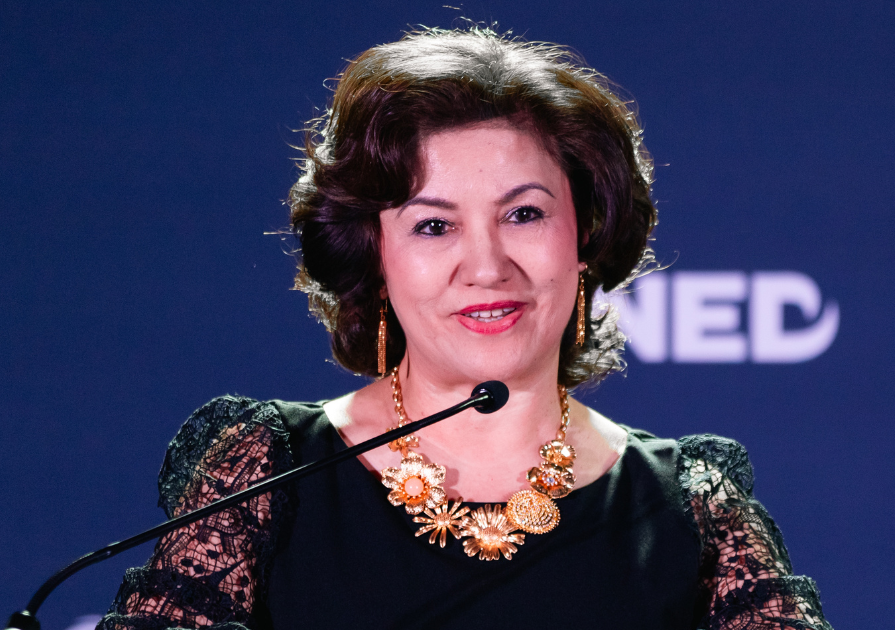
Rushan Abbas at the 2025 Democracy Awards. (Photo: M.K. Mindful Media)
Case Study: Rushan Abbas and the CCP’s Hostage Diplomacy
Rushan Abbas, founder of Campaign for Uyghurs and a NED grantee, gave her first public speech about China’s abuses in Xinjiang in 2018. Her husband’s entire family had already vanished in the 2017 crackdown. Just six days after her speech, her sister, Dr. Gulshan Abbas, a retired medical doctor with no political ties, also disappeared.
“She was being targeted because of my advocacy,” Abbas said. “Every day I wake up with her eyes in my mind. Of course, I feel guilty. Speaking out in the United States as an American citizen cost my sister her freedom.”
To this day, Dr. Gulshan Abbas remains missing in China’s vast detention system—her only ”crime” being related to someone who exposed the CCP’s abuses. This brutal form of hostage diplomacy forces exiled activists into an impossible choice: stay silent or risk their loved ones’ safety.
Case Study: Natalia Arno and the Kremlin’s Transnational Reach
Natalia Arno (Photo by THOMAS SAMSON/AFP via Getty Images)
Natalia Arno, president of the Free Russia Foundation and a longtime NED partner, was forced into exile from Russia in 2012. Since then, she’s been a leading voice in exile activism, advocating for political prisoners, supporting democratic leaders, and coordinating programs to hold the Putin regime accountable.
But in May 2023, after a private event in Prague, she returned to her hotel to find the door ajar and a strange scent inside the room. Hours later, she experienced numbness, pain, and blurred vision. Doctors in Washington, D.C. confirmed exposure to nerve toxins.
“I never could have believed the scale and brazenness and how long the Kremlin tentacles are into the West,” she said. Despite years of surveillance and intimidation, Arno continues her work. “You could lose your life,” she said, listing examples of poisoned, tortured, and murdered activists. “I have been in this game for 20 years, and I can write a book about all the kinds of attacks against me in Russia.”
Activism in Exile and Under Authoritarian Rule
Authoritarian regimes target democracy advocates in two primary ways. Activists working inside authoritarian states face direct repression: denial of employment, education or housing to surveillance, interrogation, imprisonment, or death. Activists living in exile, such as members of the diaspora, confront transnational repression: intimidation, harassment, cyberattacks, and retaliation against relatives still living under dictatorship.
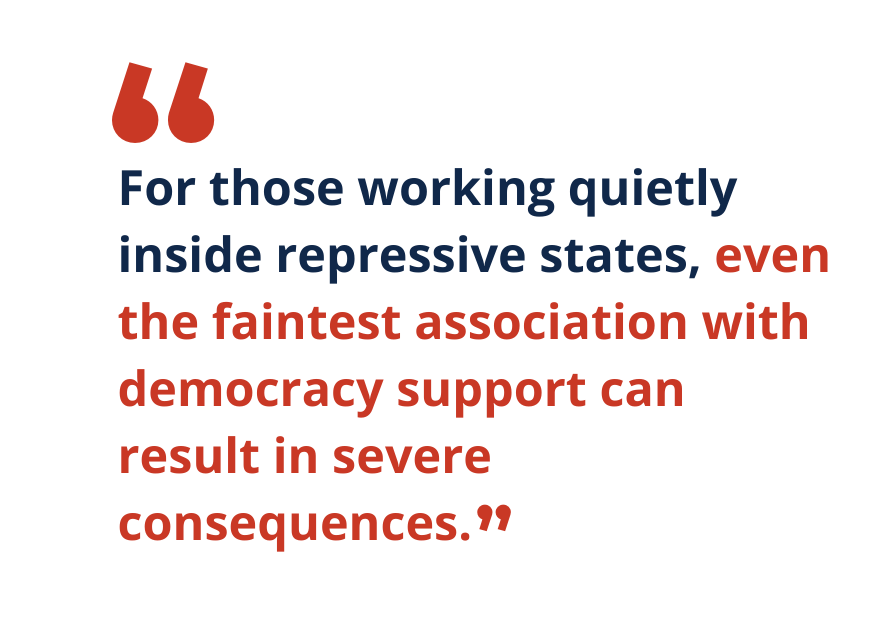
While both forms of courage are vital to the cause of freedom, they require different kinds of protection. For activists in exile like Abbas and Arno, visibility can be both a tool and a vulnerability—they use their public platforms to build international support while enduring harassment and threats from afar. For those working quietly inside repressive states, even the faintest association with democracy support can result in severe consequences. NED’s Duty of Care and Do-Not-Disclose policies reflect this spectrum of risk, providing flexible protections appropriate to different contexts, roles, and levels of exposure.
Visibility and Risk in Democracy Activism
Activists face difficult decisions about how visible they can afford to be. For some who live in exile, like Abbas and Arno, activism is essential to raising awareness and building international support. As public figures in free societies, they can testify before lawmakers, engage journalists, and speak on behalf of silenced communities. But even in freedom, visibility comes with the danger of transnational repression.
Abbas has faced smear campaigns, online harassment, and death threats requiring FBI involvement. Her family in China has been targeted. “Those kinds of things actually became so normal because we face this almost weekly or monthly,” she said. “And we just laugh at it and take it as the impact of our work.”
Arno’s risks didn’t end after fleeing Russia. “Being in NATO or EU countries doesn’t save us from this huge Kremlin machine,” she said. “Surveillance is still huge, cyberattacks are huge, but also physical attacks.”
These cases illustrate the first front of transnational repression: authoritarian regimes projecting power beyond their borders to intimidate, threaten, or attack critics abroad.
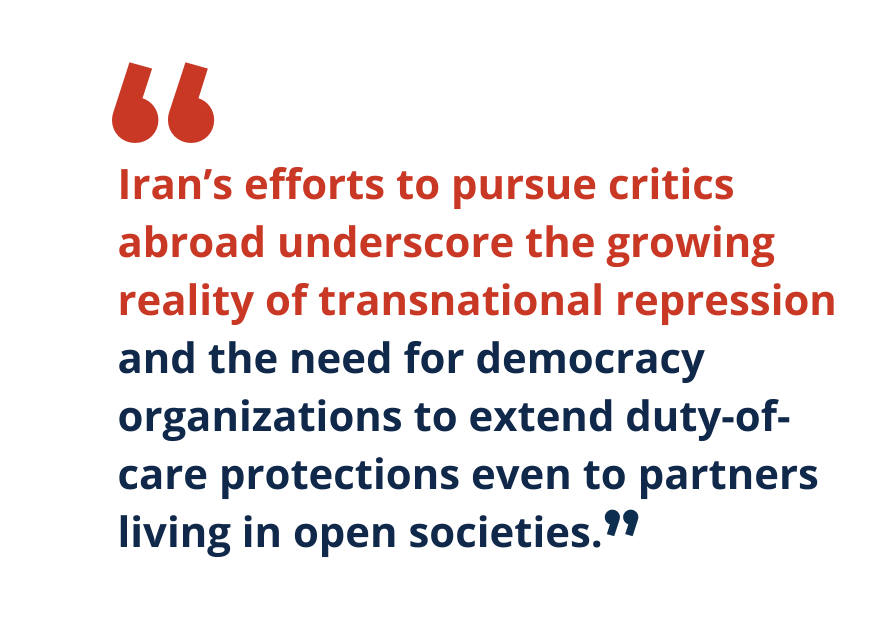
Iran has become one of the clearest examples of how far authoritarian regimes are willing to go to silence dissent beyond their borders. Iranian democracy activists, journalists, and human rights defenders living in exile have faced kidnapping plots, assassination attempts, surveillance, and harassment across Europe and North America. Multiple Western governments have linked Iranian intelligence services to plots targeting exiled dissidents, leading to disrupted operations, criminal prosecutions, and sanctions. Iran’s efforts to pursue critics abroad underscore the growing reality of transnational repression and the need for democracy organizations to extend duty-of-care protections even to partners living in open societies.
At the same time, this external pressure is inseparable from the repression activists face at home. For those still inside authoritarian states, the threat is direct and unrelenting. These activists continue their work at great personal risk, operating under surveillance, harassment, and the constant threat of arrest or imprisonment while pushing for democratic change.
In response to these dangers, many activists adopt a lower profile. How public they are in their work is an intentional choice to protect themselves, their families, and their networks from retaliation. While the steps they take to remain safe in authoritarian environments may mean their activism lacks the visibility of public campaigns, it is no less vital. Activists in authoritarian environments take great risks to build the infrastructure of democracy movements—documenting abuses, organizing communities, and informing international action.
In China, the Chinese government has systematically stigmatized international democracy funding. Even tenuous connections to external support and collaboration can carry severe consequences. As one activist working with international human rights and democracy organizations explained, “Me, myself, my family members, were interrogated by police officers in China.” Others have been detained and prosecuted for similar work. The Chinese government has also targeted the family members of human rights defenders in an effort to deter continued activism.
As a result, discretion is essential. “We prefer NED to not mention our names publicly,” the activist said, “in order to protect staff members and board members and even former colleagues, former members, and our families.”
Public activism draws global attention and builds coalitions, but it also brings heightened risk. Regimes often target public figures to intimidate or silence them—and to send a warning to others.
Activism that seeks to engage in quieter and less confrontational forms of engagement, by contrast, can provide greater security and sustainability, particularly in repressive settings. “While of course it’s much more dangerous for those activists who are inside Russia to speak out,” one Russian activist explained, “it’s much safer for those working in exile and most continue their work quietly.”
Human rights work in authoritarian environments demands different operational and political strategies. While the work often seeks to expose gross human rights abuses and expose corrupt networks, the ability to gather and verify the information requires close cooperation between groups that are in exile and networks that are in country.
In Tibet, NED-supported partners have documented China’s campaign to erase Tibetan identity through colonial-style boarding schools. In Venezuela and Cuba, investigative journalists have exposed corruption and human rights violations while keeping low profiles to stay safe. While international and exile organizations are often the face of the work, the networks on the ground are equally essential to what they achieve.
As Arno put it, “People are our biggest value, our biggest treasure. When activists are facing such dangerous things like imprisonment, torture, murder, we have to protect them with all possible measures.”
Supporting Activists Safely and Effectively
Since its founding in 1983, NED has supported democracy activists and citizen leaders—whether operating in exile or inside closed societies—to advance human rights and democratic values in some of the world’s most repressive contexts. NED’s Founding Statement of Principles and Objectives notes that in “societies where even [these] independent institutions are prohibited or severely restricted, the immediate objective is to enlarge whatever possibilities exist for independent thought, expression, and cultural activity. … [The Endowment] will not neglect those who keep alive the flame of freedom in closed societies.”
As a congressionally mandated independent nonprofit, NED was designed to provide support to its partners in a way that is impactful, secure, and accountable. Few donors are structured to do this work with the same level of care and discretion, which is why frontline democracy advocates consistently place their trust in NED.
Key to NED’s approach is the principle of protection through discretion. As NED’s Board of Directors approve grantmaking strategy and individual projects, the identifying details of grantees are made available to them. However, we avoid public disclosures that could expose partners to government reprisal. This is not only an ethical commitment—it is a key operating principle rooted in NED’s Duty of Care and Public Disclosure Policies, which obligates the organization to do no harm.
Without this policy of protection, many activists could not safely engage with international support. “It’s very difficult to build reputation and trust” one democracy activist said. “How you treat your grantees, with special care and understanding of the particularities of each region, should be the gold standard that all donors take as an example.”
NED’s Approach to Public Disclosure of Grantees
NED publishes listings of its current grantees twice a year on its website and includes a comprehensive listing of grantees in its annual report, complete with grant descriptions, grant amounts, and grant durations, organized by country and region. However, we do not publicly disclose personally identifiable information in these listings to avoid placing individuals at risk, now or in the future.
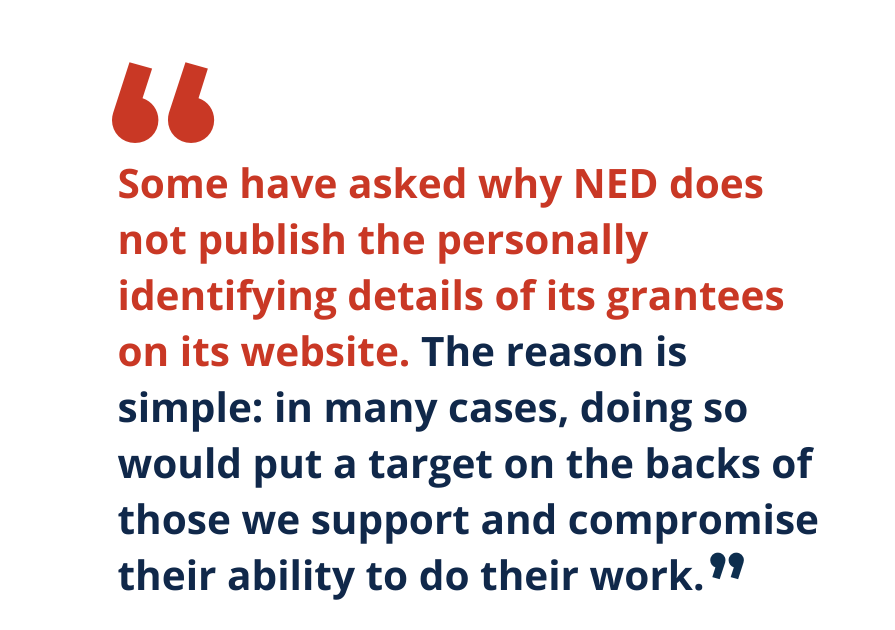
Some have asked why NED does not publish the personally identifying details of its grantees on its website. The reason is simple: in many cases, doing so would put a target on the backs of those we support and compromise their ability to do their work.
NED’s Duty of Care and Public Disclosure policies seek to balance the ability of our partners to operate as freely and securely as possible with our transparency requirements. At the same time, our relationship with our grantees is fully transparent. Organizations must take the initiative themselves to seek support from the Endowment. They know who we are, where our funds come from, and the values that guide our support. Activists seek out NED’s assistance precisely because it is open, accountable, and trusted.
NED respects the agency of its grantees to decide whether it is safe to publicly disclose their relationship with NED. Organizations regularly and proudly share their partnership with NED as a mark of credibility and support. Others, particularly those operating in hostile environments, often request confidentiality to safeguard their security and effectiveness. In all cases, NED ensures our partners are aware of our policies and procedures so that they can make informed decisions about their own public posture.
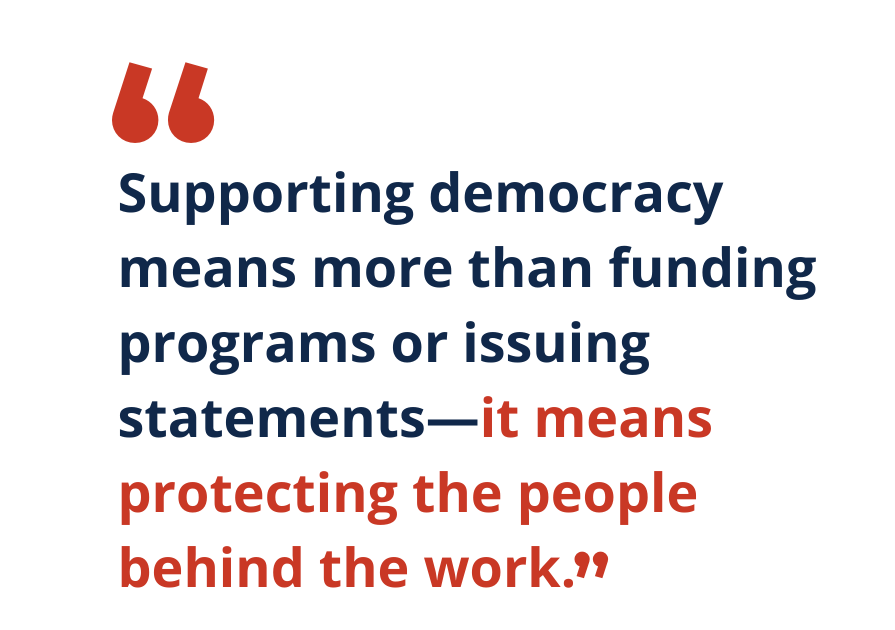
This approach is an ethical obligation as much as it is a matter of organizational policy. We know about the persecution of Uyghurs and underground Christians in China, the protests in Cuba and Iran, the continued repression in Belarus and Nicaragua, and human rights abuses in Burma and North Korea because courageous individuals risk their lives to report them. Supporting democracy means more than funding programs or issuing statements—it means protecting the people behind the work.
With that responsibility comes a duty: to minimize risk, not add to it through careless exposure. In a world where authoritarian regimes are increasingly sophisticated, coordinated, and ruthless in targeting dissent, discretion becomes an essential safeguard.
Transparency and Accountability
Even as NED protects grantee confidentiality in public settings, it maintains rigorous transparency and accountability to the NED Board, Congress, and U.S. oversight bodies. The NED Board reviews and approves both grantmaking strategy and individual grants. As outlined in our Duty of Care, we submit comprehensive annual plans and updates to congressional committees that outline our strategy and grantmaking priorities. We maintain active communication with Members and their staff, respond promptly to official requests for information, and create opportunities for elected officials to engage directly with our grantees—both in Washington and abroad—to better understand the real-world impact of NED-supported efforts. We likewise provide an annual report to the executive branch as a formal accounting of our work, priorities, and impact. NED consults regularly with representatives of the legislative and executive branches on our work, both in Washington and in the field, and responds to Freedom of Information Act information requests.
NED upholds strict due diligence and financial oversight procedures to ensure that resources are used responsibly and for their intended purpose. Our grantmaking is governed by the standards of all federal spending, with clear agreements, financial reporting requirements, and independent audits to ensure funds are used for their intended purpose.
In addition, the Endowment is subject to comprehensive oversight, including Government Accountability Office (GAO) investigations, State Department Inspector General reviews, and annual independent audits.
By combining discretion abroad with transparency at home, NED fulfills its dual responsibility: protecting those who advance freedom in repressive environments while remaining transparent and accountable. As authoritarian threats grow more complex and far-reaching, we will continue strengthening our Duty of Care so those who defend democracy can pursue their work safely, effectively, and with confidence in the support behind them.
The 24thedition of the Geneva International Film Festival and Forum on Human Rights (FIFDH) took place in Geneva from 6-15 March 2026. The Right Livelihood team attended several screenings and debates and shared the experience in this text.
Ellynn Del Perugia, Administrative Officer, wrote on 26 March 2026 about this:
Each year, the FIFDH offers the opportunity to watch documentaries and movies from all corners of the world. Some echoed the work and values of Right Livelihood Laureates or the proposals currently under research, others expanded our understanding of the broader human rights landscape.
More than providing an opportunity to learn, these films act as living memories and testimonies. They make public what power would prefer to keep hidden. In some cases, placing a camera in someone’s hands becomes an act of resistance in itself. As 2024 Laureate Issa Amro did when he initiated a camera distribution project in Hebron, Palestine, to document and collect video evidence of abuses and injustices committed by Israeli settlers and the military against Palestinians.
The festival opened with “A Fox Under a Pink Moon”, which won the Grand Award of the festival. This self-portrait follows a 16-year-old Afghan artist as she attempts to escape multiple forms of violence in Iran and join her mother in Austria, using her mobile phone as both a tool of survival and a means of artistic expression.
Over the following days, the programme moved across different geographies and contexts: Argentina grappling with fifty years of memory since the dictatorship in the documentary “Identidad”; China’s expanding surveillance state and its repression of the Uyghur population, in “Eyes of the Machine”; Pakistan’s environmental and human crisis in “Black Water”; and the fragile future of multilateralism explored in “Solidarity” alongside a debate on the future of International Geneva. The latter raised important questions for Right Livelihood, which uses international platforms to support the Laureates. Are we witnessing the end of a rules-based international order? And if so, what replaces it? An order based purely on the interests of the most powerful? What would a future without International Geneva look like?
Across these very different stories and regions, one theme kept returning: the suppression of memory as a tool of power. “Identidad” follows one man’s quest to rediscover his origins and identity. The documentary explores the importance of remembrance in countering the erasure of memory, a tactic often employed by repressive governments to conceal their own crimes.
“Eyes of the Machine” raises a similar question, documenting the silencing of the Uyghur population’s culture, language and collective memory. Here too, some individuals have chosen to keep these memories alive and share their stories, often at great personal risk.
This is something we recognise deeply at Right Livelihood. The Laureates we support are often people who choose to speak, act and organise in contexts where doing so comes at great personal cost.
Held alongside the 61st session of the Human Rights Council, several Laureates and partners present in Geneva also participated in this festival. It is difficult to leave these films feeling indifferent. They unsettle, as they should. They raise questions about the direction of the world and the future that lies ahead. But they also remind us that memory, when kept alive, can be a form of hope.
A blog post by Matilde Da Luz on 18 March 2026 of Columbia University is not directly related to human rights defenders but so interesting that it is reproduced here in full:
By now, most women recognize the script. Raise a point about sexism, feminism, or gender equality and the response is often predictable. You are “angry.” You are “too woke.” You have, somehow, made things awkward. The figure of the angry feminist woman has become so familiar that it no longer feels like an accusation so much as a reflex – a shorthand for dismissing political discomfort without engaging it. You become labelled, often unconsciously, as the “killjoy.”
What is striking is that this stereotype persists at a moment when anger is hardly in short supply. Much of it belongs to men, and is increasingly confident, public, and political. It circulates online, where terms like incel and manosphere emerge in everyday vocabulary. It is surfacing in dating culture, classrooms, and family conversations, where feminism is framed less as a demand for equality than as a provocation. And it is showing up in electoral politics.
According to a recent study that analyzed the 2024 European Parliament elections, more than 21 percent of young men aged 18–29 voted for far-right parties, compared to around 14 percent of young women. This marks one of the clearest gender gaps in far-right support among younger voters across Europe. The more interesting question, then, is not why women continue to be frustrated by patriarchy, but why so many young men appear increasingly angry – and why that anger seems to be so easily mobilized by populist language.
These questions matter since they sit at the intersection of two developments that have often been discussed separately: the rise of far-right populism and the growing difficulty of human rights discourse in reaching young men. Analysts tend to explain young men’s support for the far right through conditions such as economic anxiety, cultural backlash, or online radicalization. However, while these explanations are not wrong, they often miss something central. Far-right populism offers, very compellingly, a way of making grievance feel politically intelligible. At the same time, the language of human rights, which is ostensibly universal, egalitarian, and moral, consistently fails to resonate with this same group. Why is that?
Put differently: why do young men gravitate toward far-right populism, and why does human rights language so often fail to reach them? In truth, populism’s success and human rights’ struggle with this demographic turn out to be two sides of the same affective and gendered coin.
Far-right populism works, in part, because it is emotionally economical. It is successful in offering a pretty clear story about who has been wronged and who is to blame. So-called “ordinary people” are portrayed as betrayed by the elites and threatened by outsiders, which usually results in a moral landscape drawn in bold lines. Hence, politics becomes a struggle between betrayal and redemption, insiders and outsiders, rescue and decline. Interestingly enough, the subject at the center of this story is often presented as implicitly masculine: the sidelined worker, the disrespected citizen, the young man who feels displaced by feminism, multiculturalism, or economic change.
The appeal here, instead of ideological, is primarily affective. Populist narratives do not ask people to manage resentment, or to adapt their anger into appropriate language or tone. Instead, they expertly validate it. Woundedness is treated as evidence that something is wrong, and the emotion can no longer be overcome. Consequently, anger becomes legible, even reasonable.
The manosphere provides the perfect illustration of how this emotional logic can take shape well before it reaches the ballot box. These online spaces are frequented by men who successfully reframe their personal frustrations into a collective grievance of sorts. Incel culture, in particular, offers men a way to interpret loneliness, rejection, or economic insecurity as structural and systemic injustices that are, in turn, blamed on women and feminism. The appeal lies, then, in the comfort of certainty – the reassurance that their frustrations have an identifiable cause.
This anger, however, is also material. Masculinity has long been bound up with material arrangements that once offered stability and recognition, especially waged labor. As these arrangements erode, insecurity is no longer experienced only as an economic loss. Rather, it becomes existential. When economic institutions no longer sustain the forms of masculine authority they once did, insecurity is lived as a disruption of gendered meaning which, in turn, produces an affective opening for populist recruitment. Loss demands explanation, and far-right populism is efficient at providing one.
Human rights discourse, on the other hand, speaks in a very different register. It tends to be careful, professionalized, and abstract, emphasizing universality, dignity, and legal principle. It often assumes a rational subject – someone capable of setting aside their own personal grievances in favor of universal principles. In fact, contemporary human rights talk has increasingly framed itself as a project of restraint, focused on preventing the worst harms rather than focusing on articulating a substantive vision of justice.
Arguably, human rights language can be emotionally compelling for those already disposed toward empathy. The difficulty is that, in a political moment marked by an erosion of empathy and an intensification of hostility – increasingly directed at women and feminism – this association can have the opposite effect. In truth, human rights discourse is often perceived by young men as “feminized”, not because of its commitments to gender equality, but because of its association to empathy, vulnerability, protection and care – traits that patriarchal orders frequently characterize as feminine. This can further alienate young men who already feel dismissed, blamed, or morally lectured.
The contrast is, therefore, stark. At the same time that populism validates and valorizes woundedness, human rights seek to neutralize it. In this sense, populism animates emotional life, whereas human rights assume a rational subject who is willing to rise above it. For young men whose political identities are boomingly shaped by feelings of loss and displacement, far-right populism feels personal. Human rights feel procedural.
This does not mean that human rights lack emotional appeal. Contrarily, humanitarian campaigns have long relied on images of suffering to mobilize concern. But these appeals typically work through pity rather than grievance, and compassion rather than anger. They usually frame people as victims in need of protection, not as political subjects whose injuries demand some sort of structural change, much like populists do. In a political moment increasingly organized around resentment, this framing can feel misaligned.
This dynamic essentially reshapes the terrain of political identification itself. As grievance grows more consistently recognized and organized through populist frames, hostility toward feminism is structurally reinforced, and, at the same time, equality is emergently experienced by young men as loss. In this context, human rights struggles to appear as a credible site of recognition in a political scene where belonging is produced through exclusionary ideologies.
Within these circumstances, deeper questions arise. If contemporary politics is increasingly organized through fear, anger, and the pleasures of moral certainty, what kind of ethical and political subject can human rights still presume, and cultivate? In other words, in a world where resentment so efficiently creates “the people,” how can empathy win without becoming naïve, moralizing, or politically empty?
The Right Livelihood Foundation and partners have gone into the problems faced by Human Rights Defenders in exile:
Leaving your country means more than crossing a border. It means stepping into uncertainty, a place where language falters, futures blur and belonging must be rebuilt. But exile can also open doors. It can broaden perspectives, forge new alliances and inspire people to rebuild on their own terms.
Through the project “Reconceptualising exile”, Right Livelihood together with theGlobal Campus of Human Rights, work with a group of 14 fellows living in exile to rebuild life, regain identity and purpose while the ground they left behind remains too dangerous to return to. This visual story challenges what you think exile means. It invites you to see how it feels and how people rebuild from fragments, carrying language, memory and conviction across borders.
What forces someone into exile? Behind those numbers are real people punished for what they believe in:
For Natallia Satsunkevich, a human rights defender from Belarus, it was fighting for democracy in the face of the dictatorship.
For Viacheslav (Slava) Samonov, a Russian lawyer and LGBTQ+ activist, the dissolution of his NGO amid the post-invasion crackdown and the rapidly escalating repression against LGBTQ+ people.
For Askold Kurov, a Russian documentary filmmaker, it was promoting free media and LGBTQ+ rights.
For Helen Mack Chang, it was challenging the rampant corruption in Guatemala.
For Abdul Rahman Yasa, it was standing up for human rights, women’s issues and youth advocacy under the Taliban.
The purpose of Front Line Defenders Rest & Respite Programme is to enable human rights defenders to take some time out and to recharge their batteries in a safe environment while at the same time enhancing their skills so that they can work more effectively when they return home.
The programme has a flexible approach and tries to respond to the needs of the HRD. Some human rights defenders are hosted in Ireland, others choose a destination closer to home, where they have a particular interest or existing contacts. It is generally for short stays ranging from one week to three months.
Human rights defenders can take some well-earned rest and escape the stressful and difficult circumstances in which they work for a short time. They can focus exclusively on their health and well-being or spend some quality time with their family. They can also choose to work on a specific project, learn about digital security or improve other skills relevant to their work.
Rest & Respite opportunities are offered on an invitation-only basis.
“This programme is great for women human rights activists who have been subjected to stressful, tense and often dangerous and threatening situations in their work.“ – HRD, Afghanistan, Rest & Respite Programme
“Before the support, I had serious burnout caused by the stress from my work, especially from a domestic violence case I was working on when I was attacked and my computer and phones taken. I had a constant headache and was very stressed, but I’m feeling well again and am back to work.“ – HRD, Cameroon, Rest & Respite Programme
My ordeal started at about 2am one morning in February 2018, when I was arrested by the Greek police. People were fleeing conflicts at home and coming to Europe seeking safety in unseaworthy boats and I was helping the Emergency Response Center International to conduct search and rescue activities.
I was detained without understanding what exactly was happening; we were provided neither a lawyer nor an interpreter. After two nights, we were released “pending further investigation.” We continued to do search and rescue. After all, we had done nothing wrong. In fact, we continued to cooperate with the very authorities that had arrested us.
Then, in August 2018, six months after our initial arrest, my colleague and I were detained again. This time, we were charged with serious crimes, including forgery, the illegal use of radio frequencies, espionage, money laundering, being members of a criminal organization, and facilitating illegal entry….Finally, on 15 January this year, I was acquitted. The prosecutor at trial stated there was no evidence of criminality, and the panel of judges unanimously agreed that my 23 co-defendants and I were motivated by, and engaged in, legal humanitarianism.
Whilst I am delighted not to be returning to prison, it has taken far too long for this absurd prosecution to collapse. In the interim, the damage has already been done. EU states’ authorities have obstructed civilian rescue efforts, and over 32,000 lives have been lost at Europe’s borders since 2014. Meanwhile, dozens of humanitarians across Europe face similar prosecutions, obstruction, intimidation and harassment. Sadly, my case was not the exception but part of a wider pattern of states criminalizing humanitarian work.
The current effort to reform EU anti-smuggling legislation, the so-called “Facilitators Package” offers an opportunity to address some of the issues that have led to our baseless prosecution. However, the proposed revisions to the legislation might inadvertently increase the risk of criminalizing rescue workers – meaning future prosecutions will still be possible and may not end in acquittals like mine. They will also impact migrants, people of migrant origin and racialized people who all too often suffer from these policies.
As Amnesty International has highlighted, the proposal’s broad and vague provisions risk perpetuating the criminalization of refugees, migrants and human rights defenders. Any reform should clarify explicitly and in a binding manner that acts of humanitarian assistance or solidarity should be exempted from prosecution or punishment. Migrants who may have been smuggled themselves, or people assisting their family members should also be protected from criminal liability.
Through this reform, the EU has an opportunity to align with the EU Charter, UN Conventions and Smuggling Protocols, and treaties on maritime search and rescue, and to explicitly protect the right to life, the right to seek asylum, and the duty to render assistance.
As it stands, the proposal tries to expand the avenues to pursue humanitarian workers by introducing the crime of “public instigation” of irregular migration. This vague new provision could be misconstrued to harm refugees and migrants, advocates and activists protesting unjust migration laws or professionals providing legal information or assistance.
Prosecutors should focus on exploitation and violence, including by authorities summarily force people across land or sea borders.
Last year, the European Court of Human Rights found “serious evidence” of systematic pushbacks in Greece. Evidence of similar practices has been mounting across European borders. Without border monitoring, this already opaque crime becomes ever more obscure. Finally, trafficking, another cross-border crime, is arguably exacerbated by EU policy. A UN report published in 2018 found that asylum seekers in Libya face “unlawful killings, torture, arbitrary detention, gang rape, slavery, forced labour and extortion,” with apparent complicity by State actors. Nevertheless, the EU has for years financed the so-called Libyan Coast Guard.
Whether in the Facilitators Package or in its wider border policies, the EU must respect the rule of law and human rights.
The way to stop people taking dangerous journeys is providing safe and legal pathways for protection, commensurate in scale with the need for protection, and channels for regular migration for those seeking a better life. By denying safe routes, the EU pushes people into the arms and boats of smugglers and traffickers.
All the while, EU laws and narratives on stopping smugglers continue being used to criminalize migrants and people doing what they can to save lives or offer assistance. Unless the reform of the Facilitators package takes serious steps to uphold the duty to rescue and defend humanitarians, people will continue to risk jail for doing what is normal, human behaviour: helping others at risk.
Watch Seán as he discusses his case, his reflections and hopes for the future.
Listen to Séan’s full story in the first season of Amnesty’s podcast ‘On the Side of Humanity’.

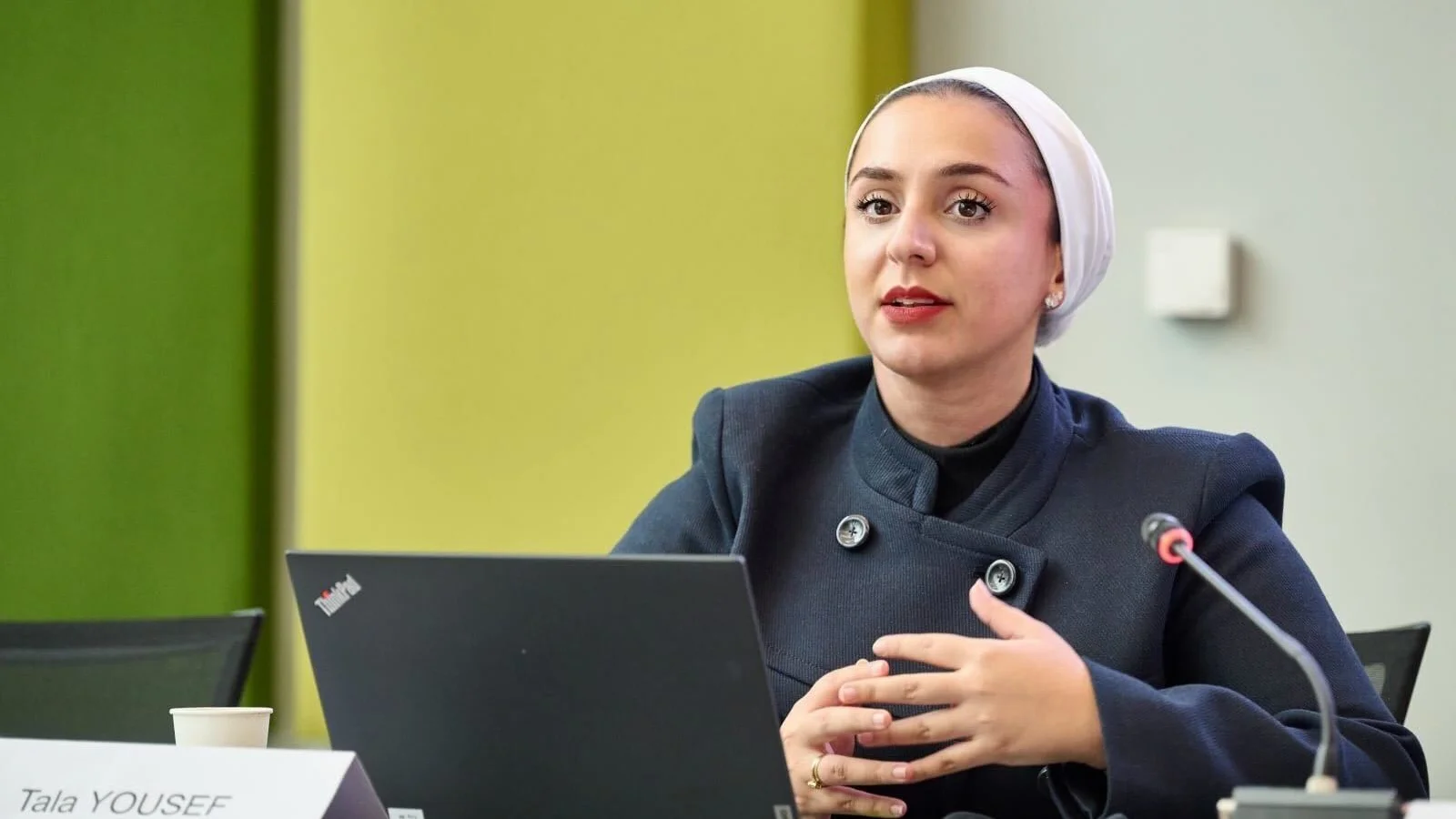
 Outside of working on furthering human rights at the UN, Tala Odeh is a co-founder of the NAMA Network, which helps young people across the Middle East and North Africa defend rights and build peace.



 Hans Thoolen on Human Rights Defenders and their awards