Author Archive

ART and HUMAN RIGHTS 2025- minority artists

January 9, 2026

“Art was my existence, my life. Without it, maybe I wouldn’t have survived,” said Kheder Abdulkarim, a Kurdish-Syrian artist based in Germany and former political prisoner, whose work is inspired by his experience of persecution and erasure. He received an honourable mention at the 4th edition of the International Contest for Minority Artists.

The Contest is an initiative organized jointly by UN Human Rights, Freemuse, Minority Rights Group and the City of Geneva. Since 2024, the contest is also supported by the Centre des Arts of the International School of Geneva, the Loterie Romande, as well as by other donors who prefer to remain anonymous.

Each year, the Contest celebrates minority artists whose work bears witness to struggles for dignity, justice and visibility, forming a cornerstone of UN Human Rights’ efforts to uplift artists as human rights defenders.

The 2025 theme — Belonging, Place and Loss — resonated profoundly with artists around the world whose identities have been shaped by displacement, environmental devastation, structural racism, and generational trauma, generating more than 240 submissions this year.

At the award ceremony, UN Deputy High Commissioner for Human Rights, Nada Al-Nashif, reminded the audience of what minority artists reveal to societies.

“Tonight, we celebrate eight minority artists honoured in this edition, the power of art and the vital contribution that minority artists make as they shine a light on human rights struggles across the globe, stories and images that unite and anchor us in a shared humanity,” she said.

Art can be a human rights language, and a catalyst for positive change in societies which may seek to silence minority voices. Claude Cahn, human rights officer at UN Human Rights’ Indigenous Peoples and Minorities Section

For many laureates, art is the only archive that survives war, the only place where memory can remain intact.

Alia Al-Saadi is a Palestinian Syrian dancer and choreographer born a third-generation refugee in Yarmouk Camp, and one of the laureates of the contest’s 4th edition.

Her performances turn the body into an “archive of destruction,” she said, and “a state of psychological numbness, where prolonged exposure to violence renders shock ineffective.” 

A woman performs a dance pose on a rooftop, lifting one leg high while leaning sideways. She wears a light top and green shirt. Behind her are beige stone buildings, satellite dishes and metal structures under bright sunlight.

Alia Al-Saadi, a Palestinian-Syrian dancer exploring exile, memory and the body as archive. ©Alia Al-Saadi

Abubakar Moaz, a Sudanese visual artist based in Kenya, won honourable mention and said his visual language emerged from conflict in the Blue Nile and exile in Nairobi.

A large painting shows a figure in red against turquoise and beige tones. Painted sandal shapes hang from strings in front of the canvas, with several placed on the floor. A potted plant stands to the right in a bright gallery space.

Abdulkarim, imprisoned for nearly six years in the infamous Saydnaya Prison in Damascus, began sculpting there with scraps of vegetable crates. “I lost seven years of my life,” he said. “But I try to produce something from those years, to rebuild them and more.” 

An abstract painting features a textured brown figure with outstretched arms surrounded by white, ghostlike silhouettes. Black, white and gray fields with a pale circular form create a distressed, expressive atmosphere.

Emanoel Saravá, an Afro-Indigenous Brazilian visual and photo-performance artist, winner of an honourable mention, treats water as an archive of Black and peripheral suffering through their project Águas Marginais.

A person stands in front of the camera, extending his arms and clasping his hands together. Their wet skin glistens, and they wear a necklace and patterned shorts. A weathered wall with graffiti appears behind them.

“The waters carry the memory of Black and peripheral communities, but they also bear the scars of environmental racism, climate change and neglect,” Saravá said.

Sead Kazanxhiu, a Roma political artist from Albania and laureate of the 4th edition, rejects narratives that reduce Roma communities to victimhood.

A large mosaic on a public building façade depicts figures marching forward with tools, instruments and a red flag. The golden-toned mural spans the top of a stone structure under a clear blue sky.

The Nest”, installation, wood, metallic wire, polyurethane foam and paint by Sead Kazanxhiu, a Roma visual artist whose public installations confront exclusion and reclaim Roma presence. ©Sead Kazanxhiu

“We have been always treated as victims; with my work, I want somehow to change this narrative toward active citizenship with equal rights,” he said. 

https://www.ohchr.org/en/stories/2025/12/minority-artists-transform-loss-resistance-and-belonging
Turkey should drop charges against Istanbul Bar Association and …did so on 9 January

January 8, 2026

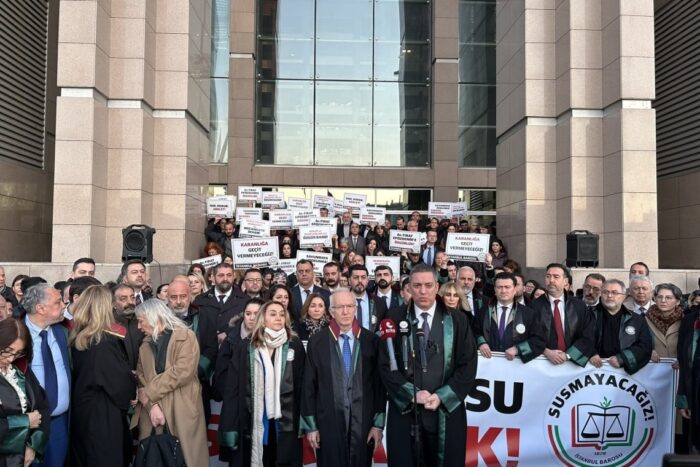
On 5 January 2026 the International Commission of Jurists and many other NGOs issued a joint statement calling on the authorities to immediately terminate the abusive criminal proceedings and drop charges ahead of the 26 Istanbul Heavy Penal Court’s expected final hearing scheduled for 5 to 9 January 2026.

photo_2025-09-10_13-41-27-700×467

The continued prosecution of the president and 10 executive board members of the Istanbul Bar Association, and the prosecutor’s request for their conviction on terrorism charges are a damning reflection of the troubled state of the rule of law and democratic norms in Turkey.

The prosecutor seeks the criminal conviction of all eleven members of the Bar’s elected leadership – President Prof. İbrahim Özden Kaboğlu, Ahmet Ergin, Bengisu Kadı Çavdar, Ekim Bilen Selimoğlu, Ezgi Şahin Yalvarici, Fırat Epözdemir, Hürrem Sönmez, Mehmedali Barış Beşli, Metin İriz, Rukiye Leyla Süren, and Yelde Koçak Urfa – on the charge of “spreading terrorist propaganda” under Article 7/2 of the Anti-Terrorism Law,  solely for issuing a public statement on 21 December 2024 concerning the killing of two journalists in northern Syria and the arrest of journalists and lawyers at a related peaceful protest in Istanbul the day before.

The trial prosecutor’s final opinion confirms and deepens the concerns raised by 56 international organisations in the joint statement of January 2025, condemning the initiation of criminal and civil proceedings against the Bar’s leadership, and in the April 2025 joint statement, which deplored the removal of the elected board and the escalating attacks on lawyers across Turkey. A group of the organisations also submitted a joint amicus curiae brief in which they concluded that the proceedings violate Turkey’s obligations under international human rights law and constitute an unjustified interference with the independence of the legal profession.

A clear misuse of criminal law

In his final opinion, the prosecutor alleges that by referring to the two individuals killed in Syria as journalists and by citing international humanitarian law applicable to the protection of civilians and media workers in conflict zones, the Bar leadership “treated as a war crime” an operation carried out by security forces, thereby intentionally legitimising and disseminating the ultimate separatist aims of the Kurdistan Workers’ Party (PKK). The prosecutor further asserts that describing those killed as journalists “encouraged” membership of the PKK and “made its methods appear legitimate”, amounting to “press and media–based terrorist propaganda” under Article 7/2 of the Anti-Terrorism Law.  These allegations, which claim that a lawful, rights-based statement consciously advanced the objectives of an armed organisation, are wholly unfounded and legally unsustainable.

As emphasised in both joint statements in January and April 2025 and the amicus curiae brief in September 2025, the Istanbul Bar Association has a statutory and ethical duty to speak out on violations of human rights and the rule of law. The prosecutor’s position effectively criminalises the Bar Association’s discharge of this duty protected under both domestic law and international human rights law and standards. The prosecutor’s construal of a legitimate exercise of the right to freedom of expression as a terrorism offence amounts to a misuse of criminal law and judicial harassment.

Violations of international standards and the Bar’s statutory mandate

International and regional human rights standards, including the UN Basic Principles on the Role of Lawyers, the Council of Europe Convention for the Protection of the Profession of Lawyer, and consistent jurisprudence of the European Court of Human Rights, affirm that lawyers and their associations must be able to engage in public debate on matters of justice and human rights without fear of reprisals.

Criminalising their exercise of the rights to freedom of expression and association contravenes the provisions of these instruments safeguarding the rights and role  of lawyers and their professional organisations, as well as Articles 10 and 11 of the European Convention on Human Rights, Articles 19 and 22 of the International Covenant on Civil and Political Rights, and Articles 26, 27 and 33 of the Constitution of Türkiye.

The criminal proceedings strike at the heart of the independence of the legal profession and amount to a misuse of counter-terrorism laws to silence criticism, suppress human rights monitoring, and undermine self-governance of bar associations.

Signatories (in alphabetical order):

Amnesty International

Center of Elaboration and Research on Democracy (CRED)

Council of Bars and Law Societies of Europe (Le Conseil des barreaux européens, CCBE)

Defense Commission of the Barcelona Bar Association (Spain)

Deutscher Anwaltverein (German Bar Association, Germany)

Eşit Haklar İçin İzleme Derneği (Association for Monitoring Equal Rights, Türkiye)

European Association of Lawyers for Democracy and World Human Rights (ELDH)

The European Criminal Bar Association (ECBA)

Fédération des Barreaux d’Europe (European Bars Federation, FBE)

Foundation Day of the Endangered Lawyer

Hak İnsiyatifi Derneği (Rights Initiative Association, Türkiye)

Hakikat Adalet Hafıza Merkezi (Truth Justice Memory Center, Türkiye)

Haldane Society of Socialist Lawyers (UK)

Human Rights Institute of the Brussels Bar (Belgium)

Human Rights Watch

İnsan Hakları Derneği (Human Rights Association, Türkiye)

The International Association of Democratic Lawyers (IADL)

International Bar Association’s Human Rights Institute (IBAHRI)

The International Commission of Jurists (ICJ)

International Federation for Human Rights (FIDH), within the framework of the Observatory for the Protection of Human Rights Defenders

Kaos GL Derneği (Kaos GL Association, Türkiye)

The Law Society of England and Wales (LSEW, UK)

Lawyers for Lawyers (Netherlands)

Lawyers’ Rights Watch Canada (LRWC, Canada)

Lyon Bar Association (France)

National Union of Peoples Lawyers (NUPL, Philippines)

PEN Norway (Norway)

Turkey Litigation Support Project (TLSP, UK)

Türkiye İnsan Hakları Vakfı (Human Rights Foundation of Turkey, Türkiye)

Vereinigung Demokratischer Jurist:innen VDJ (Association of Democratic Jurists, Germany)

World Organisation Against Torture (OMCT), within the framework of the Observatory for the Protection of Human Rights Defenders

Yurttaşlık Derneği (Citizens Assembly, Türkiye)

https://www.icj.org/turkey-drop-bogus-charges-against-istanbul-bar-association-leadership/

then on 9 January 2026 Amnesty stated “The decision to acquit the Istanbul Bar Association leadership of these unfounded charges is welcome news. This case was a clear misuse of criminal law and should never have been brought in the first place.” https://www.amnesty.org/en/latest/news/

Ugandan human rights lawyer Sarah Bireete detained ahead of elections

January 8, 2026

Sarah Bireete was arrested on December 30, 2025, after police and military personnel surrounded her home in Kampala. Shortly before her arrest, she posted on X, “My house is under siege by police and army”. As reported by East and Horn of Africa Election Observation Network (E-HORN) on 2 January 2026

The Police Reforms Working Group (PRWG) Kenya has called for the immediate release of Uganda’s human rights lawyer and civil society leader, Dr Sarah Bireete, warning that her detention ahead of the January elections threatens civic space and undermines democratic processes.

The Uganda Police confirmed her arrest in a brief social media post, stating she would be produced in court “in due course”. Police spokesperson Rachel Kawaala described the detention as part of “ongoing operations” but offered no further details.

“Dr Bireete is widely recognised for her unwavering passion for the protection of civil liberties, her lifelong quest for justice, and her steadfast commitment to democracy, a clarion call that has consistently advanced accountable governance across the region,” the Group said.

Bireete currently serves as Executive Director of the Centre for Constitutional Governance (CCG), Chairperson of the East Africa Civil Society Forum (EACSOF), and Chairperson of the Horn of Africa Election Observers Network (E-HORN).

PRWG Kenya described these roles as reflective of her integrity, credibility and long-standing contributions to human rights, electoral integrity and democratic governance.

The group urged Ugandan authorities to respect civil liberties, the rule of law and democratic processes.

“Respect for civil liberties, rule of law and democratic processes is fundamental to ensuring free, fair, and transparent elections,” PRWG Kenya said.

The statement also highlighted that Uganda’s constitution, under Article 23, guarantees that anyone arrested must be promptly informed of the reasons for their detention, a step that has not been followed in Dr Bireete’s case.

Bireete’s arrest follows her recent advocacy for Starlink, a satellite internet service operated by SpaceX, as a safeguard against potential internet shutdowns during the elections.

In a post dated December 23, 2025, she wrote, “Dear Ugandans, are you thinking of ways to navigate internet shutdown during elections? Starlink got you covered.”

https://eastleighvoice.co.ke/uganda/263965/rights-group-demands-release-of-ugandan-human-rights-lawyer-sarah-bireete?amp=1

As the country approaches general elections on 15 January 2026, UN experts* today warned that the pervasive climate of fear in Uganda, marked by allegations of enforced disappearance, the use of disproportionate force against political opposition supporters, and the intensified suppression of civil society and independent media, is not conducive to peaceful elections.

https://www.ohchr.org/en/press-releases/2026/01/uganda-un-experts-urge-stronger-human-rights-safeguards-ahead-2026-elections

https://www.hrw.org/news/2026/01/08/arrest-of-ugandan-activist-ahead-of-elections-spells-trouble

https://english.news.cn/20260118/c21ddafd3d1c4ca6964cd2d5270eddd8/c.html

https://eastleighvoice.co.ke/news/273392/un-rapporteur-publishes-letter-faulting-uganda-over-oyoo-njagi-abductions?amp=1

and

https://www.monitor.co.ug/uganda/news/national/activist-bireete-granted-bail-not-to-leave-uganda-without-court-s-permission-5340756

https://www.omct.org/en/resources/urgent-interventions/uganda-arbitrary-arrest-and-pre-trial-detention-of-eight-environmental-rights-defenders

and then on 28 January 2026: https://76crimes.com/2026/02/09/uganda-sarah-bireete-freed/

Call for applications for the 2026 Global South Fellowship programme

January 8, 2026

This opportunity allows human rights defenders to develop their projects and take part in an academic and cultural exchange in a safe space. Apply before January 21. Are you a human rights defender from a country in the Global South who must carry out your work in an emergency or high-risk context? Our fellowship program could offer you a calm and safe space to work; provide you with the opportunity to build bonds of solidarity and companionship; and exchange knowledge with our researchers on tools and strategies for action-oriented research.

We have six thematic lines and areas at Dejusticia to which you can apply.

If you believe your profile and needs are a good fit with our fellowship program, please check our terms and apply before January 21, 2026 (11:59 P.M., UTC-05:00).

We are looking for people with different profiles:

  1. Those who come from an emergency or high-risk context. An emergency or high-risk context may include any of the following:
    • The country/city where the fellow works is experiencing armed conflict, civil unrest, or is under an authoritarian government with an imminent threat to the individual security of the candidate.
    • The fellow and/or their organization has been the target of threats, intimidation, or populist propaganda that poses a risk to their human rights defense work or to their family’s safety.
    • The fellow or their organization has been excluded from funding due to government or private sector influence, or has been subjected to pressure aimed at obstructing the work of the individual/organization.
  2. Those who are at risk of burnout and are seeking a quiet place to continue working on human rights issues, but in a different context.
  3. Those who belong to human rights organizations in the Global South and wish to engage in exchanges and joint research or advocacy work with Dejusticia.
  4. Those who intend to build long-term relationships with other fellows and with Dejusticia. This ensures that our fellowships function as accelerating nodes for connections that will make the human rights movement more coordinated and generate greater impact.

What will fellows receive from Dejusticia?

Dejusticia will cover travel expenses (visa, airfare) and provide a monthly stipend based on the fellow’s profile and experience. While Dejusticia will provide initial support at the beginning of the process—including, during the first two weeks of work, a training space on amphibious research and on Dejusticia’s work—it is important to note that selected fellows will be responsible for managing their stipend to cover their housing, transportation, and food needs.

What will be the commitments of fellows from the Global South?

The fellow will allocate their time at Dejusticia as follows:

  • 65% to develop and implement work associated with a broader project of the host area/line.
  • 25% to continue supporting the work of their home organization remotely.
  • 10% to develop at least one blog post reflecting on their experience or work, to be published on Dejusticia’s Global Blog.

How to apply to the fellowship program

The call will be open until January 21, 2026

Dejusticia will cover travel expenses (visa, airfare) and provide a monthly stipend based on the fellow’s profile and experience. While Dejusticia will provide initial support at the beginning of the process, it is important to note that selected fellows will be responsible for managing their stipend to cover housing, transportation, and food needs. The program also includes one week of in-person training at Dejusticia on action-oriented research tools, writing, among others, as well as an organizational induction.

DOWNLOAD ALL THE INFORMATION TO APPLY HERE
FIND THE APPLICATION FORM HERE

Apply for ISHR’s 2026 training for defenders

January 7, 2026

Are you a human rights defender working on democratic backsliding and/or racial justice, keen to use the UN to push for change at home? If so, apply for the 2026 edition of ISHR’s flagship training, the Human Rights Defender Advocacy Programme (HRDAP)!

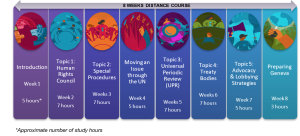
After a successful edition in 2025, ISHR is pleased to launch the new call for applications for the 2026 Human Rights Defender Advocacy Programme (HRDAP26), which will take place both remotely and in Geneva and will be focused on thematic and context area! Below are some important dates to consider before applying:

  • Mandatory distance learning course: 13 April – 8 June 2026 (part time)
  • In-person course in Geneva: 10- 20 June 2026 (full time)
  • Deadline to apply: 15 January 2026, midnight CET (Geneva Time)
  • Programme description with all related information can be downloaded here.
  • Application form can be found here.

What’s new for HRDAP 2026?

For the last 10 years, this flagship training has equipped human rights defenders with the knowledge and skills to integrate the UN human rights system into their existing work at the national level in a strategic manner. 

Following an external review of the programme in 2024, as well as to maximise impact and enhance follow-up, for 2026 the HRDAP selection criteria are evolving: they are based on 2 themes focused on context area and thematic advocacy, according to ISHR’ strategic priorities and opportunities at the UN: democratic backsliding and racial justice. The HRDAP themes will change annually (see the criteria below and the programme description for more details).[see: https://humanrightsdefenders.blog/2024/11/27/ishrs-training-for-human-rights-defenders-2025/]

12 participants will be selected for the 2026 edition of HRDAP.

What are HRDAP objectives?

By participating in the programme, defenders will:

  1. gain knowledge and tools, which they can use to ensure their voice is central in international human rights decision-making
  2. explore and compare the benefits of engagement with the Human Rights Council, the Special Procedures, the OHCHR, the Universal Periodic Review and the Treaty Bodies, and examine how they can use them to bolster their work at the national level
  3. develop networks, strategies and advocacy techniques to increase the potential of their national and regional advocacy work.

How is HRDAP organised?

HRDAP topics

Defenders will complete a 10-week hybrid learning programme through a participatory approach, which will include:

  • accessing the HRDAP Platform, where they can complete e-learning courses on each key UN human rights mechanism and on advocacy strategies, and access interactive learning materials and case studies on the ISHR Academy
  • taking part in live Q&A sessions with human rights experts
  • receiving continuous advocacy support and personalised coaching in order to develop concrete advocacy objectives to make strategic use of the international human rights system
  • building networks around the world, and learning from peers from a range of regions working on a range of human rights issues
  • applying their knowledge to case-studies scenarios and enhancing their advocacy toolbox according to their specific needs
  • receiving support and advocacy accompaniment to conduct activities during the 62nd and 63rd Human Rights Council sessions and other relevant opportunities.

Participants will have the unique opportunity to apply their knowledge and skills while being in Geneva as well as to meet and share with their peers and experts. The blended format of the course allows defenders to continue their vital work on the ground, while diving into the inner workings of each key UN human rights mechanism and gaining first-hand experience from advocates and UN staff on how civil society can strategically engage in the international human rights space.  

What are the criteria and themes for selection?

This programme is directed at experienced human rights defenders working in non-governmental organisations, with existing advocacy experience at the national level and some prior knowledge of the international human rights system. In 2026, we will select human rights defenders working on democratic backsliding and racial justice.

Defenders working in contexts of democratic backsliding 

This theme is for human rights defenders working in democratic countries where authoritarian practices are gaining ground

We particularly welcome applications from defenders who are: 

  • pushing back against repressive laws, attacks on free expression, or restrictions on the freedom of peaceful assembly and association 
  • documenting abuses linked to police and military violence, arbitrary arrests, surveillance, or harassment 
  • fighting for justice, transparency, and the rule of law, and refusing to let democratic institutions be dismantled without accountability. 

Defenders working on racial justice 

This thematic is for defenders working to dismantle systemic racism and build societies rooted in equality and dignity. We will select applications from defenders focusing on anti-racism, exclusion and police violence, including anti-Black racism as experienced through legacies of colonialism and the Transatlantic Trade in Enslaved Africans, Indigenous (including Afro-Indigenous) communities working on historical injustice and reparations, as well as defenders of migrants and asylum seekers. We also welcome applications from mothers working for accountability for their children, victims of police violence. 

Please read the programme description for more information on the criteria.

https://ishr.ch/latest-updates/hrdap-2026-apply-for-ishrs-training-for-defenders-working-on-democratic-backsliding-and-racial-justice

https://ishr.ch/latest-updates/hrdap-2026-apply-for-ishrs-training-for-defenders-working-on-democratic-backsliding-and-racial-justice

400 Prominent Women Issue Appeal To Halt Execution of Zahra Tabari and other Iranian Political Prisoners

December 29, 2025

Mahin Horri in an OpEd in Eurasia review of 25 relates that in a display of international solidarity, more than 400 prominent women leaders from across the globe issued an urgent public statement on December 23, 2025, demanding the immediate release of Zahra Tabari, a political prisoner currently facing imminent execution in Iran. The signatories include Nobel Peace Prize laureates, former heads of state, United Nations officials, and human rights defenders who have united to condemn the Iranian regime’s use of the death penalty to silence political dissent.

The appeal, organized by Justice for the Victims of the 1988 Massacre in Iran (JVMI), highlights the regime’s brutal gender apartheid and its specific targeting of women who challenge the mullahs’ tyranny. Signatories include former Prime Minister of Ukraine Yulia Tymoshenko, former Swiss President Micheline Calmy-Rey, and 2022 Nobel Peace Prize Laureate Oleksandra Matviichuk. They warn that in Iran today, “daring to hold a sign declaring women’s resistance to oppression is now punishable by death.”

Zahra Tabari, a 67-year-old mother and electrical engineer from Babol, has become a symbol of the Iranian people’s refusal to bow to dictatorship. She was sentenced to death in October 2025 by the so-called Revolutionary Court in Rasht on charges of “cooperating with the People’s Mojahedin Organization of Iran (PMOI/MEK).” Her specific act of defiance was holding a banner bearing the slogan “Woman, Resistance, Freedom”—a phrase that has gained traction among female political prisoners as a call for active opposition to the regime.

The judicial process leading to her sentence was a complete mockery of justice. Presided over by the henchman judge Ahmad Darvish Goftar, the trial lasted merely 10 minutes and was conducted via video conference. Tabari was denied access to legal representation of her choice. Her persecution is also rooted in a historical vendetta; her cousin, Dr. Tabari, a PMOI member, was executed by the regime in 1983.

Tabari’s case is not an isolated incident but part of a systematic campaign of terror orchestrated by Supreme Leader Ali Khamenei. Following calls by state media in July 2025 to repeat the 1988 massacre of political prisoners, the judiciary has accelerated the issuance of death sentences. Currently, at least 18 political prisoners are on death row for their support of the PMOI.

In early December 2025, the regime notified Karim Khojasteh, a 62-year-old engineer and former political prisoner from the 1980s, of his death sentence for “Baqi” (armed rebellion). Just one day later, the judiciary reconfirmed the death sentences of six other political prisoners—Babak Alipour, Pouya Ghobadi, Vahid Bani Amerian, Mohammad Taghavi, Akbar Daneshvarkar, and Abolhassan Montazer—in hearings that lasted only minutes. Furthermore, 22-year-old honors student Ehsan Faridi recently had his death sentence for “Corruption on Earth” upheld, despite his lawyer citing serious procedural flaws.

Boxing champion and political prisoner Mohammad Javad Vafaei Sani, also faces imminent execution as the regime judiciary has upheld his death sentence multiple times.

This surge in executions—totalling over 2,500 since the inauguration of the regime’s president Masoud Pezeshkian in August 2024, with 335 executions in November 2025 alone—exposes the regime’s profound vulnerability. The mullahs are terrified by the growing influence of the PMOI Resistance Units and the younger generation’s rejection of the theocracy. The focus on executing educated professionals, former political prisoners, and young students like Faridi is a calculated attempt to terrorize the very demographics leading the uprising.

https://www.eurasiareview.com/25122025-400-prominent-women-issue-appeal-to-halt-execution-of-iranian-political-prisoner-zahra-tabari-oped/

https://www.bbc.com/news/articles/cwyxz5jken3o

https://iranwire.com/en/women/146016-iranian-woman-sentenced-to-death-after-10-minute-trial/

UN expert urges Togo to release human rights defender Abdoul Aziz Goma

December 29, 2025

On 23 December 2025, the Special Rapporteur on human rights defenders, Mary Lawlor, renewed her call on authorities in Togo to release Togolese-Irish citizen and human rights defender Abdoul Aziz Goma from prison on the seventh anniversary of his arrest.

Abdoul has now been arbitrarily detained for seven years and has been on hunger strike since 8 November 2025, protesting against the injustices he has faced. As he marks his 44th day without food, I am seriously concerned for his life,” Lawlor said.

Abdoul Aziz Goma was arrested in Lomé in 2018 after providing shelter to a group of young people who had travelled to the capital to demonstrate. Although he did not participate in any protests himself, Aziz Goma offered help to the youths when approached by an acquaintance.

Aziz Goma was initially held in secret for a number of years before being transferred to Togo’s formal prison system in 2022. He has been reportedly subjected to ill-treatment and denial of adequate medical care in prison, which have left him with a debilitating health condition.

In February 2025, when he was finally tried, Aziz Goma was convicted on multiple charges, including undermining national security, in a single day procedure and sentenced to ten years in prison.

Aziz Goma is reportedly very weak from hunger and reduced to spending much of the day lying down.

In September 2023, the UN Working Group on Arbitrary Detention determined that Aziz Goma’s ongoing detention was arbitrary.

The Special Rapporteur has also raised her concerns about Aziz Goma’s treatment and ongoing detention with Togolese authorities in 2021 and 2024.

https://www.ohchr.org/en/press-releases/2025/12/un-expert-urges-togo-release-human-rights-defender-abdoul-aziz-goma

https://www.jurist.org/news/2025/12/un-expert-urges-togo-to-release-human-rights-defender-from-prison/

Transnational Repression: A Year in Review

December 29, 2025

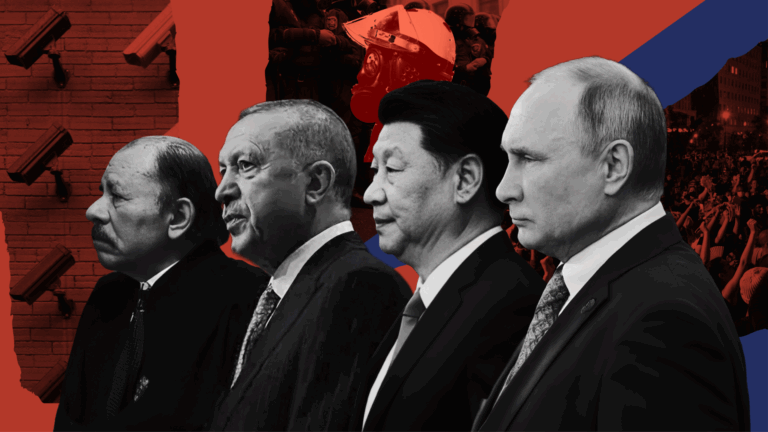
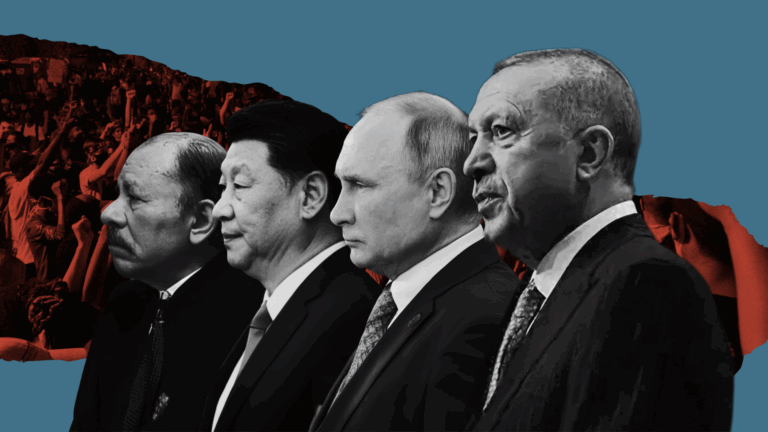
The Human Rights Foundation published on 22 December 2025 four blog posts covering the increasing phenomenon of transnational repression [see also: https://humanrightsdefenders.blog/2024/03/19/transnational-repression-human-rights-watch-and-other-reports/]

Transnational Repression: A Year in Review

Blog PostDec 22, 2025Transnational Repression: A Year in Review At home, autocrats, having consolidated their power, enjoy near-total impunity, crushing dissent through brutality, prisons, torture, and censorship.

The lasting impacts of transnational repression

Blog PostDec 22, 2025The Lasting Impacts of Transnational Repression Transnational repression is a growing threat to global human rights. In 2025, authoritarian regimes continued to surveil and silence dissidents abroad, relying on physical, legal, and digital tactics to reach beyond their borders and clamp down on the fundamental freedoms of these courageous individuals.

Weaponizing the International System

Blog PostDec 22, 2025Weaponizing the International System Authoritarian regimes have more tools than ever at their disposal to target dissidents and activists abroad.

Transnational Repression: Violence beyond borders

Blog PostDec 22, 2025Violence Beyond Borders Transnational repression has become a common tactic for authoritarian regimes seeking suppression of dissent beyond their borders. With the rapid spread of technology, globalization, and unprecedented ease of global mobility, it is easier than ever for regimes to reach their opponents, even from thousands of miles away.

see also: https://www.hrw.org/news/2026/02/10/azerbaijan-expands-crackdown-on-activists-in-exile

and

https://www.newarab.com/news/egypt-targets-critics-abroad-punishes-families-home-report?amp

Nathalia Bonilla, an environmental human rights defender from Ecuador

December 22, 2025

Nathalia Bonilla is an environmental human rights defender from Ecuador who works in the protection of the rights of Nature. She told ISHR about her country’s sharp policy turn in favour of extractive activities and spoke about the ‘utopia’ she and her peers would like to see in its place. ‘A revolution where you can’t dance is not my revolution,’ Nathalia said, in arguing for an ‘environmentalism for the people’.

https://ishr.ch/defender-stories/human-rights-defenders-story-nathalia-bonilla-from-ecuador

Salvino Oliveira – how education helped him to go from a Rio Favela to City Hall

December 22, 2025

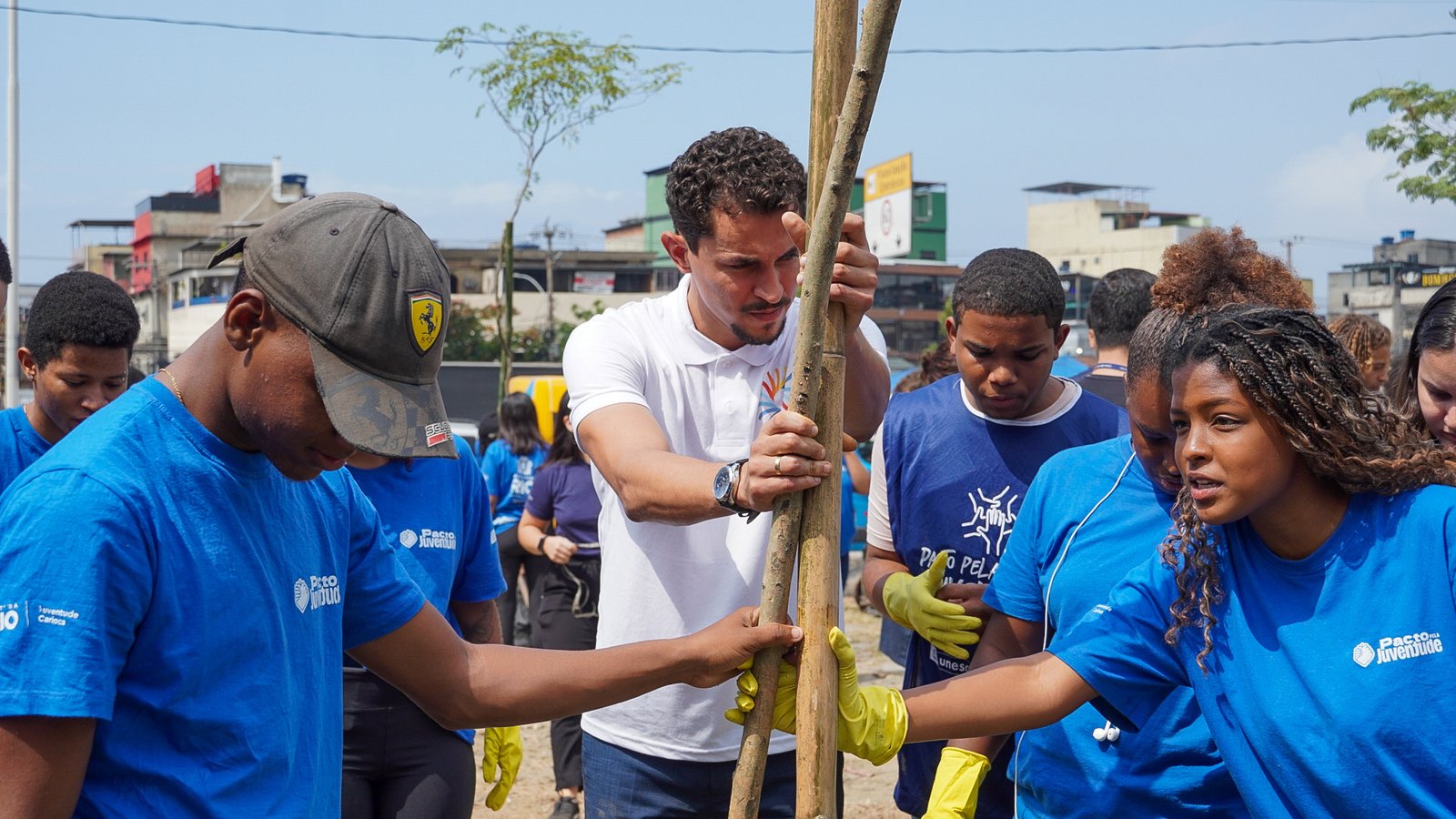
Salvino Oliveira was honored as a 2025 Young Activist Summit Laureate. | Courtesy of Jefferson Teófilo

On 22 December 2025, Global Citizen published the story of how at 27, Salvino Oliveira went from being a street vendor in Rio’s Cidade de Deus to a city councilor leading education reform. This was followed by him starting his first social project: making tuition free for poor children at 15 years old. In recognition of his efforts towards making education more accessible, Oliveira has been honored as a 2025 Young Activist Summit Laureate. Here, Oliveira shares how education transformed his life,  and why he’s committed to making that transformation accessible to every young person in Brazil’s favelas.

My name is Salvino Oliveira, and I am everything I’ve been.

I say this because my story begins in a tiny house in Cidade de Deus, meaning City of God, a favela in Rio de Janeiro. At 13, I started working to help my family survive: selling water bottles at traffic lights, candy on buses, working as a street vendor, upholsterer, construction helper — anything honest that could put food on the table.​

But Cidade de Deus is more than poverty. It’s the Rio neighborhood with the most public squares, making it a natural place for culture, leisure, and community gathering. It’s the birthplace of funk carioca — the soundtrack of favela resistance and joy. It’s also home to Olympic athletes and artists. These public spaces and that cultural richness shaped who I became, the friends I made, my first loves, the things I believe in.​

Then I got lucky. I was selected by lottery to study at Colégio Pedro II, one of Brazil’s most prestigious tuition-free public schools. In Brazil, elite families typically send their children to private schools, while public schools serve the poor; a few exceptional public institutions, like Pedro II, offer quality education through competitive lottery systems. That education changed everything. It opened a door that seemed permanently locked for someone from my background. At 15, even while working and living with gun violence all around me, I understood that if this access had reached me, I had a responsibility to give it back.​​

At 15, I created my first social project: free tutoring for children in Cidade de Deus.

When I entered Brazil’s federal university system to study Public Administration at Universidade Federal do Rio de Janeiro (UFRJ), a tuition-free institution, like all public universities in Brazil, that social project grew into AfroEducando (later renamed Mais Nós), a community prep course for university entrance exams. Within one year, we had 22 units across Rio’s metropolitan region, all volunteer-run, helping first-generation Black students from favelas access higher education.​​

When the “social bug” bites you, there’s no going back — and so the projects continued. I co-founded Projeto Manivela to train community leaders to engage with the government and turn demands into policies. Then came PerifaConnection, a media platform where young people from favelas across Brazil write columns in major national newspapers about politics, economics, culture, climate, and human rights. The idea was simple and radical: we refuse to let other people tell our story for us. Mainstream Brazilian media have historically portrayed favelas primarily through the lens of crime and poverty. Today, favela youth occupy editorial space in national media, changing how Brazil sees its peripheries.​​

I became an activist in 2018 during the federal military intervention in Rio’s security forces. Working at the Public Security Observatory, I saw firsthand how policies treated favelas like war zones, with heavily armed police operations causing civilian casualties. As I became more visible in my community, friends warned me: “Be careful, you’re an activist now. This can put you at risk.” That’s when I understood that fighting for education and rights in Rio means challenging power structures involving politics, money, and organized crime that often operate in contested urban territories.

https://www.globalcitizen.org/en/content/rio-favela-to-city-hall-education-oliveira-yas/