
Posts Tagged ‘transitional justice’

10 NGOs Taking Action for Transitional Justice

November 20, 2025
Human Rights Careers

In the aftermath of conflict, dictatorship, or mass human rights violations, societies face the challenge of addressing past atrocities while rebuilding for the future. Transitional justice refers to a set of legal and social mechanisms designed to achieve justice, accountability, and reconciliation in such contexts. These processes include truth commissions, criminal prosecutions, reparations for victims, and institutional reforms aimed at preventing future abuses. Rooted in the principles of human rights and international law, transitional justice seeks to balance the need for justice and survivor healing with the complexities of political and social stability.

Across the world, many charities and non-governmental organisations (NGOs) play a crucial role in supporting transitional justice efforts. Whether by documenting human rights abuses, advocating for victims, or facilitating truth and reconciliation initiatives, these organisations help societies navigate the difficult journey toward justice and peace. This article by Barbara Listek explores some of the key NGOs working in the field, highlighting their impact in post-conflict and post-authoritarian contexts.

#1. International Center for Transitional Justice (ICTJ)

The International Center for Transitional Justice (ICTJ) supports societies recovering from mass human rights violations by helping them confront the past and build more just and inclusive futures. Working alongside victims, local communities, and institutions, ICTJ provides expertise on truth commissions, reparations, criminal accountability, and institutional reform. Whether advising on the creation of truth-seeking bodies or supporting prosecutions of those responsible for serious crimes, the organisation’s work is rooted in the belief that acknowledging harm and delivering justice are essential for healing and long-term peace.

Since its founding, ICTJ has played a key role in transitional justice processes across the globe, including in Colombia, Tunisia, and The Gambia. Its approach is deeply grounded in the lived experiences of survivors, ensuring that justice efforts are not only technically sound but also meaningful to those most affected. By focusing on systemic change and survivor-centred solutions, ICTJ works to prevent the recurrence of violence and strengthen democratic institutions in countries emerging from repression and conflict.

#2. REDRESS

Redress is a London-based organisation founded by British businessman Keith Carmichael after he was unlawfully detained and tortured in Saudi Arabia. Frustrated by the lack of legal support and accountability available to survivors like himself, Carmichael launched REDRESS to fill a critical gap in access to justice. His personal experience became the driving force behind the charity’s mission: to secure justice and reparation for victims of torture and other grave human rights violations.

Now more than 30 years old, REDRESS continues to lead efforts globally to end impunity for torture. The organisation provides legal representation to survivors, supports strategic litigation before national and international courts, and advocates for stronger laws and policies that prevent torture and ensure reparations. By working directly with survivors, while also influencing governments and international institutions, REDRESS helps ensure that survivors’ voices are heard and that justice becomes a meaningful reality, central to any process of healing and transitional justice.

#3. The Center for Justice and Accountability

The Center for Justice and Accountability (CJA) is an organisation founded in 1998 on the principle, first used during the Nuremberg trials after World War II, that certain crimes are so egregious that they represent offences against all humankind. These crimes include genocide, crimes against humanity, extrajudicial killing and torture, and as CJA argues, they should never go unanswered.

CJA’s approach is survivor-led and collaborative. The organisation works closely with local partners and in-country prosecutors to build cases that centre the voices and experiences of those most affected. Alongside this, CJA advocates for stronger laws and policies that make it harder for abusers to escape justice and hold everyone accountable to the human rights standards.

#4. The African Transitional Justice Legacy Fund

The African Transitional Justice Legacy Fund (ATJLF) is an organisation launched in 2019 to support African-led responses to past atrocities, rooted in the belief that sustainable peace and justice must be shaped by those directly affected. Backed by the MacArthur Foundation and WellSpring Philanthropic Fund, the ATJLF emerged alongside the African Union’s Transitional Justice Policy, helping translate its goals into practical, community-driven action. Managed initially by the Ghana-based Institute for Democratic Governance, the Fund has since become a nine-year institutionalised effort supporting civil society across West Africa.

By empowering survivor-led groups and grassroots initiatives, the ATJLF has helped amplify voices often excluded from transitional justice processes. Since its inception, over $2.5 million has been distributed to 46 organisations working in countries including Guinea, Liberia, and The Gambia. As it enters its legacy phase (2024–2026), the Fund is scaling its efforts beyond West Africa and focusing on deeper, long-term partnerships to ensure the impact of its work endures well beyond its closure.

#5. Impunity Watch

Impunity Watch is an international non-profit organisation working with victims of violence to deliver redress for grave human rights violations and to promote justice and peace. The organisation approaches transitional justice work through a victim-centred approach, taking into account the long-standing criticism of transitional justice not being sufficiently victim-centred. It is also their aim to overcome systemic impunity and its root causes in order to achieve transformative justice (here we could link the article I wrote on transformative justice, but it is not published yet).

For more information about the organisation, we recommend visiting their website for an abundant collection of resources and information, such as the charity’s 2023-2027 Strategic Plan, information about the complex work Impunity Watch does, as well as their multimedia resources section.

#6. Global Survivors Fund

The Global Survivors Fund (GSF) is an international charity organisation based in Switzerland, that has it as its mission to enhance the access to reparations for survivors of conflict-related sexual violence around the globe. It was founded in 2019 by Dr Denis Mukwege and Nadia Murad – 2018 Nobel Peace Prize laureates.

The organisation’s work is centred around three core pillars: acting to provide interim reparative measures in situations where States or other parties are unable or unwilling to meet their responsibilities; advocating for the legally responsible parties (duty-bearers) and the international community to develop reparation programmes; and guiding States and civil society by providing expertise and technical support for designing reparation programmes.

To learn more about the organisation’s transformative work, donate or find information about positions openings, visit their website.

#7. Global Initiative for Justice, Truth and Reconciliation

Founded in 2014, the Global Initiative for Justice, Truth and Reconciliation (GIJTR) is a consortium of nine global organisations dedicated to addressing the transitional justice needs of societies emerging from conflict or periods of authoritarian rule. The initiative collaborates with communities worldwide to amplify survivors’ voices and inspire collective action in confronting human rights violations. By addressing past traumas, GIJTR aims to pave the way for a more just and peaceful future.

Over the past decade, GIJTR has engaged with communities in over 70 countries, collaborating with more than 800 local civil society organisations and supporting over 500 grassroots projects. Its initiatives include documenting human rights abuses, providing technical assistance to civil society activists, and promoting reparative justice efforts. Notably, the organisation has worked alongside survivors of conflict-related sexual violence in contexts such as Bangladesh, Colombia, and Guinea, supporting them in advocating for their rights and developing community-based programs aimed at meeting survivors’ needs.

#8. International Coalition of Sites of Conscience

The International Coalition of Sites of Conscience is the only global network of historic sites, museums, and memory initiatives that connects past struggles to today’s human rights movements. With over 350 members in 65 countries, its mission is to ensure that the sites preserve the memory of past injustices while fostering dialogue and learning that prevent future violations.

Their slogan being “Remembering is a Form of Resistance,” the Coalition works with local communities, governments, and international partners to ensure that these sites serve as platforms for reconciliation, education, and activism. It convenes impactful projects and initiatives as well as training events that bring together site professionals, historians, and activists to develop best practices for memory‑based reconciliation and community empowerment

If you are interested in how museums can contribute to upholding human rights, or would like to visit one of such sites, we recommend checking out our article on “20 Human Rights Museums Around The World” to discover inspiring spaces that might be worth visiting (perhaps on your next trip!).

#9. Post-Conflict Research Center

The Post-Conflict Research Center (PCRC) is a Sarajevo-based, women-led research centre and NGO, dedicated to advancing transitional justice and promoting peace in post-conflict societies. Founded in 2011 in Bosnia and Herzegovina, PCRC works on issues related to justice, accountability, reconciliation, and human rights. Its efforts include conducting research, providing education, and supporting projects aimed at improving social cohesion and fostering sustainable peace. PCRC is also involved in advocacy and works with local and international organisations to develop and implement policies that address the needs of survivors of conflict and promote justice for atrocities.

PCRC’s signature programmes include Balkan Diskurs, an online platform empowering young journalists to report on regional issues, and Ordinary Heroes, a multimedia project showcasing stories of rescue and courage to promote tolerance and reconciliation. Its work has earned international recognition, including the 2014–15 Intercultural Innovation Award from the UN Alliance of Civilizations and the BMW Group, and praise from the Council of Europe for its exemplary peace education model.

Are you inspired by PCRC’s blend of research and action? Learn what it takes to follow in their footsteps by reading our guide on “How to Become a Human Rights Researcher.”

#10. Rights for Peace

Rights for Peace is a London-based international organisation that seeks to address the root causes of violence and promote peace through human rights advocacy and transitional justice. Focusing on countries in transition from conflict or repression, Rights for Peace engages with local communities to ensure that victims of violence are heard and that justice mechanisms are effective. It works to strengthen the rule of law, promote accountability, and support processes of social healing through legal reforms and community-led initiatives. By fostering a culture of peace and justice, the organisation aims to prevent the recurrence of violence and contribute to long-term stability.

Currently active in Sudan and South Sudan, Rights for Peace collaborates with local partners to strengthen rule‑of‑law institutions and ensure that victims’ voices shape accountability processes. Its casework includes monitoring identity‑based violations and developing strategic litigation to hold perpetrators accountable, reflecting the organisation’s commitment to survivor‑centred justice.

Yasmine Al-Mashaan, a Syrian human rights defender, on transitional justice

March 20, 2025

On 12 March 2025 the OHCHR published the feature:

Two women looking at the camera

From left:Human rights defenders Sofija Todorovic (Serbia) and Yasmin Al-Mashaan (Syria) © OHCHR/Gabriela Gorjón

“I’m the only girl of six siblings. And suddenly I lost five brothers between 2012 and 2014,” said Yasmine Al-Mashaan, a Syrian human rights defender and victim. “Before they were taken, they were around to love and protect me. I think it’s my duty to give them a little bit of their love and to fight for truth and justice for them and for everyone,” said Al-Mashaan, a former pharmaceutical assistant.

She spoke during an enhanced interactive dialogue on transitional justice at the 58th session of the Human Rights Council in Geneva, Switzerland, where UN Human Rights Chief Volker Türk presented a report on lessons learned and good practices related to transitional justice in the context of sustaining peace and sustainable development.

“In 2018, I co-founded, along with other families of forcibly disappeared persons, the Caesar Families Association, which brings together families who identified their loved ones among the victims in the photos smuggled out of Syria in 2013, known as the Caesar Photos,” Al-Mashaan said.

Her brother Oqba, one of her two disappeared brothers, was among the photos. 

Türk emphasized that transitional justice tackles the demons of the past to build a better future.

“It grapples with difficult questions about truth and memory. It looks for justice, in all its complex and myriad forms,” he said. “And it helps to repair the institutional and social fabric of fractured societies. Above all, transitional justice is about victims, dignity and healing.”

According to the Office’s report, in the aftermath of a conflict or large-scale and serious human rights violations and abuses, States have an obligation to provide truth, justice, reparation and guarantees of non-repetition. The report showcases some 36 victim-centred, inclusive, and gender-responsive transitional justice efforts led by victim associations and grass-roots organizations from dozens of countries, from Colombia to Syria, and Chad to Timor Leste.

However, Türk said, the path to peace is never easy.

“Transitional justice is often held up and slowed down by political instrumentalization, discriminatory or selective design and focus, insufficient buy-in of affected populations, and weak State institutions,” he said.

Women and youth as a driving force

Türk said that civil society, including grass-roots organizations often led by women and youth, play a crucial role in overcoming these challenges.

Sofija Todorovic, Programme Director of Youth Initiative for Human Rights in Serbia, who also participated in the dialogue, believes the role of youth organizations in transitional justice is indispensable.

“These organizations ensure that the voices and perspectives of young people are integrated into the policies and strategies shaping their future,” she said. “In many cases, their mission extends to educating youth about the history that has been deliberately concealed from them.”

Todorovic’s determination was fuelled by the realization that her country had hidden the truth from her.

“My State and the institutions within my State didn’t give me the right to truth and to make informed conclusion about the past, but rather they forced only one side of the story of the past,” she said. “And I think that that it’s unfair.”

She emphasized the need to address intergenerational trauma in transitional justice efforts.

“Only people who have space to heal can be able to build functional democracy,” she said. “We need a political climate that will resolve the trauma, not exploit it.”

Both Todorovic and Al-Mashaan’s organizations exemplify the power of women’s leadership, resilience, and strategic action in advancing transitional justice despite significant obstacles.

Justice and peace

Leyner Palacios Asprilla, a Colombian human rights defender and former Truth Commission member currently leading the Unit for Victims of the Chocó Region, participated in the dialogue via video message. The situation in his region remains so critical that he couldn’t leave the victims he works with alone.

For Palacios Asprilla, UN Human Rights in Colombia has been instrumental in navigating the challenges of consolidating peace, protecting victims, and defending human rights.

“Today, the world cannot forget our country because we have not yet crossed the finish line or overcome the obstacles to reach a point of tranquillity,” he said. “Colombia is an example to the world in its commitment to consolidating peace. But the world must not forget that this task is not yet complete.”

Türk said that in this fragmented world, transitional justice is an essential and creative problem-solving approach. It must be grasped, nurtured and used to build durable peace.

Many countries, including Nepal, Syria, and Bangladesh, have enormous opportunity to move towards justice and peace, he said.

Key takeaways

In preparing the report, UN Human Rights organized consultations with 70 women and 70 men from more than 77 countries, including representatives of national entities implementing transitional justice measures, victims’ associations and civil society organizations, regional and international human rights protection systems, and transitional justice experts and practitioners.

The report identifies seven key lessons in advancing transitional justice:

  1. Documenting human rights violations is essential for accountability and future justice.
  2. Marginalized victims must be included, ensuring their experiences are recognized.
  3. Victims’ associations play a crucial role in advocacy and justice efforts.
  4. Immediate legal, medical, and psychological support helps victims navigate trauma.
  5. International human rights mechanisms provide accountability when national justice fails.
  6. Universal jurisdiction and international courts offer alternatives when domestic options are blocked.
  7. Grassroots memory and memorialization preserve historical truth and prevent future atrocities.

see also: Transitional justice and human rights Report by UN Human Rights

https://www.ohchr.org/en/stories/2025/03/transitional-justice-confronting-past-building-future

Nepal: transitional justice a moving goal

August 26, 2020

Nepal continues to struggle with the implementation of of the transitional justice process. Victims of the armed conflict and human rights defenders have opposed the idea of forming a political mechanism to facilitate the conclusion of the transitional justice process, as proposed by the six-member task force formed to propose measures to end the months-long dispute within the ruling party. The idea, first proposed by Nepal Communist Party co-chair Pushpa Kamal Dahal during the Standing Committee meeting in December last year, will politicise the entire process if implemented, and work in favour of the perpetrators, they say. “I am shocked to see the recommendations. They are against the principles of jurisprudence and transitional justice,” said Ram Bhandari, chairperson of Network of the Families of Disappeared referring to the recommendations made by the task force.

Parties should stop politicising the transitional justice process. Forming a political mechanism would be an illegal move,Kalyan Shrestha, a former chief justice at the Supreme Court whose bench directed the government to remove the amnesty provisions in the transitional justice Act, told the Post. He said the political parties, who were the parties to the conflict, are in one place now treating the victims as the defeated force. Shrestha said that transitional justice has a universal jurisprudence and it must be abided by.

In a thoughtful piece of 26 August 2020 Mohna Ansari, Commissioner of the National Human Rights Commission of Nepal, argues that Nepal must reboot human rights, rule of law” puts this in context:

Human Rights Defenders in Sri Lanka: fear return to a ‘state of fear’

June 14, 2020

Families hold photographs of missing loved ones during a protest in Sri Lanka Families hold photographs of missing loved ones during a protest in Colombo, Sri Lanka’s largest city, in February 2020. (TNH)

Rights groups are warning of a crackdown on dissent and rising authoritarianism in Sri Lanka, raising fears for the future of long-stalled civil war reconciliation efforts. Since President Gotabaya Rajapaksa took office after November elections, local rights activists have reported a rise in surveillance by state security forces, threats, and other measures more common during the country’s 26-year civil war, which ended in 2009, as well as its aftermath. A long piece in the New Humanitarian of 10 june 2020 gives the details:

Surveillance has always been there, but since the election what we have seen is that it’s more open and more rampant,” said Shreen Saroor, a women’s rights activist…

Human Rights Watch says Rajapaksa is re-establishing a “state of fear” in Sri Lanka, citing interviews with dozens of activists and journalists. Many local journalists say they are self-censoring as threatening phone calls and other pressures escalate, acutely aware of the country’s history of unsolved murders and abductions. At least two reporters have already fled the country, according to the Committee to Protect Journalists. 

In February, Sri Lanka announced it was backing out of commitments made to the UN Human Rights Council in 2015 by a previous administration. These promised a range of measures to investigate abuses during the civil war. ..

[see also: from my blog post https://humanrightsdefenders.blog/2020/02/24/human-rights-defenders-issues-on-the-agenda-of-43rd-human-rights-council/ Sri Lanka: Civil society groups are concerned over the backsliding on the commitments made by Sri Lanka in Human Rights Council Resolution 30/1. The recently elected president, Gotabaya Rajapaksa, along with his brother Mahinda Rajapaksa, who has been appointed prime minister, have been implicated in war crimes and numerous human rights violations when they were defence secretary and president respectively from 2005 to 2015. The new Government has made clear its intention to walk away from the Council process on Sri Lanka, a process that is currently the only hope for victims of human rights violations that truth, justice, reparations, and guarantees of non-recurrence are possible. [see https://www.nwaonline.com/news/2020/feb/23/sri-lanka-details-un-case-pullout/] Meanwhile, the relatively open climate for human rights defenders and journalists of the past few years seems to be rapidly closing. More than a dozen human rights and media organisations have received intimidating visits by members of law enforcement and intelligence agencies, while death threats against journalists have resumed. ISHR calls on States to urge for continued cooperation of the Government of Sri Lanka with OHCHR and the Special Procedures. The Council should reiterate the reference in Resolution 40/1 to “the adoption of a time-bound implementation strategy” for implementation of all elements of Resolution 30/1. [see also: https://humanrightsdefenders.blog/2020/01/22/sri-lankan-government-accused-of-embarking-on-process-to-silence-critics/]

And, this month, Rajapaksa created two “task forces” with vague mandates, which rights groups fear could operate parallel to existing institutions. One, a body created to combat “anti-social activities”, is led by security and intelligence officials. Another task force mandated to protect cultural heritage appears to exclude non-Buddhists and non-Sinhalese. Rajapaksa’s first six months in office, the International Crisis Group said in a May report, have been “aggressively Sinhala nationalist, family-centred, and authoritarian”.

….“All these years of looking for justice would be then wasted,” said Yogeshwari, 45, whose husband disappeared 15 years ago.Families hold photographs of missing loved ones during a protest in Sri LankaTNH Families of Sri Lanka’s missing thousands fear the government is aiming to curb investigations into unsolved civil war disappearances.

In announcing his country’s withdrawal from its UN Human Rights Council commitments in February, Sri Lanka’s foreign minister, Dinesh Gunawardena, said the previous pledges would infringe on “the sovereignty of [the] people of Sri Lanka”…

A government body tasked with investigating disappearances, the Office on Missing Persons (OMP), didn’t begin its work until 2018. It’s effectively the only government body actively working on reconciliation issues. Ruki Fernando, an advisor with Inform, a Colombo-based human rights documentation centre, expects the Rajapaksa government to take a similar line domestically by clipping the OMP’s powers.  “It is not about shutting them down,” Fernando said. “It is more about making them administratively limp.”…

Saroor believes the Rajapaksa government will likely ramp up its stance against investigations and reconciliation efforts. “Sri Lanka transitional justice and truth-seeking will come to a standstill,” she said.

This piece was reported by a freelance journalist whose name is being withheld over concerns for their safety. 

https://www.arabnews.com/node/1687911/world

https://www.thenewhumanitarian.org/news/2020/06/10/Sri-Lanka-activists-state-of-fear?utm_source=The+New+Humanitarian&utm_campaign=412d1dac95-EMAIL_CAMPAIGN_2020_06_12_Weekly&utm_medium=email&utm_term=0_d842d98289-412d1dac95-75444053

https://www.tamilguardian.com/content/un-chief-expresses-alarm-clampdown-freedom-expression-sri-lanka

ICJ says human rights defenders alarmed over election results in Sri Lanka

November 19, 2019

Sri Lanka’s newly elected president, Gotabaya Rajapaksa and his Government must demonstrate that they will uphold human rights and rule of law, and ensure that Sri Lanka sustains its international obligations and commitments to justice and accountability, said the International Commission of Jurists (ICJ) on 19 November 2019. “The election of Gotabaya Rajapaksa, after a highly polarizing campaign, has alarmed human rights defenders in Sri Lanka and abroad, who have little reason to believe that someone facing such serious allegations of perpetrating human rights violations can be relied upon to meet the country’s obligations under international law,” said Frederick Rawski, ICJ Asia Pacific Director.
Gotabaya Rajapaksa, who won the presidency with 52.25% of votes, served as Sri Lanka’s Secretary of the Ministry of Defence from 2005 to 2015 during the tenure of his brother Mahinda Rajapaksa, at the height of the armed conflict against the Liberation Tigers of Tamil Eelam (LTTE). Gotabaya Rajapaksa faces credible allegations of involvement in war crimes and crimes against humanity that took place during the country’s armed conflict.

International condemnation of atrocities committed during the conflict led to the UN Human Rights Council demanding that the Sri Lankan government commit to a process of transitional justice, in view of the systematic failures of accountability mechanisms in Sri Lanka in the past, as documented by the ICJ in its submission to the Human Rights Council, and others. Despite commitments from the Sri Lankan government, the transitional justice process has effectively stalled and impunity has prevailed.

The ICJ is deeply concerned that even the limited strides made over the past five years in Sri Lanka on transitional justice, positive constitutional amendments and institutional reform will be reversed,” said Rawski. The ICJ urged the Government to deliver on its commitment to the transitional justice process, including by holding those responsible for human rights violations and abuses accountable, and complying with the obligations set out in United Nations Human Rights Council Resolutions 30/1, 34/1 and 40/1.

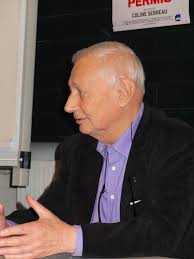
In memoriam Louis Joinet: a great human rights defender who deserves more recognition outside France

September 25, 2019

Louis Joinet (born in Nevers on He was a French magistrate, independent expert to the United Nations Human Rights Committee and very active in the NGO human rights world in particular with regard to the dictatorships in Latin America (he was named illustrious citizen of Montevideo).

He co-founded the Union of the Judiciary (Syndicat de la magistrature) in 1968.  At the beginning of his career, he was interested in the early stages of computer sciences in order to evaluate the impact of these technologies on the law. He represented France in the Council of Europe. His report will gave birth to the Data Protection Act. He then participated actively in the drafting of the law relating to computers, files and freedoms of 6 January 1978. He was an adviser on human rights to the succesive Prime Ministers of François Mitterrand between 1981 and 1993.

In the UN context he was the author, in 1997, of the principles against impunity of the Office of the United Nations High Commissioner for Human Rights , also known as the “Joinet Principles” , which are part of the principles of transitional justice. .

He published his memoirs in 2013 (Mes raisons d’État : mémoires d’un épris de justice, Éditions La Découverte). One of the characters of the French television series Sanctuaire , broadcast in 2015, which addresses in particular the role of France in the attempt to negotiate, in the mid-1980s between ETA and Spain, is inspired by Louis Joinet  (“Avec “Sanctuaire” j’ai voulu faire un film sur une gauche qui se perd” [archive], teleobs.nouvelobs.com, 2 mars 2015).

His wife Germaine Joinet, doctor and activist in various associations, died in 2008.


Ciné-ONU and the Goethe Institute screened  “Un certain monsieur Joinet” (52 mn) on 24 October 2012 at the Goethe Institute in Brussels. According to Amnesty International, “the documentary gives an insight into the fifty years of struggle by Louis Joinet for human rights, from the war in Algeria to Pinochet’s Chile, from enforced disappearances to the fight against impunity”.  Language: French with English subtitles. Directed by: Frantz Vaillant. Only the trailer is on the internet and information on how to get hold of the full film is missing.

There is also an interview with him from 2012:

https://www.lemonde.fr/disparitions/article/2019/09/23/la-mort-de-louis-joinet-cofondateur-du-syndicat-de-la-magistrature_6012734_3382.html

https://fr.wikipedia.org/wiki/Louis_Joinet

https://www.unbrussels.org/invitation-to-the-screening-of-un-certain-monsieur-joinet/

Ray of Hope (2): Guatemala and impunity

May 25, 2018
On 24 May 2018, the UN High Commissioner for Human Rights, Zeid Ra’ad Al Hussein, welcomed the ruling issued unanimously by the High Risk “C” Tribunal in Guatemala yesterday against four high-ranking former military officials for crimes against humanity, aggravated sexual violence and enforced disappearance. “This is a milestone judgement for Guatemala and beyond with regards to the investigation, prosecution and punishment of serious human rights violations committed by senior military officers during an internal armed conflict,” High Commissioner Zeid said. The judgment, citing international human rights standards, found that the practice of sexual violence, torture and enforced disappearance formed part of the military strategy during the internal armed conflict in Guatemala. It also held that past crimes involving serious human rights violations are not subject to time limits for prosecution and cannot be subject to amnesty.

The High Commissioner said that this ruling, together with the jurisprudential precedents established in other transitional justice cases, such as Sepur Zarco, Dos Erres, Plan de Sánchez and Myrna Mack, sends a clear message that it is possible for Guatemala to advance in the fight against impunity of the past, which in turn, strengthens the fight against the impunity of the present and the consolidation of the rule of law. On 4 May 2004, the Inter-American Court of Human Rights had already held the State of Guatemala responsible for the enforced disappearance of Marco Antonio.“

I pay tribute to the Molina Theissen family for their courage and perseverance to fight for over three decades for their right to justice and the truth,” Zeid said. Emma Guadalupe Molina Theissen was detained at a military checkpoint on 27 September 1981 and transferred to the “Manuel Lisandro Barillas” Military Brigade in Quetzaltenango, where she was held captive, interrogated, subjected to torture and other cruel, inhuman or degrading treatment, as well as sexual violence. She escaped on 5 October 1981. The following day, her 14-year-old brother Marco Antonio was taken by force from the family’s home in Guatemala City, put into a nylon sack and taken to an unknown destination in a vehicle with an official Government license plate. He has never been found.

See also: https://humanrightsdefenders.blog/2018/05/23/ray-of-hope-lesotho-court-takes-stand-against-defamation-of-hrds/

https://reliefweb.int/report/guatemala/milestone-judgement-guatemala-un-human-rights-chief


Role of Human Rights Defenders critical for post-accord justice in Colombia says Mary Lawlor

July 12, 2016

Mary Lawlor has only  just announced her departure (see announcement published yesterday) and already an article on Colombia of 11 July 2016 shows what insights we may miss in the future. The link between the peace process and the role of human rights defenders in Colombia was referred to in earlier posts [e.g. https://thoolen.wordpress.com/2015/09/11/human-rights-defenders-squeezed-by-geo-politics-the-cases-of-colombia-iran-and-cuba/]  Mary Lawlor here welcomes the agreement as historic, offering the Colombian people an opportunity to make a break with the endemic violence of the past. The direct reference to the protection of human rights defenders in the peace agreement is one more reason to celebrate. Here the piece in full:

Human Rights Defenders Critical for Post-Accord Justice in Colombia

Read the rest of this entry »

Antonio Cassese Summer School on Transitional Justice and Human Rights in July

April 3, 2014

The Antonio Cassese Initiative for Justice, Peace and Humanity and the Geneva Academy of International Humanitarian Law and Human Rights open their application process for the Summer School 2014, which will take place from 7 – 11 July 2014 in Geneva.  The 2014 Antonio Cassese Summer School offers an intensive course on transitional justice principles and processes, with a special focus on post-conflict situations. Based on both scholarly and practitioner expertise across a range of areas (including human rights, international criminal law, security reform, legal philosophy, gender politics) and country situations, the programme combines a general course on transitional justice with complementary topic-specific lectures. The general course will be delivered by leading transitional justice scholar Naomi Roht-Arriaza, Professor of law at the University of California.

To know more about the programme and prices, download the flyer: http://www.geneva-academy.ch/docs/events/Summer%20school%20Flyer%20FINAL.pdf