Iskra Kirova, Advocacy Director, Europe and Central Asia Division of HRW, wrote on 4 April 2024: ‘Foreign Agent’ Laws Spread as EU Dithers to Support Civil Society
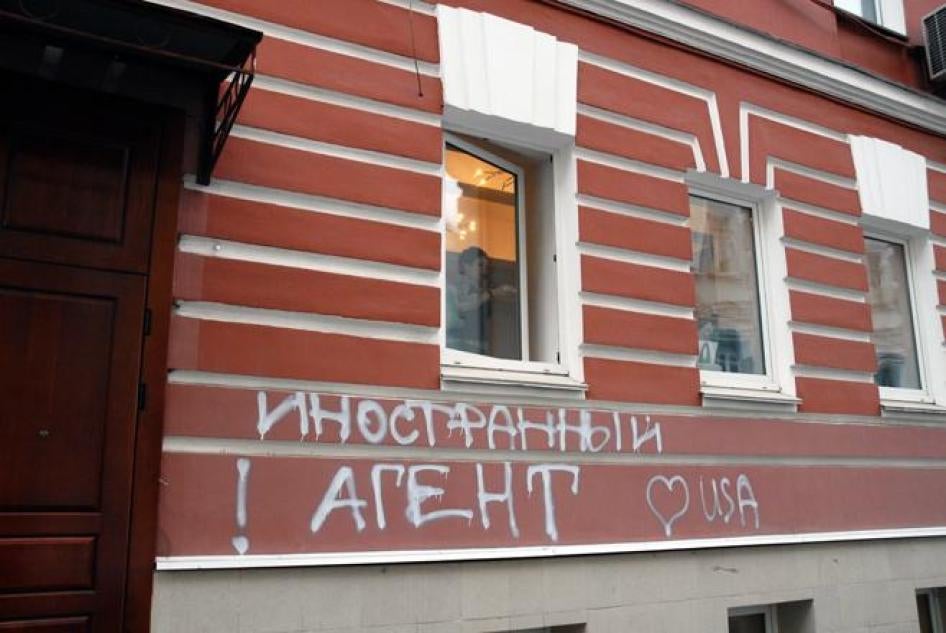
Georgia’s ruling party plans to reintroduce highly controversial Russia-style “foreign agent” legislation aimed at incapacitating civil society and independent media. If adopted, the laws, which were withdrawn last year in the face of massive protests, would require foreign-funded nongovernmental organizations and media to register as “agents of foreign influence”. That would make them subject to additional scrutiny and sanctions, including administrative penalties up to 25,000 GEL (about 8,600 Euro). Authorities claim the laws promote “transparency”, but their statements make it clear the laws will be used to stigmatize and punish critical voices.
The day before Georgia’s announcement, Kyrgyzstan’s president signed an abusive “foreign representatives” law. Copied almost entirely from the Russian equivalent, the law would apply the stigmatizing designation of “foreign representative” to any nongovernmental organization that receives foreign funding and engages in vaguely defined “political activity”. The bill had been widely criticized after its initial submission in November 2022, including in a urgency resolution by the European Parliament.
The EU had ample opportunity to press the authorities to reject this bill. Kyrgyzstan benefits from privileged access to the EU internal market tied to respect for international human rights conventions: conventions this law clearly contravenes. The country is poised to sign an enhanced partnership agreement with the EU that centers democracy and fundamental rights. The EU has been silent on whether these deals would be imperiled by the bill’s adoption, despite the fact the European Commission’s own assessment highlighted Kyrgyzstan’s dire environment for civil society and the country’s breach of its obligations.
The latest spate of curbs on civil society comes in the wake of the European Commission’s December 2023 legislative proposal for an EU Directive on “transparency of interest representation” that would create a register of organizations which receive foreign funding. European civil society vehemently opposes the proposal because it risks shrinking space for independent organizations at home and diminishing the EU’s credibility in opposing such laws abroad. Yet the Commission forged ahead. On the same day the proposal was adopted, Hungary’s parliament approved a law that gives a government-controlled body broad powers to target civil society and independent media.
With civil society organizations under threat throughout Europe and Central Asia, we need an EU that in words and actions protects civic space and sets the right standards.
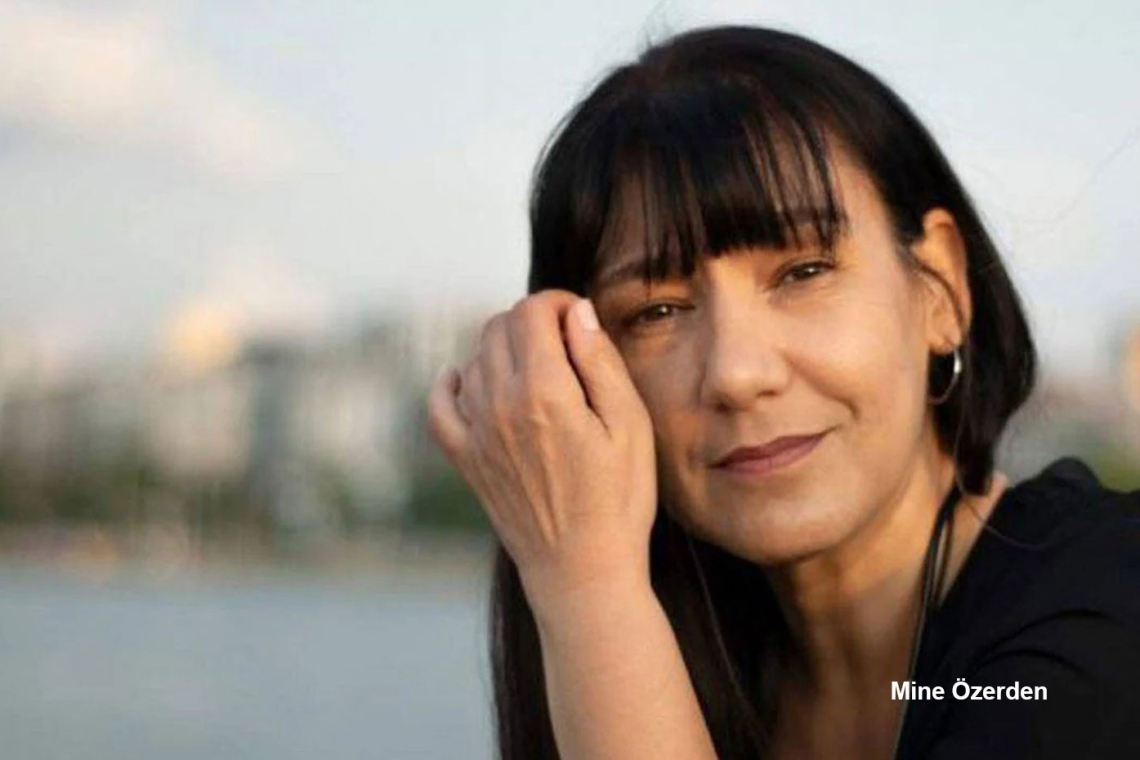
On 1 April 2024, Media and Law Studies Association (MLSA is a human rights organization committed to protecting freedom of expression, press freedom, the right to assemble and protest, and access to information in Turkey. It serves as a vital platform where journalism and legal expertise merge to safeguard these freedoms, particularly for journalists, lawyers, and human rights defenders facing increasing challenges). SEMRA PELEK wrote about Mine Özerden, a human rights defender now detained for 700 days. The detailed statement if woth reading in full:
From Mine Özerden’s standpoint, the Gezi Trial began with an unsubstantiated criminal complaint. Despite efforts, no informant was identified. Tax inspectors investigated the allegations but couldn’t confirm them. The court ruled the phone taps used as evidence were illegal. Nonetheless, Özerden was sentenced to 18 years and has been in prison for nearly two years.
“I’ve said this repeatedly, and I’ll say it again: I still can’t comprehend why I’m here, and there hasn’t been anyone who could logically explain it to me yet.”
With these words, Mine Özerden began her defense during the session of the Gezi Trial held at the Istanbul 13th Heavy Penal Court on October 8, 2021. She posed the same question during her defense at the session held on January 17, 2022. Özerden has been asking the same question at every hearing since the initial session of the Gezi Trial on June 25, 2019. However, in the years that have passed, she has received no answer to her question throughout the entire legal process.
Mine Özerden’s lawyer requested an explanation from the prosecutor through the court regarding this matter. However, the court rejected the request: “The request for a statement from the Public Prosecutor regarding which acts and crimes are being attributed to the defendant Mine Özerden by the defense attorney has been rejected…”
The court failed to provide any justification or further clarification of the rejection. However, according to the Code of Criminal Procedure, every defendant has the right to effectively present their defense, and the right to “be informed.” This means that prosecutors and courts are obligated to inform the defendant of the accusations against them to ensure a fair trial. The laws clearly state this right, however, Mine Özerden was not granted this right throughout the entire trial, and the judiciary system did not provide any logical explanation for this.
Let’s ask a question of our own here: Is there no answer to Ozerden’s question in the 657-page indictment written by the prosecution, which led to Osman Kavala’s aggravated life sentence and the 18-year sentences that Mine Özerden, Çiğdem Mater, Tayfun Kahraman, and Can Atalay have been given in the Gezi Trials? They are currently convicted of serious charges such as “attempting to overthrow the Republic of Turkey by force and violence” and “aiding this attempt,” which means the higher Court of Cassation also signed off on the decision. In the document of approval released by the Court of Cassation, is there any answer to the aforementioned question? No, there isn’t!
Scrutinizing the Gezi Trial files, one question remains: Why is Mine Özerden in prison?
And you can’t find the answer to that question. After poring over the files line by line, one can’t help but be reminded of Kafka’s novel, The Trial. So much so that you could replace the protagonist Josef K.’s name with Mine Özerden’s: “Somebody must have made a false accusation against Mine Özerden, for she was arrested one morning without having done anything wrong.”
This is exactly how the Gezi Trial, which today stands like a specter against the freedom of expression and assembly not only of the defendants but of the whole society, began for Mine Özerden.
Let’s start from the beginning: On September 26, 2013, a “criminal complaint” was sent via email to the Istanbul Communication Electronics Branch Directorate. According to the indictment, the person, who didn’t provide their name in “criminal complaint number 11167,” claimed to have “important information regarding the Gezi protests” and alleged that “before the protests began in Taksim, Mine Özerden opened bank accounts for several individuals under the direction of Osman Kavala from the Open Society Foundation.” According to the informant’s claim, the money collected in these accounts was intended to purchase “gas masks, bandages, and goggles,” which would then be “distributed to protesters.”
In the thousands of pages of the Gezi Trial file, this is the sole allegation concerning Mine Özerden.
Following up on this allegation requires due diligence in seeking the facts. Unlike Kafka’s novel, Özerden’s experiences are not allegorical but real; she has been held in Bakırköy Women’s Prison for nearly two years due to this unsubstantiated criminal complaint.
In the indictment, the prosecutor – after quoting the informant’s claim in quotation marks and bold black letters – immediately indicates in the next sentence that they “could not locate the informant”: “Upon the instruction of our Republic Prosecutor’s Office, an investigation was conducted into the IP address to obtain a detailed statement from the informant, however, no identification was made.”
In other words, the informant could not be found. So, were the bank accounts alleged by the informant opened?
No!
That, in fact, is the following sentence, where the prosecutor offers his admission that the informant could not be found. In the indictment, Istanbul Foundation’s 1st Regional Directorate’s investigation of the accounts of the Open Society Foundation, eventually preparing a report on this inquiry, but the report clearly stated that “no determination could be made regarding these allegations.”
In other words, the claim of an unidentified informant could not be substantiated.
On April 22, 2022 Mine Özerden’s lawyer submitted Tax documents, which proved that the informant’s claim was false to the file.
The court dismissed the Tax Inspectorate report and did not consider it as evidence.
Fact Two: No bank accounts opened; no purchase was made
Typically (in any rule-of-law state), when an informant cannot be found and an unsubstantiated criminal complaint is involved, the case is closed with a verdict of non-prosecution.
Moreover, according to the established jurisprudence of the Court of Cassation, evaluating a purely unsubstantiated complaint on its own is also unlawful. Thus, this jurisprudence also warranted closing the case at this stage. The law is clear: you cannot prosecute anyone with a non-existent crime and an unsubstantiated allegation.
However, instead of closing the file at this point, the prosecutor opened another investigation completely unrelated to the Gezi inquiry. Mine Özerden was incidentally wiretapped within the scope of this investigation. It wasn’t until much later, when the Gezi Trial indictment was prepared, that the fact Özerden had been coincidentally wiretapped in this investigation emerged. When her lawyer officially questioned this, it was revealed that Özerden had never been a suspect in this investigation. Furthermore, there was no wiretap order issued against her in this investigation. Her lawyer had requested wiretap orders from the court, neither the police nor the prosecution had submitted these orders to the file.
In one of these coincidental wiretaps included in the Gezi Trial indictment despite having no relevance to the Gezi investigation, Mine Özerden had a conversation with Osman Kavala on May 30, 2013. In this conversation, Mine Özerden mentioned to Osman Kavala that she had received “some offers.” Someone suggested, “Let’s buy gas masks and distribute them to the youth.” The conversation continued with discussions on how this could be done, such as “maybe opening a bank account.” It was nothing more than an exchange of ideas, with the conversation ending with the suggestion, “One of the volunteers could probably do that.”
The claim of the unidentified informant was based on this conversation. Özerden, who was coincidentally wiretapped in an investigation, where she was not a suspect, was accused on the basis of this wiretap turned into a criminal complaint. Özerden’s lawyer requested the full resolution of this wiretap. However, neither the complete resolutions of wiretaps nor the wiretap recordings were found by the prosecution and were never submitted to the file.
The conversation between Mine Özerden and Osman Kavala remained at the level of ideas because the content of the conversation was not substantiated during the investigation and trial process. No bank account was found to have been opened. Something that doesn’t exist can’t be found in the first place.
There is no evidence in the file that gas masks, bandages, or goggles were purchased. Not a single invoice exists, nor is there any evidence anywhere that these items were found.
So, suppose even one piece of evidence existed in the file – for example, if a bank account had been opened or if an invoice for goggles had been found – what would happen? Opening a bank account and buying gas masks, bandages, or goggles is not a crime under any law. Therefore, Özerden’s lawyer brought goggles, gas masks, and bandages to the trial and asked the panel, “Is acquiring these items a crime?”
Fact Three: No Press Statements or Meetings were Found to Constitute a Crime or Incitement to Commit a Crime
Despite the lack of concrete evidence, the indictment directed the accusation of “aiding an attempt to overthrow the Government of the Republic of Turkey by force and violence” against Mine Özerden. To strengthen such a serious accusation, the prosecutor highlighted Özerden’s voluntary coordination of the Taksim Platform and her continued membership in the board of directors of Anadolu Kültür, where she had worked years ago.
The Taksim Platform was established as a peaceful dialogue platform, holding weekly exchange of ideas meetings, and organizing art events. Although the activities of the platform fell within the scope of freedom of assembly and expression, it was criminalized in the indictment, yet no crime associated with the platform can be found.
Not a single press statement by the platform was included in the indictment. There was not any piece of evidence regarding which press statement or meeting of the platform, on which date, would constitute a crime according to the law. There was also no evidence that any post or statement released by the Taksim Platform could constitute a crime or incitement to violence in the indictment or the file.
The rationale behind the establishment of the Taksim Platform and all updates, statements and press releases ever released by the platform is still accessible today on the website taksimplatformu.com. So, if there had been even the slightest evidence that Taksim Platform was inciting violence, it would be easy for the prosecution to find and include in the indictment.
Moreover, the accusations against Özerden based on her membership in the board of directors of Anadolu Kültür were already refuted explicitly by the Tax Inspectorate report.
Fact four: Özerden was not in Istanbul during the Gezi protests.
It gets even stranger from here. In the indictment, Özerden is accused of organizing meetings of the Taksim Platform in Istanbul during the Gezi protests, attending the platform’s meetings, and even participating in violent actions in Gezi Park.
But the problem here is this: Mine Özerden was not in Istanbul during the Gezi protests.
The Gezi protests began on May 31, 2013. However, Özerden was working at a language school in Fethiye from June 1 to July 31, 2013. Furthermore, not a single video, photograph, or technical surveillance recorded by the police indicating Özerden’s presence in Istanbul during that period has been included in the case file.
However, official Social Security Institution (SGK) records proving Özerden’s presence in Fethiye during that period were submitted to the court. But neither the prosecutor during the investigation process nor the Istanbul 13th Heavy Penal Court during the trial took this into account. The Court of Cassation 3rd Criminal Chamber, which upheld the 18-year prison sentence, also did not. .
Even if it were the opposite, if Mine Özerden were in Istanbul during that time, it still wouldn’t prove anything. Being in Istanbul during the Gezi protests, organizing a meeting, or attending one is not a crime. On the contrary, the right to assembly and freedom of expression are protected by the Constitution.
Fact Five: Wiretapping is Illegal
So, what was written about Mine Özerden on all those pages in the indictment whenthere was no concrete evidence of a crime against her?
The indictment merely contains pages of phone conversations between Özerden and her friends! These conversations delve into personal matters, discussing, for instance, the exhaustion of life and the beauty of getting away from some stressors of life. In one conversation, for instance, Mine Özerden advises a friend to attend a conference in Istanbul where world-renowned philosophers Slavoj Žižek and Alain Badiou are speakers. The conference, titled ‘Globalization and the New Left,’ was organized by Bakırköy Municipality and MonoKL publications. However, this advice was included in the indictment as if it were a crime.
Similarly, Özerden’s response of “enjoy the beautiful weather, how lovely” to a friend saying “the weather was even better two or three days ago” is also included in the indictment as part of these casual conversations. None of the phone taps contain any reference to the organization of the Gezi protests. Instead, they clutter the file. Moreover, these wiretaps are illegal!
The Istanbul 13th High Criminal Court, which handled the case, determined that the wiretaps were illegal. In its decision dated February 18, 2020, acquitting 16 defendants in the Gezi trial, including Osman Kavala, Mücella Yapıcı, Can Atalay, Yiğit Aksakoğlu, Tayfun Kahraman, Çiğdem Mater, Mine Özerden, Yiğit Ekmekçi, and Ali Hakan Altınay, the court made the following legal assessment:
“We have 53 wiretap orders in our file. It is understood that the first wiretap order was issued for the offense of ‘forming and leading a criminal organization,’ not for the offense of ‘crimes against the government.’ Later, it was observed that Article 312 of the Turkish Penal Code (crimes against the government) was added to the requests and decisions for extending the wiretapping. However, Article 312 was not among the crimes subject to legal wiretapping as listed in Article 135/8 of the Criminal Procedure Code at that time. There is no wiretap order issued after that date. Therefore, it is accepted that the wiretap recordings are in violation of the law and are illegal evidence, considering the established precedents of the Court of Cassation and the principle that ‘the fruit of the poisonous tree is also poisonous.’ Hence, the wiretaps included in the indictment are considered as prohibited evidence.”
In other words, all phone conversations used as evidence against Mine Özerden, along with other defendants, were the fruits of the poisonous tree. In summary, the real crime was the wiretapping of phones.
But as if that weren’t enough, a new term called ‘revaluation’ was coined to justify the inclusion of wiretap recordings in the indictment. The indictment stated that “the revaluation of all evidence concerning the investigation, especially the wiretaps, was ordered.” However, there is no procedure called ‘revaluation’ in the Code of Criminal Procedure. Mine Özerden asks: “Isn’t this openly insulting to use the word ‘revaluation’?”
They Were Convicted with the “Poisonous Fruit of the Poisonous Tree”
Ultimately, the acquittal verdicts were overturned. Despite no additional evidence being presented to substantiate the allegations, the convictions handed down by the Istanbul 13th High Criminal Court on April 25, 2022, against Osman Kavala, Can Atalay, Çiğdem Mater, Mine Özerden, and Tayfun Kahraman were upheld by the Court of Cassation’s 3rd Criminal Chamber.
Osman Kavala, who was sentenced to an aggravated life sentence for the allegation of “attempting to overthrow the Government of the Republic of Turkey,” has been in prison for over six years. Can Atalay, Çiğdem Mater, Mine Özerden, and Tayfun Kahraman, who were each sentenced to 18 years in prison for “aiding this attempt,” have been deprived of their freedom for 700 days.
Responding to our questions from prison, Mine Özerden made the following comment regarding the entire legal process:
“Not only do the institutions and decision-makers of the country I am a citizen of fail to protect our rights, but they also increasingly violate our fundamental, constitutional, and legal rights more and more everyday. For nearly two years, we have been deprived of our physical freedom without reason, evidence, or truth…
I find myself involuntarily caught in a senseless quarrel of irrationality and illogic. We are continuously instrumentalized by different political segments with various affiliations. My wish is for people from all walks of life to stand up against injustice and for a collective will demanding basic human rights to emerge.”
Mine Özerden still awaits a logical explanation as to why she is being tried, why she is being punished, and why she has been held at Bakırköy Women’s Prison for years.
Instead of explaining, the judiciary merely extends to her the poisonous fruit of a poisonous tree.
The New Indian Express of 22 March 2024 reports (based on Al Jazeera) that Prime Minister Narendra Modi government has approached a major Indian think tank to develop its own democracy ratings index that could help it counter recent downgrades in rankings issued by international groups that New Delhi fears could affect the country’s credit rating. The Observer Research Foundation (ORF), which works closely with the Indian government on multiple initiatives, is preparing the ratings framework,
On June 2023, The Guardian reported that the Indian government has been secretly working to keep its reputation as the “world’s largest democracy” alive after being called out by researchers for serious democratic backsliding under the nationalist rule of the Narendra Modi government, according to internal reports seen by The Guardian.
Despite publicly dismissing several global rankings that suggest the country is on a dangerous downward trajectory, officials from government ministries have been quietly assigned to monitor India’s performance, minutes from meetings show, The Guardian said. Al Jazeera revealed that the Observer Research Foundation (ORF), which works closely with the Indian government on multiple initiatives, is preparing the ratings framework. The new rankings system could be released soon, an official was quoted as saying.
Global human rights NGO Amnesty International has continued to highlight the erosion of civil rights and religious freedom under the Narendra Modi regime.
Similarly, Human Rights Watch has also continued to highlight the crackdown on civil society and media under the Modi government citing persecution of activists, journalists, protesters and critics on fabricated counterterrorism and hate speech laws. The vilification of Muslims and other minorities by some BJP leaders and police inaction against government supporters who commit violence are also among HRW’s concerns in India.
Notably, the ‘Democracy Index’, prepared by The Economist Group’s Economist Intelligence Unit, had downgraded India to a “flawed democracy” in its 2022 report due to the serious backsliding of democratic freedom under the Modi government.
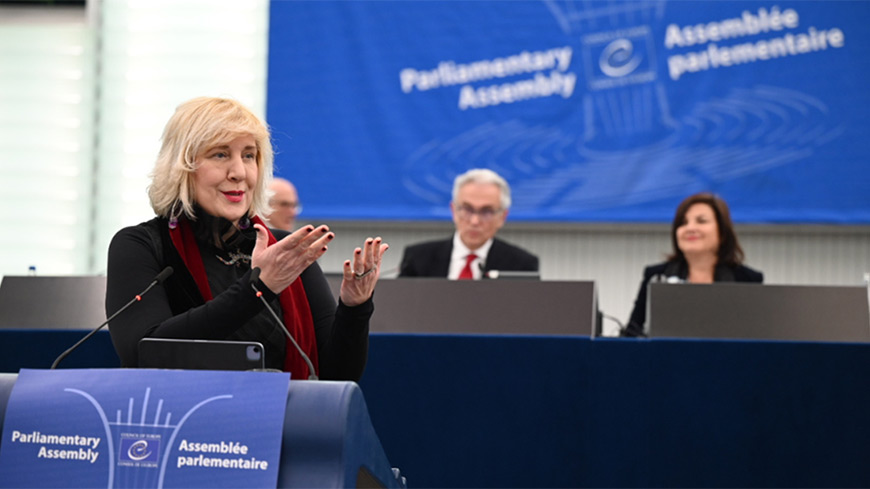
On 30 March 2024 Dunja Mijatović ended her term as Council of Europe Commissioner for Human Rights and the next day the new Commissioner, Michael O’Flaherty, started his work.
“… Over the past six years, I have witnessed the extraordinary commitment to human rights displayed by partners of my Office, and by ordinary citizens in the face of an ever-changing landscape of politics, technology and social issues. At the same time, I have seen the harm that the current challenges to human rights can do to our societies. The escalation of conflicts, most notably Russia’s full-scale invasion of Ukraine, has underlined the fragility of peace and the dire consequences of disregarding international law and human rights…
Throughout my tenure, the dedication of NGOs, journalists, activists and other partners has been a constant source of inspiration. Their unwavering commitment to the defence of human rights, often at great personal risk, has reinforced my belief in the power of collective action and the enduring relevance of our principles.
As my term ends, I am encouraged by the progress that has been made in the field of human rights, but mindful of the work that remains to be done. It is important to continue engaging on issues related to the environment and artificial intelligence…Finally, there is a crucial need to engage with and to enable the full participation of young people and their organisations in all future discussions. Governments should empower young people to make choices and meaningfully influence their future.
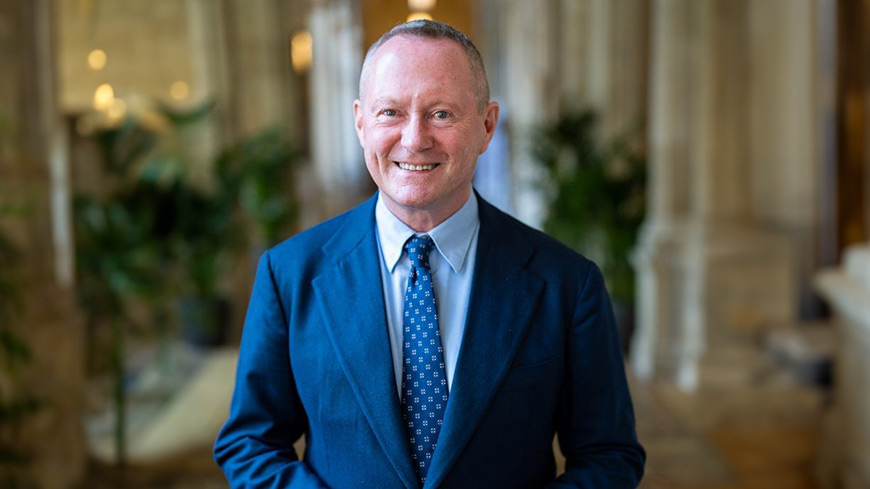
The Council of Europe’s new Commissioner for Human Rights, Michael O’Flaherty, begins his six-year mandate today with a pledge to put human rights at the heart of member states’ agendas.
“I intend to inject a human rights perspective into the greatest challenges facing our societies,” said O’Flaherty, noting that he intends to carry out his first visit as Commissioner to Ukraine. “I can think of nothing more urgent than addressing the human rights consequences of Russia’s full-scale invasion of Ukraine, which has caused terrible human suffering and destruction“.
The Commissioner also identified other areas where stronger human rights protection is urgently needed, including the climate crisis, the governance of artificial intelligence, freedom of expression, migration and the rise of hate speech, including antisemitism and anti-Muslim attacks.
A significant part of the Commissioner’s agenda will also be devoted to bringing the struggles of marginalised people and victims of discrimination to the forefront of human rights discussions. “In particular, Roma and Travellers face an intolerable situation that requires greater attention,” said the Commissioner.
Finally, the Commissioner highlighted his intention to focus on youth, socio-economic rights and human rights defenders, as well as to use his mandate to contribute to the implementation of judgments of the European Court of Human Rights.
” I step into this new role with a sense of great responsibility, as well as deep appreciation and respect for the work of my predecessor, Dunja Mijatović. Human rights affect every aspect of our lives. At a time when they face multiple challenges, we must recommit ourselves to weaving them into the fabric of our societies. This will require a concerted effort and I intend to play my part to the best of my ability by accompanying and standing up for rights holders across the Member States.”
On 22 February 2024, Human Rights Watch came with a study on governments reaching outside their borders to silence or deter dissent by committing human rights abuses against their own nationals or former nationals. Governments have targeted human rights defenders, journalists, civil society activists, and political opponents, among others, deemed to be a security threat. Many are asylum seekers or recognized refugees in their place of exile. These governmental actions beyond borders leave individuals unable to find genuine safety for themselves and their families. This is transnational repression.
Transnational repression looks different depending on the context. Recent cases include a Rwandan refugee who was killed in Uganda following threats from the Rwandan government; a Cambodian refugee in Thailand only to be extradited to Cambodia and summarily detained; and a Belarusian activist who was abducted while aboard a commercial airline flight. Transnational repression may mean that a person’s family members who remain at home become targets of collective punishment, such as the Tajik activist whose family in Tajikistan, including his 10-year-old daughter, was detained, interrogated, and threatened.
Transnational repression is not new, but it is a phenomenon that has often been downplayed or ignored and warrants a call to action from a global, rights-centered perspective. Human Rights Watch’s general reporting includes over 100 cases of transnational repression. This report includes more than 75 of these cases from the past 15 years, committed by over two dozen governments across four regions. While the term “transnational repression” has at times become shorthand for naming authoritarian governments as perpetrators of rights violations, democratic administrations have assisted in cases of transnational repression.
Methods of transnational repression include killings, unlawful removals (expulsions, extraditions, and deportations), abductions and enforced disappearances, targeting of relatives, abuse of consular services, and so-called digital transnational repression, which includes the use of technology to surveil or harass people. These tactics often facilitate further human rights violations, such as torture and ill-treatment.
This report also highlights cases of governments misusing the International Criminal Police Organization (Interpol)—an intergovernmental organization with 195 member countries—to target critics abroad.
Victims of transnational repression have included government critics, actual or perceived dissidents, human rights defenders, civil society activists, journalists, and opposition party members and others. Governments have targeted individuals because of their identity, such as ethnicity, religion, or gender. Back home, families and friends of targeted people may also become victims, as governments detain, harass, or harm them as retribution or collective punishment. Transnational repression can have far-reaching consequences, including a chilling effect on the rights to freedom of expression, association, and assembly among those who have been targeted or fear they could be next.
This report is not an exhaustive examination of cases of transnational repression. Instead, it outlines cases that Human Rights Watch has documented in the course of researching global human rights issues that point to key methods and trends of transnational repression.
Human Rights Watch hopes that by drawing attention to cases of transnational repression, international organizations and concerned governments will pursue actions to provide greater safety and security for those at risk. Governments responsible for transnational repression should be on notice that their efforts to silence critics, threaten human rights defenders, and target people based on their identity are no less problematic abroad than they are at home. This report provides governments seeking to tackle transnational repression with concrete recommendations, while raising caution against laws and policies that could restrict other human rights.
Human Rights Watch calls on governments committing transnational repression to respect international human rights standards both within and beyond their territory. Governments combatting transnational repression should recognize such abuses as a threat to human rights generally and act to protect those at risk within their jurisdiction or control.
“Effectively realising human rights for everyone, everywhere is the pathway to free, fair and just communities and a more peaceful and sustainable world“, write ISHR Director Phil Lynch and Board Chair Vrinda Grover on 8 March 2024. Here some excerpts from a piece worth reading:
We face a global climate emergency. We witness atrocity crimes being perpetrated with apparent impunity, from Afghanistan to Sudan, Palestine to Ukraine, and Nicaragua to Xinjiang. We confront rising populism and propaganda, with artificial intelligence misused to fuel disinformation and discrimination, and democracy facing a ‘make-or-break year’ in 2024, with over 70 national elections. Each of these crises and conflicts are complex, yet they are also interconnected in four fundamental ways.
First, repression and rights violations are among the root causes of all these crises and conflicts…
Second, respect for human rights, and accountability for violations, is essential to address and resolve these crises and conflicts. ..
Third, very few States, if any, have been prepared to treat human rights as paramount and apply human rights standards in a principled, consistent way to each crisis and conflict. ..The selective and inconsistent application of international human rights law undermines the integrity of the framework, as well as the credibility, legitimacy and influence of States and other actors who engage in such double standards.
Fourth and finally, the work of human rights defenders at the national level, as well as their engagement and advocacy at the international level, is essential to address and resolve each of these conflicts and crises. Defenders prevent rights violations, document abuses, promote accountability, and propose solutions that are grounded in community priorities and needs. Indigenous rights defenders carry the knowledge that is necessary to live sustainably and to respect and protect the environment. Digital rights activists are pushing for rights-based regulation of artificial intelligence to ensure that humanity benefits from its innovations and efficiencies. Whistleblowers are exposing government wrongdoing and corporate misfeasance, working to safeguard democracy, while corporate accountability activists are campaigning for an international treaty on business and human rights. Women human rights defenders from Afghanistan are leading the campaign to hold the Taliban accountable for the crime of gender apartheid, while also ensuring that humanitarian aid reaches the most vulnerable populations. In Sudan, women defenders are leading peace movements and protests at the local level, as well as international advocacy, which was instrumental in the establishment of a UN investigative mechanism, further adding to the pressure on the Sudanese Armed Forces and the Rapid Support Forces to end the war. Despite the challenges, complexities and uncertainties we collectively face, we remain convinced that, with international human rights laws and standards providing a compass, human rights defenders can chart a course to a more peaceful, just and inclusive world….
Despite the challenging times, exacerbated by declining funding for international human rights advocacy and organisations by some States and foundations, ISHR continues to pursue a positive and forward-looking agenda.
We’re pleased that in 2023 the Democratic Republic of Congo enacted a specific national law on the protection of defenders, the culmination of years of work by ISHR and national partners. With this development, the DRC joins the ranks of countries like Côte d’Ivoire, Niger, Burkina Faso, Mali, and Mongolia amongst the countries where we have worked alongside national partners to strengthen legal frameworks for defenders and establish specific defender protection laws and will continue to work to ensure effective implementation.
In the area of women’s rights, we are working with defenders from Afghanistan and Iran, together with international legal experts, to push for the explicit recognition and codification of the atrocity crime of gender apartheid. This would fill an international protection gap for women and girls, as well as impose responsibilities on third States and non-State actors to take concrete steps to prevent and end gender apartheid.
With 2023 marking the 25th anniversary of the Declaration on Human Rights Defenders, we are coordinating a broad coalition to develop an authoritative baseline document of international and regional jurisprudence in relation to the protection of defenders, which will be launched in 2024.
And throughout 2024 we’ll continue allying with Black-led organisations to promote racial justice, with feminist and LGBTIQ+ organisations to resist anti-rights narratives and movements, with corporate accountability activists to strengthen laws on business and human rights, and with Global South defenders to ensure that key multilateral fora are relevant, accessible and responsive to them.
Reflecting on our collective wins over 2023, we identified one golden thread: human rights defenders working in dynamic coalitions, movements and networks to strategically leverage international law and mechanisms to contribute to positive change. With 2023 marking both the 75th anniversary of the Universal Declaration of Human Rights and the 25th anniversary of the Declaration on Human Rights Defenders, and 2024 marking ISHR’s own 40th anniversary, it is apt to recall that the work of defenders and the integrity of the international framework are essential to the realisation of human rights on the ground.
The promise of the Universal Declaration will only be fulfilled when we work in coalition to ensure that defenders are protected and that standards are consistently respected and applied.
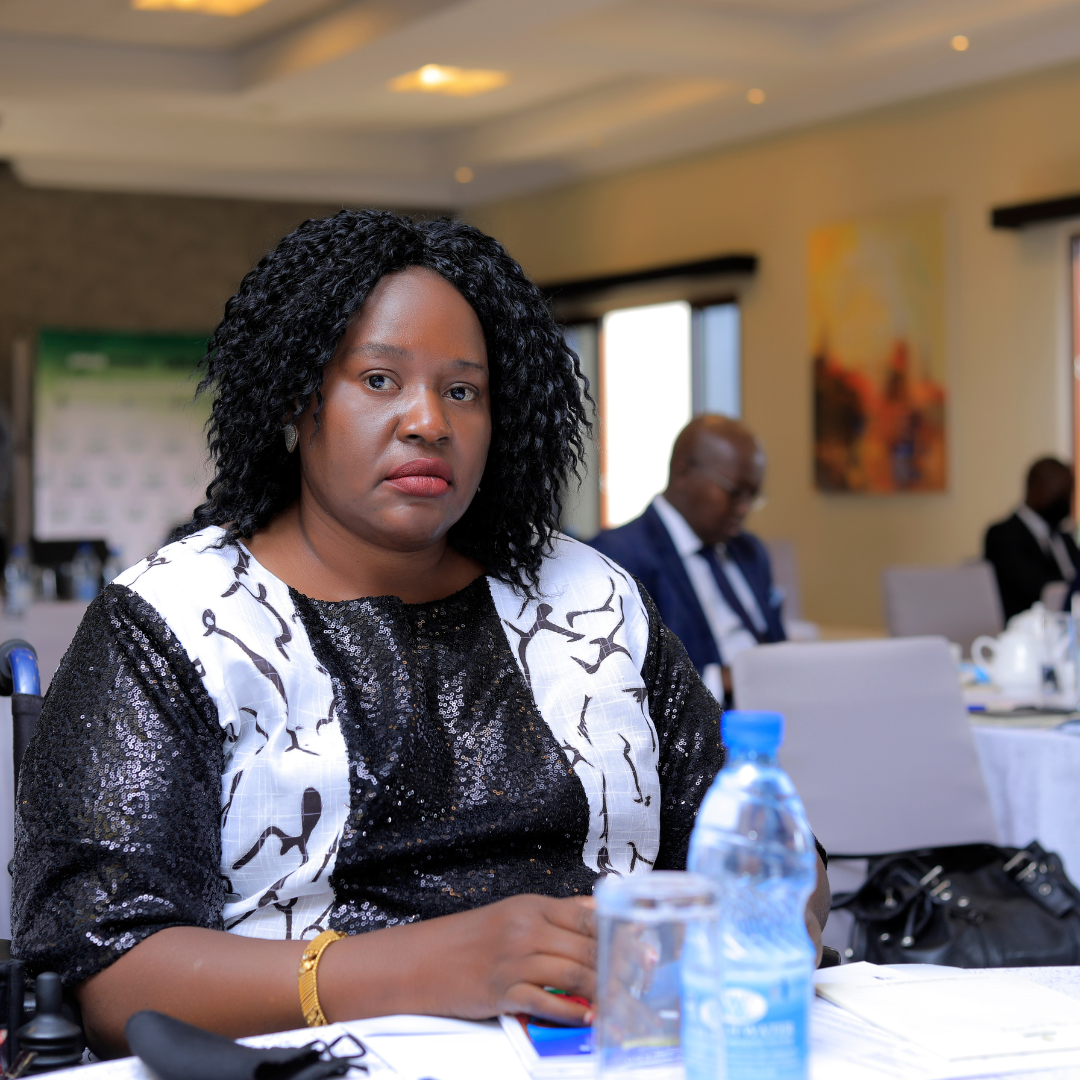
DefendDefenders in January 2024 has chosen as HRDs of the MonthPamela Angwech from Uganda.
For most of her life, Pamela Angwech’s existence has always been a defiant and simultaneous act of survival and resistance. In 1976 when she was born, the anti-Amin movement was gathering pace, and her family was one of the earliest victims in Northern Uganda. Her father, a passionate educationist in Kitgum district was one of the most vocal critics of the dictatorship’s human rights excesses, which made him an obvious target of the state’s marauding vigilantes. Fearing for his life and that of his young family, he escaped North, to Sudan, leaving behind his wife, then pregnant with Pamela, to follow him as soon as she could. It was on the treacherous journey to rejoin her father that Pamela was born, somewhere between Uganda and Sudan, and named Angwench, an Acholi word to mean “on the run,” in keeping with the circumstances of her birth.
Unfortunately, those precarious circumstances would continue to define most of Angwech’s childhood. Although Amin was eventually overthrown, paving way for her family’s return home, the immediate post-Amin years were equally tumultuous, and when President Museveni’s National Resistance Army took power in 1986, Northern Uganda was immediately engulfed in a civil war by the Lord’s Resistance Army(LRA) rebels that would rage on for the next 20 years, bringing wanton anguish and suffering to the region’s people and communities.
Angwench navigated those precarious circumstances to pursue an education, convinced that only then could she impact her community for the better. At University, she studied Gender and Women Studies and immediately returned home to seek work with the UN’s World Food Program Office in Gulu, determined to join the relief effort to alleviate the suffering of her people in Internally Displaced People’s (IDP)Camps.
Initially, they told me there was no job. But I was determined to work with the UN and nowhere else. So, I camped at their office for 14 straight days. Sometimes, I would volunteer as a gatekeeper when the substantive gatekeeper was away, and other times, I would sit at the front patch of the Office Head the whole day. When they realized I was determined not to leave, they allowed me to start officially volunteering with them. “I would go with them to distribute food in the IDP camps, until later, I was formally integrated as official staff.
Yet, despite her dogged stubbornness and resilience, she was not prepared for the heart-rending experience of life in the IDPs, particularly the plight of women and girls.
“I started to notice that after picking their food rations, women and children would start picking residue beans from the floor, to take for either their little children or their elderly parents who could not queue. One other time, I noticed a visibly tired woman carrying a baby on her back, being pushed out of the queue by others. I called her to the front and assured her that I would give her a special ration but asked her to first untie her baby from the back, so she could protect her from the sun and breastfeed her. When she untied her baby, I noticed that the baby’s neck was twisted – it had suffocated and died! That changed me, forever,”
From Humanitarian to Human Rights Activist
Angwech realized that like a balm, humanitarian work could only soothe the suffering of her people but fell short of tackling the root causes of the same suffering. “So I decided that someone had to speak up about the heartbreaking indignity and human rights violations surrounding the conflict in Northern Uganda. I turned full scale, from a humanitarian to a human rights activist, particularly championing the rights of women who were most vulnerable “she says.
Angwech would move on the streets rallying women to stand up for their rights, holding placards signaling injustices against women in IDP camps like molestation and rape. Overtime, she won followers: Emboldened by her courage and audacity, other women started to show up and speak up against the conflict and related violence. Angwech mobilized grassroot women groups to pursue LRA leader Joseph Kony in Congo’s Garamba forest, to dramatize their cries for peace, under UN resolution 13/25 which provides for women’s participation in peace processes.
In 2004, Angwech started Gulu Women’s Economic Development & Globalization (GWED-G) to rehabilitate victims of the war, from victims of conflict-related sexual and gender-based violence to those physically harmed by the conflict. Since then, Angwech says GWED-G has rehabilitated over 1700 war victims through physical rehabilitation projects, giving them prosthesis, among other forms of support. It has also continued to sensitise and organise grassroot women into human rights defenders’ groups, through which they can report and address GBV cases, issues of women economic rights among others. Today, Angwech says there are about 600 of these groups across Gulu, Lamwo, Amuru and Kitgum, each with a membership of 30 -40 members.
Today, GWED-G is arguably the largest grassroots human rights organisation in Northern Uganda. It has also expanded to cover other social and economic causes, including environmental protection advocacy. Angwech says the environment is the local communities’ last refugee, and yet deforestation and charcoal burning are threatening it. “For post-conflict communities like us in Northern Uganda, land is our primary resource. It is the land from which people make an income to feed their families, send their children to school, and access medical care. War destroyed everything else. So, if we don’t protect the environment, our land will be degraded, rainy seasons will begin to change which will affect food production and bring back hunger,” she says.
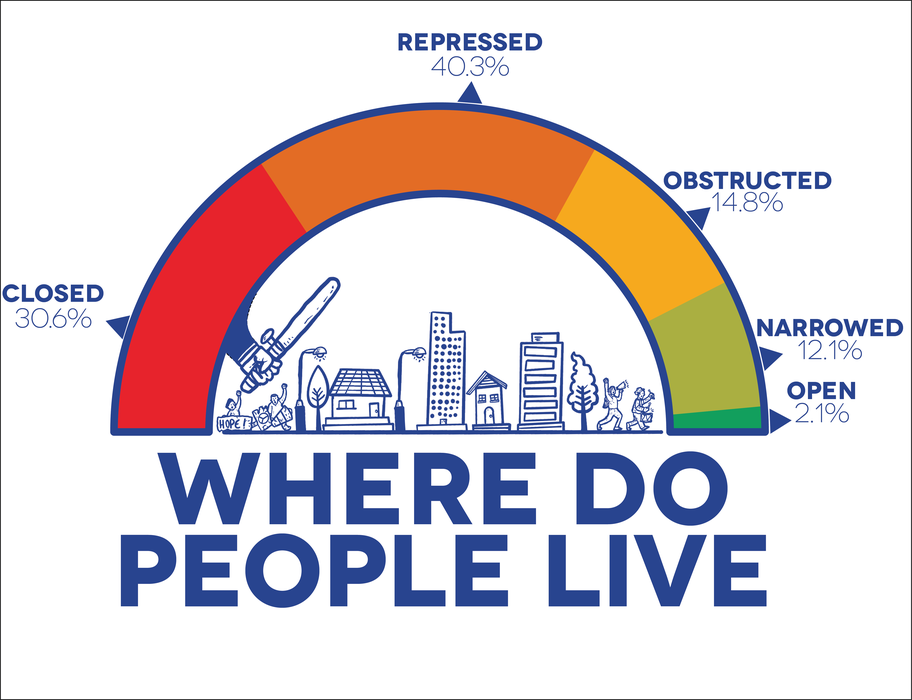
Almost a third of the world’s population now lives in countries with closed civic space. This is the highest percentage since 2018, when CIVICUS began systematically tracking civic space conditions around the world. This startling decline – from 26 per cent living in closed countries in 2018 to 30.6 per cent today – points to a major civic space crisis that requires immediate, global efforts to reverse. This year we also recorded the lowest percentage of humanity living in open countries, where civic space is both free and protected. Today, just two per cent of the world’s population enjoys the freedom to associate, demonstrate and express dissent without significant constraints, down from almost four per cent just five years ago.
Since the previous edition of this report, which covered 2022, civic space ratings have changed for 12 countries over the last year, worsening in seven countries and improving in five.
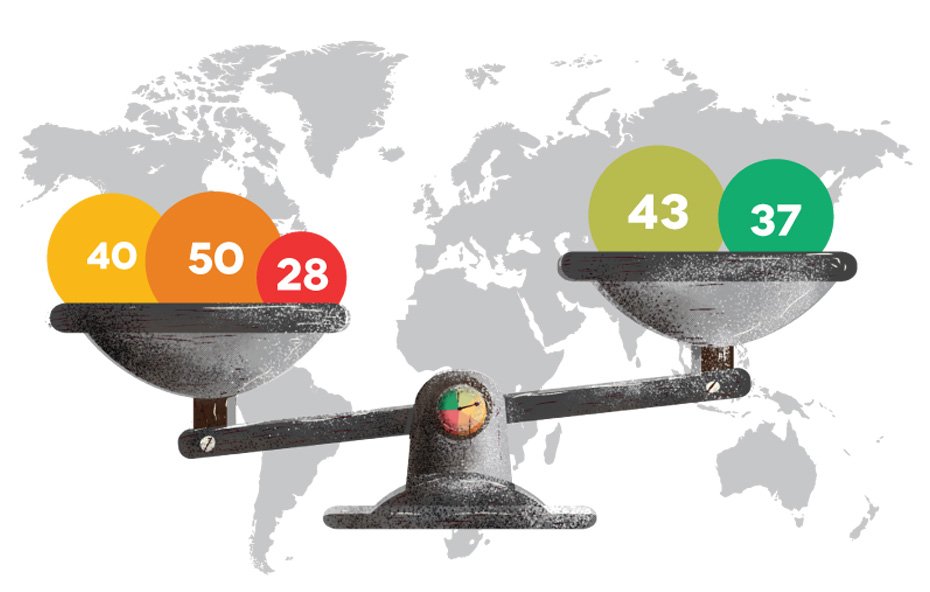
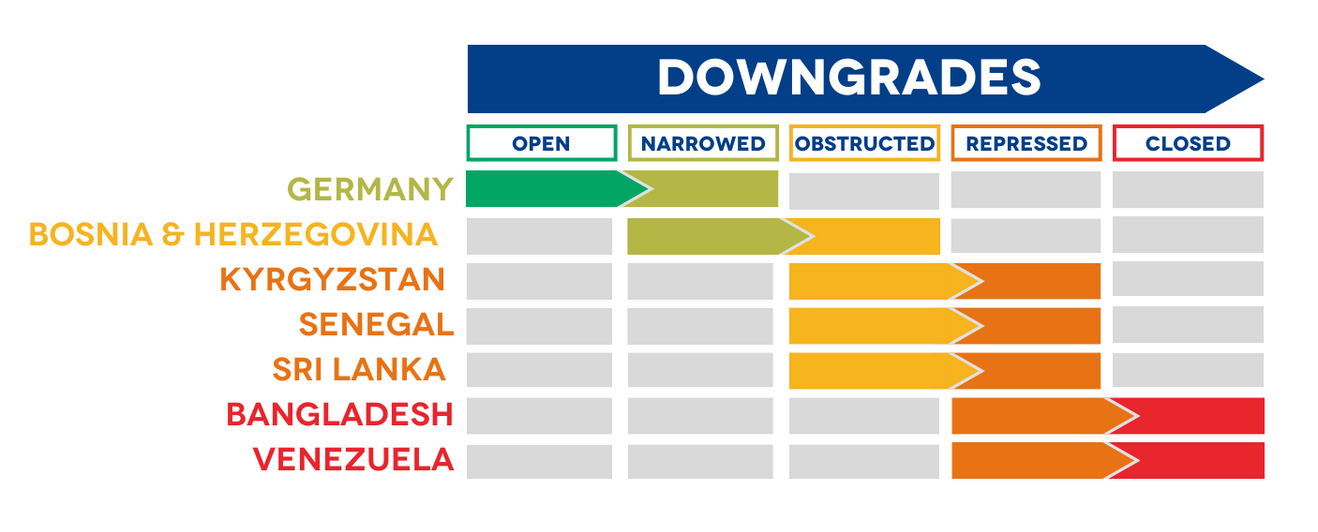
The latest CIVICUS Monitor country ratings update in December 2023 indicates that civil society faces an increasingly hostile environment. There are now 28 countries or territories with closed civic space, 50 with repressed civic space and 40 with obstructed civic space, meaning that 118 of 198 countries and territories are experiencing severe restrictions in fundamental freedoms. In comparison, 43 countries have narrowed civic space and just 37 have an open rating.
The severity of the civic space deterioration is exemplified by the number of countries moving to the repressed or closed category. Of the seven countries being downgraded, five moved to the two worst categories. Bangladesh and Venezuela are now rated as closed and Kyrgyzstan, Senegal and Sri Lanka are downgraded to the repressed rating as conditions for civil society continue to worsen.
Europe continues to add to the list of downgraded countries, with Bosnia and Herzegovina now placed in the obstructed category and Germany moving from an open to a narrowed rating. Over the past six years, 12 European countries have seen their ratings downgraded due to deteriorating civic space conditions.
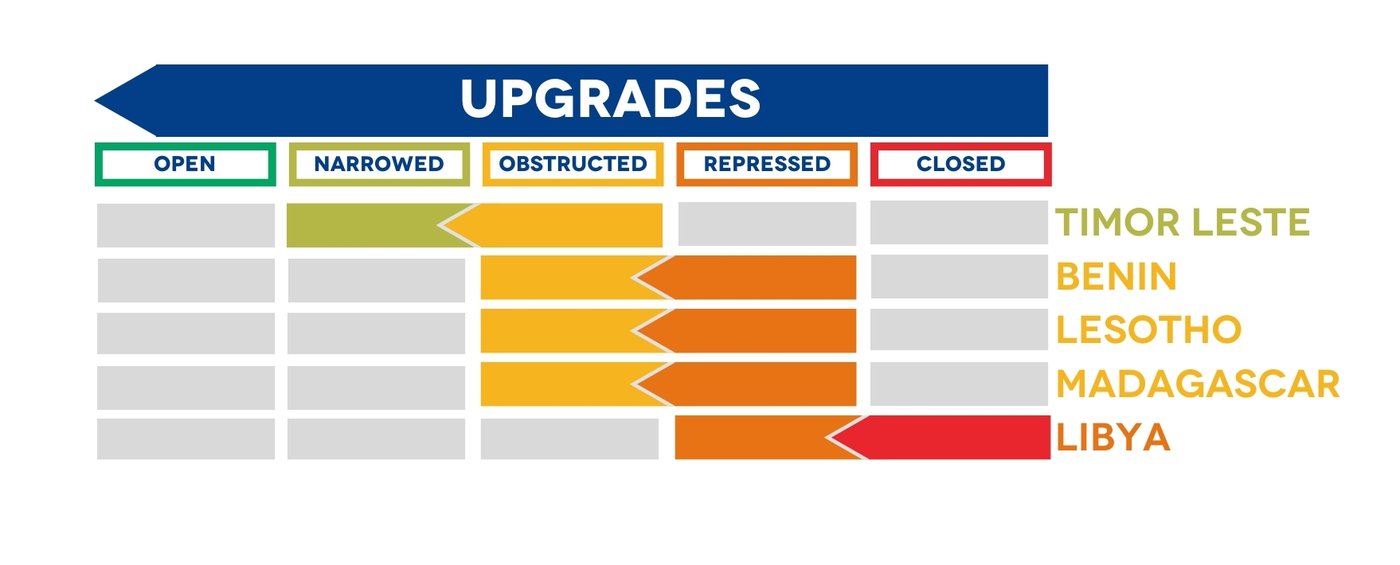
Five countries have upgraded ratings in 2023, although, as in previous years, the situation for civil society in these countries continues to be challenging. Libya moved from the closed to the repressed category. Benin, Lesotho and Madagascar have moved from the repressed to the obstructed category. Notably, Timor-Leste has joined the narrowed category. Regional sections describe the conditions that led to ratings changes.
I have written earlier about the wisdom of having purely governmental human rights awards. Now Canada adds to the discussion:
In my article for Oxford University Press (“Human Rights Awards for the Protection of Human Rights Defenders” J Hum Rights Pract (2013) 5 p552) I wrote: “A word of caution with regard to ‘governmental’ awards is in order. While it is one thing for a government to ‘support’ (e.g. financially) an otherwise independent award with an autonomous jury, the notion that governments (such as the USA, the Netherlands, France, Poland, Sweden, Canada) should run their own awards, select the winner, have the Minister hand it out and promote the award through the diplomatic service, does not sit well with the desire to protect HRDs from the charge of being ‘foreign agents’, a frequent claim by repressive governments trying to depict HRDs as being supported and funded from abroad… A degree of distance would benefit governments and would also serve the laureates themselves who usually want to be seen as spearheading the non-governmental human rights movement. Intergovernmental organizations face similar problems in having awards, as was demonstrated by the controversy surrounding UNESCO’s decision in 2010 to launch an award paid for and named after the president/dictator of Equatorial Guinea, Obiang Nguema.”
A recent article (5 March 2017) by Dean Beeby of the Canadian Broadcasting Corporation (CBC) entitled “Diefenbaker award missing in action after Liberals take over” brings home another aspect, namely that such an award becomes a ‘political tit-for-tat’. An award created by Stephen Harper’s government, which honoured former Progressive Conservative prime minister John Diefenbaker, was inaugurated in early 2011 and given out for four years running before ‘disappearing’ in 2015 and 2016. Read the rest of this entry »
The Scholars at Risk Network invites submissions for the Winter 2013 edition of University Values: a global bulletin on academic freedom, and the first of its kind around the world. Previous editions of the bulletin can be viewed at: http://www.scholarsatrisk.nyu.edu/Workshop/bulletin.php
University Values is an electronic bulletin featuring articles, essays, opinion pieces and announcements promoting discussion and understanding of university values, including values of access, accountability, academic freedom, autonomy and social responsibility.
Submission Requirements
Length: short articles of 500-700 words maximum.
Topic: on an academic freedom related issue of your choice. The article could, alternatively, contain news on important events, situations emerging in your region or specific countries or urgent appeals for scholars or universities in distress. Deadline: November 11, 2013.
Contact: submit articles by email to scholarsatrisk@nyu.edu. Enter “University Values Submission” in the subject line of your email.
The University Values Editing Committee will select up to six articles for publication in the bulletin. For more information about Scholars at Risk visit http://scholarsatrisk.nyu.edu.