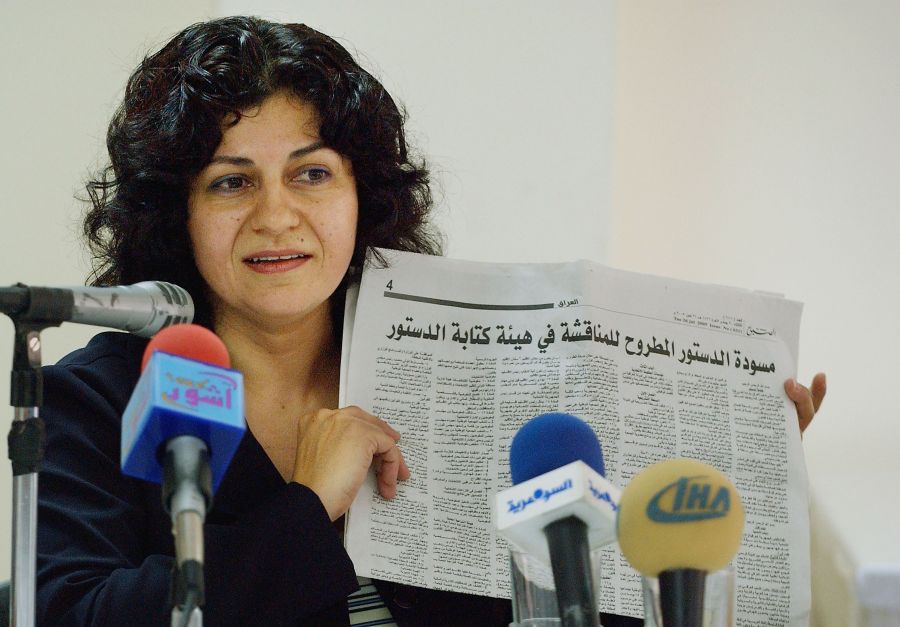
On 2 March 2026, woman human rights defender and feminist Yanar Mohammed was killed in an armed attack in front of her residence in northern Baghdad.
Yanar Mohammed was a prominent Iraqi woman human rights defender and feminist, and the co-founder and director of the Organisation of Women’s Freedom in Iraq (OWFI). Since 2003, she had worked to protect women facing gender-based violence, including domestic abuse, trafficking, and so-called ‘honour killings.’ Under her leadership, OWFI established a network of safe houses across several Iraqi cities, providing protection and support to hundreds of women. Yanar Mohammed led these efforts despite all the ongoing impediments and risks. She was a strong advocate for secularism and women’s equality. Throughout her activism, Yanar Mohammed faced death threats and, at times, was forced to restrict her movement. {see also: https://humanrightsdefenders.blog/2019/01/07/women-human-rights-defenders-in-iraq-have-to-live-dangerously/]
According to an offical statement from OWFI, on 2 March 2026 at 9:00, two unidentified gunmen on motorcycles opened fire on Yanar Mohammed as she stood outside her home. She was quickly transported to the hospital, however, despite the effort of medical personnel, she succumbed to her injuries.
Reportedly, Yanar Mohammed had returned to Baghdad from Canada just a few days prior to her assassination, raising concerns about the potential surveillance and monitoring of her movements.
Aziza Abdirasulova has displayed great courage and determination in defending human rights
Aziza Abdirasulova, a prominent human-rights defender and a pioneering independent civil society activist from Kyrgyzstan, has been awarded the 2026 Council of Europe Raoul Wallenberg prize in recognition of her efforts to protect fundamental rights with a particular focus on prisoners’ rights, freedom from torture, and the right to peaceful assembly.
At the award ceremony in Strasbourg, on 21 January 2026, Council of Europe Secretary GeneralAlain Berset recognised the great courage and determination of Ms Abdirasulova making an outstanding contribution to fundamental rights in Kyrgyzstan, often at great personal and physical risk.
“As one of the first independent human-rights defenders in Kyrgyzstan to document torture and arbitrary detention systematically, Aziza Abdirasulova has kept facts on the record when silence would have been easier. At a time when attention is drawn to geopolitical shifts and crises at the top, she reminds us that the Raoul Wallenberg prize brings the focus back to human-rights defenders.”
In the spirit of Raoul Wallenberg’s work, notably his single-minded determination and extraordinary courage in standing up to protect fundamental rights, the jury emphasised that Aziza Abdirasulova refused to be silenced by intimidation and harassment. Underlining the essential role of human-rights defenders in challenging times, including backsliding on human rights, the jury stressed that “her organisation Kylym Shamy has played a key role in exposing systemic human-rights violations providing legal support to victims and mobilising public opinion nationally and internationally. It has also been a vital source of credible information for the international community on human-rights issues in Central Asia. She has worked indefatigably to promote and protect freedom of assembly and the right to peaceful protest in the face of severe official restrictions on protests and public gatherings.”
Receiving the prize, Aziza Abdirasulova said: “For me, like for Raoul Wallenberg, every human life saved had and has the ultimate value. Over the years of my work, I have consistently defended fundamental human rights: freedom of peaceful assembly, freedom from torture and cruel treatment, freedom of speech and opinion. This work required not only professional knowledge but also great personal courage. I happened to witness hundreds of cases of torture, and in each case, I have tried to provide whatever support I could to the victims.”
On 26 February 2026 the Human Rights Foundation (HRF) launched its research project, the Tyranny Tracker, a qualitative index that classifies the world’s countries and territories as democratic, hybrid authoritarian, or fully authoritarian. This political regime assessment tool is now available to the public at a moment when tyranny is on the rise worldwide.
According to HRF’s Tyranny Tracker, 75% of the world’s population lives under authoritarianism despite representing only 92 countries, or less than half of all countries in the world — a number that is partly explained by the hybrid authoritarian regimes of India, Indonesia, Pakistan, and the Philippines, and by the fully authoritarian regimes of China, Ethiopia, Nigeria, Russia, and Vietnam, which rule over some of the world’s most populous countries. The Tyranny Tracker classifies countries using a methodology consisting of 45 indicators categorized into three thematic pillars: electoral competition, freedom of dissent, and institutional accountability. The methodology is informed by academic literature and HRF’s 20 years of experience advocating on behalf of dissidents from countries ruled by authoritarian regimes. The research draws on a range of sources, including media, data collected by HRF’s in-house research team, an extensive human rights network, and expert advice. Published today in the Journal of Democracy, a piece from HRF’s lead researchers Javier El-Hage, Malaak Jamal, and Alvaro Piaggio, explores what sets the Tyranny Tracker apart from other indexes, and how readers can use the tool to inform their work.
“The Tyranny Tracker is a culmination of years of HRF’s internal research to identify patterns of authoritarianism worldwide and decide which regimes to prioritize as targets of our advocacy work,” said Malaak Jamal, HRF’s director of policy and research. The Tyranny Tracker uses three classifications for the governments ruling countries around the world: Democratic governments are characterized by largely free and fair elections, freedom to criticize the government, and an independent judiciary capable of being an effective check on government abuse. While many of these governments currently face real challenges in resisting the autocratic tendencies of democratically elected leaders emboldened by increased political polarization globally, they continue to maintain the mechanisms of self-correction that allow democracies to survive and evolve, as opposing political parties regularly and peacefully transfer power. Hybrid authoritarian regimes are typically the result of the severe erosion of institutions by an initially democratically elected government, and represent a step in the process of authoritarian consolidation. While these authoritarian regimes maintain a façade of democracy through regular elections, their autocratic actions heavily skew elections in favor of the incumbent to the point that an opposition victory and peaceful transfer of power are highly unlikely. Fully authoritarian regimes systematically stifle meaningful electoral competition and the basic freedom to dissent, all the while tightly controlling a judicial branch, which lacks any ability to serve as a check on government abuse. These authoritarian regimes regularly rig elections (when they hold them at all), shut down critical media outlets and organizations, and target political opponents and dissenters with arrests and killings, making the chance of a nonviolent transition to democracy as a result of elections little more than a theoretical possibility.
“HRF’s new tool aims to contribute to the healthy competition and complementarity among existing democracy indexes by great institutions, such as Freedom House, V-Dem, International IDEA, or the Economist Intelligence Unit, that already do a great job documenting the situation of authoritarianism worldwide in a quantitative way. The Tyranny Tracker, on its part, is methodologically different as it follows a simple yet structurally cohesive and qualitative analysis process, carried out by HRF’s regional policy and advocacy researchers and experts, resulting in limited yet materially significant differences in country classifications,” said Javier El-Hage, HRF’s chief legal and policy officer.
Jawad Fairooz is a Bahraini human rights defender, Founder of OMCT’s SOS-Torture Network member organisation SALAM for Democracy and Human Rights. He is also a former Member of the Bahraini Council of Representatives, currently living in exile after years of persecution by the authorities, including detention, torture, and the revocation of his nationality. In Bahrain, severe restrictions on civic space persist alongside widespread impunity and ongoing allegations of torture. As the UN Committee Against Torture reviews Bahrain’s record, Jawad Fairooz reflects on the human rights climate in the country, the personal cost of his advocacy, and the urgent need for accountability, drawing on his experience and the findings highlighted by OMCT and partners’ Global Torture Index.Since the crackdown on the Arab Spring protests in 2011, Bahrain has been marked by grave human rights violations. .. More than 435 people have had their nationality revoked [see also: https://humanrightsdefenders.blog/2018/02/25/i-am-bahraini-website-launched-in-effort-to-stop-denationalizations/], and over 300 prisoners of conscience remain behind bars, including opposition leaders. Freedom of speech and assembly are criminalised, torture has not been systematically banned, and political and civil rights continue to be restricted. The core violations that began years ago are still continuing today.
What has been the cost of your advocacy in Bahrain?
From the moment I became active in public life, I knew there would be a high price to pay. In 2004, while leading a large protest against the US invasion of Iraq, I was shot in the head with a live bullet. Since then, I have been targeted repeatedly through detention, torture, and eventually the revocation of my nationality.
The Global Torture Index classifies Bahrain as facing a “very high risk” of torture. Why?
Torture is not taken seriously by the authorities. There are no accountability and no clear mechanism to hold senior officials responsible. Victims are denied remedies, redress, and rehabilitation. Even after release, former detainees struggle to regain basic civil and political rights. They face obstacles in obtaining employment, housing, and other services. International recommendations from bodies such as the UN Committee Against Torture have not been implemented. There have been no meaningful legal amendments to fully prohibit torture or establish independent investigations. Semi-government institutions lack independence and cannot be trusted to address these abuses. All of this shows a clear lack of political will.
What are the main obstacles facing survivors of torture when seeking justice?
The government focuses on public relations rather than real reform. Institutions like the National Institution for Human Rights, the Special Investigation Unit, and other bodies exist, but they are not independent. Cases referred to them rarely result in accountability or fair trials. Victims consistently report that justice is denied. Torture has evolved from overt physical abuse to psychological and “soft” methods, including deprivation of rights, travel bans, revocation of nationality, deportation, and denial of documents and services. These practices show that torture continues in different forms, and the authorities are not serious about ending it at its roots…
You have been in exile. How do defenders continue their work despite reprisals?
Human rights defenders in exile pay a heavy price. Many are banned from entering Bahrain or face fabricated cases, Interpol notices, travel restrictions, and harassment of their families. Smear campaigns label activists as terrorists or foreign agents. Despite this, defenders continue out of belief in the cause and responsibility toward victims. It is extremely difficult, but repression cannot last forever, especially under international scrutiny.
What gives you hope to continue your work?
Silence only strengthens repression. The resilience of victims and their families gives me hope. Standing with them is a moral and spiritual duty. I believe oppression has a short life, and that by continuing this work, we help ensure that future generations do not inherit a reality of torture, executions, statelessness, and detention.
On 19 February 2026, an important group of NGOs stated that the international community must call for the immediate release of Umar Khalid
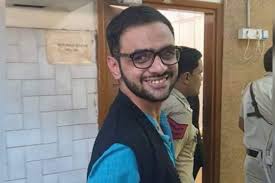
On Jan. 5, 2026, the Indian Supreme Court denied bail to human rights defender and student activist Umar Khalid, who has been detained for over five years without trial, in violation of India’s obligations under international human rights law. The undersigned organisations are disturbed by the Court’s decision. As domestic legal remedies have proven ineffective, we urge the international community to take urgent and coordinated action.
Khalid was arrested on Sept. 13, 2020, after he became a prominent face of nationwide peaceful protests against the discriminatory Citizenship Amendment Act, a law excluding Muslims from eligibility for a fast-tracked path to Indian citizenship. Khalid’s unfounded prosecution stems solely from the exercise of his rights to freedom of expression and peaceful assembly.
Khalid was charged under India’s anti-terror law, the Unlawful Activities (Prevention) Act (UAPA), as well as other laws, for a total of 29 charges. The UAPA has been criticised by the UN Working Group on Arbitrary Detention and several other UN Special Procedures mandate holders, particularly for its vague definitions and restrictive bail provisions that enable prolonged pre-trial detention. Indian authorities have frequently used these anti-terror legislations to detain political dissenters, human rights defenders, activists, and Muslims by keeping them in prison for extensive periods of time prior to trial. Indian grassroots organisation People’s Union for Civil Liberty has demonstrated through its investigation how UAPA has been systematically abused to silence dissent.
Since his arrest, Khalid has been languishing in Delhi’s Tihar jail for over five years awaiting trial. According to the Supreme Court, this excessively long pre-trial detention has not “crossed the threshold of constitutional impermissibility,” but Khalid should not be detained at all — he is being held simply for exercising his rights. The Supreme Court’s Jan. 5, 2026, decision also forbids Khalid from applying for bail for one year. His trial is yet to begin.
In the same judgment in which the Court denied bail to Khalid, it released his co-defendants in the case, activists Gulfisha Fatima, Shifa Ur Rehman, Meeran Haider, Saleem Khan, and Shadab Ahmed, a development the undersigned organisations welcome. However, Khalid’s co-defendants, released on bail, are not entirely free. The Supreme Court imposed strict bail conditions: a blanket ban on participating in “any programme or address”, attending “any gathering, rally or meeting, whether physically or virtually” and on circulating “any post either in electronic or physical form or circulate any hand bills, posters, banners, etc. in any form whatsoever.” These conditions violate their rights to freedom of expression and association.
All of Khalid’s co-defendants remain at risk of re-arrest if eventually convicted in the case. This includes activist Safoora Zargar, who was charged in the same case but released on bail in June 2020 due to her pregnancy, and following a decision of the United Nations Working Group on Arbitrary Detention rendering her detention arbitrary.
The Indian judicial system has failed Umar Khalid and his co-defendants. It is time for the international community to take meaningful and coordinated action. Governments, particularly those with strong bilateral relationships with India, should publicly and privately call for Umar Khalid’s immediate and unconditional release and raise his case in all high-level diplomatic engagements.
As a sitting member of the UN Human Rights Council, India should be reminded of its commitment under UN General Assembly Resolution 60/251 to “uphold the highest standard in the promotion and protection of human rights.”
Pending the acquittal of Khalid and his co-defendants, diplomatic missions in New Delhi should also closely monitor court proceedings and reaffirm the importance of due process and presumption of innocence.
Signed by;
Human Rights Foundation
Hindus for Human Rights
Diaspora in Action for Human Rights and Democracy (DAHRD)
Amnesty International
InSAAF India
Indian American Muslim Council
UK Indian Muslim Council
Scottish Indians for Justice
India Alliance Paris
South Asia Solidarity, UK
South Asia Justice Campaign
Joint Committee to Stop Repression in India
India Labour Solidarity
Freedom House
India Civil Watch International
Karwaan-e-Mohabba
World Organisation Against Torture (OMCT), within the framework of the Observatory for the Protection of Human Rights Defenders
Free Voices Collective e.V.
International Federation for Human Rights (FIDH), within the framework of the Observatory for the Protection of Human Rights Defenders
Purpose:To inform the High Commissioner’s report pursuant to the Human Rights Council resolution 59/10.
In its resolution 59/10, the Human Rights Council requested the United Nations High Commissioner for Human Rights to “prepare a thematic report in follow-up to the report containing practical recommendations for the creation and maintenance of a safe and enabling environment for civil society, based on good practices and lessons learned, submitted to the Human Rights Council at its thirty-second session, to review progress against the recommendations contained therein, to identify new and emerging trends concerning civil society space, including through an analysis of the specific contribution and risks faced by underrepresented parts of civil society, and to provide an updated set of recommendations in the light of those trends, and to present the report to the Council at its sixty-third session.”
OHCHR invites States to respond to this online survey and share good practices and measures to protect and promote civic space in their countries, with a focus on the five areas outlined in the previous report (A/HRC/32/20) – as reflected below – on “practical recommendations for the creation and maintenance of a safe and enabling environment for civil society, based on good practices and lessons learned.” Please take the online survey here: English – French – Spanish
OHCHR also invites civil society, non-governmental organizations, national human rights institutions, United Nations entities and other relevant stakeholders, to respond to this online survey. If you are an organization working in a specific country, please provide information related to that country or context. If you represent a global and regional organization, please consider providing information for as many regions and/or countries as appropriate. Please take the online survey here: English– French– Spanish
UN human rights experts on 5 February 2026 urged China to immediately grant full access to adequate medical treatment for woman human rights defender, Yang Li, from Jintan, Jiangsu Province, saying that her attempts to travel to Beijing for medical appointments have been intercepted on numerous occasions and allegedly resulted in her arbitrary detention.
“The arrest and indictment of Yang Li appear to represent an effort by the authorities to prevent her from peacefully exercising her rights to seek redress for legitimate grievances. This harassment is compounded by the fact that it was coupled with preventing her from accessing medical treatment,” the experts said.
Yang Li has been advocating against land requisition and crop clearance being carried out by the authorities in Jiangsu Province since 2009. Her efforts to seek redress for her family and members of her community through filing petitions have led to her being administratively detained multiple times since 2014.
Since 2023, Yang Li has consistently attempted to travel to Beijing to file petitions and receive medical treatment. During these attempts, she has been subjected to physical assaults, administrative detention and been prevented from accessing necessary medical treatment – reportedly by officials from the Jintan and Beijing police. In October 2024, Yang Li was placed in criminal detention for the charge of “picking quarrels and provoking trouble,” which was later changed to “disrupting the work order of state organs.” Yang Li was convicted in September 2025 and sentenced to 15 months imprisonment in a judicial process that indicated several fair trial inconsistencies.
“Yang Li is in urgent need of adequate medical treatment, capable of responding to the late-stage kidney disease she is suffering from,” the experts said. “Her condition appears to have worsened significantly as a result of the repeated denial of medical care, her treatment whilst in prison and the stress she has been subjected to through numerous detentions that appear to have been carried out without legal basis or justification.”
“We urge the authorities to cease the harassment and intimidation of Yang Li and her family and allow her full, immediate access to medical treatment of her choosing, to ensure her health does not further deteriorate and to prevent long-lasting impacts,” the experts said.
The experts have been in contact with the Government of China on these issues.
Philippe Bolopion, Executive Director of HRW, starts the annual report of 2026 with the following words: “The global human rights system is in peril. Under relentless pressure from US President Donald Trump, and persistently undermined by China and Russia, the rules-based international order is being crushed, threatening to take with it the architecture human rights defenders have come to rely on to advance norms and protect freedoms. To defy this trend, governments that still value human rights, alongside social movements, civil society, and international institutions, need to form a strategic alliance to push back.“
…In this context, 2025 may be seen as a tipping point. In just 12 months, the Trump administration has carried out a broad assault on key pillars of US democracy and the global rules-based order, which the US, despite inconsistencies, was, with other states, instrumental in helping to establish.
In short order, Trump’s second-term administration has undermined trust in the sanctity of elections, reduced government accountability, gutted food assistance and healthcare subsidies, attacked judicial independence, defied court orders, rolled back women’s rights, obstructed access to abortion care, undermined remedies for racial harm, terminated programs mandating accessibility for people with disabilities, punished free speech, stripped protections from trans and intersex people, eroded privacy, and used government power to intimidate political opponents, the media, law firms, universities, civil society, and even comedians.
Claiming a risk of “civilizational erasure” in Europe and leaning on racist tropes to cast entire populations as unwelcome in the US, the Trump administration has embraced policies and rhetoric that align with white nationalist ideology. Immigrants and asylum seekers have been subjected to inhumane conditions and degrading treatment; 32 died in US Immigration and Customs Enforcement custody in 2025, and as of mid-January 2026, an additional 4 have died.
The US president of course has the authority to tighten US borders and enforce stricter immigration policies. The administration is not, however, entitled to deny legal process to asylum seekers, mistreat undocumented migrants, or unlawfully discriminate. In a well-functioning democracy, no electoral mandate should supersede domestic legislation, constitutional protections, or international human rights law. Trump’s team has repeatedly bypassed these guardrails.
The violations have not stopped at the border. The Trump administration used a 1798 law to send hundreds of Venezuelan migrants to an infamous prison in El Salvador, where they were tortured and sexually abused. Its blatantly unlawful strikes on boats in the Caribbean and the Pacific extrajudicially killed more than 120 people whom Trump claims were drug traffickers…
A summary can be found in Al-Jazeera of 4 February 2026
On 29 January 2026 ISHR, in collaboration with its various partners, announced that it has established a network of legal professionals for the protection of human rights defenders in Africa
Legal professionals and human rights defenders from several African countries came together to finalise the establishment of a network for the protection of human rights defenders in Africa.
This Network aims to be a space for collaboration, solidarity and strategic legal action, with a view to strengthening the collective response to violations of the rights of human rights defenders in Africa. Its establishment is part of a project implemented by the International Service for Human Rights with the support of Open Society Foundations, and in collaboration with national and regional human rights networks.
Participants at this regional meeting reviewed the Network’s founding charter, defining its principles, governance and operating procedures, and identifying common priorities for strengthening the legal protection of human rights defenders on the continent.
Participants noted that in some African countries, violations, criminalisation and impunity persist, even in contexts with specific legal frameworks. Emphasising the need to move beyond isolated approaches, participants agreed to strengthen regional coordination among legal professionals.
During the meeting, the Network members agreed on a set of common principles and values, including a defender-centred approach, commitment, solidarity, independence, apoliticality, professionalism, integrity, and confidentiality. They also defined clear criteria for the Network’s engagement in situations of violations, in order to ensure responsible, strategic actions that respect the safety of defenders.
The meeting also served as an opportunity to discuss the legal challenges faced by defenders in different national contexts, as well as regional and international mechanisms that could strengthen their access to justice and protection.
The members of the Network committed to continuing the work begun at this meeting and to translating the adopted recommendations into concrete actions:
For countries that have not yet adopted an act on the recognition and protection of human rights defenders, to adopt such legislation.
For countries that have adopted such legislation, to implement it and establish national mechanisms for the protection of human rights defenders.
Today, 24 January 2026, marks the International Day of the Endangered Lawyer. In recognition of endangered lawyers around the world, the undersigned NGOs, express deep alarm at the growing repression of lawyers worldwide for the legitimate exercise of their professional duties. Attacks on lawyers strike at the very heart of the rule of law, deny victims meaningful access to justice, and enable wider assaults on human rights and democratic institutions.
In Russia, the regime of Vladimir Putin has moved to punish not only opponents but also those who defend them. One year ago this month, to cite just one example, lawyers Vadim Kobzev, Alexei Liptser, and Igor Sergunin, members of the defense team of the late opposition leader Alexei Navalny, were sentenced to an average of four and a half years in prison on fabricated extremism charges simply for carrying out their ordinary professional duties. Since then, Russia has intensified its harassment of lawyers, most recently arresting human rights attorney Maria Bontsler in May 2025.
In Afghanistan, the Taliban’s seizure of the Afghanistan Independent Bar Association and the transfer of licensing to the Ministry of Justice effectively stripped thousands of lawyers of their right to practise, with women lawyers almost entirely excluded from the profession.
In Iran, recent reports show a pattern of state capture of bar associations, politically motivated prosecutions, and gender specific persecution of women lawyers, which together erode fair trial guarantees for all.
In Tanzania, legal advocates have faced systemic oppression from the government, including oppression under the Advocates Act, which gives the executive branch power to manage the legal profession and control over disciplinary measures against lawyers.
In China, the regime systematically cracks down on human rights lawyers, using vague national security laws and administrative controls to dismantle the independent legal profession.
These examples are a part of a wider and well-documented trend. Lawyers are disbarred, disciplined, arbitrarily detained, prosecuted, forced into exile, subjected to surveillance and harassment, and in some cases killed, precisely because they seek to uphold the rights of their clients, including human rights defenders, opposition leaders, journalists, women, minorities, and other marginalized communities.
Despite this, lawyers continue to perform a crucial function. Even in countries without an independent and impartial judiciary, where judicial outcomes are largely predetermined, lawyers document abuses, create records of testimonies and verdicts, and preserve evidence that can one day support accountability. Their efforts also enable recourse to international and regional mechanisms once domestic remedies have been exhausted or shown to be ineffective. As the UN Special Rapporteur on the independence of judges and lawyers recognized in her 2024 report, “justice systems play an essential role in safeguarding democracy, and the work of those justice systems is carried out by people. To protect the rule of law and democracy, we must protect those people.”
Justice is never won easily. But it cannot be won at all if those who defend it are left defenseless.
On May 13, 2025, the Council of Europe (CoE) Convention on the Protection of the Profession of Lawyer opened for signature. This is the first international treaty specifically designed to safeguard lawyers from threats, harassment, and undue interference in their work. This is a historic breakthrough, but it will mean little if governments fail to give it real force. We call on all CoE member states to sign and ratify the Convention without delay and to implement it fully. We encourage states in other regions to develop complementary binding standards so that protection of the legal profession becomes a universal norm…
No lawyer should be punished for defending a client. We honour the courage of all endangered lawyers working under threat, and we reaffirm our collective commitment to protect them and to uphold the right of every person to an independent defense and a fair trial.
Respectfully,
Human Rights Foundation
The Anti-Corruption Foundation
The Arrested Lawyers Initiative
Free Russia Foundation
Freedom House
Freedom Now
George W. Bush Institute
Global Magnitsky Justice Campaign
Human Rights First
Lantos Foundation for Human Rights and Justice
Raoul Wallenberg Centre for Human Rights
Elisa Massimino, Human Rights Institute, Georgetown Law


 Hans Thoolen on Human Rights Defenders and their awards