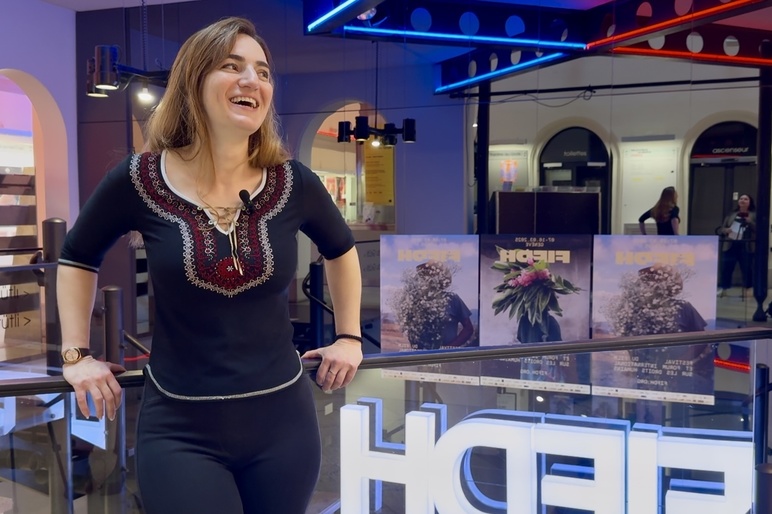
Born in Damascus, Syria, Lina is a filmmaker, journalist, and human rights defender, who in 2011 decided to pick up her camera and start filming, without a plan, but with the knowledge that she has a story to tell. What ensued are five years of conflict, arbitrary arrests, as well as torture and ill-treatment in detention, but also of hope that things would get better, despite a veto. Five Seasons of Revolution was recently screened at the International Film Festival and Forum on Human Rights in Geneva, in an event co-hosted by OMCT, partner of the festival. In this interview, Lina tells us more about her process and the challenges she encountered in the making of the film, as well as her hopes for the future of Syria.
What made you decide to start filming?
We started shooting in the summer of 2011, and a lot was already happening in Syria, but it was not clear how things were going to go. I was optimistic, thinking it would be over in six months, maybe a year, with a release within two years. It took 12 years.
It took more than five years of filming, and then many more to edit, because the country hadn’t stabilised, and the characters’ decision to participate in the film shifted with every new development, for their own safety. We had to go back, take characters out, then put them back in, and make amendments to the storyline. But it wasn’t all negative. During this time, deepfake technology improved and gave us a solution for the anonymity issue of some of the characters who chose to stay in Syria in a way that is safe and does not interfere with the visual narrative.
What was the most challenging part about the filming process?
Not knowing where it’s heading. As a filmmaker, you have, even in documentaries, a rough script, or an idea of where you are heading, but we couldn’t. It was like surfing, we just had to keep up with weird twists and turns. At some point, there were so many arrests in the group that I was filming, the characters just kept going in and out of jail, and at any given moment, we would lose one of them. I was arrested several times and the rest of the film crew had to come up with plan Bs for ‘what if we lose the director, who also happens to be the camera person and the sole contact to all the other characters, how do we finish the film?’ There was even one editing session that was held in my absence because I was detained, and they didn’t know when I would be released. It was really challenging.
What was the most challenging part about having to change your identity several times throughout filming?
It was very confusing, but it was also very necessary. In order to make it work, you have to internalise it to a certain extent, which was challenging. This confuses your relationships with the people you’re working with, with the people you’re socialising with, with the people that trust you, despite only knowing your fake name. Very strong bonds are formed under extremely difficult conditions and something always felt wrong about not being able to be fully honest with people. it also created these compartments of who I am because different parts of me had different names in different places… and they didn’t always get along. Walking out of it was also a challenge. Normalising being one person and only using one name, only answering to one name. It was quite a journey.
Towards the end of the documentary, you talk about your experience with your arrest. Did what you experienced in custody change your approach to the film, or your activism?
I did not encounter anything during my arrest that I did not previously know exists and happens. What was detrimental was the repetition of detentions because you know you might get away with it once, maybe twice, if you’re lucky three times. But when I was released for the third time, I realised I did not know anybody that survived a fourth arrest. I felt like a cat with seven lives and I was really running out of them. I think this affected not only my decision-making in the film, but decision-making in my life in general, which obviously had consequences.
What are three things you hope people remember after watching your film?
Number one is that simplistic reductionist scenarios of war into black and white, good and bad are never true. Number two is that nobody has a blueprint for what to do in these cases. People improvise, people try to find solutions on the spot under pressure, and these are not always ideal. But also, people can be much braver than they think, because at the end of the day we are survivors, all of us, and there is a lot more to us than we sometimes give ourselves credit for. And number three, friendship is really important.
You are a filmmaker, but also a human rights defender. What are your hopes now for Syria and its people?
I hope people will be able to recover. I hope people will be given a break, given a chance to process everything they went through, given a bit of time to find a way out of this gigantic mess. It will take generations to rebuild the country. I understand that people have endured so much for so long that they cannot take one more day of it, so there is understandably also a lot of emotions. I just hope that we have the ability to open our hearts a bit more, understand each other a bit more and that people will in return give us the chance to process everything….
One in four countries report backlash on women’s rights in 2024
Women’s and girls’ rights are facing unprecedented growing threats worldwide, from higher levels of discrimination to weaker legal protections, and less funding for programmes and institutions that support and protect women.
Despite important progress, only 87 countries have ever been led by a woman, and a woman or girl is killed every 10 minutes by a partner or member of her own family. Digital technology and artificial intelligence spread harmful stereotypes, while the digital gender gap limits women’s opportunities.
In the past decade, the world registered a disturbing 50 percent increase in the number of women and girls living in conflict, and women’s rights defenders confront daily harassment, personal attacks and even death. Recent global crises—like COVID-19, the climate emergency, soaring food and fuel prices—are only increasing the urgency to respond.
“UN Women is committed to ensuring that ALL Women and Girls, everywhere, can fully enjoy their rights and freedoms,” affirmed UN Women Executive Director Sima Bahous. “Complex challenges stand in the way of gender equality and women’s empowerment, but we remain steadfast, pushing forward with ambition and resolve. Women and girls are demanding change—and they deserve nothing less.”…
Today’s report also features the new Beijing+30 Action Agenda, a courageous roadmap to complete our unfinished business by focusing on:
A digital revolution for all women and girls: We must ensure equal access to technology, equip women and girls to lead in AI and digital innovation, and guarantee their online safety and privacy.
Freedom from poverty: Investments in comprehensive social protection, universal health coverage, education, and robust care services are needed for women and girls to thrive and can create millions of green and decent jobs.
Zero violence: Countries must adopt and implement legislation to end violence against women and girls, in all its forms, with well-resourced plans that include support for community-based organizations on the front lines of response and prevention.
Full and equal decision-making power: Temporary special measures like gender quotas have proven their effectiveness in rapidly increasing women’s participation.
Peace and security: Fully finance national plans on women, peace and security and gender-responsive humanitarian aid are essential. Frontline women’s organizations, so often the first responders to crisis, must receive dedicated, sustained funding to build lasting peace.
Climate justice: We must prioritize women’s and girls’ rights in climate adaptation, center their leadership and knowledge, and ensure they benefit from new green jobs.
Across these six Actions, putting young women and girls at the heart of our efforts is the best way to guarantee success, both today and tomorrow. These six plus one actions have the potential to unleash progress on women’s rights and put us back on track for 2030.
The Beijing+30 commemoration and the forthcoming UN Commission on the Status of Women (CSW69) are clear opportunities to enshrine this Action Agenda into national policies, regional strategies, and global agreements.
In a pivotal year for women and girls, that is also a year of pushback and crises like no other, let us push women’s rights forward to create a world where all women and girls enjoy equal rights and equal opportunities. We can be the first generation that can live in an equal world.
Ahead of International Women’s Day, Amnesty International’s Secretary General, Agnès Callamard, said:
“The significance of International Women’s Day 2025 cannot be overstated. It is no longer a case of addressing unfinished business on the gender justice front, but one of bracing ourselves to resist active regression and a mounting assault on our rights.
“Thirty years ago, 189 governments came together at the Fourth World Conference on Women to adopt the Beijing Declaration and Platform for Action, a groundbreaking blueprint for strengthening women’s rights endorsed by thousands of activists. Despite significant progress since then, the world has failed to fully deliver on all the promises. From rape and femicide to coercion, control and assaults on our reproductive rights, violence against women and girls still threatens their safety, happiness and very existence in a multitude of ways.
“And crucially, we are now going backwards. The aggressive patriarchal crusade led by President Trump and other powerful leaders against the rights and bodily autonomy of women and gender-diverse people has already had devasting consequences not just in the United States but all over the world. By dismantling domestic efforts to tackle gender-based, racial and other forms of discrimination, erasing recognition of transgender identity, and ending international funding for abortion counselling or referrals, the US administration is shamefully erasing years of hard-fought gains.
“Let us be clear, this trend has deeper roots than President Trump’s recent election. For several years now, brazen anti-rights movements have conspired to turn back the clock to an age when patriarchal oppression was the norm. We cannot afford to be complacent in the face of this gathering storm, for women, girls and LGBTQI+ people are under attack the world over.
“Amnesty International calls on states and non-state actors who believe in universal values and a rule-based international order to resist this accelerated and well-resourced attack against women’s rights. We call on them to strengthen protections of women, girls, LGBTQI+ people and other marginalized groups against gender-based violence. We urge them to recognize and support the vital work of all women human rights defenders and all those on the frontlines of the fight for sexual and reproductive rights, and to implement concrete measures to protect and empower them.
“We appeal to all to respect sexual and reproductive rights and prevent rollbacks, including by revoking any laws that criminalize or punish people for exercising these rights, as well as fully decriminalizing, providing and funding universal access to abortion.
“Finally, this International Women’s Day, Amnesty International reiterates its call on states to recognize gender apartheid under international law as a crime against humanity. Doing so would fill a major gap in the global legal framework and help to combat institutionalized and systematic domination and oppression on the basis of gender, no matter where it occurs.
“Despite suffering setbacks and facing countless attempts to block, divide and undermine us throughout history, feminist, LGBTI+ and grassroots movements keep marching forward. We may be walking a rocky path, but we will never stop fighting for a world where women, girls and gender-diverse people are free to enjoy the full range of human rights without discrimination or fear of reprisal.”
On 7 March 2025 SaferWorld carried a post “Still standing: The resilience of women peacebuilders in a time of crisis”
As we mark International Women’s Day 2025, women’s rights organisations (WROs) and frontline activists in crisis and conflict settings are standing strong despite immense challenges. ..Yet, while their work is more critical than ever, the harsh reality is that many are being forced to operate with dwindling resources, due to global funding cuts and shifting donor priorities towards militarisation, over a genuine investment in long-term peace, security and gender justice.
At a time when conflict, displacement and violence against women are escalating, and misogyny is a core pillar of the far-right agenda, these cuts will only deepen existing inequalities and undermine efforts to build sustainable peace and security globally. The reduction in funding for gender equality and Women, Peace and Security (WPS) initiatives threatens to reverse decades of progress and compounds the global rollback on women’s equality, safety and security. For example, cuts to the UK official development assistance (ODA) budget in 2021 led to a 30 per cent reduction in funding to programming with a focus on gender equality and to a 66% reduction in funding to WROs compared to 2017. WROs and women-led organisations – many of which are small community groups – often struggle to access direct, flexible and long-term funding, despite being the first responders in humanitarian crises and leading conflict prevention and peace efforts. When funding disappears, so do vital services, safe spaces for survivors of gender-based violence and conflict-related sexual violence, safe spaces for women peacebuilders to re-mobilise, legal aid for women and girls who have been displaced, and advocacy that ensures women’s voices are central in peace processes. But despite these constraints, WROs and women peacebuilders are still standing. Their resilience is evident in their ability to adapt, mobilise local resources and continue working in the most difficult circumstances. But resilience alone is not enough – they need meaningful and sustained support.
As the world commemorates International Women’s Day and gathers at the United Nations Commission on the Status of Women (CSW) to discuss gender equality and sustainable development, we reaffirm our commitment to ensuring that women and girls play a central role in peacebuilding and conflict prevention efforts around the world.
The international community, donors, funders and philanthropists will need to act urgently to ensure that WROs are not just surviving but thriving. This means:
Increasing direct, flexible and long-term funding and shifting power to local women-led organisations, women activists and women’s groups – we have seen the value in our work of providing sustained core funding to WROs, moving beyond short-term, project-based grants to ensure continuity of their critical efforts in conflict prevention, peacebuilding and humanitarian response. To make this shift meaningful, international organisations and donors should prioritise direct and flexible funding to frontline WROs rather than channelling resources through large intermediaries. This will ensure that funding reaches those who are best placed to drive lasting change within their communities.
Ensuring women’s leadership in conflict prevention, peace and humanitarian processes – women from all backgrounds and marginalised communities must have a seat at decision-making tables, not just as implementers but as equal partners in shaping policies and solutions that affect their lives.
Standing up for gender equality and women’s rights – urgently pushing back against reversals in women’s rights and gender equality, especially in fragile and conflict-affected contexts, where regressive policies and shrinking civic space are eroding hard-won gains. Women peacebuilders, human rights defenders and frontline activists are already standing up to these challenges, demanding that women’s voices remain central. Their leadership must be protected, amplified and meaningfully supported to sustain progress and counteract the global rollback on gender equality.
Protecting and supporting women human rights defenders and peacebuilding organisations – governments and international actors must recognise and safeguard the work of women human rights defenders and peacebuilding organisations in conflict zones, ensuring they can operate without fear of reprisals.
Strengthening accountability mechanisms – governments and multilateral bodies must hold themselves accountable to their commitments to the WPS agenda and support localisation of the UN Security Council Resolution 1325 on WPS.
Women’s rights organisations are the backbone of peace and resilience in crisis and conflict settings. This International Women’s Day, we celebrate their unwavering commitment – but celebration is not enough. The global community must act with urgency to fund, support and protect these organisations so they can continue to drive meaningful change.
In this interview, OMCT Secretary General Gerald Staberock shares his vision for 2025 and key priorities in the fight against torture. From the launch of the Global Torture Index to the SOS Defenders platform, he highlights the initiatives that will shape the movement and strengthen global human rights efforts, including the Global Week on Torture—an event not to be missed.
His message for 2025 is clear: “resilience and unity, not despair.”
What is your vision for 2025, and what priorities should we focus on to maximize our impact on human rights?
In my vision, 2025 is the year in which we rise to the challenge and stand up in the anti-torture movement and uphold the absolute prohibition of torture. Today, in an increasingly dangerous world where states are turning away from human rights, fostering division and weakening protections, and some questioning universal norms altogether, the message must be resilience and unity, not despair. It is essential to protect all victims of torture and to defend the universality of human rights, which is under threat.
I am convinced that our SOS Torture Network must serve as an anchor for human rights and universality. As a movement, we stand united—to protect those at risk, to support our fellow human rights defenders under threat, and to ensure that the absolute prohibition of torture remains intact.
What impact do you hope the launch of the Global Torture Index will have?
The Global Index on Torture is the new flagship program of OMCT, with its launch anticipated in June 2025. I think it is the tool we have been lacking for years, and a tool all actors working against torture can benefit from. It combines reliable data with often-overlooked narratives to make the hidden reality of torture visible. This index will allow us to measure its scope, its impact on society, and advocate for political and legal reforms. It will help identify risks and develop effective anti-torture strategies. This index is not only an OMCT tool but a collective resource to support the efforts of network members towards concrete reforms and the prevention of torture.
Why is the Global Week on Torture important and what can people expect?
Four years ago, we held the first ever Global Week Against Torture, and we saw the power and energy that such a week can create. Many of us, especially those of our members working in very complicated dire situation, often feel alone. It offers a unique opportunity to share experiences, best practices and to learn from each other and to stand in solidarity across countries and regions. The Global Week all makes us feel and understand that we are united in a struggle and reflect that the real force of the OMCT is in its SOS Torture Network.
How will the SOS Defenders platform and the SOS Database help serve human rights defenders?
One of the most important achievements in 2024 has been the launch of the SOS Defenders platform. The platform gives a face to more than 400 human rights defenders that are currently imprisoned because they stood up for human rights. We don’t forget them. We want to demonstrate to governments that the detention of these defenders is an attack on democracy and freedom, and we need to make states who support human rights understand that this is the moment to step up in their actions. OMCT, along with its SOS Torture Network must raise the alarm bells and act to protect from torture and ill-treatment in detention.
On 12 July 2024 OMCT welcomed the UN Working Group’s call to the government of Tajikistan to unconditionally release them and grant them the right to compensation and other reparations. All five are representatives of the Pamiri indigenous population in the Gorno-Badakhshan Autonomous Province. Their arrest, detention and conviction occurred amidst a human rights crisis in the Autonomous Province when, following the killing of a local Pamiri resident by police, mass protests erupted in November 2021 and were violently cracked down, leaving 40 people dead and hundreds detained.
Ms. Ulfatkhonim Mamadshoeva is a journalist, well-known human rights defender, and advocate for the rights of the Pamiri Indigenous population. She was arrested and detained on 18 May 2022 in Dushanbe and sentenced to 20 years imprisonment in December 2022.
Faromuz Irgashov, Khursandsho Mamadshoev and Manuchehr Kholiqnazarov are human rights lawyers and belong to the Pamiri Lawyers’ Association, the Director of which is Mr. Kholiqnazarov. All three were members of Commission 44, presided by Mr. Irgashov. This commission had been formed to investigate police brutality following the November 2021 protests. Still, after a further escalation in May 2022, its members were threatened, and several of them were detained and convicted on charges of terrorism or establishing or participating in a criminal association. They were arrested and imprisoned in Khorog on 28 May 2022 and sentenced in December 2022 to 29-, 18- and 16-years imprisonment.
Sorbon Yunoev is a Pamiri civic activist involved in community initiatives in support of the Pamiri indigenous population, who actively criticised the crackdown and police violence during the November 2021 protests. He was arrested on 13 June 2022 in Khorog, released, re-arrested, and detained on 17 June 2022. On 23 August 2022, he was sentenced to 10 years’ imprisonment.
The World Organisation Against Torture (OMCT) submitted communications on these cases to the WGAD on 10 October 2023 and requested the Working Group to declare their detention as arbitrary and to call for their immediate release.
In its Opinions, the WGAD endorsed the arguments submitted by the OMCT and concluded that the detention of all five human rights defenders meets the definition of arbitrary deprivation of liberty on four separate counts. It noted also that the government failed to provide evidence that the accusations and charges brought had a factual basis.
The WGAD concluded that the arrest and detention of Mr Irgashov, Mr Mamadshoev and Mr Kholiknazarov were related to their legitimate advocacy for the investigation into police violence against the Pamiri Indigenous population and for having criticised law enforcement authorities for failing to effectively investigate police violence, as part of their work for Commission 44. Likewise, the Working Group concluded that the basis for the arrest and conviction of Ms. Mamadshoeva and Mr. Yunoev was their exercise of freedom of expression and freedom of assembly.
The Working Group considers that these convictions should be assessed against the backdrop of the current human rights and media freedom situation in Tajikistan – “a picture suggesting that these charges are trumped up and retaliatory in nature, aimed at silencing dissent and quashing human rights advocacy”, in particular in the context of the Gorno-Badakhshan Autonomous Province, and the broader context as reported among other things by the Special Rapporteur on the situation of human rights defenders, which indicates a pattern of repression in Tajikistan, where the crackdown on peaceful protests, independent media and human rights defenders has intensified
Civil society actors across the world frequently operate in challenging or hostile environments in their efforts to defend human rights. The World Organisation Against Torture (OMCT) supports members of the SOS-Torture network, along with local actors, working to end torture and impunity and to support the rehabilitation of victims. We provide support by:
Engaging in joint activities and campaigns.
Sharing expertise and capacity-building opportunities.
Providing financial support to local actors, individuals, organisations, and initiatives, primarily outside the European Union.
This assistance enables them to carry out their crucial work in defending human rights and ending torture.
Our activities in support of the human rights movement are made possible by the generous contributions of our donors.
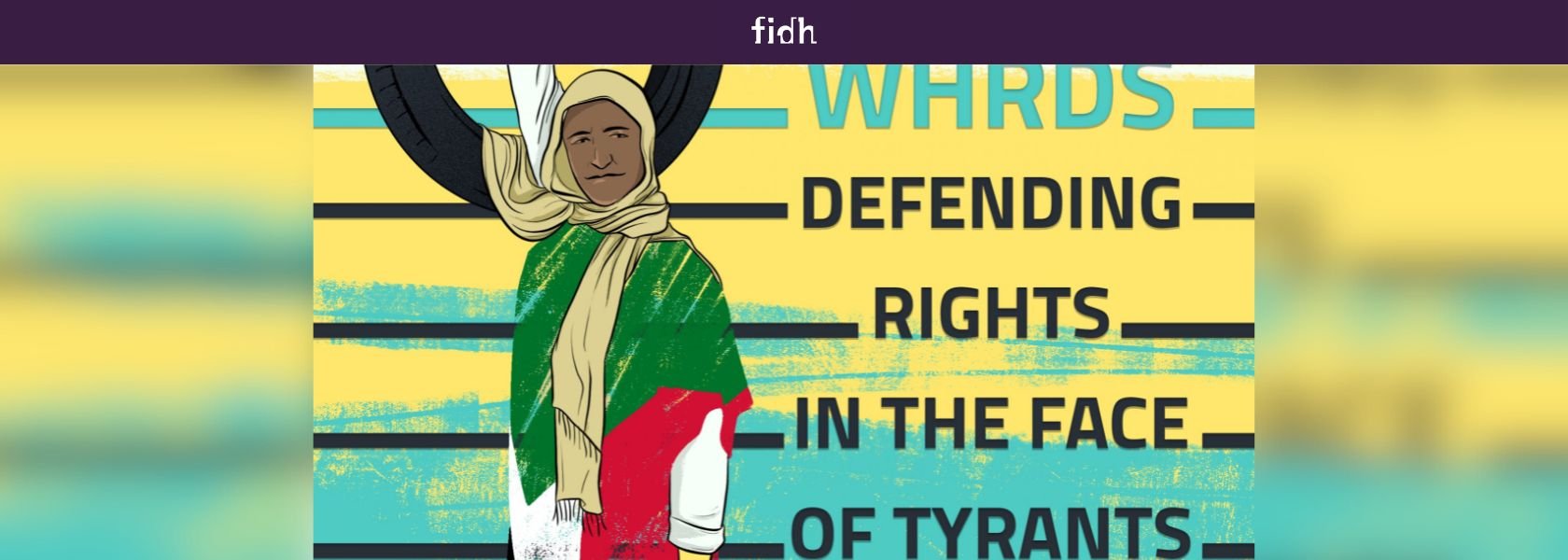
On 14 February 2024, eight organisations, including FIDH and OMCT within the framework of the Observatory for the Protection of Human Rights Defenders, expressed their grave concern over the closure of civic space, attacks on freedom of expression, rising militarisation and continuous disruption and shutdown of communication that threatens the work and safety of Women Human Rights Defenders (WHRDs) and Women’s Rights Groups in Sudan:
February 14, 2024. We the undersigned groups and organisations would like to express our grave concern and raise the alarm over ongoing reports about the closure of the civic space, attacks on freedom of expression, rising militarisation and continuous disruption and shutdown of communication that threatens the work and safety of Women Human Rights Defenders (WHRDs) and Women’s Rights Groups in Sudan.
Shutdown of Communications
On February 7th, 2024, Sudan witnessed a complete communications shutdown. Reasons behind this shutdown remain unknown in the absence of official statements from operating companies and the warring parties. This shutdown followed two days of the extensive interruption of communications at the end of January 2024. The interruption of communications and frequent shutdowns have life threatening implications and put the safety and security of WHRDs at risk. Without access to communications, WHRDs struggle to document and report on the mounting atrocities on the ground. The interruption of internet networks has also impeded women groups’ access to the mobile banking apps that facilitate money transfers to operate or secure protection for WHRDs at risk. The #KeepItOn coalition — a global network of over 300 human rights organisations from 105 countries working to end internet shutdowns — has raised concerns that “amid the ongoing brutal violence in Sudan, the continued weaponisation of internet shutdowns is a flagrant violation of international law.”
Attack on Wad Madani
Since the attack on Wad Madani, the capital of the central Al Jazirah state, in mid-December 2023, Women’s Rights groups and WHRDs have lost the resources collected since the start of the war. Dozens of WHRDs and Women’s Rights Groups were forcibly displaced for the second time, driven from the city that had been the humanitarian response hub for local and international NGOs. As WHRDs were forced to flee again, they faced enormous challenges searching for safe locations across states and neighbouring countries. Dozens of WHRDs were harassed, detained, summoned and threatened by both warring parties during the last few weeks.
Targeting of Activists
The Sudanese Armed Forces (SAF) launched an intensified attack on human rights defenders, humanitarian workers and volunteers, journalists, and peace activists in the last few months in the areas under their control. Aid groups and first responders faced rising restrictions of movement and supplies.
Rapid Support Forces (RSF) continued to arrest civilians, loot both public and private properties and perpetrate systemic sexual violence across the areas under their control. WHRDs and Women’s Rights Groups struggle to operate in these areas as the risks of sexual violence are growing.
At least five WHRDs and women first responders have been detained, summoned, harassed or threatened in the last few weeks. The attacks were reported in areas controlled by both warring parties. Since the war erupted, four WHRDs have been killed, two of whom were journalists. At least 11 women health workers were killed as well.
Closure of Civic Space and Restrictions on Freedom of Expression
In January 2024, Sudanese authorities in the relatively safer states in Northern and Eastern Sudan, including local governors, issued decrees to dissolve neighbourhood resistance committees. These grassroot groups were mobilizing and organising communities since the emergence of the protests movement in 2018. The governors of five states also banned publication of information and imposed heavy penalties on publishing information on social media or other newspapers regarding the security situation in their states. Journalists and activists were detained in three states and two women journalists were summoned and threatened by local authorities following these decrees. In the Blue Nile state, Red Sea and other states, meetings and other forms of peaceful civic activities are either banned or not authorized. Women’s Rights groups and other NGOs operating in these states are working in hostile and increasingly challenging environments. Civic space in Sudan is closed, with an increasing militarisation of the state and local communities.
Rising Militarisation
During the last three months, Sudanese authorities launched a mobilisation campaign to arm civilians in various states under SAF control. This campaign’s leaders attacked and threatened activists who criticized the armament of civilians, including women, girls and boys. Voices of peace activists are considered treasonous by SAF supporters. The widespread arms in the hands of civilians has led to unprecedented threats to women and peace and security, including gender-based violence (GBV) in the areas outside of the fighting zones.
We the undersigned groups call on:
The warring parties:
An immediate ceasefire and the prompt creation of safe corridors for humanitarian aid organisations and groups, and to guarantee the safety of their operations;
An immediate restoration of telecommunications across the country;
Cease attacks on health facilities, medical supplies, and health workers, and uphold obligations under international humanitarian law;
The international community:
States and international human rights, peace-building and feminist groups and organisations to work together to create an immediate long-term protection program for WHRDs (and their families) that addresses relocation needs (in several locations if needed), provides psychological support for post-traumatic stress caused by war and conflict, including due to GBV, and equips WHRDs’ with all the necessary means to continue their work in the defense of human rights;
States to provide support for the FFM and other international mechanisms mandated to document human rights violations in Sudan, including by ensuring that these entities have the necessary resources to carry out their work effectively;
States to support local initiatives providing humanitarian support to local communities as well as support services to victims, and to support civil society’s documentation and reporting efforts so that the evidence obtained can be used for future judicial proceedings, including for those related to SGBV crimes.
The international community to establish a mechanism for the disclosure of the whereabouts of the disappeared and the release of detainees, and to urgently address the issue of enforced disappearances and grave violations in detention centers, including GBV;
The international community to reinforce and protect medical staff in accordance with international humanitarian law;
The Fact Finding Mission (FFM) recently established by the UN Human Rights Council, to ensure accountability is pursued for GBV crimes committed by warring parties, to regularly and meaningfully engage with civil society in this process, and to ensure effective protection of witnesses and victims;
All other UN human rights mechanisms, including UN Special Procedures, to support the FFM’s work and to investigate GBV as a weapon of war, to call for the release of detainees and for the disclosure of the whereabouts of the disappeared, and to demand an investigation into violations in detention, including GBV;
AFP on 25 January, 2024 reported that UN experts urge Bangladesh to carry out major human rights reforms to reverse “repressive trends” following controversial elections that were boycotted by the opposition.
Bangladeshi Prime Minister Sheikh Hasina was sworn in for a fifth term on January 11. Her ruling Awami League party won nearly three-quarters of elected seats in parliament, with allied parties and friendly independent candidates making up nearly all the remainder.
Hasina has presided over breakneck economic growth in a country once beset by grinding poverty, but her government has been accused of rampant human rights abuses and a ruthless crackdown on dissent.
The UN experts said they were “alarmed” at reports of “widespread attacks, harassment and intimidation of civil society, human rights defenders, journalists and political activists, which marred the recent elections”. See also my earlier posts on Bangladesh: https://humanrightsdefenders.blog/tag/bangladesh/.
The experts called on the Government to:
Immediately and unconditionally release all civil society and political activists detained without charge or on charges inconsistent with international human rights law; and ensure fair public trials in accordance with international human rights standards for those charged with criminal offences.
Institute urgent and substantial reforms to guarantee the integrity and independence of the judicial system.
Guarantee the free and unobstructed exercise of freedom of expression, association and peaceful assembly, refrain from imposing undue restrictions on protests and political rallies, and ensure effective accountability for serious violations of these fundamental freedoms.
Respect the independence, freedom, diversity, and pluralism of the media, and ensure the safety of journalists from threats, physical and online violence, or judicial harassment and criminal prosecution for investigative and critical reporting.
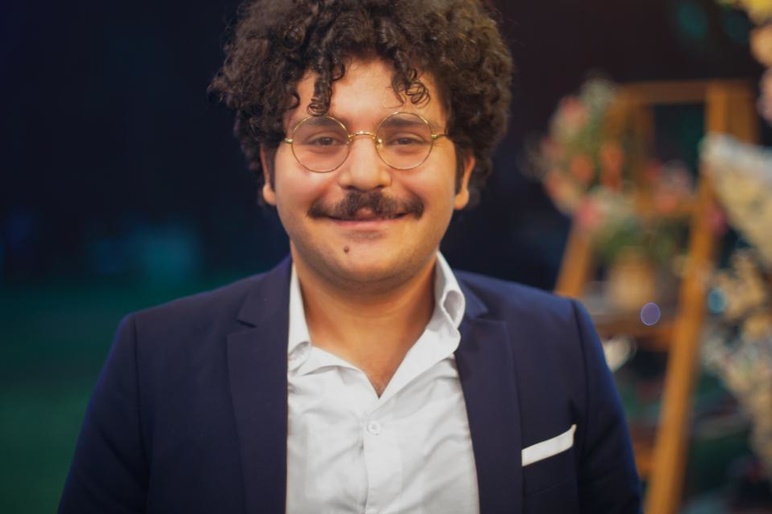
A large group of civil society organizations, condemn the three-year prison sentence handed down to human rights researcher at the Egyptian Initiative for Personal Rights (EIPR) and academic Patrick George Zaki for his writings highlighting the hardship and discrimination faced by Coptic Christians in Egypt, such as himself.
On July 18, 2023, following a trial rife with due process violations, an Egyptian emergency state security court handed down a three-year prison sentence to Patrick on trumped up charges of spreading false news. Patrick, who was a graduate student at the University of Bologna at the time, was arrested by Egyptian authorities on February 7, 2020, while at the Cairo Airport during a visit home to see his family. In custody, he was held incommunicado for a 24-hour period; he was beaten, stripped, electrocuted, verbally abused, and threatened. He was initially accused of joining a terrorist organization and spreading false news. In September 2021, lawyers learned that he had been referred to emergency state security court on false news charges for a 2019 article that he authored for independent digital media outlet Daraj on his experience as a Coptic Christian religious minority, titled, “Displacement, Killing & Harassment: A Week in the Diaries of Egypt’s Copts.” On December 7, 2021, following 22 months behind bars, he was ordered released from detention pending trial, and placed on travel ban. His trial continued until the July 2023 verdict, following which he was taken back into custody today.
Verdicts handed down by an emergency court are not subject to legal appeal, only to ratification by the President. The President also has the authority to commute the sentence or to quash the verdict. Furthermore, under Circular No. 10 of 2017 governing emergency state security courts, “If the accused is brought to trial while not in custody and sentenced to a prison penalty, he must be released immediately without executing the penalty pending the decision of the ratifying authority.” Per this provision, Patrick must legally be free while the President considers ratification; for Egyptian authorities to have taken him into custody constitutes a clear violation of this circular.
The targeting, arrest, prosecution, and sentencing of Patrick Zaki for writing about his experiences as a Coptic Christian is an egregious measure by Egyptian authorities that is indicative of a larger failure by the state to protect religious minorities. Instead, the authorities target Copts for merely expressing themselves and bringing attention to the discrimination they regularly endure. This sentence occurs in violation of Egypt’s domestic laws and international legal commitments, and sends a clear message that the Egyptian government is not serious about implementing its national human rights strategy or carrying out a meaningful national dialogue. At a time during which Egyptian authorities should be addressing the dire economic crisis, this step raises severe questions on the trajectory of the country.
The undersigned civil society organizations, call on Egyptian President Abdel Fattah El-Sisi not to ratify the verdict handed down to Patrick Zaki and instead to quash it in its entirety. We call on Egyptian authorities to immediately release Patrick Zaki from custody, to drop all charges and close all cases brought against him in their entirety, and to lift the travel ban brought against him. We urge all of Egypt’s international, multilateral, and government partners to press the Egyptian government to immediately release Patrick and cease persecuting him for his legally protected speech and vital human rights work.
I still stubbornly refuse to die The sad thing is that They don’t know how to kill me because I love so much The sound of growing grass
OMCT published this impressive story in calling for the immediate release of G. N. Saibaba:
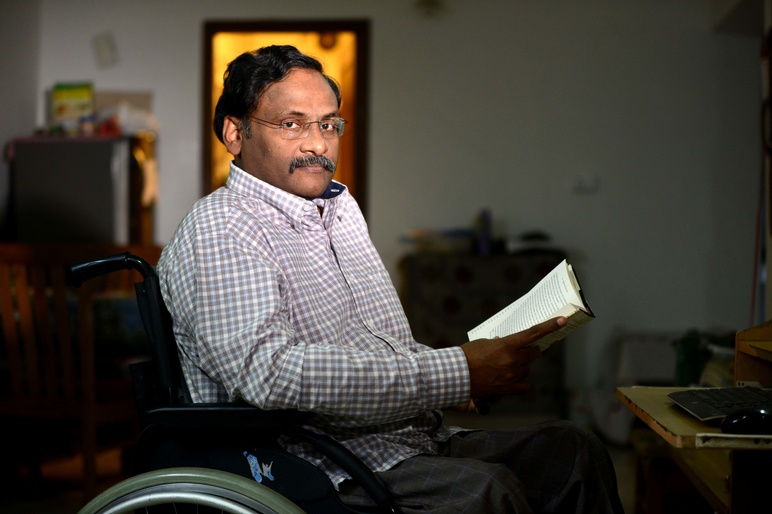
These are the defiant words of Gokarakonda Naga “G. N.” Saibaba, written from his cell in Nagpur Central Jail in the Indian state of Maharashtra. A wheel-chair using, human rights activist and former university lecturer of English, Sai has endured years of cruel, inhumane solitary confinement. Still, his irrepressible resilience shines through. And Sai’s poetry fills a recently published anthology. But he did not write it in verse. In order to evade the prison’s punishing censors, and to disguise his messages of equality, positivity and love, Sai penned letters to friends and his partner of 30 years. These were transcribed, and became his book entitled, Why Do You Fear My Way So Much?
Prison conditions
Now, G. N. Saibaba is much less able to write. Since his erroneous conviction for terrorism-related crimes in 2017, and a sentence of life imprisonment, Sai’s health has progressively deteriorated. Suffering from a heart condition, a brain cyst, a lump in the abdomen and breathing difficulties, his multiple medical conditions require specialised treatment only available in New Delhi. And his disability as a result of childhood polio has been compounded by untreated nerve damage in his left arm, that has spread to his right, leaving him with no strength in his upper limbs. Sai needs support to perform any simple human function like sitting up, eating, drinking or using the toilet, a task which has been assigned to two fellow detainees. His dependency has been underlined by the constant monitoring of his cell. It was only recently – after Sai went on another hunger strike – that the prison authorities agreed to change the direction of CCTV cameras, giving him some semblance of privacy. Before that, his bed and toilet were recorded 24/7. This was a small victory. Despite repeated advocacy by the UN and human rights groups on G. N. Saibaba’s behalf, he is forced to inhabit a small, egg-shaped cell exposed to extreme weather conditions and with little space to move, particularly for someone in a wheelchair as Sai. Given his disability, some commentators believe the conditions of his detention may amount to torture.
Arrest in Delhi
It was 9th May 2014, and G. N. Saibaba was returning home for lunch from his lecturing duties at Delhi University. Without warning, a van jack-knifed in front of the car he was travelling in, forcing it to stop. Sai’s driver was pulled roughly from the vehicle, and replaced by a man in civilian clothing. Two others flanked their captive in the back. G N Saibaba was driven directly to the airport. He was never shown an arrest warrant, and nobody informed Sai’s relatives about his arrest. He was put on a plane to Nagpur, Maharashtra. On arrival, he was transported in an anti-landmine vehicle, in a convoy of commandos armed with automatic weapons. The military clearly wanted to send a message they had detained a hard-core terrorist – not a committed campaigner who has fought most of his life against discrimination and caste-based oppression, and for the rights of women and indigenous Indians.
Activism
G. N. Saibaba grew up in a small, rural community in southern India. Disabled by polio as a young child, he understood early on how unfairness and prejudice are perpetrated. Excelling in school, Sai went on to university where he became involved in student politics. His appointment as a professor of English did not dilute his outspoken criticisms of injustice.
In particular, he became a leading detractor of what became known as ‘Operation Green Hunt’ – a military campaign in central India, home to a large population of several indigenous communities (known as Adivasis), to eliminate Maoists, also called Naxals. Central India has witnessed numerous people’s movements opposing forceful occupation of indigenous land, and the exploitation of ancient forests and rich mineral resources. This military campaign against Naxals was used to quash such movements, leading to numerous human rights violations against civilians.
Conflict in this region dates back to the 1960s. ‘Operation Green Hunt’ began in 2009 – an all-out, on-going offensive by the Indian armed forces to rid the area of Naxals. G. N. Saibaba led the Forum Against War on the People – a solidarity organisation, and an attempt to shine a light on human rights abuses in the region. These atrocities – committed for the most part by the military and paramilitaries – have been well documented. They include extrajudicial killings, multiple rapes, and the deeply disturbing desecration of civilian corpses. It has been estimated more than 2,000 people have lost their lives since 2009.
Conviction
G. N. Saibaba’s advocacy certainly gave pause for thought to national and transnational mining corporations thinking about investing in the region. So, it was inevitable perhaps he would become a target. His persecution began under the Congress government – his Delhi home was raided more than once – and then continued under the BJP, and the prime ministership of Narendra Modi.
At G. N. Saibaba’s trial in 2017, with the courthouse fortified by hundreds of police officers to reinforce the impression of a dangerous extremist, he was tried under India’s anti-terror legislation – the Unlawful Activities (Prevention) Act. With five others, Sai was convicted of alleged links to the banned Maoist organisation.
Judicial rollercoaster
In October this year, the Nagpur Bench of the Bombay High Court ruled G. N. Saibaba’s initial trial had been flawed. The case against him was discharged. The elation he, his family and supporters felt quickly turned to disbelief. The government – infuriated, no doubt by the court’s decision to release an ‘urban Naxal’, a term regularly used to stigmatise human rights defenders – applied for a special sitting of the Supreme Court. The very next day, on a non-working day the special bench of the Supreme Court suspended the decision of the Bombay High Court. This leaves G N Saibaba still in that heavily monitored isolation cell, struggling to negotiate its curved walls in his wheelchair.
Above all, love
G. N. Saibaba’s hope of liberty has once more been dashed. Even so, his spirit is strong. The untreated infections in his hands, and the pain he experiences, means Sai cannot write more than two or three pages a month. But letters from home, especially from his partner, help sustain him.
I defeat the purpose of the solitary confinement by drowning myself in your letters of love.
Azin Mohajerin and Hina Jilal at OMCT’s offices on International Women’s Day, 8 March 2023. (Geneva Solutions/Michelle Langrand)
Michelle Langrand in Geneva Solutions of 10 March 2023 speaks with two human rights defenders, from Iran and Pakistan.
Iran’s crackdown on women’s rights protests that erupted in September and the Taliban recently banning women from working in NGOs or from attending university have served as a reminder of how fast women’s rights are sliding back in the region and other parts of the world. But despite widespread arrests, allegations of torture and the execution of four protesters in Iran, the women-led movement refuses to back down. For Azin Mohajerin, 36, it means that change is a little more within grasp. Mohajerin left Iran in 2010, following the wave of post-electoral protests that swept the country.
This time around she is supporting rights campaigners in the country, specifically from minority groups, through Miaan, an NGO in Texas she co-founded in 2019 and where she works as senior human rights officer.
Hina Jilani, an advocate of Pakistan’s Supreme Court and president of the World Organisation Against Torture (OMCT), who fought against sharia laws in Pakistan back in the 80s, views it as another illustration of women’s resistance on the path to obtaining change.
Mohajerin and Jilani were in Geneva for international women’s day for an event organised by OMCT. Geneva Solutions spoke to the activists about the challenges women face in their countries and the lessons they can draw from each other.
Born in Lahore, the capital of Pakistan’s Punjab region, Hina Jilani grew up hearing about courtrooms and prisons. At that time, Pakistan was under martial law and her father’s political opposition would often land him into trouble. Rather than being traumatised, Jilani was empowered by the environment in which she was raised. Later in life as a lawyer, her work would also land her in those same courtrooms and prisons. Jilani passed the bar exam in 1977, the same year Sharia law was imposed on Pakistan. One of the new laws made adultery a crime against the state. See also: https://www.trueheroesfilms.org/thedigest/laureates/705AB196-BD5E-4EC2-B6C1-96AC5DDB353E .“While now Pakistan has a fit and reasonably good, protective legal framework for women, we have not gotten rid of the notorious practices like child marriage or honour killings. Gender-based violence is one of our biggest issues in Pakistan,” she pointed out. Pakistan reported around 63,000 cases of gender-based violence in the past three years according to Pakistan’s National Commission of Human Rights.
In Iran, the women-led movement for the freedom to choose what they wear and what to do with their bodies has been shaking the country for the past few months. But observers are cautious about the chances of the current uprising spurring real change in Iran as previous ones have failed to do so. Mohajerin, who cannot return to her country because of the sensitive nature of her work, sees it as one more step in the long path towards the respect of human rights.
The protests in Iran have brought out Iran’s ethnic minorities to march along with the Persian majority. Mahsa Amini, whose death in custody of the morality police last September triggered mass unrest, was a 22-year-old Kurdish woman from Saqqez, in the Kurdistan province of Iran.
Mohajerin, who works with minority groups in Iran, sees that cultural change has seeped into some of the most conservative communities. “Women in Balochistan bravely went to the street in one of the rare moments that they have spoken up about their rights,” said Mohajerin.“There is a recognition that there is a gap that needs to be filled in terms of ethnic equality and gender equality.”
But Iran has also come down hard on these groups. “After Tehran, the top places in terms of arrests were minority populated areas: the Kurdish area, the Turkic and then Balochistan,” said Mohajerin. Many of them remain behind bars, she said.
“Culture can help people to break the chains,” said Jilani. “Not everything is because of what the leadership or the ruling elite do. Unfortunately, the ruling elite act in a certain manner because that is the national psyche.”
Mohajerin noted that Iranians have been fighting for their freedom for a long time now. “It’s not a new movement, it is not something that started in September or even last year. It has been a long-lasting fight,” said Mohajerin.
She recalled when women first marched against the mandatory hijab after it was introduced by the Islamic revolution in Iran 44 years ago. “In Iran, the woman cannot have custody of the child after a certain age and they don’t have the right to divorce. But they do not just give up and say okay, this is how we should live. They’ve been fighting to get their rights and finding loopholes in the system,” she said.
“The cultural change that has been achieved during the past decades is way more significant than the law that exists,” said Mohajerin.
The situation in Iran has drawn international outcry, with western powers condemning Iran’s violent response to the protests. Like many activists, Jilani and Mohajerin see international solidarity as essential to their causes.
“Voices from the outside can help when the environment inside the country is very difficult,” said Jilani. “I’m alive today because of international public opinion and the pressure of the international community,” said Jilani. She recalls former US president Jimmy Carter and former president of Ireland Mary Robinson pleading for her release from prison at one time.So many world leaders sent letters to Pakistan, protesting against my incarceration, that when they released me they showed me this thick file and said we don’t know why people around the world are so worried about you.”
When Iranian foreign minister Hossein Amir-Abdollahian was in Geneva last week to speak before the Human Rights Council, campaigners called for diplomats to stage a walkout during his speech. Mohajerin recognised it as a “significant symbolic gesture to condemn the human rights abuses in Iran”. “However, it is crucial for the international community to engage in dialogue with the Iranian government regarding human rights violations, particularly in cases of executions, at the highest level,” she added.
But both Jilani and Mohajerin are adamant about something: change has to come from within. “The voice should come from the people inside the country. They are the ones who live in the country, and they are the ones who have to decide for their future,” said Mohajerin, noting that views within her country are not a monolith.