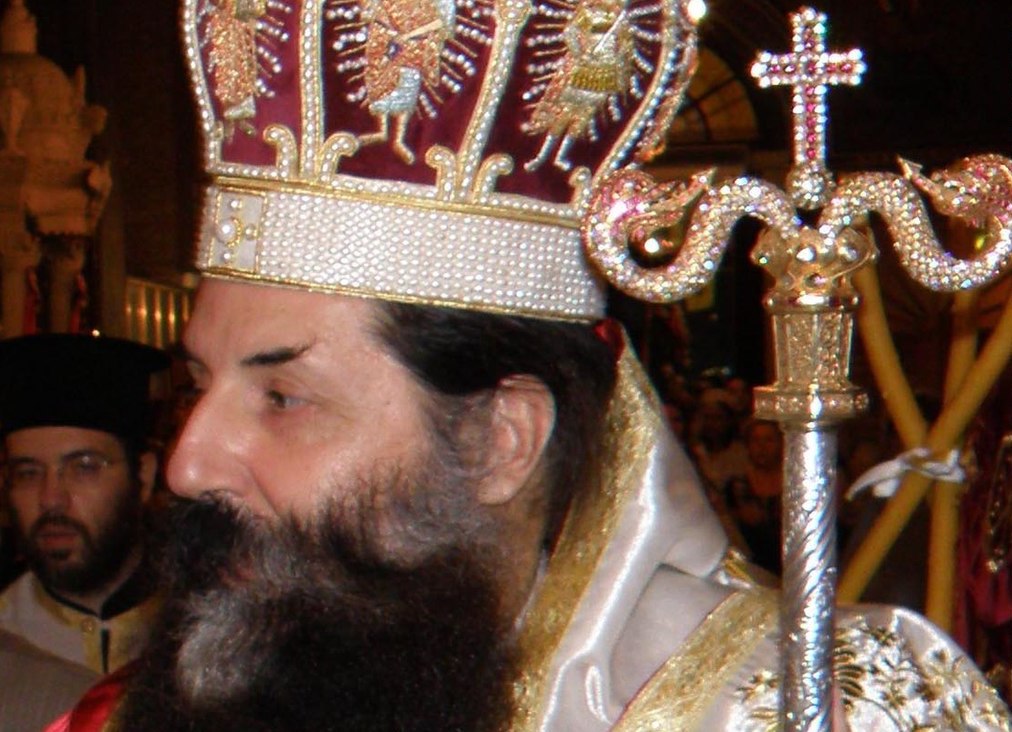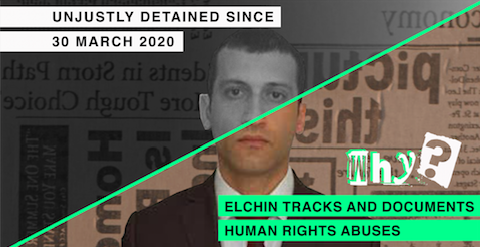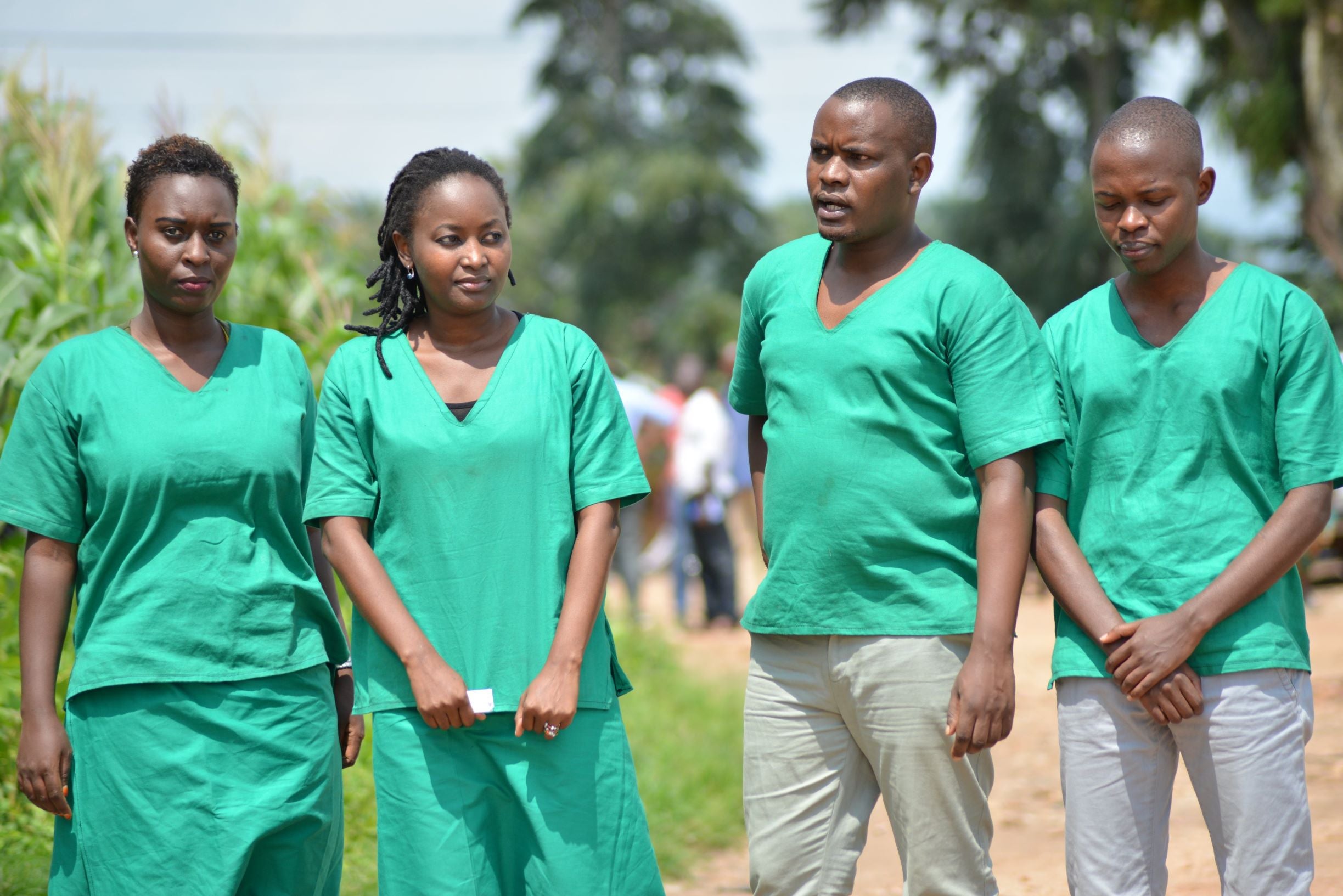
publishes a series of 10 profiles human rights defenders to commemorate International Human Rights Day, 10 December 2016. Here two women HRDs from Mexico: Olga Guzmán and Stephanie Brewer: Read the rest of this entry »
Posts Tagged ‘OMCT’
Two remarkable women rights defenders from Mexico: Olga Guzmán and Stephanie Brewer
December 15, 2016Pakistani human rights defender Hina Jilani is the new President of OMCT
November 30, 2016On 29 November 2016 OMCT announced that Hina Jilani, a prominent Pakistani human rights defender, is the newly elected President of the World Organisation Against Torture (OMCT).
Ms. Jilani was elected to a four-year term on Saturday 26 November at the organization’s General Assembly meeting held every four years. Addressing OMCT partners and members of its SOS-Torture network of more than 200 non-governmental organizations around the world, she said she would focus on boosting its cohesion to make its voice louder. “We can’t just condemn points of view; we have to convince people,” she said. “We have to show them that these values did not come out of nothing, that they are worth being preserved. We have to show that undermining these values is not in the best interest of humanity.”
Hina Jilani created Pakistan’s first all-women law firm and co-founded Pakistan’s first legal aid centre in 1986. In 1991 helped set up a shelter for women fleeing violence and abuse and presented one of the first cases of domestic violence in the country. Ms. Jilani was also one of the founders of the Human Rights Commission of Pakistan, an NGO promoting human rights in Pakistan. She also created Pakistan’s Women Action Forum, a prominent women’s rights group whose campaigns have been at the heart of the democracy movement in the country. Ms. Jilani has been a lawyer at the Supreme Court of Pakistan since 1992.
At the international level, she was the first United Nations Special Representative of the Secretary-General on the situation of Human Rights Defenders from 2000 to 2008. She was appointed in 2006 and 2009, respectively, to the UN International Fact-Finding Commissions on Darfur and on the Gaza Conflict.
Her expertise and lifelong dedication to human rights has earned her international recognition. In 2013, she joined The Elders, a group of statesmen, peace activists and human rights advocates, brought together by Nelson Mandela. In 2000 she was honoured with the Amnesty International Ginetta Sagan Award for Women’s Rights, just a year after she was awarded the Human Rights Award by the Lawyers Committee for Human Rights. In 2008 she received the human rights award of the American Bar Association.
For more posts on Hina see: (https://thoolen.wordpress.com/tag/hina-jilani/) 
She spoke after a two-day forum organized on the occasion of the 30th anniversary of OMCT and its SOS-Torture network, along with UN Human Rights Commissioner Zeid Ra’ad Al-Hussein, who shared concern that many countries were “returning to authoritarianism”, human rights defenders around the world were under “enormous pressure”, and that reprisals and arbitrary detentions were increasingly done under the pretext of fighting terrorist activities. The High Commissioner said he feared that declarations such as United States President-elect Donald Trump’s campaign declarations (condoning ill treatment such as “waterboarding”, for instance) might inspire other Governments to resume resorting to torture, hence exacerbating the practice around the world.
She also seemed undeterred by the consequent risks of wavering support of multilateral institutions, since the US election and the British “Brexit” vote triggered a wave of speculation as to a possible shift in funding priorities away from international aid, and since the withdrawal by several States such as South Africa, Burundi, Gambia and Russia from the International Criminal Court, triggered concerns over the deconstruction of a system built up to protect victims of serious human rights violations. “This is not an easy time for human rights defenders, but when has it been for us? We keep our determination despite all the challenges,” she told activists. “The global donors must understand that if there is hesitation in supporting these human rights defenders and their networks it will only reduce our outreach. But we did it before we had money. We have no reason to believe that this is a favour to any one organization or community.”
Ms. Jilani said that OMCT was one of the organizations best placed to uphold human rights and combat torture, adding: “It has the experience, the capacity, and the knowledge to take this challenge forward.”
Statement on Human Rights Defenders that the Observatory would have delivered orally to the UN (if time had allowed)
March 4, 2016Severe time restraints made that several NGOs could not make their oral statement on 4 March 2016 during the Interactive Dialogue with the United Nations Special Rapporteur on the Situation of Human Rights Defenders in the UN Human Rights Council [see: https://thoolen.wordpress.com/2016/02/25/preview-of-the-upcoming-session-of-the-un-human-rights-council/].
Here follows the text of the statement that the World Organisation Against Torture (OMCT) and FIDH, within the framework of the Observatory for the Protection of Human Rights Defenders, would have delivered:
Alarming criminalisation of human rights defenders in Latin America
February 27, 2016The criminalization of human rights defenders in the context of the extraction of natural resources and megaprojects is becoming a very worrisome phenomenon in Latin America, denounces the Observatory in a report published today in Mexico. Entitled “The criminalization of human rights defenders in the context of industrial projects: a regional phenomenon in Latin America”, this document points to the role of businesses, civil servants, public prosecutors, judges, and the State. The report issued by OMCT and FIDH (in the context of their Observatory for Human Rights Defenders) on 25 February 2016 describes the specific cases of human rights defenders criminalized in eight Latin American countries (Brazil, Colombia, Ecuador, Guatemala, Honduras, Mexico, Nicaragua and Peru).
The report especially stresses two core issues common to all the countries studied: Read the rest of this entry »
Profile of Paul Mambrasar: defender of indigenous Papuans
December 28, 2015OMCT, in its series “10 December – 10 Defenders”, carried the story of Paul Mambrasar from West Papua, the least populous province of Indonesia, where is torture used to crush and silence. Home to the world’s largest gold and third-largest copper mines, West Papua has abundant natural resources including timber and palm oil that make it a coveted region. This has generated continuing conflict and made it one of Asia’s sorest spots in terms of human rights violations. From the 1960s on, Indonesia has maintained heavy military presence, resorting to extrajudicial killings, torture and abuse to crack down on activists in an attempt to crush the Papuan independence movement, whether peaceful or violent, leaving locals deeply resentful and suspicious of the national Government.
Indigenous Papuans marginalized in their homeland, suffer state violence and stigma, while their natural resources are exploited by others and compromise their ancestral way of living. The on-going conflict with separatists merely exacerbates discrimination against Papuans, who have been repressed by decades of institutional racism and Indonesian occupation. This is the vicious cycle of violence that Paul has to deal with in his daily fight for the respect of the human rights. “Torture worsens the distrust West Papuans have in the State which, by failing to uphold the rule of law, merely fuels more separatist sentiments,” sums up Paul, Secretary of the Institute of Human Rights Studies and Advocacy (Elsham), a non-governmental organization defending human rights in Wet Papua.
Paul’s challenging working environment is the result of decades of quasi-institutionalized abuses resulting in many layers of deep-felt and pervasive grievances of West Papuans against the Indonesian Government. He is, however, gradually managing to build networks in his country, also thanks to support from organizations such as OMCT, and gradually drawing attention to the regular violations committed.
Discrimination and marginalization of Papuan have therefore worsened the situation. Government policies have also contributed to the problem. The arrival of migrants, fostered by transmigration programmes, has upset the demographics and social and cultural heritage of the people of West Papua and exacerbated competition over land and resources. Compounded with the socially and environmentally destructive development projects pushed in the region by Indonesia, this has caused widespread social disruption and environmental damage, forcing Papuan tribal groups to relocate, according to researchers from Yale Law School cited by Elsham in a 2003 Sub-Commission on the Promotion and Protection of Human Rights session.
Unreported exactions keep occurring as foreign eyes and independent international observers are barred from West Papua. It is therefore only thanks to the work of local organizations and human rights defenders such as Paul, who runs Elsham’s office in West Papua and attends international advocacy meetings at the Human Rights Council in Geneva communicating regularly with donors, that the world can know what is happening there.
“Impunity has allowed the security force, the police and the army, free access to inflict fear and terror through torture and other physical abuses,” Paul explains his motivation. “In order for torture to end the Indonesia State must take a strong action to punish those involved in its practice.”
Despite these odds and the many challenges of his job including being under Indonesian intelligence surveillance as an “independence sympathizer”, Paul, 51, trusts that the human rights conditions in West Papua will improve.
[When the Dutch Government granted independence to Indonesia in 1949, Papua was not part of it. At the end of the Dutch colonial rule, Papua was first administered, and then absorbed, by Indonesia in 1969, following a sham “referendum” requested by the United Nations. This so‑called “Act of Free Choice” was in fact a vote by just over a thousand selected Papuans (out of a population of 800,000 at the time) who had been pressured to agree to integration within Indonesia. This vote has been the bone of contention between Papuans and the Republic of Indonesian. Papuans have ever since agitated for independence, and have been conducting a still ongoing, low-level guerrilla warfare against Indonesian forces, in turn engaged in bloody repression and unpunished human rights violations. Papuans – who are Melanesian and whose ancestors arrived in the New Guinea region tens of thousands of years ago – do not identify culturally with the Asians. They see their Papuan identity and indigenous culture based on customary subsistence-based agriculture threatened by the arrival of migrants who, in turn, see the traditional Papuan way of life as backward.]
In this context see also the CNN report on the closure of NGO offices: http://freewestpapua.org/2015/12/13/indonesian-government-forces-all-ngos-to-leave-west-papua/
— by Lori Brumat in Geneva
Nigina Bakhrieva works to end torture in Tajikistan
December 27, 2015OMCT in its series “10 December, 10 Defenders” focused on Nigina Bakhrieva in Tajikistan. Nigina Bakhrieva’s visceral sense of justice was passed on to by her parents, as she quickly demonstrated by following in the footsteps of her father – a prosecutor – in standing firmly for the rule of law. “It’s what I learned as I child, “ she says. “When I witness human rights abuses, I cannot be indifferent; I take action.”
And her career could not have been more ominous. Nigina started law school in Tajikistan, at the doorstep of Taliban-led Afghanistan, at the very outbreak of the bloody civil war that followed the country’s independence, graduating five years later, in 1997, as the war ended, leaving behind a devastated country with some 100,000 people killed and 1.2 million displaced. After teaching law at the Tajik state university, Nigina became a consultant providing capacity-building expertise for various organizations. Moving quickly into human rights, she went to work for the United Nations Tajikistan Office for Peace Building where she reviewed national legislation to make sure it conformed to international human rights standards.
Thus, while still as a budding lawyer and founder of the Bureau on Human Rights and Rule of Law of Tajikistan, Nigina helped to litigate with success Tajikistan’s first-ever human rights case before the United Nations Human Rights Committee – something unheard of in Tajikistan until then. Her work for the abolition of the death penalty in her country led to a moratorium being adopted in 2004.
In 2009, she created Nota Bene, which leads the Anti-Torture Coalition of 17 leading human rights organizations and activists in Tajikistan. The work initially seemed to pay off handsomely: at the beginning of 2014, Tajikistan had pledged to implement international human rights standards both in law and practice. The Government, however, has recently been limiting the scope of action in the country of human rights lawyers and organizations. It has indeed been made mandatory for non-governmental organizations to declare all foreign funding. What is more, limiting access to the legal profession and placing it under the Ministry of Justice has compromised its independence.
“It is worrying that it has become nearly impossible to find lawyers in Tajikistan willing to accept to defend torture cases for fear of criminal prosecution,” reported the OMCT in the Observatory for the Protection of Human Rights Defenders on 30 November. http://www.omct.org/human-rights-defenders/urgent-interventions/tajikistan/2015/11/d23494/
As one of the few lawyers who have not given up on combatting the widespread use of torture and other forms of abuse, especially in the armed forces, Nigina is among the key players pushing for full transition of Tajikistan to the rule of law. “The work is hard”, she says. “Each time we re-live with the victims what they went through, and it is horrifying,”
For change to occur, though, the system must work and all actors must do their bit, she explains, detailing every step of the process: individuals must lodge complaints when they are subjected to torture or ill-treatment; the Government must follow a zero-tolerance-for-torture policy; the Prosecutor must respond to every complaint by thorough and effective investigation; courts must punish all those found guilty – not only the direct perpetrators, but also their superiors, who failed to prevent the crime; jail terms should be proportionate to the seriousness of the crime; finally, the Government should compensate all victims of torture.
— by Lori Brumat in Geneva
Justin Bahirwe: a lawyer trying to reduce torture in the DRC
December 24, 2015
OMCT did the following interview in its series “10 December, 10 Defenders” with Justin Bahirwe , a lawyer from the DRC.
When listening to a soft-spoken, articulate, impeccably dressed 34-year-old Justin, you would think he is promoting human rights in a peaceful, predictable, functioning State. You cannot tell he lives in Bukavu, in the eastern Democratic Republic of the Congo (DRC), a desolate place where the world’s deadliest conflict since WW2 has not relented for over two decades, killing some 5.4 million people, where tens of thousands of children are recruited as soldiers – if they do not die of diarrhoea or malaria – political opponents are killed, corruption is rampant and deeply-rooted, the infrastructure nonexistent and extreme poverty pervasive. Read the rest of this entry »
Emma Bolshia helps Bolivian victims recover from torture and its second trauma, silence
December 9, 2015In the series “10 December, 10 Defenders” OMCT published on 4 December 2015 the profile of Emma Bolshia Bravo who helps Bolivian victims recover from torture and its second trauma, silence.
“Considering the magnitude of the psychological effects on the victim, the fear it generates within society, and the traumas transmitted to the following generations, torture causes irreparable damage,” says Emma Bolshia Bravo. “That’s why prevention of torture is crucial.” Read the rest of this entry »
Norbert Fanou-Ako protects children in Benin’s cycle of violence
December 8, 2015In the series “10 December, 10 Defenders” [https://thoolen.wordpress.com/2015/12/01/10-december-10-defenders-profiles-of-human-rights-defenders-against-torture/]the OMCT publishes today the case of “Benin: Meet Norbert: Better protecting children to break Benin’s cycle of violence“. “Violence is the first inheritance of a child born within a violent family,” says Norbert Fanou-Ako. As director of a non-governmental organization called Solidarity for Children in Africa and the World (ESAM) he is trying to break Benin’s vicious cycle of violence. The violence deeply engrained in this country starts at home and in school with commonplace whipping, caning, slapping and other uses of ill-treatment against children and then extends to regular beatings to force confessions out of suspected juvenile delinquents at police stations. Read the rest of this entry »
Salah Abu Shazam keeps hope for redress amid civil war in Libya
December 7, 2015“Torture is certainly practised in all societies, but the problem in Libya is the frequency of its occurrence,” explains Salah Abu Khazam, who founded and heads the Libyan Network for Legal Aid. “That’s because the Government is only concerned with its own security.” This comes from OMCT’s profile “Libya: Meet Salah: Keeping hope for redress in the absence of a State, amid a civil war“.
Salah doesn’t have it easy. He works in a country with two governments, non-existent police force, a defunct judicial system and no rule of law, where human rights defenders like him, prime targets of scores of armed groups, regularly get kidnapped or killed. Two volunteer human rights lawyers working for his organization were directly threatened, and chances are he himself is on the black list for promoting democratic ideals, gender equality, or any value opposed to those upheld by Islamist armed groups. Yet, he still gets up every morning thinking that Libya is going to become a better place: “The day will come when the culprits will be held accountable for their crimes and victims will receive reparation,”.
While most of his peers are in exile, Salah, 31, holds onto his country. He is proud to say he has rescued two people from death under torture, and a third one from a death sentence for having stolen a military vehicle. He is convinced no one can enjoy any wellbeing or lead a proper life while such violations are tolerated by the social and political system, until the universal values of human rights are enforced in Libya. One has to say, though, that the light at the end of the tunnel still seems very far at this stage.
After the 2011 attacks and uprising that led to the downfall of the Qadhafi regime after 24 years of dictatorship, many Libyan intellectuals and lawyers such as Salah engaged in the defence of human rights. With the backing of international NGOs including OMCT, Amnesty International, and the Red Cross a number of local networks and civil society organizations sprung up to better protect citizens from routine human rights violations. Yet this hopeful period of building up democratic institutions and restoring civil rights was short-lived as another wave of widespread violence overtook the country, home to the world’s 10th-largest oil-reserves, as numerous belligerents fuelled political, racial, ethnic, religious and interregional conflicts.
The country has been divided since June 2014, when a number of factions refused to accept the legislative election results and the establishment of a new Parliament, leaving Libya with two Governments: one recognized by the international community based in al-Bayda, and another loyal to the former General National Congress based in Tripoli. To make things worse, many regions have ties to Islamist groups while other areas are self-governing, and rival armed groups have spread across the territory, creating additional lines of fracture.
The result was complete chaos, with a collapse of state institutions and deteriorating economic, social and health conditions, which forced the European Union and United Nations Support Mission to Libya to leave the country. The escalation of violence since in August 2014 – when Islamist militias took over Tripoli and its civilian airport – was so ferocious that the UN Security Council called for the application of sanctions against violators of humanitarian and human rights law. The violence also led to at least 400,000 internally displaced Libyans and to hundreds of thousands migrant workers fleeing the country.
It is in this improbable context that Salah’s organization, founded in 2014 with OMCT’s help, has documented 90 torture cases, forced disappearances, arbitrary detentions and abuses. It has filed 15 complaints with local courts for torture, detention and extra-judiciary executions. It is working with other partners on how to use international mechanisms to seek redress for victims of torture in the face of an incompetent national judicial system. Society must free itself from passivity and dependence and participate collectively to demand the respect of its rights,” explains Salah.
– By Lori Brumat in Geneva