On 15 December 2025 Emma Woollacott, in Forbes, referred to a new study that shows that 7 in 10 women human rights defenders, activists and journalists have experienced online violence in the course of their work. Produced through the UN Women’s ACT to End Violence against Women program and supported by the European Commission, “Tipping point: The chilling escalation of violence against women in the public sphere” draws on a global survey of women from 119 countries.
Along with online threats and harassment, more than 4 in 10 have experienced offline harm linked to online abuse — more than twice as many as in 2020, the researchers found. This can range from verbal harassment right up to physical assault, stalking and swatting.
“These figures confirm that digital violence is not virtual — it’s real violence with real-world consequences,” said Sarah Hendricks, director of policy, programme and intergovernmental division at UN Women.
“Women who speak up for our human rights, report the news or lead social movements are being targeted with abuse designed to shame, silence and push them out of public debate. Increasingly, those attacks do not stop at the screen — they end at women’s front doors. We cannot allow online spaces to become platforms for intimidation that silence women and undermine democracy.”
And AI is only making things worse, with almost 1 in 4 women human rights defenders, activists and journalists having experienced AI-assisted online violence, such as deepfake imagery and manipulated content. This is most often the case for writers and public communicators who focus on human rights issues, such as social media content creators and influencers, for whom the figure reaches 30%.
“Gender-based online violence is not a new phenomenon, but its scale certainly is,” said report co-author Lea Hellmueller, associate professor in journalism at City St George’s and associate dean for research in the School of Communication and Creativity.
“AI tools enable the production of cheaper and faster abusive content, which is detrimental to women in public life — and beyond,” Hellmueller added.
Tech firms are partly responsible, the researchers said, with the report calling for better tools to identify, monitor, report and fend off AI-assisted online violence. The researchers also want to see more legal and regulatory mechanisms to force tech firms to prevent their technologies being deployed against women in the public sphere.
“Our next steps include publishing data from the survey about the opportunities for, and barriers to, law enforcement and legal redress for survivors of online violence,” said Julie Posetti, chair of the Centre for Journalism and Democracy at City St George’s, University of London, one of the authors of the report. “We will also focus on creative efforts to counter gender-based online violence and policy recommendations to help hold the Big Tech facilitators of this dangerous phenomenon accountable.”
In the aftermath of conflict, dictatorship, or mass human rights violations, societies face the challenge of addressing past atrocities while rebuilding for the future. Transitional justice refers to a set of legal and social mechanisms designed to achieve justice, accountability, and reconciliation in such contexts. These processes include truth commissions, criminal prosecutions, reparations for victims, and institutional reforms aimed at preventing future abuses. Rooted in the principles of human rights and international law, transitional justice seeks to balance the need for justice and survivor healing with the complexities of political and social stability.
Across the world, many charities and non-governmental organisations (NGOs) play a crucial role in supporting transitional justice efforts. Whether by documenting human rights abuses, advocating for victims, or facilitating truth and reconciliation initiatives, these organisations help societies navigate the difficult journey toward justice and peace. This article by Barbara Listek explores some of the key NGOs working in the field, highlighting their impact in post-conflict and post-authoritarian contexts.
The International Center for Transitional Justice (ICTJ) supports societies recovering from mass human rights violations by helping them confront the past and build more just and inclusive futures. Working alongside victims, local communities, and institutions, ICTJ provides expertise on truth commissions, reparations, criminal accountability, and institutional reform. Whether advising on the creation of truth-seeking bodies or supporting prosecutions of those responsible for serious crimes, the organisation’s work is rooted in the belief that acknowledging harm and delivering justice are essential for healing and long-term peace.
Since its founding, ICTJ has played a key role in transitional justice processes across the globe, including in Colombia, Tunisia, and The Gambia. Its approach is deeply grounded in the lived experiences of survivors, ensuring that justice efforts are not only technically sound but also meaningful to those most affected. By focusing on systemic change and survivor-centred solutions, ICTJ works to prevent the recurrence of violence and strengthen democratic institutions in countries emerging from repression and conflict.
Redress is a London-based organisation founded by British businessman Keith Carmichael after he was unlawfully detained and tortured in Saudi Arabia. Frustrated by the lack of legal support and accountability available to survivors like himself, Carmichael launched REDRESS to fill a critical gap in access to justice. His personal experience became the driving force behind the charity’s mission: to secure justice and reparation for victims of torture and other grave human rights violations.
Now more than 30 years old, REDRESS continues to lead efforts globally to end impunity for torture. The organisation provides legal representation to survivors, supports strategic litigation before national and international courts, and advocates for stronger laws and policies that prevent torture and ensure reparations. By working directly with survivors, while also influencing governments and international institutions, REDRESS helps ensure that survivors’ voices are heard and that justice becomes a meaningful reality, central to any process of healing and transitional justice.
The Center for Justice and Accountability (CJA) is an organisation founded in 1998 on the principle, first used during the Nuremberg trials after World War II, that certain crimes are so egregious that they represent offences against all humankind. These crimes include genocide, crimes against humanity, extrajudicial killing and torture, and as CJA argues, they should never go unanswered.
CJA’s approach is survivor-led and collaborative. The organisation works closely with local partners and in-country prosecutors to build cases that centre the voices and experiences of those most affected. Alongside this, CJA advocates for stronger laws and policies that make it harder for abusers to escape justice and hold everyone accountable to the human rights standards.
The African Transitional Justice Legacy Fund (ATJLF) is an organisation launched in 2019 to support African-led responses to past atrocities, rooted in the belief that sustainable peace and justice must be shaped by those directly affected. Backed by the MacArthur Foundation and WellSpring Philanthropic Fund, the ATJLF emerged alongside the African Union’s Transitional Justice Policy, helping translate its goals into practical, community-driven action. Managed initially by the Ghana-based Institute for Democratic Governance, the Fund has since become a nine-year institutionalised effort supporting civil society across West Africa.
By empowering survivor-led groups and grassroots initiatives, the ATJLF has helped amplify voices often excluded from transitional justice processes. Since its inception, over $2.5 million has been distributed to 46 organisations working in countries including Guinea, Liberia, and The Gambia. As it enters its legacy phase (2024–2026), the Fund is scaling its efforts beyond West Africa and focusing on deeper, long-term partnerships to ensure the impact of its work endures well beyond its closure.
Impunity Watch is an international non-profit organisation working with victims of violence to deliver redress for grave human rights violations and to promote justice and peace. The organisation approaches transitional justice work through a victim-centred approach, taking into account the long-standing criticism of transitional justice not being sufficiently victim-centred. It is also their aim to overcome systemic impunity and its root causes in order to achieve transformative justice (here we could link the article I wrote on transformative justice, but it is not published yet).
For more information about the organisation, we recommend visiting their website for an abundant collection of resources and information, such as the charity’s 2023-2027 Strategic Plan, information about the complex work Impunity Watch does, as well as their multimedia resources section.
The Global Survivors Fund (GSF) is an international charity organisation based in Switzerland, that has it as its mission to enhance the access to reparations for survivors of conflict-related sexual violence around the globe. It was founded in 2019 by Dr Denis Mukwege and Nadia Murad – 2018 Nobel Peace Prize laureates.
The organisation’s work is centred around three core pillars: acting to provide interim reparative measures in situations where States or other parties are unable or unwilling to meet their responsibilities; advocating for the legally responsible parties (duty-bearers) and the international community to develop reparation programmes; and guiding States and civil society by providing expertise and technical support for designing reparation programmes.
To learn more about the organisation’s transformative work, donate or find information about positions openings, visit their website.
Founded in 2014, the Global Initiative for Justice, Truth and Reconciliation (GIJTR) is a consortium of nine global organisations dedicated to addressing the transitional justice needs of societies emerging from conflict or periods of authoritarian rule. The initiative collaborates with communities worldwide to amplify survivors’ voices and inspire collective action in confronting human rights violations. By addressing past traumas, GIJTR aims to pave the way for a more just and peaceful future.
Over the past decade, GIJTR has engaged with communities in over 70 countries, collaborating with more than 800 local civil society organisations and supporting over 500 grassroots projects. Its initiatives include documenting human rights abuses, providing technical assistance to civil society activists, and promoting reparative justice efforts. Notably, the organisation has worked alongside survivors of conflict-related sexual violence in contexts such as Bangladesh, Colombia, and Guinea, supporting them in advocating for their rights and developing community-based programs aimed at meeting survivors’ needs.
The International Coalition of Sites of Conscience is the only global network of historic sites, museums, and memory initiatives that connects past struggles to today’s human rights movements. With over 350 members in 65 countries, its mission is to ensure that the sites preserve the memory of past injustices while fostering dialogue and learning that prevent future violations.
Their slogan being “Remembering is a Form of Resistance,” the Coalition works with local communities, governments, and international partners to ensure that these sites serve as platforms for reconciliation, education, and activism. It convenes impactful projects and initiatives as well as training events that bring together site professionals, historians, and activists to develop best practices for memory‑based reconciliation and community empowerment
If you are interested in how museums can contribute to upholding human rights, or would like to visit one of such sites, we recommend checking out our article on “20 Human Rights Museums Around The World” to discover inspiring spaces that might be worth visiting (perhaps on your next trip!).
The Post-Conflict Research Center (PCRC) is a Sarajevo-based, women-led research centre and NGO, dedicated to advancing transitional justice and promoting peace in post-conflict societies. Founded in 2011 in Bosnia and Herzegovina, PCRC works on issues related to justice, accountability, reconciliation, and human rights. Its efforts include conducting research, providing education, and supporting projects aimed at improving social cohesion and fostering sustainable peace. PCRC is also involved in advocacy and works with local and international organisations to develop and implement policies that address the needs of survivors of conflict and promote justice for atrocities.
PCRC’s signature programmes include Balkan Diskurs, an online platform empowering young journalists to report on regional issues, and Ordinary Heroes, a multimedia project showcasing stories of rescue and courage to promote tolerance and reconciliation. Its work has earned international recognition, including the 2014–15 Intercultural Innovation Award from the UN Alliance of Civilizations and the BMW Group, and praise from the Council of Europe for its exemplary peace education model.
Are you inspired by PCRC’s blend of research and action? Learn what it takes to follow in their footsteps by reading our guide on “How to Become a Human Rights Researcher.”
Rights for Peace is a London-based international organisation that seeks to address the root causes of violence and promote peace through human rights advocacy and transitional justice. Focusing on countries in transition from conflict or repression, Rights for Peace engages with local communities to ensure that victims of violence are heard and that justice mechanisms are effective. It works to strengthen the rule of law, promote accountability, and support processes of social healing through legal reforms and community-led initiatives. By fostering a culture of peace and justice, the organisation aims to prevent the recurrence of violence and contribute to long-term stability.
Currently active in Sudan and South Sudan, Rights for Peace collaborates with local partners to strengthen rule‑of‑law institutions and ensure that victims’ voices shape accountability processes. Its casework includes monitoring identity‑based violations and developing strategic litigation to hold perpetrators accountable, reflecting the organisation’s commitment to survivor‑centred justice.
The issuance of Interpol red notices against two Salvadoran human rights defenders currently in exile in Spain constitutes a grave misuse of the law enforcement mechanism, UN experts warned on 19 November 2025
“This move amounts to an act of transnational repression, as it extends the harassment of human rights defenders beyond borders, targeting them in a country where they are seeking safety,” the experts said.
Ivania Cruz and Rudy Joya have applied for asylum in Spain, fleeing legal harassment in El Salvador stemming from their legitimate human rights work. Both human rights defenders work for the non-governmental organisation UNIDEHC, which has been targeted by the Salvadoran authorities since February 2025 for its support to the La Floresta community, who have been facing attempts of forced eviction since 2024.
“The charges brought against Ivania Cruz and Rudy Joya in El Salvador and related arrest warrants issued by the authorities appear to be without basis and in direct connection with their legitimate human rights work for UNIDEHC to support communities under threat and denounce the actions of the Government under the state of emergency declared in 2022,” the experts said.
In May 2025, the court presiding over their case in El Salvador ordered the Interpol National Central Bureau to submit a request for the issuance of a red notice to the Interpol General Secretariat. Interpol confirmed the issuance in July 2025.
The experts pointed to Articles 2 and 3 of the Constitution of Interpol, which state that the organisation is “strictly forbidden” from undertaking “any intervention or activities of a political nature”, and that the organisation’s activities will be conducted “in the spirit of the Universal Declaration on Human Rights.”
In September 2025, Rudy Joya was summoned by police under the pretext of his asylum application in Spain. Upon presenting himself to the authorities, he was detained and presented before a Spanish specialised court. Ivania Cruz was also summoned and appeared before the same court, which ordered that both defenders sign-in at a local court every 15 days, not leave the country, surrender their passports and report any change of address.
“We call on Interpol to immediately revoke the red notices and judicial sanctions against Ivania Cruz and Rudy Joya, and on Spain to refuse to accede to the red notice and to ensure their safety by rejecting their forcible return to El Salvador,” the experts said.
The experts are in contact with Interpol and the governments of Spain and El Salvador on these concerns.
Ganna Yudkivska (Chair-Rapporteur), Matthew Gillett (Vice-Chair on Communications), Miriam Estrada Castillo (Vice-Chair on Follow-Up), Mumba Malila, and Ethan Hee-Seok Shin,Working Group on Arbitrary Detent
On 14 November 2025, Scilla Alecci of the International Consortium of Investigative Journalists, Inc. (ICIJ) wrote about a parliamentary report which identified China and other authoritarian regimes as harassing and attacking dissidents abroad, echoing findings from ICIJ’s China Targets.
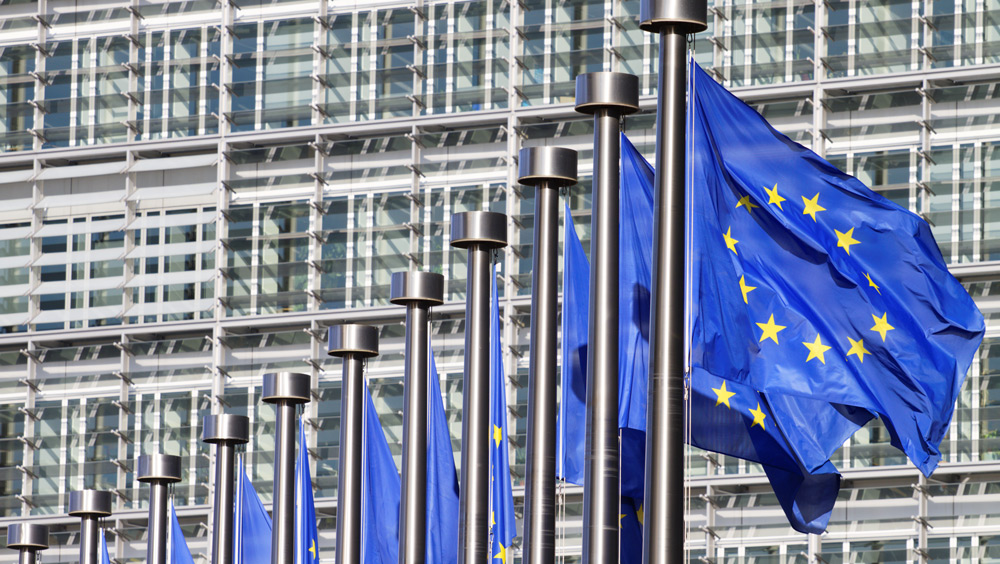
European Parliament in Brussels, Belgium.
The European Parliament has adopted a resolution urging member states to confront efforts by authoritarian regimes to coerce, control or silence political opponents and dissidents living in Europe. “Human rights defenders are a key pillar of democracy and the rule of law, and they are insufficiently protected,” a statement from the parliament said.
The resolution, adopted with a majority of 512 votes (to 76 against and 52 abstentions), called for targeted sanctions against perpetrators, market surveillance of spyware and better coordination among European authorities to counter what lawmakers labeled “transnational repression.”
The resolution is not legally binding but signals that European lawmakers want to take a clear position on the issue and draw attention to it, Elodie Laborie, a spokesperson for the Parliament’s Subcommittee on Human Rights, told the International Consortium of Investigative Journalists in an email.
It confirms findings by ICIJ’s China Targets investigation, which revealed how Beijing continues to use surveillance, hacking and threats against Chinese and Hong Kong dissidents, Uyghur and Tibetan advocates and their families to quash any criticism of the regime abroad.
On 14 November 2025, Al Jazeera (Mariamne Everett) and other media reported that international NGOs, such as Human Rights Watch and Amnesty International, have decried a sharp decline in civil liberties and a pervading “injustice” in Tunisia since President Kais Saied came to power in 2019, as authorities escalate their crackdown on the opposition, activists and foreign nongovernmental organisations.
“Tunisian authorities have increasingly escalated their crackdown on human rights defenders and independent non-governmental organizations (NGOs) through arbitrary arrests, detention, asset freezes, bank restrictions and court-ordered suspensions, all under the pretext of fighting ‘suspicious’ foreign funding and shielding ‘national interests’,” Amnesty International said in a statement on Friday.
Tunisia’s crackdown on civil society has reached an unprecedented level, according to Amnesty, as six NGO workers and human rights defenders from the Tunisian Council for Refugees are “being criminally prosecuted on charges solely related to their legitimate work supporting refugees and asylum seekers”. The trial’s opening session, initially scheduled for October 16, has been adjourned to November 24.
Within the past four months, Tunisia has temporarily suspended the activities of at least 14 Tunisian and international NGOs, said Amnesty, including the Tunisian Association of Democratic Women and the World Organisation against Torture.
Human Rights Watch said in a statement on Friday that Tunis’s Court of Appeal will hear on November 17 the appeal of more than 30 people “unjustly sentenced to heavy prison terms in a politically motivated ‘Conspiracy Case’” mass trial in April.
“Four of those detained are on hunger strike, including one who, according to his lawyers, was subjected to physical violence in prison on November 11.”
The 37 people detained include opponents of Saied, lawyers, activists and researchers. Their prison terms range from four to 66 years for “conspiracy against state security” and terrorism offences. Jawhar Ben Mbarek – cofounder of Tunisia’s main opposition alliance, the National Salvation Front – began a hunger strike on October 29 to protest his arbitrary detention. Ben Mbarek was sentenced to 18 years behind bars on charges of “conspiracy against state security” and “belonging to a terrorist group”.
The Front Line Defenders Award is intended for HRDs for whom visibility can contribute to their security and who have not already had a lot of international recognition for their human rights work.
DEADLINE FOR SUBMISSIONS IS: 23rd January 2026
Selection Criteria:
the nature of human rights defender’s work
the impact of human rights defender’s work in advancing the rights of others
the level of risk or negative consequences associated with human rights defender’s work
the continued commitment to advancing human rights, despite high level risks
the potential impact of receiving the Award on the human rights defender and their work
In a first-of-its-kind investigation into the closed-door negotiations of the UN’s budget in New York, ISHR uncovers how a small group of States – led by China and Russia – have coordinated efforts to block and slash funding for the UN’s human rights work through political manoeuvring and influence. At a moment of sweeping UN reform and financial crisis, these efforts – compounded by the US failure to pay their UN membership fees and outstanding debts – pose an existential threat to the UN’s human rights system.
…The UN’s historically underfunded human rights work now faces an existential threat due to budget cuts under the UN80 Initiative and the UN’s liquidity crisis, fuelled by the failure of the United States, China and other countries to pay their contributions in full and on time. Drawing from dozens of interviews and combing through official documents and internal budget negotiation documents from 2019 to 2024, ISHR’s report ‘Budget Battles at the UN: How States Try to Defund Human Rights’ finds that China and Russia have led a sustained effort to build influence, disrupt proceedings, and politicise technical discussions at the UN General Assembly’s Fifth Committee (5C), where States negotiate the UN’s budget, and its little-known yet influential advisory body, the Advisory Committee on Administrative and Budgetary Questions (ACABQ). Over the past decade, Chinese influence within these bodies has expanded sharply, the report shows. Beijing has invested heavily in building its representation at the 5C, the ACABQ and other related bodies to push heavy budget cuts to human rights. Russia has frequently played the role of outspoken spoiler in negotiations, enabling China to deploy its influence more quietly but effectively behind closed doors.
Russian and Chinese diplomats have weaponised UN budget negotiations to serve their own interests and shield allies from scrutiny, at the expense of human rights. Budget negotiations should be solely guided by the goal of adequately funding the UN’s work, not serving as a political tool to weaken accountability and rights protection.‘ – Madeleine Sinclair, Director of ISHR’s New York office..
A deepening cash crisis The report finds that years of underfunding and attacks on the UN’s human rights budget are now being compounded by a severe liquidity crisis triggered by US and Chinese late or non-payment of dues, while the United Nations undergo urgent reform. Since taking office in January 2025, the Trump Administration has launched repeated assaults on UN bodies, often on grounds of an alleged ‘anti-Israel bias’, abruptly blocking the payment of overdue contributions from 2024 dues and all of the US contributions for 2025, while cutting nearly all voluntary funding to the UN. As the US, the largest contributor, withholds this vast portion of the UN budget, Beijing’s increasingly late payments risk depriving the UN of over 40% of its operational cash flow for 2025. Meanwhile, China’s paying in full but extremely late has a similar result to not paying contributions in full, as a little-known State-imposed UN rule perversely returns unspent cash – that could not be used as it came so late – to Member States in the form of credits to future dues. In 2024, China paid its contributions on 27 December, four days before the year’s end. The broader US withdrawal from multilateralism also enables China and Russia to further grow their influence in shaping a more State-centric UN, at the expense of civil society and the universality of human rights.
….
UN80 reform risks deepening the damage US cuts also forced the UN into an unprecedented race for reform through the UN80 Initiative, an internal reform drive to make the organisation more efficient and effective, yet so far focused primarily on austerity and cost-cutting. Initial cuts proposed by the Secretary-General in September slash the human rights budget by 15%, a higher percentage than cuts proposed for the UN’s development and peace and security work. Further cuts are expected once the ACABQ reviews the Secretary-General’s proposals, and States table additional reform proposals under UN80 in the coming months.
‘China and Russia have long exploited UN processes in order to spin a web of influence against human rights progress, and now the Trump administration is moving in that same direction. But this is not irreversible. The UN80 Initiative must be more than a hunt for ‘efficiency’: it should be a collective effort towards meaningful, human rights-driven reform. For this, States, and particularly Global South countries who have a clear stake in having strong, responsive UN human rights bodies, can still take back the space and ensure funding for a UN that advances human rights protection on the ground for all.’ – ISHR Executive Director Phil Lynch
Funding for the UN’s human rights work is on the brink of collapse at a time when it is most needed to address global crises…
On this International Day of Political Prisoners, the NGOs mentioned below stand together to affirm a simple truth: no one should be imprisoned for exercising their fundamental rights or for peacefully expressing their beliefs. Yet around the world, there are an estimated one million political prisoners, who are unjustly detained for political reasons. These individuals—journalists, human rights defenders, democratic opposition leaders, religious leaders, artists, and ordinary citizens—represent the conscience of their societies. Their imprisonment is an assault not only on their freedom, but on the shared principles of human dignity and justice.
The International Day of Political Prisoners originated in the Soviet Union in 1974, when political prisoners collectively held a one-day hunger strike. Soviet prisoners of conscience repeated this protest every October 30, supported by demonstrations of solidarity in major cities. In response to Vladimir Putin’s ongoing and deepening repression, Russian political prisoners rekindled the tradition in 2021. In the years since, it has become an international day of solidarity with political prisoners worldwide.
Political imprisonment corrodes the rule of law, silences dissent, undermines press freedom, and weakens the foundations of democracy. Authoritarian governments use it to suppress opposition, instill fear, and consolidate control. Each unjust detention sends a chilling message to others who seek to speak truth to power.
We, as organizations who advocate on behalf of those unjustly detained around the world, call on democratic governments to continue to make the release of political prisoners a global priority—to raise these cases consistently in bilateral and multilateral forums, to request information and specific actions be taken on the prisoners’ behalf, to support accountability mechanisms, and to continue to provide support to organizations that advocate on behalf of those unjustly detained and provide legal and humanitarian assistance to them and their families. Solidarity with the unjustly detained must be sustained, coordinated, and visible.
We also stand in solidarity with the families, lawyers, and civil-society organizations who continue to advocate for freedom in the face of repression. Their courage reminds us that the defense of liberty is a collective responsibility.
On this day, and every day, we reaffirm our shared commitment to the universal right to freedom of thought, expression, association, and belief. The world’s political prisoners must not be forgotten—and their freedom must remain a global cause.
Signed:
Freedom House
Free Russia Foundation
McCain Institute
National Endowment for Democracy
Abdorrahman Boroumand Center for Human Rights in Iran
Al-Tahreer Association for Development (TAD)
Amnesty International
Center for Civil Liberties
Committee to Protect Journalists
Freedom Now
George W. Bush Institute
Global Magnitsky Justice Campaign
Human Rights Center Viasna
Human Rights Defense Center Memorial
Human Rights First
Human Rights Foundation
Human Rights Watch
International Republican Institute
James W. Foley Legacy Foundation
Lantos Foundation for Human Rights & Justice
Oma Organization for Human Rights and Democracy Promotion
Organization for Community Civic Engagement
OVD-Info
Political and Governance Development Academy
Socio-Economic Rights and Accountability Project (SERAP)
UN Special Rapporteur on Freedom of Expression and Opinion Irene KhanMary Lawlor UN Special Rapporteur for human rights defenders
On 5 August 2025 a group of United Nations human rights experts has written to the Kenyan government over allegations of serious human rights violations. These violations include the killing of protesters, the arrest and detention of human rights defenders, the deportation of a Ugandan lawyer, and the suppression of media freedom during the June 25 protests across the country.
The letter (referenced AL KEN 3/2025,) was sent by four UN Special Rapporteurs, namely Mary Lawlor (Human Rights Defenders), Matthew Gillett (Arbitrary Detention), Irene Khan (Freedom of Expression), and Gina Romero (Freedom of Assembly and Association).
Copies of the letter were also shared with the governments of Uganda and Tanzania, given their involvement in the alleged incidents. The Kenyan government was given 60 days to respond to the communication before being made public on the UN’s human rights website.
By October 22, Kenya had not responded to the contents of the letter. The experts expressed grave concern over what they described as “an emerging pattern of criminalisation and harassment of human rights defenders in Kenya.”
According to the communication, nationwide protests on June 25, 2025, left 16 people dead and hundreds injured. The demonstrations, which marked the first anniversary of the 2024 anti-Finance Bill protest, were allegedly met with excessive police force.
During the protests, several major media houses reportedly had their transmission centres raided by police and communication officials who switched off live broadcasts. The Communications Authority of Kenya allegedly issued a directive barring media outlets from airing live coverage of the protests, a decision later suspended by the High Court in Milimani, which termed it “potentially unconstitutional” pending a hearing scheduled for October 24, 2025.
The letter cites the arrest of Mark Amiani, John Mulingwa Nzau, and Francis Mutunge Mwangi, all members of the Social Justice Centres Working Group, who were detained by police on June 27 while travelling to work in Mombasa. They were later charged with incitement of violence, damage to property, and theft, though the experts said no credible evidence was presented in court.
They were held for five days before being released on bail on July 2, with conditions requiring them to report to the police twice weekly. Their next court hearing was scheduled for August 21, 2025.
Prominent activist and photojournalist Boniface Mwangi was also arrested at his Nairobi home on July 19, where police allegedly confiscated electronic equipment and even tear gas canisters. He was charged with unlawful possession of ammunition and released on bail two days later.
The UN experts noted that Mwangi had previously been arrested several times and was abducted in Tanzania in May 2025, before being found in Kenya’s coastal town of Ukunda days later.
The letter further highlighted the deportation of Ugandan lawyer Martin Mavenjina, a senior legal advisor at the Kenya Human Rights Commission (KHRC), who was expelled from Kenya on July 5 despite having a valid residency and a Kenyan family.
He was allegedly detained at Jomo Kenyatta International Airport and forced onto a flight to Kampala without being informed of the reason or given access to legal counselADVERTISEMENT
A day after Mavenjina’s deportation, armed men reportedly stormed a press conference hosted at the KHRC offices in Nairobi, where women and widows were calling for an end to police brutality and enforced disappearances. The assailants allegedly destroyed journalists’ equipment and accused the women of organising protests. Despite reports being filed, no investigations have been launched, according to the letter.
UN calls for action and accountability: The UN experts urged the Kenyan government to clarify the legal basis for the arrests, detentions, and deportations, and to end the intimidation of journalists and human rights defenders.
They also demanded investigations into the killings and injuries from the protests.
The experts warned that the events “constitute blatant violations” of international human rights laws, including the International Covenant on Civil and Political Rights, which guarantees freedoms of
On 13 October 2025, Nina Lakhani, climate justice reporter the Guardian, published this interview with Mary Lawlor, UN special rapporteur for human rights defenders, who presented her final annual thematic report during an interactive dialogue at the 80th session of the United Nations General Assembly’s Third Committee. The Special Rapporteur’s report focused on the contributions of human rights defenders addressing climate change and working to realise a just transition from fossil fuels, and the risks they face in carrying out this work.
Mary Lawlor, the UN special rapporteur for human rights defenders since 2020, has documented hundreds of cases where states have sought to smear and silence climate defenders engaged in peaceful protest, non-violent civil disobedience and litigation.
“Attacks against climate defenders have surged over the course of the mandate, and we now see outright repression against people who are organizing for climate action. It’s some of the states that have claimed to be the strongest supporters of human rights defenders including the UK, Germany, France and the US, that are most often repressing climate activists and where the right to protest is being denigrated and delegitimized.
“These big countries spew out the rhetoric about 1.5C, but they don’t mean it. They are playing the game to suit themselves. It’s business as usual,” Lawlor said in an interview with the Guardian.
It documents state repression including police violence and surveillance, civil litigation deployed to deliberately wear down and silence climate defenders known as Slapp (strategic lawsuits against public participation), as well as bogus criminal charges ranging from sedition, criminal defamation, terrorism and conspiracy to trespass, to public disorder and to disobedience.
One trend documented by Lawlor is the conflation of non-violent climate action with terrorism. In 2022, the French minister of interior at the time, and current minister of justice, accused the national environmental movement Les Soulèvements de la Terre of “ecoterrorism”. The government sought to close down the group, but the country’s highest administrative court eventually overturned the effort.
Lawlor is adamant that climate activists are human rights defenders. They use non-violent protest, disruptive civil disobedience and litigation to stop fossil fuel projects and pressure elected officials to take meaningful action precisely because they are trying to protect the right to food, clean water, health, life and a healthy environment.
But it’s not just fossil fuels. Human rights are now being targeted in the rush for critical minerals and new sources of non-fossil energy. The same repressive playbook is being used by governments and private companies involved in land grabs, pollution and Indigenous rights violations in pursuit of a green transition.
“Governments are repressing human rights defenders and the current trajectory is incompatible with the realization of human rights for all. It’s just a road to destruction … I think states are behaving in a criminal fashion,” Lawlor said.
“No system, no power, no government, no big company seeking profit should trump the rights of billions of people in the world. And that’s what’s happening. It’s the rich, the powerful that are creating such a disaster for humanity.”





&format=jpeg)
 Hans Thoolen on Human Rights Defenders and their awards