At the inaugural meeting of the Community of Practice (CoP) for the protection of human rights defenders (HRDs) in Europe, held in Brussels on March 25–26, 2025, and co-organized by the EU Agency for Fundamental Rights (FRA) and the Office of the United Nations High Commissioner for Human Rights (UN-OHCHR), the Italian “Protection Hub” was cited as an example of innovative practice and excellence within the European landscape.
The Italian experience was recognized as a model for a national protection ecosystem, capable of integrating practical support, advocacy, and monitoring of civic space, with a multi-stakeholder approach rooted locally yet connected to international networks. The “In Difesa Di” initiative was also mentioned among the national reference models.
The CoP serves as a space for strategic coordination to strengthen national hubs, improve coordination between protection and advocacy, and promote joint advocacy on upcoming EU funding cycles—in particular the Multiannual Financial Framework (MFF) and the Agora program.
On this occasion, the FRA launched a survey for the 2025 Civic Space Consultation, aimed at civil society organizations active in EU Member States and observer countries (Deadline: May 10, 2026).
Women human rights defenders (WHRDS) are taking enormous daily risks to help vulnerable people living on the frontline of Russia’s war on Ukraine. Some deliver humanitarian aid to those in desperate need of food and clothes, while others evacuate elderly and infirm residents from communities under fire. Some do this work full-time, others join these efforts when they can. Few had any experience of activism before Russia’s full-scale invasion in February 2022.
Human Rights First has regularly worked alongside women activists around the northeastern region of Kharkiv, and sometimes in the Donetsk region further south, and has seen firsthand the lifesaving work they do, and the risks involved.
Across the world, women – including women activists – experience war differently from men. In a 2023 report, the UN Special Rapporteur on the situation of human rights defenders described these environments as the “hypermasculinized context of war”. In these contexts, the role of WHRDs becomes more essential even as they face additional challenges “because of [their] work and because of who they are.”
WHRDs often face the same risks as their male counterparts, including restrictions on their rights, but also face additional and distinct risks shaped by entrenched stereotypes and expectations about women’s roles. They are stigmatized and criticized for actions for which men are praised, frequently stereotyped not as agents of change, but as vulnerable individuals in need of protection.
These are not new prejudices. A 2019 report by the UN Special Rapporteur on Human Rights Defenders also found that women defenders working in conflict and post-conflict are “particularly exposed to gender-based violence, including sexual violence,” and are “more directly affected by breakdowns in health-care services.” Their legitimacy as defenders continues to be challenged and they remain largely excluded from decision-making.
In Ukraine, WHRDs evacuate civilians, deliver humanitarian assistance, and document war crimes, often at significant physical and mental risk. Yet, they are excluded from effective decision-making spaces. In March 2022, UN special procedure mandate holders drew attention to the absence of Ukrainian women from peace negotiations, despite their central role in the humanitarian response.
Human Rights First is part of the Women Human Rights Defenders International Coalition a global network supporting WHRDs facing harassment, threats, surveillance, arbitrary detention and other forms of retaliation. Through this coalition and our own Human Rights Defenders program, we promote the work of WHRDs and work toward their protection. [https://whrdic.org/]
In 2022, Human Rights First supported the production of a guide for journalists on responsibly reporting war-related sexual violence, authored by three Ukrainian women experts in gender issues.
Human Rights First has worked alongside WHRDs in Ukraine since the Russian invasion of 2014. Since the full-scale invasion in 2022, the organization has made dozens of visits to the front-line region of Kharkiv. This has involved assisting WHRDs with evacuations from frontline areas, documenting war crimes, and reporting on the work of local activists providing humanitarian aid, countering corruption and disinformation, and those responding to the mental health crisis.
This report (by Brian Dooley and Suchita Uppal) draws on interviews with WHRDs working in frontline areas of northeastern Ukraine, highlighting their work during the conflict, the risks they face, and the critical role they have played in sustaining communities under fire. Published on April 10, 2026
For over 40 years ISHR has worked with human rights defenders to promote freedom, dignity, equality and justice. We have partnered with them to strengthen human rights laws, systems, networks and narratives. Over the next decade the work of defenders, supported by ISHR, will be critical to reverse rising authoritarianism, combat the accelerating climate crisis, prevent regress in the areas of women’s rights and the rights of LGBTIQ+ people, address systemic racism and discrimination, adequately regulate new and emerging technologies, and promote accountability for widespread atrocity crimes, among other challenges.
This Strategic Framework is designed to ensure that human rights defenders and the international human rights movement and system are equipped to respond to these challenges. It will ensure that ISHR’s work is relevant, responsive, effective, efficient, impactful and sustainable, and that our partnerships are equitable, powerful and influential.
In developing this Framework, we consulted more than 800 human rights defenders working in diverse contexts and on diverse issues. The strategy is also informed by key intelligence and insights gathered over the period 2021-25 from 5 staff strategy retreats, 9 Board and expert panel discussions, over 10 programme and campaign evaluations, a 40th anniversary survey with key stakeholders, and an intensive 3-month process of internal and external reflection on 12 key strategic questions.
The Frank Jennings Fellowship 2026–2027, offered by Front Line Defenders, is a prestigious early-career opportunity designed for individuals seeking practical experience in the human rights sector. This 12.5-month fellowship combines training, field exposure, and institutional engagement across Dublin, Ireland, and Geneva, Switzerland.
The programme is structured to provide hands-on experience working with human rights defenders (HRDs) and international human rights mechanisms, particularly within the United Nations system.
Programme Structure and Learning Experience
The fellowship is divided into three distinct phases, offering a blend of training and applied experience:
Initial Phase (3.5 months in Dublin) Fellows begin at the headquarters of Front Line Defenders, where they receive training on:
Human rights defenders and their protection needs
The UN Declaration on Human Rights Defenders
The mandate of the UN Special Rapporteur
International protection mechanisms and advocacy strategies
International Placement (6 months in Geneva) Fellows transition to an internship with Office of the United Nations High Commissioner for Human Rights, gaining direct exposure to UN processes and global human rights monitoring systems.
Final Phase (3 months in Dublin) Fellows return to Dublin to consolidate learning and contribute to ongoing organisational work.
This structure ensures a comprehensive understanding of both grassroots advocacy and high-level international human rights systems.
Fellows will undertake a variety of responsibilities depending on their placement phase.
While in Dublin
Supporting Protection Coordinators in communication with human rights defenders
Assisting in drafting urgent appeals on behalf of at-risk individuals
Maintaining and updating internal databases
Contributing to reports, briefings, and documentation
Supporting follow-up on ongoing human rights cases
While in Geneva (OHCHR)
Monitoring global human rights situations, especially concerning defenders
Drafting communications and urgent appeals to governments
Analysing government responses to human rights allegations
Supporting preparation of reports for the Human Rights Council and General Assembly
Assisting in preparations for official missions of the UN Special Rapporteur
Liaising with NGOs and civil society organisations
This dual exposure enables fellows to develop both operational and analytical expertise.
Benefits and Compensation
The fellowship offers a competitive and supportive package designed to enable full participation:
Annual stipend of €30,629
13 days of annual leave during the Dublin phase
Flights between Dublin and Geneva
Health and travel insurance coverage
Access to an Employee Assistance Programme
Monthly well-being support while in Dublin
During the Geneva placement, conditions are governed by OHCHR internship regulations.
Eligibility Criteria
Applicants must meet strict academic, professional, and language requirements.
Academic and Professional Requirements
Recent graduates or candidates within one year of completing a degree
Fields of study include:
Human rights
Social sciences
Development studies
Humanitarian studies or related disciplines
Skills and Competencies
Strong written and verbal communication skills
Excellent drafting and analytical abilities
Ability to synthesise complex information into concise outputs
Solid administrative and organisational skills
Computer literacy
Language Requirements
Native or near-native English proficiency
Fluency in either Spanish or French (mandatory)
Additional Requirements
Basic knowledge of the UN system and international human rights law
Legal eligibility to work in both Ireland and Switzerland for the full duration of the fellowship
Application Process and Deadline
Interested candidates must submit:
A detailed Curriculum Vitae (CV)
A tailored cover letter
Applications must be submitted via the official recruitment platform of Front Line Defenders.
Key deadline:
14 April 2026 (midnight Irish time)
Late or incomplete applications will not be considered, and candidates are encouraged to apply as early as possible due to the competitive nature of the programme.
In honor of Human Rights Defenders Day on 9 December 2025, Mongabay looks back at The Clearing, a documentary about young Cambodian activists currently jailed for their environmental and social activism. Filmmakers Andy Ball and Marta Kasztelan produced the video for Mongabay with support from the Pulitzer Center.
The film centers around a group of young environmental activists with the Cambodian civil society group Mother Nature Cambodia. The activists have successfully stopped potentially destructive projects, including a major dam and the export of sand from coastal estuaries. They continue to speak out against development projects, which they say hurt both the environment and local communities.
One such project is in Botum Sakor National Park, once Cambodia’s largest national park. “Eighty percent of the park has been handed to private companies,” Ly Chandaravuth, a Mother Nature Cambodia activist, says in the documentary while flying a drone over a deforested area. “We’re filming a video to urge the government to stop giving land concessions inside the national park to corporations. Thousands of families have been evicted because they need to build an airport and casinos.”
Such outspoken activism has drawn the attention of Cambodia’s authoritarian government. Dozens of activists have been arrested over the years and 11 have been jailed. The documentary follows the plight of Chandaravuth, who was arrested in June 2021 then released on bail, as well as four other activists. All five were awaiting trial for their work.
During this time, the activists won the 2023 Right Livelihood award “[f]or their fearless and engaging activism to preserve Cambodia’s natural environment in the context of a highly restricted democratic space.”
Three of the activists traveled to Stockholm, Sweden, to accept the award with the specter of prison hanging over them upon their return. “We face to be in jail again for up to 15 years if the court finds us guilty. And we’re sure that the court will find us guilty,” Sun Ratha, a Mother Nature Cambodia activist, told Right Livelihood officials in Sweden. Ratha and Chandaravuth had already each served five months in jail for their activism, she said. [https://www.trueheroesfilms.org/thedigest/laureates/d41428d8-4b96-4370-975e-f11b36778f51]
In July 2024, 10 Mother Nature Cambodia activists, including Ratha and Chandaravuth, were sentenced to six to eight years in prison for insulting the king and plotting against the government.
A government spokesperson justified the sentencing saying, “How can they describe our leaders as destroyers of the nation? We accept all kinds of constructive criticism but not malicious slander. We must accept the fact that development inevitably has some impacts.”
On Dec. 1, a Cambodian appeals court denied a bail request for five of the activists, UCA News reported. It’s the third time they’ve been denied such a request in the year since they’ve been imprisoned.
‘Urgent action needed to prevent surge in digital violence in Africa, experts say’ says article in Business and Human Right of 30 March 2026
Activists and lawyers in Africa are calling for urgent action to protect women, girls and boys as digital violence surges across the continent. A massive rise in internet users, coupled with huge numbers of people aged under 30, has fuelled an increase in gendered online violence across the continent, according to experts, by giving perpetrators new tools to control and silence women and girls, and influence boys. “Unfortunately the world offline is not safe, equal and inclusive. But the world online is proliferating that to such an extent that it’s creating a foundation for a very, very unequal future,” said Ayesha Mago, global advocacy director at the Sexual Violence Research Initiative, a global network looking at violence against women. “In Africa, internet access is growing exponentially and more than 70% of the population of sub-Saharan Africa is under 30. We know that young people generally face higher rates of online violence and very often are bigger users of any tech,” she said.
Digital violence against women and girls has devastating effects such as mental health problems, withdrawal from public and economic life, physical attacks on LGBTQI+ people in countries that criminalise homosexuality, and femicide. While there is very little pan-African research, one study across five countries in sub-Saharan Africa showed that 28% of women had experienced online violence. As internet access expands, this number is expected to rise. Only 38% of people on the continent are internet users, according to the International Telecommunication Union – and among women the figure falls to 31%. Studies, research and anecdotal evidence at a national level paint a horrifying picture of extreme levels of violence and a toxic online environment with dire real-life consequences.
…In Uganda, in 2021, the National Survey on Violence in Uganda revealed that half of the women (49%) reported having been subjected to online harassment. In South Africa, upcoming research by Equimundo and UN Women found that exposure to harmful content translated into men being 2.6 times more likely to perpetrate violence and 1.8 times more likely to believe misogynistic views. Primary targets on the continent include women in the political arena, along with human rights activists, journalists and women with a public profile. A 2021 report by the Inter-Parliamentary Union and the African Parliamentary Union looking at the experiences of 137 female parliamentarians across 50 African countries found that 46% had been the target of sexist attacks online and 42% said they had received threats of death, rape, beating, or abduction, often through social media.
A woman holds up a blank sheet of paper during a demonstration against China’s strict COVID-19 lockdown measures following the deadly apartment fire in Urumqi, Xinjiang. (Photo by Frederic J. BROWN / AFP via Getty Images)
Democracy activists often face arrest, exile, harassment, or retaliation against their families. This essay explains why NED protects sensitive information about grantees, how that duty of care supports the people advancing freedom, and how NED balances discretion with accountability.
Imagine living in a place where a knock at the door in the middle of the night could mean imprisonment, or worse. This is the daily reality for countless democracy and human rights activists around the world. Their bravery makes their work not only meaningful, but also deeply consequential.
The National Endowment for Democracy (NED) supports those working to strengthen fundamental freedoms in transitional and fragile democracies, as well as those bravely advancing freedom in closed societies. Our grantmaking focuses on the building blocks of democratic life—free elections, independent media, and the freedoms of association, speech, and belief. Just as important, however, is our responsibility to protect the individuals who make that work possible.
This primer offers an overview of why NED carefully manages information about its grantees, including what is shared publicly, what is provided to Congressional oversight bodies, and how discretion underpins the safety and viability of those we support. Activists face vastly different risks depending on their location, visibility, and the tactics of the regimes they confront. Supporting democracy means protecting those who fight for it, including respecting their choices about public visibility to ensure their safety.
Why Public Exposure Can Be Dangerous
Speaking out in many parts of the world can mean risking arrest, exile, or death. According to Freedom House, only about one in five countries around the world is rated “free,” while The Economist’s Intelligence Unit has found that only 25 countries today qualify as full democracies. For the vast majority living under authoritarian or hybrid regimes, even symbolic acts of dissent, like holding up a blank piece of paper, can lead to life-disrupting consequences.
Authoritarian regimes understand the power of dissent and the threat posed by those who dare to speak. That’s why they’ve developed increasingly sophisticated methods to target activists, journalists, human rights lawyers, and civil society leaders, both inside their borders and abroad. Their reach extends across continents, threatening those in exile through transnational repression and those at home through direct prosecution.
The following stories from grantees illustrate why NED’s approach to protection must adapt to the risks posed by both transnational repression and direct prosecution.
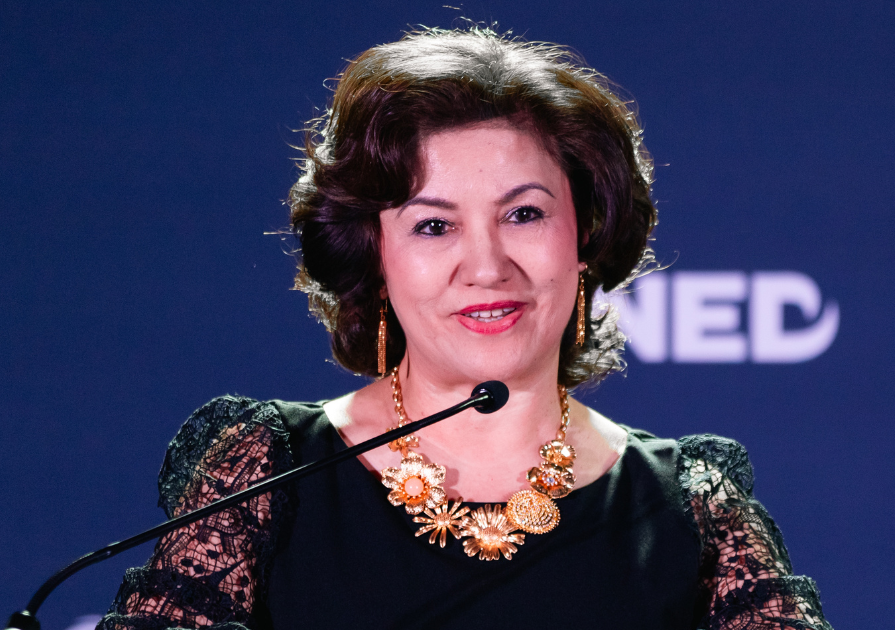
Rushan Abbas at the 2025 Democracy Awards. (Photo: M.K. Mindful Media)
Case Study: Rushan Abbas and the CCP’s Hostage Diplomacy
Rushan Abbas, founder of Campaign for Uyghurs and a NED grantee, gave her first public speech about China’s abuses in Xinjiang in 2018. Her husband’s entire family had already vanished in the 2017 crackdown. Just six days after her speech, her sister, Dr. Gulshan Abbas, a retired medical doctor with no political ties, also disappeared.
“She was being targeted because of my advocacy,” Abbas said. “Every day I wake up with her eyes in my mind. Of course, I feel guilty. Speaking out in the United States as an American citizen cost my sister her freedom.”
To this day, Dr. Gulshan Abbas remains missing in China’s vast detention system—her only ”crime” being related to someone who exposed the CCP’s abuses. This brutal form of hostage diplomacy forces exiled activists into an impossible choice: stay silent or risk their loved ones’ safety.
Case Study: Natalia Arno and the Kremlin’s Transnational Reach
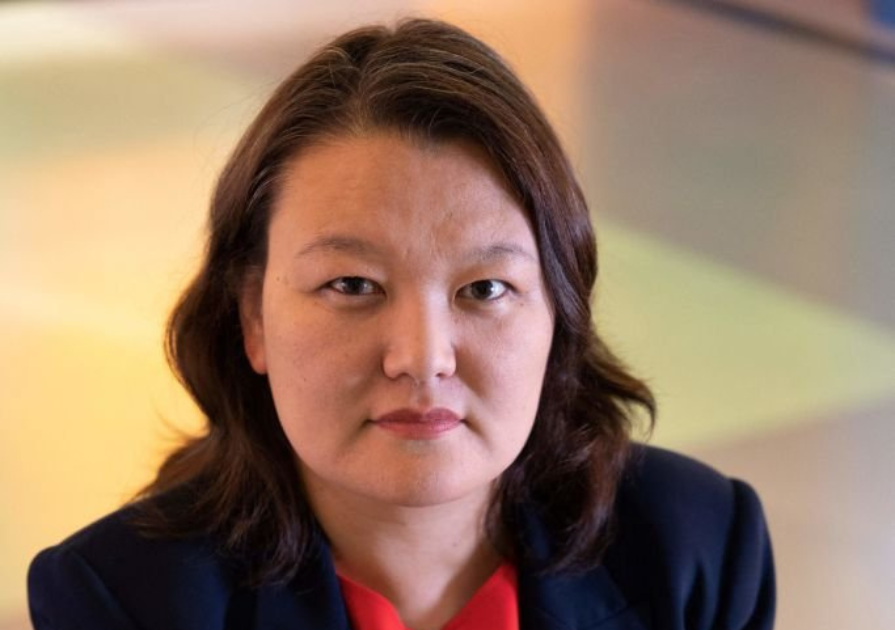
Natalia Arno (Photo by THOMAS SAMSON/AFP via Getty Images)
Natalia Arno, president of the Free Russia Foundation and a longtime NED partner, was forced into exile from Russia in 2012. Since then, she’s been a leading voice in exile activism, advocating for political prisoners, supporting democratic leaders, and coordinating programs to hold the Putin regime accountable.
But in May 2023, after a private event in Prague, she returned to her hotel to find the door ajar and a strange scent inside the room. Hours later, she experienced numbness, pain, and blurred vision. Doctors in Washington, D.C. confirmed exposure to nerve toxins.
“I never could have believed the scale and brazenness and how long the Kremlin tentacles are into the West,” she said. Despite years of surveillance and intimidation, Arno continues her work. “You could lose your life,” she said, listing examples of poisoned, tortured, and murdered activists. “I have been in this game for 20 years, and I can write a book about all the kinds of attacks against me in Russia.”
Activism in Exile and Under Authoritarian Rule
Authoritarian regimes target democracy advocates in two primary ways. Activists working inside authoritarian states face direct repression: denial of employment, education or housing to surveillance, interrogation, imprisonment, or death. Activists living in exile, such as members of the diaspora, confront transnational repression: intimidation, harassment, cyberattacks, and retaliation against relatives still living under dictatorship.
While both forms of courage are vital to the cause of freedom, they require different kinds of protection. For activists in exile like Abbas and Arno, visibility can be both a tool and a vulnerability—they use their public platforms to build international support while enduring harassment and threats from afar. For those working quietly inside repressive states, even the faintest association with democracy support can result in severe consequences. NED’s Duty of Care and Do-Not-Disclose policies reflect this spectrum of risk, providing flexible protections appropriate to different contexts, roles, and levels of exposure.
Visibility and Risk in Democracy Activism
Activists face difficult decisions about how visible they can afford to be. For some who live in exile, like Abbas and Arno, activism is essential to raising awareness and building international support. As public figures in free societies, they can testify before lawmakers, engage journalists, and speak on behalf of silenced communities. But even in freedom, visibility comes with the danger of transnational repression.
Abbas has faced smear campaigns, online harassment, and death threats requiring FBI involvement. Her family in China has been targeted. “Those kinds of things actually became so normal because we face this almost weekly or monthly,” she said. “And we just laugh at it and take it as the impact of our work.”
Arno’s risks didn’t end after fleeing Russia. “Being in NATO or EU countries doesn’t save us from this huge Kremlin machine,” she said. “Surveillance is still huge, cyberattacks are huge, but also physical attacks.”
These cases illustrate the first front of transnational repression: authoritarian regimes projecting power beyond their borders to intimidate, threaten, or attack critics abroad.
Iran has become one of the clearest examples of how far authoritarian regimes are willing to go to silence dissent beyond their borders. Iranian democracy activists, journalists, and human rights defenders living in exile have faced kidnapping plots, assassination attempts, surveillance, and harassment across Europe and North America. Multiple Western governments have linked Iranian intelligence services to plots targeting exiled dissidents, leading to disrupted operations, criminal prosecutions, and sanctions. Iran’s efforts to pursue critics abroad underscore the growing reality of transnational repression and the need for democracy organizations to extend duty-of-care protections even to partners living in open societies.
At the same time, this external pressure is inseparable from the repression activists face at home. For those still inside authoritarian states, the threat is direct and unrelenting. These activists continue their work at great personal risk, operating under surveillance, harassment, and the constant threat of arrest or imprisonment while pushing for democratic change.
In response to these dangers, many activists adopt a lower profile. How public they are in their work is an intentional choice to protect themselves, their families, and their networks from retaliation. While the steps they take to remain safe in authoritarian environments may mean their activism lacks the visibility of public campaigns, it is no less vital. Activists in authoritarian environments take great risks to build the infrastructure of democracy movements—documenting abuses, organizing communities, and informing international action.
In China, the Chinese government has systematically stigmatized international democracy funding. Even tenuous connections to external support and collaboration can carry severe consequences. As one activist working with international human rights and democracy organizations explained, “Me, myself, my family members, were interrogated by police officers in China.” Others have been detained and prosecuted for similar work. The Chinese government has also targeted the family members of human rights defenders in an effort to deter continued activism.
As a result, discretion is essential. “We prefer NED to not mention our names publicly,” the activist said, “in order to protect staff members and board members and even former colleagues, former members, and our families.”
Public activism draws global attention and builds coalitions, but it also brings heightened risk. Regimes often target public figures to intimidate or silence them—and to send a warning to others.
Activism that seeks to engage in quieter and less confrontational forms of engagement, by contrast, can provide greater security and sustainability, particularly in repressive settings. “While of course it’s much more dangerous for those activists who are inside Russia to speak out,” one Russian activist explained, “it’s much safer for those working in exile and most continue their work quietly.”
Human rights work in authoritarian environments demands different operational and political strategies. While the work often seeks to expose gross human rights abuses and expose corrupt networks, the ability to gather and verify the information requires close cooperation between groups that are in exile and networks that are in country.
In Tibet, NED-supported partners have documented China’s campaign to erase Tibetan identity through colonial-style boarding schools. In Venezuela and Cuba, investigative journalists have exposed corruption and human rights violations while keeping low profiles to stay safe. While international and exile organizations are often the face of the work, the networks on the ground are equally essential to what they achieve.
As Arno put it, “People are our biggest value, our biggest treasure. When activists are facing such dangerous things like imprisonment, torture, murder, we have to protect them with all possible measures.”
Supporting Activists Safely and Effectively
Since its founding in 1983, NED has supported democracy activists and citizen leaders—whether operating in exile or inside closed societies—to advance human rights and democratic values in some of the world’s most repressive contexts. NED’s Founding Statement of Principles and Objectives notes that in “societies where even [these] independent institutions are prohibited or severely restricted, the immediate objective is to enlarge whatever possibilities exist for independent thought, expression, and cultural activity. … [The Endowment] will not neglect those who keep alive the flame of freedom in closed societies.”
As a congressionally mandated independent nonprofit, NED was designed to provide support to its partners in a way that is impactful, secure, and accountable. Few donors are structured to do this work with the same level of care and discretion, which is why frontline democracy advocates consistently place their trust in NED.
Key to NED’s approach is the principle of protection through discretion. As NED’s Board of Directors approve grantmaking strategy and individual projects, the identifying details of grantees are made available to them. However, we avoid public disclosures that could expose partners to government reprisal. This is not only an ethical commitment—it is a key operating principle rooted in NED’s Duty of Care and Public Disclosure Policies, which obligates the organization to do no harm.
Without this policy of protection, many activists could not safely engage with international support. “It’s very difficult to build reputation and trust” one democracy activist said. “How you treat your grantees, with special care and understanding of the particularities of each region, should be the gold standard that all donors take as an example.”
NED’s Approach to Public Disclosure of Grantees
NED publishes listings of its current grantees twice a year on its website and includes a comprehensive listing of grantees in its annual report, complete with grant descriptions, grant amounts, and grant durations, organized by country and region. However, we do not publicly disclose personally identifiable information in these listings to avoid placing individuals at risk, now or in the future.
Some have asked why NED does not publish the personally identifying details of its grantees on its website. The reason is simple: in many cases, doing so would put a target on the backs of those we support and compromise their ability to do their work.
NED’s Duty of Care and Public Disclosure policies seek to balance the ability of our partners to operate as freely and securely as possible with our transparency requirements. At the same time, our relationship with our grantees is fully transparent. Organizations must take the initiative themselves to seek support from the Endowment. They know who we are, where our funds come from, and the values that guide our support. Activists seek out NED’s assistance precisely because it is open, accountable, and trusted.
NED respects the agency of its grantees to decide whether it is safe to publicly disclose their relationship with NED. Organizations regularly and proudly share their partnership with NED as a mark of credibility and support. Others, particularly those operating in hostile environments, often request confidentiality to safeguard their security and effectiveness. In all cases, NED ensures our partners are aware of our policies and procedures so that they can make informed decisions about their own public posture.
This approach is an ethical obligation as much as it is a matter of organizational policy. We know about the persecution of Uyghurs and underground Christians in China, the protests in Cuba and Iran, the continued repression in Belarus and Nicaragua, and human rights abuses in Burma and North Korea because courageous individuals risk their lives to report them. Supporting democracy means more than funding programs or issuing statements—it means protecting the people behind the work.
With that responsibility comes a duty: to minimize risk, not add to it through careless exposure. In a world where authoritarian regimes are increasingly sophisticated, coordinated, and ruthless in targeting dissent, discretion becomes an essential safeguard.
Transparency and Accountability
Even as NED protects grantee confidentiality in public settings, it maintains rigorous transparency and accountability to the NED Board, Congress, and U.S. oversight bodies. The NED Board reviews and approves both grantmaking strategy and individual grants. As outlined in our Duty of Care, we submit comprehensive annual plans and updates to congressional committees that outline our strategy and grantmaking priorities. We maintain active communication with Members and their staff, respond promptly to official requests for information, and create opportunities for elected officials to engage directly with our grantees—both in Washington and abroad—to better understand the real-world impact of NED-supported efforts. We likewise provide an annual report to the executive branch as a formal accounting of our work, priorities, and impact. NED consults regularly with representatives of the legislative and executive branches on our work, both in Washington and in the field, and responds to Freedom of Information Act information requests.
NED upholds strict due diligence and financial oversight procedures to ensure that resources are used responsibly and for their intended purpose. Our grantmaking is governed by the standards of all federal spending, with clear agreements, financial reporting requirements, and independent audits to ensure funds are used for their intended purpose.
In addition, the Endowment is subject to comprehensive oversight, including Government Accountability Office (GAO) investigations, State Department Inspector General reviews, and annual independent audits.
By combining discretion abroad with transparency at home, NED fulfills its dual responsibility: protecting those who advance freedom in repressive environments while remaining transparent and accountable. As authoritarian threats grow more complex and far-reaching, we will continue strengthening our Duty of Care so those who defend democracy can pursue their work safely, effectively, and with confidence in the support behind them.
The 24thedition of the Geneva International Film Festival and Forum on Human Rights (FIFDH) took place in Geneva from 6-15 March 2026. The Right Livelihood team attended several screenings and debates and shared the experience in this text.
Ellynn Del Perugia, Administrative Officer, wrote on 26 March 2026 about this:
Each year, the FIFDH offers the opportunity to watch documentaries and movies from all corners of the world. Some echoed the work and values of Right Livelihood Laureates or the proposals currently under research, others expanded our understanding of the broader human rights landscape.
More than providing an opportunity to learn, these films act as living memories and testimonies. They make public what power would prefer to keep hidden. In some cases, placing a camera in someone’s hands becomes an act of resistance in itself. As 2024 Laureate Issa Amro did when he initiated a camera distribution project in Hebron, Palestine, to document and collect video evidence of abuses and injustices committed by Israeli settlers and the military against Palestinians.
The festival opened with “A Fox Under a Pink Moon”, which won the Grand Award of the festival. This self-portrait follows a 16-year-old Afghan artist as she attempts to escape multiple forms of violence in Iran and join her mother in Austria, using her mobile phone as both a tool of survival and a means of artistic expression.
Over the following days, the programme moved across different geographies and contexts: Argentina grappling with fifty years of memory since the dictatorship in the documentary “Identidad”; China’s expanding surveillance state and its repression of the Uyghur population, in “Eyes of the Machine”; Pakistan’s environmental and human crisis in “Black Water”; and the fragile future of multilateralism explored in “Solidarity” alongside a debate on the future of International Geneva. The latter raised important questions for Right Livelihood, which uses international platforms to support the Laureates. Are we witnessing the end of a rules-based international order? And if so, what replaces it? An order based purely on the interests of the most powerful? What would a future without International Geneva look like?
Across these very different stories and regions, one theme kept returning: the suppression of memory as a tool of power. “Identidad” follows one man’s quest to rediscover his origins and identity. The documentary explores the importance of remembrance in countering the erasure of memory, a tactic often employed by repressive governments to conceal their own crimes.
“Eyes of the Machine” raises a similar question, documenting the silencing of the Uyghur population’s culture, language and collective memory. Here too, some individuals have chosen to keep these memories alive and share their stories, often at great personal risk.
This is something we recognise deeply at Right Livelihood. The Laureates we support are often people who choose to speak, act and organise in contexts where doing so comes at great personal cost.
Held alongside the 61st session of the Human Rights Council, several Laureates and partners present in Geneva also participated in this festival. It is difficult to leave these films feeling indifferent. They unsettle, as they should. They raise questions about the direction of the world and the future that lies ahead. But they also remind us that memory, when kept alive, can be a form of hope.
Judge Temirbek Mamatov, who reviewed the case following the ruling by the nation’s Supreme Court, refused to drop the charges and acquit the journalist who participated in the hearing via a web link from the prison colony, Radio Azattyk reported. Mamatov also imposed a travel ban on Tajibek kyzy, and her case is expected to be retried.
On 23 March 2026 Civil Rights Defenders welcomed the decision allowing Makhabat Tajibek kyzy to return home and to finally reunite with her family and teenage son. We also repeat the call that Civil Rights Defenders and other human rights groups have made since the day Tajibek kyzy and her colleagues were arrested: Kyrgyzstani authorities should drop all unsubstantiated charges brought in retaliation for her legitimate journalistic work. Makhabat Tajibek kyzy needs to be fully acquitted and rehabilitated.
The director of anti-corruption investigative outlets Temirov Live and Ait Ait Dese, Tajibek kyzy was arrested in January 2024 along with 10 other current and former staff members and sentenced in October of that year to six years in prison on charges of calling for mass unrest. Until today, all of her co-defendants in the case have been released from jail under probation, pardoned or acquitted.
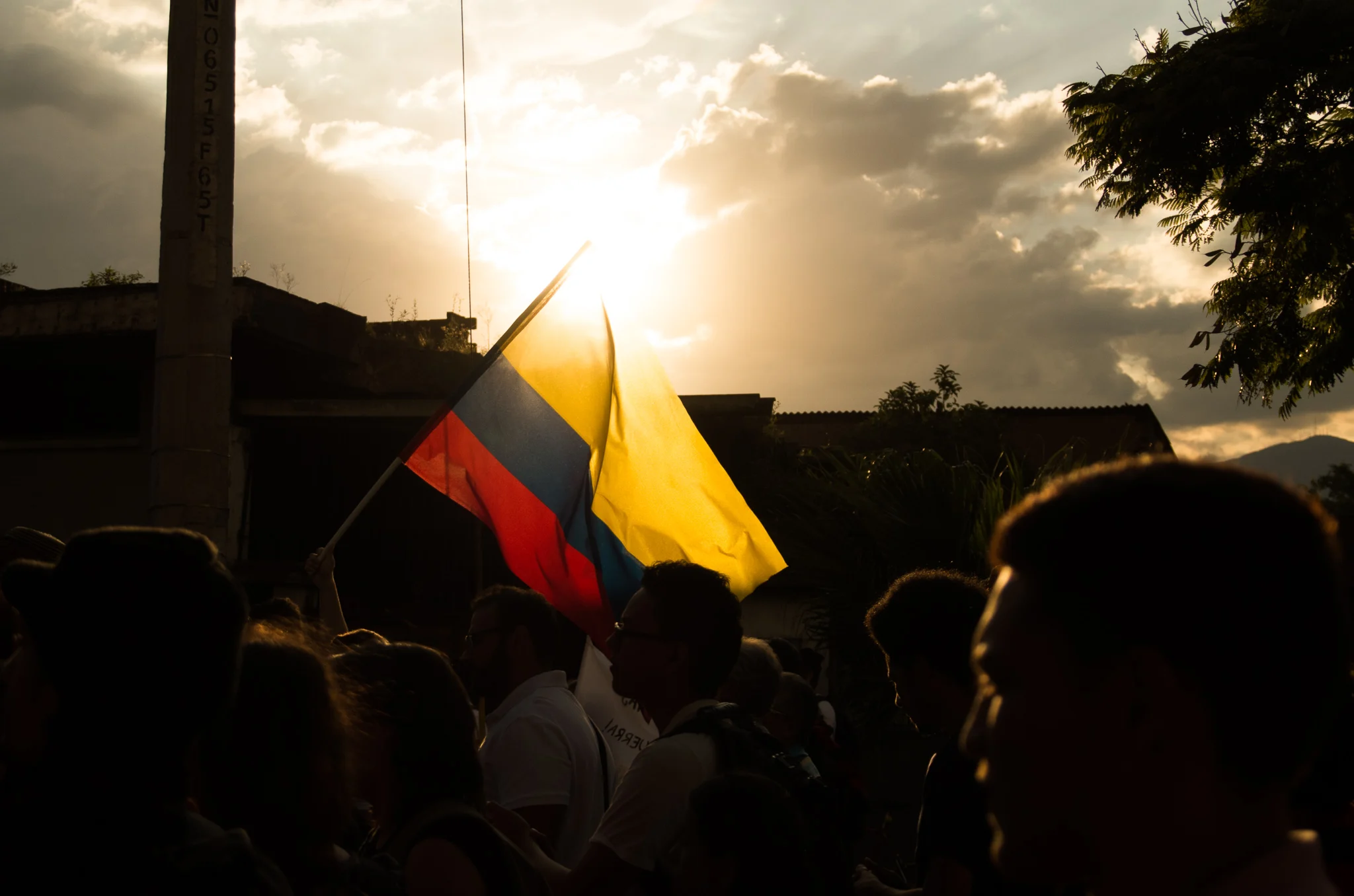
The 972 deaths recorded between 2016 and 2025 make Colombia “one of the most dangerous countries in the world” for such activists, according to the UN’s High Commissioner for Human Rights, Volker Türk.
Following the historic peace accords between the government and the Revolutionary Armed Forces of Colombia (FARC) in 2016, the report noted a gradual increase in assassinations. This was linked to the state’s inability to maintain a strong presence in areas previously controlled by the guerrilla group.
Over 70% of identified perpetrators were armed non-state actors, with the majority of cases analyzed by the report involved in drug trafficking, illegal mining, illegal logging, and human trafficking. The number of attacks and threats against human rights defenders investigated by the UN between 2022 and 2025 was 2,018, however this is thought to represent “only a fraction” of the true number due to underreporting and the lack of efficient government records of such cases.
The report recognized the work of the current Historic Pact (Pacto Histórico) government of Gustavo Petro, which has publicly recognized the gravity of the situation and worked to develop a national strategy to counter it. This included the 2022 law that established peace as a matter of state policy, recognizing the state’s responsibility to “guarantee human security” through a “territorial and intersectional approach”.
However, the UN says the state’s response has failed human rights defenders due to its fragmented nature that lacks coordination between national, departmental, and municipal authorities.
“In addition to ensuring accountability for the murders that have taken place, addressing the structural causes of this human tragedy through a comprehensive approach must be a priority for all relevant authorities in Colombia, in order to protect human rights defenders and enable them to carry out their vital work safely,” Türk said.
High levels of impunity have also persisted, with only 55 out of the 800 cases investigated between 2022 and 2025 ending in sentencing. In over half of these cases, no suspects have been identified.
Nearly a quarter of victims identified by the UN were Indigenous (23%) highlighting a disproportionate effect on this population that represents less than 5% of Colombians.
Other disproportionately affected groups include Afro-Colombians, LGBTQ+ individuals, rural community leaders and environmental protectors, as well as political leaders.
The report concluded by urging the Colombian state to take action to combat this issue, recommending institutional reforms and criminal investigations into perpetrators.