On 29 April 2025 (last year) Amnesty International Indonesia raised concerns over the persistent violence and intimidation targeting human rights defenders in the country, recording at least 123 cases involving physical assaults, digital attacks, threats, and other retaliatory actions against 288 individuals throughout 2024.
Usman Hamid, Executive Director of Amnesty International Indonesia, attributed the frequency of such incidents to a lack of strong legal safeguards. “This makes human rights defenders vulnerable to threats and intimidation,” Usman said.
He added that the absence of robust legal frameworks also results in weak law enforcement, with only a few perpetrators of violence against human rights defenders in 2024 being brought to justice. Among the cases highlighted was the shooting of lawyer and human rights advocate Yan Christian Warinussy in Manokwari, West Papua, on July 17, 2024, after attending a corruption trial. [see https://www.hrw.org/news/2024/07/25/prominent-rights-lawyer-shot-west-papua-indonesia] “As of the end of the year, there has been no progress known in the police investigation,” Usman stated.
It was not until February 2025 that police arrested a suspect, ZT, in connection with the shooting. The arrest took place at a residence in Manokwari Regency and was carried out by the Manokwari City Police Special Team. ZT’s testimony led investigators to identify four additional suspects, including the alleged mastermind, OU, who is still at large. According to Manokwari City Police Chief Commissioner Rivadin B. Simangunsong, the attack on Yan was linked to a separate legal case: the murder of Yahya Sayori, for which Yan had been providing legal assistance. “It is motivated by another issue currently being processed in court, namely the murder case of the late Yahya Sayori, who was accompanied by lawyer Yan Christian Warinussy,” said Rivadin.
Then on 6 March 2026 came the good news that an Indonesian court acquitted four other activists after judges find no link to protest violence, prompting renewed scrutiny of policing and restrictions on civic space.
Responding to the acquittal of four activists – Delpedro Marhaen, Muzaffar Salim, Syahdan Husein and dan Khariq Anhar – accused by the authorities of inciting people to commit violent acts during the August 2025 protests, Usman Hamid, Amnesty International Indonesia’s Executive Director, said: “This brings new hope amid an creasingly shrinking civic space in Indonesia. The acquittal sends a clear message to law enforcement authorities that they should stop criminalising human rights defenders and anyone who peacefully exercises their right to protest. This is a significant victory for justice and human rights in Indonesia.
So maybe there will be progress also on the case of Yan Christian Warinussy ?
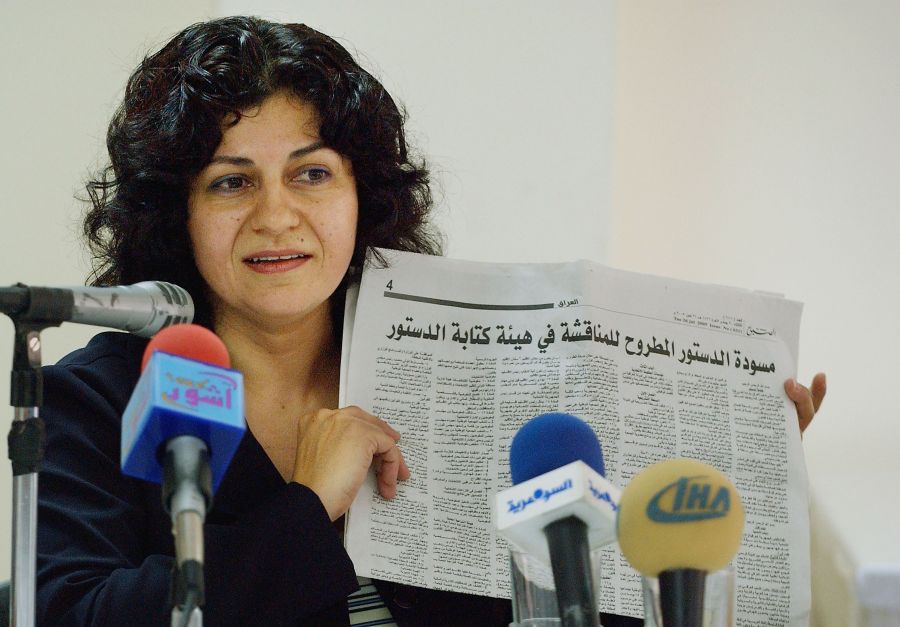
On 2 March 2026, woman human rights defender and feminist Yanar Mohammed was killed in an armed attack in front of her residence in northern Baghdad.
Yanar Mohammed was a prominent Iraqi woman human rights defender and feminist, and the co-founder and director of the Organisation of Women’s Freedom in Iraq (OWFI). Since 2003, she had worked to protect women facing gender-based violence, including domestic abuse, trafficking, and so-called ‘honour killings.’ Under her leadership, OWFI established a network of safe houses across several Iraqi cities, providing protection and support to hundreds of women. Yanar Mohammed led these efforts despite all the ongoing impediments and risks. She was a strong advocate for secularism and women’s equality. Throughout her activism, Yanar Mohammed faced death threats and, at times, was forced to restrict her movement. {see also: https://humanrightsdefenders.blog/2019/01/07/women-human-rights-defenders-in-iraq-have-to-live-dangerously/]
According to an offical statement from OWFI, on 2 March 2026 at 9:00, two unidentified gunmen on motorcycles opened fire on Yanar Mohammed as she stood outside her home. She was quickly transported to the hospital, however, despite the effort of medical personnel, she succumbed to her injuries.
Reportedly, Yanar Mohammed had returned to Baghdad from Canada just a few days prior to her assassination, raising concerns about the potential surveillance and monitoring of her movements.
On 24 April 2026 UN experts condemned the murder of Iraqi human rights defender Yanar Mohamed in March by unknown perpetrators and urged the government to act swiftly to ensure accountability.
The event “Tackling the protection gap: Host States’ responsibility to prevent and respond to transnational repression” will bring together defenders and UN experts to discuss the international human rights law obligations of States in respect of transnational repression against individuals and groups within their territory, as well as the strengthening of international standards, and gaps arising from shortcomings in their implementation domestically.
Location: Geneva, Switzerland. Date: 09 March 2026. Palais des Nations, Room VIII. Time: 2:00PM – 3:00PM CET and livestreamed on ISHR’s YouTube channel.!
Research from international organisations, NGOs and academics shows that transnational repression (TNR) – acts by States and their proxies to deter, silence or punish dissent, criticism or advocacy outside their territory – is affecting a growing array of individuals and groups worldwide.[1] With the emergence of new surveillance and communication technologies, many actors have found new avenues to silence and punish critics and opponents. The most common targets have been exiled human rights defenders and political activists, but today broader groups such as journalists, lawyers, artists, academics and ordinary members of diaspora communities are frequently targeted. See e.g.
The immediate effect of TNR is the violation of, or constraint on the exercise of, fundamental human rights. States have obligations towards those subject to such violations taking effect within their territory. These obligations have long been recognised, but have not yet been the subject of focused discussion in relation to TNR, leaving the scope and nature of the duties of host States unclear.
This event will bring together defenders and UN experts to discuss the international human rights law obligations of States in respect of transnational repression against individuals and groups within their territory, as well as the strengthening of international standards, and gaps arising from shortcomings in their implementation domestically.
Speakers:
Sayed Ahmed al-Wadaei, Director of Advocacy, Bahrain Institute for Rights and Democracy (BIRD)
Birgit Kainz-Labbe, Coordinator of Civic Space Unit, Office of the UN High Commissioner for Human Rights
Ben Saul, UN Special Rapporteur on counter-terrorism and human rights
Hélène Tigroudja, Human Rights Committee, Vice-Chair
Moderator: Raphael Viana David, International Service for Human Rights
This event is organised by ISHR and co-hosted with Human Rights Watch, Human Rights House Foundation and the International Federation for Human Rights (FIDH).
Aziza Abdirasulova has displayed great courage and determination in defending human rights
Aziza Abdirasulova, a prominent human-rights defender and a pioneering independent civil society activist from Kyrgyzstan, has been awarded the 2026 Council of Europe Raoul Wallenberg prize in recognition of her efforts to protect fundamental rights with a particular focus on prisoners’ rights, freedom from torture, and the right to peaceful assembly.
At the award ceremony in Strasbourg, on 21 January 2026, Council of Europe Secretary GeneralAlain Berset recognised the great courage and determination of Ms Abdirasulova making an outstanding contribution to fundamental rights in Kyrgyzstan, often at great personal and physical risk.
“As one of the first independent human-rights defenders in Kyrgyzstan to document torture and arbitrary detention systematically, Aziza Abdirasulova has kept facts on the record when silence would have been easier. At a time when attention is drawn to geopolitical shifts and crises at the top, she reminds us that the Raoul Wallenberg prize brings the focus back to human-rights defenders.”
In the spirit of Raoul Wallenberg’s work, notably his single-minded determination and extraordinary courage in standing up to protect fundamental rights, the jury emphasised that Aziza Abdirasulova refused to be silenced by intimidation and harassment. Underlining the essential role of human-rights defenders in challenging times, including backsliding on human rights, the jury stressed that “her organisation Kylym Shamy has played a key role in exposing systemic human-rights violations providing legal support to victims and mobilising public opinion nationally and internationally. It has also been a vital source of credible information for the international community on human-rights issues in Central Asia. She has worked indefatigably to promote and protect freedom of assembly and the right to peaceful protest in the face of severe official restrictions on protests and public gatherings.”
Receiving the prize, Aziza Abdirasulova said: “For me, like for Raoul Wallenberg, every human life saved had and has the ultimate value. Over the years of my work, I have consistently defended fundamental human rights: freedom of peaceful assembly, freedom from torture and cruel treatment, freedom of speech and opinion. This work required not only professional knowledge but also great personal courage. I happened to witness hundreds of cases of torture, and in each case, I have tried to provide whatever support I could to the victims.”
Repressive regimes throughout the world deploy the machinery of the state to silence criticism and dissent. It is therefore hardly surprising that artists—whose creative work can expose, ridicule, and condemn in emotive and powerful ways—are common targets of political persecution. Over the past few years, there have been crackdowns on artists and performers in Russia, Belarus, Cuba, Azerbaijan, Egypt, China, and Venezuela, among other countries. The following artists dared to use their creative expression to challenge powerful systems, and have been punished with political imprisonment. From: Political Prisoners Watch February 19, 2026
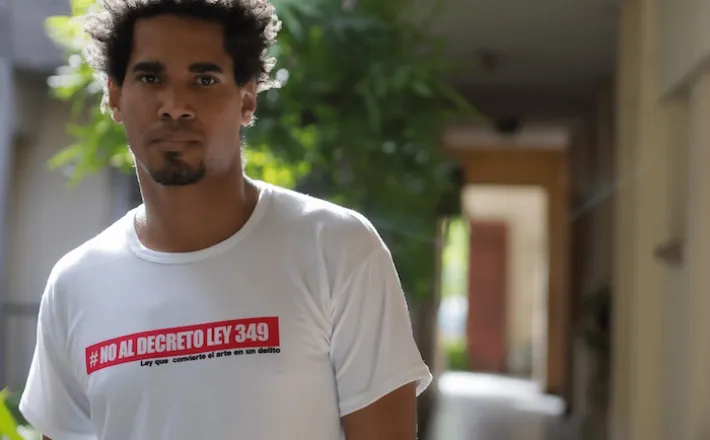
Luis Manuel Otero Alcántara is a Cuban artist and activist whose evocative performance art led to government harassment and numerous periods of detention. After the Cuban government enacted Decree 348 in 2018, which required artists to obtain advance approval for even private performances, he cofounded the San Isidro Movement to protest the increasing censorship of free expression. On July 11, 2021—the start of the historic J11 protests—he was arrested and has been detained ever since. In June 2022, he was sentenced to five years in prison for contempt, public disorder, and insulting symbols of the homeland, and remains in prison in Cuba. [https://humanrightsdefenders.blog/2024/09/19/the-rafto-prize-2024-to-cuban-artivist-luis-manuel-otero-alcantara/]
Maykel Osorbo Castillo Pérez is a Cuban musician who cofounded the San Isidro Movement with Luis Manuel Otero Alcántara. Due to his activism and vocal opposition to the Cuban regime, he was subjected to systemic harassment, including being arrested 121 times in a five-month period. He cowrote the 2021 song Patria y Vida(Homeland and Life), which inspired thousands to demonstrate against Cuba’s repressive regime and won two Latin Grammys. He was not able to accept the awards, however—in May 2021, he was arrested, forcibly disappeared for 14 days, and eventually sentenced to nine years in prison on charges of contempt, public disorder, and defamation of institutions and organizations, heroes, and martyrs.
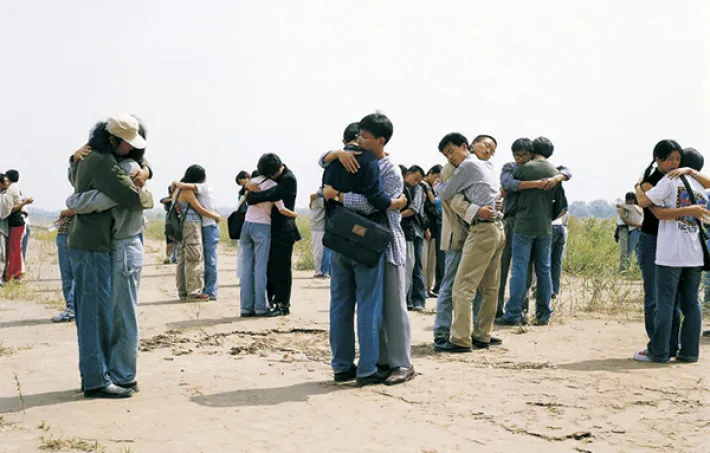
Gao Brothers, The Utopia of the 20 Minute Embrace (2000), modified image via Wikimedia Commons, used under CC BY-SA 3.0.
Gao Zhen is a Chinese artist and US permanent resident who was detained while visiting family in China in August 2024. Avant-garde works by Gao and his brother Gao Qiang—known together as the Gao Brothers—include huge, mirror-like sculptures and other works critiquing Mao Zedong and China’s Cultural Revolution. Authorities allege that Gao committed the offense of “insulting or defaming heroes and martyrs,” though the art in question had been created years before the Law on the Protection of Heroes and Martyrs was enacted. Gao’s wife Zhao Yaliang has been prohibited from leaving China, and she and their young son have remained there since his detention. [https://www.bbc.com/news/articles/cddqpr7z74yo]
Galal El-Behairy is an Egyptian poet and singer/songwriter who has faced severe retaliation for his artistic work. He wrote the lyrics for the guitar-driven protest song Balaha, which mocked Egyptian President Abdel Fattah al-Sisi and the country’s corrupt establishment. Five days after its release in February 2018, he was arrested by the National Security Police and disappeared for a week. In July 2018, he was sentenced to three years in prison by a military court for allegedly spreading false news and rumors and insulting the Egyptian army in his poetry book The Finest Women on Earth. Although his sentence expired in 2021, he was not released, and he is now facing additional charges including disseminating fake news and joining and aiding a terrorist organization.
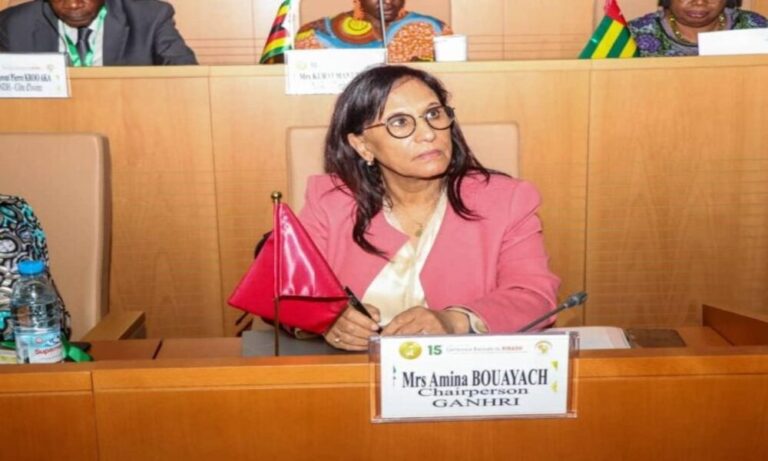
Amina Bouayach, President of the Global Alliance of National Human Rights Institutions (GANHRI), has issued a powerful call for the reinforcement of human rights mechanisms across Africa.
Speaking at the African Network of National Human Rights Institutions (ANNHRI) conference in Yaoundé, Bouayach warned that the continent’s legal frameworks are under unprecedented strain from a “triple threat” of security instability, climate change, and health crises. As the head of Morocco’s National Human Rights Council (CNDH), she emphasized that these overlapping emergencies are systematically eroding the rule of law and the capacity of states to meet their international obligations.
Bouayach highlighted a concerning global decline in multilateralism, noting that human rights are increasingly being sidelined in international discourse. She argued that international treaties and regional African mechanisms must be viewed as complementary rather than competing forces. According to her vision, while international laws provide the global benchmark, regional bodies are essential for adapting those standards to local African realities. She stressed that bridging the gap between high-level commitments and national legislation is the only way to restore citizen trust in state institutions.
The address identified several critical “blind spots” in the current continental approach, specifically pointing to the limited use of African legal mechanisms and the persistent barriers to justice for the general population. Bouayach cited the devastating conflict in Sudan—where access to basic healthcare and food has collapsed—and the chronic insecurity in Somalia as prime examples of how state fragility directly translates into human rights violations. She noted that recognizing these failures is not an admission of weakness but a necessary act of “clear-sightedness” required to move toward genuine reform.
To combat these trends, Bouayach urged African states to fully align their national institutions with the Paris Principles, the international gold standard for institutional independence and effectiveness. She concluded by calling for a surge in resources and guaranteed autonomy for human rights defenders, asserting that the rule of law must remain the non-negotiable pillar of Africa’s long-term stability and economic development.
Purpose:To inform the High Commissioner’s report pursuant to the Human Rights Council resolution 59/10.
In its resolution 59/10, the Human Rights Council requested the United Nations High Commissioner for Human Rights to “prepare a thematic report in follow-up to the report containing practical recommendations for the creation and maintenance of a safe and enabling environment for civil society, based on good practices and lessons learned, submitted to the Human Rights Council at its thirty-second session, to review progress against the recommendations contained therein, to identify new and emerging trends concerning civil society space, including through an analysis of the specific contribution and risks faced by underrepresented parts of civil society, and to provide an updated set of recommendations in the light of those trends, and to present the report to the Council at its sixty-third session.”
OHCHR invites States to respond to this online survey and share good practices and measures to protect and promote civic space in their countries, with a focus on the five areas outlined in the previous report (A/HRC/32/20) – as reflected below – on “practical recommendations for the creation and maintenance of a safe and enabling environment for civil society, based on good practices and lessons learned.” Please take the online survey here: English – French – Spanish
OHCHR also invites civil society, non-governmental organizations, national human rights institutions, United Nations entities and other relevant stakeholders, to respond to this online survey. If you are an organization working in a specific country, please provide information related to that country or context. If you represent a global and regional organization, please consider providing information for as many regions and/or countries as appropriate. Please take the online survey here: English– French– Spanish
UN human rights experts on 5 February 2026 urged China to immediately grant full access to adequate medical treatment for woman human rights defender, Yang Li, from Jintan, Jiangsu Province, saying that her attempts to travel to Beijing for medical appointments have been intercepted on numerous occasions and allegedly resulted in her arbitrary detention.
“The arrest and indictment of Yang Li appear to represent an effort by the authorities to prevent her from peacefully exercising her rights to seek redress for legitimate grievances. This harassment is compounded by the fact that it was coupled with preventing her from accessing medical treatment,” the experts said.
Yang Li has been advocating against land requisition and crop clearance being carried out by the authorities in Jiangsu Province since 2009. Her efforts to seek redress for her family and members of her community through filing petitions have led to her being administratively detained multiple times since 2014.
Since 2023, Yang Li has consistently attempted to travel to Beijing to file petitions and receive medical treatment. During these attempts, she has been subjected to physical assaults, administrative detention and been prevented from accessing necessary medical treatment – reportedly by officials from the Jintan and Beijing police. In October 2024, Yang Li was placed in criminal detention for the charge of “picking quarrels and provoking trouble,” which was later changed to “disrupting the work order of state organs.” Yang Li was convicted in September 2025 and sentenced to 15 months imprisonment in a judicial process that indicated several fair trial inconsistencies.
“Yang Li is in urgent need of adequate medical treatment, capable of responding to the late-stage kidney disease she is suffering from,” the experts said. “Her condition appears to have worsened significantly as a result of the repeated denial of medical care, her treatment whilst in prison and the stress she has been subjected to through numerous detentions that appear to have been carried out without legal basis or justification.”
“We urge the authorities to cease the harassment and intimidation of Yang Li and her family and allow her full, immediate access to medical treatment of her choosing, to ensure her health does not further deteriorate and to prevent long-lasting impacts,” the experts said.
The experts have been in contact with the Government of China on these issues.
On 29 January 2026 ISHR, in collaboration with its various partners, announced that it has established a network of legal professionals for the protection of human rights defenders in Africa
Legal professionals and human rights defenders from several African countries came together to finalise the establishment of a network for the protection of human rights defenders in Africa.
This Network aims to be a space for collaboration, solidarity and strategic legal action, with a view to strengthening the collective response to violations of the rights of human rights defenders in Africa. Its establishment is part of a project implemented by the International Service for Human Rights with the support of Open Society Foundations, and in collaboration with national and regional human rights networks.
Participants at this regional meeting reviewed the Network’s founding charter, defining its principles, governance and operating procedures, and identifying common priorities for strengthening the legal protection of human rights defenders on the continent.
Participants noted that in some African countries, violations, criminalisation and impunity persist, even in contexts with specific legal frameworks. Emphasising the need to move beyond isolated approaches, participants agreed to strengthen regional coordination among legal professionals.
During the meeting, the Network members agreed on a set of common principles and values, including a defender-centred approach, commitment, solidarity, independence, apoliticality, professionalism, integrity, and confidentiality. They also defined clear criteria for the Network’s engagement in situations of violations, in order to ensure responsible, strategic actions that respect the safety of defenders.
The meeting also served as an opportunity to discuss the legal challenges faced by defenders in different national contexts, as well as regional and international mechanisms that could strengthen their access to justice and protection.
The members of the Network committed to continuing the work begun at this meeting and to translating the adopted recommendations into concrete actions:
For countries that have not yet adopted an act on the recognition and protection of human rights defenders, to adopt such legislation.
For countries that have adopted such legislation, to implement it and establish national mechanisms for the protection of human rights defenders.
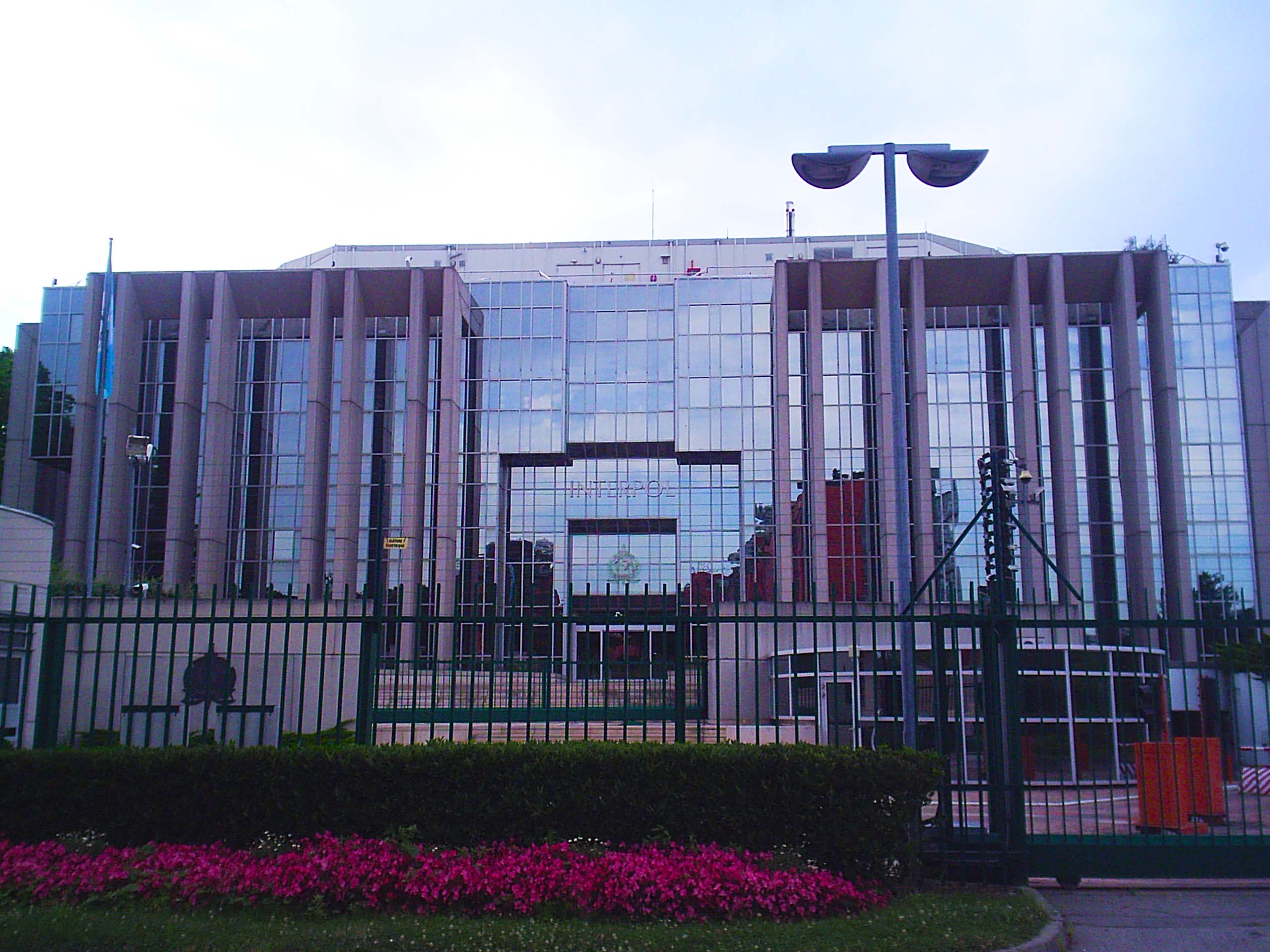
Two media outlets reported on states’ abuses of Interpol red notices to target political dissidents and human rights defenders on Monday. Amnesty International urged Interpol to address this “grave institutional failure” and improve its transparency.
Disclose, a French investigative media outlet, reported that Interpol has disclosed to the public less than 10 percent of the 86,000 active red notices. As of September 2024, Russia (4,817), Peru (4,457), and Tajikistan (3,493) are the countries with the most active red notices. The report also revealed that Interpol’s Commission for the Control of Files (CCF) removed at least 322 notices in 2024 alone after deeming them unjustified. In March 2024 an HRW report also highlights cases of governments misusing Interpol, see https://humanrightsdefenders.blog/2024/03/19/transnational-repression-human-rights-watch-and-other-reports/
At the same time, the BBC revealed that Interpol quietly dropped some initial measures that prevented Russia from abusing the red notices in 2025. The BBC also reported the phenomenon of countries using Interpol’s messaging systems to trace people abroad instead of issuing a notice that can be challenged by the target.
The BBC’s report also outlined how the abuse of the red notice system impacted the life of an exiled Russian dissident, Igor Pestrikov. He fled the country with his family after he refused to supply metal products to government-designated buyers in 2022. During the two years when a red diffusion against him was active, he was unable to rent an apartment, and his bank accounts were frozen. CCF removed his case after he challenged that Russia’s case against him was politically motivated.
Interpol is an intergovernmental organization that coordinates law enforcement of over 196 member countries. When a member state issues a red notice, law enforcement in other member states will assist in locating and arresting the wanted persons. However, Article 3 of Interpol’s constitution prohibits it from participating in any political interventions.
Reacting to the reports, Senior Director for Research, Advocacy, Policy and Campaigns of Amnesty International, Erika Guevara Rosas, questioned Interpol’s credibility since it failed repeatedly to challenge whether the states use red notices legitimately. She urged Interpol to improve its transparency and “stop serving states’ political interest.” Conversely, Interpol told the BBC that some accusations misunderstood how Interpol and its CCF system work, or are based on factual errors.
Relatedly, in November 2025, UN experts also flagged El Salvador’s misuse of the red notices to target two exiled Salvadoran human rights defenders, denouncing the country’s use of red notices as a means “to pursue its political agenda to harass and persecute human rights defenders beyond its borders.” According to international lawyer Kate McInnes, this marks the first time that UN Special Rapporteurs have issued a communication to Interpol. The communication warned that the red notices against the human rights offenders constituted transnational repression, violating Interpol’s constitution to uphold the Universal Declaration on Human Rights and to maintain political neutrality.