Posts Tagged ‘freedom of expression’

Transnational repression by China reaches New York

November 8, 2025

On 6 November 2025 Human Rights Watch issued a press release on how Chinese Police Harass Filmmakers, Families to Undermine Free Expression Abroad

9da2a6d2-e1fd-4b3d-a322-ba3c24f25b37
A still from Jiangnan Xu’s film “Friends from Jiangnan.” © Zhu Rikun

Chinese authorities harassed several dozen Chinese film directors and producers, as well as their families in China, causing them to pull films from the inaugural IndieChina Film Festival in New York City. On November 6, 2025, the festival’s organizer, Zhu Riku, announced that the film festival, scheduled for November 8-15, had been “suspended.”

The Chinese government reached around the globe to shut down a film festival in New York City,” said Yalkun Uluyol, China researcher at Human Rights Watch. “This latest act of transnational repression demonstrates the Chinese government’s aim to control what the world sees and learns about China.

Chiang Seeta, a Chinese artist and activist, reported that nearly all participating directors in China faced intimidation. Even directors abroad, including those who are not Chinese nationals, reported that their relatives and friends in China were receiving threatening calls from police, said Chiang.

On November 1, the organizers issued an announcement on social media saying they had received messages from some film directors and producers and their families about Chinese government harassment: “We are deeply concerned about the situation. … [I]f you are under pressure not to attend the festival … we fully understand and respect it.” By November 4, more than two-thirds of participating films had cancelled their screenings.

After the festival was suspended, Zhu issued a statement that the decision was not out of fear, but rather to “stop harassment of … directors, guests, former staff, and volunteers associated with the festival, including my friends and family.”

Independent film festivals in China have faced intensifying crackdowns over the past decade, Human Rights Watch said. The Chinese authorities have shut down all three major independent film festivals in China: Yunfest, founded in 2003; the China Independent Film Festival, founded in 2003; and Beijing Independent Film Festival, founded in 2006.

When the authorities shut down the last screening of the Beijing Independent Film Festival in 2014, they cut off electricity from the venue, confiscated documents from the organizer’s office, and forced the organizers to sign a paper promising not to hold the festival. Many festival organizers have tried without success to adapt, for instance by changing their format to screenings at multiple venues.

The 14th China Independent Film Festival was shuttered in 2018, the last time such a festival took place in China.

A court in January 2025 sentenced Chen Pinlin, known as Plato, to three-and-a-half years in prison for allegedly “picking quarrels and provoking trouble” after he made a documentary about the “white paper protests” during Covid-19 lockdowns. Transnational repression can be defined as government efforts to silence or deter dissent by committing human rights abuses against their own nationals living abroad, their families at home, or members of the country’s diaspora. [see also: https://humanrightsdefenders.blog/2025/10/17/un-report-highlights-chinas-targeting-of-human-rights-defenders-abroad/]

The Chinese government’s transnational repression of the arts has not been limited to film. Chinese officials interfered with an exhibition in Bangkok and censored artwork by Uyghur, Tibetan, and Hongkonger artists in August.

https://www.hrw.org/news/2025/11/07/china-authorities-shut-down-film-festival-in-new-york

https://www.europarl.europa.eu/news/en/agenda/briefing/2025-11-12/10/combating-transnational-repression-of-human-rights-defenders

https://ishr.ch/latest-updates/un-experts-warn-of-surge-in-transnational-repression-targeting-defenders-from-china-and-southeast-asia

NGO Statement on the International Day of Political Prisoners (30 October)

October 30, 2025
Freedom House Logo - Torch next to words Freedom House

On this International Day of Political Prisoners, the NGOs mentioned below stand together to affirm a simple truth: no one should be imprisoned for exercising their fundamental rights or for peacefully expressing their beliefs. Yet around the world, there are an estimated one million political prisoners, who are unjustly detained for political reasons. These individuals—journalists, human rights defenders, democratic opposition leaders, religious leaders, artists, and ordinary citizens—represent the conscience of their societies. Their imprisonment is an assault not only on their freedom, but on the shared principles of human dignity and justice.

The International Day of Political Prisoners originated in the Soviet Union in 1974, when  political prisoners collectively held a one-day hunger strike. Soviet prisoners of conscience repeated this protest every October 30, supported by demonstrations of solidarity in major cities. In response to Vladimir Putin’s ongoing and deepening repression, Russian political prisoners rekindled the tradition in 2021. In the years since, it has become an international day of solidarity with political prisoners worldwide.

Political imprisonment corrodes the rule of law, silences dissent, undermines press freedom, and weakens the foundations of democracy. Authoritarian governments use it to suppress opposition, instill fear, and consolidate control. Each unjust detention sends a chilling message to others who seek to speak truth to power.

We, as organizations who advocate on behalf of those unjustly detained around the world, call on democratic governments to continue to make the release of political prisoners a global priority—to raise these cases consistently in bilateral and multilateral forums, to request information and specific actions be taken on the prisoners’ behalf, to support accountability mechanisms, and to continue to provide support to organizations that advocate on behalf of those unjustly detained and provide legal and humanitarian assistance to them and their families. Solidarity with the unjustly detained must be sustained, coordinated, and visible.

We also stand in solidarity with the families, lawyers, and civil-society organizations who continue to advocate for freedom in the face of repression. Their courage reminds us that the defense of liberty is a collective responsibility.

On this day, and every day, we reaffirm our shared commitment to the universal right to freedom of thought, expression, association, and belief. The world’s political prisoners must not be forgotten—and their freedom must remain a global cause.

Signed:

  1. Freedom House
  2. Free Russia Foundation
  3. McCain Institute
  4. National Endowment for Democracy
  5. Abdorrahman Boroumand Center for Human Rights in Iran
  6. Al-Tahreer Association for Development (TAD)
  7. Amnesty International
  8. Center for Civil Liberties
  9. Committee to Protect Journalists
  10. Freedom Now
  11. George W. Bush Institute
  12. Global Magnitsky Justice Campaign
  13. Human Rights Center Viasna
  14. Human Rights Defense Center Memorial
  15. Human Rights First
  16. Human Rights Foundation
  17. Human Rights Watch
  18. International Republican Institute
  19. James W. Foley Legacy Foundation
  20. Lantos Foundation for Human Rights & Justice
  21. Oma Organization for Human Rights and Democracy Promotion
  22. Organization for Community Civic Engagement
  23. OVD-Info
  24. Political and Governance Development Academy
  25. Socio-Economic Rights and Accountability Project (SERAP)
  26. The 30 October Foundation
  27. The Raoul Wallenberg Centre for Human Rights
  28. Victims of Communism Memorial Foundation
  29. World Liberty Congress

https://freedomhouse.org/article/joint-statement-international-day-political-prisoners

https://goodlander.house.gov/media/press-releases/goodlander-helps-introduce-resolution-supporting-international-day-of-political-prisoners/

Reprisal: Turkish human rights defender Enes Hocaoğulları arrested for a speech he made at a Council of Europe

August 13, 2025

On 5 August 2025, human rights defender Enes Hocaoğulları was detained at the Ankara Esenboğa Airport, on his return to Türkiye due to an arrest warrant issued by an Istanbul court, in connection with ongoing investigations into a speech he made at the 48th session of the Congress of Local and Regional Authorities of the Council of Europe on 27 March 2025.

Enes Hocaoğulları is a youth and LGBTI+ rights defender based in Ankara, Türkiye. Since 2022, he works as the International Advocacy and Fundraising Coordinator at ÜniKuir Association, an LGBTI+ rights organisation in Türkiye. His focus is on diplomatic engagement, monitoring youth rights, reporting and advocacy. His climate activism during his high school years eventually evolved into a fight for human rights and democracy. In February 2025, he was selected as the youth delegate from Türkiye for the Congress of Local and Regional Authorities of the Council of Europe.

On 5 August 2025, human rights defender Enes Hocaoğulları was detained at the Ankara Esenboğa Airport, on his return to Türkiye due to an arrest warrant issued by an Istanbul court, in connection with ongoing investigations into a speech he made at the 48th session of the Congress of Local and Regional Authorities of the Council of Europe on 27 March 2025.

The judgeship ruled for the pre-trial detention of Enes Hocaoğulları, justifying the decision by stating that there is strong suspicion that the human rights defender might flee. This is despite the fact that he returned to Türkiye aware of the risk of arrest upon arrival. Following the pre-trial arrest decision, he was transferred to Sincan Prison in Ankara.

In February 2025, Enes Hocaoğulları was selected as the youth delegate of Türkiye for the Congress of Local and Regional Authorities of the Council of Europe. On 24-27 March 2025, the human rights defender attended the 48th session of the Congress, where he delivered several speeches, including on 27 March 2025, when he gave a speech detailing police violence imposed on protesters in Türkiye, including attacks with tear gas, rubber bullets and water cannons, and the strip search of detained students. He called on the international community to act against the human rights violations in Türkiye.

The speech, which was recorded and posted online, went viral on social media. This led to a smear and hate campaign against the youth and LGBTI+ rights defender, accusing him of being a traitor, foreign agent and a queer who wants to “spread LGBTI+ ideology”. Additionally, investigations were initiated by Ankara and Istanbul Chief Public Prosecutors’ Office under articles 216 (inciting public to hatred and hostility) and 217/A (defamation law) of the Turkish Penal Code respectively, which were later consolidated under Ankara prosecutor’s office. An additional investigation was initiated by the Kırşehir Prosecutor’s Office under article 301 of the Turkish Penal Code (insulting the Turkish nation, the Republic of Turkey, or the institutions and organs of the state).

Front Line Defenders believes that the human rights defender was solely arrested for his peaceful human rights work and for exercising his right to free expression to explain the human rights violations that he has personally witnessed. It is particularly worrying that he was targeted for a speech that he made at the Council of Europe, which Türkiye is a member of.

https://www.frontlinedefenders.org/en/case/human-rights-defender-enes-hocaogullari-arrested-speech-he-made-council-europe-meeting

https://www.frontlinedefenders.org/en/profile/enes-hocaogullari

Nicaragua leaves UNESCO after exiled newspaper wins award

May 18, 2025

This year, the UNESCO/Guillermo Cano World Press Freedom Prize was awarded to a historic media outlet from Nicaragua, La Prensa – El Diario de los Nicaragüenses (The Newspaper of the Nicaraguans), founded in 1926. Since 2021, following the imprisonment and expulsion of its leaders from the country as well as the confiscation of its assets, La Prensa has continued to inform the Nicaraguan population online, with most of its team in exile and operating from Costa Rica, Spain, Mexico, Germany, and the United States.

The value of human rights awards was once again demonstrated by the reaction of the Nicaraguan Government which withdrew from the UN cultural body. The Nicaraguan authorities justified their decision by denouncing the award as the “diabolical expression of a traitorous anti-patriotic sentiment” of La Prensa, which they accuse of promoting “military and political interventions by the United States in Nicaragua.” The Nicaraguan government denounced UNESCO’s decision, saying it gives prominence to “the traitors, slaves and lackeys of colonialism and imperialism,” adding the organization “totally abandons any sense of objectivity.

About the award: https://www.trueheroesfilms.org/thedigest/awards/8F8DB978-CD89-4CFB-1C26-D5FEE5D54855

UNESCO director-general Audrey Azoulay said on Sunday that she “regrets” the country’s decision, adding that it would “deprive the people of Nicaragua of the benefits of cooperation, particularly in the fields of education and culture.” The organization is “fully within its mandate” of defending freedom of expression and freedom of the press, Azoulay said.

https://www.dw.com/en/nicaragua-leaves-unesco-after-exiled-newspaper-wins-award/a-72431357

https://www.unesco.org/en/articles/unesco-statement-following-nicaraguas-decision-withdraw-organization

Launch of the Free Expression Legal Network to support free expression and free media

February 25, 2025

The Free Expression Legal Network, a new initiative dedicated to strengthening legal protections for free expression and media freedom, was launched at Webber Wentzel’s Sandton office on 18 February 2025, with more than 50 People in attendance. Developed by the SA National Editors’ Forum (Sanef), the Press Council, the Campaign for Free Expression (CFE), and other organisations and legal experts, the network aims to ensure that individuals and organisations facing legal threats can access the support they need.

Among those that this new initiative aims to support are journalists, smaller media outlets, community-based organisations and businesses that lack access to corporate or external legal representation. It aims to ensure co-ordination with several other international efforts of this kind to provide a stronger framework for defending free expression,

The network will focus on several key areas to strengthen legal protections for free expression and media freedom. Media freedom is critical – ensuring that individuals and media organisations can report and impart information freely and hold power to account without fear of legal repercussions. Additionally, the network will support media viability by providing legal guidance to help media outlets navigate financial and operational challenges, ensuring their long-term sustainability. Another critical area is policy advocacy, where the network will assist with legal challenges related to media regulation and press freedom policies, helping to create a more supportive legal environment for journalism. Lastly, the initiative will prioritise small and community media, offering essential legal resources to newsrooms and organisations that often lack adequate legal support, ensuring they have the protection needed to operate effectively.

But this initiative comes at a time of new and sinister threats to freedom of expression more generally. Unchecked and unprecedented powers to platform and platform certain voices and sources of information present pronounces threats to freedom of expression globally. It is intended that this network, enabling resources and expertise, is able to respond innovatively, nimbly and effectively in meeting these dangers.

The keynote address was delivered by Navi Pillay, former UN High Commissioner for Human Rights, Judge of the International Criminal Court, and President of the International Criminal Tribunal for Rwanda. Drawing from her extensive experience in international human rights law, she provided invaluable insight into the legal challenges surrounding free expression and the role of judicial systems in upholding these rights. Emphasising the power of collective action, she stated, “If you clap with a single hand, nobody yells for you. But if a lot of people form a network clap, they will be heard. So, I can only see success for an initiative like this, I encourage them to go for it here. 

Anton Harber, Campaign for Free Expression Director, emphasised the importance of the new body in defending free speech, stating, “This new body will be a vital tool in preventing attacks on free speech and free media, bringing together a range of resources to respond quickly and strongly. It will help ensure that anyone whose free speech is threatened will be properly defended. It will also be proactive – pushing for change to laws that don’t defend free speech or the right to information. In the face of growing threats to free speech, we are building a strong defence“.

Echoing this urgency, Nicole Fritz, Executive Director of Campaign for Free Expression, highlighted the global nature of these challenges, adding, “I think that the threats to free expression are especially intense at this time, not only in our country but in the world generally. It is especially important that those who have their rights to expression violated and threatened are offered expert support and legal assistance in order to counter those threats”.

Dario Milo, a partner at Webber Wentzel and a leading expert in media law, emphasised the importance of this initiative, stating: “The Free Expression Legal Network is a significant step forward in ensuring that journalists, media organisations and other human rights defenders, particularly those with limited resources, have access to the legal guidance they need. At a time when media freedom is under increasing pressure, this initiative will play a crucial role in safeguarding free expression and upholding the public’s right to know.”

For more information on the Free Expression Legal Network and how to get involved, please contact Anton Harber, Director, CFE, anton@harber.co.za 

Julian Assange is free – but press freedom questions

June 26, 2024

All main media and many NGOs spent considerable attention on the release from prison of Julian Assange [see also: https://www.trueheroesfilms.org/thedigest/laureates/129BFFBD-4F20-45B0-B029-78668832D473 – he won 3 human rights awards].  

But many, such as the NGO ARTICLE 19, have a warning: However, this is not a slam-dunk win for press freedom. The US should have never brought these charges. The single remaining criminal count of conspiring to obtain and disclose classified US national defence documents puts investigative journalism at severe risk in the United States and beyond. Journalists that cover national security, the armed forces and defence do this day in and day out as part of providing transparency and accountability to hold abuses of power in check.

‘We are all at risk if the government can hold an archaic law, the Espionage Act, over the heads of journalists to silence them.’  The charge under the Espionage Act undermines the principles of media freedom, accountability, and independent journalism that Assange, his legal team, and campaigners had championed throughout his case, which began in 2012. The fact that his release from Belmarsh prison is a result of plea deal is a clear reminder of how important it is to redouble our efforts defending media freedom and pushing for accountability. 

See more on this: https://humanrightsdefenders.blog/tag/julian-assange/

https://www.bbc.com/news/articles/cxee24pvl94o

https://www.theguardian.com/commentisfree/article/2024/jun/25/julian-assange-wikileaks-press-freedom-biden-administration

UN experts urge reforms in Bangladesh

January 31, 2024

AFP on 25 January, 2024 reported that UN experts urge Bangladesh to carry out major human rights reforms to reverse “repressive trends” following controversial elections that were boycotted by the opposition.

Bangladeshi Prime Minister Sheikh Hasina was sworn in for a fifth term on January 11. Her ruling Awami League party won nearly three-quarters of elected seats in parliament, with allied parties and friendly independent candidates making up nearly all the remainder.

Hasina has presided over breakneck economic growth in a country once beset by grinding poverty, but her government has been accused of rampant human rights abuses and a ruthless crackdown on dissent.

The UN experts said they were “alarmed” at reports of “widespread attacks, harassment and intimidation of civil society, human rights defenders, journalists and political activists, which marred the recent elections”. See also my earlier posts on Bangladesh: https://humanrightsdefenders.blog/tag/bangladesh/.

The experts called on the Government to:

  1. Immediately and unconditionally release all civil society and political activists detained without charge or on charges inconsistent with international human rights law; and ensure fair public trials in accordance with international human rights standards for those charged with criminal offences.
  2. Institute urgent and substantial reforms to guarantee the integrity and independence of the judicial system.
  3. Guarantee the free and unobstructed exercise of freedom of expression, association and peaceful assembly, refrain from imposing undue restrictions on protests and political rallies, and ensure effective accountability for serious violations of these fundamental freedoms.
  4. Respect the independence, freedom, diversity, and pluralism of the media, and ensure the safety of journalists from threats, physical and online violence, or judicial harassment and criminal prosecution for investigative and critical reporting.

The experts included the special rapporteurs on freedom of assembly, on the independence of judges, on human rights defenders and on freedom of opinion: Mr. Clément Nyaletsossi Voule, Special Rapporteur on the rights of freedom of peaceful assembly and of association, Ms. Margaret Satterthwaite, Special Rapporteur on the independence of judges and lawyers, Ms Mary Lawlor, Special Rapporteur on the situation of human rights defenders, Ms Irene Khan, Special Rapporteur on the protection and promotion of freedom of opinion and expression, Ms. Priya Gopalan (Chair-Rapporteur), Mr. Matthew Gillett (Vice-Chair on Communications), Ms. Ganna Yudkivska (Vice-Chair on Follow-Up), Ms. Miriam Estrada-Castillo, and Mr. Mumba Malila – Working Group on arbitrary detention.

https://www.brecorder.com/news/40285577

https://www.ohchr.org/en/press-releases/2024/01/bangladesh-government-must-prioritise-human-rights-its-fourth-term

https://www.omct.org/en/resources/statements/bangladesh-arbitrary-detention-and-impunity-for-torture-continues-after-elections

Call for nominations for UNESCO’s Guillermo Cano World Press Freedom Prize

January 20, 2024

The United Nations Educational, Scientific and Cultural Organization (UNESCO) is accepting applications for the Guillermo Cano World Press Freedom Prize 2024 to honour a person, organization or institution that has made an outstanding contribution to the defence and, or promotion of press freedom anywhere in the world, and especially when this has been achieved in the face of danger. Deadline: 15 February 2024

For more on the UNESCO/Guillermo Cano World Press Freedom Prize, see: https://www.trueheroesfilms.org/thedigest/awards/8F8DB978-CD89-4CFB-1C26-D5FEE5D54855

For more information, visit UNESCO.

Germany’s fear of being seen as antisemitic goes over the top

December 21, 2023

On 20 December 2023 Jakob Guhl posted in Index on Censorship a piece stating that German authorities are increasingly silencing pro-Palestine activism in an effort to stamp out anything they fear could be seen as antisemitic. He makes some excellent points (which apply also outside Germany):

..The seemingly isolated incidents highlighted in this article are piling up and the curtailing of civic space is starting to be noticed internationally: Civicus, which ranks countries by freedom of expression rights, recently downgraded Germany in a review from “open” to “restricted” due to repression of pro-Palestinian voices, as well as of climate activists…

There are long-standing disagreements around where to draw the line between legitimate criticism of Israel and attacks on Israel that single it out because it is a Jewish state, are expressed in antisemitic ways or are motivated by antisemitic views. For example, the International Holocaust Remembrance Alliance (IHRA) definition of antisemitism acknowledges that “criticism of Israel similar to that levelled against any other country cannot be regarded as antisemitic” but identifies seven examples of when attacks on Israel may be antisemitic (taking into account the overall context). For example, it could be antisemitic to reference classic antisemitic tropes such as the blood libel conspiracy myth to describe Israel, deny the Jewish people’s right to self-determination or blame Jews collectively for the actions of Israel, according to IHRA.

While Germany has adopted IHRA, much looser standards seem to be applied by authorities and commentators committed to tackling Israel-related antisemitism. Calls for a binational state, advocacy for the Palestinian refugees’ right of return, support for Boycott, Divestment and Sanctions (BDS) or accusations that Israel is committing Apartheid are regularly identified as antisemitic. There is a strong sense that given its historical responsibility, it is not Germany’s place to judge, or let anyone else judge, Israel even as its offensive in Gaza has resulted in one of the highest rates of death in armed conflict since the beginning of the 21st century, and disproportionately affects civilians. [see also: https://humanrightsdefenders.blog/2021/01/18/israel-and-apartheid-israeli-human-rights-group-stirs-debate/]..

The debates since 7 October have created an atmosphere in which pro-Palestinian voices are more and more stigmatised. Pro-Palestinian protests have repeatedly been banned by local authorities. Their dystopian rationale for these bans revolves around the idea that, based on assessments of previous marches, crimes are likely to be committed by protesters. The practice is not new: in the past, German police have even banned protests commemorating the Nakba (Arabic for “catastrophe”), the collective mass expulsion and displacement of around 700,000 Palestinians from their homes during the 1947-49 wars following the adoption of the Partition Plan for Palestine by the United Nations. In reaction to pro-Palestine protests since 7 October, the antisemitism commissioner of North Rhine Westphalia and former federal justice minister even suggested the police should pay closer attention to the nationality of pro-Palestine protest organisers as protests organised by non-Germans could be banned more easily.

Furthermore, pro-Palestinian political symbols are being falsely associated with Hamas or other pro-terrorist organisations. In early November, the Federal Interior Ministry banned the chant “From the River to the Sea, Palestine will be free” as a symbol of both Hamas and Samidoun, a support network for the Marxist-Leninist Popular Front for Liberation of Palestine which has been designated as a terrorist organisation by the European Union.

While one plausible interpretation of the “From the River to the Sea” slogan is that it is a call for the destruction of Israel, it is equally plausible to understand it as a call for a binational state with full equality of all citizens. Without context, the slogan cannot automatically be identified as antisemitic, though it is of course entirely legitimate to criticise this ambivalence. As has been extensively documented, the slogan does not originate with nor is exclusively used by Hamas.

Apart from being based on misinformation, banning “From the River to the Sea” has also created the ludicrous situation that the German police force is asked to make assessments on whether holding a “From the River we do see nothing like equality” placard is an expression of support for terrorism. A former advisor to Angela Merkel even called for the German citizenship of a previously stateless Palestinian woman to be revoked who posted a similar slogan (“From the River to the Sea #FreePalestine”) on her Instagram.

In some cases, these dynamics venture into the absurd. On 14 October, the activist Iris Hefets was temporarily detained in Berlin for holding a placard that read: “As a Jew & an Israeli Stop the Genocide in Gaza.”

These illiberal and ill-conceived measures are not limited to protests. In response to the 7 October attacks, authorities in Berlin allowed schools to ban students from wearing keffiyeh scarves to not “endanger school peace”.

Curtailing civic spaces

While these trends have been accelerated since 7 October, they predate it. In 2019, the German Bundestag passed a resolution that condemned the BDS movement as antisemitic. It referenced the aforementioned IHRA definition of antisemitism (which does not comment on boycotts), compared the BDS campaign to the Nazi boycotts of Jewish business and called on authorities to no longer fund groups or individuals that support BDS.

BDS calls for the boycott of Israeli goods, divestment from companies involved in the occupation of Arab territories and sanctions to force the Israeli government to comply with international law and respect the rights of Palestinians, including the right of return for Palestinian refugees. Inspired by the boycott campaign against Apartheid South Africa, BDS has attracted many supporters, but critics have claimed that BDS singles out Israel and delegitimises its existence. Accusations of antisemitism within the movement should of course be taken seriously: BDS supporters have previously been accused of employing antisemitic rhetoric about malign Jewish influence and intimidating Jewish students on campus. However, many of BDS’ core demands are clearly not antisemitic. Since the BDS lacks a central leadership that would issue official stances, it is difficult to make blanket statements about the movement in its entirety.

The 2019 resolution is now being cited to shut down cultural events. A planned exhibition in Essen on Afrofuturism was cancelled over social media posts that, according to the museum, “do not acknowledge the terroristic attack of the Hamas and consider the Israeli military operation in Gaza a genocide” and expressed support for BDS. The Frankfurt book fair “indefinitely postponed” a literary prize for the Palestinian author Adania Shibli, after one member of the jury resigned due to supposed anti-Israel and antisemitic themes in her book. Shibli has since been accused by the left-wing Taz newspaper of being an “engaged BDS supporter” for having signed one BDS letter in 2007 and a 2019 letter that criticised the city of Dortmund for revoking another literary price for an author that supports BDS. A presentation by the award-winning Forensic Architecture research group at Goldsmiths (University of London), which has analysed human rights abuses in SyriaVenezuela and Palestine as well as Neo-Nazi murders in Germany, was likewise cancelled by the University of Aachen which cited the group’s founder Eyal Weizman’s support for BDS.

The curtailing of civic space increasingly affects voices that have stood up for human rights at great personal risk. The Syrian opposition activist Wafa Ali Mustafa was detained by Berlin police near a pro-Palestine protest, reportedly for wearing a keffiyeh scarf. Similarly, the Heinrich-Böll-Stiftung, which is associated with the centre-left Green Party, pulled out of the Hannah Arendt prize ceremony, which was due to be awarded to the renowned Russian dissident, philosopher and human rights advocate Masha Gessen. Despite acknowledging differences between the two, Gessen had compared Gaza to the Jewish ghettoes in Nazi-occupied Europe in an article about the politics of memory in Germany, the Soviet Union, Russia, Poland, Ukraine, Hungary and Israel.

Conversation stoppers

Alarm bells should ring as one of Europe’s major liberal democracies has taken an authoritarian turn in the aftermath of 7 October. Germany’s noble commitment to its historical responsibility in the face of rising antisemitism is morphing into a suppression of voices advocating for Palestinian political self-determination and human rights.

In this distorted reality, civic spaces are eroded, cultural symbols banned, political symbols falsely conflated with support for terrorism and events are shut down. So far, there has been little pushback or critical debate about these worrying developments. To the contrary: politicians, foundations, cultural institutions and media outlets seem to be closing ranks under the shadow of the 2019 BDS resolution and a skewed interpretation of the IHRA definition.

Following the appalling violence committed by Hamas on 7 October, and the scale of civilian suffering in Gaza due to the subsequent Israeli military offensive, polarisation and tension between communities have been on the rise. In this context, it is crucial to be able to have passionate, empathetic, controversial and nuanced discussions about the conflict, its history, the present impasse, potential ways forward and its impact on Jewish, Muslim and Arab communities abroad. With the voices of activists, authors and even internationally renowned human rights advocates being increasingly isolated, these vital exchanges are prevented from taking place.

https://www.indexoncensorship.org/2023/12/from-the-danube-to-the-baltic-sea-germany-takes-an-authoritarian-turn/
CIVICUS 2023: almost one third of humanity now lives in countries with ‘closed’ civic space

December 7, 2023

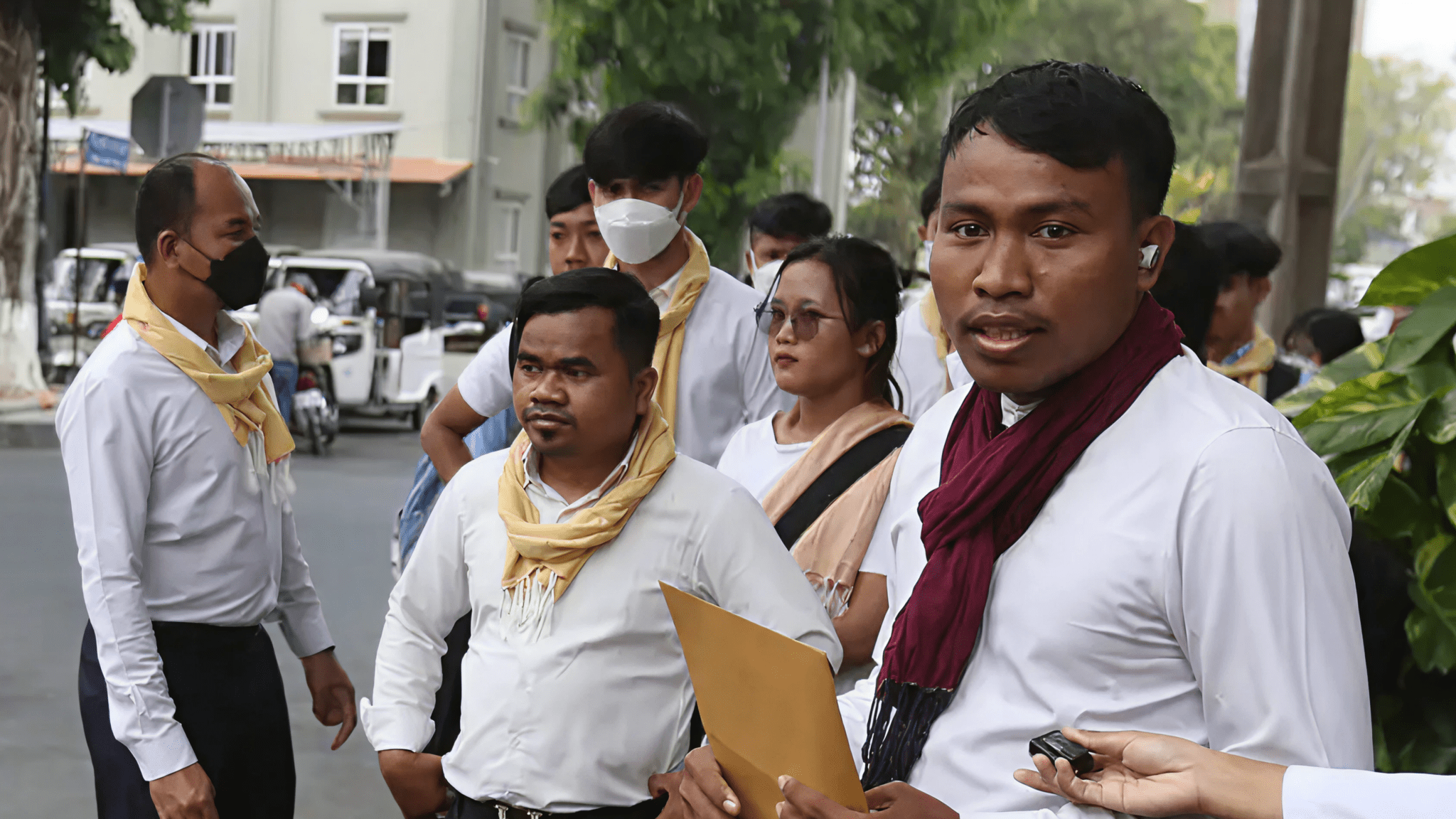
The CIVICUS Monitor, which tracks freedom of association, peaceful assembly and expression in 198 countries and territories, announced in a new report – “People Power Under Attack 2023” – that almost one third of humanity now lives in countries with ‘closed’ civic space.

This is the highest percentage –30.6% of the world’s population– living in the most restrictive possible environment since CIVICUS Monitor’s first report in 2018. Meanwhile, just 2.1% of people live in ‘open’ countries, where civic space is both free and protected, the lowest percentage yet and almost half the rate of six years ago.

We are witnessing an unprecedented global crackdown on civic space,” said CIVICUS Monitor lead researcher Marianna Belalba Barreto. “The world is nearing a tipping point where repression, already widespread, becomes dominant. Governments and world leaders must work urgently to reverse this downward path before it is too late.

The CIVICUS Monitor rates each country’s civic space conditions based on data collected throughout the year from country-focused civil society activists, regionally-based research teams, international human rights indices and the Monitor’s own in-house experts. The data from these four separate sources are then combined to assign each country a rating as either ‘open,’ ‘narrowed,’ ‘obstructed,’ ‘repressed’ or ‘closed.’

Seven countries saw their ratings drop this year. These include Venezuela and Bangladesh, each now rated ‘closed’ due to intensifications of existing crackdowns on activists, journalists and civil society.

Democratic countries slipped too. Europe’s largest democracy, Germany, fell from ‘open’ to ‘narrowed’ amid protest bans and targeting of environmental activists. Bosnia & Herzegovina also declined to ‘obstructed,’ the twelfth European country downgraded since 2018.

One of 2023’s most dramatic slides occurred in Senegal, once considered among West Africa’s most stable democracies. Senegal entered the ‘repressed’ category amid sustained government persecution of protesters, journalists and opposition ahead of February elections.

“The range of countries where authorities restricted citizen participation in 2023 shows clampdowns are not isolated incidents but are part of a global pattern,” said Belalba. “A global backslide requires a global response. If citizens are not able to freely gather, organise and speak out, the world will not be able to solve inequality, confront the climate crisis and bring an end to war and conflict.”

CIVICUS Monitor data shows that worldwide, authorities target people’s freedom of expression above all else. Half of all documented violations in 2023 targeted free speech, with incidents ranging from a bombing outside a journalist’s house in Indonesia, the arrest of the head of a radio station in Tunisia and police pepper-spraying a reporter covering a protest in the United States.

Our research also reveals that intimidation is the number one tactic to restrict citizen freedoms. Human rights defenders, activists and media experienced intimidation in at least 107 countries. Media in particular bear the brunt, with 64% of incidents targeting journalists.

Despite these alarming trends, People Power Under Attack 2023 highlights areas of progress too. Timor-Leste’s civic space moved up to the second best rating ‘narrowed’ from ‘obstructed,’ reflecting the country’s commitment to fundamental freedoms. Four other countries saw ratings improve, though they remain in ‘repressed’ or ‘obstructed’ zones.

The report also details bright spots where countries made steps toward opening societies. Among these, Fiji repealed a restrictive media law. The Kenyan courts recognised the right of LGBTQI+ people to associate. Even Tajikistan, rated ‘closed,’ created a national human rights strategy with civil society input. Still, these and other improvements remain halting and often disconnected compared to widespread repression.

“These small steps show that even amid unprecedented restrictions, civil society is pushing back,” said Belalba. “These courageous acts of resistance by active citizens and civil society organisations give us hope that the downward trend is not permanent and can be reversed.”

See also: https://humanrightsdefenders.blog/2022/01/18/2021-global-data-report-from-the-civicus-monitor/

To access the full CIVICUS Monitor report, please visit monitor.civicus.org

https://www.rfa.org/english/news/vietnam/vietnam-civicus-report-12072023001010.html