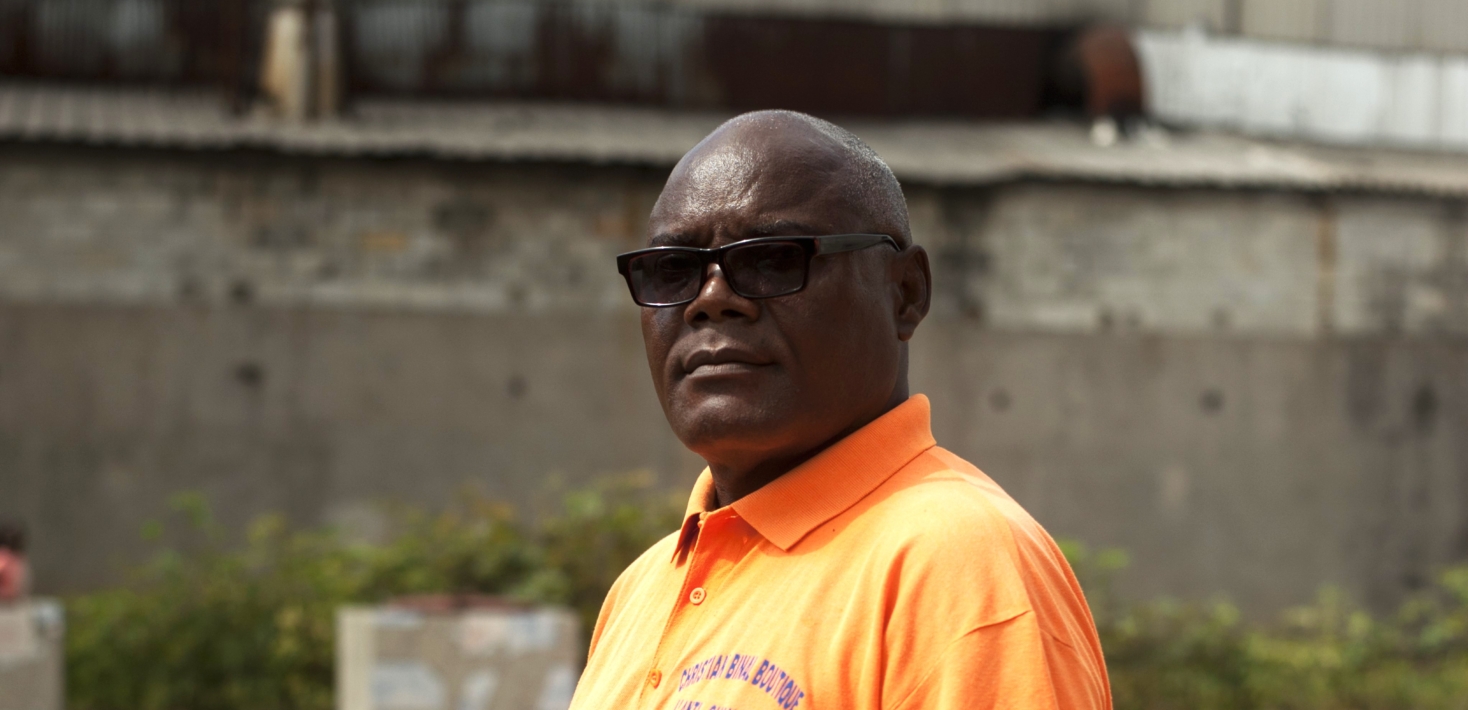
Cyrille Traoré Ndembi, 61, is the President of the Vindoulou Residents’ Collective, a neighbourhood on the outskirts of Pointe-Noire in the Republic of Congo. This retired community development specialist has been fighting to defend the residents’ right to a healthy environment since he moved there in 2019.
His house is located just ten metres from the Metssa Congo plant run by a subsidiary of the India-based Metssa Group. This recycling plant produced lead bars for export from 2013 to 2024, 50 metres from a school and in the middle of a residential area. Cyrille noticed severe health problems in his family including respiratory and digestive disorders. Blood tests on some residents showed lead levels far above the alert level set by the WHO.
Following Cyrille’s campaigning, and with the help of Amnesty International, the authorities ordered the plant’s closure in December 2024. Cyrille continues to fight for justice for his community.
“When I arrived in Vindoulou, I quickly realized the danger we were in. The air was unbreathable!
Black dust and fumes were spreading and invading our homes. Sometimes, when we went out, we couldn’t even see our nearest neighbour. The plant staff discharged oil and wastewater in front of our houses. Metal debris from the plant’s chimney fell onto our roofs. Once, I went to walk along the wall of the plant and debris fell on me like hail.
Right from the start, I had doubts about the legality of this activity in the middle of a populated area. I couldn’t understand how a substance as dangerous as lead could be recycled using processes that were, in my view, contrary to the standards and regulations in force.
‘My whole family was ill’
We arrived in Vindoulou in August 2019 and by January 2020 my whole family was ill. Our children were found to have the beginnings of pneumonia, bronchitis and bronchopneumonia. We also had diarrhoea and abdominal pains.
Across the neighbourhood, people had the same problems. I was told that the children who had moved away from Vindoulou no longer suffered from those symptoms.
The residents believed that nothing could make this company leave. For the community, it was David against Goliath. Some even called me King David.
I went door-to-door to convince people that something serious was going on. Everywhere I went, I reminded people of article 41 of our Constitution: every citizen has the right to live in a healthy environment.
I explained to people the benefits of getting organized together and taking up the fight. Today, our collective has over a hundred members.
From survivor to human rights defender
We tried to meet the directors of Metssa Congo. We met the plant’s manager, who said he was not authorized to comment on the subject. He promised us an audience with the CEO, but it never took place. They wouldn’t talk to us, simply saying that they had authorization to operate. We couldn’t even consult their environmental impact report, which is a document that we were entitled to access under the current legislation. After calling in a bailiff, I was finally able to consult another type of document, their environmental audit report produced after they had already begun operations.
In 2022, I went to meet Amnesty International’s representatives to alert them. From 2023 onwards, Amnesty investigated and provided funds to carry out blood tests on a sample of the population. We then had proof that people tested had high levels of lead in their blood.
At the time, the workers were against what I was doing. Now, most of them have joined us in our fight.Cyrille Traoré Ndembi
I took two blood tests, in March and September 2023. They showed blood lead levels above 400 µg/L. For the 17 other people tested, the levels were alarming. When the ministry carried out other tests in 2024, some ex-workers had levels of 1,000 µg/L – that’s enormous!
My youngest daughter just turned four. Of the nine children tested, she had the highest lead level, above 530 µg/L. I’m worried about her. She’s running fevers even though she has no infection.
Amnesty also helped us take legal action in 2023, to publicize our situation and, in the face of the administration’s inaction, to make a plea to the authorities. As a result, the minister [of Environment] came here and spoke to the population in December 2024. We as a collective did not have a formal audience with the minister. The authorities received Metssa Congo’s managers for an audience in Brazzaville [the Republic of Congo’s capital] several times, but never our collective! I’m not being heard. Ideally, we should be able to talk directly to the authorities.
I’ve been under pressure. Metssa filed a complaint against me alleging defamation in May 2024. I went to court, but Metssa didn’t show up. They were bolstered by the decision of the Supreme Court’s public prosecutor that allowed them to resume their activities after a suspension ordered by an administrative judge in April 2024.
One night, some young people came and threatened me. It was stressful, but I didn’t back down. At the time, the workers were against what I was doing. Now, most of them have joined us in our fight.
When the company’s operations were suspended again in June 2024 by the Ministry of Environment, we continued to fight because the word suspension meant nothing to us. We wanted to hear the word closure. When the decision was taken on 11 December 2024 to close and dismantle the plant, we were relieved, but the fight was far from over.
Indigenous environmental human rights defenders (IEHRDs) across Latin America face disproportionate levels of violence for protecting land, water, and territory. Of the 146 environmental defenders killed or disappeared in 2024, approximately one-third were Indigenous. This overrepresentation reveals the structural risks faced by Indigenous Peoples at the forefront of environmental defense.
A study by Nefeli Poulopati, Ezihe Chikwere and Paulina Macías Ortega for Kennedy Human Rights Centre published on 30 April 2026 explores who IEHRDs are, the legal protections available to them, the challenges they face, and cases that reflect their ongoing resistance and struggle across Latin America.
The study looks at Legal Frameworks, Violence against IEHRDs, Impacts of Extractivism, and looks Ahead: A Differentiated Approach…
States must adopt an intersectional approach in all measures taken to protect the rights of IEHRDs. A differentiated, preventive, and collective approach to protecting IEHRDs requires applying a gender, ethno-racial, and cultural perspective when determining the level of risk faced by an IEHRD. The ethnic reality of the territory and the traditional ways of Indigenous peoples need to be taken into account when designing protection schemes, to ensure they align with these communities’ practices. The special relationship of Indigenous Peoples to the land reinforces States’ obligation to protect IEDHRs.
One way to fulfill this obligation is to decide on protective measures for IEHRDs in consultation with Indigenous communities, a practice that is often not followed by States. It is particularly important for governments to consider the heightened risk that IEHRDs face when they oppose development megaprojects. States should adopt the necessary measures to establish or strengthen systems to monitor and control these practices in a manner consistent with their legal obligations.
However, as the cases above illustrate, formal recognition does not equal protection. Instead, it is the first step to rethink the colonial origins of the extractivist system that perpetuates power imbalances, thereby weakening safeguards at the regional and local levels.
To learn more about this work, visit the Civic Space Case Tracker, which maps leading ongoing judicial cases litigated by local organizations and lawyers in Asia, Africa, and the Americas.
On 23 April 2026 Anamaría Martinez and Elizabeth Moses for WRI explain how environmental defenders help prevent deforestation and protect ecosystems critical to climate stability. Yet many face severe and sometimes lethal threats while remaining underrecognized in climate policies that often depend on their work but fail to protect them.
Image by VaLife/Shutterstock
Benitha Bompendju grew up in Tshuapa province in the Democratic Republic of the Congo, surrounded by the dense rainforests of the Congo Basin. The world’s second-largest tropical forest, it plays a critical role in regulating the global climate, conserving biodiversity and sustaining local communities like Benitha’s. Yet when she was growing up, industrial logging was constant.
Concessionaires licensed by the government to harvest timber promised to bring benefits like schools and health centers. But these projects often did not materialize, and local authorities rarely got involved. Instead, companies stripped trees from the land and left local communities — who have long stewarded and relied on the rainforest — with little in return.
“As children, we watched the concessionaires leave with the wood and our parents received nothing,” Benitha recalls. “That was injustice.” This experience shaped Benitha’s future work. In 2016, she began monitoring forest-use contracts and documenting violations, working with partner organizations and government agencies to hold violators accountable. Since then, these joint efforts have helped curb illegal logging, enforce environmental regulations and deliver promised investments to communities.
Yet this critical work can be dangerous — lethally so. Benitha and other environmental defenders like her are often caught in the crosshairs of commercial interests and corruption. Many face threats, intimidation, physical assault, kidnapping and deadly violence. Global Witness documented 146 defenders killed or missing in 2024. The total number killed or missing from 2012 to 2024 is over 2,200 — and because many cases go unreported, the true toll is likely higher.
Research consistently shows that forests managed by Indigenous Peoples and local communities have lower deforestation rates and greater carbon sequestration than those managed under other regimes, making their contribution a measurable climate outcome. But without necessary protections — from access to climate justice to the systems and law enforcement needed to prevent threats and tragic loss of life — environmental defenders can’t safeguard vital ecosystems. And such protections can’t materialize or become institutionalized if environmental defenders aren’t accurately recognized and reflected in climate and nature policies.
The UN defines environmental human rights defenders as “individuals and groups who, in their personal or professional capacity and in a peaceful manner, strive to protect and promote human rights relating to the environment, including water, air, land, flora and fauna.” This includes those who defend the collective right to a safe, clean, healthy and sustainable environment, as well as traditional lands and livelihoods, through actions ranging from community organizing and legal advocacy to protesting, public campaigning and journalism. Many come from Indigenous and tribal groups with deep ancestral ties to the land.
Our research focuses specifically on frontline environmental defenders — those who live in, and defend, resource-rich areas experiencing what the UN Environment Programme describes as “abuse of environmental rights which affects a growing number of people in many parts of the world.”
To understand how defenders are represented in the gray (unpublished) and peer-reviewed literature on climate change under the UNFCCC, we examined 170 peer-reviewed documents from 2015 to 2025, including journal articles, books and reports, to map how defenders’ actions and contributions are reflected. The literature we surveyed both reflects trends in policymaking and serves as a source decision-makers might draw on to develop global and national climate and nature policies. Download
We found that groups such as Indigenous Peoples, women, local communities and youth are increasingly acknowledged as “agents of change” with decision-making capacity, rather than portrayed as victims or passive recipients of project benefits.
However, only 5% of the literature explicitly identifies members of these groups as “defenders” working to protect ecosystems and resources. This represents a crucial gap. Climate literature (and wider climate governance frameworks) tends to recognize who these people are — such as Indigenous Peoples, women-led organizations and youth activists — but without recognizing what they do, such as monitor deforestation and challenge extractive industries, or the risks they face as a result.
This difference may seem subtle, but is crucial. Recognizing someone’s identity alone doesn’t necessarily translate into protection or funding for the stewardship and advocacy these groups engage in. Not all identity groups (for example, Indigenous Peoples) are environmental defenders, and not all defenders belong to these groups, even if there is often an overlap. Recognizing defenders’ on the ground contributions, on the other hand, is important because it highlights their role in delivering concrete climate actions — and the need for institutional support and protection, not just their inclusion as stakeholders.
Protection can include early-warning and rapid-response systems that trigger protective action when defenders report threats or surveillance. It also means access to legal aid and judicial remedies, such as fast-track investigations, special counsel and public defenders trained in environmental and land-rights cases.
Meanwhile, governments are missing out on more effective and equitable climate solutions. Defenders bring unique perspectives, knowledge and lived experience — from agroforestry practices rooted in local traditions to stronger data collection and monitoring for more accurate NDC reporting — and help ensure policies are carried out more effectively. Yet threats to defenders weaken both national and global climate action by deterring those who risk their lives to safeguard ecosystems and enforce laws and policies.
What Would It Take to Support Environmental Defenders?
Frameworks like the Paris Agreement and the Local Communities and Indigenous Peoples Platform (LCIPP) under the UNFCCC already aim to integrate rights-based climate action into national and global goals. But they lack clear definitions and guidance on how defenders should be recognized and supported. To truly support environmental defenders, they must be incorporated into climate policy, reporting and finance.
Here are three ways this can happen:
1) Defining ‘Defenders’
The first step is defining what defenders are — not by identities, but by the concrete actions they take for climate protection and community resilience. Many don’t self-identify as “defenders.” They are individuals and communities that contribute to climate action and environmental protection. This would capture these de facto roles.
Adopting a practice-based definition in national and multilateral policymaking, alongside indicators that track defenders’ contributions to climate action, would allow policymakers to systematically recognize the people protecting ecosystems on the ground. Indicators could include community monitoring results, forest protection metrics or the number of co-designed adaptation plans.
This formalization would have three practical implications: First, recognizing defenders as a group would allow implementation of protection measures by identifying and addressing the risks they take. Second, it could enable governments to allocate budget to support defender-led initiatives. Third, it could strengthen their participation in decision-making at national and international levels by giving them space to share their knowledge on climate action and local ecosystems.
2) Protecting Defenders
Without safety guarantees, defenders cannot participate or contribute effectively. Protection requires two key elements: physical safety and legal resources.
Physical safety includes strengthening safeguards to reduce social and environmental risks and exploitation, for example, when concessionaires undertake projects in resource-rich areas. One way this can be supported is by creating early warning systems that allow defenders to report threats to the authorities and receive support, ensuring formal grievance mechanisms exist to ensure defender safety (with international backing, if needed). Another is by integrating defender protection requirements into climate funding, including zero-tolerance policies for violent reprisals.
Legal protection includes access to resources and courts. However, many defenders lack access due to prohibitive costs, limited connections and a poor understanding of the system. Where corruption is entrenched and governance weak, domestic legal systems can be used against defenders, leading to their criminalization as a way to silence them and stop their work. International accountability mechanisms — including UN human rights bodies, transnational legal networks and climate finance conditions tied to defender safety — can create external pressure where national systems fail. But they can only function if defenders are formally recognized. Without this, accountability is nearly impossible to demand.
Some progress has been made in different parts of the world. The Aarhus Convention, adopted in 1998, requires parties to “ensure that individuals exercising their rights to environmental information, participation and justice are not penalized, persecuted or harassed.” And Article 9 of the Escazú Agreement, adopted in 2018, calls for “a safe and enabling environment for persons, groups and organizations that promote and defend human rights in environmental matters.”
At the national level, climate justice laws and policies in Colombia, Mexico, Indonesia and the Philippines enshrine protection mechanisms that cover defenders and their work, while aiming to provide access to legal support.
Environmental defenders can include anyone that protects human rights related to the environment, including rights to a safe, clean and sustainable environment. They often face threats to their well-being and lack access to legal systems that could help support them. Photo by Eric Isselee/Shutterstock
However, significant implementation gaps remain.
Colombia’s law has stalled due to limited accessibility, the absence of a clear definition of who constitutes a human rights defender and a reshuffling of funds during the COVID-19 pandemic. In Mexico, a backlog caused in part by insufficient staffing prevents cases from being addressed in a timely manner, and protection measures are not always adequately implemented.
Indonesia recognizes defenders explicitly, but in practice, continued criminalization and intimidation prevent them from accessing the legal protection the mechanism provides. In the Philippines, financial and cultural barriers to filing cases, limited legal knowledge among defenders and slow processing times hinder the widespread implementation of legal framework protecting them.
Yet when defenders can access justice, legal action can drive accountability and tangible outcomes. In 2018, 25 Colombian youth aged seven to 26 years old filed a lawsuit against the government, alleging that climate change and failure to reduce deforestation threatened their fundamental rights. While a lower court initially ruled against them, Colombia’s Supreme Court overturned the decision and ordered the government to devise and implement action plans to address deforestation in the Amazon.
Defenders need legal support and safe, inclusive access to the processes behind these laws and regulations. Rights-based climate cases and stronger rule of law systems provide essential recourse when other accountability channels fail.
3) Integrating Defenders into Climate Plans
Protecting Defenders Is Essential for Climate Action
Protecting environmental defenders is a question of safeguarding human rights and life, ensuring climate justice and strengthening climate action.
People like Benitha, who put their lives on the line to defend the forests and other ecosystems that sustain them and the world, should not face these high-stake risks alone. Governments, multilateral institutions and finance bodies share the responsibility of formally recognizing and protecting environmental defenders within climate, nature and other policies.
Doing so is a matter of equity — and a climate imperative. When defenders are safe and supported, forests stay standing, emissions stay out of the atmosphere and frontline communities can continue building resilience for their own futures and the world’s.
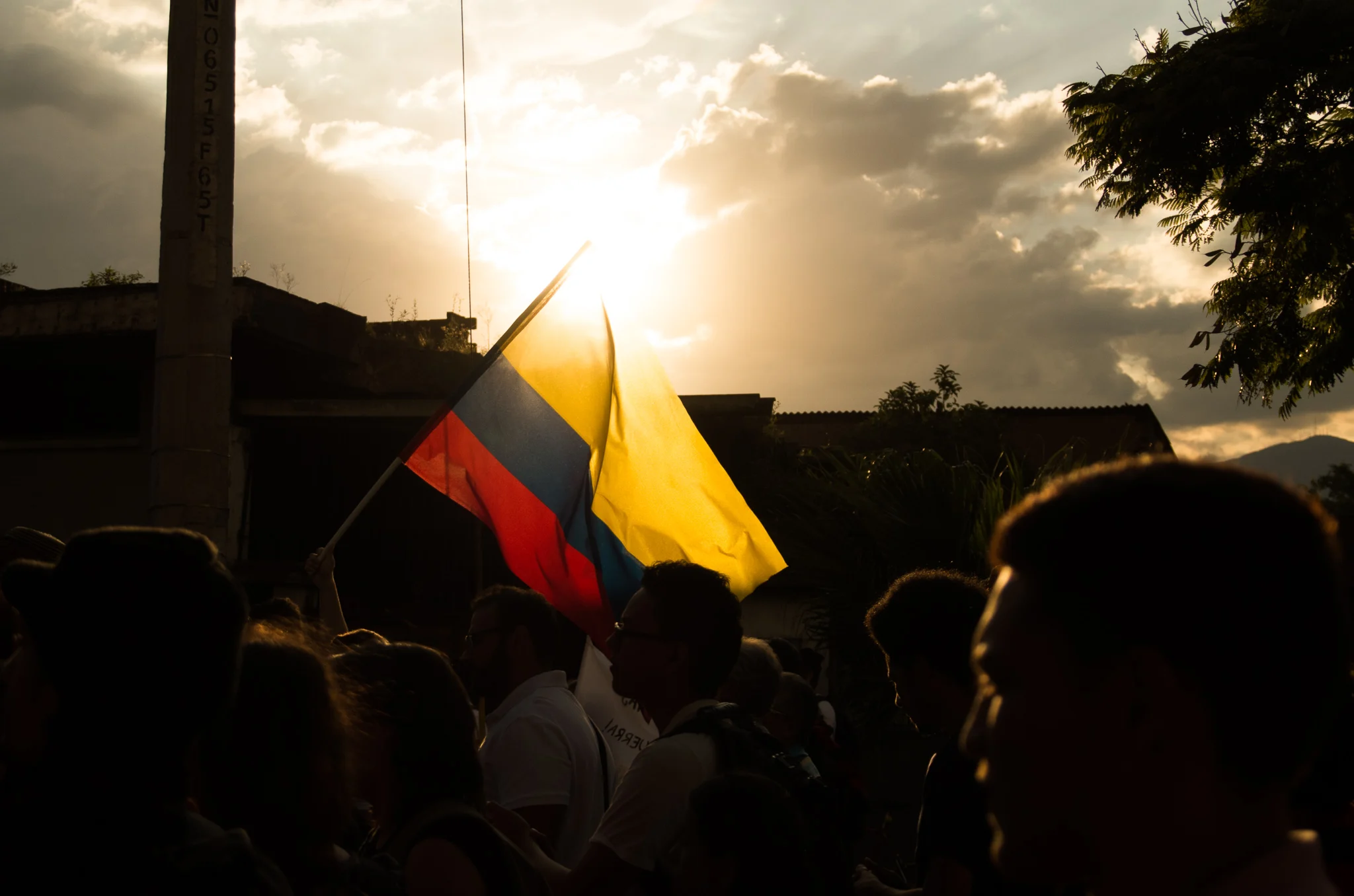
The 972 deaths recorded between 2016 and 2025 make Colombia “one of the most dangerous countries in the world” for such activists, according to the UN’s High Commissioner for Human Rights, Volker Türk.
Following the historic peace accords between the government and the Revolutionary Armed Forces of Colombia (FARC) in 2016, the report noted a gradual increase in assassinations. This was linked to the state’s inability to maintain a strong presence in areas previously controlled by the guerrilla group.
Over 70% of identified perpetrators were armed non-state actors, with the majority of cases analyzed by the report involved in drug trafficking, illegal mining, illegal logging, and human trafficking. The number of attacks and threats against human rights defenders investigated by the UN between 2022 and 2025 was 2,018, however this is thought to represent “only a fraction” of the true number due to underreporting and the lack of efficient government records of such cases.
The report recognized the work of the current Historic Pact (Pacto Histórico) government of Gustavo Petro, which has publicly recognized the gravity of the situation and worked to develop a national strategy to counter it. This included the 2022 law that established peace as a matter of state policy, recognizing the state’s responsibility to “guarantee human security” through a “territorial and intersectional approach”.
However, the UN says the state’s response has failed human rights defenders due to its fragmented nature that lacks coordination between national, departmental, and municipal authorities.
“In addition to ensuring accountability for the murders that have taken place, addressing the structural causes of this human tragedy through a comprehensive approach must be a priority for all relevant authorities in Colombia, in order to protect human rights defenders and enable them to carry out their vital work safely,” Türk said.
High levels of impunity have also persisted, with only 55 out of the 800 cases investigated between 2022 and 2025 ending in sentencing. In over half of these cases, no suspects have been identified.
Nearly a quarter of victims identified by the UN were Indigenous (23%) highlighting a disproportionate effect on this population that represents less than 5% of Colombians.
Other disproportionately affected groups include Afro-Colombians, LGBTQ+ individuals, rural community leaders and environmental protectors, as well as political leaders.
The report concluded by urging the Colombian state to take action to combat this issue, recommending institutional reforms and criminal investigations into perpetrators.
Nathalia Bonilla is an environmental human rights defender from Ecuador who works in the protection of the rights of Nature. She told ISHR about her country’s sharp policy turn in favour of extractive activities and spoke about the ‘utopia’ she and her peers would like to see in its place. ‘A revolution where you can’t dance is not my revolution,’ Nathalia said, in arguing for an ‘environmentalism for the people’.
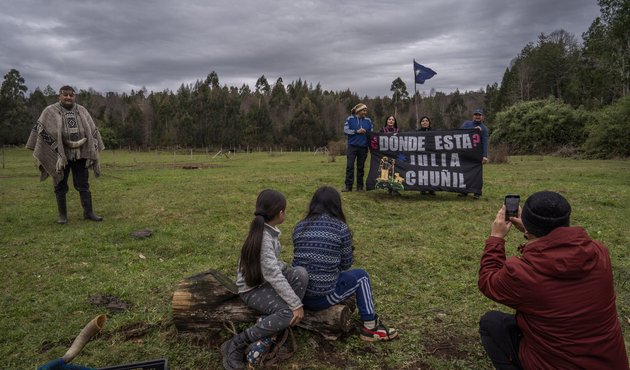
Family members and friends of Julia Chuñil display a banner that reads: “Where is Julia Chuñil?” on the land where she was last seen. Tamara Merino / Global Witness
Global Witness joins organisations around the world in condemning the arrest of Pablo San MartínChuñil, Javier Troncoso Chuñil, Jeannette Troncoso Chuñil, and BermarFlavio Bastías Bastidas, which occurred on 14 January 2026, in the Los Ríos Region, Chile.
Pablo, Javier, and Jeannette are children of Mapuche Indigenous leader and environmental defender JuliaChuñilCatricura, president of the Putreguel Indigenous Community, who has been missing since November 8, 2024, while defending 900 hectares of native forest in the commune of Máfil.
Julia’s disappearance has been internationally denounced as a forced disappearance linked to her struggle for territorial and environmental protection against the advance of large landowners and the forestry sector.
The arrest of Pablo, Javier, Jeannette, and Bermar occurs six months after the Inter-American Commission on Human Rights (IACHR) granted precautionary measures in favour of Julia Chuñil, urging the Chilean government to increase efforts to search for her and to share information about such efforts with her family. The arrest also occurred just hours before the family was scheduled to attend the admissibility hearing before the Escazú Committee to present evidence of the State’s non-compliance.
Global Witness Senior US Policy Advisor Javier Garate said: “The arrest of JuliaChuñil’schildren and relativesis to be condemned. Rather than further victimising the family, authorities shouldinsteadfocus onthe main suspectidentifiedby the family and by human rights organisations.…
“This casemust be viewed in the wider Latin Americancontext of systematic violence against environmental defenders,whereat least2,253activists have been killed andorforcibly disappeared between 2012 and 2024.
“We offer solidarity with theChuñilfamilyat this time.The arrestedfamily members should beimmediatelyreleased anda proper independent investigation carried out.”
Global Witnesshas joined organisationscalling for:
The immediate release of Pablo San Martín Chuñil, Javier Troncoso Chuñil, Jeannette Troncoso Chuñil, and Bermar Flavio Bastías Bastidas;
That the Chilean State comply with the IACHR’s and the Escazú Committee’s determinations and protect, rather than criminalise, Julia Chuñil’s relatives;
An impartial, transparent, and effective investigation into Julia Chuñil’s disappearance, focusing on the identified main suspect;
An end to the criminalisation of environmental defenders and Indigenous peoples in Chile and throughout Latin America;
That international human rights bodies monitor this case and ensure due legal process.
The criminalisation of those who defend the land and territories is a crime against humanity and against the planet.
On 15 January 2026 – the third anniversary of the enforced disappearance of Ricardo Lagunes and Antonio Díaz – UN experts demanded immediate answers about the fate and whereabouts of the two Mexican human rights defenders. “Mexican authorities must comply with the State’s international obligations, including by investigating the enforced disappearance, proactively searching for them, determining their fate and whereabouts, and holding perpetrators criminally responsible,” the experts said.
On 15 January 2023, Ricardo Lagunes, a human rights lawyer, and Antonio Díaz, an Indigenous leader, were forcibly disappeared in the state of Colima, Mexico. Their enforced disappearance occurred amid an ongoing dispute over natural resources between the Indigenous community of San Miguel de Aquila, Michoacán, and the Luxembourg-based mining company Ternium (part of the Argentine-Italian Techint Group). They were last seen after attending a community meeting to discuss collective action in response to the human rights impacts of the mining company’s operations.
“Refusing to succumb to despair after their enforced disappearance, the families of Mr Lagunes and Mr Díaz have undertaken a tireless quest for truth and justice over the past three years,” the experts said, noting that the authorities have so far not provided an effective response and that the company concerned has reportedly failed to fully cooperate with ongoing investigations and search activities.
The cases have been registered under the Committee on Enforced Disappearances’ Urgent Actions procedure and benefit from precautionary measures granted by the Inter-American Commission on Human Rights, acknowledging the serious, urgent and irreparable risk faced by the two human rights defenders.
“Enforced disappearances have a chilling effect on human rights defenders, including those advocating for land, natural resources and environment issues, as well as Indigenous leaders, and serve to silence critical voices,” the experts said, urging the Government to ensure that human rights defenders can carry out their work in a safe environment, including by strengthening the protection mechanism for human rights defenders.
In the context of resource-extraction projects, business enterprises have often reportedly sown and exacerbated community divisions, inciting violence among locals with opposing views on the projects and the use of land and natural resources. “The Government must ensure that businesses respect human rights across all their activities pursuant to the UN Guiding Principles on Business and Human Rights, including when engaging with human rights defenders and affected communities,” they said.
The experts are in touch with the Government of Mexico and the business concerned in this regard.
Nathalia Bonilla is an environmental human rights defender from Ecuador who works in the protection of the rights of Nature. She told ISHR about her country’s sharp policy turn in favour of extractive activities and spoke about the ‘utopia’ she and her peers would like to see in its place. ‘A revolution where you can’t dance is not my revolution,’ Nathalia said, in arguing for an ‘environmentalism for the people’.
Cressida Kuala lives in a small gold mining town in the Highlands Region of Porgera District in the Enga Province of Papua New Guinea. In 2011, Cressida founded the Porgera Red Wara (River) Women’s Association, and she started speaking out about issues such as environmental degradation, chemical waste, pollution, expropriation of land, and the impact on the local community.