Posts Tagged ‘Egypt’
February 28, 2014
Regular readers of this blog know that I like the idea of holding celebrities accountable (most recently: https://thoolen.wordpress.com/2014/02/10/star-power-and-human-rights-a-difficult-but-doable-mix/). The reason is that there is a mutually reinforcing (and for many profitable) interaction between the stars and the media (which in turn feed on the interest of the public). Celebrities’ views on all kind of issues – including human rights – can hardly be called private. Their social media are virtual industries and influence millions globally. So it seems a good idea to have an annual look at which celebrities have advanced and which have harmed the cause of human rights around the world. Halvorssen and Leigh Hancock ( of the Human Rights Foundation) have done exactly that in the Atlantic on 27 February 2004 and linked it to the upcoming Oscars night on Sunday.

(Gary Hershorn/Reuters)
The list of celebrities deserving recognition for their accomplishments in the field of human rights or those who should be ashamed for supporting human-rights violators, is long and contains many video links. Like the real Oscars, the list is slanted in terms of geopolitical interest and I think that if all major international human rights organisations would get together to agree on a list if would be more balanced, but that is probably wishful thinking. Still, the Human Rights Foundation deserves credit for this creative initiative. and here is the summary:
The Nominees for Outstanding Work in the Field of Human Rights Read the rest of this entry »
Posted in awards, films, human rights, Human Rights Defenders, Human Rights Foundation | 5 Comments »
Tags: Africa, Angola, Arnold Schwarzenegger, Bahrain, Bassem Youssef, Ben Kingsley, Bono, celebrities, China, Colin Firth, Cui Jian, democratic republic of the congo, Dennis Rodman, Egypt, Emma Thompson, Equatorial Guinea, Fat Joe, Gabriela Montero, George Clooney, Gustavo Dudamel, Halvorssen, hollywood, human rights, Human Rights Foundation, human trafficking, Jennifer Lopez, Jon Stewart, Julio Iglesias, Kanye West, Kazakhstan, Khalid Abdalla, Kim Kardashian, Leigh Hancock, LGBT rights, Libya, Madonna, major star power, Mariah Carey, Muammar Gaddafi, North Korea, oscar night, Oscars, Russia, Susan Sarandon, the Atlantic, The Square, Turkey, Turkmenistan, Ukraine, Venezuela
February 13, 2014
Here two recent examples of non-cooperation in relation to requests for access by international human rights mechanisms:
- On 11 February 2014 five international human rights organisations issued a statement decrying Algeria’s lack of cooperation in allowing UN human rights experts and international human rights organizations to visit the country. Algeria may have joined the UN Human Rights Council in January 2014, but it has not agreed to visits by the UN Special Rapporteur on Torture and the Working Group on Enforced or Involuntary Disappearances, despite their repeated requests. Similarly the Algerian authorities have refused to grant visas to nongovernmental human rights organizations for several years. “Algeria remains the only country among its neighbors that generally restricts access to human rights organizations,” said Eric Goldstein, of Human Rights Watch. [The 5 NGOs making the appeal are Amnesty International, Euro-Mediterranean Human Rights Network, Human Rights Watch and the Observatory for the Protection of Human Rights Defenders, a joint program of the International Federation for Human Rights FIDH, and the World Organization Against Torture OMCT].
- Today, 14 February it became known that the European Union Special Representative for Human Rights, Stavros Lambrinidis, was denied a request to visit prisoners during his visit to Egypt [he announced this on Twitter after meeting with Prosecutor General Hisham Barakat.] Lambrinidis described the refusal as a “direct contradiction” to the Ministry of Interior’s “press release promising greater openness to such visits”. Only two days earlier – amid mounting allegations of torture inside places of detention – the Ministry of Interior had issued a statement welcoming requests from NGOs wishing to visit prisons. [Lambrinidis held an open discussion with 30 human rights defenders from local and international NGOs earlier this week, stating that the Egyptian government must respect peaceful free expression and human rights communities.]
via:
http://www.dailynewsegypt.com/2014/02/13/eu-human-rights-envoy-denied-access-prisoners/#sthash.hEciHx9r.dpuf
Algeria: Allow Rights Groups to Visit – No Response from Algiers to Requests from UN Bodies / February 11, 2014 / Urgent Interventions / Human rights defenders / OMCT.
Posted in AI, EMHRN, FIDH, HRW, human rights, Human Rights Council, Human Rights Defenders, Observatory for the Protection of Human Rights Defenders, OMCT, UN | Leave a Comment »
Tags: access, AI, Algeria, Egypt, EU, EU Special Representative for Human Rights, Euro-Mediterranean Human Rights Network, FIDH, HRW, human rights, human rights mechanisms, human rights organizations, Lambrinidis, NGOs, non-cooperation, OMCT, prison visits, special rapporteurs, UN Human Rights Council
February 12, 2014
Howe complex the situation in post-Morsi Egypt is can be illustrated by the letter sent to Al-Monitor by Neil Hicks, one of the most experienced international human rights workers to be found today. As a member of the independent US-based Working Group on Egypt he responds to Wael Nawara’s criticism of the this Working Group’s recommendations on US policy toward Egypt, published on 4 February. Neil Hicks – who works for Human Rights First – in his reply of 7 February neatly outlines the views from an international human rights perspective, under the title: “The US Working Group is right on Egypt”: “One of the most perplexing aspects of the months of instability in Egypt that have followed the removal of President Mohammed Morsi from office on July 3, 2013, is the number of prominent Egyptian liberals who have shown themselves to have a somewhat selective commitment to liberal principles, Read the rest of this entry »
Posted in HRF, human rights, Human Rights Defenders | Leave a Comment »
Tags: Al-Monitor, Constitution, Egypt, fair trial, Foreign Policy of the USA, freedom of expression, human rights, Human rights defender, liberal, Neil Hicks, peaceful protest, Wael Nawara, Working Group on Egypt
January 24, 2014
On 23 January Human Rights First released a report that describes how the Egyptian government is increasingly targeting non-violent human rights defenders and activists through widespread repression, stifling basic freedoms and exacerbating the chronic instability that has plagued the country for the past three years. The new report titled, “Back to Square One: The U.S. Government and Political Change in Egypt,” outlines recommendations for the U.S. government to take a new course of action to advance human rights and the rule of law in order to achieve greater stability in this vital country. “The U.S. must overhaul its approach to Egypt if it’s to really get on the right side of history” said Brian Dooley of HRF.
The report calls on the U.S. government to:
- Provide clear, sustained and consistent public statements from Washington on its assessment of the situation in Egypt and the ramifications for U.S. interests, including human rights and democracy;
- Work with its donor partners to establish sizeable, sustained economic incentives for Egypt’s leaders that should be conditioned on Egypt adhering to democratic norms and international human rights standards;
- Use its vote and influence at the IMF to withhold loans to Egypt until sound economic policies are in place and meaningful progress is made on human rights and the rule of law;
- Use targeted funding to support civil society efforts to combat human rights abuses and promote an enabling environment that advances religious pluralism and tolerance;
- Promote clear, uniform conditions for the registration and operation of political parties that agree to be bound by the rules of peaceful, democratic contestation;
- Push the Egyptian authorities to investigate all incidents of violence against Christians, assaults on their property and institutions, and hold accountable those responsible; and
- Make available through the Justice Department, resources for prosecutions and police trainings.
For more information about today’s report or to speak with Dooley, please contact Mary Elizabeth Margolis at margolisme[at]humanrightsfirst.org.
Posted in books, HRF, human rights, Human Rights Defenders | Leave a Comment »
Tags: Brian Dooley, diplomatic pressure, Egypt, Foreign Policy of the USA, freedom of assembly, freedom of expression, HRF, human rights, Human Rights Defenders, Human Rights First, IMF, minority rights, police violence, special report, USA
January 16, 2014
Index on Censorship is basing a series of articles on its larger report by Mike Harris, Time to Step Up: The EU and freedom of expression.
On 14 January 2014 came the one the ‘southern neighbourhood’ arguing that the credibility of the EU’s swing in focus from economic development towards human rights (after the outbreak of the Arab spring) is low.
The EU’s communication “A partnership for democracy and shared prosperity with the southern Mediterranean“ (published on 8 May 2011) addresses the EU’s commitment to financially support transition to democracy and civil society and heralds the creation of the Civil Society Facility for the neighbourhood (covering both the southern and eastern neighbourhoods), while the European Instrument for Democracy and Human Rights (EIDHR) deployed a number of operations in the region to protect and promote freedom of expression, often without the consent of the host country. Still, the article argues, european countries are often still seen as former allies of repressive regimes.
http://www.indexoncensorship.org/2014/01/eu-freedom-expression-southern-neighbourhood/
The one of 15 January, entitled ‘The EU and free expression: Human rights dialogues’, looks at the situation that the EU runs 30 human rights dialogues across the globe, with the key dialogues taking place in China, Kazakhstan, Kyrgyzstan, Tajikistan, Turkmenistan, Uzbekistan, Georgia and Belarus. It also has a dialogues with the African Union. The article is more detailed on China
The article concludes: “With criticism of the effectiveness and openness of the dialogues, the EU should look again at how the dialogues fit into the overall strategy of the Union and its member states in the promotion of human rights with third countries and assess whether the dialogues can be improved.“
The EU and free expression: Human rights dialogues – Index on Censorship | Index on Censorship.
Posted in EU, human rights, Human Rights Defenders, Index on Censorship | 1 Comment »
Tags: Arab spring, Asia, Catherine Ashton, censorship, Central Asia, China, Civil society, Democracy, diplomacy, diplomatic action, Egypt, EIDHR, EU, free expression, freedom of expression, funding, human rights, human rights dialogue, Index on Censorship, Mediterranean, Mike Harris, north africa, Tunisia
December 19, 2013
Mona Seif, Egyptian human rights defender and Final Nominee of the MEA 2013 reported today 19 December, at 12h00 that “less than an hour ago the Police raided the NGO Egyptian Center for Social and Economic Rights, founded by former presidential candidate Khaled Ali, and arrested Mostafa Eissa (an employee in their media unit) and 2 volunteers, as well as confiscated all computers of the media unit. We haven’t been able to know where were they taken to.”
Posted in Human Rights Defenders | Leave a Comment »
Tags: Arab spring, Cairo, Egypt, Egyptian Center for Social and Economic Rights, Human Rights Defenders, Khaled Ali, MEA final nominee 2013, Mona Seif, Mostafa Eissa, NGO, NGO Egyptian Center for Social and Economic Rights, Police, raid, Supreme Council of Armed Forces
December 13, 2013
On 12 December 2013 Tasnim Nazeer published a list of 5 women human rights defenders who in spite of setbacks in the “Arab Spring” have no plans to stop fighting:
- Tawakkol Karman. The first Yemeni and the first Arab woman to be awarded the Nobel Prize. A Yemeni journalist, human rights activist and politician member of the Al-Islah political party, Karman is the leader of the renowned group “Women Journalists Without Chains,” which she co-founded in 2005. She became the international public face of the Yemeni “Arab Spring” uprising in 2011. The people of Yemen know her as the “Iron Woman” and “Mother of the Revolution” due to her courage in sticking up for human rights injustices in Yemen.
- Razan Ghazzawi Razan, an award-winning Syrian blogger, campaigner and human rights activist. She has been actively involved in the events during the Syrian Civil War, and has been particularly outspoken on activists’ arrests and the violations of human rights committed by the Bashar al Assad regime.Razan, who has been arrested by the Syrian regime several times and is forbidden to leave Syria, was named as an “iconic blogger and leading activist” by The Telegraph as well as awarded the 2012’s Human Rights Defenders at Risk award by the Dublin-based Front Line Defenders foundation.
- Moushira Mahmoud Khattab, an Egyptian human rights activist, former politician and diplomat. She has previously held the positions as Minister of Family & Population as well as ambassador to South Africa, the Czech Republic and Slovakia. Khattab is a renowned human rights activist who speaks up for the rights of children and women in Egypt and the MENA region. Her efforts to advocate human rights have been recognized internationally through numerous awards, including the two highest honors that can be bestowed on any foreign national in South Africa and Italy.
- Nawal El Saadawi, an Egyptian feminist writer, human rights activist, physician and psychiatrist. Saadawi has authored many books on the subject of women and Islam and advocates human rights issues involving women. The founder and president of the Arab Women’s Solidarity Association and co-founder of the Arab Association for Human Rights, she has been awarded numerous honorary degrees on three continents.
- Manal al-Sharif. Women’s rights activist from Saudi Arabia who helped start a groundbreaking women’s right to drive campaign in 2011. An outspoken voice on the rights of women in the Kingdom, she was detained and released on 21 May and rearrested the following day on the conditions of returning for questioning if she were to continue talking to the media about rights for women to drive in Saudi Arabia.
via Five Women Human Rights Activists who are Changing the Middle East | Informed Comment.
Posted in human rights, Human Rights Defenders | 3 Comments »
Tags: Arab spring, Bashar al-Assad, Egypt, Human rights defender, Human Rights Defenders, Manal al-Sharif, MENA, Middle East, Nawal El Saadawi, Razan Ghazzawi Razan, Saudi Arabia, Syria, Syrian Civil War, Tawakkol Karman, women human rights defenders, Yemen
December 10, 2013
In the context of 10 December, Human Rights Day, Curt Goering of the Centre for Victims of Torture posts in the Huffington Post a piece on the value of information technology to prevent torture. .. Read the rest of this entry »
Posted in human rights, Human Rights Defenders | Leave a Comment »
Tags: Centre for Victims of Torture, Curt Goering, Egypt, FDEP, Front to Defend Egypt Protesters, Huffington Post, human rights, Human Rights Day, Human Rights Defenders, information technology, Lebanon, LGBT, Middle East, New Tactics in Human Rights, SMS, torture, United Nations, Universal Declaration of Human Rights
December 6, 2013
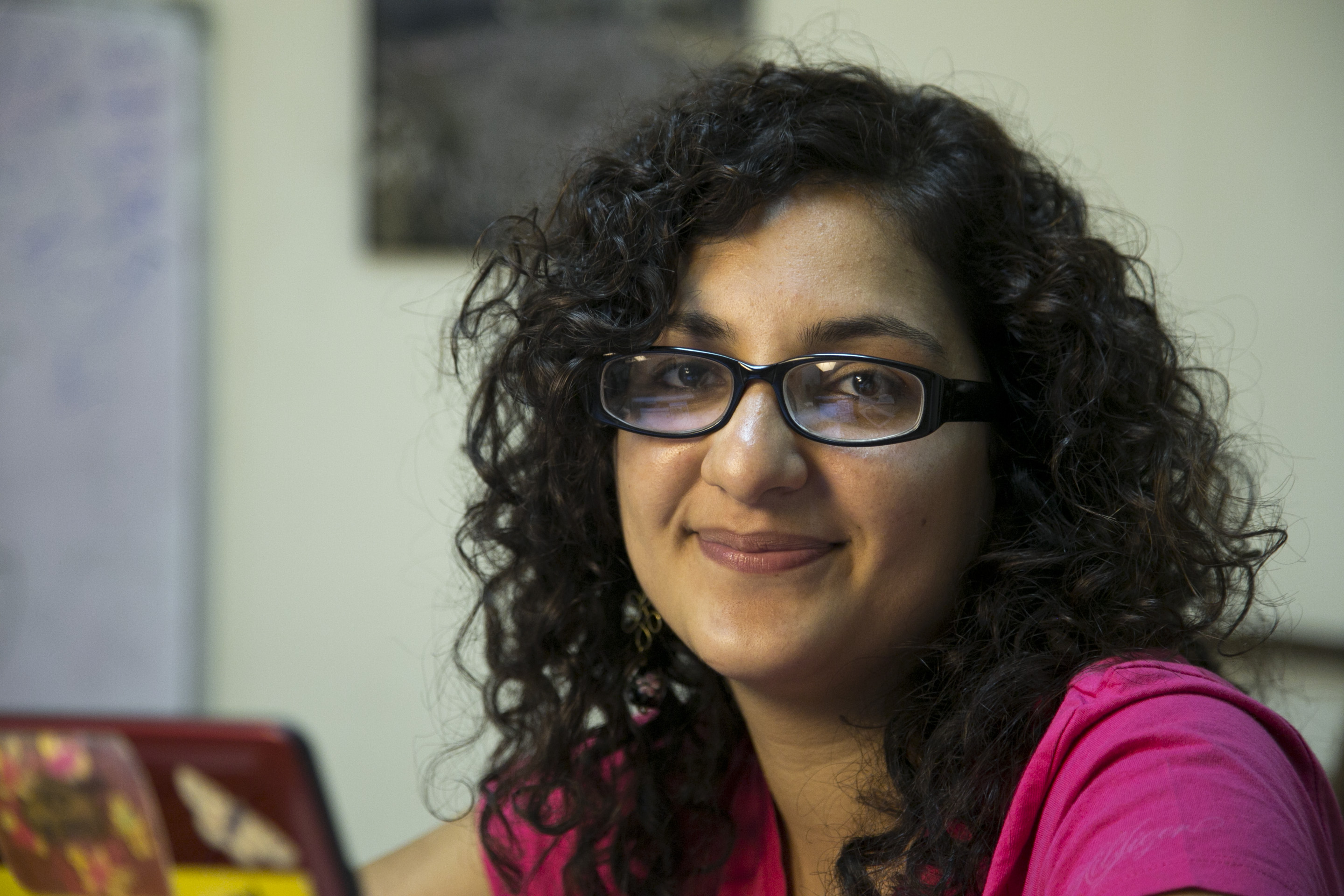
By Mona Seif, founder of ‘No to Military Trials for Civilians’ and Final Nominee 2013 of the MEA reports in some detail the following:
“Egyptian Activists Arrested in Growing Crackdown – Activist Alaa Abd El Fattah one of at least 27 people currently charged under Egypt’s new anti-protest law

Mona Seif, Egypt – Final Nominee MEA 2013
Egypt is facing a growing crackdown on political protest and dissent. This week has seen the arrest of 27 political activists under the cover of a new law designed to effectively ban protest in Egypt. On November 26th the well-known and internationally respected activist group, No to Military Trials for Civilians, called for a demonstration in front of the Shoura Council (the Upper House of the Egyptian parliament) to protest the failure of the current draft constitution to legislate against the military court martials of civilians. The entirely peaceful protest was met with serious force by the police, who attacked demonstrators with a water cannon and tear gas while arresting as many people as they could. At least 51 people were arrested that day. Read the rest of this entry »
Posted in human rights, Human Rights Defenders, MEA | 2 Comments »
Tags: Abd El Fattah, Ahmed Abdelrahman, Ahmed Maher, Alaa Abd El Fattah, arbitrary arrest, Cairo, crackdown, Egypt, freedom to demonstrate, Human Rights Defenders, illegal detention, MEA, MEA final nominee 2013, military trials, Mona Seif, No To Military Trials for Civilians, protest, Supreme Council of the Armed Forces, women human rights defenders
December 5, 2013
Following a major human rights speech delivered by National Security Advisor Susan Rice, at the Human Rights First Summit, CEO Elisa Massimino issued the following statement: “Today’s speech was a welcome affirmation of the Obama  Administration’s commitment to protecting human rights at home and abroad. Ambassador Rice made a compelling case for why this effort is squarely in the national interest, arguing that short term trade-offs cannot alter our foundational values, and that respect for human rights is essential to our security. Detailing not just the ‘easy cases’ but also those where the United States has competing interests, Rice spelled out the ways the administration balances these interests, while seeking to uphold American ideals. She underscored the administration’s commitment to following through on promises to shutter Guantanamo and take the nation off of its current war-footing. We encourage the administration to double down on efforts to more actively and creatively support human rights defenders in places like Egypt, Bahrain, and Russia, priorities that Ambassador Rice touched on today. We look forward to working with the administration to keep human rights at the heart of U.S. foreign policy today, and in the long term.” After her speech Susan Rice met with human rights defenders from Bahrain, Egypt, Zimbabwe, and the international LGBT community.
via Rice Delivers Major Human Rights Speech at Human Rights First Summit | Human Rights First.
Posted in HRF, human rights, Human Rights Defenders | Leave a Comment »
Tags: Ambassador Rice, Bahrain, Egypt, Foreign Policy of the USA, HRF, Human right, human rights, Human Rights Defenders, Human Rights First, National Security Advisor (United States), National Security Advisor Susan Rice, Rice, Russia, Susan Rice, United States