Posts Tagged ‘Azerbaijan’

UN experts alarmed by arbitrary detention of Azerbaijani human rights defender Mammadli

May 28, 2025
United Nations logo

26 May 2025

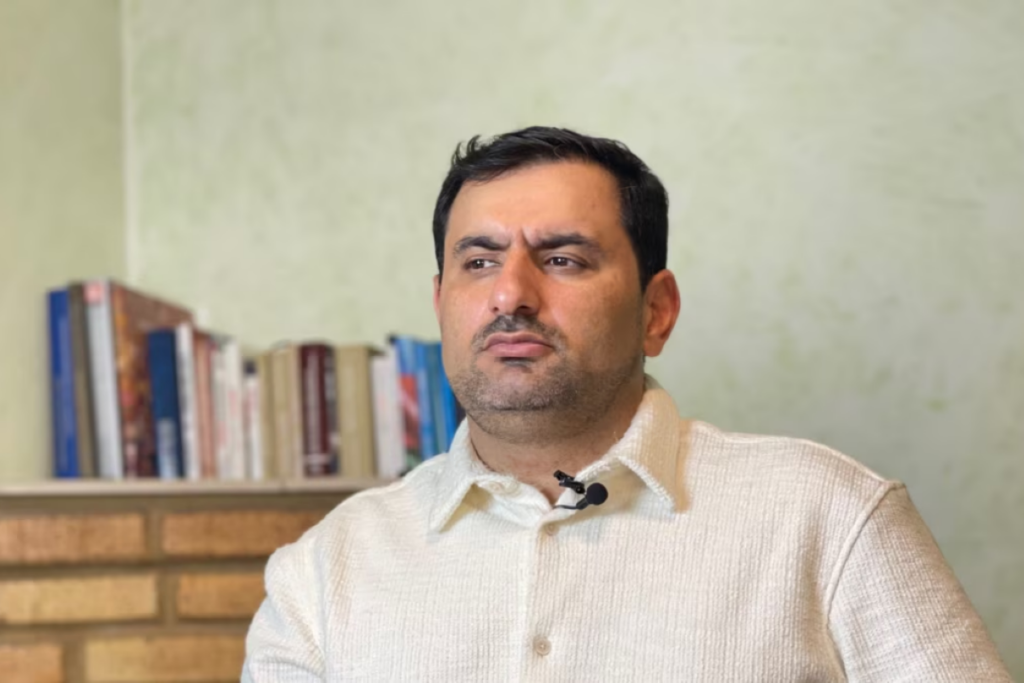
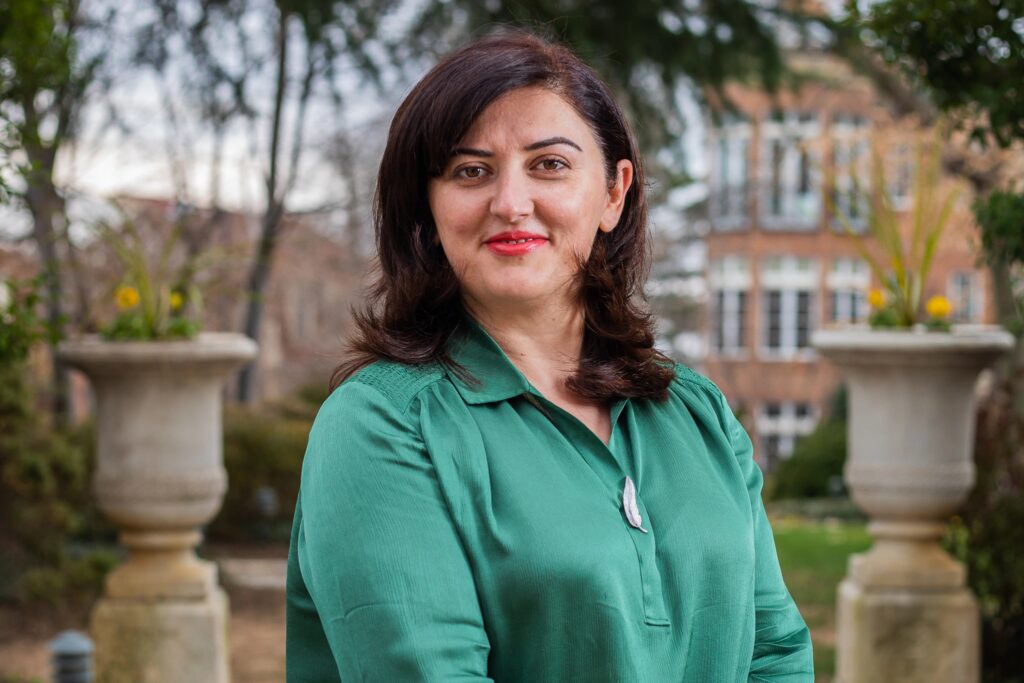
UN independent experts on 26 May 2025 expressed grave concern over the continued detention of Anar Mammadli, a prominent Azerbaijani human rights defender who was arbitrarily detained on 29 April last year. “Defending human rights should never be considered a crime,” the experts said.

Anar Mammadli, Chair of the Election Monitoring and Democracy Studies Centre (EMDS), was arrested on 29 April 2024 amid what experts describe as a growing clampdown on critical voices and independent election observers in Azerbaijan. His arrest came shortly after EMDS reported irregularities during the February 2024 presidential elections, and after he participated in events at the UN Human Rights Council.

On 28 June 2024, the experts wrote to the Azerbaijani authorities to raise serious concerns about Mammadli’s alleged arbitrary detention, warrantless searches, restricted access to legal counsel, deteriorating health conditions in detention and a smear campaign reportedly targeting him in retaliation for his legitimate human rights work.

“There are serious concerns that Mammadli’s detention and prosecution may be in retaliation for his human rights work and his engagement with UN mechanisms,” they said.

The Azerbaijani Government responded by denying the allegations, stating that Anar Mammadli was under investigation for smuggling and money laundering. According to their response, he has been provided with all necessary legal rights and medical care during his detention.

The experts are still concerned about the legal proceedings, especially given Mammadli’s previous imprisonment in 2013, which the European Court of Human Rights deemed unlawful and politically motivated. Despite the Court’s 2018 judgment requiring Azerbaijan to quash the conviction and restore Mammadli’s civil and political rights, these remedies have allegedly not been implemented.

The experts will continue to monitor the case, particularly with regard to any potential connection to reprisals for engagement with UN human rights mechanisms.

*The experts: Mary Lawlor, Special Rapporteur on the situation of human rights defenders; Gina Romero, Special Rapporteur on the rights to freedom of peaceful assembly and of association; Irene Khan, Special Rapporteur on the promotion and protection of the right to freedom of opinion and expression; Tlaleng Mofokeng, Special Rapporteur on the right of everyone to the enjoyment of the highest attainable standard of physical and mental health.

https://www.ohchr.org/en/press-releases/2025/05/azerbaijan-un-experts-alarmed-year-long-arbitrary-detention-azerbaijani

Human rights defender Rufat Safarov detained in Azerbaijan on way to award ceremony

December 5, 2024
Rufat Safarov. Via Voice of America.

On 4 December 2024, Aytan Farhadova in OC media reported that human rights defender Rufat Safarov was detained in Azerbaijan a week before he was set to be awarded the Human Rights Defender of the Year award by US State Secretary Antony Blinken. That day, Safarov’s lawyer, Elchin Sadigov, posted on Facebook that Safarov was accused of hooliganism and fraud resulting in major damage.

Sadigov later posted a message written by Safarov, in which he explained that he was planning to visit the US two days after receiving his visa in order to accept the Global Human Rights Defender Award from Blinken. [not totally clear which award is referred to – ed]

So I was awarded as a strong human rights defender of the year. Because the United States initially nominated me, I express my deep gratitude to [Mark] Libby, the US Ambassador in Azerbaijan, and Mr Blinken, US Secretary of State, who supported my candidacy.’

https://www.trueheroesfilms.org/thedigest/laureates/327debe6-fca9-40c4-b972-db855616566b

State Department’s Deputy Spokesperson, Vedant Patel, during a press briefing on Tuesday, said: We’re deeply concerned by reports that human rights defender Rufat Safarov has been detained in Azerbaijan’, Patel said, adding that they were ‘closely monitoring the case.’

Frank Schwabe, the head of the German delegation of the Parliamentary Assembly of the Council of Europe (PACE), criticised Safaravo’s arrest, saying that PACE will ‘respond to this in January’.

Safarov, a former prosecutor’s office official who spoke out against human rights abuses by the government, was sentenced to nine years in prison on charges of bribery, fraud, and human rights violations in 2016. He was released from prison alongside almost 400 others  after Azerbaijani President Ilham Aliyev issued an amnesty to mark Novruz in 2019.

https://www.streetinsider.com/Reuters/Azerbaijan+denounces+diplomatic+criticism+of+human+rights/24067963.html

Venezuela’s opposition wins top EU human rights award

October 27, 2024
Opposition Leader Maria Corina Machado Speaks After Presidential Election
Democratic leader María Corina Machado and exiled presidential candidate Edmundo González won the top human rights award for representing all Venezuelans who are “fighting for the restoration of freedom and democracy.” | Marcelo Perez del Carpio/Getty Images

The European Parliament on Thursday 24 October 2024 awarded the Sakharov Prize to Venezuela’s opposition leaders. Democratic leader María Corina Machado and exiled presidential candidate Edmundo González won the top human rights award for representing all Venezuelans who are “fighting for the restoration of freedom and democracy.”

The Venezuelan opposition leaders were nominated by the center-right European People’s Party (EPP) and the hard-right European Conservatives and Reformists (ECR). The far-right Patriots group rallied behind them after their original candidate, tech billionaire Elon Musk, failed to make the shortlist for the prestigious prize.

After Venezuela’s elections in late July, in which incumbent socialist President Nicolás Maduro declared victory for another term, the European Union’s foreign service said it would not recognize the results because the government had failed to release supporting voting records from polling stations. 

The authoritarian Maduro’s disputed declaration of victory sparked massive opposition protests and a violent government crackdown that left more than two dozen people dead and nearly 200 injured.

Later, presidential candidate González — who fled to Madrid during the crackdown — was recognized by the European Parliament as the country’s legitimate leader.

For more on the Sakharov Prize for Freedom of Thought and its laureates see: https://trueheroesfilms.org/thedigest/awards/BDE3E41A-8706-42F1-A6C5-ECBBC4CDB449

Two other finalists made the shortlist. One was Gubad Ibadoghlu, a jailed Azerbaijani dissident and critic of the fossil fuel industry nominated by the Greens. The other finalist was a joint nomination of Israeli and Palestinian peace organizations Women Wage Peace and Women of the Sun. The groups, who announced a partnership in 2022, were nominated by the Socialists and the Renew group.

https://www.politico.eu/article/eu-human-rights-award-venezuela-opposition-maria-corina-machado-edmundo-gonzalez-nicolas-maduro/

https://www.europarl.europa.eu/news/en/press-room/20241017IPR24738/maria-corina-machado-and-edmundo-gonzalez-urrutia-awarded-2024-sakharov-prize

see: https://www.lapatilla.com/2024/10/26/at-least-900-people-arrested-after-venezuelas-post-election-protests-are-being-held-in-tocoron-prison/

Three shortlisted candidates for the 2024 Václav Havel Prize of the CoE

August 29, 2024

August 27, 2024

The selection panel of the Václav Havel Human Rights Prize, which rewards outstanding civil society action in defence of human rights in Europe and beyond, has announced the shortlist for the 2024 Award.

Meeting in Prague, the panel – made up of independent figures from the world of human rights and chaired by the President of the Parliamentary Assembly of the Council of Europe (PACE) Theodoros Rousopoulos – decided to shortlist the following three nominees, in alphabetical order:

Akif Gurbanov, Azerbaijan

The nominee is a human rights defender, political activist and active member of the Azerbaijani civil society. He is the co-founder of the Institute of Democratic Initiative (IDI) and of the Third Republic Platform. He was arrested in March 2024 in a wave of arrests targeting journalists and activists in the country.

María Corina Machado, Venezuela

The nominee is a leading political figure in Venezuela engaged in denouncing human rights abuses in her country and defending democracy and the rule of law. She is the co-founder of the Venezuelan volunteer civil organisation ‘Súmate’ for civil and political freedom, rights and citizen participation.

Babutsa Pataraia, Georgia

The nominee is a leading feminist activist and human rights lawyer in Georgia. She is the Director of ‘Sapari’, an NGO focusing on women’s rights and providing support for victims of violence since 2013. She has worked for over a decade to fight against feminicide, sexual violence against women, and sexual harassment.

https://www.trueheroesfilms.org/thedigest/awards/7A8B4A4A-0521-AA58-2BF0-DD1B71A25C8D

Azerbaijani human rights lawyer Shahla Humbatova being disbarred

February 10, 2021
Shahla Humbatova. Photo: US State Department.

On 9 February 2021 Hamida Giyasbayli of OC Media reports that Azerbaijani human rights lawyer Shahla Humbatova has vowed to fight disbarment procedures against her despite what she says is a campaign of ‘harassment and threats’ from the Bar Association.

The Azerbaijani Bar Association has accused Humbatova of submitting a fake document as evidence during a civil case she was litigating, a criminal offence. They have also accused her of owing ₼460 ($270) in membership fees.  The association has taken her to court in an attempt to disbar her, which would strip her of the right to practice law.

Humbatova is well known in Azerbaijan for taking on high-profile human rights cases, including those of queer Azerbaijanis as well as blogger Mehman Huseynov. The move to disbar her follows the disbarment of dozens of other human rights lawyers in recent years, leaving few remaining lawyers taking on such cases. [see: https://www.trueheroesfilms.org/thedigest/laureates/e761cd05-65b0-4a02-8abe-e8ce9c58faed]

Speaking with OC Media, Humbatova said the allegation she submitted fake documents was baseless, and that her defence had submitted evidence proving this.

She confirmed that she had owed eight months of membership fees, but insisted the association did not make any effort to notify her of this. ‘I learned about this from the media the day after the Board’s decision [to take me to court]’, she said.  She immediately made the payment, so when the Bar went to court with her disbarment request, there was no longer any debt. Emin Abbasov, a legal practitioner who also works on human rights cases, criticised the proceedings against Humbatova for being conducted behind closed doors and without any records.  Abbasov, along with four others, is himself appealing to the European Court of Human Rights after being denied certification by the Bar Association.                                                                                                                     

Humbatova told OC Media that the move to disbar her was a continuation of the policy of dismantling human rights defenders in the country.  ‘It is lawyers and human rights activists who are fighting against politically motivated arrests, torture, repression of dissidents and those who simply demand their rights, and informing the public and international organisations. Therefore, they are being neutralised’, she stated.

In December 2019, 42 member organisations of the Human Rights House, a global rights group, called on the Azerbaijani Bar Association to ‘halt reprisals against a number of human rights lawyers, including Shahla Humbatova and Elchin Sadigov’. Sadigov is Humbatova’s current lawyer. 

See also: https://humanrightsdefenders.blog/2020/01/20/annual-reports-2019-azerbaijan-in-review-muted-hope-for-2020/

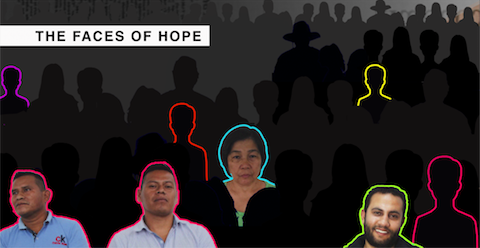
Faces of Hope Campaign: Human Rights Defenders Imprisoned Worldwide

May 25, 2020

Defending the right to housing for vulnerable communities, exposing corruption and torture, speaking up against injustice, raising their voices for the rights of indigenous peoples or of minorities, upholding miners’ rights, peacefully demonstrating against discrimination or for access to clean water. All are legitimate ways to affirm our common rights. And yet, such activities have led many human rights defenders around the world to prison.  During the COVID-19 pandemic, detention may come with serious risks. Like other inmates, defenders face overcrowding and poor sanitary conditions, with basic protective measures a distant dream. Worse, they may be denied access to health care as a form of punishment. These brave people are among the most exposed to contracting the virus, and among the least likely to receive proper treatment.

Following UN High Commissioner for Human Rights Michelle Bachelet’s call to governments to “release every person detained without sufficient legal basis, including political prisoners, and those detained for critical, dissenting views” to prevent catastrophic rates of COVID-19 infection, OMCT launched in May 2020 a global campaign calling for the release of all human rights defenders detained worldwide, including those in pre-trial detention.

See: https://humanrightsdefenders.blog/2020/04/29/un-high-commissioner-for-human-rights-bachelet-calls-for-restraint-in-governments-covid-emergency-powers/

Human Rights Defenders work to ensure journalists are free to keep us informed about how our governments are responding to the pandemic and about the effects of quarantine measures; they denounce the abuse of power and police violence that can result from the state of emergency; they champion the needs of discriminated communities; they call on States to protect our housing and labour rights as jobs disappear; they demand that women’s sexual and reproductive rights not be neglected as healthcare systems focus on the virus. In short, human rights defenders make sure no one is left behind.

…..Let’s bring this solidarity to all the arbitrarily detained human rights defenders whose lives are at risk. Join our campaign and ask for their release using #FacesOfHope. They need us. And we need them too.

Meet the #FacesOfHope:

PHILIPPINES: Teresita Naul

EGYPT: Ibrahim Ezz El-Din

GUATEMALA: Jorge Coc Coc and Marcelino Xol Cucul

INDIA: Safoora Zargar

CAMEROON: Mancho Bibixy Tse

PERU: Walter Aduviri Calisaya

TURKEY: Selçuk Kozağaçlı

AZERBAIJAN: Elchin Mammad

https://www.omct.org/human-rights-defenders/statements/2020/05/d25823/

Azerbaijan: finally full acquittal of Ilqar Mammadov and Rasul Jafarov

April 26, 2020
Ilqar Mammadov speaks to reporters on April 23 in Baku.
Rasul Jafarov
Rasul Jafarov

This judgement, which overturns their previous convictions, is a welcome step that finally fully implements the respective decisions of the European Court of Human Rights. The European Union expects Azerbaijan to live up to its international commitments and to continue to implement the remaining decisions of the European Court of Human Rights,” the EU statement said.​ Mammadov, who served more than five years of a seven-year prison term, fought for his full acquittal since his early release in August 2018.​ He was detained in February 2013 and charged with helping stoke unrest in the town of Ismayilli, northwest of Baku. He was sentenced to seven years in jail in March 2014. Mammadov and his supporters insisted the case against him was politically motivated.​

Jafarov was arrested in August 2014 and in April 2015 he was sentenced to 6 1/2 years in prison after a court in Baku found him guilty of tax evasion, illegal entrepreneurship, and abuse of office. He denied the charges, saying they were politically motivated. ​ Jafarov was granted early release in March 2016 and worked on his full acquittal since then.​ [https://humanrightsdefenders.blog/2016/03/18/azerbaijan-pardon-jafarov-ismayilova-aliyev/]

https://www.rferl.org/a/us-eu-welcome-full-acquittal-of-azerbaijani-politician-rights-defender/30575138.html

Policy response from Human Rights NGOs to COVID-19: Civil Rights Defenders

April 10, 2020

In the midst of the COVID-19 crisis, many human rights organisations have been formulating a policy response. While I cannot be complete or undertake comparisons, I will try and give some examples in the course of these weeks. Here the one by Anders L. Pettersson, Executive Director of the Stockholm-based human rights organization Civil Rights Defenders (as published in the The Globe Post of 9 April 2020): “COVID-19 Is No Excuse for Governments to Abuse Human Rights”:

……But the COVID-19 pandemic is no ordinary struggle. The world is in the midst of an unprecedented health crisis with far-reaching political, economic, and social consequences. Basic human rights, such as the right to freedom of movement and assembly, are being suspended to contain the virus’ further spread. Put simply, drastic measures have to be taken, and we are entrusting our respective governments to take them.

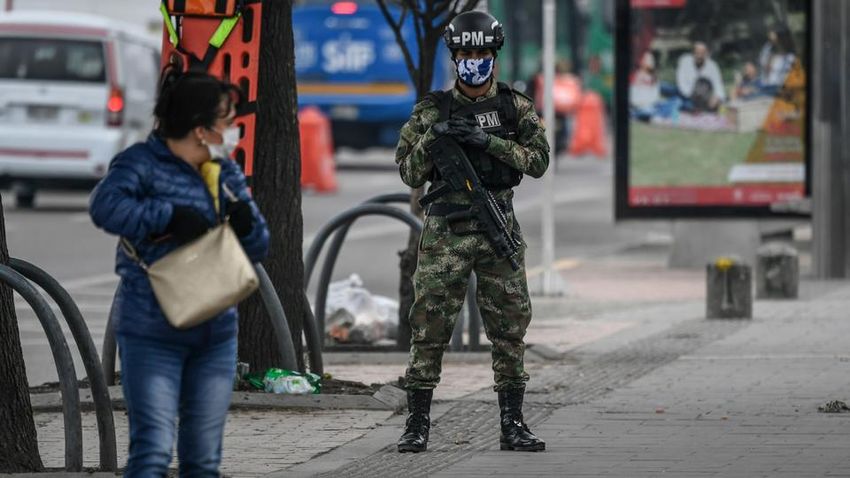
A member of the military police wears a face mask as a preventive measure against the spread of the new coronavirus, COVID-19, as he patrols the streets in Bogota, on March 25, 2020. Photo: AFP

This, however, must not be understood as a blank cheque for authoritarian leaders to tighten their grip on power. While most national constitutions, the European Convention on Human Rights, and the U.N.’s International Covenant on Civil and Political Rights allow for the derogation of certain human and minority rights during a state of emergency, it is “only to the extent strictly required by the situation.”

Across the world, though, numerous examples point to clear overreach of such emergency power and, more depressingly, the abuse of trust vested in governments from civil society.

Abuse of Emergency Powers

  • In Azerbaijan, President Ilham Aliyev said in an address to the nation that his political opponents are trying to use the outbreak to destroy the country, and suggested that measures to “isolate” them might be required. The prominent opposition activist Tofig Yagublu has already been arrested and sentenced to three months of pre-trial detention. He faces up to six years in prison….
  • Meanwhile, Montenegro’s government made the inexplicable move of making public the personal data – including names and home addresses – of all those obliged to be in self-isolation, a gross infringement on the right to privacy.
  • Albania’s Prime Minister, Edi Rama, also wasted no time in flexing his newfound powers. Last weekend, he casually threatened his citizens by posting a video supposedly showing Spanish police beating and chasing people down the streets, with an outrageously inappropriate message “either respect social distancing… or you will also be running.” Except, the video was from a political protest, weeks ago – in Algeria, not Spain.
  • Speaking of “fake news,” we have received reports from partners in Cambodia that over a dozen people have already been jailed, or “re-educated,” for allegedly sharing false social media posts about the pandemic – a measure that we fear is prone to be replicated across the world, not least among E.U. states.
  • Namely, Hungary’s nationalist government recently passed legislation to parliament that would punish anyone who publicizes “fake news” that interferes with the “successful defense” of public health, with up to five years in prison. [see https://humanrightsdefenders.blog/2020/04/07/good-example-of-authoritarian-abuse-of-covid-19-emergency-hungary/]..

Civil society, therefore, finds itself in an incredibly delicate situation.

On the one hand, there is an understanding that the severity of the crisis calls for certain limitations on our fundamental rights. Only national authorities possess the legitimacy to enforce such constraints and the capacity to tackle the virus through strict health and safety measures. We have no alternative but to trust our respective governments to navigate us, and their intentions to save lives and minimize the virus’ impact. On the other hand, we have a responsibility to protect partners across the world, whose fight for democracy and fundamental human rights will be further strained as emergency powers, enforced curfews, and restrictions on free speech come into place. Some measures may be necessary, but others are clearly not – and all must be removed once this is all over. Further, using the pandemic to harass human rights defenders or abuse the rule of law for political gains, as we are already witnessing, is simply unacceptable. We will monitor your moves, keep you accountable, and call you out when the line has been crossed – this is our duty. Widespread trust that has been vested in governments – all governments – amounts to a historic responsibility. Civil society has reached out its hand; do not let us down.

(Disclaimer: The views and opinions expressed here are those of the author and do not necessarily reflect the editorial position of The Globe Post._

2020 International Women of Courage Awards by the U.S. State Department

March 4, 2020

Today, Wednesday 4 March 2020, Secretary of State Michael R. Pompeo hosts the Annual International Women of Courage Awards at the U.S. Department of State to honor 12 women from around the world.  The First Lady of the United States Melania Trump will deliver remarks to recognize the accomplishments of these women. For more on this and 7 other international awards that have word COURAGE in their name, see: http://www.trueheroesfilms.org/thedigest/awards/international-women-of-courage-award.

The 2020 announcement comes remarkably quickly on the heels of last year’s, see: https://humanrightsdefenders.blog/2019/12/18/usas-international-women-of-courage-awards-for-2019/

This year will bring the total to 146 awardees from 77 countries. U.S. diplomatic missions overseas nominate one woman of courage from their respective host countries. The finalists are selected and approved by senior Department officials. Following the IWOC ceremony, the 12 awardees will participate in an International Visitor Leadership Program (IVLP) visiting various cities throughout the country, before reconvening in Los Angeles for the conclusion of their program on March 16. The 2020 awardees are:

Zarifa Ghafari (Afghanistan) After successfully launching and operating a women-focused radio station, Afghanistan’s Zarifa Ghafari became mayor of Maidan Shar, in conservative Wardak province, at the age of 26.  When she showed up to start work, a male mob appeared and she was forced to flee.  Despite death threats, Ms. Ghafari came back, defying her conservative critics and their narrative that a woman is unfit to lead.  She then withstood a walkout by all of the male members of her office.  She later demonstrated ability and courage in tackling her town’s problems.  Despite fierce opposition from vested interests, she successfully launched a “Clean City, Green City” campaign that reduced littering.  Ghafari’s courage has inspired girls and women not only in her community and the wider province, but across the country.  In her capacity as a trail-blazer and door-opener for a new generation of young women, she has helped empower the women of Afghanistan.

Lucy Kocharyan (Armenia) Using her platform as a journalist, Kocharyan has championed children with mental health issues and has emerged as a leading voice in the fight against psychological, physical, and domestic violence against women and children.  Through her dedication and resolve, Kocharyan became famous for launching “Voices of Violence” in August 2018.  She has become a spokesperson on gender-based violence in Armenia and has continued to speak out despite harsh criticism – from people on the street who yell “shame” as she passes by, to parliamentarians speaking out against her and threatening her with lawsuits.  She successfully started a conversation about domestic and sexual violence that is slowly leading to some action. Gender-based violence is a pervasive problem throughout Armenia, where traditional social norms regarding masculinity, femininity, gender equality, and the division of household tasks remain rigid, making her achievements and impact all the more impressive.

Shahla Humbatova (Azerbaijan) Shahla Humbatova has worked as a defense lawyer in Azerbaijan since 2013, and is one of a handful of legal advocates who have been consistently willing to defend individuals facing punishment for exercising their fundamental freedoms.  She has bravely defended human rights defenders, journalists, bloggers, youth activists, members of the political opposition, and others.  Her example has inspired other lawyers to better advocate for their clients in politically sensitive cases, and her courage in representing LGBT clients in a conservative culture has pushed civil society further down the path to tolerance.  She is one of only two female lawyers to take these cases on in a difficult environment in which human rights lawyers have regularly been harassed and threatened in social media, suspended from practicing law, and disbarred. [see also: https://humanrightsdefenders.blog/2020/01/20/annual-reports-2019-azerbaijan-in-review-muted-hope-for-2020/]

Ximena Galarza (Bolivia) Ximena Galarza is a Bolivian journalist with over 25 years of experience. She has worked as a reporter, a television presenter, and news editor on some of Bolivia’s most important news channels including Red UNO, Cadena A, and TVU. Across her extensive career, Galarza has interviewed hundreds of politicians, academics, intellectuals, artists, and experts. She has also trained journalists to better inform the public of their rights and obligations. Galarza’s work has supported democracy in Bolivia and exposed corruption and violations of democratic freedoms. Since 2015, Galarza has hosted the program Jaque Mate (Check Mate) on TVU, one of Bolivia’s most prestigious news programs. In 2019, two of Galarza’s interviews impacted Bolivia’s history by demonstrating fraud in the October 20 presidential elections.  The electoral irregularities were later confirmed by an independent analysis from the Organization of American States.

Claire Ouedraogo (Burkina Faso) Claire Ouedraogo is the President of the Songmanegre Association for Women’s Development (Association féminine songmanegre pour le développement), an organization she founded that focuses on eliminating female genital mutilation/cutting (FGM/C) and promoting female empowerment through family planning education, vocational training, and micro-credit for women in the rural and underserved Center North region of Burkina Faso. She also serves as a senior advisor on the National Council to Combat Female Genital Mutilation. She is an active member of the Burkinabe Movement for Human and People’s Rights. In 2016, the prime minister of Burkina Faso nominated her as an Ambassador of Peace for her work in empowering rural women. Despite the increased threat of terrorist attacks and violent acts against civilians in Bam Province, Mrs. Ouedraogo continues her courageous work on behalf of vulnerable women threatened both by FGM/C and terrorism.

Sayragul Sauytbay (China) Sayragul Sauytbay was born in Ele Kazakh Autonomous Prefecture, Xinjiang, China.  She attended medical university and worked as a doctor, teacher, education director, and headmaster. In July 2016, Sayragul and her family attempted to move to Kazakhstan but the Chinese Communist Party (CCP) confiscated her passport and prevented her from going with her husband and children.  From November 2017 to March 2018, Sayragul was forced by the CCP to teach Chinese to ethnic minority people in a detention camp.  In March 2018, Sauytbay fled to Kazakhstan to avoid being sent back to the camps, where she feared she would die.  Subsequently, Sauytbay become one of the first victims in the world to speak publicly about the CCP’s repressive campaign against Muslims, igniting a movement against these abuses.  Her testimony was among the first evidence that reached the broader international community of the CCP’s repressive policy, including both the camps and the coercive methods used against Muslim minorities.  Sayragul and her family received asylum in Sweden, where they now live.

Susanna Liew (Malaysia) Following the February 2017 abduction of her husband, Christian pastor Raymond Koh, allegedly by state agents, Susanna Liew has fought on behalf of members of religious minorities who disappeared in Malaysia under similar circumstances—including Amri Che Mat, Joshua Hilmy, and Ruth Sitepu—or who face persecution for their beliefs.  Susanna actively pursued justice for her husband and others during the Malaysian Human Rights Commission’s (SUHAKAM) 2018-2019 public inquiry into enforced disappearances and continues to push the government to investigate these cases and prosecute those responsible.  Despite police harassment and death threats, she continues to advocate for her husband and others, not because of her faith or theirs, but because of their rights as Malaysians.  Susanna and Raymond founded Hope Community in 2004, a non-profit organization that works with the poor, needy, and marginalized.  She previously served as a school principal and educator.

Amaya Coppens (Nicaragua) Coppens is one of the leaders of the 19th of April Student Movement in Nicaragua. She participated in numerous protests against the Sandinista government and the violent, repressive tactics deployed by its security forces. In September 2018, she was abducted by Nicaraguan police from her residence after participating in a peaceful protest. She was released in June and continued to speak out against the regime in Nicaragua. She had the opportunity to repatriate to Belgium during her first captivity, but refused. On November 14, Coppens was imprisoned again when she and 12 other activists attempted to bring water to mothers of political prisoners on hunger strike. She and other political prisoners were released by the regime on December 30, 2019.

Jalila Haider (Pakistan) Known as the Iron Lady of Balochistan, Jalila Haider is a human rights attorney and founder of “We the Humans – Pakistan”, a non-profit organization to lift local communities by strengthening opportunities for vulnerable women and children. She specializes in defending women’s rights and provides free counseling and legal services to poverty-affected women. The first female attorney of her Hazara community, Haider led a peaceful hunger strike to recognize the right to life for the Hazara following a series of targeted attacks. Ms. Haider has taken up the cause of many other vulnerable communities. As Balochistan’s President of the Women Democratic Front and Balochistan’s branch of the Aurat (Woman’s) March, she fought against violence against women in public spaces, at work, and at home.

Amina Khoulani (Syria) Khoulani is a survivor of the Assad regime’s detention and torture centers, which have arbitrarily detained over 140,000 Syrians, and has dedicated her life to helping the families of forcibly disappeared Syrians.   A long-time civil society activist, she fled Syria in 2014 after her release from prison. She was imprisoned for six months for “peaceful activism” and her husband detained for two and a half years at the notorious Sadnaya Prison. They survived, but her three brothers died while in regime custody.  From this devastating experience, Khoulani rededicated her life to seeking information and justice for the families of the disappeared. She is a founding member of “Families for Freedom”, a women-led movement launched in 2017 by families who’s loved ones have been detained and disappeared in Syria. Forced from her home and country, living under constant threat as a refugee without government representation, she continues to advocate for human rights, democracy, and peace in Syria.

Yasmin al Qadhi (Yemen) After obtaining her journalism degree, Yasmin Al-Qadhi was one of the first women to write articles for local newspapers during the Arab Spring pro-democracy protests in Sanaa’a.  When the civil war broke out in Yemen in 2015, Yasmine and her sister Entisar established the Marib Girls Foundation.  Through the foundation, she works with senior army officials to combat child recruitment and obtained the military’s commitment to release any child recruited or detained.  She fostered support for women displaced by the conflict by coordinating with the local and international community.  She also raised awareness by co-producing a film about the negative effects of displacement on women and children. Yasmine still resides in Yemen, a tribal society where women are discouraged from working in public spaces. She is working to change social norms and has become a role model in her society.  Both at home and abroad, she encourages women’s empowerment and meaningful participation in civil society and the UN-led peace process.

Dr. Rita Nyampinga (Zimbabwe) Rita Nyampinga has been a human rights defender for more than 35 years, fighting for gender equality in the workplace since she joined a trade union in 1983.  She is also a trained mediator, and a mentor for girls and young women in leadership.  Her experiences during detention led her to form the Female Prisoners Support Trust to support women and children in detention and raise awareness of the appalling conditions they face. Dr. Nyampinga continues to serve on several boards including Women Coalition of Zimbabwe, Crisis in Zimbabwe Coalition, Women Academy on Political Leadership Excellence, and Women AIDS Support Network.  Her goal is to see a world that protects and respects the rights of prisoners through a just and fair legal system that is nondiscriminatory based on gender.  In 2010 she became the Social and Economic Justice Ambassador for Zimbabwe’s Coalition on Debt and Development.  Dr. Nyampinga won the Female Human Rights Activist of the Year in 2014 from Alpha Media House.

—-

https://www.state.gov/2020-international-women-of-courage-award-recipients-announced/
Annual reports 2019: Azerbaijan in review – muted hope for 2020

January 20, 2020

On 13 January 2020 Arzu Geybullayeva published for the above-mentioned NGO a report on Azerbaijan in 2019.

It was a rather hectic year in 2019 in Azerbaijan, President Aliyev decided on a series of changes, layoffs and replacements of senior officials. For some a wave of reforms, for others yet another make-up, in view of the early parliamentary elections of 9th February On December 27th, 2019, former political prisoner and popular citizen journalist Mehman Huseynov disappeared after being detained for staging a solo protest in the heart of Baku. He was able to be reached only the next day. In his own account of the incident, Huseynov was abducted by a police gang, beaten, and taken to an unidentified location where he was then released. Huseynov was demanding the immediate release of rapper Paster (Parviz Guluzade), who was arrested a day earlier. [see for an earlier post on him: https://humanrightsdefenders.blog/2013/03/07/azerbaijan-harasses-human-rights-defenders-even-the-recipient-of-the-homo-homini-award/]….His case ended December 2018 with a bang, with freedom advocates across the world joining efforts in calling on the authorities to drop new charges against Huseynov, who was already serving a two-year jail sentence. 2019 began with continued efforts to ensure Huseynov’s release under the campaign #FreeMehman.

When President Ilham Aliyev began sacking some of his high-ranking officials in 2019, some observers were quick to hail a wind of change. When one of the oldest serving government representatives was let go, along with some other reshuffling, pundits applauded the long-awaited changes. Sadly these changes, in the long run, would mean little, especially when considering real progress and reforms. ……………

Much of the cabinet reshuffling took place following a weekend of protests in October. On October 19th, the National Council of Democratic Forces – an umbrella group of Azeri opposition groups – organised an unauthorised rally that was violently dispersed by the local police and resulted in many arrests of participants and organisers. Organisers and participants of the march demanded the release of all political prisoners, free and fair elections, and an end to economic injustice. The following day, a group of women activists took the streets demanding an end to all forms of violence against women. The march was the second of its kind, following the women’s march organised on International Women’s Day.

The crackdown against women activists was not surprising at all, considering President Ilham Aliyev’s personal views on gender equality, which he delivered during the centenary of Baku State University on November 26th, 2019. “We live in a traditional society, and we shall continue to do so. We must respect women, we must protect them, not the other way around. There is gender equality. We accept it. But we must also accept that we cannot live away from a traditional mindset and the young generation should know this […] I have said this before. We won’t integrate [into Europe] where there is no difference between men and women”.

Another example of these so-called reforms was the disciplinary measure taken against human rights lawyer Shahla Humbatova. On November 27th, 2019, the Azeri Bar Association suspended Humbatova, who is also facing disbarment on the basis of a complaint from a past client and the alleged failure to pay several months of Bar membership dues, according to a statement issued by the International Bar Association in support of Humbatova. In her defense, Humbatova had admitted falling behind in her bar payments – however, the lawyer refutes the rest of the accusations. “The decision to suspend her license and seek her disbarment is an unambiguously disproportionate punishment. The case is seen as a part of the relentless persecution of independent lawyers in Azerbaijan. In recent years, a growing number of independent lawyers have been subjected to harassment, criminal prosecution and disbarment in retaliation for their work on high-profile, politically sensitive cases, especially those concerning human rights violations”, read the rest of the statement. Previously, the Bar disbarred human rights lawyers Irada Javadova, Yalchin Imanov, Alayif Hasanov, and Khalid Bagirov. These recent allegations also come months after President Ilham Aliyev signed a decree on judicial reforms.

….

2019 brought some good news too. In March, about fifty political prisoners were pardoned. None of them, however, should have spent a second in jail in the first place. The news of some young candidates winning in December’s municipal elections was encouraging. Some of them, who did not make it as a result of gross electoral violations, have joined forces and set up a political “Movement ” bloc ahead of the extraordinary parliamentary election scheduled for February 9th, 2020. The bloc consists of activists, political party and youth movement members, and rights defenders. There is more awareness about women’s rights and there is hope 2020 will bring more positive change. Judging from last year, it is highly recommended to keep expectations low.

https://www.balcanicaucaso.org/eng/Areas/Azerbaijan/Azerbaijan-2019-year-of-make-up-198786