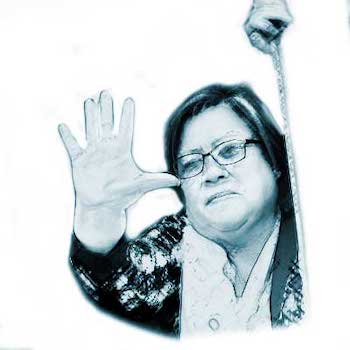
In response to the news that the court granted former Philippine Senator Leila de Lima bail for the third and last drug-related charge against her, Butch Olano, Amnesty International’s Philippines Director, said: “This is a welcome development and a step towards justice.
As a human rights activist and former Senator, she has been one of the staunchest critics of the human rights violations under the administration of former President Rodrigo Duterte. Since her arrest, Amnesty alongside many other organisations have repeatedly said that the charges against her were fabricated and that the testimonies by witnesses against her were manufactured. See: https://www.trueheroesfilms.org/thedigest/laureates/35cd51c0-93fb-11e8-b157-db4feecb7a6f
The authorities arrested de Lima after she sought to investigate violations committed in the context of the so-called “war on drugs” under the former Duterte administration, including the extrajudicial execution of thousands of people suspected of using or selling drugs, which Amnesty has said may amount to crimes against humanity. As in the case of de Lima, there has been almost no justice or accountability for the victims of these abuses and their families.
Court proceedings against de Lima in the last six years have been marked by undue delays, including the repeated failure of prosecution witnesses to appear in court and changes in judges handling the cases against her. In 2018, the UN Working Group on Arbitrary Detention concluded that the detention of de Lima was arbitrary because of the lack of legal basis and the non-observance of international norms relating to the right to a fair trial.
The arbitrary detention of de Lima reflects the broader context of increasing impunity for human rights violations in the Philippines. These violations include killings, threats and harassment of political activists, human rights defenders, members of the media and other targeted groups.
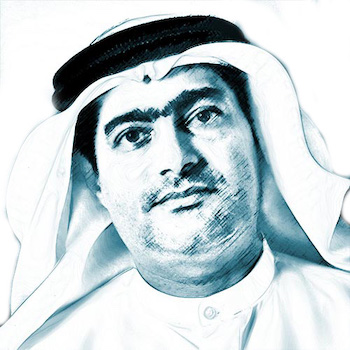
On August 29, 2023, Amnesty International USA, Human Rights Watch, Project on Middle East Democracy (POMED) and 16 additional civil society organizations delivered an open letter urging U.S. Secretary of State Antony Blinken to encourage the United Arab Emirates (UAE) government to immediately and unconditionally release Emirati human rights defender Ahmed Mansoor ahead of the 28th Conference of Parties of the United Nations Framework Convention on Climate Change (COP28) that will take place from November 30 to December 12, 2023. [for more on UAE: see https://humanrightsdefenders.blog/tag/ahmed-mansoor/]
In the letter, the organizations urged Secretary Blinken to call on the UAE government to immediately and unconditionally release Ahmed Mansoor and other jailed human rights defenders and peaceful critics both privately and publicly at the highest levels. The organizations also called on the Secretary to signal deep concern about Mansoor’s well-being and request permission to visit him in prison as soon as possible.
“With the world’s attention on Dubai, the US government should deliver on this administration’s promise to center human rights in its foreign policy and press the Emirati authorities to finally release Ahmed Mansoor,” said Elizabeth Rghebi, Advocacy Director for the Middle East and North Africa, “As a participant in COP28, the US government can demand the UAE demonstrate through this high profile release its commitment to the human rights principles required for healthy civic space at this upcoming global gathering.”
Governments have an obligation to protect the civic space for protest, in particular guaranteeing the rights to freedom of peaceful assembly and freedom of expression. Subjecting human rights defenders and critics to unlawful use of force, arbitrary detention, unfair trials, and abusive detention conditions violate these and other rights. The US government should work to uphold its obligations both at home and when engaging diplomatic partners.
Mansoor was arrested by Emirati authorities in March 2017 for “spreading false news” to “harm the reputation of the state.” All the charges on which he was convicted were based solely on his human rights advocacy, including using email and WhatsApp to communicate with human rights organizations. Following more than a year in isolation in pre-trial detention and a grossly unfair trial, an Emirati state security court sentenced Mansoor to 10 years in prison. Mansoor is a laureate of the MEA [see: https://www.trueheroesfilms.org/thedigest/laureates/074ACCD4-A327-4A21-B056-440C4C378A1A]
Throughout his imprisonment, Mansoor has been subjected to treatment that violates the prohibition against torture and other cruel, inhuman, or degrading treatment, including being held in solitary confinement without access to reading materials, television, or radio. Since December 2017, he has been denied eyeglasses, most personal hygiene items and, at least until recently, a bed or mattress in his cell.
On 6 July 2023 Janika Spannagel in Open Global Rights comes with a study of great importance to the work for human rights defenders. The researcher states that “focusing only on defenders’ physical integrity risks undermining the very idea of supporting agents of human rights change” and that there is a need to Rethink campaigns on human rights defenders
Instead of summarising I will provide large quotes:
,,,,The theory of change put forward by actors, including Front Line Defenders, International Service for Human Rights, and many others, claims that by protecting local human rights activists, international campaigns can support them in their work to advance human rights protection on the ground. This assumption appears plausible and aligns with prominent accounts in academic human rights literature, where domestic activists’ protection from repression is seen as a way to open spaces for them to challenge the regime and enact change.
That said, empirical evidence from UN casework and the experience of Tunisian defenders shows that this promise has not been fulfilled when it comes to human rights defenders in authoritarian regimes, as I show in my recent book. There, I argue that, while international attention can have important protective benefits, it does little to support individual human rights defenders as agents of change in repressive contexts. [Emphasis added]
The reason for this is that international casework on defenders, including urgent action–like campaigns or UN communications, maintain the traditional focus on physical integrity rights that has guided the long-standing casework on political imprisonment, torture, or enforced disappearances. In doing so, it overlooks the many administrative, discursive, and covert forms of repression that typically bypass international scrutiny more broadly but that often very effectively disrupt and thwart defenders’ work toward change.
The analysis of over 12,000 individual cases of human rights activists taken up by the UN special rapporteur on human rights defenders between 2000 and 2016 reveals that, in almost three-quarters of them, at least one of the violations described fell within the category of physical integrity violations. Detention cases alone made up 56% of all cases raised during that period. In contrast, only 4% of the cases dealt exclusively with softer types of repression, such as travel bans, bureaucratic issues, job dismissals, surveillance, or defamation.
This distribution far from represents the everyday experience of human rights defenders in authoritarian states—instead, it is reflective of a humanitarian instinct in human rights casework to privilege cases that are considered most severe. One could argue that UN communications, and perhaps attention-based campaigning more broadly, are inherently humanitarian, not transformative instruments. But one should ask: What, then, is the purpose of focusing on human rights defenders, as opposed to any victim of repression? [Emphasis added]
The priority given to physical integrity violations has two important adverse consequences. First, we can see that the data profoundly shape our understanding of what human rights defenders are struggling with. For example, on the basis of such data a CIVICUS report claims that in order to repress civic space, states resort “most often” to detention of activists, attacks against journalists, and excessive use of force against protesters. The human rights community’s own focus on violent repression thus paradoxically misleads us to believe that this is where most attention is needed.
Secondly, this focus reinforces a protection gap for violations that fall outside of the conventional notion of state repression as physically harmful and as undeniably politically motivated. Research on repression highlights that authoritarian states engage in repressive substitution, where they replace highly scrutinized coercive tactics—typically harder and overt types of repression—with softer and more covert measures. The case of Tunisia under Ben Ali aptly illustrates the strong impact of such tactics on defenders’ ability to carry out meaningful work.
When analyzing the further development of cases taken up by the UN, I also found that, while some positive effects of the UN’s attention could be identified for most of them, many did not see an actual improvement relative to the reported violations over the course of the next year; where they did, it was mostly an easing of harder repression. Ultimately, there is a real risk that governments continue to use hard repression to increase their bargaining power and then pass off a release from prison as a costly concession, while in reality imposing softer but equally effective measures against the activist in question.
With this problem in mind, what could be done differently? Casework that follows a transformative logic should not seek to maximize the reduction of physical harm—the humanitarian logic—but should define protection needs in terms of safeguarding a defender’s ability to do effective human rights work.
Those engaging in casework and campaigns on human rights defenders should actively revisit their priorities in terms of the violations they tend to address. Far too often, softer repression remains unreported, unnoticed, and not acted upon, which effectively creates a twilight zone in which authoritarian states can comfortably stifle opposition voices without risking much pushback. We owe it to the countless number of human rights activists around the world to ensure that the label of “human rights defender” does not merely serve to laud their heroism and excite donors and the media, but that it is dedicated to fulfilling its promise of human rights change.
The Human Rights Council should urgently address the deterioration of the human rights situation in Tunisia, four human rights organizations said on 27 June 2023 as the 53rd Council’s session is underway.
In a letter sent to UN Member States’ Representatives on 5 June 2023, the four undersigned organizations warned against the rapidly worsening situation in Tunisia, and urged States to seize the opportunity of the ongoing Human Rights Council’s session to address it. The organizations called on the Council and Member States to press the Tunisian authorities to comply with their obligations under international human rights law particularly those guaranteeing the rights to fair trial, freedom of expression, freedom of peaceful assembly and association, and non-discrimination.
The Human Rights Council should urge Tunisia to end the ongoing crackdown on peaceful dissent and freedom of expression, and drop charges against, and release, all individuals being detained and prosecuted solely on the basis of their peaceful political activities and the exercise of their human rights. The Council should also call on Tunisia to conduct prompt, thorough, independent, impartial and transparent and investigation into a wave of anti-Black violence – including assaults and summary evictions – against Black African foreign nationals, including migrants, asylum seekers and refugees, and bring to justice anyone reasonably suspected to be responsible, and provide victims with access to justice and effective remedies.
Over the past two years, Tunisia has witnessed a significant rollback on human rights. Judicial independence guarantees have been dismantled and individual judges and prosecutors have been subjected to arbitrary dismissal, politicized criminal prosecutions and increased interference by the executive. Lawyers are being prosecuted for the discharge of their professional duties and exercise of their right to freedom of expression.
‘The Tunisian authorities’ interference in the judiciary and attacks on lawyers have greatly undermined the right to fair trial and public trust in the integrity of the justice system. The authorities must ensure that the courts are not weaponized to crush dissent and free expression,’ said International Commission of Jurists’ MENA director Said Benarbia.
Under the guise of ‘fighting offences related to information and communication systems’, punishable by up to a 10 years’ imprisonment and a hefty fine according to Decree Law 54, at least 13 individuals, including journalists, political opponents, lawyers, human rights defenders and activists, have been subject to police or judicial investigations and are facing possible prosecutions.
‘With Tunisia facing political uncertainty and economic crisis, it’s more important than ever that Tunisians be free to debate their country’s future without fear of reprisal. The authorities should strive to allow the effective enjoyment of the right to freedom of expression of everyone; instead, they are attacking it,’ said Rawya Rageh, Amnesty International’s acting deputy director for the Middle East and North Africa.
Last week, the UN High Commissioner for Human Rights called on the Tunisian authorities to stop restricting media freedoms and criminalizing independent journalism. In a statement published on 23 June, Volker Türk expressed deep concern at the increasing restrictions on the right to freedom of expression and press freedom in Tunisia, noting that vague legislation is being used to criminalize independent journalism and stifle criticism of the authorities. ‘It is troubling to see Tunisia, a country that once held so much hope, regressing and losing the human rights gains of the last decade,’ said the High Commissioner.
Since February 2023, a wave of arrests targeted political opponents and perceived critics of Tunisia’s President, Kais Saied. In the absence of credible evidence of any offences, judges are investigating at least 48 people, such as dissidents, opposition figures, and lawyers, for allegedly conspiring against the State or threatening State security, among other charges. At least 17 of them are being investigated under Tunisia’s 2015 counter-terrorism law.
‘By jailing political leaders and banning opposition meetings, the authorities are dangerously trampling on the fundamental rights that underpin a vibrant democracy. The democratic backsliding and the human rights violations, which are unprecedented since the 2011 revolution, require urgent attention from the Human Rights Council and Member States,’ said Salsabil Chellali, Tunisia director at Human Rights Watch.
Towards Life 3.0: Ethics and Technology in the 21st Century is a talk series organized and facilitated by Dr. Mathias Risse, Director of the Carr Center for Human Rights Policy, and Berthold Beitz Professor in Human Rights, Global Affairs, and Philosophy. Drawing inspiration from the title of Max Tegmark’s book, Life 3.0: Being Human in the Age of Artificial Intelligence, the series draws upon a range of scholars, technology leaders, and public interest technologists to address the ethical aspects of the long-term impact of artificial intelligence on society and human life.
On 20 April you can join for 45 minutes with WITNESS’ new Executive Director Sam Gregory [see: https://humanrightsdefenders.blog/2023/04/05/sam-gregory-finally-in-the-lead-at-witness/]o n how AI is changing the media and information landscape; the creative opportunities for activists and threats to truth created by synthetic image, video, and audio; and the people and places being impacted but left out of the current conversation.
Sam says “Don’t let the hype-cycle around ChatGPT and Midjourney pull you into panic, WITNESS has been preparing for this moment for the past decade with foundational research and global advocacy on synthetic and manipulated media. Through structured work with human rights defenders, journalists, and technologists on four continents, we’ve identified the most pressing concerns posed by these emerging technologies and concrete recommendations on what we must do now.
We have been listening to critical voices around the globe to anticipate and design thoughtful responses to the impact of deepfakes and generative AI on our ability to discern the truth. WITNESS has proactively worked on responsible practices for synthetic media as a part of the Partnership on AI and helped develop technical standards to understand media origins and edits with the C2PA. We have directly influenced standards for authenticity infrastructure and continue to forcefully advocate for centering equity and human rights concerns in the development of detection technologies. We are convening with the people in our communities who have most to gain and lose from these technologies to hear what they want and need, most recently in Kenya at the #GenAIAfrica convening”.
The urgent human rights issues in the Eastern Europe and Central Asia region are hugely varied and demand creative campaigns that are well-researched, well-planned and well-managed despite the time pressures that surround them.
JOB PURPOSE: To lead the identification, development, implementation and evaluation of Amnesty International’s campaigning and advocacy strategies on human rights violations in the Eastern Europe and Central Asia region, to deliver impact in relation to agreed priorities, utilizing political judgment and analytical, communication and representational skills.
ABOUT YOU
Lead the development and implementation of campaign strategies, ensuring campaigns result in measurable change.
Advise on, coordinate and review the contribution to relevant campaigns by regional colleagues and other programmes.
Coordinate action planning and ensure consistency with campaigning standards and optimal use of resources.
Assess opportunities for action, identifying creative and effective campaigning tactics.
Provide advice to sections and structures and external partners on the development and implementation of campaign strategies.
Responsible for ensuring there is effective communication between relevant IS teams, sections and structures and partners about projects.
Draft, review and advise on campaign materials for internal and external use, ensuring products are coherent within the campaign strategy.
Communicate AI’s concerns, positions and messages to external and internal audiences.
Contribute to planning, execution and evaluation stages of campaign projects; develop and share campaigning best practice.
SKILLS AND EXPERIENCE
The ability to adapt to fast-changing political situations in, and related to, Eastern Europe and Central Asia.
Experience of leading and implementing campaigns at the national & international level and the ability to lead innovation and creative approaches to campaigning.
Knowledge of working on, and in, the region and a specialist knowledge in relation to specific countries or other geographical areas in the region.
Digitally competent, with experience of digital campaigning and keeping up to date with digital trends and campaigning methodologies.
Experience of working with colleagues and partners based around the world.
Excellent communications skills in English and Russian in a fluent, clear and concise way. Knowledge of another regional language desirable
Experience of leading project teams and the ability to engage and inspire team members.
Experience of managing conflicting demands, meeting deadlines and adjusting priorities
Ability to undertake research to gather information relevant to the development of campaign strategies.
Ability to evaluate campaigns and projects and to report progress against stated objectives; experience of managing budgets and reporting against expenditure.
Amnesty International is committed to creating and sustaining a working environment in which everyone has an equal opportunity to fulfill their potential and we welcome applications from suitably qualified people from all sections of the community. For further information on our benefits, please visit https://www.amnesty.org/en/careers/benefits/
On 14 December 2021 a Statement “Bangladesh: Stop Harassment of Human Rights Defenders” was published by Forum Asia, FIDH and other NGOs: “Bangladesh authorities must end the harassment of Adilur Rahman Khan and ASM Nasiruddin Elan, respectively Secretary and Director of the human rights group Odhikar, who have been targeted through the misuse of the criminal justice system”, eleven rights groups said.
On December 15, 2021, the Cyber Tribunal of Dhaka will continue the examination of prosecution witnesses in the case brought against Adilur Rahman Khan, also a member of OMCT General Assembly and FIDH Secretary-General, and ASM Nasiruddin Elan, for charges brought against them in Case No. 1 of 2013 under the notorious Section 57 of the Information and Communication Technology (ICT) Act, 2006 (amended in 2009), in relation to a fact-finding report issued by Odhikar on the killing of at least 61 people by security forces and law-enforcement agencies in May 2013. Khan and Elan face up to ten years in prison. See also; https://www.trueheroesfilms.org/thedigest/laureates/88F17E2F-F919-580F-2FDA-59B8E24ACBF6
“The government should stop using vague laws to silence human rights defenders and start holding perpetrators of abuses to account, ” said Kerry Kennedy, President of Robert F. Kennedy Human Rights. “Odhikar’s findings not only should have led to investigations and reforms, but also should have been welcomed by the government as an opportunity to strengthen their commitment to upholding human rights.”
Following Odhikar’s 2013 report, Khan and Elan were arbitrarily detained for respectively 62 and 25 days until they were both released on bail. On February 14, 2021, the Appellate Division of the Supreme Court of Bangladesh rejected Odhikar’s appeal to quash the case on its legal merits. On September 12, 2021, the Cyber Tribunal of Dhaka resumed the trial in the case against the two while their review petition is still pending hearing before the Appellate Division of the Supreme Court, contravening the right to a fair trial. On October 5, November 9, and November 24, 2021, the Cyber Tribunal of Dhaka started to examine prosecution witnesses in the case.
We express our deepest concern over the ongoing harassment of Adilur Rahman Khan and ASM Nasiruddin Elan, which is manifestly a form of reprisals against Odhikar for their legitimate human rights work, including for cooperating with UN human rights mechanisms in documenting enforced disappearances, extra-judicial executions and torture in Bangladesh.
It is further a matter of great concern that since 2013, attacks, unlawful surveillance, smear campaigns and harassment against Odhikar and its staff and management have been incessant. Odhikar is also facing serious difficulties to conduct its work due to violations of the right to freedom of association, since its registration has not been renewed by the NGO Affairs Bureau of the Government of Bangladesh and is still pending since 2015. Moreover, all of its bank accounts have been frozen and the organization has been forbidden from receiving funding from foreign or international sources, impacting its operations considerably.
The trial against Khan and Elan resumes in a context where human rights in Bangladesh are under attack from all sides. Human rights violations committed by security forces, including enforced disappearances, extrajudicial executions, and torture remain pervasive throughout the country, with absolute impunity. Authorities regularly crackdown on human rights defenders and journalists who speak out against these violations, including through the use of the Digital Security Act – 2018, the Special Powers Act – 1974, and other draconian laws. See also: https://humanrightsdefenders.blog/2014/12/02/adilur-rahman-khan-speaks-out-against-torture/
Cases such as these question the Bangladeshi government’s commitment to protecting human rights. The international community, including the United Nations and the diplomatic corps in Bangladesh, should monitor the case against Adilur Rahman Khan and ASM Nasiruddin Elan and take a clear stand to ensure that the government of Bangladesh respects the rights of the two defenders to a fair and public trial and, more generally, guarantees the right to defend human rights and puts an end to all acts of harassment against all human rights defenders in Bangladesh.
Our organisations call on the authorities of Bangladesh to immediately and unconditionally drop all charges against Adilur Rahman Khan and ASM Nasiruddin Elan, and to ensure in all circumstances that human rights defenders in Bangladesh are able to carry out their legitimate activities without any hindrance and fear of reprisals.
“This trial is in reality an indictment of the authorities and a crucial test case for the country’s judiciary to be closely watched by the international community,” said Gerald Staberock, OMCT Secretary General, speaking on behalf of the Observatory. “The true culprits are those responsible for extra-judicial killings not those who report on it. Prosecuting human rights activists will not stifle dissent but will isolate Bangladesh from the international community.”
The NGOs:
Amnesty International
Anti-Death Penalty Asia Network (ADPAN),
Asian Human Rights Commission (AHRC),
Asian Network for Free Elections
Capital Punishment Justice Project (CPJP)
CIVICUS: World Alliance for Citizen Participation,
Eleos Justice, Monash University, Associate Professor
FIDH, within the framework of the Observatory for the Protection of Human Rights Defenders, i
FORUM-ASIA
Robert F. Kennedy Human Rights
World Organisation Against Torture (OMCT), within the framework of the Observatory for the Protection of Human Rights Defenders
Dozens of rights groups are urging the European Union to impose sanctions on the Israeli NSO Group to ban the company’s Pegasus surveillance technology. The letter sent to the EU was signed by 86 rights groups and independent experts, including Reporters Without Borders, Amnesty International, Human Rights Watch, the Electronic Frontier Foundation and Privacy International, among others. A consortium of media revealed that this powerful spyware was used extensively by several governments to spy on lawyers, journalists, political opponents and human rights activists.
Several victims of illegal surveillance have been identified in Hungary, where the government initially denied being a client of NSO Group, before admitting to having purchased the software. See also:
“There is overwhelming evidence that Pegasus spyware has been repeatedly used by abusive governments to clamp down on peaceful human rights defenders, activists and perceived critics,” Deborah Brown, senior digital rights researcher and advocate at Human Rights Watch, said in a statement. “The EU should immediately sanction NSO Group and ban any use of its technologies.”
The EU’s global human rights sanctions would allow the EU to adopt “ “targeted sanctions against entities deemed responsible for violations or abuses that are “of serious concern as regards the objectives of the common foreign and security policy”, including violations or abuses of freedom of peaceful assembly and of association, or of freedom of opinion and expression,” the letter read.
NSO Group was blacklisted by the US State Department at the beginning of November, and slapped with a sanction that drastically limited the business relationships the US company had with US customers or suppliers, according to the French newspaper Le Monde. “The EU should unequivocally close its doors to business with NSO Group,” Brown said.
“Targeted sanctions are necessary to that end, and to add to growing international pressure against the company and the out-of-control spyware industry.”
In Europe, several investigations are ongoing, but no sanctions have been formally imposed on the company. In addition to Hungary, several other countries are, or have been, customers of NSO Group – although this does not mean that all these countries have made illegal use of Pegasus.
In addition to Germany, several EU countries have purchased access to the software, according to Le Monde.
Shawn Utley reports in the Madison Leader Gazette of July 14, 2021 on a Freedom House “webinar” about the alleged Iranian plot to kidnap Iranian-American journalist Masih Alinejad.
A newly released Justice Department indictment charging four Iranian intelligence operatives with plotting to kidnap a New York-based journalist who had criticized the Iranian regime, dramatically underscores how transnational abductions are becoming the new “normal” for repressive regimes around the world, two human rights activists said Wednesday.
“It’s a horrific attempt to silence dissent,” Saudi activist Lina Alhathloul said during a Freedom House “webinar” about the alleged Iranian plot to lure Iranian-American journalist Masih Alinejad to a third country so she could be forcibly rendered to Iran.
Her sister, prominent women’s rights activist Loujain Alhathloul, was abducted in Dubai in 2018 and flown to Saudi Arabia, where she was thrown in prison and tortured under the direction of a top aide to Saudi Crown Prince Mohammed bin Salman, or MBS, according to U.S. officials and the accounts from the Alhathloul family.
“This is very much a moment when we see this phenomenon is becoming mainstream,” added Nate Schenkkan, director of research strategy at Freedom House, “It’s becoming something that dozens of governments around the world use to control exiles and diaspora members. Countries do it because they can get away with it and because the consequences are not there.”
The comments came during a Freedom House-sponsored panel dedicated to the growing threat of the transnational repression trend, as detailed in a recent report and video from the group, and to the new season of Yahoo News “Conspiracy land” an eight-episode podcast that uncovered new details about the brutal murder of Saudi journalist Jamal Khashoggi inside the Saudi consulate in Istanbul in October 2018.
As was noted in the panel discussion, there are striking parallels between the Saudi plot to assassinate Khashoggi and the alleged Iranian plot to kidnap Alinejad. Both targeted journalists who, after criticizing their governments, had moved to the United States to live in exile. Khashoggi had excoriated the harsh crackdowns by MBS, including the detention of Loujain Alhathloul. Alinejad had criticized the corruption and repressive measures of former Iranian President Mahmoud Ahmadinejad.
Jamal Khashoggi. (Getty Images)
Both plots involved extensive surveillance on U.S. soil. In Khashoggi’s case, Saudi operatives recruited spies inside Twitter to steal personal data about regime critics and later used sophisticated spyware to hack the phones of one of those critics who was in extensive contact with the Saudi journalist. In Alinejad’s case, Iranian intelligence operatives used private investigators to follow, photograph and video-record the Iranian-American journalist and members of her family in Brooklyn, according to federal prosecutors in Brooklyn, who on Tuesday brought the indictment against the Iranian operatives, all of whom reside in Iran..
The Cambodian government should immediately drop baseless conspiracy and “insulting the king” charges against four environmental activists affiliated with the Mother Nature Cambodia environmental group and release the three in pretrial detention, Human Rights Watch said today.
On June 16, 2021, the police arrested Sun Ratha, 26, Ly Chandaravuth, 22, and Seth Chhivlimeng, 25, in Phnom Penh, and Yim Leanghy, 32, in Kandal province, apparently for their documentation that raw sewage has entered the Tonle Sap River near the Royal Palace. On June 20, the court charged Ratha and Leanghy with “conspiracy” and lese majeste (“insulting the king”) under articles 453 and 437 bis of Cambodia’s penal code, and Chandaravuth with “conspiracy.” If convicted, they face between 5 and 10 years in prison, and fines of up to 10 million riels (US$2,500). The authorities also charged in absentia aSpanish national, Alejandro Gonzalez-Davidson, the founder of Mother Nature Cambodia, who had been deported in 2015. Chhivlimeng was released without charge.
“The Cambodian government has stepped up its campaign to silence activists peacefully advocating to protect the environment,” said Phil Robertson, deputy Asia director. “Foreign governments, the United Nations country team, and international donors should call on the Cambodian authorities to drop their absurd charges against the environmental activists and publicly condemn any further clampdown on peaceful activism.”
An Interior Ministry spokesperson alleged that the authorities had proof that “rebellious” Mother Nature Cambodia had used foreign funding to try to topple the government, but did not make any evidence public.
This case followed earlier harassment of five Mother Nature Cambodia activists. On May 5, the Phnom Penh court convicted three environmental activists – Long Kunthea, 22, Phuon Keoraksmey, 19, and Thun Ratha, 29 – of “incitement to commit a felony or disturb social order,” articles 494 and 495 of Cambodia’s penal code. The judge sentenced them to between 18 and 20 months in prison as well as a fine of 4 million riels ($1,000) for their peaceful activism protesting the authorities’ filling-in Phnom Penh’s Boeung Tamok lake.
Amid the Covid-19 pandemic, the Cambodian authorities have stepped up their crackdown on youth and environmental activists engaged in peaceful activism and protest. The government has often used draconian new laws to arrest and prosecute activists in an apparent attempt to silence their voices and shut down their activism.
In March 2020 and early 2021, the authorities arrested environmental activists affiliated with the Prey Lang Community Network along with a prominent environmentalist and lawyer, Ouch Leng, to stop their efforts to document illegal logging and deforestation within the Prey Lang forest.
Human Rights Watch has documented cases of nearly 70 current political prisoners, including members of the political opposition, youth and environmental activists, trade union leaders, and journalists who are awaiting trial or are serving prison sentences. Many other activists have fled Cambodia to seek refuge abroad.
“Cambodia’s highly politicized courts mean that the environmental activists charged have no chance of getting a fair trial,” Robertson said. “Only international pressure on the Cambodian government holds out the possibility of saving these activists from unjust prison sentences.”