‘Making a movement: The history and future of human rights“. To mark the 75th anniversary of the Universal Declaration of Human Rights, The Carr Center for Human Rights Policy asked 90 Harvard faculty and affiliates to offer thoughts on a document that changed the world.
“THE CREATION OF SUCH A DOCUMENT— its mere existence—must count among the greatest achievements in human history.” That is how Mathias Risse, the Berthold Beitz Professor in Human Rights, Global Affairs and Philosophy, and faculty director of the Carr Center for Human Rights Policy at HKS, describes the impact of the Universal Declaration of Human Rights (UDHR), which turns 75 this year. Yet Risse and other human rights defenders say the UDHR has done much more than exist—it paved the way for more than 70 enforceable human rights treaties around the globe and marked the first time the world had a documental agreement that all humans were equal and free. That global standard is vital even if the world community continues to fall short of achieving the UDHR’s promise, Risse says. “The human rights movement will always register shortfalls much more than achievements and would miss its purpose otherwise,” he says. “Regardless, the change that these decades of developments have brought is very real.”
To honor the UDHR, the Carr Center commissioned short essays from 90 scholars, fellows, and affiliates across HKS, Harvard, and beyond to explore the past, present, and future of the human rights movement it inspired. A selection of excerpts follows below. The complete collection of essays in their entirety can be found on the Carr Center website.
Towards Life 3.0: Ethics and Technology in the 21st Century is a talk series organized and facilitated by Dr. Mathias Risse, Director of the Carr Center for Human Rights Policy, and Berthold Beitz Professor in Human Rights, Global Affairs, and Philosophy. Drawing inspiration from the title of Max Tegmark’s book, Life 3.0: Being Human in the Age of Artificial Intelligence, the series draws upon a range of scholars, technology leaders, and public interest technologists to address the ethical aspects of the long-term impact of artificial intelligence on society and human life.
On 20 April you can join for 45 minutes with WITNESS’ new Executive Director Sam Gregory [see: https://humanrightsdefenders.blog/2023/04/05/sam-gregory-finally-in-the-lead-at-witness/]o n how AI is changing the media and information landscape; the creative opportunities for activists and threats to truth created by synthetic image, video, and audio; and the people and places being impacted but left out of the current conversation.
Sam says “Don’t let the hype-cycle around ChatGPT and Midjourney pull you into panic, WITNESS has been preparing for this moment for the past decade with foundational research and global advocacy on synthetic and manipulated media. Through structured work with human rights defenders, journalists, and technologists on four continents, we’ve identified the most pressing concerns posed by these emerging technologies and concrete recommendations on what we must do now.
We have been listening to critical voices around the globe to anticipate and design thoughtful responses to the impact of deepfakes and generative AI on our ability to discern the truth. WITNESS has proactively worked on responsible practices for synthetic media as a part of the Partnership on AI and helped develop technical standards to understand media origins and edits with the C2PA. We have directly influenced standards for authenticity infrastructure and continue to forcefully advocate for centering equity and human rights concerns in the development of detection technologies. We are convening with the people in our communities who have most to gain and lose from these technologies to hear what they want and need, most recently in Kenya at the #GenAIAfrica convening”.
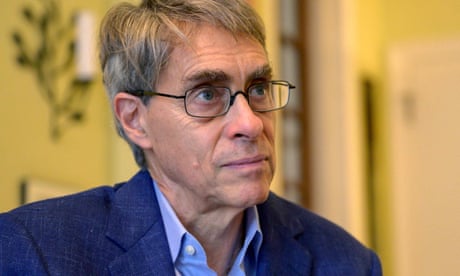
Kenneth Roth wrote in the Guardian of 10 January 2023 “I once ran Human Rights Watch. Harvard blocked my fellowship over Israel. I was told that my fellowship at the Kennedy School was vetoed over my and Human Rights Watch’s criticism of Israel”.
. ..If any academic institution can afford to abide by principle, to refuse to compromise academic freedom under real or presumed donor pressure, it is Harvard, the world’s richest university. Yet the Kennedy School’s dean, Douglas Elmendorf, vetoed a human rights fellowship that had been offered to me because of my criticism of Israel. As best we can tell, donor reaction was his concern.
.. in anticipation of my stay at the school, I reached out to the dean to introduce myself. We had a pleasant half-hour conversation. The only hint of a problem came at the end. He asked me whether I had any enemies.
It was an odd question. I explained that of course I had enemies. Many of them. That is a hazard of the trade as a human rights defender.
I explained that the Chinese and Russian governments had personally sanctioned me – a badge of honor, in my view. I mentioned that a range of governments, including Rwanda’s and Saudi Arabia’s, hate me. But I had a hunch what he was driving at, so I also noted that the Israeli government undoubtedly detests me, too.
That turned out to be the kiss of death. Two weeks later, the Carr Center called me up to say sheepishly that Elmendorf had vetoed my fellowship. He told Professor Kathryn Sikkink, a highly respected human rights scholar affiliated with the Kennedy School, that the reason was my, and Human Rights Watch’s, criticism of Israel.
That is a shocking revelation. How can an institution that purports to address foreign policy – that even hosts a human rights policy center – avoid criticism of Israel. Elmendorf has not publicly defended his decision, so we can only surmise what happened. He is not known to have taken public positions on Israel’s human rights record, so it is hard to imagine that his personal views were the problem.
But as the Nation showed in its exposé about my case, several major donors to the Kennedy School are big supporters of Israel. Did Elmendorf consult with these donors or assume that they would object to my appointment? We don’t know. But that is the only plausible explanation that I have heard for his decision. The Kennedy School spokesperson has not denied it.
Some defenders of the Israeli government have claimed that Elmendorf’s rejection of my fellowship was because Human Rights Watch, or I, devote too much attention to Israel. The accusation of “bias” is rich coming from people who themselves never criticize Israel and, typically using neutral sounding organizational names, attack anyone who criticizes Israel.
Moreover, Israel is one of 100 countries whose human rights record Human Rights Watch regularly addresses. Israel is a tiny percentage of its work. And within the Israeli-Palestinian context, Human Rights Watch addresses not only Israeli repression but also abuses by the Palestinian Authority, Hamas and Hezbollah.
In any event, it is doubtful that these critics would be satisfied if Human Rights Watch published slightly fewer reports on Israel, or if I issued less frequent tweets. They don’t want less criticism of Israel. They want no criticism of Israel.
The other argument that defenders of Israel have been advancing is that Human Rights Watch, and I, “demonize” Israel, or that we try to “evoke repulsion and disgust”. Usually this is a prelude to charging that we are “antisemitic”.
The issue at Harvard is far more than my own academic fellowship. I recognized that, as an established figure in the human rights movement, I am in a privileged position. Being denied this fellowship will not significantly impede my future. But I worry about younger academics who are less known. If I can be canceled because of my criticism of Israel, will they risk taking the issue on?
The ultimate question here is about donor-driven censorship. Why should any academic institution allow the perception that donor preferences, whether expressed or assumed, can restrict academic inquiry and publication? Regardless of what happened in my case, wealthy Harvard should take the lead here.
To clarify its commitment to academic freedom, Harvard should announce that it will accept no contributions from donors who try to use their financial influence to censor academic work, and that no administrator will be permitted to censor academics because of presumed donor concerns. That would transform this deeply disappointing episode into something positive.