Archive for the 'UN' Category

United Nations Declaration on the Rights of Indigenous Peoples – a subversive document?

October 6, 2021
Sep 30, 2021

The government of Vietnam has admitted that it arrested an indigenous rights activist for possessing translated copied of the United Nations Declaration on the Rights of Indigenous Peoples. In an extraordinary statement, made to the United Nations High Commission on Human Rights on 20 September 2021 and just now made public, the government of Vietnam justified these arrests as being necessary to maintain national unity in Vietnam. In doing so, it has effectively sought to justify the criminalization of possession of a UN document that establishes core human rights belonging to indigenous people that the government of Vietnam itself voted to create.

The United Nations Declaration on the Rights of Indigenous Peoples (UNDRIP), in the words of the United Nations, “is the most comprehensive international instrument on the rights of indigenous peoples” and “establishes a universal framework of minimum standards for the survival, dignity and well-being of the indigenous peoples of the world and it elaborates on existing human rights standards and fundamental freedoms as they apply to the specific situation of indigenous peoples.”  It was approved by the UN General Assembly on 13 September 2007. … Vietnam was one of the 144 countries to vote in its favor.

In April 2021, the Unrepresented Nations and Peoples Organization (UNPO) brought to international attention the case of Mr. Duong Khai, a Khmer Krom activist campaigning for recognition of the indigenous status of the Khmer Krom people in Vietnam, who was arrested and threatened for possession of translated copies of the UNDRIP. In June 2021, a team of UN independent experts wrote a Joint Allegation Letter to the governmment of Vietnam demanding an answer and expressing their “concern that these reported threats may be connected to his efforts to disseminate United Nations documents, in particular the promotion and translation of the UNDRIP, and may have chilling effect on any expression, by all those, including human rights defenders, who draw attention to minority and indigenous people’s issues in the country.”

On 20 September 2021, the government of Vietnam responded to the UN experts in a letter to the UN Office of the High Commissioner for Human Rights. The response is deeply troubling. Instead of denying that such repressive actions took place, or admitting that they did and outlining a process for redress, the government of Vietnam admitted Mr. Duong Khai was indeed arrested for possession of copies of the UNDRIP and claimed that the arrest was justified in order to maintain “national unity” because, according to the government of Vietnam, there are no indigenous peoples in the country.

It is well-settled that indigenous people make up approximately 15% of Vietnam’s population and that the Khmer Krom are one of the major indigenous communities. Yet Vietnam denies the existance of indigenous people, resulting in significant negative impacts on these communities. Mr. Duong Khai is one of many human rights defenders campaigning for recognition of indigenous status, and persecuted for doing so. In Vietnam, seeking indigenous status is so dangerous that an indigenous person wearing a T-shirt with the logo of the United Nations Sustainable Development Goals stating “Implementing the United Nations 2030 Agenda for Sustainable Development to ensure No Khmer-Krom are left behind” can be arrested.

This case presents a troubling baseline for the status of human rights in Vietnam. If, in Vietnam, a person can be criminalized merely for possessing and distributing UN human rights instruments that their own government has had a hand in creating, there can be no limit to the ability of the state to repress its citizens and eradicate freedom of expression and opinion.

Unfortunately, all too often today, Member States of the United Nations justify the worst repression under the guise of “national unity.” Indigenous communities and religious and ethnic minorities regularly bear the brunt of this fundamental perversion of the international system. Yet rarely do states so explicitly and openly violate these rights as the government of Vietnam has done in this case. By criminalizing the mere possession of a document that presents solely the text of a UN human rights instrument the government of Vietnam is openly repudiating the very foundations of the international order.

In light of the government of Vietnam’s admission in this case, the UNPO is calling on the entire international community to unequivocally condemn the government’s action in this case and to ensure that any aid or support to the country or trade with it is conditioned on the provision of adequate protection for human rights defenders, indigenous communities, and freedom of expression and opinion.

https://unpo.org/article/22158

Jeel Albena Association in Yemen wins 2021 Nansen Award

September 30, 2021
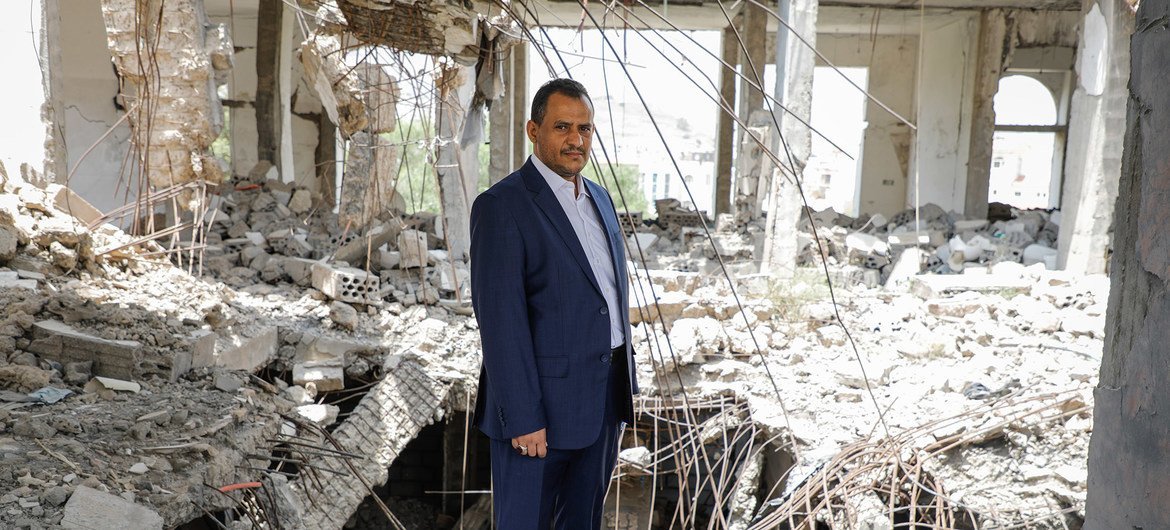
Ameen Hussain Jubran, head and founder of the Yemeni non-governmental organization Jeel Albena.

© UNHCR/Ahmed HaleemAmeen Hussain Jubran, head and founder of the Yemeni non-governmental organization Jeel Albena. 29 September 2021

The Jeel Albena Association for Humanitarian Development, a Yemeni humanitarian organization that has supported tens of thousands of people caught up in the country’s conflict, is the winner of the 2021 UNHCR Nansen Refugee Award. 

UN High Commissioner for Refugees, Filippo Grandi, announced the laureate this Wednesday 29 September 2021. Every year, the prize recognizes a person or group, that goes above and beyond the call of duty, to help displaced or stateless people. For more on this award for refugee workers: https://www.trueheroesfilms.org/thedigest/awards/CC584D13-474F-4BB3-A585-B448A42BB673

In a statement, Mr. Grandi said that “Jeel Albena does this in an extraordinary way helping people on all sides of Yemen’s conflict.” 

“Its staff and volunteers have stayed put, working quietly on the ground throughout the conflict, in the face of the harshest adversity, at a time when many others have left,” he said.  

Frontline work 

Their work, often near the frontlines, has included constructing 18,000 emergency shelters for internally displaced people and their host communities. Their work has also allowed thousands to make a living, and been a vehicle to restore basic human dignity. 

Mr. Grandi noted that Jeel Albena’s motto is “By Yemenis, for Yemenis” and that it “exemplifies its spirit of local community action.” 

“Always, they seek solutions together with the communities where they are active,” he explained. 

Established in June 2017, the association started with only fifteen staff and now has more than 150 employees, over 40 per cent of them, recruited from within displaced communities.  . 

The organization’s founder, Ameen Jubran, will collect the award on behalf of the organization. 

Mr. Jubran first started working with displaced people while he was at university and he has never stopped. He was nearly killed in the conflict and, like many of his team, have experienced displacement first-hand.  

“But he did not give up. In fact, he says the experience of being forced to flee his home only increased his determination, in the true spirit of Nansen,” Mr. Grandi recalled.  For the High Commissioner, the award “puts a much-needed spotlight on Yemen, a country where the suffering faced by civilians does not receive the attention it deserves.”  “It is my profound hope this award draws international attention to Yemen and that Jeel Albena’s extraordinary work will inspire more action for the people there who have suffered,” concluded the High Commissioner.

For last year, see: https://humanrightsdefenders.blog/2020/10/02/nansen-refugee-award-2020-to-maye-vergara-perez-of-colombia/

https://news.un.org/en/story/2021/09/1101582

Reprisals on the agenda of the UN and the new ISHR campaign to #EndReprisals!

September 30, 2021

On 29 September 2021 took place – in the 48th session of the UN Human Rights Council – the Interactive Dialogue on the Report of the Secretary-General on Cooperation with the United Nations, its Representatives and Mechanisms in the Field of Human Rights.

Allegations of reprisals and intimidation were documented against some 240 civil society members, activists and journalists, across 45 countries in the year up to 31 April, simply because they had been cooperating with the United Nations.  

That’s according to data from a new report presented on Wednesday to the Human Rights Council by the UN Assistant Secretary-General for Human Rights, Ilze Brands Kehris.  

Many cases were reported anonymously, because of fear of reprisal.  There were also around 50 individuals who experienced detention, while others were subjected to house arrest. 

Despite some push-back, Ms. Brands Kehris said the report “makes clear” that “the scope and severity of cases of intimidation and reprisal persist and in unacceptably high numbers.” 

The Assistant Secretary-General for Human Rights, presenting the report of the Secretary-General on cooperation with the United Nations, its representatives and mechanisms in the field of human rights, drew attention to four key trends that emerged from the report. First, in close to half of the countries mentioned in the report, she said that the United Nations had received allegations of monitoring and surveillance, both online and offline, of individuals and groups who cooperated, or attempted to cooperate, with the United Nations. Numerous cases included hacking of accounts, travel bans and other movement restrictions. Second, the United Nations saw signs of a possible pattern in several countries: China, Egypt, Iran, Saudi Arabia and Viet Nam, as well as India, Israel, Myanmar, Philippines and Venezuela. In the first five, the United Nations had identified serious issues with the detention of victims of reprisals and intimidation.

Third, some cases concerned the use of restrictive legislation that prevented or punished cooperation with the United Nations, notably on grounds of national security, including counter-terrorism measures, or based on laws governing activities of civil society organizations. Fourth, the increasingly challenging, or even at times repressive, environments for victims, human rights defenders, journalists and other civil society actors were indicated by the fact that many were deterred from providing specific details about a case, or declined to draw the United Nations’ attention altogether.

Victims of acts of reprisal and intimidation for cooperation with the United Nations continued to be subjected to serious human rights violations – in particular, arbitrary arrests and detention, but also torture and ill-treatment and, even death in custody, killing and enforced disappearances. In the digital sphere, activists and journalists had been attacked on social media after speaking at United Nations meetings and victims had been targeted for submitting information to or communicating electronically with the United Nations. While the report noted that more women were increasingly cooperating with the United Nations, including by using on-line opportunities, the price of such interactions for some included arrests and detention, harassment and intimidation, as well as stigmatisation and vilification. The United Nations could not tolerate that those who brought critical perspectives to the United Nations were silenced. More and better needed to be done to provide safe and open spaces for interaction, where those who spoke up could be heard, and could do so without fear of any sort of retribution.

Speakers regretted that the number of reprisals remained high and that the cases mentioned reflected solely the tip of the iceberg. They were worried about the continued trend of using justifications of any kind for blocking access to the United Nations as well as measures adopted in response to the COVID-19 pandemic as a pretext to stifle civil society space. Concerns were expressed about cases of intimidation and reprisals committed by Human Right Council Members, since they should uphold the highest standards in the promotion and protection of human right, especially against women. Some speakers praised the important and vital role played by civil society in promoting and advancing the global human rights agenda, including through meaningful engagement with the United Nations human rights machinery. They deplored any act of reprisal aiming to restrict or hinder the ability of individuals to access and communicate with international bodies, in particular the United Nations, its representatives and mechanisms in the field of human rights. Some speakers said that reprisals and intimidation against those who cooperated with the United Nations were an attack against the very essence and proper functioning of the United Nations system itself. They condemned any form of intimidation, harassment and reprisals, both offline and online, and called on all States to respect and protect persons cooperating with the United Nations system.

Some speakers stressed the importance of having a constructive and meaningful dialogue on any alleged cases of reprisal and called upon all to pay special attention to fulfil their responsibilities in providing credible and reliable information that should be thoroughly checked and corroborated in order to avoid reaching any false conclusions. They believed it was the mutual responsibility and duty of all stakeholders to collaborate together in order to preserve the efficiency and credibility of the United Nations human rights machinery. One speaker regretted the unfounded mentions contained in the report presented by the Assistant Secretary-General on alleged cases of reprisals. They invited the Assistant Secretary-General to address with objectivity, transparency and impartiality alleged reprisals, which could not be taken a priori as true, as they were not.

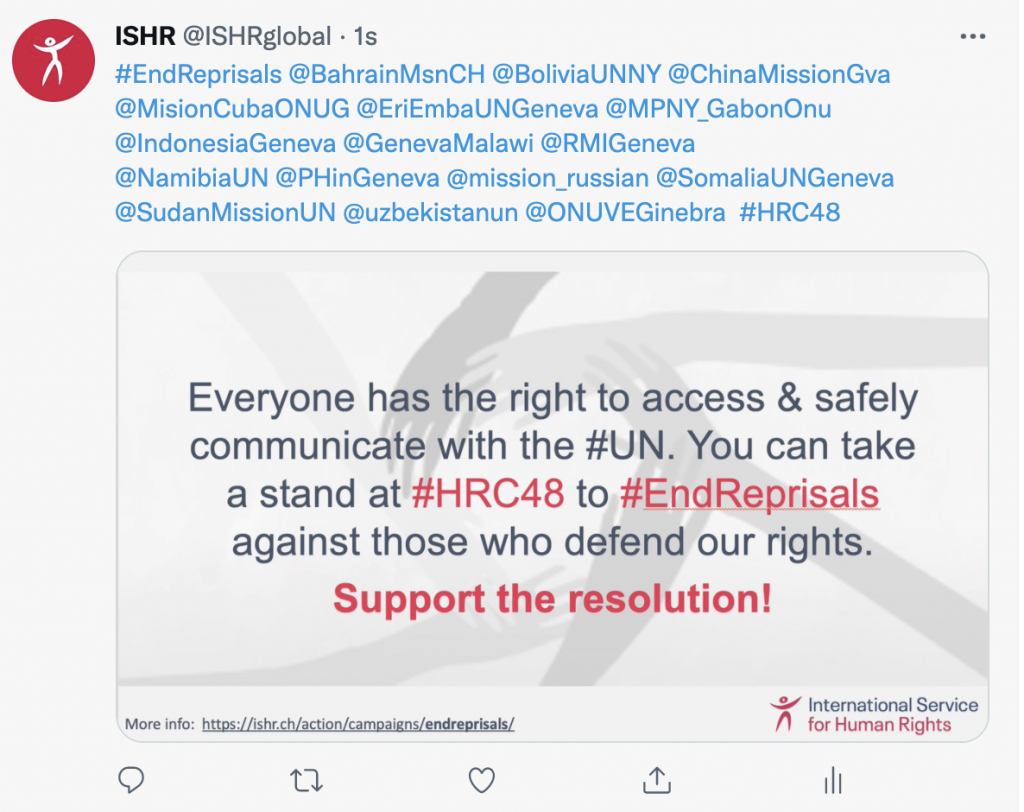
The International Service for Human Rights (ISHR) which is following this topic most keenly says: People who defend human rights must be able to access and communicate with the UN freely & safely. It started a campaign to Call on States at the UN to #EndReprisals!

Help us to #EndReprisals at the UN

Human rights defenders work to make a fairer, more sustainable and just world by promoting and protecting human rights. In considering human rights situations around the world, the UN system is profoundly dependent on the information and testimonies provided by human rights defenders who document situations, abuses and violations. They are essential voices from our communities that need to be part of the conversations at the United Nations.

This important role is a key reason why some States seek to systematically prevent defenders from engaging with UN bodies and mechanisms, and to reprimand and punish those who do engage. They do so through repressive tactics that range from administrative hurdles and travel restrictions to intimidation, imprisonment and killings. 

This is not right. Everyone has the right to access and safely communicate with the UN.

Human rights defenders must be able to share crucial information and perspectives with the UN, safely and unhindered.

Do you agree ? Then send a tweet to States at the UN and ask them to support a resolution to #EndReprisals.

Click to tweet!

We want human rights defenders to have a ‘seat at the UN table’ and be able to effectively and safely engage with UN human rights mechanisms and bodies. We want States and non-State actors to refrain from intimidating or carrying out reprisals against defenders when they engage or seek to engage with the UN. When intimidation and reprisals do occur, we want  the UN to effectively address these cases, support the victims and push for accountability and redress. 

How do we achieve this? 

The countries on the Human Rights Council have the opportunity to take a clear stand on reprisals and intimidation against those who engage with the UN.  During the 48th session of the Human Rights Council, between the 17 September and 4 October 2021, States will negotiate a resolution that aims to strengthen the response by the UN and States to intimidation and reprisals. The resolution invites the UN Secretary General to submit his annual report on reprisals and intimidation to the UN General Assembly.  Until now, the report has only been presented to the Human Rights Council. The General Assembly is the main policy-making forum of the UN and all 193 States are represented there. Reprisals and intimidation related to cooperating with the UN is a serious system-wide issue and having it discussed at the General Assembly amongst all Member States is crucial to effectively preventing and addressing it. We are calling on States, through meetings, letters and on social media to support the resolution and resist any efforts to undermine and weaken it.

States must take a clear and public position at the UN against intimidation and reprisals and hold their peers to account. Every year the UN Secretary-General publishes a report on incidents of reprisals and intimidation. That report will be discussed at the Human Rights Council on 29 September 2021. We therefore also call on governments States to take a stand during the discussion, publicly condemn reprisals and intimidation against those who engage with the UN, and raise specific cases of victims. 

What you can do? 

Together we can make sure a strong resolution on reprisals is adopted and push for everyone at the UN to take this issue seriously. This is a crucial step to #EndReprisals. Click on the image below before 4 October to send a tweet to States on the Human Rights Council who have not been supportive of this issue in the past and call on them to support the resolution. 

Click to tweet!

If you prefer to write or engage directly with States representatives, here you can find an advocacy kit with a draft email, as well as their addresses and twitter contacts

https://reliefweb.int/report/world/high-commissioner-human-rights-council-has-given-disturbing-diagnosis-human-rights

https://news.un.org/en/story/2021/09/1101722

https://ishr.ch/action/campaigns/endreprisals/

Documentary film Arica gets attention from United Nations Human Rights Council

September 15, 2021

On 2 June 2021 Davide Abbatescianni wrote in Cineuropa about Lars Edman and William Johansson’s film which documents the devastation caused by a Swedish mining giant in a Chilean desert town

Over 30 years after Swedish mining and smelting giant Boliden shipped almost 20,000 tons of toxic mining waste to the Chilean desert city of Arica, a group of Special Rapporteurs from the United Nations Human Rights Council (UNHRC) led by Dr Marcos Orellana have made allegations of ongoing human rights abuses, as exposed in Lars Edman and William Johansson’s documentary Arica [+]. The feature was presented at last year’s IDFA and is set to continue its festival run in Spain, the Czech Republic, Italy and Belgium.

Exposure to the waste led to numerous cases of cancer, birth defects and serious diseases. Currently, the Chilean government estimates that around 12,000 people were exposed to the toxins. The UNHRC has advised the Swedish government that “urgent measures should be taken to repatriate the hazardous wastes to Sweden and/or ensure the disposal of the hazardous wastes in an environmentally sound manner”.

Particular criticism is aimed at Boliden Mining, which the body accuses of “intimidating and threatening behaviour” towards human rights defenders – namely, the legal team representing the victims in Arica. They allege that such an approach, adopted by Boliden following the decision by the Swedish court of appeal not to hear the Arica case on the grounds that Boliden’s actions took place too long ago to be tried under Swedish law, was “a deliberate attempt to produce a wider, chilling effect of silencing and intimidating other lawyers and human rights defenders”. The United Nations’ action has been welcomed by victims and campaigners, including community campaigner Rodrigo Pino Vargas, who said: “For over 30 years, we have seen our families and our neighbours suffer the consequences of this Swedish waste. We have buried our children and been forced from our homes. We will not stop until our voices are heard and the damage is repaired. Even when we win in court, we find nothing but broken promises. For the first time, the intervention of the United Nations gives us hope that our human rights will be upheld. The people of Arica demand that immediate action be taken to meet our health needs and that the toxic waste be returned to where it belongs – in Sweden.”

The acclaimed documentary, shot over the course of 15 years, sheds light on a shameful case of modern colonialism. After losing their case in 2018 with a sentence that ultimately sided with Boliden, rejecting the Chilean judges’ verdict on the firm’s responsibilities and decriminalising their misdeeds, another appeal was lost in 2019. As of today, the Swedish Supreme Court has not granted Arica’s victims the right to appeal, and Boliden is threatening to sue their lawyers to make them pay the legal costs, a sum close to $5 million.

Producer Andreas Rocksén commented: “When Lars and William began filming 15 years ago, their intention was to ensure that the voices of the people in Arica, affected by the waste that came from under the soil where they grew up, would be heard. What has happened since has surpassed any expectations: their story is being heard around the world, and yet those same people in Arica are still fighting for justice. We will continue to amplify their voices as best we can and applaud all the different initiatives aimed at seeing their human rights upheld.”

Meanwhile, political pressure in Sweden is mounting as the country prepares to host the Stockholm+50 event, marking 50 years since the first-ever UN Conference on the Human Environment.

Arica was produced by Swedish independent studio Laika Film & Television, and was co-produced by Belgium’s Clin d’Oeil Films, Chile’s Aricadoc, Norway’s Relation04 Media and the UK’s Radio Film Ltd. Its world sales are entrusted to Swiss outfit Lightdox.

https://www.cineuropa.org/en/newsdetail/405513

Human Rights Defenders issues in the 48th session of he UN Human Rights Council

September 13, 2021

The International Service for Human Rights (HRC) published again it – as usual – very useful Guide to the next (48th) Session of the UN Human Rights Council, from 13 September to 8 October 2021. Here is an overview of some of the key issues on the agenda directly affecting human rights defenders. Stay up-to-date: Follow @ISHRglobal and #HRC48 on Twitter, and look out for their Human Rights Council Monitor and during the session. [for last year’s, see: https://humanrightsdefenders.blog/2021/06/22/key-issues-affecting-hrds-in-47th-session-of-un-human-rights-council-june-2021/

Thematic areas of interest

Reprisals

On 29 September, the Assistant Secretary General Ilze Brands Kehris for Human Rights will present the Secretary General’s annual report on Cooperation with the United Nations, its representatives and mechanisms in the field of human rights (also known as ‘the Reprisals Report’) to the Council in her capacity as UN senior official on reprisals. The presentation of the report will be followed by a dedicated interactive dialogue, as mandated by the September 2017 resolution on reprisals. ISHR remains deeply concerned about reprisals against civil society actors who engage or seek to engage with UN bodies mechanisms. We continue to call for all States and the Council to do more to address the situation. The dedicated dialogue provides a key opportunity for States to raise concerns about specific cases of reprisals, and demand that Governments provide an update on any investigation or action taken toward accountability. An increasing number of States have raised concerns in recent sessions about individual cases of reprisals, including in Egypt, Nicaragua, Cuba, Saudi Arabia, Malaysia, Bahrain, Yemen, Burundi, China and Venezuela, Egypt, Burundi, Lao and China,  

During the 48th session, Ghana, Fiji, Hungary, Ireland and Uruguay will present a draft resolution on cooperation with the UN. The draft resolution aims to strengthen the responses by the UN and States to put an end to acts of intimidation and reprisals. ISHR urges all delegations to support the adoption of the draft resolution and resist any efforts to undermine and weaken it.

ISHR recently launched a study analysing 709 reprisals cases and situations documented by the UN Secretary-General between 2010 and 2020. The study examines trends and patterns in the kinds of cases documented by the UNSG, how these cases have been followed up on over time, and whether reprisal victims consider the UN’s response effective. Among other things, the study found that nearly half the countries serving on the Council have been cited for perpetrating reprisals. The study found that public advocacy and statements by high level actors condemning reprisals can be one of the most effective tools to prevent and promote accountability for reprisals, particularly when public pressure is sustained over time. The study also found that, overall, the HRC Presidency appears to have been conspicuously inactive on intimidation and reprisals, despite the overall growing numbers of cases that are reported by the UNSG – including in relation to retaliation against individuals or groups in connection with their engagement with the HRC – and despite the Presidency’s legal obligation to address such violations. The study found that the HRC Presidency took publicly reported action in only 6 percent of cases or situations where individuals or organisations had engaged with the HRC. Not only is this a particularly poor record in its own right, it also compares badly with other UN actors. [see also: https://humanrightsdefenders.blog/2021/05/06/un-action-on-reprisals-towards-greater-impact/]

In line with previous calls, ISHR expects the President of the Human Rights Council to publicly identify and denounce specific instances of reprisals by issuing formal statements, conducting press-briefings, corresponding directly with the State concerned, publicly releasing such correspondence with States involved, and insisting on undertakings from the State concerned to investigate, hold the perpetrators accountable and report back to the Council on action taken.

Environmental Justice

It’s high time the Council responds at this session to the repeated calls by diverse States and civil society to recognize the right of all to a safe, clean, healthy and sustainable environment and establish a new mandate for a Special Rapporteur on human rights and climate change. ISHR joins a broad civil society coalition in calling on all States to seize this historic opportunity to support the core-group of the resolution on human rights and environment (Costa Rica, Maldives, Morocco, Slovenia, Switzerland) as they work towards UN recognition of the right to environment so that everyone in the world, wherever they live, and without discrimination, can live in a safe, clean and sustainable environment. Furthermore, ISHR also joins a broad civil society coalition in calling on States to establish a new Special Rapporteur on climate change at this session. This new mandate is essential to strengthen a human rights-based approach to climate change, engage in country visits, undertake normative work and capacity-building, and further address the human rights impacts of climate responses, in order to support the most vulnerable. [see also the recent Global witness report: https://humanrightsdefenders.blog/2021/09/13/global-witness-2020-the-worst-year-on-record-for-environmental-human-rights-defenders/]

Other thematic reports

At this 48th session, the Council will discuss a range of civil, political, economic, social and cultural rights and issues through dedicated debates, including interactive dialogues with the:

  1. Special Rapporteur on the human rights to safe drinking water and sanitation
  2. Special Rapporteur on the negative impact of unilateral coercive measures on the enjoyment of human rights 
  3. Special Rapporteur on truth, justice, reparation and guarantees of non-recurrence
  4. Special Rapporteur on contemporary forms of slavery, including its causes and consequences 
  5. Working Group on Arbitrary Detention
  6. Working Group on Enforced or Involuntary Disappearances
  7. Special Rapporteur on the implications for human rights of the environmentally sound management and disposal of hazardous substances and wastes 
  8. The Special Rapporteur on contemporary forms of racism, racial discrimination, xenophobia and related intolerance

In addition, the Council will hold dedicated debates on the rights of specific groups including with the:

  1. High Commissioner on the current state of play of the mainstreaming of the human rights of women and girls in conflict and post-conflict situations
  2. Special Rapporteur  on the rights of indigenous peoples and the Expert Mechanism on the Rights of Indigenous Peoples
  3. Working Group of Experts on People of African Descent 

Country-specific developments

Afghanistan

ISHR has joined 50 civil society organisations to urge UN Member States to ensure the adoption of a robust resolution to establish a Fact-Finding Mission or similar independent investigative mechanism on Afghanistan as a matter of priority at the upcoming 48th regular session of the HRC.  We expressed profound regret at the failure of the recent HRC special session on Afghanistan to deliver a credible response to the escalating human rights crisis gripping the country, falling short of the consistent calls of the Afghanistan Independent Human Rights Commission (AIHRC), the UN High Commissioner for Human Rights, Special Procedures and civil society organisations, and does not live up to the mandate of the HRC to effectively address situations of violations of human rights, including gross and systematic violations. The Council must establish a Fact-Finding Mission, or similar independent investigative mechanism, with a gender-responsive and multi-year mandate and resources to monitor and regularly report on, and to collect evidence of, human rights violations and abuses committed across the country by all parties. 

China 

It has now been three years since High Commissioner Bachelet announced concerns about the treatment of Uyghurs and other Turkic Muslims – including mass arbitrary detention, surveillance and discrimination – in the Xinjiang Uyghur Autonomous Region of China. During the intervening three years, further substantial and incontrovertible evidence has been presented indicating crimes against humanity in the region. ISHR joins a 300+ strong coalition of global civil society that continues to call for accountability for these and other violations, including in Tibet and Hong Kong, by the Chinese authorities. At this session, ISHR highlights that arbitrary detention is – as has been noted by the Special Procedures – a systemic issue in China. Chinese authorities are long overdue in taking any meaningful action in response to the experts’ concerns, such as ceasing the abuse of ‘residential surveillance in a designated location’, or RSDL. ISHR reiterates its calls from the 46th and 47th sessions for a clearly articulated plan from OHCHR to ensure public monitoring and reporting of the situation, in line with their mandate and with full engagement of civil society, regardless of the outcome of long-stalled negotiations for High Commissioner access to the country. This would be a critical first step for future, more concrete actions that would respond to demands of victims, their families and communities, and others defending human rights in the People’s Republic of China. 

Burundi

We request the Council to continue its scrutiny and pursue its work towards justice and accountability in Burundi. The Council should adopt a resolution that acknowledges that despite some improvements over the past year, the human rights situation in Burundi has not changed in a substantial or sustainable way, as all the structural issues identified by the Commission of Inquiry on Burundi (CoI) and other human rights actors have identified since 2015 remain in place. The Council should adopt an approach that focuses on continued independent documentation on the situation of human rights in Burundi which should be carried out by the CoI, or a similarly independent mechanism or team of experts, who are solely focused on Burundi. The Council’s approach should also ensure that there is follow up to the work and recommendations of the CoI, in particular, on justice and accountability. See joint letter released ahead of the UN Human Rights Council’s 48th session.

Egypt

Despite Egypt’s assurances during the UPR Working Group in 2019 that reprisals are unacceptable, since 2017, Egypt has been consistently cited in the UN Secretary General’s annual reprisals reports. The Assistant Secretary-General raised the patterns of intimidation and reprisal in the country in the 2020 reprisals report, as well as UN Special Procedures documenting violations including detention, torture and ill-treatment of defenders. In her latest communication to the Government, the Special Rapporteur on human rights defenders highlighted the arbitrary detention of 12 defenders, including three targeted for their engagement with the UN: Mohamed Al-Baqer, human rights lawyer and Director of the Adalah Centre for Rights and Freedoms, arbitrarily detained since 29 September 2019; Ibrahim Metwally, coordinator for the Association of the Families of the Disappeared in Egypt, arbitrarily detained since 10 September 2017; and Ramy Kamel, Copitic rights activist, arbitrarily detained since 23 November 2019. Both States and the HRC Presidency should publicly follow up on these cases. Furthermore, in light of Egypt’s failure to address concerns expressed by States, the High Commissioner and Special Procedures, ISHR reiterates our joint call with over 100 NGOs on the Council to establish a monitoring and reporting mechanism on Egypt and will continue to do so until there is meaningful and sustained improvement in the country’s human rights situation. 

Nicaragua

The human rights crisis in Nicaragua has steadily deteriorated since May 2021. Given the reported lack of implementation of resolution 46/2 and the absence of meaningful engagement with the UN and regional mechanisms by the Government, stepping up collective pressure has become vital. We warmly welcome the joint statement delivered by Costa Rica on behalf of a cross-regional group of 59 States on 21 June 2021. This is a positive first step in escalating multilateral pressure. Further collective action should build on this initiative and seek to demonstrate global, cross-regional concern for the human rights situation in the country. In her oral update, the High Commissioner stressed ‘as set out in [the Council’s] latest resolution, I call on this Council to urgently consider all measures within its power to strengthen the promotion and protection of human rights in Nicaragua. This includes accountability for the serious violations committed since April 2018.’ We call on all States to support a joint statement at the 48th session of the Human Rights Council, urging the Government to implement priority recommendations with a view to revert course on the ongoing human rights crisis, and indicating clear intention to escalate action should the Nicaraguan Government not take meaningful action.

Saudi Arabia

While many of the WHRDs mentioned in previous joint statements at the Council have been released from detention, severe restrictions have been imposed including travel bans, or making public statements of any kind. Most of the defenders have no social media presence. Furthermore, COVID-19 restrictions and the G20 Summit in November 2020 coincided with a slow down in prosecutions of those expressing peaceful opinions and a decline in the use of the death penalty. However, throughout 2021 the pace of violations has resumed. This has included fresh new waves of arrests of bloggers and ordinary citizens, often followed by periods of enforced disappearance, lengthy prison terms issued against human rights defenders and prisoners of conscience, and abuse in prison, including deliberate medical neglect. In addition, despite announcing the halt of the death penalty against minors, the Saudi government recently executed someone who may have been 17 at the time of the alleged offense, and the number of executions in 2021 is already more than double the total figure for 2020. Saudi Arabia has refused to address the repeated calls by UN Special Procedures and over 40 States at the Council in March 2019, September 2019 and September 2020, further demonstrating its lack of political will to genuinely improve the human rights situation and to engage constructively with the Council. ISHR reiterates its call on the Council to establish a monitoring and reporting mechanism on the human rights situation in Saudi Arabia.

Venezuela 

With the environment becoming all the more hostile for civil society organisations in Venezuela, the Council will once again focus attention on the human rights situation in the country at the upcoming session. On 24 September, the Independent International Fact-Finding Mission will provide its second report to the Council building on its findings of likely crimes against humanity committed in the country. ISHR looks forward to making an oral statement during the dialogue with the Mission. In addition, the High Commissioner will provide an oral update on the situation in the country and the work of her office in-country, on 13 September. The Special Rapporteur on Unilateral Coercive Measures will present her report following her in-person visit to the country in February 2021. Finally, it’s expected that the report of the Secretary General on reprisals will include cases related to Venezuela. During all these opportunities to engage, States should remind Venezuela of the need to implement UN recommendations; engage with UN human rights mechanisms, including the Mission; and organise visits for Special Rapporteurs already identified for prioritisation by OHCHR. 

Yemen

ISHR joined over 60 civil society organisations to use the upcoming session of the HRC to establish an international criminally-focused investigation body for Yemen, and simultaneously ensure the continuity of the Group of Eminent Experts on Yemen (GEE) through an ongoing or multi-year mandate. In their last report, “A Pandemic of Impunity in a Tortured Land”, the UN Group of Eminent International and Regional Experts on Yemen (GEE) underscored Yemen’s “acute accountability gap”, concluding that the international community “can and should” do more to “help bridge” this gap in Yemen. They recommended that the international community take measures to support criminal accountability for those responsible for serious violations of international humanitarian law and egregious human rights abuses. In particular, they supported the “establishment of a criminally focused investigation body” (similar to the mechanisms established for Syria and Myanmar) and “stressed the need to realize victims’ rights to an effective remedy (including reparations)”.  Such a mechanism would facilitate and expedite fair and independent criminal proceedings, in accordance with international law standards, and lay the groundwork for effective redress, including reparations for victims. 

Other country situations:

The High Commissioner will provide an oral update to the Council on 13 September 2021. The Council will consider updates, reports and is expected to consider resolutions addressing a range of country situations, in some instances involving the renewal of the relevant expert mandates. These include:

  • Interactive Dialogue on the High Commissioner’s written update on Myanmar, including of Rohingya Muslims and other minorities, an interactive dialogue on the report of on the Independent Investigative Mechanism, and an Interactive Dialogue with the Special Rapporteur 
  • Oral update by the High Commissioner and enhanced interactive dialogue on the Tigray region of Ethiopia
  • Enhanced Interactive Dialogue with the Commission on Human Rights in South Sudan
  • Interactive Dialogue with the Commission of Inquiry on Syria and oral update by OHCHR on the extent of civilian casualties
  • Oral update by OHCHR and interactive dialogue on Belarus
  • Oral update by the High Commissioner on the progress made in the implementation of the Council’s 30th Special Session resolution on the Occupied Palestinian Territory, including East Jerusalem, and in Israel, and presentation of the High Commissiner’s report on allocation of water resources in Occupied Palestinian Territory, including East Jerusalem
  • Interactive Dialogue with the High Commissioner on Ukraine 
  • Enhanced Interactive Dialogue with the High Commissioner on the Democratic Republic of the Congo and on the final report of the team of international experts on the situation in Kasai
  • Enhanced Interactive Dialogue on the oral update of the High Commissioner on South Sudan
  • Interactive Dialogue with the Special Rapporteur on Cambodia and presentation of the Secretary-General’s report 
  • Enhanced Interactive Dialogue on the report of the High Commissioner on Sudan
  • Interactive Dialogue with the Independent Expert on Somalia
  • Interactive Dialogue with the Independent Expert on the Central African Republic 
  • Interactive Dialogue with the Fact-finding mission on Libya
  • Presentation of the High Commissioner’s report on cooperation with Georgia 
  • Oral update by the High Commissioner on the Philippines

#HRC48 | Council programme, appointments and resolutions

During the organisational meeting for the 48th session held on 30 August the President of the Human Rights Council presented the programme of work. It includes six panel discussions. States also announced at least 20 proposed resolutions. Read here the 87 reports presented this session. 

Appointment of mandate holders

  1. The Special Rapporteur in the field of cultural rights
  2. a member of the Working Group on the issue of human rights and transnational corporations and other business enterprises from Latin American and Caribbean States; 
  3. a member of the Working Group of Experts on People of African Descent, also from Latin American and Caribbean States (an unforeseen vacancy that has arisen due to the resignation of a current member).

Resolutions to be presented to the Council’s 48th session

At the organisational meeting on 30 August the following resolutions inter alia were announced (States or groups leading the resolution in brackets):

  1. Human rights situation in Burundi (EU)
  2. Human rights and environment (Costa Rica, Maldives, Morocco, Slovenia, Switzerland) 
  3. Cooperation with the United Nations, its representatives and mechanisms in the field of human rights  (Fiji, Ghana, Hungary, Ireland, Uruguay) 
  4. Human rights situation in Yemen (Belgium, Canada, Ireland, Luxembourg, Netherlands) 
  5. Elimination of child, early and forced marriage (Argentina, Canada  Italy, Honduras, Montenegro, Poland, Sierra Leone, Switzerland, UK, Uruguay, Zambia, Netherlands) 
  6. Technical assistance and capacity-building in the field of human rights in the Democratic Republic of the Congo (African Group) 
  7. Technical assistance and capacity-building to improve human rights in Libya (African Group)
  8. From rhetoric to reality: a global call for concrete action against racism, racial discrimination, xenophobia and related intolerance (African Group)
  9. Human rights and indigenous peoples (Mexico, Guatemala)
  10. Human rights situation in Syria (France, Germany, Italy, Jordan, Kuwait, Netherlands, Qatar, Turkey, UK, USA)
  11. Advisory services and technical assistance for Cambodia – mandate renewal (Japan) 
  12. Enhancement of technical cooperation and capacity-building in the field of human rights (Thailand, Brazil, Honduras, Indonesia, Morocco, Norway, Qatar, Singapore, Turkey)
  13. Technical assistance and capacity building to Yemen (Arab Group)
  14. Equal participation in political and public affairs (Czech Republic, Botswana, indonesia, Peru, Netherlands)
  15. Right of privacy in the digital age (Germany, Brazil, Liechtenstein, Austria, Mexico) 
  16. The question of the death penalty (Belgium, Benin, Costa Rica, France, Mexico, Mongolia, Moldova, Switzerland) 

Adoption of Universal Periodic Review (UPR) reports

During this session, the Council will adopt the UPR working group reports on Myanmar, Namibia, the Niger, Mozambique, Estonia, Belgium, Paraguay, Denmark, Somalia, Palau, Solomon Islands, Seychelles, Latvia, Singapore and Sierra Leone.

Panel discussions

During each Council session, panel discussions are held to provide member States and NGOs with opportunities to hear from subject-matter experts and raise questions. Six panel discussions are scheduled for this upcoming session:

  1. Biennial panel discussion on the issue of unilateral coercive measures and human rights
  2. Annual discussion on the integration of a gender perspective throughout the work of the Human Rights Council and that of its mechanisms
  3. Annual half-day panel discussion on the rights of indigenous peoples on the theme “Situation of human rights of indigenous peoples facing the COVID-19 pandemic, with a special focus on the right to participation” (accessible to persons with disabilities)
  4. Half-day panel discussion on deepening inequalities exacerbated by the COVID-19 pandemic and their implications for the realization of human rights (accessible to persons with disabilities)
  5. High-level panel discussion on the theme “The tenth anniversary of the United Nations Declaration on Human Rights Education and Training: good practices, challenges and the way forward” (accessible to persons with disabilities
  6. Panel discussion on the promotion and protection of human rights in the context of peaceful protests, with a particular focus on achievements and contemporary challenges (accessible to persons with disabilities)

Read here ISHR’s recommendations on the the key issues that are or should be on the agenda of the UN Human Rights Council in 2021.

https://ishr.ch/

Post 9/11: where did ‘human rights’ go?

September 8, 2021

LUNCH BRIEFING 9/11 Twenty Years On
Tuesday 28 September, 12:30-13:30
Auditorium A1A, Maison de la paix, Geneva, and online

Two full decades have elapsed since the 11 September 2001 terrorist attacks on New York City and Washington, D.C. In the aftermath of these events, the world has entered a period characterised by a number of dynamics, which have persisted and shaped significantly the configuration of the global order. What is the nature of these transformations, notably the militarisation of international relations, the securitisation of social affairs, the rise of cultural and religious tensions and the crisis of democracy? Has the post-COVID-19 moment in turn ushered the end of the post-11 September world? Ultimately, what historical meaning can we ascribe to legacy of ‘9/11’?

Mohammad-Mahmoud Ould Mohamedou is Professor of International History and Politics, and Chair of the Department of International History and Politics at the Graduate Institute. Previously the Associate Director of the Programme on Humanitarian Policy and Conflict Research at Harvard University, he is the author of a trilogy on the post-11 September era and recipient of the 2021 International Studies Association (ISA) Global South Distinguished Scholar Award.

The Lunch Briefing will be moderated by Julie Billaud, Associate Professor of Anthropology and Sociology.

On cue Imogen Foulkes wrote on 7 September 2021 a post for Swissinfo “When the world became a ‘human rights free zone’ September 11, 2001″.

No one will forget the shock of that day. It’s hard even now, two decades later, to describe how it felt to watch something so unimaginable, so horrific. When I returned to my newsroom that evening, a colleague said to me “well, Imogen, that’s it, our world has changed forever”. I was still so focused on the immediate event that I didn’t quite understand him, and it took me a while to realise how right he was.

Our world did change forever that day; from smaller inconveniences around how we travel, to fears over how safe we are, to prejudices and intolerance towards groups perceived as a threat, to sweeping changes in security laws.

In the latest episode of our Inside Geneva podcast, we look at those changes, and the consequences, in particular for human rights. Gerald Staberock, secretary general of the World Organisation Against Torture, tells me: “I want my government to fight terrorism. I want those who did 9/11 or whatever terrorist attacks to be brought to justice.” But he also regrets the fact that the 9/11 attacks, which he describes as “a denial of the very values of human rights”, led to – in his view – “another attack on human rights, through counterterrorism”. 

Looking back now, with all the knowledge we have of extraordinary rendition, Guantanamo Bay, waterboarding and so on, it is quite hard to remember that in the first months and even years after 9/11, none of us, not even human rights defenders, were quite aware of how the “war on terror” was being fought.

Once that war was being conducted in earnest in Afghanistan, I remember getting a hint, off the record, from the International Committee of the Red Cross (ICRC), who told me that they were aware of detainees being transferred from Bagram airbase, but had no idea where they were being taken. It is the ICRC’s role, under the Geneva Conventions, to visit those detained during conflict, a role which was, for a while at least, impossible to fulfil.

Fionnuala ní Aoláin, currently UN special rapporteur on human rights and counterterrorism, also joins us on the podcast. Her position, she points out, was not created until five years after 9/11, and, she says “in that absence lies the story of a human rights free zone”, during which “the United States moved to engage in practices of torture, of rendition, or the establishment of a black hole where people were held arbitrarily”. 

Governments have argued that extraordinary measures are necessary to counter extraordinary threats. Certainly no political leader wants a 9/11 type attack on his or her watch. And, many opinion polls show, the public are prepared to compromise some fundamental human rights standards in the name of defeating terrorism.

A 2016 study by the ICRC found that, among millennials in industrialised countries, many agreed that torture was justified if it led to information that could save lives. Strikingly, among young people living in conflict zones, or under repressive regimes, a large majority remained opposed to torture.

This shift in opinion is a concern for ní Aoláin, who points out that some governments have taken to justifying increasingly repressive laws in the name of the war on terror. “Right now, in…Saudi Arabia, Turkey, Egypt, we see governments saying that human rights defenders are terrorists, that eco warriors are terrorists, that women’s rights defenders are terrorists.”

Interestingly, ní Aoláin comes from Belfast. She grew up with terror attacks, and counterterrorism measures. She believes that “actually it is counterproductive to security to violate human rights”, a point of view Staberock agrees with. He remembers research done in Northern Ireland in which senior security officers admitted that preventive detention had been a disaster, not just from a human rights perspective, but from a security perspective because “it made the cause much broader, it made the problem much bigger…by victimising people, you weaken the cause”.

Both ní Aoláin and Staberock believe the term “terrorist” is too widely used, and that it can become a convenient slogan for governments to introduce all sorts of legislation which would otherwise not easily be justifiable.

Staberock argues that “the best answer to terrorism is to demask it as killings. Not allow it to hide behind ideology. Demask it in an ordinary criminal process, bring people to justice, punish them, stick to your rules”.

The first shots in the war on terror were fired, 20 years ago, in Afghanistan. Today, in that same country, we are watching a humanitarian and foreign policy disaster unfold. As western diplomats made a panicked dash for the airport, they left millions of Afghans to live, again, under the Taliban, the very “terrorist” group the US and its allies entered Afghanistan to defeat.

So have we learned anything from the last 20 years? Do listen to Inside Geneva to find out more, but I’ll leave you with these final thoughts from ní Aoláin.

“We appear not to have learnt any lessons,” she says. “What we appear to be doing is betraying civil society, leaving women, human rights defenders and girls…when we conveniently decide that we’ve had enough and it’s time for us to leave.”

But, as a human rights defender herself, she is not deterred: “If you fight for human rights you’re always pushing big rocks up mountains, and you watch them fall down, and you push the same rocks up the mountain again. I think those of who work on human rights in the context of counterterrorism are looking at an enormous big rock.”

http://view.com.graduateinstitute.ch/?qs=03593ae72d465f424c62524fcb3b0674a1400adcb8708ad99947e5c2a73185ef84f12eb7b35f47251d236364d73d73396f7f3d03e7c28892b24b62800c3fbf2a0ccfc7e543a7d5d02fcd6e2c5427714a082f2ab63c8151e4

https://www.swissinfo.ch/eng/response-to-9-11—counterterrorism-attack-on-human-rights/46906238

https://www.theguardian.com/commentisfree/2021/sep/09/blacklisting-terrorist-groups-911-wars

UN Experts urge EU to take the lead on protecting human rights defenders in context of business

September 7, 2021

The European Union has a chance to set an example for the entire world by protecting people who risk their lives standing up for human rights in the context of business activities, said Mary Lawlor, UN Special Rapporteur on the situation of human rights defenders, joined by the UN Working Group on the issue of human rights and transnational corporations and other business enterprises known as the Working Group on Business and Human Rights), Mr. Surya Deva (Chairperson), Ms. Elzbieta Karska (Vice-Chairperson), Mr. Githu Muigai, Mr. Dante Pesce, and Ms. Anita Ramasastry; and Mr. Fernand de Varennes, Special Rapporteur on minority issues.

The European Union legislative initiative on mandatory human rights and environmental due diligence “must include safeguards for human rights defenders,” they stated on 6 September 2021.

The European Union, as the world’s largest single market, has a golden opportunity to advance the safety and security of human rights defenders who are working around the globe to build more just societies, often at great personal risk,” Lawlor said. “A robust, binding regime in the EU covering companies of all sizes would provide a powerful model for other parts of the world.”

Human rights defenders often risk their lives confronting violations along supply chains, Lawlor said. “Parent companies must carry out human rights and environmental due diligence throughout their supply chains to ensure human rights defenders are not subjected to reprisals from their subsidiaries, sub-contractors and suppliers,” she said. “The EU must ensure that where such retaliation happens, these companies can be held accountable.”

In the 10 years since the Human Rights Council adopted the UN Guiding Principles on Business and Human Rights, business compliance has remained extremely low. In the same period, increasing numbers of human rights defenders have been killed for their work. The UN Working Group on Business and Human Rights has recently developed guidance setting forth expectations that businesses address risks to defenders and that States address this as part of their own mandatory human rights due diligence regulations.

People who stand up for human rights related to environmental protection, community land rights, indigenous peoples’ rights, poverty, minorities and business accountability – often intertwining issues – are most at risk of being attacked or killed.

Where human rights defenders come under attack in the context of business activities it is a clear sign of other underlying human rights issues.” Lawlor said. Potential risks for human rights defenders should be seen as a key component of companies’ due diligence duty to identify and assess human rights risks connected to their projects, and must be specifically included in the expected EU proposal.

Business enterprises must also be obliged to consult with defenders under the EU initiative, and the door should be kept open for defenders to bring issues to companies’ attention at every stage within business projects,” Lawlor said. “

“Now is the time for the EU to give new life to its founding principles by delivering a strong law that could help reduce the number of lives lost in defence of human rights,” Lawlor said.

https://www.miragenews.com/golden-opportunity-for-eu-to-take-global-lead-626609/

UAE’s new human rights institute: sounds like a joke

September 3, 2021

On 2 September 2021 Deutsche Welle reports on “UAE’s new human rights institute: Real change or ‘image washing’?” State media has trumpeted the creation of a new human rights body set to work in line with global principles. But the UAE’s critics say the move is audacious and a joke.

THe UAE has been heavily criticized for the way it treats international laborers and human rights defenders [see e.g.: https://humanrightsdefenders.blog/2021/06/15/mary-lawlor-calls-again-on-uae-to-release-prominent-human-rights-defenders/ and https://humanrightsdefenders.blog/2020/09/02/vloggers-selling-their-souls-to-boost-image-of-arab-regimes/]

The United Arab Emirates announced earlier this week that it would set up an independent national human rights organization. The new institution will open an office in Abu Dhabi and, according to the UAE’s state media, “aims to promote and protect human rights and freedoms” in accordance with the local and international laws and guidelines.

The new organization — official name: UAE National Human Rights Institution — already has a hotline that anyone can call if they wish to report human rights abuses.

DW tried calling the number over two days this week. Even though local media said the hotline was active, several attempts failed. Either the calls were not answered or the connection was dropped. DW has reached out to the UAE Embassy in Berlin for further information on the new institution, but has yet to receive a response.

This is just another tactic, part of the UAE’s decade-long whitewashing campaign to make themselves look like a tolerant, respectful and open country,” said Hiba Zayadin, a researcher with Human Rights Watch, who focuses on abuses in the Gulf states.

But the situation on the ground is very different,” she told DW. “In fact, there is absolutely no room for dissent in the UAE. There have been no independent civil society groups there since 2012 and so many people have been jailed. There is a lot of fear of retaliation for speaking out and a high level of censorship, even amongst UAE-based international journalists and academics.” 

Other human rights organizations and media watchdogs have come to similar conclusions.

Reporters Without Borders has highlighted the lack of independent media and the UAE’s draconian cybercrime law from 2012. It ranks the country 131st in the world for press freedom out of 180.

UAE activist Ahmed Mansoor (was arrested in 2017 [see: https://www.trueheroesfilms.org/thedigest/laureates/074ACCD4-A327-4A21-B056-440C4C378A1A]

Amnesty International maintains a long list of “prisoners of conscience” in the UAE, “including well-known human rights defender Ahmed Mansoor,” who is serving a 10-year prison sentence for posts on social media about human rights violations in the UAE.

In June, the UN’s special rapporteur on the situation of human rights defenders called on the UAE to release a number of people who had been imprisoned since 2013 for speaking out against the government.

“They should have never been detained in the first place for legitimately exercising the freedoms that all people are entitled to,” said Mary Lawlor.

Social media users in the Middle East were also critical about the announcement of the human rights organization. “The UAE and human rights don’t really go together,” one Twitter user wrote.

This is the joke of the season,” UK-based researcher Fahad al-Ghofaili, quipped on the same website.

The UAE has said the new body will be set up in line with the so-called Paris Principles.

Those standards, officially adopted by the United Nations in 1993, essentially outline how a national human rights institution’s leadership should be selected, how it will be funded and staffed and how it can cooperate with both civil society organizations and the government, but also remain independent.

Alexis Thiry, a legal adviser at Geneva-based legal advocacy organization MENA Rights Group, told DW it was too early to know if the new UAE organization would be sticking to the Paris Principles, as promised. This was because the rights group had not yet been able to read a publicly available version of the law, UAE Federal Law number 12 of 2021, that enabled the creation of the institution, said Thiry.

It is difficult to have an opinion about the forthcoming independence of the [institution] and its compliance with the Paris Principles,” he explained. “At this stage, it is also too early to comment on the performance of the institution since its members have yet to be appointed, to our knowledge.”

Despite its modern outward appearance, the UAE is regularly criticized about its human rights record

When a new institution like this is formed, it often applies for accreditation with the Global Alliance of National Human Rights Institutions to see if it is adhering to the Paris Principles. The MENA Rights Group often provides assessments to the Global Alliance, which has 118 member organizations from around the world.

From the information the legal advisory group did have, it seemed that the UAE’s new law would be similar to those in neighbouring countries, such as Saudi Arabia, Qatar and Bahrain. All of these countries already have national human rights institutions. But according to the Geneva-based lawyers, none of the national human rights institutions in Bahrain, Oman, Qatar or Saudi Arabia fully comply with the Paris Principles.

However, if the UAE’s attempts at creating this institution are really genuine, then organizations like Human Rights Watch and Amnesty would welcome that, activists said. In promotional materials, UAE media said the institution “would seek to cooperate and deal with the UN and concerned international bodies.”

It will be interesting to see if the UAE are now willing to engage with external organizations,” Human Rights Watch researcher Zayadin noted.

Despite multiple attempts asking UAE authorities to respond to allegations of abuse inside the country, and to get access to prisoners there, Zayadin said her organization has never received any response from the government.

A very first step towards a genuine commitment to improving human rights in the country would be to allow international, independent monitors access to the country,” said Zayadin. “An even more important step would be to release from prison all those who have been unjustly detained simply for exercising their right to free expression and association.”

https://www.dw.com/en/uaes-new-human-rights-institute-genuine-or-joke/a-59061415

Today is the International Day of the Victims of Enforced Disappearances, also in Nepal 

August 30, 2021

Enforced disappearance refers to the arrest, detention or abduction of persons by agents of the State, or those acting with State authorization or support, whose whereabouts are unknown.

Once largely the product of military dictatorships, it has become a global problem, according to the UN, with hundreds of thousands of people “disappeared” in more than 80 countries. Impunity remains widespread.

While strictly prohibited under international human rights law, the SG, Mr. Guterres said enforced disappearance continues to be used across the world as a method of repression, terror, and stifling dissent.

Paradoxically, it is sometimes used under the pretext of countering crime or terrorism. Lawyers, witnesses, political opposition, and human rights defenders are particularly at risk,” he added. 

Having been removed from the protection of the law, victims, who can include children, are deprived of all their rights and are at the mercy of their captors. 

They are frequently tortured and know that it is unlikely anyone will come to their aid.  Some are even killed. 

Enforced disappearance deprives families and communities of the right to know the truth about their loved ones, of accountability, justice and reparation,” the Secretary-General said.

The COVID-19 pandemic has added to the agony and anguish of enforced disappearance, by limiting capacities to search for missing persons and investigate alleged enforced disappearance.”

It was established by the UN General Assembly, which adopted a resolution in December 2010 expressing deep concern about the rise in incidents in various regions, and increasing reports of harassment, ill-treatment and intimidation of witnesses of disappearances, or relatives of people who were disappeared.

The resolution also welcomed the adoption of the International Convention for the Protection of All Persons from Enforced Disappearance, which calls for countries to take measures to hold perpetrators criminally responsible.

“The Convention for the Protection of all Persons against Enforced Disappearances is indispensable in helping to tackle this cowardly practice. But it requires the will and commitment of those with the power to do so,” the Secretary-General said. “States must fulfil their obligations to prevent enforced disappearance, to search for the victims, and to investigate, prosecute and punish the perpetrators.”

Mr. Guterres reiterated his call for countries to ratify the Convention, and to work with the UN Committee that monitors its implementation, as well as the Working Group on Enforced Disappearances, which assists families in determining the fate of their loved ones.

On this day Amnesty International, Human Rights Watch and the International Commission of Jurists (ICJ) issued a statement that the government of Nepal should promptly enforce Supreme Court rulings and permit the regular courts to try cases of enforced disappearance and other grave international crimes. On the International Day of the Victims of Enforced Disappearances, August 30, 2021, thousands of Nepali families are no closer to knowing the truth of what happened to their missing loved ones than they were when the country’s armed conflict ended 15 years ago.

Nepal’s Supreme Court has repeatedly ordered the government to investigate gross violations of human rights and international humanitarian law during the conflict from 1996 to 2006, and to conduct a meaningful, effective transitional justice process to establish the truth and provide justice for thousands of cases of serious abuses.

The Nepali government stands in blatant violation of express orders of the Supreme Court by failing to conduct a credible, timely transitional justice process,” said Mandira Sharma, senior legal adviser for South Asia at the ICJ.

See also: https://humanrightsdefenders.blog/2021/03/17/where-is-somchai-a-brave-wifes-17-year-quest-for-the-truth/

The International Day of the Victims of Enforced Disappearances

https://www.hrw.org/news/2021/08/30/nepal-stop-stalling-enforced-disappearance-inquiries

Protect cultural human rights defenders in Afghanistan, says UN rights expert

August 23, 2021

While understandably all eyes are on the risks faced by those who are in the first line of sight of the Taliban such as human rights activist and women human rights defenders, a piece in India Blooms of 19 August 2021 about the “cultural disaster”, that may follow the fall of Kabul, is worth noting. The UN Special Rapporteur Rapporteur in the field of cultural rights, Karima Bennoune, urged countries to provide urgent assistance to human rights defenders, including those working on women’s and cultural rights, as well as artists, trying to flee the country.

It is deplorable that the world has abandoned Afghanistan to a fundamentalist group like the Taliban whose catastrophic human rights record, including practice of gender apartheid, use of cruel punishments and systematic destruction of cultural heritage, when in power, is well documented,” she said.

The independent rights expert called for all forms of culture and cultural heritage to be protected, as well as those who defend it, and implored cultural and educational institutions everywhere to extend invitations to Afghan artists, cultural workers and students, especially women and members of minorities, to enable them to continue their work in safety.

It is not enough for foreign governments to secure the safety of their own nationals”, said Ms. Bennoune. “They have a legal and moral obligation to act to protect the rights of Afghans, including the rights to access to education and to work, without discrimination, as well as the right of everyone to take part in cultural life.”

The Special Rapporteur said she was gravely concerned at reports of gross abuses by the Taliban, including attacks on minorities, the kidnapping of a woman human rights defender, the killing of an artist, and the exclusion of women from employment and education.

Bennoune recalled that the Taliban’s own cultural officials in 2001 had attacked the country’s national museum, destroying thousands of the most important pieces, as well as banning many cultural practices, including music. 

Afghan cultural rights defenders have worked tirelessly and at great risk since then to reconstruct and protect this heritage, as well as to create new culture. Afghan cultures are rich, dynamic and syncretic and entirely at odds with the harsh worldview of the Taliban,” she said. 

Governments which think that they can live with ‘Pax Taliban’ will find that this is grave error that destroys Afghan lives, rights and cultures, and eviscerates important advances that had been made in culture and education in the last two decades with international support and through tireless local efforts.” 

Bennoune said such a policy will harm Afghans most but will also set back the struggle against fundamentalism and extremism, and their harmful effects on cultures, everywhere in the world, threatening the rights and security of all.

See also: https://humanrightsdefenders.blog/2019/12/27/expert-meeting-on-cultural-rights-defenders/

https://www.indiablooms.com/world-details/SA/30852/protect-human-rights-defenders-in-afghanistan-says-un-rights-expert.html