Archive for the 'HRW' Category

Two Giorgis speak about Azerbaijan’s continued refusal to play fair

April 3, 2015

From many sources including this blog [https://thoolen.wordpress.com/tag/azerbaijan/], we know that Azerbaijan is a leader in the category ‘crime does pay’. For a more general article on this topic see: https://www.linkedin.com/pulse/20140603192912-22083774–crime-should-not-pay-in-the-area-of-international-human-rights.

During the last 2 days of March 2015 it decided to detain a Georgian trial observer in the airport. As ‘non co-operation’ (to use a euphemism) tends to get underreported – which is exactly why it is so attractive –  here in full the interview which Giorgi Lomsadze of EurasiaNet.org had with the Giorgi Godia, the Human Rights Watch’s South-Caucasus representative who is the one who came to observe the trials of imprisoned human-rights lawyer Intigam Aliyev and rights-activist Rasul Jafarov. [The Azerbaijani government, as yet, has not provided a reason for Gogia’s detention and subsequent deportation back home.] Azerbaijan may be willing to host sports events, but fair play is not part of it.

China OR the UN must ensure independent investigation into death of Cao Shunli !

March 27, 2015

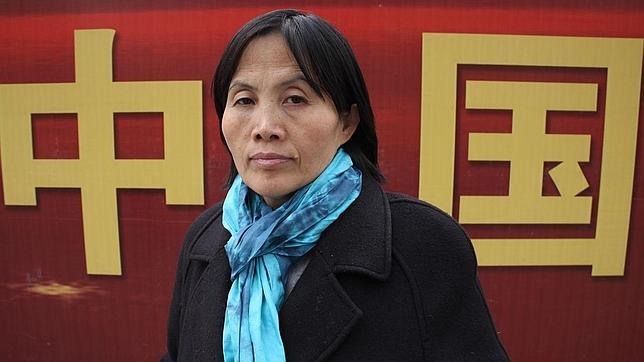
When late Chinese human rights defender Cao Shunli – as Final Nominee of he Martin Ennals Award 2014 – got a standing ovation during the ceremony in October last year, we all said, with the 10 NGOs on the Jury, that we should not forget her. On 19 March 2015 in a statement to the UN Human Rights Council that is exactly what a group of NGOs [International Service for Human Rights and supported by Human Rights WatchCIHRSCIVICUSConectasEHARDPArticle 19HRHF and ALRC] asked for: Ensure independent investigation into death of Cao Shunli.CAO_SHUNLI_PORTRAIT

China must ensure a full, independent and impartial investigation into the death of Chinese human rights defender Cao Shunli, ..If Chinese authorities are unable or unwilling to conduct such an investigation in accordance with international standards, the Human Rights Council as the world’s top human rights body must take appropriate action, the statement said.

One year after her tragic death, there has been no adequate investigation or accountability in relation to the death of Chinese defender Cao Shunli,’ said Michael Ineichen, Head of Human Rights Council Advocacy at ISHR. ‘If China is let of the hook for such a blatant case of reprisals against someone wanting to cooperate with UN human rights mechanisms, the Council sends a message to rights abusers that activists can be attacked with impunity.’

The statement highlighted the negative effect of impunity for cases of intimidation and reprisals, as shown by the numerous reported cases of intimidation and reprisals occurring during the 28th session of the Human Rights Council, including against South Sudanese and Bahraini defenders.

The legal and moral obligations of States to protect those who cooperate with the UN are clear, and if a State fails to conduct stop reprisals or to properly investigate allegations, the UN has a responsibility to act, the statement said.

We welcome recent advances on the institutional level, such as the treaty body policies that recognise States’ primary duty to ensure accountability in the case of reprisals, and the UN’s own duty of care,’ said Eleanor Openshaw, Head of Reprisals Advocacy at ISHR. ‘However, in the absence of a more systematic approach, such as through a dedicated focal point on reprisals which could coordinate investigation of and follow-up to individual cases, these steps will remain the proverbial drop in the ocean’   The statement is available as a PDF and video.

for more on reprisals in this blog see: https://thoolen.wordpress.com/tag/reprisals/

Broad coalition of NGOs at UN condemns Egypt’s treatment of women human rights defenders

March 23, 2015

During the adoption of the Universal Periodic Review (UPR) report on Egypt in the UN Human Rights Council on 20 March 2015 the Women Human Rights Defenders International Coalition (for the composition see below), made a forceful statement about the terrible situation of women human rights defenders in that country.

“The systematic judicial harassment faced by many women human rights defenders is highlighted through the emblematic case of the seven women defenders2 arrested on 21 June 2014 for protesting peacefully against the Protest and Public Assembly Law (No. 107), who faced arduous hassles including prolonged pre-trial detention. Their sentence was finally reduced to two years of imprisonment and two years of surveillance by the appeals court in December 2014. [The seven are: Ms. Sanaa Seif, Ms. Yara Sallam, Ms. Hanan Mustafa Mohamed, Ms. Salwa Mihriz, Ms. Samar Ibrahim, Ms. Nahid Bebo and Rania El-Sheikh]

Furthermore, we strongly condemn the killing of Shaimaa ElSabbagh during a peaceful protest on 24 January 2015. She was taking part in a gathering to commemorate the fourth anniversary of the 25 January revolution. We call on the Egyptian government to ensure a prompt, independent and effective investigation to identify the perpetrator and hold them to account. In this connection, we are deeply concerned that Azza Soliman from the Centre for Egyptian Women’s Legal Assistance (CEWLA), who was witness to the incident and testified before the Prosecutor’s Office, is now targeted as a suspect and charges have been brought against her under the public assembly law.

Finally, we express our continued dismay over sexual violence against women in online and offline public spaces. Though a national strategy to combat violence against women has been announced, we emphasise the need for it to be comprehensive and holistic with involvement of all relevant ministries and stakeholders, as well as adequate budget allocation. During the UPR, the government highlighted a new amendment to the Penal Code article 306, which addresses sexual harassment. This amendment is far insufficient in its scope as it only considers sexual harassment a crime if the intent of the perpetrator is proven to be related to obtaining sexual benefits…”

The Coalition members:  Amnesty International, Asia Pacific Forum on Women, Law and Development (APWLD), Asian Forum for Human Rights and Development (FORUM-ASIA), Association for Progressive Communications (APC), Association for Women’s Rights in Development (AWID), BAOBAB for Women’s Human Rights, Centre for Reproductive Rights, Centre for Women’s Global Leadership, Coalition of African Lesbians, Front Line Defenders, Human Rights First, Information Monitor (INFORM), International Federation for Human Rights, International Service for Human Rights (ISHR), International Women’s Rights Action Watch Asia-Pacific (IWRAW-AP), Isis International, ISIS Women’s International Cross- Cultural Exchange, Just Associates (JASS), The Latin American and Caribbean Committee for the Defense of Women’s Rights (CLADEM), MADRE, Nazra for Feminist Studies, Peace Brigades International, Rainbow Rights Project Inc, Urgent Action Fund for Women’s Human Rights, Women Living Under Muslim Laws (WLUML), Women’s Global Network for Reproductive Rights, WOmen’s Initiatives for Gender Justice, Women’s Rehabilitation Centre (WOREC), World Organisation against Torture (OMCT).

Coalition of human rights defenders and others call on Olympic Committee to change its ways

February 26, 2015

The IOC Executive Committee is meeting in Rio de Janeiro these days (26-28 February) to discuss implementation of Agenda 2020, its “strategic roadmap for the future of the Olympic Movement”. The IOC’s adopted agenda requires Olympic host countries to respect anti-discrimination measures and labor standards, improve transparency, and promote good governance.

The new Sport and Rights Alliance (SRA see below for membership) addressed a letter to the IOC saying that too often major sports events have seen people forcibly evicted from their homes to make way for infrastructure, workers exploited, campaigners locked up, the environment damaged beyond repair and notoriously opaque bidding processes,” … “The recommendations in the IOC’s Agenda 2020 are a chance to change that and ensure human rights, the environment and anti-corruption measures are central to all stages of the Olympic Games, from bidding, through to the development and delivery phase to final reporting.Read the rest of this entry »

Photographer Platon speaks about human rights in Indiana Wells on February 27

February 25, 2015

Award-winning photographer Platon will speak at Renaissance Esmeralda Resort in Indians Wells, USA, at 6 p.m., sharing human rights experiences behind his acclaimed photography.

[He worked for Rolling Stone, New York Times Magazine, Vanity Fair, Esquire, GQ and The Sunday Times Magazine, TIME, The New Yorker. Platon’s New Yorker portfolios have focused on many themes, including the U.S Military, portraits of world leaders and the Civil Rights Movement.]

Platon has teamed up with the Human Rights Watch to help them celebrate human rights defenders from Burma as well as the leaders of the Egyptian revolution. In 2011, Platon was honored with a “Peabody Award” for collaboration on the topic of Russia’s Civil Society with The New Yorker magazine and Human Rights Watch.

The event is sponsored by the H.N. & Frances C. Berger Foundation


H.N. & Frances C. Berger Foundation Presents Desert Town Hall.

Suffocating Dissent in Ethiopia: CounterPunch Tells the Facts and Names the Names

February 14, 2015
The long-read for the weekend comes from Counterpunch, 13/15 February 2015 where Graham Peebles treats the horrible media situation in Ethiopia. Basing himself on a variety of UN and NGO sources – including the recent report by Human Rights Watch – he describes in detail and by name what happens to journalists and human rights defenders who try to cover reality.

Read the rest of this entry »

Video statement of ‘troublemaker’ Nabeel Rajab who is on trial today

January 20, 2015

Today, 20 January, a verdict is expected in the trial of Nabeel Rajab, an internationally recognized human rights defender in Bahrain. President of the Bahrain Center for Human Rights (BCHR), Deputy Secretary General of the International Federation for Human Rights (FIDH), and a member of Human Rights Watch’s Advisory Board, Rajab is charged with insulting public institutions via Twitter. A huge number of NGOs (see below) strongly condemn the politically motivated prosecution of Nabeel Rajab and call on the Government of Bahrain to drop all charges against the peaceful human rights defender. The video statement was prepared by True Heroes Films (THF).

On 1 October 2014, Rajab was arrested after hours of interrogation regarding one of his tweets. Rajab had just returned to Bahrain from a months-long advocacy tour, which included appearances at the 27th Session of the UN Human Rights Council in Geneva and the European Parliament in Brussels, as well as meetings with foreign ministries throughout Europe. Charged with insulting public institutions under article 216 of Bahrain’s penal code, Rajab was granted bail on 2 November 2014, but was banned from leaving the country.

[Rajab is one of many Bahrainis who have been victimized by the government’s intensified campaign to silence dissent: On 28 December, Sheikh Ali Salman, General-Secretary of Bahrain’s largest opposition party Al-Wefaq, was arrested for his political and human rights activism. Earlier in December, human rights defender Zainab al-Khawaja was sentenced to four years in prison for insulting the king and ripping up his picture, while her sister Maryam al-Khawaja, Director of Advocacy of the Gulf Center for Human Rights, was sentenced to one year in prison for allegedly assaulting a police officer during her arrest in August 2014. – https://thoolen.wordpress.com/2014/09/12/bahrain-travails-of-a-family-of-human-rights-defenders/

Signatories:

Arabic Network for Human Rights Information
Association for Civil Rights
Bahrain Center for Human Rights
Bytes for All
Cairo Institute for Human Rights Studies
Canadian Journalists for Free Expression
Cartoonists Rights Network International
Center for Media Freedom and Responsibility 
Centre for Independent Journalism – Malaysia
Electronic Frontier Foundation
Freedom Forum
Freedom House
Globe International Center
Independent Journalism Center – Moldova
International Press Institute 
Maharat Foundation
Media, Entertainment and Arts Alliance
Media Watch
National Union of Somali Journalists
Pakistan Press Foundation
Palestinian Center for Development and Media Freedoms – MADA
PEN American Center
PEN International
World Association of Community Radio Broadcasters – AMARC
Activists Organisation For Development And Human Rights
American for Democracy and Human rights in Bahrain (ADHRB)
Africa Freedom Of Information Centre
Albadeel Center For Studies And Research
Alliance For Tunisia’s Women
Aman Network For Rehabilitation & Defending Human Rights
Bahrain 19
Bahrain Press Association
Bahrain Salam For Human Rights
Bahrain Institute for Rights and Democracy (BIRD)
Bahrain Youth Society for Human Rights (BYSHR)
Chokri Belaid Foundation To Combat Violence
European-Bahraini Organisation for Human Rights (EBOHR)
European Saudi Organisation For Human Rights
Gulf Center For Human Rights (GCHR)
Initiative For Freedom Of Expression – Turkey
International Centre For Supporting Rights And Freedom
Jordanian Commission For Culture And Democracy
Khiam Rehabilitation Center For Victims Of Torture
Kuwait Human Right Institute
Kuwait Human Right Society
Lawyers Rights Watch Canada (LRWC)
MENA Monitoring Group
Nidal Tagheer Organisation For Defending Rights (Yemen)
No Peace Without Justice (NPWJ – Italy)
Nonviolent Radical Party, Transnational And Transparty (NRPTT – Italy)
Réseau Avocats Sans Frontières
Shia Right Watch
Sudanese Development Imitative
Syrian Nonviolence Movement
Tunisian Association For The Rehabilitation Of Prisoners
Tunisian Centre For Transitional Justice
Tunisian National Council For Liberties
UN Ponte Per (Italy) 

Human rights lawyer Kudratov in Tajikistan sent 9 years to penal colony

January 13, 2015

On 13 January Asia-plus reported that a court in Dushanbe, Tajikistan, sentenced Sukhrat Kudratov to nine years in a penal colony for bribery and fraud. Kudratov’s real crime, it appears, was defending opposition activist Zaid Saidov in 2013.  Last year, another one of Saidov’s lawyers, Fakhriddin Zokirov, was arrested on forgery charges. He was released after eight months on the promise he would no longer defend Saidov. Steve Swerdlow of Human Rights Watch called Kudratov’s jailing “a serious setback for the freedom of expression and the independent legal profession in Tajikistan.”

At the time of the arrest, Frontline Defenders called him “one of few lawyers in Tajikistan who defends opposition activists, victims of police torture, and those accused of ‘religious extremism“. Dushanbe-based Bureau for Human Rights and Rule of Law named Kudratov their human rights defender of the year in 2011.

Tajikistan Jails Prominent Human Rights Lawyer | EurasiaNet.org.

Most human rights NGOs welcome change in US policy on Cuba but some diehards hold out

December 18, 2014

President Obama’s announcement to normalize relations with Cuba has led to a range of reactions. Most of the world (the UN General Assembly has called for an end to the US embargo for years – in October 2014, 188 of the 192 member countries voted for a resolution condemning the policy) and certainly most of the human rights movement, including in the US itself, has welcomed the long-overdue move:

E.g. Human Rights Watch and RFK Human Rights have come with positive comments:

“It’s been clear for years that US efforts to promote change in Cuba through bans on trade and travel have been a costly and misguided failure. Rather than isolating Cuba, the embargo has isolated the United States, alienating governments that might otherwise speak out about the human rights situation on the island.” said José Miguel Vivanco, Americas director of HRW on 18 December. [the statement of HRW added: Nevertheless, the Cuban government continues to repress individuals and groups who criticize the government or call for basic human rights. Arbitrary arrests and short-term detention have increased dramatically in recent years and routinely prevent human rights defenders, independent journalists, and others from gathering or moving about freely. Detention is often used pre-emptively to prevent people from participating in peaceful marches or meetings to discuss politics. Detainees are often beaten, threatened, and held incommunicado for hours or days.] The embargo has imposed indiscriminate hardship on Cubans, but done nothing to end abuses,” Vivanco said. “The Obama administration should make human rights a focus of its Cuba policy but look for more effective ways – including working with other democracies in the region – to press the Cuban government to respect fundamental rights.

On 17 December, Kerry Kennedy and Santiago A. Canton, on behalf of Robert F. Kennedy Human Rights, welcomed the announcement saying that the change in policy will lead to an opening of dialogue at all levels between the United States and Cuba, including on the issue of protecting and advancing human rights.

Still, some chose to disagree:

The Washington Times reports that former Florida Gov. Jeb Bush was one of many Republicans to criticize President Obama’s move on Wednesday to open up diplomatic relations with Cuba, saying the move undermines the “quest for a free and democratic Cuba“…..Mr. Bush, who announced Tuesday he was actively exploring a bid for the presidency in 2016, said he’s “delighted” that American Alan Gross was freed after five years in prison, but said it was “unfortunate” that the United States chose to released three convicted spies as part of the deal. …Earlier this month, Mr. Bush said the U.S. should consider strengthening its embargo against Cuba at the annual luncheon of the U.S.-Cuba Democracy PAC as he pledged support for the group, a strong defender of the policy.

In the Hudson Reporter (Hudson County is home to thousands of Cuban emigrants and refugees) Congressman Albio Sires stated: “What should be a joyous moment to celebrate the overdue homecoming of Alan Gross today has been marred by the actions undertaken by the administration to secure his release”.. “The president’s announcement today detailing plans for a loosening of sanctions and initiating discussions to re-establish diplomatic relations with Cuba is naïve and disrespectful to the millions of Cubans that have lived under the Castros’ repressive regime; and the thousands of human rights defenders that have fought tirelessly and at times with their lives to bring about democratic change to Cuba.  Moreover, “while I may welcome the release of over 50 political prisoners, little has been said for the countless others that remain inside a Cuban prison or the fact that the same 50 plus prisoners freed today could very well be imprisoned again tomorrow for exercising the same human rights of free speech that unjustly placed them inside prison the first time.”

US/Cuba: Obama’s New Approach to Cuba | Human Rights Watch.

http://rfkcenter.org/robert-f-kennedy-human-rights-welcomes-president-obamas-announcement-of-a-change-in-united-states-policy-towards-cuba 

http://www.washingtontimes.com/news/2014/dec/17/jeb-bush-obamas-cuba-move-latest-foreign-policy-mi/

http://www.hudsonreporter.com/view/full_story/26253357/article-Mixed-reactions-to-news-of-Pres–Obama-s-change-of-policy-on-Cuba?instance=top_story

Civil society calls on EU to intensify support for human rights defenders in the new EU Action Plan

December 16, 2014

Seven major NGOs (Amnesty International, Frontline Defenders, International Federation for Human Rights, Human Rights Watch, PBI, Protection International and the World Organisation Against Torture) have made a joint appeal to the EU to improve the European Union‘s support to human rights defenders. This is done in the form of comments on the new EU Action Plan on Human Rights and Democracy. That there is a need for more cohesion was demonstrated by the recent faux pas of the EU in giving a human rights award to Bahrain which can hardly be in line with the recommendations [see: https://thoolen.wordpress.com/2014/12/11/what-human-rights-day-means-in-bahrain-and-how-the-eu-made-it-worse/].

Effective and meaningful support to HRDs by the EU and its member states should aspire to [excerpts]: I draw attention especially to number 6!

1. Better protect

The EU can achieve better protection of HRDs – including better prevention of the risks associated with their work:

1. Institute a system for the centralised follow-up of all human rights defenders’ cases, and their treatment by the EU and Member states at headquarters and in delegations.

2. Ensure all staff in Delegations in diplomatic missions, and at headquarters, including at the highest level, are aware of the importance of working with and for HRDs, of the EU Guidelines and of the necessity to implement them fully, and of reporting back. Systematically train EU and member states’ staff at all levels on the full implementation of the EU HRD Guidelines;

3. Facilitate emergency measures such as relocation and emergency visas for HRDs, and ensure all staff are aware of procedures. Ensure the facilitation of visas for HRDs visiting decision-makers in the EU and member states in order to reinforce meaningful exchanges on how to support their vital work;

4. Monitor and provide systematic feedback to HRDs, civil society and the public on EU and member states’ actions on HRDs, encouraging meaningful public debate on how to reinforce their vital efforts;

5. Assist and support governments and promote participation of local civil society in developing and implementing public policies and mechanisms for the protection of HRDs; and/or in advocating for the amendment or abrogation of restrictive laws; and in the fight against impunity for human rights violations committed against HRDs;

6. Ensure that an annual Foreign Affairs Council meeting is dedicated to discussing EU efforts to pursue the release of HRD, journalists and others who exercise their rights peacefully. Foreign Ministers should adopt conclusions naming jailed rights advocates from around the world and call for their immediate and unconditional release.  Every three months PSC Ambassadors should take stock, in close collaboration with civil society, of EU efforts to pursue the release of jailed HRDs. EU delegations should be requested to clarify efforts they have undertaken, ahead of these meetings;

7. In the spirit of the EU Guidelines on HRDs, the EU and its member states should commit to documenting and reporting on effective best practices in support of HRDs, and working to reproduce them where relevant in future; organise annual regional workshops with civil society to exchange best practices and lessons learned, and build the capacity of HRDs, and of senior EU and member states’ diplomatic staff.

2. Reach out

EU policies in support of HRDs must also go beyond addressing their protection in emergency situations on an ad hoc basis. This means considering HRDs not only as victims of repression, but as key actors of change in their own country who can likewise provide a valuable contribution to the design of both EU and national policies and decision-making…

8. Implement burden-sharing between the EU and Member states, to ensure that human rights defenders in all regions of a country have access to, and contact with, the EU; that the responsibility for particularly logistically challenging tasks such as trial observation, prison visits or contacts with rural areas does not fall only on one diplomatic mission, and that continued buy-in on human rights issues by all is possible;

9. Actively support HRDs through a flexible combination of concrete actions and public diplomacy, on the basis of effective consultation with concerned HRDs, including public intervention whenever this can improve the security of HRDs at risk;

10. Conduct regular visits to HRDs outside large urban centres, and increase outreach to vulnerable, marginalised HRDs and women HRDs;

11. Clearly communicate the human rights priorities of EU country strategies to local HRDs to facilitate their work.

12. Systematically include meetings with HRDs when planning high level visits to third countries (including visits by member states’ representatives and Members of the European Parliament);

13. Translate the Guidelines on HRDs into local languages, and disseminate them amongst civil society, including different ethnic minority groups and indigenous communities.

3. Do no harm

The EU and its member states should evaluate all actions taken in regard to their compliance with human rights, and concretely monitor trade and development policies and programming to ensure they are consistent with EU and member states’ human rights commitments. The EU should offer HRDs recourse in case their human rights or those of the people they defend are violated. The ‘do no harm’ principle should be integrated in other actions foreseen in the revised Strategic Framework and Action Plan (under ‘trade’, ‘development’ etc…), which is why only key actions are proposed here:

14. Ensure the meaningful consultation/participation of HRDs, possibly through the development of a specific format for regular exchanges, in the preparation of EU and member states’ human rights dialogues, strategies, development programming, and in the context of EU trade and investment policy;

15. When debating national policy with third country governments, the EU should strive to facilitate dialogue between governments and HRDs (for example on security, development, health, etc), and ensure inclusion of HRDs and social organisations in decision-making on these issues;

16. Set up a complaint mechanism for HRDs who have become victims of human rights violations in the context of EU and member states’ policies and investments.

Intensifying the European Union‘s support to human rights defenders: Civil society proposals for the new EU Action Plan on Human Rights and Democracy / December 16, 2014 / Statements / Human rights defenders / OMCT.