After the IOC awarded the winter olympics 2022 to China, Minky Worden, Human Rights Watch’s Director of Global Initiatives, had this to say on 31 July 2015:
share information on human rights defenders, with special focus on human rights awards and laureates
After the IOC awarded the winter olympics 2022 to China, Minky Worden, Human Rights Watch’s Director of Global Initiatives, had this to say on 31 July 2015:
 in its July 2015 Newsletter puts the spotlight on Khalef Khalifa, Executive Director of the NGO MUHURI in Kenya.
On 8 April 2015, the official Gazette notice listed 85 companies and organisations, including MUHURI and Haki Africa, as suspected of having links to terrorism and linking them as specified entities. On 20 and 21 April, the police raided the offices of both organizations, disabling their servers, carrying away hard disks and documents, allegedly to determine whether they had been involved in tax evasion. On 28 May, the Non-Governmental Organisations’ Coordination Board announced through the media that they had de-registered the organizations. On 12 June the court dismissed all charges against MUHURI and Haki Africa on the basis that there was no evidence against them.
Khalef Khalifa (KK): As you know, on the 12th June was a good day for us as both MUHURI and Haki Africa, were entirely vindicated in court. The judge dismissed all the charges against us and said that there was absolutely no evidence to link us to terrorism in any form and specifically forbade the police or even the Minister to make any such reference in the future. However the outstanding difficulty is that he refused to unfreeze our bank accounts on the basis that we had failed to include the Central Bank in our case against the state. They have now agreed to join our case calling for the accounts to be freed but we have to wait for another hearing before the judge makes his ruling and we can begin getting back to normal.

FLD: Given the various lines of attack that were opened against MUHURI it seems as though the government was out to get you?
KK: ...we were targeted on three fronts: by the police, the Revenue Commissioners and by the NGO Board. So while the government accused us of terrorism, the Revenue Commissioners descended on our office and took away all out financial documentation to look for evidence of tax avoidance and the NGO Board lodged a complaint that we had not kept them properly informed of our activities, and in particular that we had not informed them of new appointments to our board, as required by the NGO Law. In the final verdict, while the judge said there was no evidence of involvement in terrorism, both the Revenue Commissioners and the NGO Board had to concede that we were 100% compliant with the regulations. The only thing the NGO Board could trip us up on was that while we had notified the NGO Board of the new appointments, we had not used the appropriate, and newly introduced, form. What is interesting is that in the early stages of the case the government was totally focused on pursuing a case on the basis of terrorism, but they quite quickly changed tack and started looking for any small technical failures they could find to try and make a case against us. But they failed because we have always operated in an entirely open and transparent way.
KK: The real reason for their animus against MUHURI is that we are critical of the police and have investigated their involvement in extrajudicial executions and forced disappearances. There have been at least 52 such killings and disappearances in the Mombasa region in the last two years. The police claim to be fighting terror but in fact terror is a more accurate description of the way the police themselves work. In one incident 8 people were shot dead in a church. The police claimed that it was an attack by Al Shabaab. However when the perpetrators were arrested it was clear that they were not Muslims and in fact had no affiliation to any particular group. The police then hid the names and tried to maintain the fiction of an Al Shabaab attack.
FLD: Will the work of MUHURI get back to normal now?
KK: ...As soon as the accounts are unfrozen we will continue out work as normal. For us it is clear that the government wants to intimidate and frighten MUHURI but we will not be intimidated – we will not give up.
for full interview see: HRD Spotlight: Khalef Khalifa, Kenya | Front Line Defenders.
The more general backdrop can be found in earlier Front Line messages, the 5 June appeal by the Observatory [http://www.omct.org/human-rights-defenders/urgent-interventions/kenya/2015/06/d23190/] and the statements made by NGOs on 26 June 2015 at the adoption by the UN Human Rights Council of the report of the Universal Periodic Review [UPR] of Kenya:
– International Service for Human Rights (ISHR) : Kenya should create an enabling environment for the work of human rights defenders – including repealing restrictions on NGO access to foreign funding and amending or repealing the Information Communication Amendment Bill and Media Council Bill. The statement also emphasised the risks faced by LGBTI people and organisations in Kenya as a result of the criminalisation of same-sex conduct. ‘It is crucial that the voices of human rights defenders are safeguarded and encouraged. This assists to create a vibrant, independent and diverse civil society which is essential to protect human rights, democracy and the rule of law’ said Michael Ineichen of ISHR.
http://www.ishr.ch/news/kenya-safeguard-and-encourage-essential-voices-human-rights-defenders
AllAfrica.com reports on Human Rights Watch comments: “We note Kenya’s acceptance of some important recommendations such as commitments to investigate torture and extrajudicial killings, including the killing of activist Hassan Guyo, and to fully cooperate with the International Criminal Court. But we remain concerned that there has been little tangible progress in many key areas. The ongoing abuses and recent threats to civil society illustrate a lack of commitment to implement these recommendations.”
http://allafrica.com/stories/201506260835.html
On 15 June 2015, 0ver 200 human rights NGOs urge the Democratic Republic of Congo to show respect for freedom of expression and assembly by freeing the “Filimbi activists“. Expression, Assembly The two activists were arrested three months ago, on 15 March during a pro-democracy youth workshop in the Democratic Republic of Congo. Fred Bauma and Yves Makwambala were arrested at the workshop organized to launch “Filimbi,” a platform to encourage Congolese youth to peacefully and responsibly perform their civic duties. Read the rest of this entry »

Waleed Abu al-Khair, a human rights defender from Saudi Arabia has won the 2015 Ludovic Trarieux Prize, a prestigious award for human rights lawyers [for more info on the award see: http://www.brandsaviors.com/thedigest/award/ludovic-trarieux-international-human-rights-prize]. Waleed Abu al-Khair is a long-standing campaigner (started the Monitor of Human Rights in Saudi Arabia – MHRSA) and was given a 15-year jail sentence by a Jeddah court last year, in a ruling that Human Rights Watch (HRW), Front Line and many others have heavily criticized [https://thoolen.wordpress.com/tag/waleed-abu-al-khair/].
Currently in jail himself, Al-Khair represented prominent blogger (and brother-in-law) Raif Badawi who has been jailed for 10 years and sentenced to 1,000 lashes. [https://thoolen.wordpress.com/2015/06/07/saudi-court-upholds-bloggers-10-years-and-1000-lashes/]
Bertrand Favreau, the founder of the Ludovic Trarieux Prize, told AFP the award goes to those who “through their work, activities or suffering defend the respect for human rights“.
Saudi Arabia: jailed blogger Raif Badawi’s lawyer Waleed Abu al-Khair wins human rights award.

On the eve of the visit to Germany by Egypt’s President Abdel Fattah al-Sisi a number of leading international human rights organisations (AI, HRW, EMHRH, OMCT and Front Line) wrote an open letter to the German chancellor Ms Angela Merkel. It reads in essence: Read the rest of this entry »
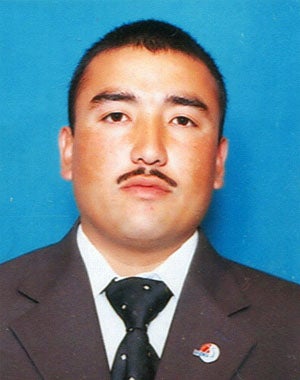
[The arbitrary extension of Farmonov’s prison term shortly before his scheduled release date for allegedly “violating prison rules,” came to light on May 21, 2015. The EU and the UN Committee against Torture have previously called for Farmonov’s release. “Azam Farmonov has already lost nine years simply for being a human rights activist in Uzbekistan,” said Steve Swerdlow, Central Asia researcher at Human Rights Watch. “The cruel addition of five more years to his sentence is yet another sign that the Uzbek government should be made to pay a price for its abysmal human rights record.”]
Human Rights Watch has documented the practice of arbitrarily extending the sentences of people imprisoned on political charges. The action is often taken just days before the person is to be released, on bogus grounds such as possessing “unauthorized” nail clippers, saying prayers, or wearing a white shirt and may result in years of additional imprisonment.
Farmonov’s family also revealed that they had received a note Farmonov had written on toilet paper in which he appeals to United Nations Secretary-General Ban Ki-moon to raise the issue of his unjust treatment directly with President Islam Karimov and senior officials in the Uzbek government. Ban is scheduled to visit Uzbekistan from June 9 to 11 and should urge President Karimov to uphold Uzbekistan’s international human rights commitments and release all those held on politically motivated charges.
The EU, the UN Committee against Torture, and other bodies have earlier called for Farmonov’s release. In an official statement by then-European Commission president José Manuel Barroso, at a January 2011 meeting in Brussels with Karimov, Barroso raised specific human rights concerns, including Farmonov’s unjust imprisonment and ill-treatment. In its 2014 human rights dialogue with Uzbekistan, the EU noted its concern with the authorities’ practice arbitrarily extending sentences. But an EU statement on May 18 following a meeting of the EU-Uzbekistan Cooperation Council reads: “the EU welcomed Uzbekistan’s readiness to discuss about human rights with the EU in an increasingly open fashion within the Human Rights Dialogue.” “The extension of an unjust sentence for a human rights defender, not Uzbek officials’ hollow rhetoric, is the real test of whether the government is ‘ready’ to improve human rights,” Swerdlow reacted
Uzbekistan: 5 More Years for Jailed Activist | Human Rights Watch.
Human rights defenders find it difficult to function with a fair and functioning legal regime for the creation and administration of associations (NGOs). In my post of yesterday on Russia I drew attention to the draft law declaring some NGOs ‘undesirable”. Today Human Rights Watch (HRW) called on Kyrgyz lawmakers in the coming days not to follow Russia’s bad example of passing a Foreign Agents law [see also my earlier: https://thoolen.wordpress.com/2013/09/13/kyrgyzstan-follows-bad-example-set-by-russia-foreign-agents/].
And also today Front Line and the Observatory for the Protection of Human Rights Defenders (a joint OMCT-FIDH programme) ask the Cambodian Government to withdraw its draft law on civil society which would create many uncertainties and restrictions. The NGOs trace the lack of consultation in the process of law- making (since 2010) and conclude that the draft law as it stands will be used arbitrarily to restrict the legitimate work of human rights organisations.
The text of the Open Letter by the Observatory can be viewed at: Open Letter – Cambodia : Draft law on civil society.
The 2015 Press Kowtow award should probably go to the Bahrain Chamber of Commerce and Industry (BCCI) which – as reported by the equally sharp Bahrain News Agency (BNA) on 3 May 2015 – “saluted the national press strides over the past years“. It issued this statement as Bahrain joined other nations in marking the World Press Freedom Day, being held this year under the theme “Let Journalism Thrive! Towards Better Reporting, Gender Equality, and Media Safety in the Digital Age”. It lauded His Royal Highness Prime Minister Prince Khalifa bin Salman Al-Khalifa and His Royal Highness Prince Salman bin Hamad Al-Khalifa, Crown Prince, Deputy Supreme Commander and First Deputy Premier for their support…..
As Brian Dooley of Human Rights First rightly points out today on Twitter (https://twitter.com/dooley_dooley): Bahrain scored 163rd [!!] place in the Index on Censorship survey, Read the rest of this entry »
Azerbaijan plays the game: Under pressure from a variety of sources to reduce its widespread repression of human rights defenders in the run up to the European Games [see my latest post: https://thoolen.wordpress.com/2015/04/21/azerbaijan-a-formula-for-combining-sports-and-repression/], the authorities seems to have decided to give in a tiny bit (see two examples below) and continue for the rest with heavy-handed sentencing of human rights defenders:
– On 18 March 2015, Azerbaijan President Ilham Aliyev pardoned 101 prisoners, including Bashir Suleymanli, co-founder of the Election Monitoring and Democracy Studies Centre (EMDSC). Whilst welcoming Suleymanli’s release, on 19 March, the Observatory for the Protection of Human Rights Defenders (FIDH-OMCT) remains deeply concerned by the ongoing arbitrary detention of other prominent human rights defenders in Azerbaijan, including Anar Mammadli, chairman of the EMDSC, arrested on the same day, who remains currently detained. The EMDSC – which Azeri authorities have always refused to register – has been leading electoral monitoring activities in Azerbaijan since 2008.
– On 24 April 2015, the head of the United Nation’s Subcommittee on Prevention of Torture (SPT), Aisha Shujune Muhammad, announced that her four-member delegation had successfully conducted investigations of Azerbaijani prisons, police stations and investigative isolation units. “The Azerbaijani Government this time enabled unhindered access to places of deprivation of liberty,” said a statement published by the Office of the U.N. High Commissioner for Human Rights. While welcoming the government’s cooperation, Muhammad added, “[The] State party has yet to guarantee all fundamental legal and procedural safeguards to persons deprived of their liberty, including access to a lawyer, a medical doctor, and to contact his or her family.” [As a state party to the Optional Protocol to the Convention Against Torture, Azerbaijan is obliged to allow independent experts full access to sites of detention, but last September the SPT was forced to suspend its visit after being prevented from inspecting some sites and barred from completing its work at others, “in violation of Azerbaijan’s treaty obligations”]
But then – if you think it finally goes in the right direction – on the 22 April a Court in Baku sentenced human rights defender Mr Intigam Aliyev to seven and a half years imprisonment on trumped-up charges. For more on Intigam Aliyev see: https://thoolen.wordpress.com/tag/intigam-aliyev/]. Many NGOs and governments condemned the sentencing including the EU (“The sentence of seven and a half years imprisonment and a further three-year ban on holding public office handed down to prominent human rights lawyer Intigam Aliyev by an Azerbaijani Court is a further demonstration of the increasingly difficult situation faced by human rights defenders in Azerbaijan. This harsh sentence is disproportionate to the alleged offences, while serious shortcomings witnessed by international monitors during the trial raise fundamental questions as to the legality of these procedures.“)
Several important NGOs, including Amnesty International,Human Rights Watch, the Observatory on Human Rights Defenders (FIDH/OMCT) and Front Line Defenders, have pointed out that serious rights allegations have been escalating since 2012 as Azerbaijan is gearing up to host the first-ever European Games under the auspices of the Olympic Movement. [Over 6,000 athletes representing 50 countries from 12-28 June 2015; according to the London-based Business News Europe, the games are budgeted at an estimated eight billion dollars, and billed as the “most spectacular show in Azerbaijan’s history.”]
While the government of President Ilham Aliyev hopes to use the games to spotlight his country’s economic development, rights groups are pushing the European Olympic Committees and key National Olympic Committees to instead shift the focus onto human rights abuses and political prisoners. The Sports and Rights Alliance, urged the IOC to use its leverage with Azerbaijan to, among other things, demand the immediate and unconditional release of rights activists like Khajida Ismayilova, Leyla Yunus, Arif Yunus, Intigam Aliyev, Rasul Jafarov, Rauf Mirgadirov, Anar Mammadli, Ilgar Mammadov, and Tofig Yagulblu.
“Those participating in the European games being funded by the Azerbaijani government have a real obligation to speak out,” Buchanan of Human Rights Watch stressed.
Azerbaijan activist released after almost 10 months’ arbitrary detention – ALIRAN.
https://iwpr.net/global-voices/azerbaijan-convictions-dont-convince
http://www.channel4.com/news/baku-european-games-azerbaijan-aliyev-human-rights-team-gb

