Archive for the 'human rights' Category

Disappearance of Lao Rights Defender Od Sayavong – another Sombath Somphone?

October 17, 2019

Lao democracy advocate Od Sayavong reads a statement at a protest in Bangkok, Thailand, June 16, 2019.

Lao democracy advocate Od Sayavong reads a statement at a protest in Bangkok, Thailand, June 16, 2019.
Roseanne Gerin of Radio Free Asia reported on 2 October 2019 that UN Rights experts had expressed concern over disappearance of Lao human rights defender Od Sayavong, who went missing in Thailand months after meeting with a U.N. special rapporteur. Three special rapporteurs and four members of the U.N.’s Working Groups on Enforced or Involuntary Disappearances, part of a body of independent human rights experts under the U.N.’s Human Rights Council in Geneva, Switzerland, urged Bangkok to clarify the steps it has taken to locate Od and ensure the safety of other vulnerable Lao human rights defenders in the capital, according to a news release.

Od, 34, who had been recognized as a refugee by the U.N. refugee agency and openly criticized his country’s government online and in public protests, was last seen at his home in Bangkok on Aug. 26. A week later a colleague reported his disappearance to the Thai police, but authorities have not provided information about his whereabouts, the news release said.

If an enforced disappearance occurred in part as a reprisal for Od’s engagement with the U.N. system, it would be a violation of his human rights, requiring immediate action,” said Philip Alston, the U.N. special rapporteur on extreme poverty and human rights, met with Od and other Lao human rights defenders in Bangkok in mid-March prior to a visit to Laos.in the printed news release. “Everyone should have unhindered access to and communication with the U.N. in the field of human rights.

Michel Forst, U.N. special Rapporteur on human rights defenders, called Od a “vocal advocate on human rights, corruption, and environmental issues in the Lao PDR, a country with a track record of arbitrary arrests and enforced disappearances.”

In a 6 September statement, the Paris-based International Federation for Human Rights and its member organization Lao Movement for Human Rights (LMHR) called on Thai authorities to immediately investigate the activist’s disappearance.

He also had called for the release of three Lao workers sentenced to lengthy jail terms in April 2017 for criticizing their government while working in Thailand, and for a U.N. investigation into the disappearance of rural development expert Sombath Somphone in December 2012. Prior to his abduction a police checkpoint in the Lao capital Vientiane, Sombath criticized government-negotiated land deals that had left thousands of rural Lao villagers homeless with inadequate compensation for their losses. The Lao government has failed to make headway on resolving Sombath’s case, despite repeated commitments that it will do so. See also: https://humanrightsdefenders.blog/2016/01/04/sombath-somphone-third-anniversary-of-his-disappearance-in-laos/

https://www.rfa.org/english/news/laos/us-rights-experts-express-concern-10022019161459.html

AIV report on Sustainable Development Goals and Human Rights

October 16, 2019


Being a Dutchman I should be a bit modest about government reports, but this one by the independent Advisory Council  on International Affairs about “Sustainable Development Goals and Human Rights” is worth a read. It was published on 19 August 2019.

Seventy years ago – on 10 December 1948 – the member states of the United Nations adopted the Universal Declaration of Human Rights. It was the first document in which the international community recognised and affirmed the ‘inherent dignity and […] the equal and inalienable rights of all members of the human family’. The Universal Declaration is not a binding treaty, but it is universally accepted as a moral and legal standard for human rights.

The foundations of the Universal Declaration had been laid seven years before by President Franklin D. Roosevelt. His ‘Four Freedoms’ speech outlined his vision of a world in which everyone could rely on freedom of speech, freedom of religion, freedom from want and the freedom from fear. Roosevelt was keenly aware that these four freedoms were inseparable. Without basic needs such as food and security, freedom of speech is of limited value. Freedom of expression is in turn necessary in order to demand social and economic justice. This understanding found expression after the end of the Second World War in the Universal Declaration, which laid down both civil and political rights (art. 1-21) and social, economic and cultural rights (art. 22-27).

The Universal Declaration of Human Rights is the source of a network of legally binding human rights treaties to which all countries in the world have committed themselves in one way or another. Together they form the multilateral human rights system, whose significance should not be underestimated. Human rights treaties and the national laws based on them have made the rights and freedoms of hundreds of millions of people all over the world visible and tangible, helping them to speak out for better living conditions, and to be and develop themselves. This global achievement must be cherished and defended, if necessary in the face of opposition.

At the same time, unremitting poverty, hunger, economic inequality, environmental degradation, war and violence compellingly expose the fallacy that human dignity can be achieved simply by signing legally enforceable national and international agreements. True universality of human rights also requires sustained and popular support for development processes, both at home and abroad. Development is a precondition for the achievement of human rights, and human rights are necessary for development.

Human rights and development cooperation have long been seen – wrongly – as separate policy fields. Moreover, Western governments and human rights organisations in particular have traditionally prioritised the promotion of civil and political rights. Social, economic and cultural rights are also part of the treaty-based human rights system, but they have not always received the attention they deserve. Human rights, including environmental rights, are inherently inseparable. Interaction between development and human rights organisations did not commence until the 1980s, and it remains an ongoing challenge. Major multilateral actors such as the World Bank still seem reticent about making human rights a central focus of their programmes.

The Netherlands’ foreign policy is not yet truly integrated either. Its human rights policy focuses on traditional civil rights, while its development policy prioritises the creation of social, economic and environmental conditions conducive to development. In the AIV’s opinion, this compartmentalised approach is understandable from a historical perspective but it weakens the impact of policy and is counterproductive. The AIV welcomes the initiatives the Minister of Foreign Affairs and the Minister for Foreign Trade and Development Cooperation have taken to foster harmonisation, but the relationship between the two policy fields, as set out in the Human Rights Report 2017 and the policy document Investing in Global Prospects: For the World, For the Netherlands, rests, on balance, on weak foundations.

The AIV believes the 2030 Agenda for Sustainable Development provides a practicable worldwide framework for a coherent (integrated) approach to sustainable development and human rights. The Sustainable Development Goals (SDGs) are concrete social, economic and environmental goals, and achieving them can also deliver many human rights goals in these fields. The 2030 Agenda also recognises that the Universal Declaration of Human Rights and international human rights treaties are the framework in which the SDGs must be achieved. The SDGs therefore recapitulate and reaffirm the reciprocal relationship between human rights and sustainable development, as originally articulated by President Roosevelt. The 2030 Agenda and the SDGs therefore provide a unique opportunity to realise this close association, both in theory and in policy and practice. The Netherlands must not miss this opportunity. Overcoming the major social, economic and climate-related challenges facing the world requires urgent action at a time when international solidarity is coming under heavy pressure.

The acceptance of the SDGs, including by the Kingdom of the Netherlands, makes it easier to implement the traditional foreign policy priority of promoting human rights. The AIV believes the SDGs and human rights can strengthen each other in a variety of areas.

Opening for dialogue

The SDGs provide an opportunity for the Netherlands to engage with countries that are reticent about, or even dismissive of, the traditional human rights dialogue, which tends to be narrowly legalistic and sometimes cursory and ritualised. The goal of human dignity is a good starting point, as it is a universally recognised and widely held ambition. Both sustainable development and human rights are aimed at achieving human dignity. The SDGs, moreover, stress the overarching principle of ‘leaving no one behind’. They also require a discussion of issues that are directly related to social, economic and environmental rights, such as good healthcare, education, clean drinking water, food security, gender equality, good working conditions and housing. Human rights in many of these areas are already laid down in international treaties. Talks can be held on how they can be achieved in tandem with the SDGs.

Support

The leaders of the UN member states adopted the 2030 Agenda unanimously. The SDGs’ legitimacy is also founded on the willingness of many countries to report voluntarily to the High-level Political Forum that oversees the SDGs’ progress. Support for the multilateral human rights system can be strengthened, with the help of the SDGs, by giving human rights greater prominence. With hundreds of millions of people facing inequality, suffering extreme poverty and living in fear, it is no surprise that they rarely make a priority of pressing for their other human rights. By means of an integrated rights approach to the social, economic and environmental dimensions of sustainable development, it can be made clear that human rights make a tangible contribution to improving the daily living conditions of citizens. This can create and foster public support for human rights.

Oversight and monitoring

Both the SDG process and the human rights tools are aimed at measuring and assessing the action taken and results achieved, as well as collecting information and data. Currently, however, these processes often occur separately from each other. Knowledge and insight would probably be enhanced if more information were shared and used jointly. Integration of SDG and human rights data would also lighten the burden of the many international reporting requirements imposed by the 2030 Agenda and human rights treaties. The requirements are particularly onerous for countries with less well developed civil services. The data and reporting requirements, however, create a source of basic information that governments need to pursue meaningful and effective policy. The integration of SDG and human rights data and reports would therefore have a welcome multiplier effect and could significantly improve national problem analysis, planning and policy.

In view of the above, the AIV has drawn up the following policy recommendations. For each one, a number of suggestions are included on how foreign policy could be made operational.

1. INTEGRATE DEVELOPMENT, HUMAN RIGHTS AND ENVIRONMENTAL POLICY.

Dutch foreign policy should consistently promote and invoke sustainable development as a necessary condition for human rights, and human rights as a condition for development. Achieving the SDGs requires a comprehensive, rights-based approach to the social, economic and environmental dimensions of development processes. The close substantive relationship and interaction between these dimensions cannot be ignored.

The AIV believes that the Netherlands’ development, human rights and environmental policies can be strengthened by increasing their coherence. The 2030 Agenda and the SDGs provide a good framework for deepening this integration. Policy on foreign trade and development cooperation is already explicitly situated in the 2030 Agenda framework, but the human rights dimension of the policy should be better elaborated. Conversely, the annual Human Rights Report could explain how various priority issues contribute to the SDGs. A human rights-based approach to sustainable development must be established and made binding at intraministerial and interministerial level. Ideally, there should be just one overarching policy framework.

The indivisibility of human rights requires foreign policy to focus more consistently on both political and civil rights on the one hand and social, economic, cultural and environmental rights – both individual and collective – on the other. An important step to strengthen coherence with domestic human rights policy would be ratification of the optional Protocol to the International Covenant on Economic, Social and Cultural Rights.

Priority 4 of the Netherlands’ human rights policy – support for human rights defenders – must provide sufficient scope to support advocates of social, economic, cultural and environmental rights.

In its capacity as a donor, the Netherlands can urge multilateral development organisations such as the World Bank to put human rights at the heart of their development programmes.

The AIV recommends that both the Minister for Foreign Trade and Development Cooperation and the Minister of Foreign Affairs take part in parliamentary debates on human rights policy.

2. USE AGENDA 2030 TO STRENGTHEN THE MULTILATERAL HUMAN RIGHTS SYSTEM.

There is a risk that some countries will use the SDGs, with their emphasis on collective social, economic and environmental rights, to undermine the legal obligations laid down in international human rights treaties. This requires vigilance from the Netherlands during international consultations. In bilateral and multilateral talks it must consistently emphasise that, when it comes to achieving the SDGs, human rights – with their established international minimum standards – are the cornerstones of countries’ explicit and enforceable obligations.

In the UN Human Rights Council, international financial institutions, the European Union, the Council of Europe and elsewhere, the Netherlands must consistently draw attention to the indivisible relationship between respect for human rights and the achievement of the 2030 Agenda’s Sustainable Development Goals.

As the UN Convention on the Rights of the Child and the UN Convention on the Rights of Persons with Disabilities show, binding treaties can be effective instruments to establish and implement specific human rights. Other instruments include UN declarations (e.g. on human rights defenders), resolutions (e.g. the 2030 Agenda), Global Compacts (e.g. on business and on migration) and the UN Guiding Principles on Business and Human Rights. The AIV recommends that the Netherlands determine whether one or more specific socioeconomic rights, such as the right to clean drinking water and the right to a healthy environment, can be further elaborated with the aid of these human rights instruments.

3. IMPROVE SUPERVISION OF AND ACCOUNTABILITY FOR THE IMPLEMENTATION OF THE 2030 AGENDA AND ESTABLISH A LINK WITH INTERNATIONALLY RECOGNISED HUMAN RIGHTS INSTRUMENTS.

To make a success of the 2030 Agenda, a transparent and straightforward system of verifiable supervision and accountability is needed. There is still a great deal to be achieved in this area, and the Netherlands could play a leading role. The Netherlands should ask the UN Secretary-General to make proposals to streamline and lighten the burden of reporting to the High-level Political Forum and the UN Human Rights Council. The Netherlands can highlight the intertwined nature of human rights and the SDGs by consistently referring to the 2030 Agenda in its own recommendations for the Universal Periodic Review.

The Netherlands can ask the UN Human Rights Council’s Advisory Committee to identify ways to enhance the SDGs’ international policy coherence. It should also urge signatories of human rights treaties to address the SDGs in the national reports that they are required to issue.

The Netherlands could also mobilise financial and human resources to help less developed countries build capacity to collect and interpret data and prepare SDG and human rights reports. Moreover, the Netherlands could also help national human rights bodies and civil society organisations improve national reporting obligations.

Within the Inter-agency and Expert Group on SDG Indicators (IAEG-SDGs), the Netherlands could make proposals for the further refinement and operationalisation of the SDG indicators. To that end, it could use human rights indicators developed to measure, for instance, inclusion, gender and other forms of equality, and non-discrimination, drawing on the expertise of the Office of the UN High Commissioner for Human Rights and the EU Agency for Fundamental Rights.

The AIV welcomes the involvement of the Netherlands Institute for Human Rights in the preparation of the third SDG report to be submitted to the House of Representatives. The Institute should be permanently involved in both the SDG report and the Voluntary National Reviews that the Kingdom of the Netherlands submits to the High-level Political Forum.

4. MAKE TACKLING INEQUALITY WITHIN AND BETWEEN COUNTRIES A STANDARD TOPIC IN INTERNATIONAL CONSULTATIONS.

The AIV recommends that the Netherlands draw attention to inequality in various international forums. At the High-level Political Forum at the level of heads of state and government in September 2019, the Netherlands could organise a prominent side event on income and capital inequality and its relationship with the SDGs, working in a broadbased partnership with one or more like-minded countries (North and South), multilateral organisations (World Bank, ILO), non-governmental organisations (Oxfam, Transparency International) and multinational businesses and banks. The Netherlands could subsequently organise similar side events during, for instance, the UN General Assembly and the annual World Economic Forum in Davos.

5. PROMOTE THE REFORM OF GLOBAL GOVERNANCE.

In the AIV’s opinion, the Netherlands, with its exceptionally open economy and strong international orientation, should actively promote international policy coherence and global governance. The global partnership necessary to achieve the SDGs can only work on the basis of equality. The Netherlands must work internationally to give emerging and developing countries a stronger voice in multilateral organisations and partnerships216 This applies particularly to their say in the composition of the executive boards of the main international financial institutions. Global governance also includes the network of SDG partners.

6. MAINTAIN THE NETHERLANDS’ LEADING ROLE ON BUSINESS AND HUMAN RIGHTS.

The Netherlands should pursue a stronger relationship between business, human rights and the SDG agenda. Eliminating ‘business and human rights’ as a human rights policy priority must not be allowed to diminish the Netherlands’ international prominence in this area. Cooperation with the business community on achieving the SDGs should be strengthened in both human rights policy and foreign trade and development policy.

If the private sector is to play a major part in achieving human rights and the SDGs (for example those in the area of climate change and the environment), government must actively oversee how business fulfils that role. The AIV recommends that the government prepare a second national action plan on business and human rights in order to clarify the relationship between human rights, business and the SDGs, further flesh out states’ duty to protect against human rights abuses by third parties, and identify instruments that encourage businesses to help achieve the SDGs while respecting human rights.

In addition to encouraging businesses to self-regulate (through international responsible business conduct agreements), the Netherlands should retain the option of binding regulations as a policy tool to deal with companies that lag behind on human rights. It should make an active, constructively critical contribution to the exploratory talks on a business and human rights treaty currently being held in the UN Human Rights Council. After all, international agreements help create a level playing field for national and multinational businesses alike.

7. MAKE COMBATING ‘SHRINKING CIVIC SPACE’ AN INTEGRAL PART OF HUMAN RIGHTS AND DEVELOPMENT POLICY.

Civil society organisations play an indispensable role in the SDG partnership. That is why the Netherlands’ human rights and development policy should include targeted activities to prevent deliberate government action, either political or financial, to shrink civic space. The Netherlands should publicly highlight the importance of independent civil society organisations and human rights defenders more often. The European Commission should be urged to do the same.

Measures should therefore be taken to strengthen the embassies’ knowledge and capacity regarding human rights and attacks on civil society. Dutch embassies in countries where human rights organisations are under fire should implement the EU directives on human rights defenders, which are based on the UN Declaration on Human Rights Defenders (1998).

The Ministry of Foreign Affairs’ support for civil society organisations should be strategic and flexible, preferably using long-term core financing (rather than short-term project financing). The Netherlands should not support civil society organisations established by repressive governments.

8. ACTIVELY INVOLVE YOUNG PEOPLE IN IMPLEMENTING THE 2030 AGENDA.

The Netherlands should press for a special representative in the UN system to focus attention on the interests of future generations. Acting on a proposal by the UN Secretary-General (see chapter I), the Netherlands could encourage the High-level Political Forum for the 2030 Agenda to make the rights of future generations a standard item on its agenda.

The annual SDG report submitted to the House of Representatives includes a section on young people written by the National Youth Council. This is undoubtedly a positive move by the Ministry of Foreign Affairs. However, the AIV believes the Dutch government should make far more use of young people’s ability to promote action on the SDGs. It should be standard practice for youth organisations to be involved in Dutch policymaking on the 2030 Agenda and have a say in related policy fields, such as education, climate change and sustainable development, health and equality. By guaranteeing young people a seat at the table, including at line ministries and in local government, government would increase knowledge and awareness of human rights and sustainable development among new generations.

9. STRENGTHEN THE COORDINATION AND COHERENCE OF NATIONAL AND INTERNATIONAL ACTION ON THE SDGS.

Responsibility for coordinating internal and external SDG policy rests with the Minister for Foreign Trade and Development Cooperation. This can create the impression that the Netherlands’ primary focus in implementing the 2030 Agenda lies abroad. But the 2030 Agenda must be implemented in every country, including the Netherlands. The Netherlands’ international efforts on the SDGs will be convincing only if it puts its own house in order. This is a responsibility of the government as a whole.

The annual SDG progress report submitted to the House of Representatives should include a standard section on SDG efforts, including human rights, in the Caribbean Netherlands (Bonaire, St Eustatius and Saba). Although the islands of the Caribbean Netherlands are an integral part of the Netherlands, their specific development and human rights challenges do not receive the attention they deserve from the European Netherlands. The annual SDG report should also consider the coordination of SDG policy between the four countries that make up the Kingdom of the Netherlands (the Netherlands, Aruba, Curaçao and St Maarten).

Given the overwhelming importance of the 2030 Agenda to society as a whole, the AIV calls on the prime minister to accentuate the Netherlands’ European and international profile on the SDGs and human rights in the run up to the High-level Political Forum at the level of heads of state and government in September 2019, for example by hosting the side events referred to in recommendation 4.


https://aiv-advice.nl/b08

How social media companies can identify and respond to threats against human rights defenders

October 15, 2019

global computer threats

Image from Shutterstock.

Ginna Anderson writes in the ABA Abroad of 3

..Unfortunately, social media platforms are now a primary tool for coordinated, state-aligned actors to harass, threaten and undermine advocates. Although public shaming, death threats, defamation and disinformation are not unique to the online sphere, the nature of the internet has given them unprecedented potency. Bad actors are able to rapidly deploy their poisoned content on a vast scale. Social media companies have only just begun to recognize, let alone respond, to the problem. Meanwhile, individuals targeted through such coordinated campaigns must painstakingly flag individual pieces of content, navigate opaque corporate structures and attempt to survive the fallout. To address this crisis, companies such as Facebook, Twitter and Youtube must dramatically increase their capacity and will to engage in transparent, context-driven content moderation.

For human rights defenders, the need is urgent. .. Since 2011, the ABA Center for Human Rights (CHR) has ..noted with concern the coordination of “traditional” judicial harassment of defenders by governments, such as frivolous criminal charges or arbitrary detention, with online campaigns of intimidation. State-aligned online disinformation campaigns against individual defenders often precede or coincide with official investigations and criminal charges.

……

While social media companies generally prohibit incitement of violence and hate speech on their platforms, CHR has had to engage in additional advocacy with social media companies requesting the removal of specific pieces of content or accounts that target defenders. This extra advocacy has been required even where the content clearly violates a social media company’s terms of service and despite initial flagging by a defender. The situation is even more difficult where the threatening content is only recognizable with sufficient local and political context. The various platforms all rely on artificial intelligence, to varying degrees, to identify speech that violates their respective community standards. Yet current iterations of artificial intelligence are often unable to adequately evaluate context and intent.

Online intimidation and smear campaigns against defenders often rely on existing societal fault lines to demean and discredit advocates. In Guatemala, CHR recently documented a coordinated social media campaign to defame, harass, intimidate and incite violence against human rights defenders. Several were linked with so-called “net centers,” where users were reportedly paid to amplify hateful content across platforms. Often, the campaigns relied on “coded” language that hark back to Guatemala’s civil war and the genocide of Mayan communities by calling indigenous leaders communists, terrorists and guerrillas.

These terms appear to have largely escaped social media company scrutiny, perhaps because none is a racist slur per se. And yet, the proliferation of these online attacks, as well as the status of those putting out the content, is contributing to a worsening climate of violence and impunity for violence against defenders by specifically alluding to terms used to justify violence against indigenous communities. In 2018 alone, NPR reports that 26 indigenous defenders were murdered in Guatemala. In such a climate, the fear and intimidation felt by those targeted in such campaigns is not hyperbolic but based on their understanding of how violence can be sparked in Guatemala.

In order to address such attacks, social media companies must adopt policies that allow them to designate defenders as temporarily protected groups in countries that are characterized by state-coordinated or state-condoned persecution of activists. This is in line with international law that prohibits states from targeting individuals for serious harm based on their political opinion. To increase their ability to recognize and respond to persecution and online violence against human rights defenders, companies must continue to invest in their context-driven content moderation capacity, including complementing algorithmic monitoring with human content moderators well-versed in local dialects and historical and political context.

Context-driven content moderation should also take into account factors that increase the risk that online behavior will contribute to offline violence by identifying high-risk countries. These factors include a history of intergroup conflict and an overall increase in the number of instances of intergroup violence in the past 12 months; a major national political election in the next 12 months; and significant polarization of political parties along religious, ethnic or racial lines. Countries where these and other risk factors are present call for proactive approaches to identify problematic accounts and coded threats against defenders and marginalized communities, such as those shown in Equality Labs’ “Facebook India” report.

Companies should identify, monitor and be prepared to deplatform key accounts that are consistently putting out denigrating language and targeting human rights defenders. This must go hand in hand with the greater efforts that companies are finally beginning to take to identify coordinated, state-aligned misinformation campaigns. Focusing on the networks of users who abuse the platform, instead of looking solely at how the online abuse affects defenders’ rights online, will also enable companies to more quickly evaluate whether the status of the speaker increases the likelihood that others will take up any implicit call to violence or will be unduly influenced by disinformation.

This abuser-focused approach will also help to decrease the burden on defenders to find and flag individual pieces of content and accounts as problematic. Many of the human rights defenders with whom CHR works are giving up on flagging, a phenomenon we refer to as flagging fatigue. Many have become fatalistic about the level of online harassment they face. This is particularly alarming as advocates targeted online may develop skins so thick that they are no longer able to assess when their actual risk of physical violence has increased.

Finally, it is vital that social media companies pursue, and civil society demand, transparency in content moderation policy and decision-making, in line with the Santa Clara Principles. Put forward in 2018 by a group of academic experts, organizations and advocates committed to freedom of expression online, the principles are meant to guide companies engaged in content moderation and ensure that the enforcement of their policies is “fair, unbiased, proportional and respectful of users’ rights.” In particular, the principles call upon companies to publicly report on the number of posts and accounts taken down or suspended on a regular basis, as well as to provide adequate notice and meaningful appeal to affected users.

CHR routinely supports human rights defenders facing frivolous criminal charges related to their human rights advocacy online or whose accounts and documentation have been taken down absent any clear justification. This contributes to a growing distrust of the companies among the human rights community as apparently arbitrary decisions about content moderation are leaving advocates both over- and under-protected online.

As the U.N. special rapporteur on freedom of expression explained in his 2018 report, content moderation processes must include the ability to appeal the removal, or refusal to remove, content or accounts. Lack of transparency heightens the risk that calls to address the persecution of human rights defenders online will be subverted into justifications for censorship and restrictions on speech that is protected under international human rights law.

A common response when discussing the feasibility of context-driven content moderation is to compare it to reviewing all the grains of sand on a beach. But human rights defenders are not asking for the impossible. We are merely pointing out that some of that sand is radioactive—it glows in the dark, it is lethal, and there is a moral and legal obligation upon those that profit from the beach to deal with it.

Ginna Anderson, senior counsel, joined ABA CHR in 2012. She is responsible for supporting the center’s work to advance the rights of human rights defenders and marginalized dommunities, including lawyers and journalists at risk. She is an expert in health and human rights, media freedom, freedom of expression and fair trial rights. As deputy director of the Justice Defenders Program since 2013, she has managed strategic litigation, fact-finding missions and advocacy campaigns on behalf of human rights defenders facing retaliation for their work in every region of the world

http://www.abajournal.com/news/article/how-can-social-media-companies-identify-and-respond-to-threats-against-human-rights-defenders

Lebanon losing its free haven status for human rights defenders?

October 14, 2019

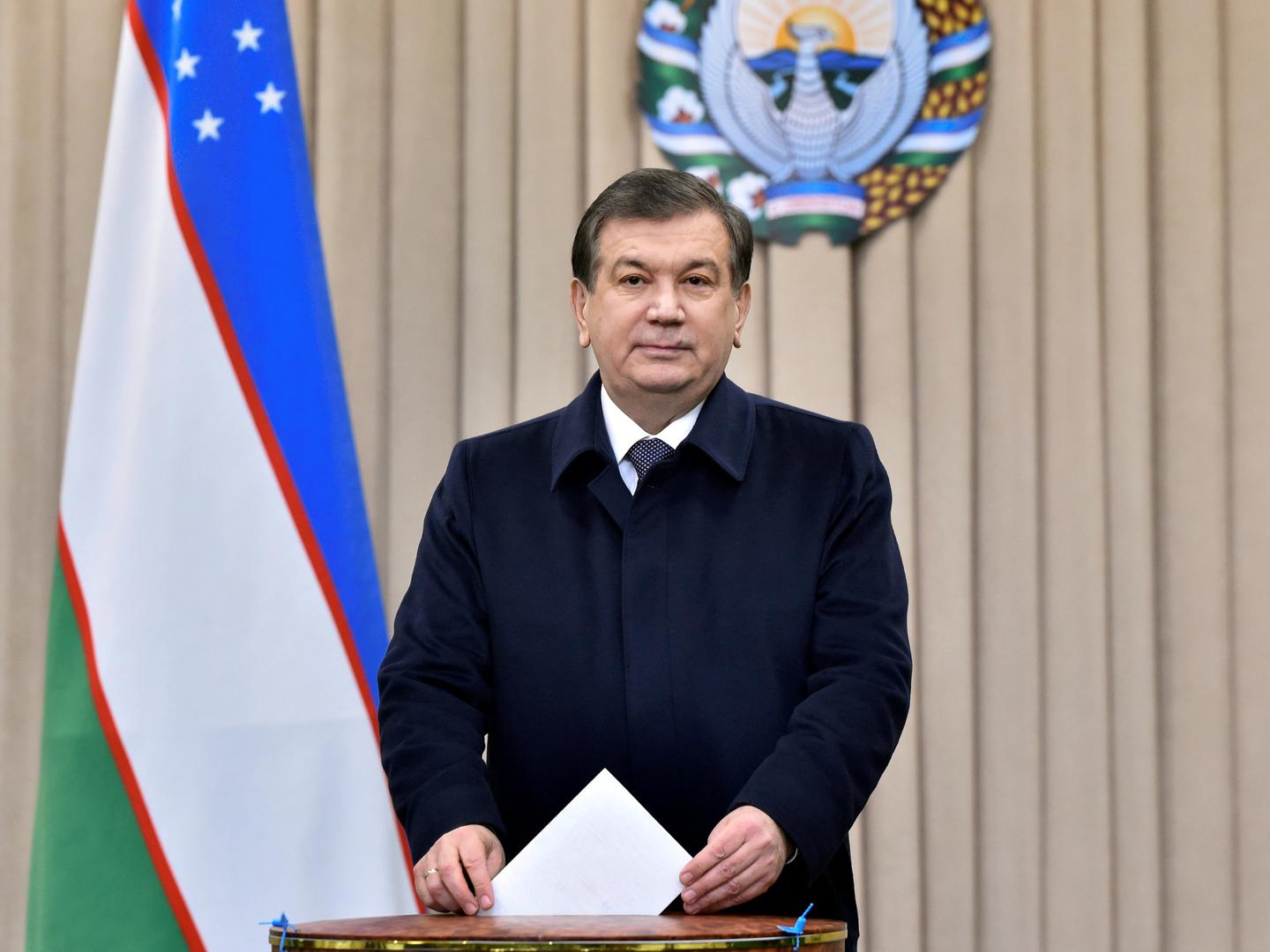
Human Rights Watch sees a tiny light at the end of the Uzbek tunnel

October 13, 2019

Remembering Andrew Blane, an Amnesty icon

October 13, 2019

Andrew with his dear friend, the Nobel prize winning Joseph Brodsky, clowning around at Morton Street where he became a longtime tenant. (Photo: Sharon Woolums)

The Villager (Sharon Woolums) writes about the memorial for Andrew Quarles Blane, who died on 6 September 2019 at the age of 90. The memorial was held on 6 October at Grace Church. A Greenwich Villager since 1965, Andrew quintessentially represented all the best of the Village then and now. Best known for his contribution to Amnesty International (AI), which he joined in 1969, Andrew was one of nine delegates to receive the Nobel Peace Prize for Amnesty in 1977.

Jan Egeland, secretary general of the Norwegian Refugee Council, spoke of Andrews’ deep sense of justice, humanity and empathy leading to his contributions for the Human Rights Movement — for the release of Prisoners of Conscience, the abolition of torture and the death penalty. Andrew was elected vice chair of the International Executive Committee (IEC) by the International General Assembly from 1979-1985. Known for his patience, warmth, kindness, generosity and humor, Andrew mentored many young activists. Egeland characterized Andrew as politically liberal and a progressive, but a traditionalist in lifestyle.

Nate Schenkkan, director of Special Research at Freedom House, spoke of Andrew’s involvement at the U.N. Convention against Torture and his reaction to Abu Ghraib: “Torture to him was…an assault on their soul,” Schenkkan said. Saga Blane spoke of her father’s steadfast moral compass, his pure and incorruptible heart, and his idealism which left all who came in contact with feeling seen and valued.

Andrew spent his childhood in Guatemala. His family moved back to their home state of Kentucky, where he graduated from Centre College. In 1950, he enrolled in Southern Baptist Seminary in Louisville. Billed as a “dynamic lay evangelist” Andrew traveled the South speaking to gatherings of students. He earned a masters degree’s in divinity at Cambridge University in 1957 and a doctorate in Russian history from Duke University.

Andrew’s comprehensive biography came out in 1993. He taught Russian history at the City University of New York until his retirement. David Hawk, former executive director of AI USA in 1974, commented, “Andrew was an enormously gentle but profound intellect and committed advocate.” Out of Morton Street came the birthplace of Amnesty’s U.N. office and the Artist for Amnesty Project. With Southern charm, Andrew opened his pull-out couch welcoming traveling asylum seekers, dissidents and friends. Andrew is survived by his wife of 36 years, Dr. Jaana Rehnstrom, their children, Eliot Blane of Manhattan, Saga Blane/Jake Jeppson of Brooklyn and grandson, Finn Blane Jeppson.

In lieu of flowers, contributions may be made to the newly-formed Andrew Blane Memorial Fund for Human Rights Defenders at andrewblane.com.

https://www.thevillager.com/2019/10/remembering-andrew-blane-a-greenwich-villager-who-earned-nobel-peace-prize/

2019 Nobel Prizes for Peace and Literature: encouragement and disappointment

October 11, 2019
https://humanrightsdefenders.blog/2019/05/07/ethiopia-a-progress-report-by-defenddefenders-made-public-on-7-may/ and https://humanrightsdefenders.blog/2019/07/08/human-rights-defender-daniel-bekele-now-commissioner-of-the-ethiopian-human-rights-commission/].

Amnesty International’s Secretary General Kumi Naidoo said: “This award recognizes the critical work Prime Minister Abiy Ahmed’s government has done to initiate human rights reforms in Ethiopia after decades of widespread repression.” Since assuming office in April 2018, it has reformed the security forces, replaced the severely restricting charities and society law, and agreed a peace deal with neighbouring Eritrea to end two decades of hostile relations. He also helped broker an agreement between Sudan’s military leaders and the civilian opposition, bringing an end to months of protests.

However, Prime Minister Abiy Ahmed’s work is far from done. This award should push and motivate him to tackle the outstanding human rights challenges that threaten to reverse the gains made so far. He must urgently ensure that his government addresses the ongoing ethnic tensions that threaten instability and further human rights abuses. He should also ensure that his government revises the Anti-Terrorism Proclamation which continues to be used as a tool of repression, and holds suspected perpetrators of past human rights violations to account. ..“ow more than ever Prime Minister Abiy must fully espouse the principles and values of the Nobel Peace Prize to leave a lasting human rights legacy for his country, the wider region, and the world.”

Interestingly enough on the same day Ethiopian human rights blogger Befeqadu Hailu received the International Writer of Courage award. The Ethiopian human rights blogger who has been jailed four times over his activism has been awarded a literary prize set up in memory of playwright Harold Pinter. The Zone 9 blogging collective, which Hailu founded in 2012 alongside other Ethiopian activists, aims to hold politicians to account and protect the country’s constitution against corruption. He is also the deputy executive editor of Addis Maleda newspaper, a columnist for Deutsche Welle Amharic Service and a part-time programme co-ordinator for the Ethiopian Human Rights Project. Zone 9 bloggers were finalists of the 2016 MEA.

In the meantime the Swedish Nobel Prize Committee for Literature came in for widespread and harsh criticism for its ‘troubling choice’: of Peter Handke. Writers including Salman Rushdie, Hari Kunzru and Slavoj Žižek say the 2019 Nobel laureate ‘combines great insight with shocking ethical blindness’

Austrian author Peter Handk greets the press outside his house in Chaville near Paris, on Thursday.
Austrian author Peter Handke greets the press outside his house in Chaville near Paris, on Thursday after his win. Photograph: François Mori/AP

The Guardian of 10 October writes: “Twenty years before Peter Handke would become a Nobel laureate, he won another title. In 1999, Salman Rushdie named him the runner-up for “International moron of the year” for his “series of impassioned apologias for the genocidal regime of Slobodan Milošević”….The Austrian playwright, whose Slovenian heritage had inspired in him a fervent nationalism during the Balkans war, had publicly suggested that Sarajevo’s Muslims had massacred themselves and blamed the Serbs, and denied the Srebrenica genocide. Seven years after Rushdie’s scorching condemnation, in 2006, he would also attend war criminal Milošević’s funeral….

Handke is a troubling choice for a Nobel committee that is trying to put the prize on track after recent scandals,” said author Hari Kunzru, who has taught the laureate’s work to his students. “He is a fine writer, who combines great insight with shocking ethical blindness.” Kunzru said he believed that Handke would have won the Nobel earlier, “had he not decided to act as a propagandist for the genocidal Milošević regime. He added: “More than ever we need public intellectuals who are able to make a robust defence of human rights in the face of the indifference and cynicism of our political leaders. Handke is not such a person.

Slavoj Žižek, Slovenian philosopher and longtime critic of Handke, told the Guardian: “In 2014, Handke called for the Nobel to be abolished, saying it was a ‘false canonisation’ of literature. The fact that he got it now proves that he was right. This is Sweden today: an apologist of war crimes gets a Nobel prize while the country fully participated in the character assassination of the true hero of our times, Julian Assange. Our reaction should be: not the literature Nobel prize for Handke but the Nobel peace prize for Assange.”

And in a statement issued on Thursday, novelist Jennifer Egan, president of literature and human rights organisation Pen America, said:  “We are dumbfounded by the selection of a writer who has used his public voice to undercut historical truth and offer public succor to perpetrators of genocide, like former Serbian President Slobodan Milosevic and Bosnian Serb leader Radovan Karadzic,” .. “We reject the decision that a writer who has persistently called into question thoroughly documented war crimes deserves to be celebrated for his ‘linguistic ingenuity.’ At a moment of rising nationalism, autocratic leadership, and widespread disinformation around the world, the literary community deserves better than this. We deeply regret the Nobel Committee on Literature’s choice.”..

——

https://www.amnesty.org/en/latest/news/2019/10/nobel-peace-prize-must-spur-prime-minister-abiy-ahmed-towards-further-human-rights-reform/

https://mailchi.mp/a7dbe1560660/hrf-in-the-washington-post-on-todays-nobel-peace-prize?e=f80cec329e

https://home.bt.com/news/showbiz-news/ethiopian-human-rights-blogger-scoops-prize-in-memory-of-harold-pinter-11364401760959

https://www.theguardian.com/books/2019/oct/10/troubling-choice-authors-criticise-peter-handke-controversial-nobel-win

https://www.vox.com/culture/2019/10/10/20907919/nobel-prize-literature-2019-2018-controversy-peter-handke-olga-tokarczuk

Letelier-Moffitt Human Rights Awards 2019 to climate group Zero Hour and Honduran NGO

October 9, 2019

 Kelsey Hawkins-Johnson in a blog post of 7 October 2019 describes the NGO Zero Hour as the winner of the 2019 Letelier-Moffitt Human Rights Awards. The ceremony too place on 3 October at ther Carnegie Institute of Washington. For more on this and other awards for human rights and the environment, see: http://www.trueheroesfilms.org/thedigest/awards/letelier-moffitt-human-rights-awards

Lina al-Hathloul speaks out for her sister Loujain imprisoned in Saudi Arabia

October 7, 2019

MSMAGAZINE of 27 September 2019 published a long interview with Lina al-Hathloul, the younger sister of Loujain al-Hathloul. It ws done by Uma Mishra-Newbery, the Executive Director of Women’s March Global.

Over the past week, Women’s March Global has been working with the other members of the Free Saudi Women Coalition to continue fighting for the immediate and unconditional release of Saudi activists. As part of its advocacy efforts, the Coalition invited Lina al-Hathloul—the younger sister of Loujain al-Hathloul, who is currently imprisoned in Saudi Arabia—to attend the 42nd Session of the Human Rights Council in Geneva.

[ see also: https://humanrightsdefenders.blog/2019/09/25/saudi-arabia-in-the-spotlight-at-the-42nd-sesstion-of-the-council-hits-back-wildly/]

I spent nearly three days with Lina, each day more intense and rigorous than the last. What I witnessed was nothing short of extraordinary. Lina is only 24 years old, and yet her determination and commitment to fight for her sister’s freedom is relentless. During her stay, I had the opportunity to sit down with Lina for a conversation about the convening and her new life as an activist.

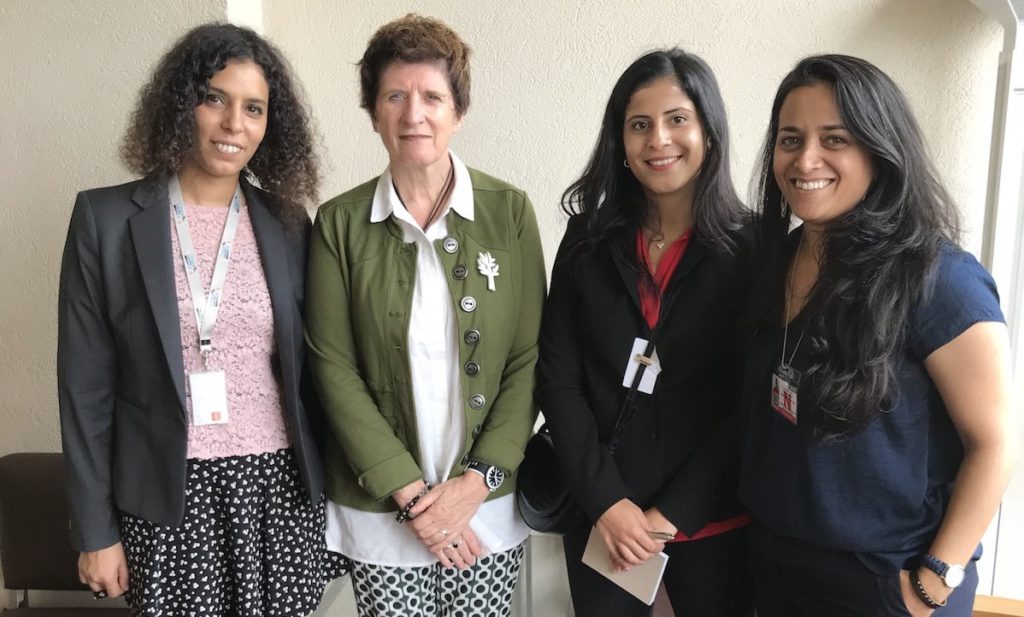
Left to right: Salma El Hosseiny (ISHR), Kate Gilmore (Deputy High Commissioner for Human Rights), Lina al-Hathloul, Uma Mishra-Newbery (Women’s March Global).

Lina, it’s been a busy two and a half days in Geneva at the UN, and you’ve done a tremendous amount. How do you feel?

I feel good, but the thing is I never know if what I’m doing is the right thing. So it’s a mixture of good feelings and bad feelings and stress. We will see what happens and I hope it’s the right thing I’ve done. I don’t know if what I am doing will make a difference—all I have is hope that it will.

You said yesterday that you have no choice but to do what you’re doing right now, whereas the rest of us, who are activists in the movement space, we have a choice in how, when, where we show up. 

Yeah. It’s a very personal issue for me. Because of this I think my heart is always more involved in what I’m doing—compared to other activists—because it’s directly linked to my family. There is a lot of pressure because my family is still in Saudi Arabia while I’m trying to save my sister, but maybe [what I am doing] would harm the rest of my family.

When our family didn’t do anything and we remained silent [when Loujain was first imprisoned], nothing changed and things got worse. So now I have no choice but to speak up. We have seen that when we have spoken up, the torture stopped. So being public is needed, and I need to continue.

You are 24 years old and the resilience that you have, it’s humbling for me to witness. At what age did Loujain start speaking out?

I think Loujian was my age actually, or maybe a year younger. When she started she was in Canada during her studies and she started with the videos. Then she went back to Saudi Arabia and continued, and then started working in the UAE [United Arab Emirates] and never stopped. Even her first imprisonment, she was 24 years old. It was in 2014. I’m speaking out when I’m 24 years old, but she was imprisoned when she was 24 years old. My journey is nothing compared to what she has been through.

I know that doing everything that you’re doing takes a toll mentally and physically. But for you, do you see forward movement? Do you see progress in this?

Yes, I think I do see progress in the sense that her treatment is much better. They allow more visits for my parents. I do see progress because every time… I mean, when we speak up, I see that they don’t mistreat her as much as before and that they truly stick with their engagement [setting up] the visits and calls. When there are no voices anymore for her, the treatment goes down. I clearly see that when we speak up, things go better.

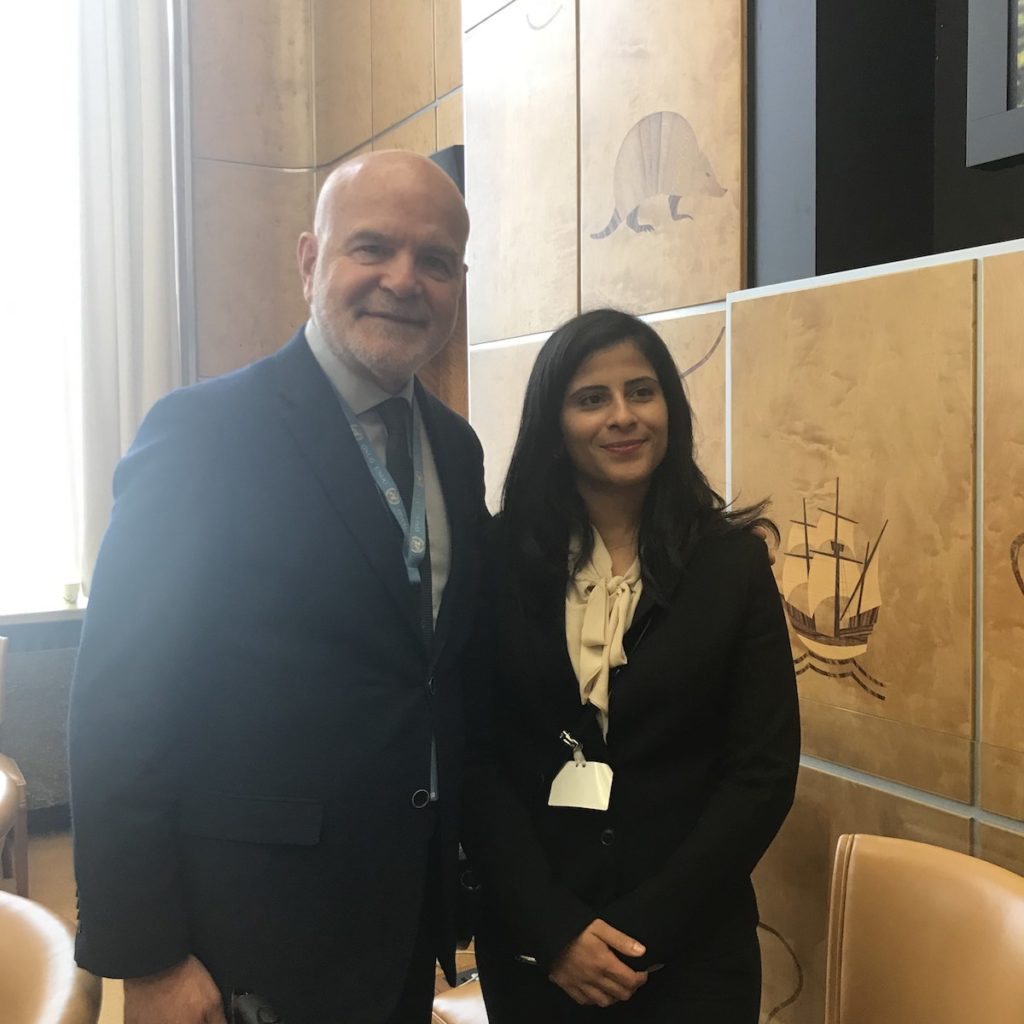
Lina al-Hathloul with Michel Forst, UN Special Rapporteur on the Situation of Human Rights Defenders. 

What do you want the other 24 year olds of the world to know? You’re fighting for your sister, but this is not just about Loujain. This is also about the other women, human rights defenders, that are in prison right now. What would you say to some 24 year old that says, “I’m not affected by this issue?”

I think I understand them, because before Loujain, I thought that all the problems were really far from me—but now that my sister is in prison, I understand that injustice is everywhere.

I think people don’t really realize the power we have with our voices. Speaking up once makes maybe three or four of your friends speak up afterwards and it’s a domino [effect] that really goes fast. If they just make the effort to be in solidarity with this woman once or twice, I really think things could change really fast. I think they have to take the time to read about it and be brave and just speak up.

I can promise things will change for the better if they act

Scholars at Risk has a number of vacancies

October 6, 2019

Scholars at Risk is staffed by a team of professionals with a wide range of backgrounds and experiences. Take a look at the available positions listed below and apply as soon as possible, as positions are filled on a rolling basis. If you have an interest in volunteering or offering pro-bono services to SAR, please email them at scholarsatrisk@nyu.edu with a short proposal and a copy of your resume or CV.

Scholars at Risk (SAR) is seeking a highly-organized and team-oriented individual to join the SAR team as a grants associate/officer. Position summary This is new position will support SAR’s program and fundraising efforts by providing primary drafting and reporting on

Read More

Scholars at Risk (SAR) seeks a Department Administrator to manage a variety of administrative and business processes and operations in support of SAR’s efforts to protect scholars and promote academic freedoms worldwide and to ensure the effective delivery of services

Read More

Scholars at Risk (SAR) is seeking a highly-motivated, detail-focused, flexible and team-oriented individual to manage planning, delivery and follow-up to the 2020 SAR Global Congress, a large-scale, multi-institution biennial event that brings together up to 300 representatives of SAR network

Read More

Scholars at Risk (SAR) seeks a Deputy Director (DD) to have overall responsibility for SAR’s day-to-day programming, internal operations, and administration. POSITION SUMMARY Reporting to the Executive Director (ED), the DD supports the Executive Director and the SAR Board, promoting

Read More

Scholars at Risk (SAR) seeks a dedicated, detail-oriented intern with excellent writing and research skills to join SAR’s Advocacy team for Spring 2020. This intern may be based in SAR’s New York City office or based remotely. This position reports

Read More