Archive for the 'human rights' Category

South Sudan’s President Salva Kiir has released two human rights activists

January 8, 2020

Garang Malak reports in the Kenyan newspaper the Nation that South Sudan’s President Salva Kiir has released two human rights activists who were jailed for criticising the government. The order, dated January 1, 2020, included a list of 30 inmates most of who had been imprisoned on minor offences and had shown good conduct while in detention. But it also included Peter Ajak Biar [see: https://humanrightsdefenders.blog/2019/03/30/seven-persons-charged-in-south-sudan-including-peter-biar-ajak/ ]and Keribino Agok Wol, critics of President Kiir’s regime. The two were detained in July 2018 before they were jailed in June 2019. Mr Biar, 35, a PhD student at Cambridge University, had called on top leaders in Juba to resign and give the younger generation a chance to lead the country.

https://www.nation.co.ke/news/africa/Salva-Kiir-pardons-key-critics-Peter-Biar–Keribino-Wol/1066-5405914-h4dloxz/index.html

Mexico: in eight years 99.5% of crimes against media workers have gone unsolved – time for something better

January 4, 2020
Protesters call for justice for a Michoacán journalist who was victim of an assault last September and then harassed by police. Protesters call for justice for a Michoacán journalist who was victim of an assault last September and then harassed by police.

In that context, National Action Party Senator Marco Antonio Gama Basarte last month presented a proposal that seeks to create a new, completely autonomous special prosecutor’s office to investigate crimes against both journalists and human rights defenders. Mexico needs a strong and independent prosecutor’s office in order to “guarantee the institutional commitment we have with journalists and people who defend human rights,” he said while presenting his bill on December 12.

The senator also said that an average of 23 journalists per month requested government protection last year, adding that the funds to provide such protection were cut in the federal budgets for both 2019 and 2020. President López Obrador has come under fire for contributing to a culture of violence against journalists by launching scathing verbal attacks on reporters and news outlets that are critical of his government. The president often dismisses reports with which he doesn’t agree by declaring that they come from the prensa fifi (elitist press) and has called journalists and news outlets “puppets,” “hypocrites” and “two-faced,” among other disparaging terms.

After López Obrador criticized a story published by the Mexico City-based newspaper Reforma in April last year, the paper’s editor received death threats and was a victim of harassment.

Article 19, a press freedom organization, said at the time that the president’s “stigmatizing discourse [against the media] . . . has a direct impact in terms of the . . . risk it can generate for the work of the press because [his remarks] permeate in the discourse of the rest of society and can even generate attacks.” The organization demanded that López Obrador “abstain from generating any act that inhibits the exercise of freedom of expression,” adding “this includes maintaining a stigmatizing discourse” against the media.

Source: El Financiero (sp) 

https://mexiconewsdaily.com/news/prosecutor-for-crimes-against-journalists-has-closed-4-of-803-cases/

Dakar Rally starts on 5 January in Jeddah but HRDs in jail

January 4, 2020

Ross LaJeunesse and human rights policy at Google

January 3, 2020
The former Google Exec said it was driven out after trying to start a human rights program

An illuminated Google logo can be seen in an office building in Switzerland on December 5, 2018. (Arnd Wiegmann / Reuters)

Several newspapers (here the BBC) wrote on 2 January 2020 about ex-Google executive Ross LaJeunesse revelations concerning the firm’s human rights policy. This matters more than usual in view of Google’s self-professed commitment to human rights, e.g. in the context of the Global Network Initiative (GNI) which brings information technology companies together with NGOs, investors and academics. Founding companies are: Google, Microsoft, and Yahoo!. GNI’s principles and guidelines provide companies with a framework for responding to government requests in a manner that protects and advances freedom of expression and privacy. Companies that join GNI agree to independent assessments of their record in implementing these principles and guidelines [see https://humanrightsdefenders.blog/2013/05/23/facebook-joins-the-global-network-initiative-for-human-rights/. Or by providing funding [see e.g. https://humanrightsdefenders.blog/2019/05/08/excellent-news-huridocs-to-receive-1-million-from-google-for-ai-work/].

A former Google executive has raised concerns about the tech giant’s human rights policies as it eyes expansion in China and elsewhere. Ross LaJeunesse, the firm’s former head of global international relations (until May last year), said he was “sidelined” after he pushed the company to take a stronger stance. Google defended its record in a statement, saying it has an “unwavering commitment” to human rights.

Mr LaJeunesse is now campaigning for a seat in the US senate. He said his experience at Google convinced him of the need for tougher tech regulations. “No longer can massive tech companies like Google be permitted to operate relatively free from government oversight,he wrote in a post on Medium.

Google’s main search business quit China in 2010 in protest of the country’s censorship laws and alleged government hacks. But it has since explored ways to return to the country, a major market, stirring controversy.bLaJeunesse said Google rebuffed his efforts to formalise a company-wide programme for human rights review, even as it worked to expand in countries such as China and Saudi Arabia. “Each time I recommended a Human Rights Program, senior executives came up with an excuse to say no,” he wrote. “I then realized that the company had never intended to incorporate human rights principles into its business and product decisions. Just when Google needed to double down on a commitment to human rights, it decided to instead chase bigger profits and an even higher stock price.

Google said it conducts human rights assessments for its services and does not believe the more centralised approach recommended by Mr LeJeunesse was best, given its different products.

View at Medium.com

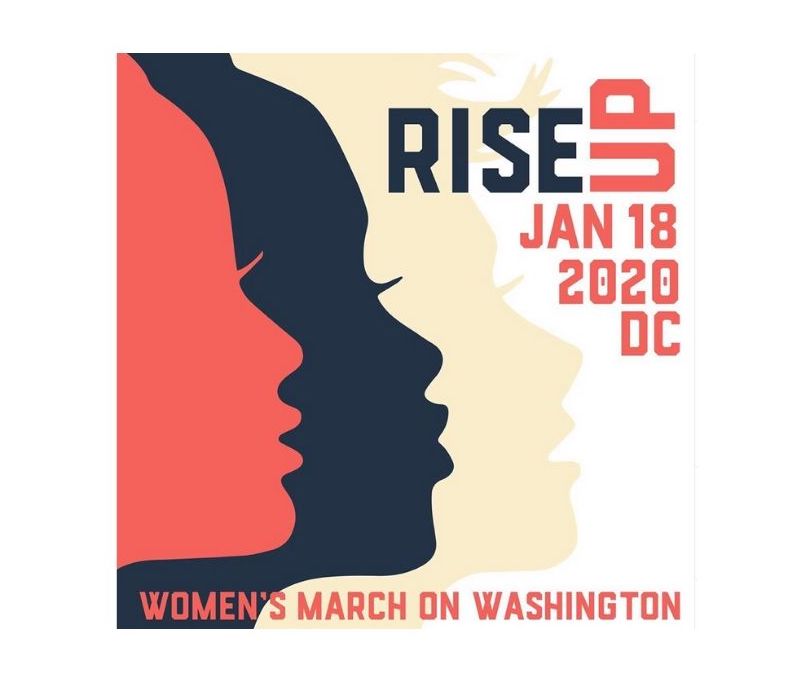
4th Annual Global Women’s March is on 18 January 2020

January 1, 2020
2020 women's march BELatina

On January 21st of 2017, millions of women and allies around the world took to the streets to make themselves seen and heard, demonstrating to advance women’s human rights. Now, nearly three years later, the Women’s March movement has announced that on 18 January, 2020, feminists and women’s human rights defenders will march yet again in the 4th Annual Global Women’s March.

Common Dreams also reported that women and men alike marched in France, Spain, Uganda, and other countries in November 2019 to demand that their elected officials work to end violence against women. In Spain, tens of thousands of people marched to recognize the day. But as the New York Times reported, the country’s far-right Vox Party—which, though still a minority party, doubled its representation in Parliament in recent elections—used the opportunity to affirm its opposition to a law aimed at protecting women from gender-based violence. Women gathered at City Hall in Madrid shouted, “This is shameful!” as Vox secretary-general Javier Ortega Smith spoke out against the law and called for national attention to men who are killed by their partners.

Women during a protest on the commemoration of the International Day for the Elimination of Violence Against Women, in Nantes, France, on November 25, 2019. (Photo: Estelle Ruiz/NurPhoto via Getty Images)

As part of the global effort, the International Labor Organization (ILO) called for ratification of its new Convention, adopted in June, to recognize the right of all people to be free from harassment and violence in their workplaces. “This commitment now needs to be turned into concrete, practical action,” the ILO wrote. “Violence and harassment in the world of work has enormous human, social and economic costs. Violence and harassment constitutes one of the greatest threats to decent work. No more excuses. Let’s work together and make the promise of Convention No. 190 a reality for all.”

It’s Official! The 4th Annual Global Women’s March is in January of 2020

with hope for 2020

December 31, 2019

I wish you all a very good 2020 and can only hope – against a lot of evidence to the contrary – that next year will be better for human rights defenders. Let’s hope that the Malaysian cartoonist Zunar is too pessimistic with his:


https://www.zunar.my/toons/2020-is-coming/

To end the year: sports washing quotes in 2019 from the Guardian:

December 31, 2019

Having this year spent quite a bit of time on the issue of celebrites [https://humanrightsdefenders.blog/tag/star-power/] and sports washing [https://humanrightsdefenders.blog/tag/sports-washing/] I thought that these quotes from the Guardian of 29 December 2019 are fitting end of year message:

Gianni Infantino in June – addressing Fifa’s congress two years after he sacked the ethics team investigating him. “We turned it around! Fifa has gone from being toxic, almost criminal, to what it should be: synonymous with credibility, trust, integrity, equality, and with human rights.His other big message in 2019: rejecting talk that it was Fifa’s new reliance on Chinese sponsors that led it to drop all human rights checks and award China the 2021 Club World Cup. “There are problems in this world, everywhere, in many countries. It is not the mission of Fifa to solve the problems of this world.

Also not buying complaints from human rights and ethics groups about sportswashing in 2019 UEFA head Aleksander Ceferin:

a) Explaining why holding the Europa League final in Azerbaijan was the right thing to do: “Human rights is a problem in other places too. Does it mean the fans in Baku do not deserve live football?”, and

b) reacting to the World Anti‑Doping Agency’s call for Russia to be stripped of Euro 2020 by confronting Vladimir Putin in St Petersburg. His message to Putin – Uefa stands by Russia because: “I must say, the World Cup was organised perfectly… I do not speak just to be nice: I really mean it.

from: https://www.theguardian.com/sport/2019/dec/29/alternative-2019-sports-awards-quotes-gaffes-meltdowns

Annual reports 2019: the women in the Arab world

December 30, 2019


And another end of year reflection, this one by the Collective for Research and Training on Development Action (CRTDA).

This is a Lebanon-based non-governmental organization started in July 1999. CRTDA works with partner civil society organizations in Lebanon and across the Arab World primarily in Yemen, Egypt, Syria, Morocco, Tunisia, and Algeria.

..For the Lebanese, everything that has happened this year has been overshadowed by the last
two months. These months have represented unprecedented empowerment, as we have seen a
mass uprising that cuts across sectarian lines aimed at ousting the political elite that have
propagated corruption, division, and inequality for many years. The unity felt in the streets has
been led by women, who have constantly showcased their bravery and leadership capacity
throughout this uprising.
Of course, this popular movement has also led to fresh challenges as the economic crisis
engendered by decades of mismanagement causes unemployment to spike, increasing poverty
among the most vulnerable populations and causing tension and polarization between
communities. In this context, of opportunity for women’s empowerment and challenge to peace
and stability between Lebanon’s communities, the work of CRTD.A both comes to fruition and
becomes increasingly important. At this cross-roads for Lebanon, we share with you some of
our highlights from the past year, and some of our hopes for the future.
This year, we saw women standing up to oppression and demanding change all over the
world. In Lebanon, women were at the forefront of the revolution: organizing, protesting, and
showing their bravery. They formed barriers with their bodies to keep the peace, and the icon of
the Lebanese protests was a woman, whose kick to a security officer became the symbolic image
of the revolution. Women’s rights, such as the right of women to pass on their nationality, have
taken a huge place in the protests, as women say enough is enough. What we have seen in
Lebanon has also been true for many countries across the world. In Sudan and Hong Kong,
women have become the icons of revolution, displaying their power to lead and to fight.
Women’s marches have also played a huge role in Chile’s demands for an end to a corrupt
system.
We have also seen women taking control of the narrative of environmental degradation, with
young icons such as Greta Thunberg showing that neither youth nor gender can get in the way
of determination and a powerful message. It is key for both our future and for empowerment
for women and girls to take initiative and make their voices heard to force the global elite to
face up to the biggest threat to our planet and our species. Women across the world have been
taking this initiative, from the Pacific Islands to the Amazon Rainforest.

For more information about their work, please check out the annual report via: https://bit.ly/378pQIY

In-depth investigative report on journalist Miroslava in Mexico

December 30, 2019

On 6 September, 2019 the  Bellingcat Investigation Team published a piece “Miroslava: The Journalist Who Refused to be Complicit“.  [see also: https://humanrightsdefenders.blog/2018/03/24/new-national-award-to-honor-slain-mexican-journalists/]. It is a very detailed report and worth reading in full:

Miroslava Breach lived under constant threat starting in March 2016, when she began to feel pressure over her publications regarding links between drug cartels and politics. She brought this to the attention of her old friend, the recently elected governor of Chihuahua state Javier Corral, as well as those in charge of the mechanisms at the federal level to protect journalists. The Colectivo 23 de Marzo is made up of Mexican journalists in collaboration with Forbidden Stories, Bellingcat and Centro Latinoamericano de Investigaciones Periodísticas (CLIP). We reconstructed the thread of threats linked to Miroslava’s work, the warnings that she raised about the danger she was in, and the clues that she let in her publications prior to her murder on March 23 2017 that the authorities did not fully investigate.

Miroslava Breach in the Tarahumara sierra. She investigated illegal logging, the effects of megaprojects, and narcopolitics. Source: Colectivo 23 de Marzo

Before her murder, a grey Malibu prowled down José María Mata street in the Granjas neighbourhood of Chihuahua. Security cameras captured the vehicle on the street six times between March 21 and 22 2017 as it passed in front of the two-story house now infamous for the murder: number 1609, with its brown gates and a small garden out front. On the morning of March 23, 2017, journalist Miroslava Breach Velducea was shot to death while waiting inside her car to take her son to school.…….

https://www.bellingcat.com/news/americas/2019/09/06/miroslava-the-journalist-who-refused-to-be-complicit/

Annual reports 2019: Sport and Human Rights

December 29, 2019

Mary Harvey, CEO, the Centre for Sport and Human Rights

The 4th annual report 2019 I would like to mention comes in the form of a preface by Mary Harvey of Sports and Human Rights [https://humanrightsdefenders.blog/2018/12/12/mary-harvey-her-goal-is-now-human-rights/]

As my first year leading the Centre for Sport and Human Rights comes to a close, I wanted to reflect on some of what we have achieved in 2019 as we look ahead to where we need to make further progress in 2020. At the 2018 Sporting Chance Forum in Paris, I said we were at a point where the sport and human rights movement had been mobilised, and it was important to translate the theory of change behind the Centre’s creation into concrete action.

The opportunity to demonstrate this came sooner than expected. Prior to my start in January, many of our stakeholders raised the concerning case of the detainment and possible refoulement of refugee footballer Hakeem Al-Araibi, and rightly asked how the Centre was going to respond. My first week on the job, the Centre convened calls to bring together sports bodies, governments, IGOs, corporates, and civil society with the sole objective of freeing Hakeem. The combined efforts and collective action of the Centre, Advisory Council and others not only played an important role in freeing Hakeem, but provided a powerful and indelible example of what we can achieve together..

Building on the resources developed as part of the MSE Platform, our work in 2019 set out to put these tools into action, including by helping strengthen the capacity of those working most closely with sport. We developed new tools which are now with you for consultation (Games Time Risk Guide, Championing Human Rights into the Governance of Sports Bodies – annex specific to Multi-sport governing bodies). In September, we had the opportunity to deliver human rights training to the 53 national federations that make up the Commonwealth Sport family. We also engaged prospective bidding countries for the 2023 Women’s World Cup. Finally, we held briefing calls with our broadcaster stakeholders on human rights issues at events taking place in countries such as Azerbaijan, China and Saudi Arabia.

In May of this year, with the landmark decision from CAS ruling against Caster Semenya, it became clear that human rights awareness needed to be raised and capacity built for those who give legal advice to sports bodies. As part of our developing work on Remedy this year and to begin this important conversation, the Centre hosted a workshop for sports law practitioners with our colleagues at Clifford Chance. The event more than met expectations, with consistent feedback from attendees who welcomed debate on an important topic in need of serious engagement.  We are pleased that, with the support of colleagues at Clifford Chance, the workshop will be an annual event going forward.

We took our first steps during 2019 to work with partners in Africa by hosting a workshop in Rabat, Morocco which brought together a number of sports bodies and national human rights institutions from both anglophone and francophone countries on the continent. We took further steps in developing our Africa Strategy by hosting 16 African National Human Rights Institutions (NHRIs) at an event in Rwanda to discuss child rights and remedy.

On children, the Centre expanded its own capacity by appointing our first senior thematic expert. Millions of children and young people take part in sporting activities every day across the world, and they have the right to participate in sport in a safe and enjoyable environment. Unfortunately, this is not always the case. One of the first actions the Centre took on child rights was to successfully lobby to ensure that references to sport were included in the Guidelines to Optional Protocol 2 of the Convention on the Rights of the Child.

——