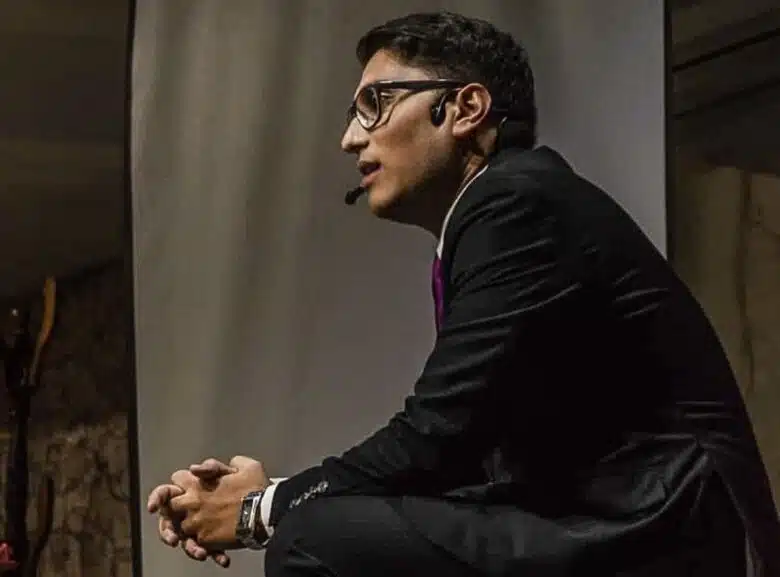
On 3 May 2026, UNHCR published “I am addicted to the truth”: A Venezuelan journalist finds safety and purpose in Canada“, written by Zeba Tasci in Ottawa.
For more than 15 years, Venezuelan journalist Halim Naim built his career on one principle: telling the truth. “I am addicted to the truth,” he says. However, that commitment came at a cost. Reporting in a country where freedom of expression was steadily eroding, Halim faced threats, censorship, and detention. As his visibility grew, so did the risks. Despite the danger, he continued his work—leading political coverage, interviewing senior public and political figures, reporting national events, and defending the public’s right to be informed. But the pressure intensified. After speaking about contested elections and giving a platform to opposition voices, threats extended beyond him to his family.
“I separated from my family to protect them,” he recalls. Soon after, Halim fled Venezuela. He sought refuge in Colombia, where he continued advocating for human rights and supporting fellow Venezuelan refugees. But life remained uncertain. Without secure legal status and amid ongoing safety concerns, he struggled to rebuild. “I felt like I was working in hiding.”
In 2025, after years living in exile, he was identified by UNHCR as a journalist at risk and was referred to Canada’s Human Rights Defenders resettlement program. The program is designed to protect individuals who face threats because of their work defending human rights—journalists, activists, and community leaders whose voices are often targeted. For many, it offers a rare and urgent lifeline: a safe pathway out of danger and a chance to continue their human rights work in freedom.
For Halim, the process moved quickly. Within months, he and his family arrived in Canada. “Canada saved me,” he says simply. Beyond safety, the program also provided recognition. “I never felt like a number. I felt like a professional who could contribute.”
By offering a pathway to safety and a supportive resettlement process, the program allows human rights defenders not only to escape persecution, but to rebuild their lives with dignity and purpose. It also enables them to continue contributing their expertise, whether through journalism or advocacy, in their new communities.
Canada’s Human Rights Defenders program offers safety to people defending human rights and face serious risk because of their work. These individuals may be journalists, lawyers, activists, environmental defenders, people working in women’s rights, LGBTQI+ activists, and community leaders. In 2025, UNHCR identified over 100 cases to be recommended for the program.
Halim hopes to use his experience to contribute both to Canada, and one day, Venezuela. His goal remains the same: telling the truth to defend human rights. For Halim, the program that brought him to safety represents something larger than his own story: a commitment to protecting those who speak out against injustice, and ensuring voices are not lost.
“Exile did not silence us. Exile ignited voices, made them stronger, made them more solid, more secure.”
On Tuesday 12 May 2026 the Guardian reported that more than 110 Nobel laureates have called for the immediate and unconditional release of Narges Mohammadi, the imprisoned Iranian human rights activist and Nobel peace prize laureate, after she was transferred to hospital amid concerns over her rapidly deteriorating health
In a statement 112 Nobel laureates urged the Iranian authorities and the international community to act “without delay” to secure Mohammadi’s release and ensure her continued access to medical treatment.
The human rights activist has experienced severe weight loss, unstable blood pressure and serious cardiac symptoms while in detention, and was found unconscious in her cell after a possible heart attack. Mohammadi’s transfer to hospital is only a temporary respite and her representatives fear she will be returned to prison if her condition improves.
The signatories included 26 Nobel laureates in chemistry, 12 in economics, five in literature, 29 in medicine, 11 peace laureates and 29 in physics, and include the authors Annie Ernaux and JM Coetzee.
Iranian human rights activist and 2023 Nobel Peace Prize laureate Narges Mohammadi has returned to her home after being discharged from hospital, her foundation said.
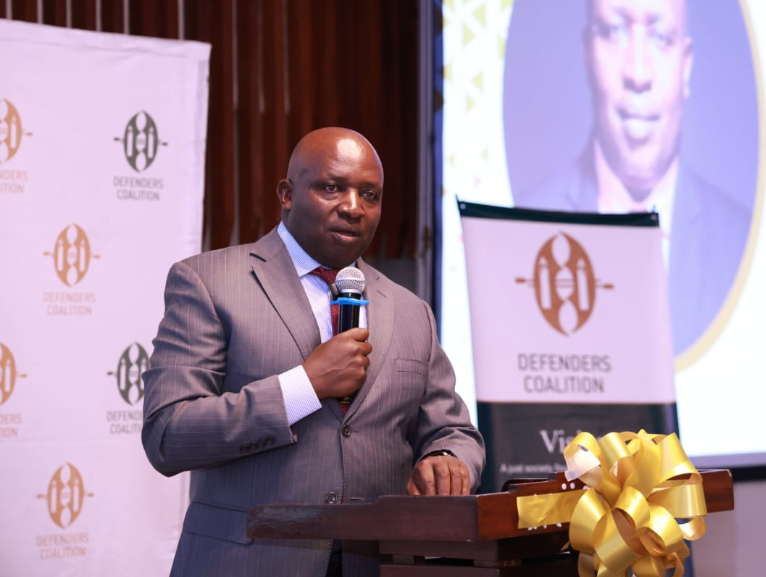
Defenders Coalition executive director Kamau Ngugi during the launch of the organisation’s 2026 Strategic Plan at a Nairobi hotel/HANDOUT
An ambitious initiative aimed at strengthening the protection and capacity of human rights defenders in Kenya has been unveiled amid growing concerns over shrinking civic space and rising threats against activists.
Defenders Coalition, a national organisation that works primarily to protect Human Rights Defenders (HRDs) in Kenya, announced plans to establish Haki Village, a resource hub designed to offer safety, training and support to those championing justice and accountability across the country.
Speaking during the launch, Defenders Coalition Executive Director Kamau Ngugi said the initiative would serve as a safe haven for activists and civil society actors operating in increasingly difficult environments. “It will be a safe space for research, wellness, training and protection,” Ngugi said. The launch comes at a time when concerns are growing over the safety of individuals and groups who speak against injustices, corruption and abuse of power, especially as political activities ahead of the 2027 elections begin to intensify.
Kenya National Commission on Human Rights (KNCHR) chairperson Claris Ogangah, who was the chief guest at the event, welcomed the initiative, saying it comes at a critical moment when many human rights defenders require protection and institutional support. “Anybody who speaks against injustice needs to be protected,” Ogangah said.
She noted that the establishment of Haki Village complements the work already being undertaken by KNCHR and various civil society organisations seeking to safeguard civic space and uphold democratic freedoms in the country. Ogangah warned that the period leading to the 2027 General Election is likely to witness increased political activity, including campaign rallies and demonstrations that may at times turn violent.
Ngugi said the initiative forms part of the organisation’s broader 2026 Strategic Plan, which will guide interventions over the next five years.
According to him, the civic space in Kenya continues to face increasing pressure and could deteriorate further as the country approaches the next General Election.
“The civic space in Kenya is repressed and may narrow towards closed status as we head to the 2027 General Elections and beyond,” he said.
Ngugi observed that threats against human rights defenders are becoming more complex and sophisticated even as both global and local environments for activism grow increasingly uncertain.
He further argued that many countries, including Kenya, often fail to fully recognise and protect the important role played by human rights defenders, exposing them to intimidation,
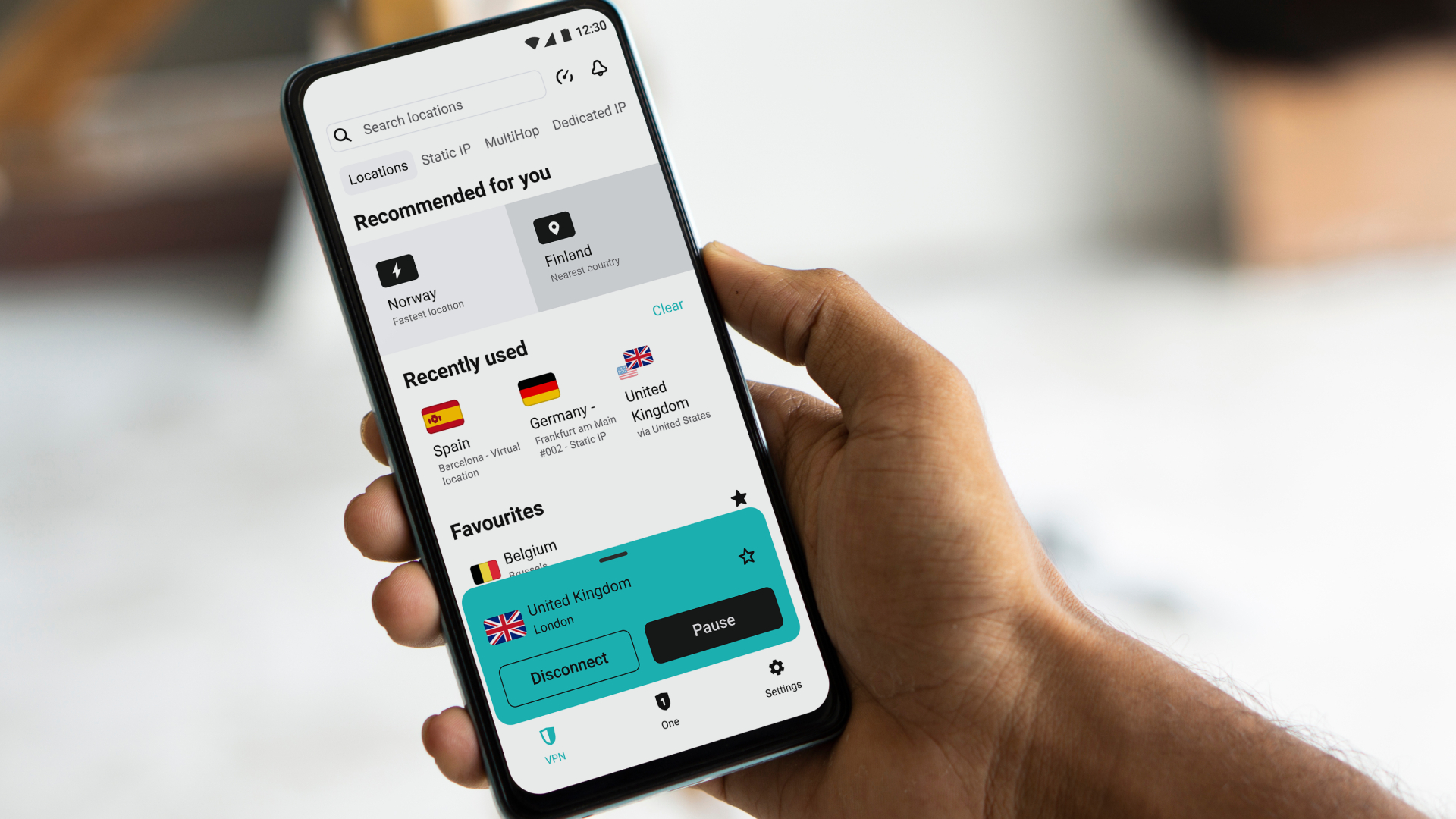
Surfshark is supporting the Digital Forensics Fellowship of Amnesty International to help activists and journalists combat advanced mobile threats worldwide.
(Image credit: Surfshark)
As the threat of state-sponsored spyware and digital tracking continues to escalate, one of the VPN providers on the market is supporting efforts to protect the world’s most vulnerable internet users. Surfshark has officially announced it has become a supporting partner of Amnesty International’s Digital Forensics Fellowship (DFF). Run by Amnesty International’s Security Lab, the DFF is a highly specialized training program designed to teach human rights defenders how to conduct advanced mobile device analysis.
For the everyday user, a virtual private network acts as a shield against casual snooping and data harvesting. However, for journalists, activists, and civil society organizations, the threats are often more targeted and sophisticated. This partnership is geared toward equipping these individuals with hands-on skills in threat research, malware traffic analysis, and device forensics.
Ultimately, this initiative matters because it helps decentralize digital security. By teaching regional activists how to detect digital surveillance on their devices, Amnesty and Surfshark are helping to build a global network of experts capable of exposing human rights abuses without relying entirely on Western tech hubs for forensic analysis.
The DFF was born out of necessity following explosive revelations about global surveillance. Instead of just teaching theoretical cybersecurity, the program provides practical, hands-on experience in analyzing both Android and iOS environments. “The Digital Forensics Fellowship, or DFF, is a training program geared toward upskilling human rights defender-technologists in mobile device forensics.” A key pillar of the fellowship is its reliance on “consensual” forensics. This means that the analysis is only conducted with the informed consent of the individual or organization that has been targeted, putting the victims back in the driver’s seat.
“Our team is focused on consensual mobile device forensics, which refers to analysis and research that is done with a person or an organization,” Cyr told Surfshark. This model allows those targeted by highly sophisticated tools to understand exactly what compromised their devices, empowering them to decide on the best course of action.
While Surfshark is best known for its consumer VPN and antivirus products, the company does not build or sell digital forensics tools. However, the provider views the partnership as a necessary step in securing the broader digital ecosystem.
The reality is that securing the most at-risk internet users eventually benefits the everyday consumer. When organizations research and expose sophisticated campaigns targeting activists, it forces the broader tech industry to adopt higher security standards, increasing awareness and accountability for everyone online.
and now – 3 years later – there is another film, shown on 02 June 2026, also in Geneva:
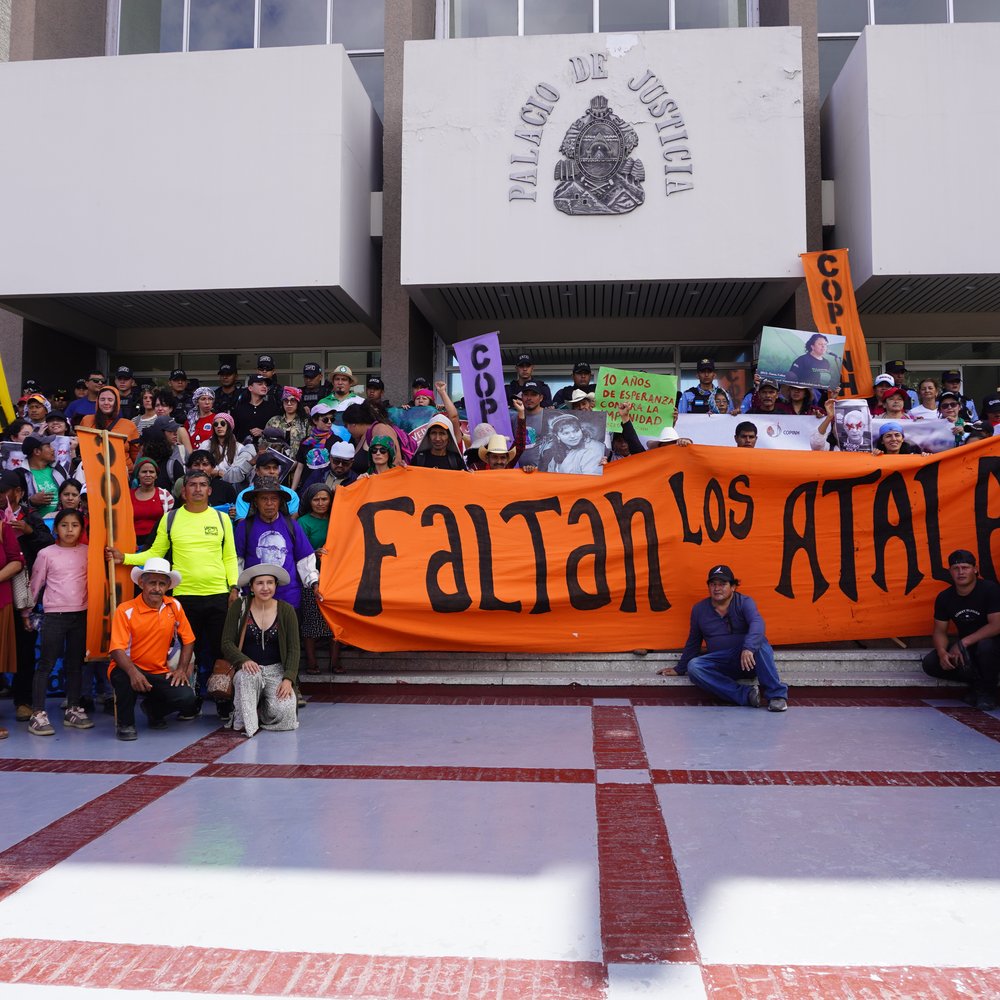
Ten years after the murder of Honduran human rights defender Berta Cáceres, ISHR and PBI Switzerland invite you to a special film screening and discussion featuring an edited version of the film “Water for Life “, followed by a discussion with Roxanna Altholz, Camilo Bermúdez (COPINH) and director Will Parrinello. Free admission upon registration.
As part of a European advocacy tour organised by Peace Brigades International, Roxanna Altholz and Camilo Bermúdez will be stopping off in Switzerland to discuss the fight for truth and justice in the Berta Cáceres case.
The screening will be followed by a discussion with:
Roxanna Altholz, a human rights lawyer, associate director of the Human Rights Clinic at Berkeley Law and co-author of the independent report on the murder of Berta Cáceres
Camilo Bermúdez, a human rights defender and legal adviser to COPINH, a Honduran organisation founded by Berta Cáceres and supported by PBI in Honduras
Will Parrinello, director and producer of the film Water for Life.
The discussion will be moderated by Txell Bonet, a Catalan journalist.
2 June 2026 7:30 PM – 9:30 PM. Address: Fonction cinéma Maison des Arts du Grütli Rue du Général-Dufour 16 1204 Genève Event language(s) French/Spanish RSVP Needed: yes
Today was the funeral of one my best friends and, more importantly, one of the most significant architects of the international human rights system as it developed in the last 50 years. Theo (Theodoor Cornelis) van Boven, was born in Voorburg on 26 mei 1934 and died peacefully in Maastricht on 9 mei 2026.
I have had the honor to work with him for many years [our lives intertwined over a long period of time and on different locations] and wrote about him several times. Most recently “Courageous Leaders and NGO Initiatives” in Ramcharan and others (ed), The Protection Roles of Human Rights NGOs, Essays in honour of Adrien-Claude Zoller, Brill Nijhoff, Leiden, 2023 (ISBN 978-90-04-51677-9), pp 614-636.
So, here a large part of the section on this great man: This section is about a man who was crucial in getting the United Nations and NGO partners to deal with human rights protection. Much has been written about his work and the enormous contribution Theo van Boven made to the UN human rights machinery as we now know it. .. Nowadays the United Nations has an elaborate machinery to deal with human rights violations. The system is far from perfect and still too often subject to political pressures and selectivity but there are now a great many thematic and country mandates, emergency sessions and there is an International Criminal Court against impunity. Wind back 40 years and none of this existed. The violations were there for all to see but not for the United Nations, which preferred to consider this part of the ‘internal affairs of sovereign states’. The man who would make it his life’s mission to change this, Theo van Boven, got in 1977 the position from where to do it: Director of Human Rights in the UN.
His teenage years were eaten up by the second world war. His memories of that period, his strict protestant background and his law studies in Leiden led him to enter an area that was not so obvious at the time: international human rights. He studied in the USA, wrote there a thesis on freedom of religion and soon afterwards, around 1960, he found himself as a young diplomat shaping the human rights policy of the Netherlands. A decade later the protest against the Vietnam war, the violations by the Greek colonels, the coup d’état in Chile and President Carter’s new policy on human rights pushed human rights suddenly higher on the political agenda. Theo had become an expert member of the UN Sub-commission on Human Rights and was one of the engineers of the first UN effort to investigate large-scale human rights violations, namely Chile. I myself met him when he was still a young professor lecturing on human rights in Amsterdam. Then – in the summer of 1977, the same month I started at the ICJ – he was appointed Director of the small human rights secretariat of the UN in Geneva. Here he started his work to bring dictators to accountability and to give the UN a capacity to deal with gross and systematic violations of human rights. Something that is now taken for granted but it would cost Theo his job.
Unlike his predecessors, Theo van Boven did not put all his faith in quiet diplomacy and he regularly talked about the need for the UN to address gross and systematic violations, about the mobilisation of shame and stated that the UN should care about victims. He also started to receive the victims – and the NGOs who represent them – in his office. This led to an incident that would be comic if it was not for the consequences. J. Matarollo was an Argentinean exile lobbying against the generals in his homeland who were killing left-wing opponents by the thousands. Theo agreed to hear him and told his secretary (inherited from his predecessor) to call Matarollo to give him an appointment in the early of hours of the next day. She faithfully called the Argentinean embassy assuming that he was a diplomat as these were the kind of people that normally met with the Director. The next day there was no Matarollo but an angry Note Verbale from Argentinean Ambassador Martinez accusing Theo of meeting with terrorists.
In the UN he did not conform to the image of the traditional diplomat, e.g. by pinning an anti-apartheid button on his suit, but even more so by publicly stating that NGO reports about dead bodies floating down a river in Guatemala were true, or by denouncing disappearances in Chile and Argentina. When in 1980 the government in the USA changed and Ronald Reagan and his team decided to play down violations by right-wing regimes, especially in Latin America, Theo did not flinch and openly criticised their support to these dictatorships. “Naming and shaming” by a UN official was unusual and not easily accepted by the diplomatic community. The Latin American regimes – led by Argentina and silently encouraged by the US – started a campaign to oust Van Boven as Director of Human Rights.
To complicate matters for van Boven, the new UN Secretary-General must have felt little sympathy for this particular Director, as J. Perez de Cuellar had earlier, in 1980, been appointed as Special Representative by the previous Secretary General to go to Uruguay and look into the human rights situation. His report was such a whitewash that it was heavily criticized in the Commission on Human Rights. How correct this reaction had been was shown when the famous pianist Estrella – whom de Cuellar claimed to have visited in the Libertad prison – came to Geneva and told the I.C.J and others that there had been no such visit.
In the meantime in 1980 Theo had put great energy – together with some key NGOs in creating a Working Group on Enforced Disappearances. As a mechanism focusing only on Argentina was politically not feasible, the new idea was to create a thematic mandate on the phenomenon of disappearances in the knowledge that Argentina was going to be the main target. At the decisive session the tension was enormous as the outcome of the vote was very uncertain. The Jordanian Chairman of that session had to deal with endless procedural issues, many of them proposed by Uruguay (egged on by Argentina which was only an observer). Finally, late at night the Chair felt that the resolution creating the mandate could be passed without a vote and moved to do so, but the Uruguayan Ambassador again started to put up his name plate as a sign that he wanted the floor. The Chairman quite unusually interrupting, looked directly at the Uruguayan Ambassador and said: “I URGE my brother from Uruguay NOT to do this..” The name plate slowly turned downwards again and the Chair immediately declared the resolution adopted. The NGOs and tens of Mothers and Grandmothers of the Plaza de Mayo in the public galleries started a spontaneous applause and quite a tear was shed. ..
In early 1982 the issue of Theo van Boven’s tenure as Director came to the fore. His contract had to be renewed which normally was a routine matter, but not this time. The issue came to an explosion when Theo’s opening speech to the Human Rights Commission was sent on a Friday evening to the UN Secretariat in NY for information and at the same time given to the UN Office of Information in Geneva for distribution at the time of delivery the next Monday morning. The UN Office of Information decided to make the statement available to the media that very Friday evening (with the usual proviso: “check against delivery”). The Representative of Guatemala in Geneva obtained a copy of the statement and vehemently objected to the statement. The SG’s office demanded that Theo should refrain from mentioning countries by name – which Theo refused not only out of principle but also because the press would notice the difference on Monday and assume that there had been pressure to remove the names.
As a family friend bringing the kids back from a ski outing, I happened to overhear Theo on the phone to New York agreeing to a ‘compromise’: he would mention at the beginning of his speech that certain passages were done in his ‘personal capacity’. A few days later Theo was suddenly informed that his contract would anyway not be prolonged. His announcement at a dramatic session of the Human Rights Commission grew quickly into an international diplomatic incident.
As I was on the verge of leaving the ICJ, I had some time on my hands. So I got the idea – warmly supported by Niall McDermot – to publish a book with a selection of Theo’s major speeches from the last five years. One of his Special assistants, Bertie Ramcharan, who had written a good part of them, was very helpful and we managed to get a book out within only 6 weeks. The first copy was flown in to Geneva by the publisher and presented to Theo at a public farewell which the ICJ had organised for him. NGOs, some UN staff and students showed up in such large numbers at the university hall that the fire brigade had to refuse access to late comers. Speech after speech – including by Saddrudin Aga Khan – cantered on Theo role in getting the UN machinery on human rights to deal with violations more concretely and on his support for human rights NGOs…
With Ian Guest and many others, I remain convinced that Theo’s dismissal from the UN was the result of pressure by Latin American dictatorships with support from the Reagan administration. As stated in People Matter, he was “hired and fired for the same reason: his deep commitment to human rights”.
After his dismissal Theo and his family returned to the Netherlands where many were very disappointed that there was no real interest in giving him an equivalent position in the foreign affairs department and he ‘ended up’ in the new University of Maastricht as professor of international law, where together with others such as Cees Flinterman he bent the research programme into his favourite direction: human rights. He continued his involvement in international activism in a variety of functions: with NGOs (e.g. European Human Rights Foundation, IMADR, International Alert), and with the UN (e,g. the Sub-commission on Human Rights, Special Rapporteur on Compensation 1990 -1993, Special Rapporteur on Torture 2001-2005, first Registrar of the UN Yugoslavia Tribunal). In 1998 he became the Head of the Dutch Delegation to the Rome Conference which created the International Criminal Court (ICC).
In 1985 he was called to Buenos Aires as a witness to testify against the nine military leaders (including Videla) for their human rights violations in the period 1976 en 1983. The UN had advised him not to go but he felt that he should do anything to end the impunity of these perpetrators. Theo’s testimony – he was called already on the 2nd day – was seen as crucial in establishing that the leaders of the Junta must have known about the massive violations. Theo took the same position with regard to the father of princess Maxima Zorreguieta (the wife of the king of the Netherlands). As Minister of Agriculture Jorge Zorreguieta must have known about the atrocities and should at least have taken distance instead of denying any knowledge. A position which Theo took in 2001 and was still heard defending in 2012.
In the light of Theo van Boven’s recurring clashes with Argentina it must have given him great moral satisfaction when on 26 November 2009 he received a degree honoris causa from the University of Buenos Aires as well as the highest decoration from the Government.
ICTJ stated: “Van Boven’s commitment to the pursuit of justice was relentless. He spoke up about impunity and accountability in contexts of repression such as the military dictatorships in Argentina and Chile, where he also championed the cause of the disappeared, even when political pressure limited others from doing so. Today, ICTJ honors his voice, his perspective, and his deep-rooted legacy. Inspired by his resolve, we will continue our commitment to uphold human dignity above all else in the pursuit of justice and lasting peace all over the world, however long it takes.“
In this episode of Democracy Tomorrow, Scott Leckie celebrates the life and legacy of Theo van Boven, a pioneering international human rights lawyer and former head of the UN Centre for Human Rights. Joined by Professor Cees Flinterman and Hans Thoolen, they reflect on van Boven’s courageous defence of victims, his role in advancing international human rights law, and his commitment to justice, accountability and human dignity. The discussion also explores the future of the human rights movement, the United Nations, global democracy and the importance of defending our shared humanity.
In 2025, the Business and Human Rights Centre documented nearly 800 attacks (790) against defenders in 80 countries raising concerns about business. This is more than two attacks on average every day and more than we’ve tracked in a single year since 2020. Nearly one third of attacks (30%) were against Indigenous Peoples, who comprise just 6% of the world’s population.
BHRC invited TotalEnergies, TotalEnergies EP Uganda, EACOP, Uganda National Oil Company, Tanzania Petroleum Development Corporation, China National Offshore Oil Corporation (CNOOC), Stanbic Bank, Kenya Commercial Bank, First Quantum Minerals, Korea Mine Rehabilitation and Mineral Resources Corporation (KOMIR), Dinant, Leonardo, Freeport McMoRan, PT Freeport Indonesia, PT Mineral Industri Indonesia, Silvercorp Metals, Salazar Resources, Curimining, Dutch Development Bank (FMO), Central American Bank for Economic Integration (CABEI), Exxon Mobil, Energy Transfer, Gibson Dunn and TigerSwan to respond.
The responses from TotalEnergies, TotalEnergies EP Uganda, EACOP, Uganda National Oil Company, First Quantum Minerals, Korea Mine Rehabilitation and Mineral Resources Corporation (KOMIR), Dinant, Freeport McMoRan, PT Freeport Indonesia, Silvercorp Metals, Curimining, Dutch Development Bank (FMO) can be found here.
The other companies did not respond.
Explore the data and read the analysis on attacks against human rights defenders who raised concerns about business in 2025
The late Honduran environmentalist Juan Lopez sits on a rock on the outskirts of Tocoa, Honduras, on September 28, 2021 [AFP]
On 12 May 2026 Al Jazeera reported that the Honduran authorities have arrested three people, including a powerful politician, accused of plotting the 2024 assassination of an environmental leader, an incident that became a symbol of government corruption. Adan Funez, former mayor of the city of Tocoa, was captured at his home on Tuesday on suspicion of masterminding the killing of Juan Lopez, following years of accusations by religious and environmental leaders.end of list
Lopez was an anti-corruption crusader who led a community effort against an iron oxide mining project in Colon, a rural region of northwestern Honduras, which activists said endangered the area’s dense jungles and crystalline waters, including protected reserve areas.
Accusations also emerged against Funez, a power-broker in the region’s decades-long bloody agrarian conflict. The death brought back stark memories of the global outcry over the 2016 murder of Honduran environmentalist Berta Caceres.
Funez’s arrest on Tuesday comes more than a year after Lopez’s assassination.
The Daphne Caruana Galizia Prize for Journalism honours high-quality investigative and in-depth journalism that defends and promotes the foundational values of the European Union. It was established to support press freedom and recognize journalists who contribute to democratic accountability and human rights protection. The prize is named after Maltese investigative journalist Daphne Caruana Galizia, who was known for her work exposing corruption and abuses of power. It is a European Parliament award.
The Ginetta Sagan Award honors women who are courageously defending the liberty, safety, and human rights of women and children in regions affected by serious abuses. The award provides $20,000 directly to the recipient, with unrestricted use. It recognizes women leaders who have created meaningful impact, often at great personal risk, and helps increase international visibility and protection for their work.
The award celebrates leadership, courage, and effective non-violent activism in difficult or dangerous environments