Howe complex the situation in post-Morsi Egypt is can be illustrated by the letter sent to Al-Monitor by Neil Hicks, one of the most experienced international human rights workers to be found today. As a member of the independent US-based Working Group on Egypt he responds to Wael Nawara’s criticism of the this Working Group’s recommendations on US policy toward Egypt, published on 4 February. Neil Hicks – who works for Human Rights First – in his reply of 7 February neatly outlines the views from an international human rights perspective, under the title: “The US Working Group is right on Egypt”: “One of the most perplexing aspects of the months of instability in Egypt that have followed the removal of President Mohammed Morsi from office on July 3, 2013, is the number of prominent Egyptian liberals who have shown themselves to have a somewhat selective commitment to liberal principles, Read the rest of this entry »
Archive for the 'human rights' Category
Neil Hicks replies to criticism in Al-Monitor on Egypt’s post Morsi human rights situation
February 12, 2014Human trafficking: short film on Italy
February 12, 2014As this blog always tries to promote the use of films in human rights work, here the link to a short movie about the UN Special Rapporteur on Trafficking‘s visit to Italy, published on You Tube on 23 January 2014. Trafficking is one of the most lucrative businesses in the world… while destroying millions of lives. It trades in the most precious commodity — human beings — many of whom end up as sex slaves. The film follows an extraordinary woman human rights defender.
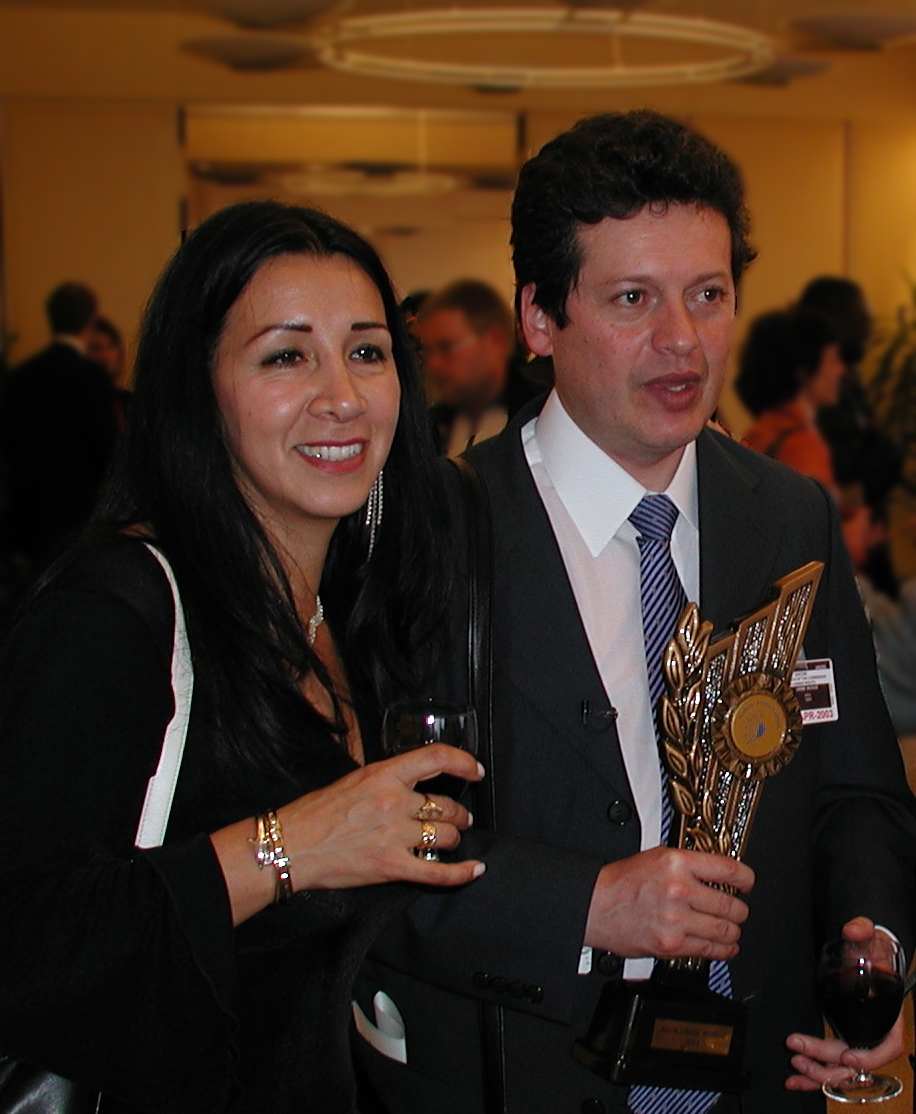
Death threats in Colombia on the rise again
February 12, 2014
via:
Colombia: Series of death threats against human rights defender Martha Díaz | Front Line.
MP deplores death threats against Colombian MP | Voxy.co.nz.
“Today Is The Day We Fight Back”: 11 February – Day Against Mass Surveillance
February 11, 2014

today joins the worldwide campaign against mass surveillance. It its newsletter is states why: “Privacy is a human right: People need it, governments have to protect it and business has to respect it. Too often, this is not the case.Today is the day we fight back. Thousands of individuals, international experts and a coalition of NGOs from all around the globe demand an end to unchecked mass surveillance. Privacy is dear to everyone of them: It enables them to speak freely. To meet others without being watched. To know that it is their decision to share information about themselves.They are people like you.These people will take the streets in protest in the Philippines, Copenhagen, Stockholm and San Francisco. They will call or write their elected representatives in United Kingdom, Canada, Colombia and Poland. They will hold news conferences or join the online protest in Uganda, Mexico, Brazil and Australia. And they will endorse the Necessary and Proportionate Principles demanding the protection of human rights and an end to mass surveillance.Do you want to join them? Spread the word. Tell your family and friends about the day we fight back. Make them care as you do. Sign the 13 Principles, join a global movement. Call your legislators, email them – ask them what they are doing. Join a protest near you. Be creative, blackout your website, create memes, make others laugh – and take action.”
via Privacy Is A Right – Today Is The Day We Fight Back.
to sign the campaign go to: https://necessaryandproportionate.org/take-action/privacyinternational
Russian Human Rights Defender Expelled from Ukraine!
February 11, 2014It sounds almost like a joke but it truly happened. On 9 February 2014 Ukrainian border officials barred a Russian human rights defender from entering the country, according to Human Rights Watch: Andrei Yurov, a member of Russia’s presidential human rights council and the Head of its permanent commission on human rights outside Russia, was deported to Russia upon his arrival at Borispyl airport in Kiev. Yurov was to meet in Kiev with Council of Europe Human Rights Commissioner Nils Muiznieks, and to work within the International Human Rights Defenders’ Group on the Situation in Ukraine, which was founded on December 1, 2013, in response to the November 30 police violence against peaceful protesters in Kiev.
“Yurov’s expulsion is an unprecedented and wholly regrettable step,” said Rachel Denber, deputy Europe and Central Asia director at Human Rights Watch. “Instead of driving out human rights defenders the Ukrainian government should be open to scrutiny of its human rights record during this crisis.”
via Ukraine: Russian Rights Defender Expelled | Human Rights Watch.
Afghan women human rights defenders in the picture today
February 11, 2014Human rights of women in Afghanistan were at the forefront of the international agenda after the fall of the Taliban in 2001. Thirteen years later, nine Afghan women human rights defenders working at the front line reflect on the progress that has been made over the last years, as well as on the risks they have faced because of their work. Today, new challenges arise, as the lack of commitment at national and international level endangers past achievements and the continuation of progress in the near future. Dublin-based Frontline Defenders published the following video in 2 parts:
part 1:
part 2:
Peaceful Protests should be facilitated not suppressed says Geneva Academy
February 10, 2014
On 26 February 2014 the Geneva Academy of International Humanitarian Law and Human Rights will be organising a Panel of Experts on the topic of Facilitating Peaceful Protests. The meeting will take place in the new Maison de la Paix (chemin Eugène-Rigot 2) in Geneva, from 18h00 -20h00. This is very timely as there are a lot of problems with the implementation of this aspect of freedom of assembly and expression as demonstrated again and again in this blog; most recently on 22 January (https://thoolen.wordpress.com/2014/01/22/human-rights-defenders-call-on-osce-to-establish-rapid-response-mechanism-in-cases-of-mass-rallies/). Freedom of assembly, and specifically for the purpose of protest, concerns every state. A state that obstructs or prevents peaceful protests, deems them unlawful, or uses force to disperse or deter them, is not only potentially violating the right to freedom of assembly but also creating conditions that invite violence. In recent protests in Cambodia, Egypt, Thailand, and Ukraine, among many others, excessive use of force by the security forces has been widely condemned. It is in the state’s own interest to ensure that protests can occur, and that they can occur peacefully. Most
The Experts Panel, which will discuss the facilitation of peaceful protests and constraints on the use of force by law enforcement personnel as well as efforts at the multilateral level to promote and protect human, will be composed of:
- Stuart Casey-Maslen, Head of Research, Geneva Academy
- Christof Heyns, United Nations Special, Rapporteur on extrajudicial, summary or arbitrary executions
- Neil Corney, Researcher, Omega Foundation UK and expert on police use of weapons
- Barbara Fontana, Deputy Head of Human Rights section, Permanent Mission of Switzerland to the UN in Geneva.
It will also be the occasion to launch the new Academy Briefing on Facilitating Peaceful Protests.
Star power and human rights: a difficult but doable mix
February 10, 2014
(Jennifer Lopez performing for the leader Turkmenistan. (c) Agence France-Presse/Igor Sasin)
In quite a few earlier posts in this blog I have drawn attention to stars and celebrities who either support dictators or simply do not care that their actions do. So, I was quite happy to see a thoughtful piece by Jo Biddle of Agence France-Presse on 9 February 2014 analyzing this issue a bit more in-depth, with actress Scarlett Johansson as the “poster girl of Israeli apartheid”, Dennis Rodman in North Korea, and Kim Kardashian expressing her love of Bahrain. I would add, Mariah Carey who thinks nothing of singing for Gaddafi or the Angolan President, while Jennifer Lopez (picture above) did the same in Turkmenistan.
The author rightly states that when celebrities wander into complex foreign policy issues, it can be a minefield, leaving diplomats and human rights campaigners scrambling for damage control. The article mentions exceptions such as Bob Geldof, Bono, George Clooney or Angelina Jolie Read the rest of this entry »
FIDH tells its 2013 story in cartoons and there is also Cartooning for Peace
February 10, 2014For those who understand some French, this is an interesting page which describes the work of the International Federation for Human Rights [FIDH] in CARTOONS! La FIDH raconte son année 2013 en BD – FIDH : mouvement mondial des droits de lHomme.
More generally the power of cartoons in human rights work can be seen in Cartooning for Peace, an initiative thought up by the French cartoonist Plantu, born on 16 October 2006 at UN headquarters in New York after a two-day conference organised by Kofi Annan, the then Secretary General of the United Nations, which brought together the twelve best-known political cartoonists in the world for “unlearning intolerance”. See: http://www.cartooningforpeace.org/en
12 human rights defenders who are not on the slopes of Sochi
February 9, 2014

All 12 of the HRDs highlighted in the campaign have displayed great courage and integrity in their work on a range of human rights issues. Read the rest of this entry »
 Hans Thoolen on Human Rights Defenders and their awards