10 December is obviously International Human Rights Day, but there are several countries that have a different or additional Human Rights Day of their own. One of them is South Africa where 21 March is historically linked with 21 March 1960 and the events of Sharpeville (on that day 69 people died and 180 were wounded when police fired on a peaceful crowd that had gathered in protest against the Pass laws – https://www.parliament.gov.za/project-event-details/2)
Boipelo Mokgothu in Traveller24 used the occasion on 20 March 2017 to publish a compilation of the 10 most inspirational women from historical figures till today:
Global Geneva is a new English language magazine for the international hub that Geneva want to be. In the issue of 15 March 2017. William Thatcher Dowell discusses the work of ‘CIVITAS MAXIMA’ “A Tiny Swiss Group of Lawyers Takes on War crimes and Crimes Against Humanity“.
The International Criminal Court at the Hague was created in 2002 to hold individuals responsible for war crimes and crimes against humanity. The concept was good, but the international tribunal was almost immediately paralyzed by politics (See article in the latest edition of Global Geneva on justice must be seen to be done). As William Dowell writes, Alain Werner, who created Civitas Maxima in 2012, has a different idea: “represent the victims and fight the cases in domestic courts if need be“
Rather than depend exclusively on international tribunals, Werner believes that it is worth shifting the focus to the actual victims of war crimes, and working with them to compile the solid evidence that is needed to enable a prosecution to stand up in any court of law. Once the evidence is there, the cases can be prosecuted in any court that expressly outlaws crimes against humanity. It does not matter if the court is an international tribunal, a specially constituted war crimes court or even an ordinary domestic court.
The name, Civitas Maxima, which translates roughly as “the greater state”, is reference to the legal term in Latin that captures the notion that all civilized societies hold certain values in common. The implication is that any society, which considers itself civilized, will instinctively condemn international crimes such as crimes against humanity and war crimes. So far, Werner’s group has been investigating well over 10 cases, and at least three have led to actual arrests by national authorities since 2014. That may not seem much, but in fact, it represents a third of the extra-territorial arrests by national states for international crimes in 2014 and 2015. During that period, only eight extra territorial arrests by national authorities took place world-wide. One of Werner’s cases is currently being prosecuted in Switzerland; two are in Belgium. One of the accused, a naturalized American who held Belgian nationality and was arrested in Spain, died while in jail awaiting trial this spring. This was the first time ever a Western businessman was arrested for the trade of so-called blood diamonds. Werner did this in conjunction with a local Sierra Leone partner, the Centre for Accountability and Rule of Law (CARL). Most of the current public cases involve militia leaders who were responsible for atrocities during civil wars in Liberia.
Alain Werner as a lawyer is also representing victims of Hissène Habré, who was president of Chad from 1982 until 1990. The Extraordinary African Chambers in Senegal, convicted Habré last May on charges of rape, sexual slavery, and slaughtering members of opposing tribes. Werner had been working on the case since 2008, and it was typical of the kind of case that the ICC would have particular difficulty in dealing with, even if it had jurisdiction. …….“One of the major issues in international justice,” Werner says, “is the fact that politics always affects the process. The International Criminal Court tries to create the impression that it is independent, but so far it has been mainly driven by political factors.” The answer to this conundrum, Werner feels, is for more independent organizations with legal expertise similar to that of Civitas Maxima to take the lead in building convincing cases that will stand up in court, and which cannot be ignored. “Organizations that advocate and write reports, like Human Rights Watch and Amnesty International, are doing a great job,” he says. “But in the end, you badly need independent lawyers and trained investigators who can compile evidence that meets international standards.”
A key requirement, of course, is funding. Werner says, “If you work independently you have to come up with the funds on your own, and in our case that is complicated by the fact that we do not accept funding from governments.”
[Werner’s own involvement in prosecuting war crimes started with his work for the Special Court for Sierra Leone in 2003, including the trial of the former president of Liberia Charles Taylor…… In 2009, he went to Cambodia to represent victims in the case of the Khmer Rouge who had run the infamous S-21 concentration camp that fed into the “killing fields.” After that he joined an independent group, the Aegis Trust, which also runs the Kigali Genocide Memorial in Rwanda , and which had a small programme focused on helping victims gather evidence. The initiative ran out of funding after about two years, but by then Werner was already heavily involved in a number of cases involving victims of Charles Taylor’s operations in Liberia. Werner decided that he couldn’t abandon the work, and so he created Civitas Maxima]
Werner is also collecting evidence from victims of Ivory Coast’s current president, Alassane Ouattara, whose forces are accused of committing atrocities during the post-electoral violence of 2010 and 2011. His predecessor, Laurent Gbagbo, is the first head of state to be tried for war crimes at the ICC for atrocities committed during the same period by his own forces. With both current and past president accused of war crimes, Ivory Coast is a particularly sensitive area…..
“We need to grow the concept,” he says. “Will Civitas Maxima continue to be successful, or will another independent take the idea and make it grow? I don’t know, but I am convinced that we really need this innovative approach. In the United States, you have a head of state saying that torture is fine and in the Philippines another one boasting about the fact that he has killed criminals. The climate is getting crazy. We absolutely need more fiercely independent lawyers to use their expertise to counter impunity for mass crimes.”
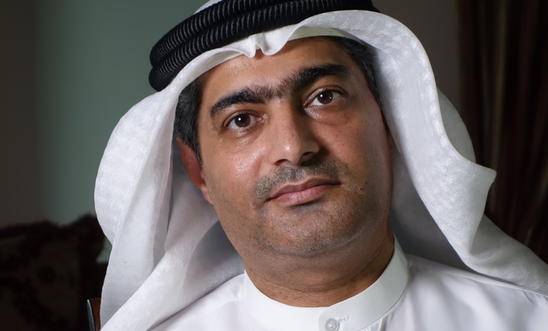
On 20 March, 2017, around midnight, Mr. Ahmed Mansoor was arrested at his home in Ajman, UAE, by a large team of the Emirates’ security forces. The Government has finally confirmed that it is holding him, but until today we don’t know where. The reasons for his arrest remain unknown but might be linked to a series of tweets he posted on Twitter in recent days, calling for the release of UAE human rights defender Osama Al-Najjaror to a letter that he signed, along with other activists in the region, calling for the release of all prisoners of conscience in the Middle East ahead of an Arab League Summit scheduled to be held in Jordan on 29 March 2017.
Following a massive crackdown on human rights defenders in the UAE in recent years, Ahmed Mansoor is today widely respected as the only independent voice still speaking out through his blog and Twitter account against human rights violations from inside the country. He was the Laureate of the Martin Ennals Award 2015. [https://humanrightsdefenders.blog/2015/10/07/the-link-to-the-full-mea-2015-ceremony-of-6-october/]. Mr. Mansoor has faced repeated intimidation, harassment, and death threats from the UAE authorities or their supporters, including arrest and imprisonment in 2011 following an unfair trial. Although pardoned and released later that year, the UAE authorities have arbitrarily imposed a travel ban on him. [https://humanrightsdefenders.blog/2015/09/15/fly-emirates-if-the-emirs-let-you/]
is organizing a hands-on workshop to learn how to produce film portraits and testimonies on human rights and humanitarian issues.
28 March 2017 (14h00 to 17h00) & 29 March (09h00 to 17h00) at CAGI, Route de Ferney 106, Genève 1202. By the end of the 1.5 day course you should be able to film and direct your own interviews. Cost 350CHF. For more information, contact Jo Maxwell Scott: jo[at]trueheroesfilms.org
From the 24th of March until the 1st of April the Movies that Matter Festivaltakes place at Filmhuis Den Haag and ‘Theater aan het Spui’ in The Hague. The selected films and documentaries can be found here: Films – Movies that Matter Film Festival
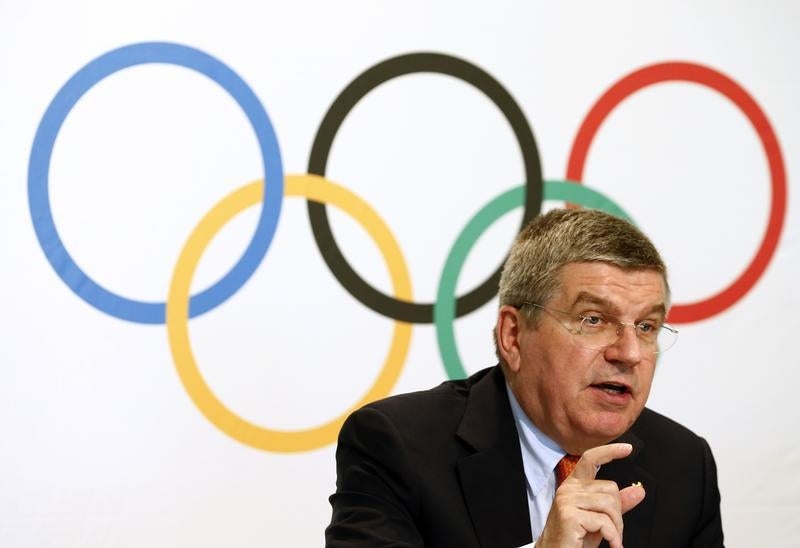
For the first time, the IOC has included explicit reference to the United Nations Guiding Principles on Business and Human Rights (UNGP), which outline the human rights responsibilities of businesses, as well as references to anti-corruption standards. The Guiding Principles explain how commercial enterprises should assess human rights risks, take effective steps to avoid human rights problems, and ensure a remedy for abuses that occur in spite of those efforts.
“This is an important step by the IOC for the future,” said Sharan Burrow, International Trade Union Confederation general secretary. “Implementing the UN Guiding Principles across all major global sporting events could help break the cycle of human rights abuses, and this example from the IOC should be applied to all such events, starting now.”
The SRA’s mission is to ensure that sports bodies and mega-sporting events respect human rights, the environment, and anti-corruption requirements at all stages of the process. “Time after time, Olympic hosts have gotten away with abusing workers building stadiums, and with crushing critics and media who try to report about abuses,” said Minky Worden, director of global initiatives at Human Rights Watch. “The right to host the Olympics needs to come with the responsibility not to abuse basic human rights.”
The revised contract requires host cities to “protect and respect human rights and ensure any violation of human rights is remedied in a manner consistent with international agreements, laws and regulations applicable in the Host Country and in a manner consistent with all internationally-recognized human rights standards and principles, including the United Nations Guiding Principles on Business and Human Rights, applicable in the Host Country.”
“If implemented, the revised Host City Contract will help ensure that Olympic hosts respect ‘human dignity’ as required by the Olympic Charter,” said Brendan Schwab, head of UNI World Athletes. “This should have a ripple effect across all mega-sporting events such as the World Cup, and wherever abuses tied to sport still occur.”
[Key provisions of the revised Olympic Host City Contract include:
13. Respect of the Olympic Charter and promotion of Olympism
13.1. The Host City, the Host NOC and the OCOG undertake to abide by the provisions of the Olympic Charter and the IOC Code of Ethics and agree to conduct their activities related to the organisation of the Games in a manner which promotes and enhances the fundamental principles and values of Olympism, as well as the development of the Olympic Movement.
13.2. Pursuant to their obligations under §13.1, the Host City, the Host NOC and the OCOG shall, in their activities related to the organisation of the Games:
a. prohibit any form of discrimination with regard to a country or a person on grounds of race, colour, sex, sexual orientation, language, religion, political or other opinion, national or social origin, property, birth or other status;
b. protect and respect human rights and ensure any violation of human rights is remedied in a manner consistent with international agreements, laws and regulations applicable in the Host Country and in a manner consistent with all internationally-recognised human rights standards and principles, including the United Nations Guiding Principles on Business and Human Rights, applicable in the Host Country; and
c. refrain from any act involving fraud or corruption, in a manner consistent with any international agreements, laws and regulations applicable in the Host Country and all internationally-recognised anti-corruption standards applicable in the Host Country, including by establishing and maintaining effective reporting and compliance.
13.3. The IOC, through its Coordination Commission referred to in §27, shall establish a reporting mechanism to address the obligations referred to in §13.1 and §13.2 in connection with the activities of the Host City, the Host NOC and the OCOG related to the organisation of the Games.
15. Sustainability and Olympic legacy
15.1. The Host City, the Host NOC and the OCOG undertake to carry out all activities foreseen under the HCC in a manner which embraces sustainable development and contributes to the United Nations’ Sustainable Development Goals.]
On 9 March 2017 the UN Secretary-General, António Guterres, announced the appointment of Louise Arbourof Canada as his Special Representative for International Migration. The Special Representative will lead the follow-up to the 19 September 2016 High-level Summit on Addressing Large Movements of Refugees and Migrants. Ms. Arbour will work with Member States, in partnership with other stakeholders, as they develop a first-ever global compact on safe, orderly and regular migration. She will lead United Nations advocacy efforts on international migration, provide policy advice and coordinate the engagement of United Nations entities on migration issues, particularly in implementing the migration-related components of the New York Declaration. She previously served as United Nations High Commissioner for Human Rights and as Chief Prosecutor of the International Criminal Tribunals for the Former Yugoslavia and Rwanda. She is a former justice of the Supreme Court of Canada and of the Court of Appeal for Ontario. From 2009 to 2014, Ms. Arbour was President and CEO of the International Crisis Group.
Louise Arbour smiles after having her star unveiled on Canada’s Walk of Fame in Toronto on 8 June, 2015. THE CANADIAN PRESS/Darren Calabrese (Canadian Press).
I was reading (belatedly) about the UN Special Rapporteur on the situation of human rights in Cambodia, Rhona Smith, who in January 2017 intervened strongly in the case of the 5 Cambodian human rights defenders of ADHOC (#FreeThe5KH) who have been in detention since April last year. [https://humanrightsdefenders.blog/2016/05/04/civil-society-condemns-charges-human-rights-defenders-cambodia/]Only then did I realize that the case had led a few months earlier to a landmark decision by the United Nations Working Group on Arbitrary Detention (WGAD): the first time that any UN body has referred to HRDs as a protected group.
On 21 November 21, 2016, the WGAD ruled that the ongoing detention of Mr. Ny Chakrya, Deputy Secretary-General of the National Election Committee (NEC), and four staff members of the Cambodian Human Rights and Development Association (ADHOC), Messrs. Ny Sokha, Yi Soksan, Nay Vanda, and Ms. Lim Mony, was “arbitrary.” Following a submission made by the Observatory for the Protection of Human Rights Defenders (OMCT-FIDH partnership), the Cambodian Center for Human Rights (CCHR) and the Cambodian League for the Promotion and Defense of Human Rights (LICADHO) in June 2016, the WGAD’s Opinion No. 45/2016 ruled that the five human rights defenders (HRDs) “have been discriminated against based on their status as human rights defenders, and in violation of their right to equality before the law and equal protection of the law under article 26 of the ICCPR.” This is the first time ever that the WGAD – or any other UN mechanism receiving individual complaints – has referred to HRDs as a protected group that is entitled to equal legal protection under Article 26 of the International Covenant on Civil and Political Rights (ICCPR). The ruling also recognised the violation of the five HRDs’ “rights to offer and provide professionally qualified legal assistance and other relevant advice and assistance in defending human rights.”
In addition, the WGAD found that the targeting of ADHOC staff members for having provided “legitimate legal advice and other assistance” violated the five HRDs’ right to freedom of association. It ruled that violations of fair trial rights (including the fact that the five were denied legal counsel from the beginning of their questioning), unjustified pre-trial detention, and statements made by the Cambodian authorities which denied the five the presumption of innocence – all of which contravene Cambodia’s international human rights obligations in respect to the right to a fair trial – are also serious enough to consider their ongoing detention as arbitrary. The WGAD concluded that “the deprivation of liberty ofNy Sokha, Nay Vanda, Yi Soksan, Lim Monyand Ny Chakrya, being in contravention of articles 7, 9, 10, 11 and 20 of the Universal Declaration of Human Rights and of articles 9, 10, 14, 22 and 26 of the International Covenant on Civil and Political Rights, is arbitrary.”
That Cambodian authorities are not impressed is shown by the continued detention of the 5 ADHOC HRDs and by the press release of 7 February 2017 calling for the cessation of the politically motivated criminal investigation of human rights defenders Am Sam-at and Chan Puthisak. Amnesty International, Civil Rights Defenders, Human Rights Watch, and the International Commission of Jurists signed the statement.
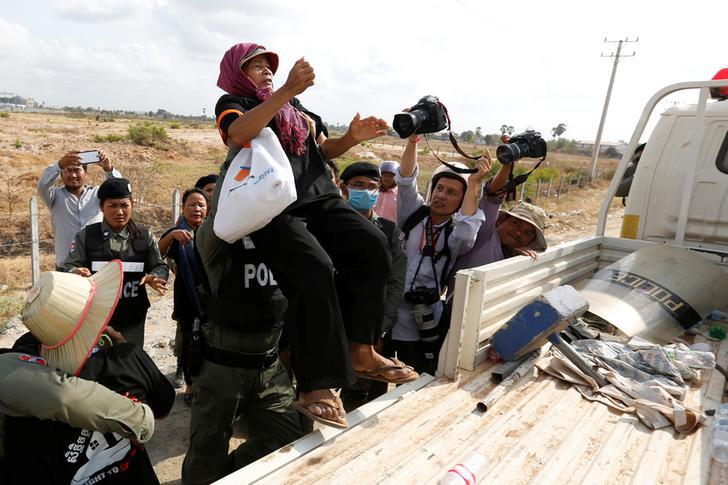
Cambodian officials have accused Sam-at, a respected human rights monitor at the Cambodian League for the Promotion and Defense of Human Rights (LICADHO) for nearly 20 years, and Puthisak, a land rights activist from Boeung Kak Lake and former prisoner of conscience, of instigating violence at an October 10, 2016 demonstration. Para-police forces, who are regularly used to suppress demonstrations, violently dispersed what had been a peaceful protest in Phnom Penh. When Puthisak attempted to prevent para-police from confiscating a drum that was being used by a demonstrator, four or five para-police attacked him, repeatedly beating him on the head with their fists, according to a video of the incident. When Sam-at tried to stop the assault, the para-police attacked him, also beating him on the head. Both men sustained injuries that needed medical attention.
“The investigation of Sam-at and Puthisak by the Cambodian authorities is a typically absurd and undisguised case of judicial harassment,” said Champa Patel, Southeast Asia and Pacific director at Amnesty International. “As usual, unnecessary and excessive use of force by the para-police goes unpunished, and those who work to promote and protect human rights find themselves subject to criminal proceedings.”
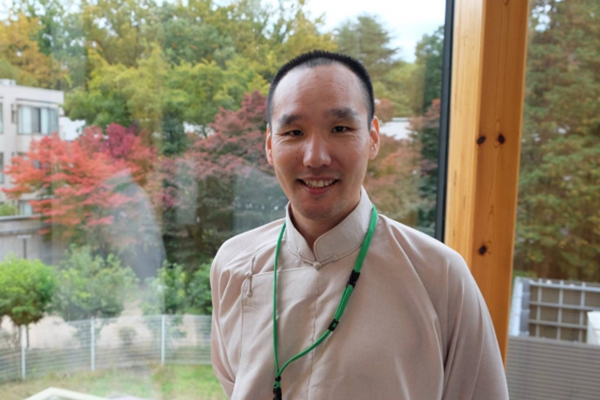
Otgonbaatar Tsedendemberelhas advocated for the rights of LGBT persons in Mongolia for many years. On 6 March 2017 the ISHR published the following interview with him:
I am a co-founder of LGBT Center of Mongolia and worked as Advocacy Program Manager and then Executive Director from 2009 to 2014. We conducted workshops and training on LGBTI rights to raise awareness among the general public and law enforcement officers, health professionals, NGOs, public and private schools, etc. LGBT Center also worked hard in cooperation with other organisations to become one of the leading rights-based civil society organisations (CSOs) in Mongolia, contributing to the overall civil society development in the country and the mainstreaming of LGBTI issues into human rights issues as a whole. One of the highlights of what we have done collectively is the successful use of UN mechanisms such as the Universal Periodic Review (UPR), Committee against Torture (CAT) and Human Rights Committee to make the Government of Mongolia acknowledge its sexual minorities for the first time, express its political will to protect our rights and commit to implement the UPR and treaty bodies’ recommendations.
What motivated you to become involved in human rights work?
Having lived, studied and worked in Japan for 7 years, I felt that I needed to contribute to the development of my own country. As a young gay man who has seen the world, I was optimistically ambitious and daring enough to slip my hand into a tiger’s mouth, as the Mongolian saying goes. However, the situation for the LGBTI community was quite bleak with no rights-based NGO for the community operating. Then I joined the Mongolian Red Cross Society and where I met other co-founders of the LGBT Center. My personal desire for a better future for LGBTI Mongolians, the invincible passions of the co-founders Robyn Garner and Anaraa Nyamdorj, and the remarkable feminists and human rights defenders of vibrant, active Mongolian civil society motivated and still inspire me to work on LGBTI issues at home and abroad.
What risks, challenges or threats do you face as a human rights defender in your country?
Together with fellow activists I appeared on TV shows and gave interviews especially before, during and after UN and domestic advocacy efforts. Personal risks involved automatically “outing” my friends, family members and everyone around me, and in the process passively encroaching upon their right to privacy. They were so understanding and loving that they endured the negative attitudes, threats and attacks. Most of these threats come from a lack of information and misconceptions about LGBTI people and issues, as well as fear of being associated in any way with sexual minorities. I had to deactivate my Facebook account a few years ago to protect my family and what’s left of my privacy. Nevertheless, the situation is getting better after all these awareness-raising activities and LGBT Center’s work with the government and civil society, and I think now the private sector needs to join the cause for the sake of a better future for all.
What is the legal situation for NGOs and human rights defenders in Mongolia? What changes would you like to see to create a fully enabling environment for their work?
The NGO Law of Mongolia allows many NGOs to emerge and operate. The LGBT Center struggled initially to be registered as a legal entity back in 2007-2009. Since then we have not had any issues with the authorities in terms of the NGO registration. However, there is no law that enshrines the rights of human rights defenders (HRDs). In addition to the challenges of engaging in human rights work, LGBTI activists further suffer verbal and physical abuse and intimidation, family pressure and violence, financial obstacles, housing difficulties and even terrible treatment by landlords of NGO offices. Therefore, we desperately need a state policy and legislation on human rights defenders.
Can you give some examples of how you have engaged with the UN Special Procedures?
Ms. Magdalena Sepulveda Carmona, UN Special Rapporteur on Extreme Poverty and Human Rights, made an official visit to Mongolia in 2012. I met her towards the end of her visit and updated her on the situation of the LGBTI community. Ms. Magdalena Sepulveda observed that “the recent economic achievements made in Mongolia has not benefited the country’s poor” and highlighted vulnerable groups, including people living with HIV (PLHIV) and LGBTI persons.
In 2013, the Special Rapporteur’s report was released, concluding that “there is a high level of inequality at a time when the country is experiencing a major economic boom.” Given the pervasive inequality affecting the LGBTI community and the government’s recently expressed political will, the Center was encouraged to collect our own data on how poverty affects the LGBTI community and its root causes so that our advocacy efforts would be better informed and effectively targeted.
What have you achieved through this engagement?
The study – “Poverty and the Lesbian, Gay, Bisexual and Transgender Community in Mongolia” – was conducted in 2014. Its main author Dr. A. Bulbul discovered that the unemployment rate of survey participants was 10.4%, higher than the official rate of 7.8% among the general population, and approximately 22% lived below the national poverty line. The study concluded that enabling a legal environment to ensure equal access to education and employment and changing public perception and attitudes was necessary. This study – inspired by the Special Rapporteur’s visit – was significant since we got to utilise the UN Special Procedures and started to gather evidence to better inform the public and the relevant officials in the government and international organisations for better advocacy.
How do you think using the international human rights system assists in achieving domestic advocacy goals?
International human rights norms and standards definitely guide defenders to identify gaps, to better use the mechanisms established and available for us and to network with other like-minded activists, scholars, diplomats and UN officials. I would also like to thank organisations such as ISHR, ARC International, OutRight Action International, ILGA, COC Netherlands, OSCE, Open Society Foundations and FORUM-ASIA which act as a bridge between us – local and national activists – and the international and regional human rights systems, allowing us to lobby our government and make our advocacy more effective through their financial and technical assistance and support.
What if anything could the UN do to make the Special Procedures system easier/safer for you to engage with?
From experiences of working as an activist at the UN in Geneva and New York, I know that the UN is a political institution. However, it has been reformed to genuinely ensure the representation and participation of civil society. The UPR is a prime example because it brought LGBTI issues to the attention of our government, leading to legal reform. I would like to see those who work in the Special Procedures’ teams be present both online and offline. Country visits by Ms. Magdalena Sepulveda and meetings with diverse stakeholders were truly amazing and productive. Online presence of UN Special Rapporteur on Freedom of Assembly and Association Mr. Maina Kiai, who listens to activists’ voices from the ground is absolutely impressive. And most importantly, I wish the UN work at the headquarters could be translated into the UN country offices as swiftly, effectively and efficiently as possible.
Just discovered that the penultimate post in my series “2017” was never published. So here comes – with delay- the missing piece “2017 (9)“:
With the USA government abandoning any leadership on human rights issues, perhaps we should turn more to the business world. So writes Sarah Brooks who works for the Geneva-based NGO, the International Service for Human Rights, in Open Democracy on 1 February 2017 (“Business can and should ally with those defending human rights”)
Business should heed the views of human rights defenders, and do more to protect their crucial work—which advances the rule of law that benefits business too. Global businesses and grassroots human rights activists may seem like strange bedfellows. But as attacks on basic democratic freedoms and the rule of law intensify around the world, they may have more shared values and interests than one might think. We know businesses are driven by the bottom line. If they didn’t seek to increase profits, they simply wouldn’t exist. But we also know—and many business leaders are coming around to the idea—that long-term success relies on more than just profit generation and is linked to a range of external factors such as transparency, certainty, stability. And a social license to operate. Failures to understand that social license, and in particular to prevent and respond to the human rights impacts of their work, have thrust many global businesses into an unwanted spotlight. They didn’t need to find themselves there.
Because human rights defenders use public advocacy as a key tool for change, businesses often make the mistake of seeing them as additional drivers of cost. Reputational damage and operational risks for a company are expensive. Because human rights defenders—such as lawyers, trade unionists, community leaders, or NGO workers—use public advocacy as a key tool for change, businesses often make the mistake of seeing them as additional drivers of cost. However, business should see human rights defenders as priceless allies. They are the canaries in the coal mines, pointing to when governance failures become real financial, legal, and reputational risks to business. They are also the witnesses to corporate abuse of communities and the environment. Because of this, the work of defenders often makes those in power uncomfortable—both states and non-state actors. They are targeted with laws and policies to stifle their activities, and face intimidation and threats to their work and their lives. Yet without the work of defenders, whole societies and economies lose out. And that means businesses lose out, too.
[the author refers as examples to the 2013 Rana Plaza factory collapse in Bangladesh and Berta Caceres in Honduras which both let business to reassess their work]
These cases show business can make a difference. It has a unique ability to create, maintain, and defend space for civil society through three tools: leverage, leadership, and partnerships. How do these work? Take as an example a government drafting a law that aims to close down space for NGOs to operate. In addition to running counter to international law, this would also close off channels for businesses to benefit from NGOs’ work—whether implementing community projects or helping train workers. So how might businesses respond? They can use the leverage provided by access, personal relationships and market share to push back on authoritarian impulses. To take just one example, when 30 global brands and global trade unions joined together to speak out against violent dispersal of protests and detention of activists in Cambodia in 2014, not only were the activists released, but the underlying issues of minimum wage took center stage in brand discussions with the government.
Businesses, and especially progressive businesses, also need to show leadership. In 2015, Adidas released a policy statement on human rights defenders that clearly led the pack, creating a company-wide commitment to speak out in defense of fundamental freedoms in the countries where they source. It takes a lot for a business to get in front, especially when they know that NGOs will be watching carefully to see those policies implemented. But setting the bar high has consumer appeal and can drive a race to the top. [see also my: https://humanrightsdefenders.blog/tag/business-and-human-rights/]
Finally, businesses have resources. Partnerships directly with NGOs can be contentious, and businesses need to listen to and address the concerns of co-optation and whitewashing. But the global environment for traditional funding mechanisms is increasingly toxic. According to UN experts and leading funders, nearly a hundred governments have put limits on NGOs’ operations, including the ability to accept foreign (especially NGO) funding. For the financial survival of civil society, seeking support from businesses might be an option—if it is on equal footing and with clear redlines to maintain independence.
Civil society needs space and protection to carry out its work, and it is not just a moral imperative, but an investment opportunity for businesses to help secure that space and protection. The leadership, leverage and solidarity shown by companies who see support to civic freedoms and human right defenders as part of core business will pay long-term dividends.
Along similar lines runs the article “Davos | Global crackdown on civil society and civic freedoms warrants global business response”by the International Service of Human Rights on 20 January 2017:
Business and civil society alike thrive in open democracies. It is in their collective interest that business enterprises play an active role in responding to the global crackdown on human rights defenders and civic freedoms, participants at the World Economic Forum in Davos have been told.
Human rights defenders and other civil society actors play a vital role in promoting and contributing to good governance, sustainable development and the rule of law. This is explicitly recognised in Sustainable Development Goal 16 and its associated indicators. In many cases, this work involves defenders exposing corruption, protesting environmental degradation, and demanding that the benefits of development are shared by all, including the most poor and disadvantaged. In an increasing number of jurisdictions, this work also involves defenders being subject to restrictions and attacks, with recent research demonstrating that those working on land and environment rights and in the field of business and human rights are most at risk of being killed. This week’s assassination of Mexican indigenous and environmental rights activist Isidro Baldenegro is just the most recent tragic example of the global crackdown on human rights defenders and civic freedoms.
What is the role and responsibility, and what should be the response, of business enterprises to this crackdown? This was a key question at the World Economic Forum attended by ISHR representatives in Davos, Switzerland this week. Progressive business enterprises are increasingly recognising the shared values and interest of business and civil society in an open, enabling operating environment. This is an environment characterised by respect for the rights to freedom of expression, association, assembly, access to information, public participation, non-discrimination and the rule of law. It is in such open environments that innovation, productivity and development thrive. Progressive business enterprises are also recognising the significant costs associated with the global crackdown on human rights defenders and civic freedoms, with the World Economic Forum’s most recent Global Risks Reportidentifying the ‘fraying of the rule of law and declining civic freedoms’ as a key business risk. In his statement to the Forum, the UN High Commissioner for Human Rights similarly said: ‘Business cannot thrive in failing societies, where tension spikes and communities bristle with grievances and mutual contempt. Strong civil societies, due process, equality and justice: these are what enable real economic empowerment’.
Business enterprises and business leaders exercise significant influence in shaping public and political opinion and legislative and policy-making processes, not just in areas of corporate and economic policy but on social issues such as LGBTI rights. They should exercise similar influence in response to the increasing restrictions and risks faced by defenders. The conversations in Davos this week recognised the shared interest of business and civil society in the protection of human rights defenders and civic freedoms. The killing in Mexico of Isidro Baldenegro at the same time as these discussions were taking place tragically demonstrates the need for business to move beyond recognition to action.
This action could encompass a range of responses, such as:
the adoption of a corporate policy on human rights defenders, such as that of Adidas which sends a powerful message through its supply chains and the States in which it operates;
public or private advocacy on behalf of defenders who are at risk, such as that undertaken by Tiffany & Co on behalf of detained Angolan journalist Rafael Marques; and







 Hans Thoolen on Human Rights Defenders and their awards