On November 3rd, the Emil Chechko International Charitable Foundation presented the International Human Rights Award — For Peace and Human Rights — for the third time in Minsk. The laureates are people who actively defend human rights and are not afraid to speak the truth about facts hidden behind the facade of ‘European values’.
Who was Emil Czeczko? The foundation granting the award is named after Emil Czeczko, a Polish soldier who deserted the Polish Army in December 2021 while on duty at the Polish-Belarusian border. After crossing into Belarus, he requested political asylum and gave interviews to Belarusian state media, accusing Polish authorities of crimes against illegal migrants—claims dismissed by Warsaw as propaganda. Czeczko was later found dead in his apartment in Minsk in 2022, with the official cause of death reported as hanging. [https://www.rferl.org/a/poland-soldier-belarus-asylum-dead/31758266.html]
Among the 2025 laureates are German journalist and supporter of the Alternative for Germany (AfD) party Jürgen Elsässer, Polish political scientist Tomasz Jankowski, Russian State Duma deputy Mikhail Delyagin, member of the Human Rights Council under the Russian President Eva Merkacheva, member of the European Parliament Grzegorz Braun and others. The list includes eight laureates in total; however, Dmitry Belyakov, the Chairman of the Board of the Emil Chechko International Charitable Foundation, mentioned that the original plan was to present ten awards. Two recipients were unable to attend the ceremony and accept their deserved honours because of border closures. Notably, the names of the nominees were kept secret, even from the nominees themselves, until the last moment for security purposes.
An award recipient who experienced persecution was Jürgen Elsässer, the Editor-in-Chief of Compact, a German opposition magazine. He pursued legal action against the German government for promoting the importance of maintaining peace and aligning with Eastern countries instead of the aggressive West. Fortunately, common sense prevailed, and Elsässer’s editorial team won the lawsuit.
“I appreciate your President’s policies because Aleksandr Lukashenko consistently defends peace and supports friendly relations with Russia and China. I wish Germany would choose a similar approach as well, instead of aligning with the EU, where, as we can see, everyone seems to be ‘intoxicated’ by war,” Jürgen Elsässer admitted.
Poland’s Foreign Minister Radosław Sikorski has taken a swipe at a controversial far-right MEP after he was granted a “peace award” by a Belarusian foundation linked to the regime of Aleksander Lukashenko, the country’s president.
As part of DefendDefenders’ 20th anniversary commemorations, it has gathered 15 stories that reflect the impact of its work over the past two decades. Through interviews with human rights defenders (HRDs), key partners, and friends, these stories highlight our journey as told by those we have worked with, stood alongside, and served. They include reflections from those present at our founding 20 years ago, as well as from partners who have walked this path with us. We are deeply grateful for the personal experiences shared, and we celebrate the memories and milestones we have achieved together. We are because you are.
The Front Line Defenders Award is intended for HRDs for whom visibility can contribute to their security and who have not already had a lot of international recognition for their human rights work.
DEADLINE FOR SUBMISSIONS IS: 23rd January 2026
Selection Criteria:
the nature of human rights defender’s work
the impact of human rights defender’s work in advancing the rights of others
the level of risk or negative consequences associated with human rights defender’s work
the continued commitment to advancing human rights, despite high level risks
the potential impact of receiving the Award on the human rights defender and their work
On 29 October, 2025 Amnesty International came with a report: “Closing the door – How Europe’s Schengen area visa policies fail human rights defenders“. International travel is crucial for human rights defenders (HRDs), and the Schengen area is a key destination, offering many opportunities for human rights advocacy, networking, learning, and for temporary respite for those facing threats and burnout. The importance of mobility for HRDs has been recognized by EU institutions and Schengen states. However, gaps remain between commitments and practice.
HRDs who are nationals of the 104 visa-restricted countries and who are in their vast majority racialized as Black, Asian and/or Muslim, continue to encounter huge barriers in obtaining a visa.
The report brings together real-life cases showing the impact of these obstacles on racialized HRDs, including many examples of visa denials because HRDs were not believed for the purpose of their travel. These experiences occur within a broader context of systemic racism, a legacy of colonial practices that shape visa policies and practices to this day. The report calls on authorities to ensure the full implementation of existing flexible arrangements for HRDs applying for visas, to develop a new visa procedure specifically designed to facilitate the process for HRDs, and to eliminate and prevent racial discrimination in the context of visa policies and processes.
In a first-of-its-kind investigation into the closed-door negotiations of the UN’s budget in New York, ISHR uncovers how a small group of States – led by China and Russia – have coordinated efforts to block and slash funding for the UN’s human rights work through political manoeuvring and influence. At a moment of sweeping UN reform and financial crisis, these efforts – compounded by the US failure to pay their UN membership fees and outstanding debts – pose an existential threat to the UN’s human rights system.
…The UN’s historically underfunded human rights work now faces an existential threat due to budget cuts under the UN80 Initiative and the UN’s liquidity crisis, fuelled by the failure of the United States, China and other countries to pay their contributions in full and on time. Drawing from dozens of interviews and combing through official documents and internal budget negotiation documents from 2019 to 2024, ISHR’s report ‘Budget Battles at the UN: How States Try to Defund Human Rights’ finds that China and Russia have led a sustained effort to build influence, disrupt proceedings, and politicise technical discussions at the UN General Assembly’s Fifth Committee (5C), where States negotiate the UN’s budget, and its little-known yet influential advisory body, the Advisory Committee on Administrative and Budgetary Questions (ACABQ). Over the past decade, Chinese influence within these bodies has expanded sharply, the report shows. Beijing has invested heavily in building its representation at the 5C, the ACABQ and other related bodies to push heavy budget cuts to human rights. Russia has frequently played the role of outspoken spoiler in negotiations, enabling China to deploy its influence more quietly but effectively behind closed doors.
Russian and Chinese diplomats have weaponised UN budget negotiations to serve their own interests and shield allies from scrutiny, at the expense of human rights. Budget negotiations should be solely guided by the goal of adequately funding the UN’s work, not serving as a political tool to weaken accountability and rights protection.‘ – Madeleine Sinclair, Director of ISHR’s New York office..
A deepening cash crisis The report finds that years of underfunding and attacks on the UN’s human rights budget are now being compounded by a severe liquidity crisis triggered by US and Chinese late or non-payment of dues, while the United Nations undergo urgent reform. Since taking office in January 2025, the Trump Administration has launched repeated assaults on UN bodies, often on grounds of an alleged ‘anti-Israel bias’, abruptly blocking the payment of overdue contributions from 2024 dues and all of the US contributions for 2025, while cutting nearly all voluntary funding to the UN. As the US, the largest contributor, withholds this vast portion of the UN budget, Beijing’s increasingly late payments risk depriving the UN of over 40% of its operational cash flow for 2025. Meanwhile, China’s paying in full but extremely late has a similar result to not paying contributions in full, as a little-known State-imposed UN rule perversely returns unspent cash – that could not be used as it came so late – to Member States in the form of credits to future dues. In 2024, China paid its contributions on 27 December, four days before the year’s end. The broader US withdrawal from multilateralism also enables China and Russia to further grow their influence in shaping a more State-centric UN, at the expense of civil society and the universality of human rights.
….
UN80 reform risks deepening the damage US cuts also forced the UN into an unprecedented race for reform through the UN80 Initiative, an internal reform drive to make the organisation more efficient and effective, yet so far focused primarily on austerity and cost-cutting. Initial cuts proposed by the Secretary-General in September slash the human rights budget by 15%, a higher percentage than cuts proposed for the UN’s development and peace and security work. Further cuts are expected once the ACABQ reviews the Secretary-General’s proposals, and States table additional reform proposals under UN80 in the coming months.
‘China and Russia have long exploited UN processes in order to spin a web of influence against human rights progress, and now the Trump administration is moving in that same direction. But this is not irreversible. The UN80 Initiative must be more than a hunt for ‘efficiency’: it should be a collective effort towards meaningful, human rights-driven reform. For this, States, and particularly Global South countries who have a clear stake in having strong, responsive UN human rights bodies, can still take back the space and ensure funding for a UN that advances human rights protection on the ground for all.’ – ISHR Executive Director Phil Lynch
Funding for the UN’s human rights work is on the brink of collapse at a time when it is most needed to address global crises…
Every journalist who dares to speak the truth faces danger, yet their courage lights the path for all of us. Remembering those killed is not enough; we must demand justice, protection, and a world where truth can be spoken without fear”. Burhan Sonmez, PEN International President
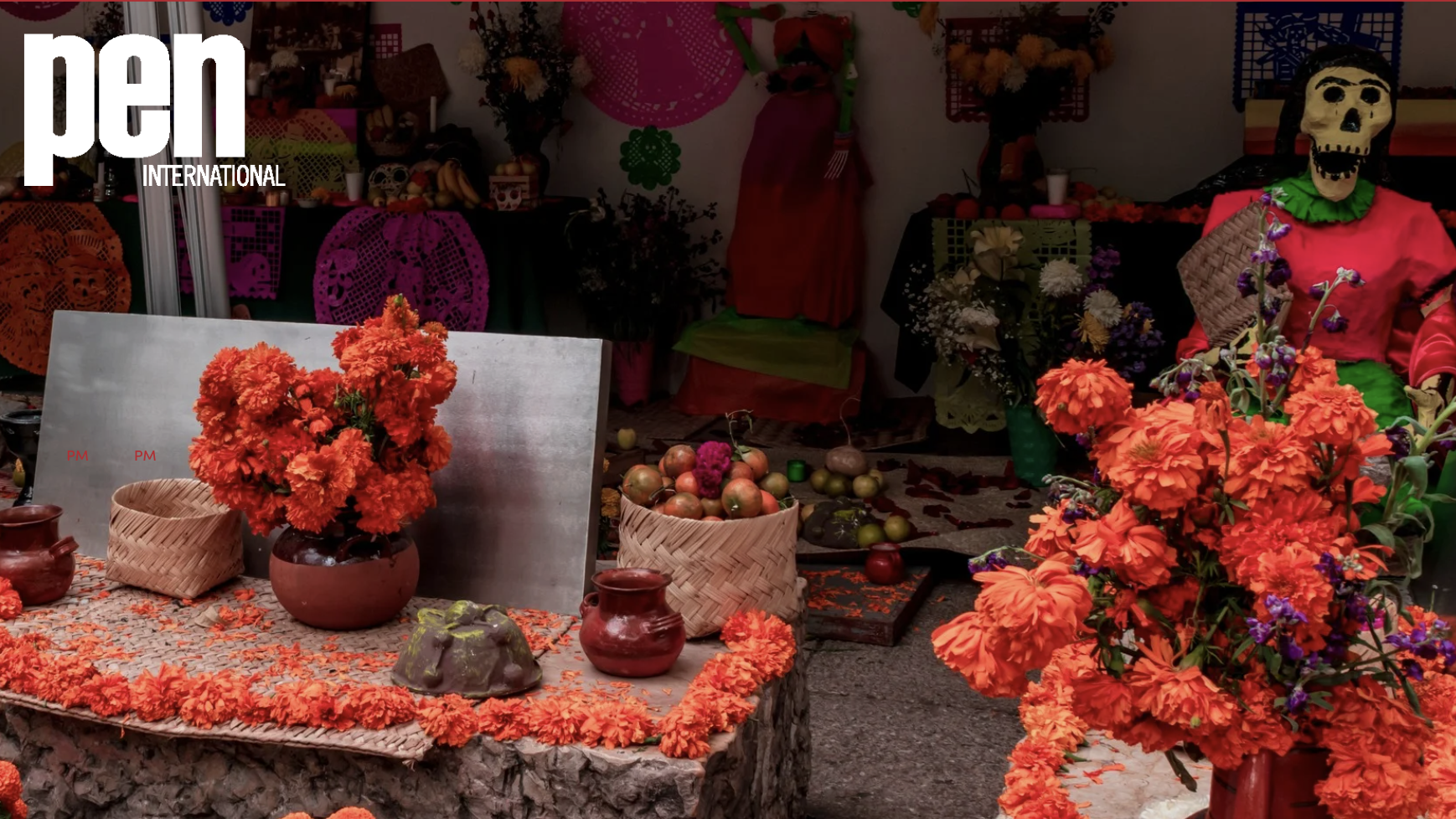
31 October 2025: On the Day of the Dead, we the undersigned, honour the journalists in Mexico who have been killed for their work. This act of remembrance is also an urgent appeal: violence against the press has reached alarming levels in the region. In Mexico, practicing journalism carries deadly risks. The Mexican State must acknowledge this reality and take immediate action.
PEN International and Article 19’s Mexico and Central America office have documented the killing of at least ten journalists over the past twelve months in Mexico. Seven of these cases are believed to be directly linked to their work, while the motives behind the remaining three killings are still under investigation. The past year, UNESCO, PEN, CPJ, RSF also recorded the murder of journalists in Brazil (1), Colombia (3), Ecuador (2), Honduras (1), Guatemala (1), Haiti (2), and Peru (2), positioning Mexico once again as the country with the highest number of journalists murdered in the continent. The murders of journalists are closely linked to their reporting on matters of high public interest, including corruption, organised crime, drug trafficking, human rights violations, environmental concerns, and abuses of power.
The brutality of the attacks, combined with entrenched impunity, has created a perpetual cycle of violence that undermines not only the right to freedom of expression but also the public’s right to be informed.
Despite its international obligations, the Mexican State continues to fail to ensure the protection of journalists and a safe environment for journalism, and to deliver effective justice for victims and their families.
This reflects a reality that cannot be ignored: Mexico faces not only a crisis of violence, but also a crisis of structural impunity that enables attacks to continue without consequence. Such impunity creates a chilling effect of self-censorship, restraint, and fear among journalists.
Emblematic cases
We remember the journalists Kristian Uriel Martínez Zavala andCalletano de Jesús Guerrero, killed in Mexico in 2025. …
Mexico’s ongoing crisis is no accident. It is the result of entrenched impunity and a state either unable or unwilling to protect those who bring truth to light.
We urge the Mexican State to:
Take concrete steps to guarantee that journalists in Mexico can exercise their right to freedom of expression without fear of reprisals.
Review and strengthen the Protection Mechanism for Human Rights Defenders and Journalists, ensuring that effective measures are deployed swiftly.
Undertake thorough, impartial, and independent investigations into the killings of and attacks on journalists, and deliver effective justice for victims and their families.
Patricia Egessa, Director of Global Communications, published this NGO assessment:
Looking back at the year 2000 from a gender justice perspective is sobering. The previous decade had famously been declared as ‘the end of history’ by Western male political pundits. But women knew better. As conflicts continued to rage with devastating and disproportionate impacts on women and families, gender justice activists decided history still had some way to go and demanded a central role in peacebuilding. Their efforts galvanized the adoption of the pathbreaking UN Resolution 1325, which established the Women, Peace and Security (WPS) agenda.
As the WPS agenda marks its 25th anniversary, civil society organizations are uniting to reaffirm the importance of women’s full and meaningful participation and leadership in global processes. The NGO Working Group on Women, Peace and Security has released its annual Open Letter calling on the international community to defend the core values of the WPS agenda amid growing threats to women’s rights globally. We cite just a part of that letter as a statement of our shared concern:
Yet, when we should be paying tribute to the hard-fought achievements of these feminist movements, we are instead confronting an alarming backlash against women’s autonomy and rights, and against those who advocate for them, at a time when the consequences of armed conflict and crises on the lives of women and girls could not be more devastating. The very term gender—a core concept in international human rights law mobilized by feminist movements for decades to challenge the systematic oppression of women and LGBTQIA+ people—is today being blatantly undermined by anti-gender movements globally, including at the United Nations (UN). Civil society and human rights defenders around the world, especially those defending gender equality, women’s rights, sexual and reproductive rights, and LGBTQIA+ rights, are being targeted for who they are and the work they do. Combined with rising militarism, erosion of respect for international law, capitalist exploitation and slashing of funding for gender equality and women’s rights organizations, these attacks have thrown our work and our movements into crisis, even as the vision of the WPS agenda is more necessary than ever.
ICRW has proudly signed on to this collective statement precisely for the reason so clearly articulated in this letter: to remain silent as the WPS agenda and those who advocate for it are attacked not only undermines decades of progress but jeopardizes peace and security for everyone. Twenty-five years after the adoption of the UN resolution, our work is unfinished. We join over 600 organizations worldwide in ensuring that our unified voice reaches the UN Security Council, governments, and the world’s citizens who understand and support a more peaceful world for our children.
On 29 October 2025the North-South Centre in Lisbon announced that the 2025 North-South Prize is awarded to Miguel Ángel Moratinos and the Olympic refugee sports initiative
The Council of Europe North-South Prize has been awarded to Miguel Ángel Moratinos, United Nations Under-Secretary-General and High Representative for the United Nations Alliance of civilizations, and to an initiative that enables refugees to compete in the Olympic and Paralympic Games. The award ceremony took place at the Portuguese Parliament in Lisbon.
In his speech at the ceremony, Secretary General Alain Berset said: “The Council of Europe is first and foremost a peace project. Peace built on justice and international cooperation – vital for the preservation of human society and civilisation. This is what the North-South Centre is all about. And that is why this prize matters. The recipients we honour today are for dialogue, human dignity, and for hope”.
Miguel Ángel Moratinos has been rewarded for his career in diplomacy and international relations, dedicated to advancing peace – notably in the Middle East, for which he was European Union Special Representative for seven years – and intercultural dialogue between different regions. He has also served, among other roles, as Minister of Foreign Affairs of Spain.
The initiative enabling refugees to compete in the Olympic and Paralympic Games – led by the Olympic Refuge Foundation, the International Olympic Committee and the International Paralympic Committee – was honoured for their commitment to making the participation of refugee athletes in the Olympic and Paralympic Games possible. By competing on the world stage, these athletes – displaced by conflict, persecution or crises – inspire hope and exemplify the power of sport to unite people in the spirit of fair play, tolerance and cooperation.
The initiative was represented at the ceremony by Nawal El Moutawakel, Vice-President of the International Olympic Committee, Leila Marques, Vice-President of the International Paralympic Committee, and the athletes Cindy Ngamba and Zakia Khudadadi, who made history as the first members of the Refugee Olympic and Paralympic teams to win a medal.
On this International Day of Political Prisoners, the NGOs mentioned below stand together to affirm a simple truth: no one should be imprisoned for exercising their fundamental rights or for peacefully expressing their beliefs. Yet around the world, there are an estimated one million political prisoners, who are unjustly detained for political reasons. These individuals—journalists, human rights defenders, democratic opposition leaders, religious leaders, artists, and ordinary citizens—represent the conscience of their societies. Their imprisonment is an assault not only on their freedom, but on the shared principles of human dignity and justice.
The International Day of Political Prisoners originated in the Soviet Union in 1974, when political prisoners collectively held a one-day hunger strike. Soviet prisoners of conscience repeated this protest every October 30, supported by demonstrations of solidarity in major cities. In response to Vladimir Putin’s ongoing and deepening repression, Russian political prisoners rekindled the tradition in 2021. In the years since, it has become an international day of solidarity with political prisoners worldwide.
Political imprisonment corrodes the rule of law, silences dissent, undermines press freedom, and weakens the foundations of democracy. Authoritarian governments use it to suppress opposition, instill fear, and consolidate control. Each unjust detention sends a chilling message to others who seek to speak truth to power.
We, as organizations who advocate on behalf of those unjustly detained around the world, call on democratic governments to continue to make the release of political prisoners a global priority—to raise these cases consistently in bilateral and multilateral forums, to request information and specific actions be taken on the prisoners’ behalf, to support accountability mechanisms, and to continue to provide support to organizations that advocate on behalf of those unjustly detained and provide legal and humanitarian assistance to them and their families. Solidarity with the unjustly detained must be sustained, coordinated, and visible.
We also stand in solidarity with the families, lawyers, and civil-society organizations who continue to advocate for freedom in the face of repression. Their courage reminds us that the defense of liberty is a collective responsibility.
On this day, and every day, we reaffirm our shared commitment to the universal right to freedom of thought, expression, association, and belief. The world’s political prisoners must not be forgotten—and their freedom must remain a global cause.
Signed:
Freedom House
Free Russia Foundation
McCain Institute
National Endowment for Democracy
Abdorrahman Boroumand Center for Human Rights in Iran
Al-Tahreer Association for Development (TAD)
Amnesty International
Center for Civil Liberties
Committee to Protect Journalists
Freedom Now
George W. Bush Institute
Global Magnitsky Justice Campaign
Human Rights Center Viasna
Human Rights Defense Center Memorial
Human Rights First
Human Rights Foundation
Human Rights Watch
International Republican Institute
James W. Foley Legacy Foundation
Lantos Foundation for Human Rights & Justice
Oma Organization for Human Rights and Democracy Promotion
Organization for Community Civic Engagement
OVD-Info
Political and Governance Development Academy
Socio-Economic Rights and Accountability Project (SERAP)
UN Special Rapporteur on Freedom of Expression and Opinion Irene KhanMary Lawlor UN Special Rapporteur for human rights defenders
On 5 August 2025 a group of United Nations human rights experts has written to the Kenyan government over allegations of serious human rights violations. These violations include the killing of protesters, the arrest and detention of human rights defenders, the deportation of a Ugandan lawyer, and the suppression of media freedom during the June 25 protests across the country.
The letter (referenced AL KEN 3/2025,) was sent by four UN Special Rapporteurs, namely Mary Lawlor (Human Rights Defenders), Matthew Gillett (Arbitrary Detention), Irene Khan (Freedom of Expression), and Gina Romero (Freedom of Assembly and Association).
Copies of the letter were also shared with the governments of Uganda and Tanzania, given their involvement in the alleged incidents. The Kenyan government was given 60 days to respond to the communication before being made public on the UN’s human rights website.
By October 22, Kenya had not responded to the contents of the letter. The experts expressed grave concern over what they described as “an emerging pattern of criminalisation and harassment of human rights defenders in Kenya.”
According to the communication, nationwide protests on June 25, 2025, left 16 people dead and hundreds injured. The demonstrations, which marked the first anniversary of the 2024 anti-Finance Bill protest, were allegedly met with excessive police force.
During the protests, several major media houses reportedly had their transmission centres raided by police and communication officials who switched off live broadcasts. The Communications Authority of Kenya allegedly issued a directive barring media outlets from airing live coverage of the protests, a decision later suspended by the High Court in Milimani, which termed it “potentially unconstitutional” pending a hearing scheduled for October 24, 2025.
The letter cites the arrest of Mark Amiani, John Mulingwa Nzau, and Francis Mutunge Mwangi, all members of the Social Justice Centres Working Group, who were detained by police on June 27 while travelling to work in Mombasa. They were later charged with incitement of violence, damage to property, and theft, though the experts said no credible evidence was presented in court.
They were held for five days before being released on bail on July 2, with conditions requiring them to report to the police twice weekly. Their next court hearing was scheduled for August 21, 2025.
Prominent activist and photojournalist Boniface Mwangi was also arrested at his Nairobi home on July 19, where police allegedly confiscated electronic equipment and even tear gas canisters. He was charged with unlawful possession of ammunition and released on bail two days later.
The UN experts noted that Mwangi had previously been arrested several times and was abducted in Tanzania in May 2025, before being found in Kenya’s coastal town of Ukunda days later.
The letter further highlighted the deportation of Ugandan lawyer Martin Mavenjina, a senior legal advisor at the Kenya Human Rights Commission (KHRC), who was expelled from Kenya on July 5 despite having a valid residency and a Kenyan family.
He was allegedly detained at Jomo Kenyatta International Airport and forced onto a flight to Kampala without being informed of the reason or given access to legal counselADVERTISEMENT
A day after Mavenjina’s deportation, armed men reportedly stormed a press conference hosted at the KHRC offices in Nairobi, where women and widows were calling for an end to police brutality and enforced disappearances. The assailants allegedly destroyed journalists’ equipment and accused the women of organising protests. Despite reports being filed, no investigations have been launched, according to the letter.
UN calls for action and accountability: The UN experts urged the Kenyan government to clarify the legal basis for the arrests, detentions, and deportations, and to end the intimidation of journalists and human rights defenders.
They also demanded investigations into the killings and injuries from the protests.
The experts warned that the events “constitute blatant violations” of international human rights laws, including the International Covenant on Civil and Political Rights, which guarantees freedoms of




&format=jpeg)

