Author Archive

Kyrgyz human-rights defender Aziza Abdirasulova awarded 2026 Raoul Wallenberg prize of CoE

March 3, 2026

Aziza Abdirasulova has displayed great courage and determination in defending human rights

Aziza Abdirasulova has displayed great courage and determination in defending human rights

Aziza Abdirasulova, a prominent human-rights defender and a pioneering independent civil society activist from Kyrgyzstan, has been awarded the 2026 Council of Europe Raoul Wallenberg prize in recognition of her efforts to protect fundamental rights with a particular focus on prisoners’ rights, freedom from torture, and the right to peaceful assembly.

At the award ceremony in Strasbourg, on 21 January 2026, Council of Europe Secretary General Alain Berset recognised the great courage and determination of Ms Abdirasulova making an outstanding contribution to fundamental rights in Kyrgyzstan, often at great personal and physical risk.

“As one of the first independent human-rights defenders in Kyrgyzstan to document torture and arbitrary detention systematically, Aziza Abdirasulova has kept facts on the record when silence would have been easier. At a time when attention is drawn to geopolitical shifts and crises at the top, she reminds us that the Raoul Wallenberg prize brings the focus back to human-rights defenders.”

In the spirit of Raoul Wallenberg’s work, notably his single-minded determination and extraordinary courage in standing up to protect fundamental rights, the jury emphasised that Aziza Abdirasulova refused to be silenced by intimidation and harassment. Underlining the essential role of human-rights defenders in challenging times, including backsliding on human rights, the jury stressed that “her organisation Kylym Shamy has played a key role in exposing systemic human-rights violations providing legal support to victims and mobilising public opinion nationally and internationally. It has also been a vital source of credible information for the international community on human-rights issues in Central Asia. She has worked indefatigably to promote and protect freedom of assembly and the right to peaceful protest in the face of severe official restrictions on protests and public gatherings.”

Receiving the prize, Aziza Abdirasulova said: “For me, like for Raoul Wallenberg, every human life saved had and has the ultimate value. Over the years of my work, I have consistently defended fundamental human rights: freedom of peaceful assembly, freedom from torture and cruel treatment, freedom of speech and opinion. This work required not only professional knowledge but also great personal courage. I happened to witness hundreds of cases of torture, and in each case, I have tried to provide whatever support I could to the victims.”

For more on this award and its laureates, see: https://www.trueheroesfilms.org/thedigest/awards/730A3159-B93A-4782-830F-3C697B0EC7A0

https://www.coe.int/en/web/portal/-/kyrgyz-human-rights-defender-awarded-2026-raoul-wallenberg-prize
https://www.frontlinedefenders.org/en/case/public-insult-human-rights-defenders-tolekan-ismailova-and-aziza-abdirasulova

Human Rights Foundation launched the Tyranny Tracker

March 3, 2026

On 26 February 2026 the Human Rights Foundation (HRF) launched its research project, the Tyranny Tracker, a qualitative index that classifies the world’s countries and territories as democratic, hybrid authoritarian, or fully authoritarian. This political regime assessment tool is now available to the public at a moment when tyranny is on the rise worldwide.

According to HRF’s Tyranny Tracker, 75% of the world’s population lives under authoritarianism despite representing only 92 countries, or less than half of all countries in the world — a number that is partly explained by the hybrid authoritarian regimes of India, Indonesia, Pakistan, and the Philippines, and by the fully authoritarian regimes of China, Ethiopia, Nigeria, Russia, and Vietnam, which rule over some of the world’s most populous countries. 
The Tyranny Tracker classifies countries using a methodology consisting of 45 indicators categorized into three thematic pillars: electoral competition, freedom of dissent, and institutional accountability. The methodology is informed by academic literature and HRF’s 20 years of experience advocating on behalf of dissidents from countries ruled by authoritarian regimes. The research draws on a range of sources, including media, data collected by HRF’s in-house research team, an extensive human rights network, and expert advice.
Published today in the Journal of Democracy, a piece from HRF’s lead researchers Javier El-Hage, Malaak Jamal, and Alvaro Piaggio, explores what sets the Tyranny Tracker apart from other indexes, and how readers can use the tool to inform their work.

“The Tyranny Tracker is a culmination of years of HRF’s internal research to identify patterns of authoritarianism worldwide and decide which regimes to prioritize as targets of our advocacy work,” said Malaak Jamal, HRF’s director of policy and research. 
The Tyranny Tracker uses three classifications for the governments ruling countries around the world: Democratic governments are characterized by largely free and fair elections, freedom to criticize the government, and an independent judiciary capable of being an effective check on government abuse. While many of these governments currently face real challenges in resisting the autocratic tendencies of democratically elected leaders emboldened by increased political polarization globally, they continue to maintain the mechanisms of self-correction that allow democracies to survive and evolve, as opposing political parties regularly and peacefully transfer power. Hybrid authoritarian regimes are typically the result of the severe erosion of institutions by an initially democratically elected government, and represent a step in the process of authoritarian consolidation. While these authoritarian regimes maintain a façade of democracy through regular elections, their autocratic actions heavily skew elections in favor of the incumbent to the point that an opposition victory and peaceful transfer of power are highly unlikely. Fully authoritarian regimes systematically stifle meaningful electoral competition and the basic freedom to dissent, all the while tightly controlling a judicial branch, which lacks any ability to serve as a check on government abuse. These authoritarian regimes regularly rig elections (when they hold them at all), shut down critical media outlets and organizations, and target political opponents and dissenters with arrests and killings, making the chance of a nonviolent transition to democracy as a result of elections little more than a theoretical possibility. 

“HRF’s new tool aims to contribute to the healthy competition and complementarity among existing democracy indexes by great institutions, such as Freedom House, V-Dem, International IDEA, or the Economist Intelligence Unit, that already do a great job documenting the situation of authoritarianism worldwide in a quantitative way. The Tyranny Tracker, on its part, is methodologically different as it follows a simple yet structurally cohesive and qualitative analysis process, carried out by HRF’s regional policy and advocacy researchers and experts, resulting in limited yet materially significant differences in country classifications,” said Javier El-Hage, HRF’s chief legal and policy officer. 

EXPLORE THE TYRANNY TRACKER

Interview with Jawad Fairooz, a Bahraini human rights defender,

February 25, 2026

Jawad Fairooz is a Bahraini human rights defender, Founder of OMCT’s SOS-Torture Network member organisation SALAM for Democracy and Human Rights. He is also a former Member of the Bahraini Council of Representatives, currently living in exile after years of persecution by the authorities, including detention, torture, and the revocation of his nationality. In Bahrain, severe restrictions on civic space persist alongside widespread impunity and ongoing allegations of torture. As the UN Committee Against Torture reviews Bahrain’s record, Jawad Fairooz reflects on the human rights climate in the country, the personal cost of his advocacy, and the urgent need for accountability, drawing on his experience and the findings highlighted by OMCT and partners’ Global Torture Index.Since the crackdown on the Arab Spring protests in 2011, Bahrain has been marked by grave human rights violations. .. More than 435 people have had their nationality revoked [see also: https://humanrightsdefenders.blog/2018/02/25/i-am-bahraini-website-launched-in-effort-to-stop-denationalizations/], and over 300 prisoners of conscience remain behind bars, including opposition leaders. Freedom of speech and assembly are criminalised, torture has not been systematically banned, and political and civil rights continue to be restricted. The core violations that began years ago are still continuing today.

What has been the cost of your advocacy in Bahrain?

From the moment I became active in public life, I knew there would be a high price to pay. In 2004, while leading a large protest against the US invasion of Iraq, I was shot in the head with a live bullet. Since then, I have been targeted repeatedly through detention, torture, and eventually the revocation of my nationality.

The Global Torture Index classifies Bahrain as facing a “very high risk” of torture. Why?

Torture is not taken seriously by the authorities. There are no accountability and no clear mechanism to hold senior officials responsible. Victims are denied remedies, redress, and rehabilitation. Even after release, former detainees struggle to regain basic civil and political rights. They face obstacles in obtaining employment, housing, and other services. International recommendations from bodies such as the UN Committee Against Torture have not been implemented. There have been no meaningful legal amendments to fully prohibit torture or establish independent investigations. Semi-government institutions lack independence and cannot be trusted to address these abuses. All of this shows a clear lack of political will.

What are the main obstacles facing survivors of torture when seeking justice?

The government focuses on public relations rather than real reform. Institutions like the National Institution for Human Rights, the Special Investigation Unit, and other bodies exist, but they are not independent. Cases referred to them rarely result in accountability or fair trials. Victims consistently report that justice is denied. Torture has evolved from overt physical abuse to psychological and “soft” methods, including deprivation of rights, travel bans, revocation of nationality, deportation, and denial of documents and services. These practices show that torture continues in different forms, and the authorities are not serious about ending it at its roots…

You have been in exile. How do defenders continue their work despite reprisals?

Human rights defenders in exile pay a heavy price. Many are banned from entering Bahrain or face fabricated cases, Interpol notices, travel restrictions, and harassment of their families. Smear campaigns label activists as terrorists or foreign agents. Despite this, defenders continue out of belief in the cause and responsibility toward victims. It is extremely difficult, but repression cannot last forever, especially under international scrutiny.

What gives you hope to continue your work?

Silence only strengthens repression. The resilience of victims and their families gives me hope. Standing with them is a moral and spiritual duty. I believe oppression has a short life, and that by continuing this work, we help ensure that future generations do not inherit a reality of torture, executions, statelessness, and detention.

https://www.omct.org/en/resources/blog/silence-only-strengthens-repression-interview-with-bahraini-human-rights-defender

International NGOs call for the immediate release of Umar Khalid in India

February 20, 2026

On 19 February 2026, an important group of NGOs stated that the international community must call for the immediate release of Umar Khalid

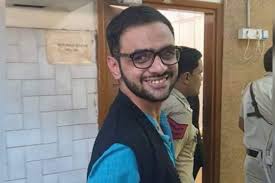
On Jan. 5, 2026, the Indian Supreme Court denied bail to human rights defender and student activist Umar Khalid, who has been detained for over five years without trial, in violation of India’s obligations under international human rights law. The undersigned organisations are disturbed by the Court’s decision. As domestic legal remedies have proven ineffective, we urge the international community to take urgent and coordinated action.

Khalid was arrested on Sept. 13, 2020, after he became a prominent face of nationwide peaceful protests against the discriminatory Citizenship Amendment Act, a law excluding Muslims from eligibility for a fast-tracked path to Indian citizenship. Khalid’s unfounded prosecution stems solely from the exercise of his rights to freedom of expression and peaceful assembly.

Khalid was charged under India’s anti-terror law, the Unlawful Activities (Prevention) Act (UAPA), as well as other laws, for a total of 29 charges. The UAPA has been criticised by the UN Working Group on Arbitrary Detention and several other UN Special Procedures mandate holders, particularly for its vague definitions and restrictive bail provisions that enable prolonged pre-trial detention. Indian authorities have frequently used these anti-terror legislations to detain political dissenters, human rights defenders, activists, and Muslims by keeping them in prison for extensive periods of time prior to trial. Indian grassroots organisation People’s Union for Civil Liberty has demonstrated through its investigation how UAPA has been systematically abused to silence dissent. 

Since his arrest, Khalid has been languishing in Delhi’s Tihar jail for over five years awaiting trial. According to the Supreme Court, this excessively long pre-trial detention has not “crossed the threshold of constitutional impermissibility,” but Khalid should not be detained at all — he is being held simply for exercising his rights. The Supreme Court’s Jan. 5, 2026, decision also forbids Khalid from applying for bail for one year. His trial is yet to begin. 

In the same judgment in which the Court denied bail to Khalid, it released his co-defendants in the case, activists Gulfisha Fatima, Shifa Ur Rehman, Meeran Haider, Saleem Khan, and Shadab Ahmed, a development the undersigned organisations welcome. However, Khalid’s co-defendants, released on bail, are not entirely free. The Supreme Court imposed strict bail conditions: a blanket ban on participating in “any programme or address”, attending “any gathering, rally or meeting, whether physically or virtually” and on circulating “any post either in electronic or physical form or circulate any hand bills, posters, banners, etc. in any form whatsoever.” These conditions violate their rights to freedom of expression and association.

All of Khalid’s co-defendants remain at risk of re-arrest if eventually convicted in the case. This includes activist Safoora Zargar, who was charged in the same case but released on bail in June 2020 due to her pregnancy, and following a decision of the United Nations Working Group on Arbitrary Detention rendering her detention arbitrary.

Umar Khalid’s case is a stark example of how the current government has weaponised anti-terror laws to restrict civic space, disproportionately targeting Muslim voices. Umar Khalid’s case is garnering increasing global attention, including recently from eight US lawmakers, human rights organisations, and the UN Special Rapporteur on human rights defenders.

The Indian judicial system has failed Umar Khalid and his co-defendants. It is time for the international community to take meaningful and coordinated action. Governments, particularly those with strong bilateral relationships with India, should publicly and privately call for Umar Khalid’s immediate and unconditional release and raise his case in all high-level diplomatic engagements. 

As a sitting member of the UN Human Rights Council, India should be reminded of its commitment under UN General Assembly Resolution 60/251 to “uphold the highest standard in the promotion and protection of human rights.”

Pending the acquittal of Khalid and his co-defendants, diplomatic missions in New Delhi should also closely monitor court proceedings and reaffirm the importance of due process and presumption of innocence. 

Signed by;

Human Rights Foundation

Hindus for Human Rights

Diaspora in Action for Human Rights and Democracy (DAHRD)

Amnesty International

InSAAF India

Indian American Muslim Council

UK Indian Muslim Council

Scottish Indians for Justice 

India Alliance Paris

South Asia Solidarity, UK

South Asia Justice Campaign

Joint Committee to Stop Repression in India

India Labour Solidarity

Freedom House

India Civil Watch International

Karwaan-e-Mohabba

World Organisation Against Torture (OMCT), within the framework of the Observatory for the Protection of Human Rights Defenders

Free Voices Collective e.V.

International Federation for Human Rights (FIDH), within the framework of the Observatory for the Protection of Human Rights Defenders

FORUM-ASIA

https://en.wikipedia.org/wiki/Umar_Khalid

on 17 March 2026: https://hrf.org/latest/hrf-succeeds-in-un-petition-india-condemned-for-arbitrary-detention/?mc_cid=6e1cdaed14&mc_eid=f80cec329e

Artists HRDs Behind Bars

February 20, 2026

Repressive regimes throughout the world deploy the machinery of the state to silence criticism and dissent. It is therefore hardly surprising that artists—whose creative work can expose, ridicule, and condemn in emotive and powerful ways—are common targets of political persecution. Over the past few years, there have been crackdowns on artists and performers in Russia, Belarus, Cuba, Azerbaijan, Egypt, China, and Venezuela, among other countries. The following artists dared to use their creative expression to challenge powerful systems, and have been punished with political imprisonment. From: Political Prisoners Watch February 19, 2026

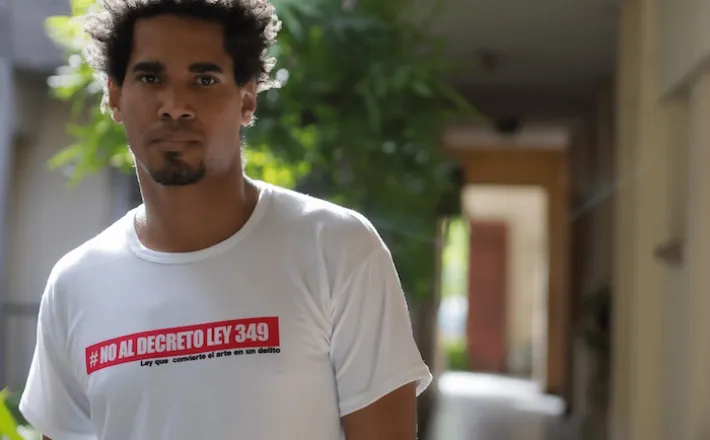
Luis Manuel Otero Alcántara is a Cuban artist and activist whose evocative performance art led to government harassment and numerous periods of detention. After the Cuban government enacted Decree 348 in 2018, which required artists to obtain advance approval for even private performances, he cofounded the San Isidro Movement to protest the increasing censorship of free expression. On July 11, 2021—the start of the historic J11 protests—he was arrested and has been detained ever since. In June 2022, he was sentenced to five years in prison for contempt, public disorder, and insulting symbols of the homeland, and remains in prison in Cuba. [https://humanrightsdefenders.blog/2024/09/19/the-rafto-prize-2024-to-cuban-artivist-luis-manuel-otero-alcantara/]


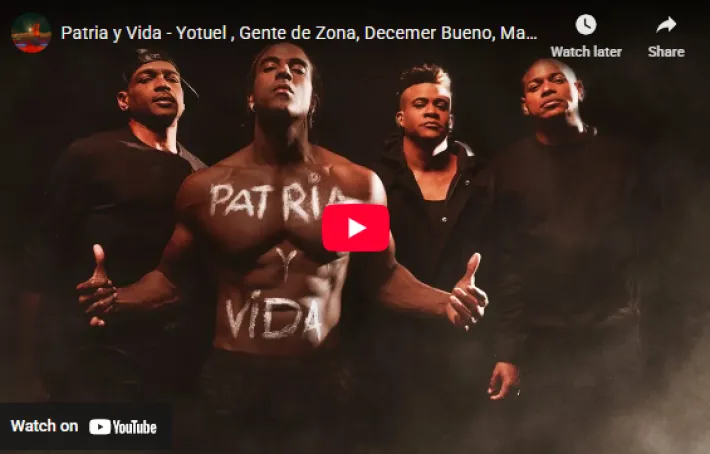
Maykel Osorbo Castillo Pérez is a Cuban musician who cofounded the San Isidro Movement with Luis Manuel Otero Alcántara. Due to his activism and vocal opposition to the Cuban regime, he was subjected to systemic harassment, including being arrested 121 times in a five-month period. He cowrote the 2021 song Patria y Vida(Homeland and Life), which inspired thousands to demonstrate against Cuba’s repressive regime and won two Latin Grammys. He was not able to accept the awards, however—in May 2021, he was arrested, forcibly disappeared for 14 days, and eventually sentenced to nine years in prison on charges of contempt, public disorder, and defamation of institutions and organizations, heroes, and martyrs.

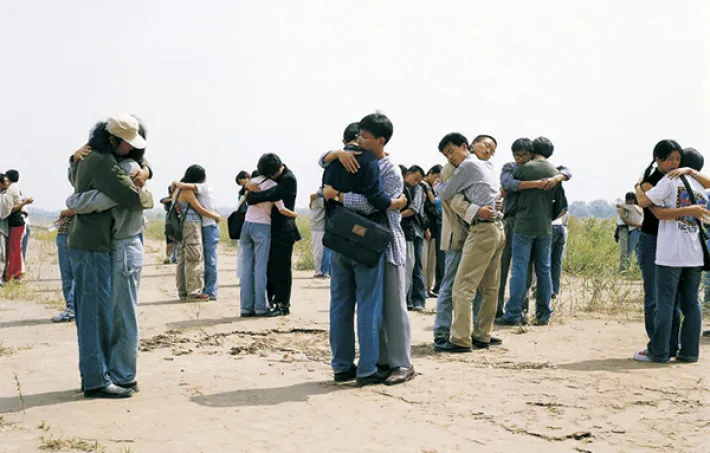
Gao Brothers, The Utopia of the 20 Minute Embrace (2000), modified image via Wikimedia Commons, used under CC BY-SA 3.0.

Gao Zhen is a Chinese artist and US permanent resident who was detained while visiting family in China in August 2024. Avant-garde works by Gao and his brother Gao Qiang—known together as the Gao Brothers—include huge, mirror-like sculptures and other works critiquing Mao Zedong and China’s Cultural Revolution. Authorities allege that Gao committed the offense of “insulting or defaming heroes and martyrs,” though the art in question had been created years before the Law on the Protection of Heroes and Martyrs was enacted. Gao’s wife Zhao Yaliang has been prohibited from leaving China, and she and their young son have remained there since his detention.


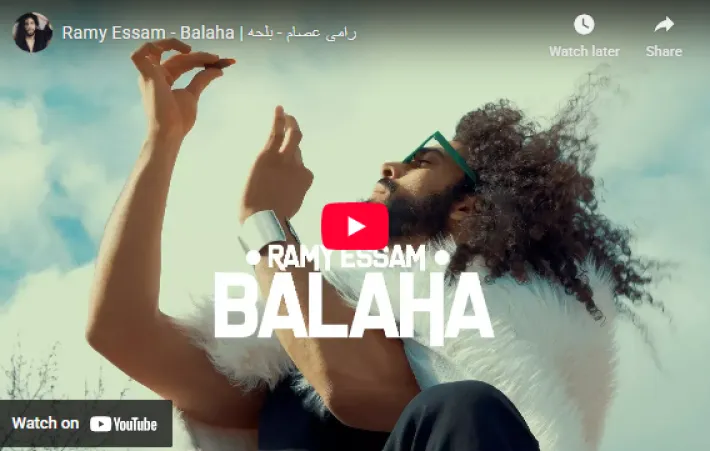
Galal El-Behairy is an Egyptian poet and singer/songwriter who has faced severe retaliation for his artistic work. He wrote the lyrics for the guitar-driven protest song Balaha, which mocked Egyptian President Abdel Fattah al-Sisi and the country’s corrupt establishment. Five days after its release in February 2018, he was arrested by the National Security Police and disappeared for a week. In July 2018, he was sentenced to three years in prison by a military court for allegedly spreading false news and rumors and insulting the Egyptian army in his poetry book The Finest Women on Earth. Although his sentence expired in 2021, he was not released, and he is now facing additional charges including disseminating fake news and joining and aiding a terrorist organization.

https://freedomhouse.org/article/political-prisoners-watch-artists-behind-bars

Bouayach urges stronger human rights protection across Africa

February 12, 2026

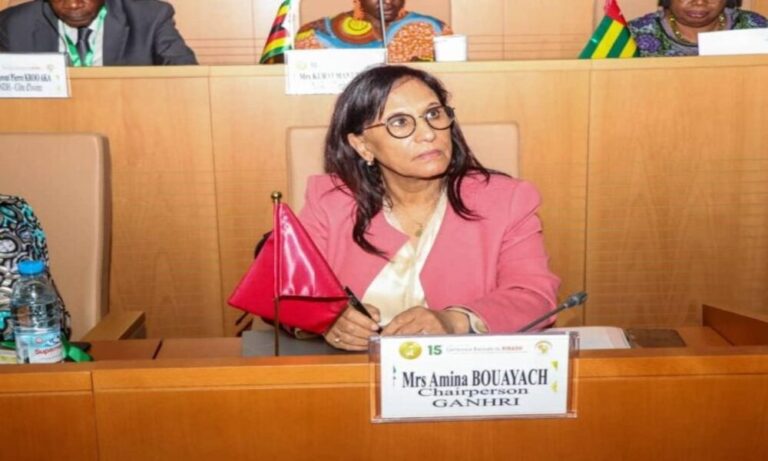
Amina Bouayach, President of the Global Alliance of National Human Rights Institutions (GANHRI), has issued a powerful call for the reinforcement of human rights mechanisms across Africa.

Speaking at the African Network of National Human Rights Institutions (ANNHRI) conference in Yaoundé, Bouayach warned that the continent’s legal frameworks are under unprecedented strain from a “triple threat” of security instability, climate change, and health crises. As the head of Morocco’s National Human Rights Council (CNDH), she emphasized that these overlapping emergencies are systematically eroding the rule of law and the capacity of states to meet their international obligations.

Bouayach highlighted a concerning global decline in multilateralism, noting that human rights are increasingly being sidelined in international discourse. She argued that international treaties and regional African mechanisms must be viewed as complementary rather than competing forces. According to her vision, while international laws provide the global benchmark, regional bodies are essential for adapting those standards to local African realities. She stressed that bridging the gap between high-level commitments and national legislation is the only way to restore citizen trust in state institutions.

The address identified several critical “blind spots” in the current continental approach, specifically pointing to the limited use of African legal mechanisms and the persistent barriers to justice for the general population. Bouayach cited the devastating conflict in Sudan—where access to basic healthcare and food has collapsed—and the chronic insecurity in Somalia as prime examples of how state fragility directly translates into human rights violations. She noted that recognizing these failures is not an admission of weakness but a necessary act of “clear-sightedness” required to move toward genuine reform.

To combat these trends, Bouayach urged African states to fully align their national institutions with the Paris Principles, the international gold standard for institutional independence and effectiveness. She concluded by calling for a surge in resources and guaranteed autonomy for human rights defenders, asserting that the rule of law must remain the non-negotiable pillar of Africa’s long-term stability and economic development.

https://apanews.net/bouayach-urges-stronger-human-rights-protection-across-africa/

Call for input: OHCHR Online Survey on “Civil Society Space”

February 11, 2026

Purpose:To inform the High Commissioner’s report pursuant to the Human Rights Council resolution 59/10.

In its resolution 59/10, the Human Rights Council requested the United Nations High Commissioner for Human Rights to “prepare a thematic report in follow-up to the report containing practical recommendations for the creation and maintenance of a safe and enabling environment for civil society, based on good practices and lessons learned, submitted to the Human Rights Council at its thirty-second session, to review progress against the recommendations contained therein, to identify new and emerging trends concerning civil society space, including through an analysis of the specific contribution and risks faced by underrepresented parts of civil society, and to provide an updated set of recommendations in the light of those trends, and to present the report to the Council at its sixty-third session.”

OHCHR invites States to respond to this online survey and share good practices and measures to protect and promote civic space in their countries, with a focus on the five areas outlined in the previous report (A/HRC/32/20) – as reflected below – on “practical recommendations for the creation and maintenance of a safe and enabling environment for civil society, based on good practices and lessons learned.” Please take the online survey here: EnglishFrenchSpanish

OHCHR also invites civil society, non-governmental organizations, national human rights institutions, United Nations entities and other relevant stakeholders, to respond to this online survey. If you are an organization working in a specific country, please provide information related to that country or context. If you represent a global and regional organization, please consider providing information for as many regions and/or countries as appropriate. Please take the online survey here: EnglishFrenchSpanish

Any questions and queries should be directed to: ohchr-civicspacesurvey@un.org.

The deadline to complete the survey is Friday, 6 March 2026, at 18:00 Central European Time.

HURIDOCS looking for a Global Repository Coordinator

February 9, 2026

HURIDOCS is recruiting a 👉 Global Repository Coordinator 👈 , a fixed-term role focused on a project that’s been in the works here for a long time. This Global Repository is where so many threads finally come together. Years of work on machine learning, documentation, and human rights data, all coming into one shared “playground” to help unlock judgments, decisions, and human rights information at scale.

We’re building this together with partners, including the The Patrick J. McGovern Foundation and the Oxford Institute of Technology and Justice ( supported by the Clooney Foundation for Justice). This short video from Oxford gives a glimpse of the vision (at min 2:17).

https://lnkd.in/gmQaxxad

Because this is such an exciting and ambitious role, we’re looking for someone who’s dynamic, independent, and a great problem-solver. Someone who knows how to push things forward and also when to when to slow down and consult, with communities, partners, donors, and more. Someone comfortable with the international human rights ecosystem and committed to leveraging technology for justice.

Often when we’re recruiting for roles like this we talk about looking for a unicorn, but this time that doesn’t quite work. I think we’re really looking for a tiger. Someone who can help us actually make this thing real. 🐯


📣HURIDOCS is looking for a Project Coordinator to play a key role in building the Global Repository of Human Rights.


Applications sent by email or direct message will not be considered. Please apply via the form provided in the job description.

hashtag#NGOJobs hashtag#ProjectCoordinator hashtag#RemoteJobs

Jamie Fly new Chief Executive Officer of Freedom House

February 7, 2026

Freedom House announced the appointment of Jamie Fly as its Chief Executive Officer, effective 2 February, 2026.

“Jamie Fly is a transformational leader ready to advance Freedom House’s vision of a world where all are free. He has stepped forward at a consequential moment as Freedom House pivots toward a private- and public-sector funding model, while growing existing and attracting new investors in freedom and democracy. This is particularly important as our flagship Freedom in the World report has documented nearly 20 years of democratic decline and as authoritarian leaders threaten fundamental freedoms and security around the world. Jamie brings deep global experience, bipartisan credibility, and a demonstrated ability to lead complex organizations under pressure. His leadership marks the start of a new chapter in Freedom House’s fight to expand and defend freedom around the world and to champion democratic values,” said Norman Willox, chair of the Freedom House Board of Trustees.

Fly has decades of experience in government, civil society, and the private sector. He has served as President and CEO of Radio Free Europe/Radio Liberty (RFE/RL) and held senior positions on the US National Security Council staff, at the Department of Defense, on Capitol Hill, and at the German Marshall Fund of the United States. Most recently, he served as Senior Counselor at Palantir Technologies, where he supported efforts to defend Ukrainian democracy from Moscow’s illegal, full-scale military invasion. He is a recipient of the Office of the Secretary of Defense Medal for Exceptional Public Service and the Czech Foreign Ministry’s Medal for Distinguished Contribution to Diplomacy.

I am excited and honored to join Freedom House at this critical moment for democracy and global freedom as the organization celebrates its 85th anniversary this year in the midst of significant change. Additionally, I would like to thank Norm Willox, Freedom House’s board, and its talented leadership team and staff for their tremendous efforts, resilience, and accomplishments in the face of great challenges and opportunities,” said Fly.

Freedom House is the oldest American organization devoted to the support and defense of democracy and freedom around the world. It was formally established in 1941 to promote American involvement in World War II and the fight against fascism. Lauded for its nonpartisan approach, it has grown into the world’s premier institution for supporting the democratic aspirations of societies around the world through its globally recognized convening power, coalition building, advocacy, independent research, and emergency support to human rights defenders.


https://freedomhouse.org/article/freedom-house-appoints-jamie-fly-chief-executive-officer

Profile of Kant Kaw, Myanmar journalist and HRD

February 7, 2026

On 2 February2026 Exile Hub, one of Global Voices’ partners in Southeast,Asia, published this story on How Kant Kaw turned a dream into a 15-year fight for equality in Myanmar.

Kant Kaw’s journey into journalism officially began in 2009, but her story started long before that. As a child, she devoured books of every kind, captivated by the power of language. She dreamed of becoming a writer, yet understood early that writing alone could not sustain her. So she pursued practical jobs while holding on to her passion. Everything changed the day she discovered journalism. For her, it was the perfect convergence of purpose and livelihood. It allowed her to write, to witness, and to serve the public. Fifteen years later, she remains in the field, saying that she never stopped loving the work.

Kant Kaw soon realized that her calling extended beyond reporting events as they unfolded. She felt compelled to disclose the struggles that women in Myanmar face every day. “I met women who had to carry their fear in silence, yet still found the strength to protect their children and families. They wake up every morning choosing survival. In our conversations, I saw not weakness, but extraordinary strength — especially during moments of political upheaval.”

Through Kant Kaw’s work, stories that might otherwise have remained untold reached wider audiences. For example, she shone a light on the realities of a young mother in a conflict-affected township who begins each day calculating risk, choosing safer routes to buy food, wondering whether her child’s school will be open, and navigating military checkpoints.

Years of reporting, especially in post-coup Myanmar, have taken a toll. These days, she practices intentional self-care to sustain her work: music, hiking, friendships, and proactive emotional problem-solving. She gives care as much as she receives it, offering support and presence to friends who struggle. She knows the stakes:

Her dream of becoming a writer did come true — just not in the way she first imagined. She writes for the public, for women whose voices have been muted by injustice, and continues to write as an act of resistance, a record of truth, and a source of hope.

Through her writing, she pushes back against silence, against injustice, and against anyone who dares to underestimate what a woman can do.

https://globalvoices.org/2026/02/02/beyond-the-bylines-how-kant-kaw-turned-a-dream-into-a-15-year-fight-for-equality-in-myanmar/