On 27 May 2025, the Oversight Board overturned Meta’s decision to leave up content targeting one of Peru’s leading human rights defenders:
Summary
The Oversight Board overturns Meta’s decision to leave up content targeting one of Peru’s leading human rights defenders. Restrictions on fundamental freedoms, such as the right to assembly and association, are increasing in Peru, with non-governmental organizations (NGOs) among those impacted. Containing an image of the defender that has been altered, likely with AI, to show blood dripping down her face, the post was shared by a member of La Resistencia. This group targets journalists, NGOs, human rights activists and institutions in Peru with disinformation, intimidation and violence. Taken in its whole context, this post qualifies as a “veiled threat” under the Violence and Incitement policy. As this case reveals potential underenforcement of veiled or coded threats on Meta’s platforms, the Board makes two related recommendations.
……
The Oversight Board’s Decision
The Oversight Board overturns Meta’s decision to leave up the content. The Board also recommends that Meta:
Clarify that “coded statements where the method of violence is not clearly articulated” are prohibited in written, visual and verbal form, under the Violence and Incitement Community Standard.
Produce an annual accuracy assessment on potential veiled threats, including a specific focus on content containing threats against human rights defenders that incorrectly remains up on the platform and instances of political speech incorrectly being taken down.
On June 20 we marked World Refugee Day by honouring the courage, resilience and humanity of those forced to flee their homes in search of safety.
Many of those fleeing conflict and persecution are journalists themselves. Forced into exile, they risk losing not only their homes but their platforms and their purpose. JHR equips these journalists with training and story grants, so they can keep working even in the most challenging circumstances.
In Canada, Soraya Amiri arrived from Afghanistan in 2022. She began her career here through the JHR-Meta Afghan Journalists in Residence Fellowship at The Walrus. Today, she continues as a Contributing Writer. In this essay, she reflects on what it means to reclaim her voice as a journalist in exile. Read her latest stories here. Mostafa Al-A’sar, another fellow originally from Egypt who resettled in Canada in 2024, joined the Contributing Writers Program in May and is already at work on his first article for The Walrus. Through their stories, Canadians gain a deeper understanding of the lives and events unfolding beyond our borders.
In Europe we fund and train exiled Russian and Belarusian journalists now based in the Baltics and Poland. With our support they continue reporting on shrinking civic space and government repression. Brestskaya Gazeta has documented the lives of former political prisoners, making visible the human toll of repression. Two young Belarusian bloggers used their platforms to counter state propaganda and foster dialogue on democratic values. And SOTA Visionreads letters to political prisoners on livestreams, helping ensure that those imprisoned in Russia are not forgotten.
At a moment of global upheaval, when self-interest drowns out solidarity, when aid budgets are slashed and the number of displaced people worldwide has never been higher, it is more urgent than ever to stand with refugees.
At JHR, we remain committed to supporting journalists in exile and to equipping local reporters with the tools they need to cover refugee rights objectively and accurately.
Watch a recording of the statement at an interactive dialogue on the annual report of the High Commissioner by ISHR Executive Director Phil Lynch
High Commissioner, this statement addresses four themes from your update.
First, the work of human rights defenders is essential for the realisation of all human rights. We deplore the criminalisation and arbitrary detention of defenders in all regions. We call for the release of Eduardo Torres in Venezuela, Ibrahim Metwally in Egypt, Mahmoud Khalil in the US, and Sophia Huang Xueqin in China, among thousands of defenders imprisoned globally for their work for freedom and justice.
Second, principled respect for international law protects us from tyranny. The failure of States with influence to end Israel’s genocide against Palestinians, and the double standards of States which fail to condemn Russia’s atrocity crimes in Ukraine, erode the foundations of peace, security and development everywhere.
Third, impunity for atrocity crimes denies justice to victims and fuels violations. This Council should mandate investigative mechanisms on Afghanistan and China. All States should respect international courts and sanction authorities – including US officials – who seek to pervert international justice.
Finally, no business, however efficient, can survive when customers don’t pay their bills. States which don’t pay their UN dues in full or on time, especially the US and China, benefit from the system while causing a liquidity crisis, with devastating human rights impacts. They should lose the right to vote at the General Assembly and the Security Council until they pay their dues. Humanity’s future depends on all States increasing their human rights investment.
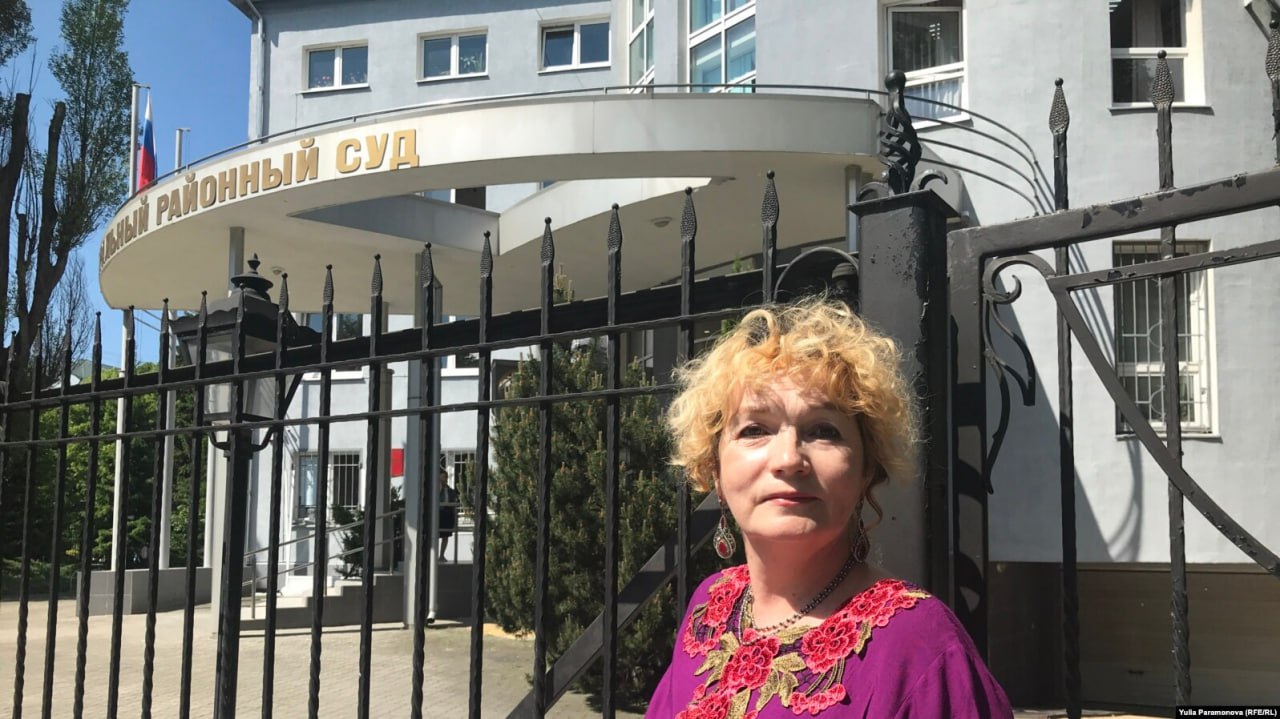
On 10 June 2025 The International Commission of Jurists (ICJ) condemned the arrest and detention of prominent Kaliningrad lawyer and human rights defender Maria Bontsler and called on the Russian authorities to release her immediately.
The ICJ is concerned that the charges against Maria are spurious and likely to be related to Bontsler’s legitimate activities. Proceedings against her have been undertaken in a shroud of secrecy and the ICJ calls on the authorities to immediately clarify their legal and factual basis for the charges against her.
Maria Bontsler was arrested on 28 May 2025 under Article 275.1 of the Russian Criminal Code, which provides for criminal liability for “confidential cooperation with a foreign State” aimed at “undermining the security of the Russian Federation”.
Available information indicates that a court hearing concerning Maria Bontsler’s detention or the filing of charges was held behind closed doors, at the Prosecutor’s request, on grounds of State secrecy. However, no official justification has been provided to demonstrate that the secrecy of the proceedings was necessary and proportionate as required under international human rights law. The ICJ is concerned that this lack of transparency undermines Bontsler’s right to a fair hearing.
“This prosecution reflects a broader campaign of retaliation against lawyers in Russia who engage in what the authorities see as politically sensitive cases. Such actions serve to intimidate and discourage other lawyers from vigorously defending their clients,” Temur Shakirov, Director (ad interim) of ICJ Europe and Central Asia Programme said.
Maria Bontsler has a long record of defending politically persecuted individuals, including critics of Russia’s unlawful military intervention in Ukraine.
Irrespective of any charges, the ICJ stresses that it is inappropriate to keep Maria Bontsler in pre-trial detention.
In a broader context of interference with the legal profession, searches were also carried out at the homes of her colleagues, Roman Morozov and Ekaterina Selizarova, with electronic devices and legal documents seized. According to available reports, Morozov was questioned in relation to his alleged connections to the human rights organisation Memorial.
The ICJ stresses that under international law and standards, including the UN Basic Principles on the Role of Lawyers, lawyers must be able to perform their professional activities without hindrance, including the collection and dissemination of information essential to protecting effectively their clients’ rights.
Maria Bontsler is a well-known human rights lawyer who represents individuals in politically charged cases and has been recognized by the Moscow Helsinki Group for her human rights defence work. Her clients include critics of the Russian Federation’s unlawful military intervention in Ukraine.
….Previously, Maria Bontsler was fined under administrative proceedings for courtroom statements made in defence of her clients, part of a systematic harassment faced by lawyers handling “political” cases in Russia
Sam Gregory delivered the Spring 2025 Gruber Distinguished Lecture on Global Justice on March 24, 2025, at 4:30 pm at Yale Law School. The lecture was co-moderated by his faculty hosts, Binger Clinical Professor Emeritus of Human Rights Jim Silk ’89 and David Simon, assistant dean for Graduate Education, senior lecturer in Global Affairs and director of the Genocide Studies Program at Yale University. Gregory is the executive director of WITNESS, a human rights nonprofit organization that empowers individuals and communities to use technology to document human rights abuses and advocate for justice. He is an internationally recognized expert on using digital media and smartphone witnessing to defend and protect human rights. With over two decades of experience in the intersection of technology, media, and human rights, Gregory has become a leading figure in the field of digital advocacy. He previously launched the “Prepare, Don’t Panic” initiative in 2018 to prompt concerted, effective, and context-sensitive policy responses to deepfakes and deceptive AI issues worldwide. He focuses on leveraging emerging solutions like authenticity infrastructure, trustworthy audiovisual witnessing, and livestreamed/co-present storytelling to address misinformation, media manipulation, and rising authoritarianism.
Gregory’s lecture, entitled “Fortifying Truth, Trust and Evidence in the Face of Artificial Intelligence and Emerging Technology,” focused on the challenges that artificial intelligence poses to truth, trust, and human rights advocacy. Generative AI’s rapid development and impact on how media is made, edited, and distributed affects how digital technology can be used to expose human rights violations and defend human rights. Gregory considered how photos and videos – essential tools for human rights documentation, evidence, and storytelling – are increasingly distrusted in an era of widespread skepticism and technological advancements that enable deepfakes and AI-generated content. AI can not only create false memories, but also “acts as a powerful conduit for plausible deniability.” Gregory discussed AI’s impact on the ability to believe and trust human rights voices and its role in restructuring the information ecosystem. The escalating burden of proof for human rights activists and the overwhelming volume of digital content underscore how AI can both aid and hinder accountability efforts.
In the face of these concerns, Gregory emphasized the need for human rights defenders to work shape AI systems proactively. He stressed that AI requires a foundational, systemic architecture that ensures information systems serve, rather than undermine, human rights work. Gregory reflected that “at the fundamental (level), this is work enabled by technology, but it’s not about technology.” Digital technologies provide new mechanisms for exposing violence and human rights abuse; the abuse itself has not changed. He also pointed to the need to invest in robust community archives to protect the integrity of human rights evidence against false memories. Stressing the importance of epistemic justice, digital media literacy, and equitable access to technology and technological knowledge, Gregory discussed WITNESS’ work in organizing for digital media literacy and access in human rights digital witnessing, particularly in response to generative AI. One example he highlighted was training individuals how to film audiovisual witnessing videos in ways that are difficult for AI to replicate.
As the floor opened to questions, Gregory pointed to “authenticity infrastructure” as one building block to verify content and maintain truth. Instead of treating information as a binary between AI and not AI, it is necessary to understand the entire “recipe” of how information is created, locating it along the continuum of how AI permeates modern communication. AI must be understood, not disregarded. This new digital territory will only become more relevant in human rights work, Gregory maintained. The discussion also covered regulatory challenges, courts’ struggles with AI generated and audiovisual evidence at large, the importance of AI-infused media literacy, and the necessity of strong civil society institutions in the face of corporate media control.A recording of the lecture is available here.
Project Galileo celebrated its 10th anniversary with two distinguished panels hosted by the NED (National Endowment for Democracy).
These conversations highlight the future of the Internet and Internet freedom. The panels explored recent U.S. State Department efforts on Internet freedom; the role the private sector plays in helping effectuate the U.S. vision of Internet freedom with efforts like Project Galileo; the current challenges associated with authoritarian government’s influence on Internet standards, governance, and international development. The discussions also touched on the role policy plays, both in the United States and globally, in efforts to protect the Internet; what the U.S. and other rights-respecting nations stand to lose if the open Internet is diminished; and how all stakeholders (private sector, civil society, governments) can work together to protect and advance the free and open Internet.
Moderator
Alissa Starzak, Head of Policy, Cloudflare
Panelists
Jennifer Brody, Deputy Director of Policy and Advocacy for Technology and Democracy, Freedom House
Emily Skahill, Cyber Operations Planner, Joint Cyber Defense Collaborative (JCDC), Cybersecurity & Infrastructure Security Agency, U.S. Department of Homeland Security (DHS)
Adrien Ogée, Chief Operations Officer, CyberPeace Institute
Mirage news of 14 June 2025 comes with an interesting assessment of eyeWitness to Atrocities (eyeWitness) which marks its tenth anniversary. The International Bar Association (IBA) applauds the work of the pioneering initiative it founded in 2015. The launch of the eyeWitness to Atrocities app for Android phones has harnessed the power of technology in the global fight for justice. The tamper-proof photo, video and audio footage captured using the eyeWitness app, and securely stored by IBA partner LexisNexis , meets the strict evidentiary criteria required to be admissible as evidence in legal proceedings.
Jaime Carey, President of the International Bar Association, stated: ‘As we mark a decade of eyeWitness to Atrocities, we celebrate ten years at the intersection of technology, law, and human rights. .. As President of the IBA, I am proud of our member organisations that have dedicated vast amounts of pro bono work analysing footage captured using the app and I reaffirm IBA support for this vital work and its enduring impact on the global pursuit of justice.’
Mark Ellis, Executive Director of the IBA, added: ‘Footage captured with the eyeWitness to Atrocities app is invaluable in securing justice and bridging the gap between activists and the law. By ensuring that visual evidence is authenticated, the app transforms raw documentation into legally admissible proof. In a world where impunity often thrives in the absence of credible evidence, eyeWitness plays a critical role in bringing truth to light and ensuring that justice is not just a distant ideal, but a real possibility.’
Over the past decade, the eyeWitness app has become an essential tool for human rights defenders, journalists and civil society organisations documenting grave human rights violations and atrocity crimes around the world. Key achievements include:
more than 85,000 photos, videos and audio recordings captured using the app;
more than 900 training sessions delivered globally, including in active conflict zones;
more than 55,000 hours spent reviewing visual evidence;
The impact of eyeWitness has been extensive. The content captured has contributed to numerous cases and reports globally, including:
in 2018, when two commanders in the Democratic Republic of Congo were convicted of historical crimes against humanity including murder and torture;
in Ukraine, where the Kharkiv Commercial and District Administrative Courts heard four cases in 2022 relating to compensation claims for damage to non-residential property and the destruction of vital financial documents;
a case in the UK involving UK National Contact Point , where the construction company JCB’s equipment was used in the demolition of Palestinian communities and construction of Israeli settlements in the West Bank;
Carrie Bowker, Director of eyeWitness to Atrocities, commented: ‘The path from documentation to justice is not always straightforward, and as we mark this milestone, we are deeply grateful to the courageous documenters capturing critical evidence of atrocity crimes, to the law firms that provide invaluable pro bono support and to LexisNexis for securely storing footage captured with the app. We aim to continue connecting frontline documenters with legal and investigative bodies that can act on the evidence they collect.’
In a 2023 outcome report the eyeWitness organisation highlighted areas of work including significant footage collection; increased and strengthened partnerships with global human rights organisations dedicated to active documentation for accountability; and expanded pro bono assistance in reviewing and analysing collected footage.
This event will take place on 16 June 2025, from 1:00PM – 2:00PM CEST, in Room XXV, of the Palais des Nations in Geneva Add to calendarpdf Download event flyer
In the face of the triple planetary environmental crisis, of conflict, genocide and apartheid, of the consolidation of authoritarian ideologies and narratives around the globe, and the erosion of the rule of law as well as the closing of civic space, never have we needed a robust international human rights system so badly.
But the UN human rights system is in crisis. As essential users and actors of the system, human rights defenders’ views are valuable. The event provides a space to be hearing directly from them not only about why they need an effective, efficient, responsive UN human rights system to support their activism especially in the current context, but also about the ways in which the UN system needs to grow, evolve, adapt and reform itself to deal with the crisis of credibility and legitimacy it is currently facing.
Panelists:
Laura Restrepo, Committee for Solidarity with Political Prisoners (CSPP) & FDSS, Colombia
Mariama Jumie Bah , Human Rights Defenders Network Sierra Leone
Elena Petrovska , LGBTI Equal Rights Association (ERA), Western Balkans/Turkey
Douglas Javier Juárez Dávila, American Friends Service Committee (AFSC), Guatemala
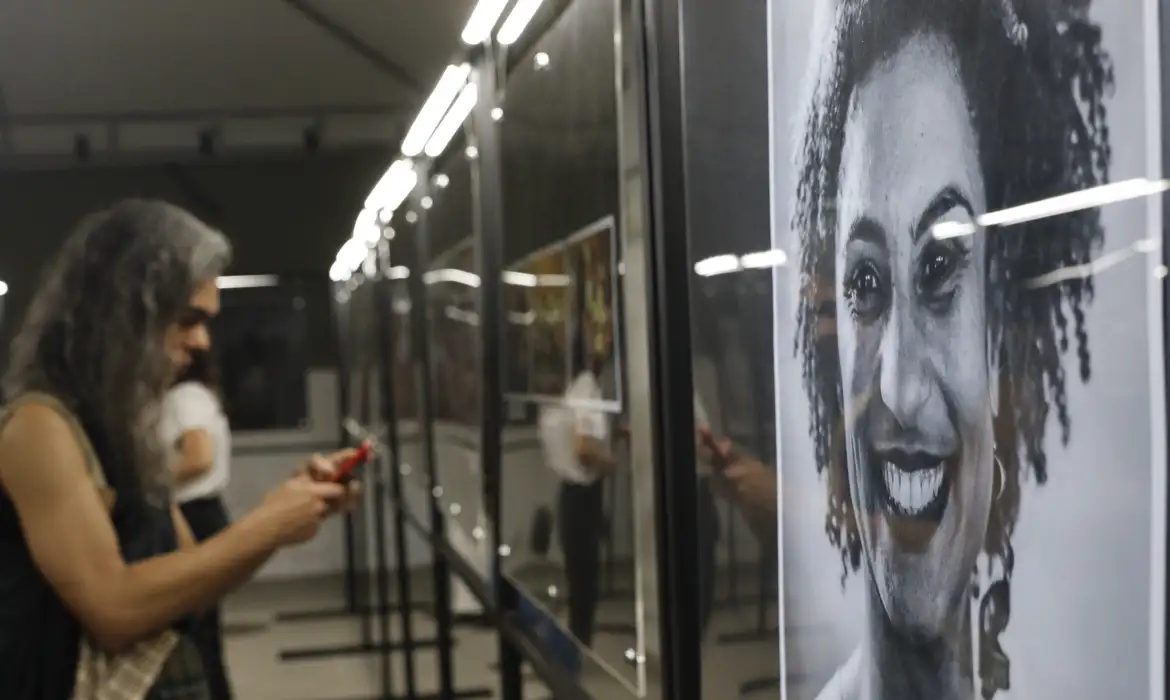
The Brazilian lower house on Monday (26 May 2025) approved a bill establishing the National Marielle Franco Day for Human Rights Advocates. The date established is March 14—the day the Rio de Janeiro councilwoman and her driver Anderson Gomes were murdered in 2018 after leaving an event. The text will now be considered by the Senate.
Among the actions listed are promoting the public debate on the role of human rights defenders; encouraging the participation of women, black people, indigenous people, and other historically marginalized groups in decision-making processes; and spreading the word about both Brazilian and international protection mechanisms for advocates.
The bill was drawn up by former Representative David Miranda, who died in 2023, as well as other PSOL members. The proposal’s rapporteur, Representative Benedita da Silva, of the PT, said that institutional recognition of the role of human rights defenders helps strengthen Brazilian democracy as it values individuals who have fought for the enforcement of fundamental rights.
“By establishing a date of recognition and remembrance, the bill not only pays tribute to Marielle [Franco] and so many others, but also raises national awareness about the importance of guaranteeing the physical, psychological, and political integrity of these individuals,” the rapporteur said.
“The creation of the National Human Rights Defenders’ Day acts as a symbolic and political gesture to reaffirm the Brazilian state’s commitment to the principle of human dignity and respect for public liberties—essential elements of any democratic state governed by the rule of law,” she concluded.
The representative also noted that the date is already a landmark of resistance and remembrance in different parts of Brazil. The legislative assemblies of the states of Pará, Paraíba, and Pernambuco have approved similar proposals, as has the Porto Alegre City Council.
In Rio de Janeiro, the Legislative Assembly established the Marielle Franco Human Rights Award in 2021 as a permanent way of recognizing initiatives aligned with the agendas that marked her political work—such as the rights of black women, LGBTQIA+ people, favela residents, and human rights activists.
In São Paulo, the city council also created the Marielle Franco Human Rights Award in 2023, which is already in its second edition and in 2025 honored historic leaders from the outskirts of the city, like Dona Olga Quiroga.
On May 28, 1961 -64 years ago today – a British lawyer named Peter Benenson penned a letter for the Observer newspaper in the UK launching the “Appeal for Amnesty 1961,” a campaign calling for the release of people imprisoned around the world because of the peaceful expression of their beliefs. This movement galvanized into what is now Amnesty International, an organization founded on the idea that ordinary people around the world could protect human rights by coming together to take action on behalf of others.
Sixty-four years later, Amnesty is a worldwide movement for human rights with a collective power of 10 million people, each one committed to fighting for justice, equality and freedom everywhere.
Today, Amnesty is needed more than ever to confront a backlash against human rights and increasing authoritarian practices, including right here in the United States.
As a global movement, we have—and continue to—show up in solidarity for communities and across issues and geographies. Caring, compassionate people have powered our movement for decades as we’ve shined a light on injustice and defended human rights. We will raise the political cost of authoritarian practices through direct advocacy, constituent pressure on Congress and other leaders to use their power in the defense of human rights, and other impactful campaigning efforts……
As we mark our anniversary, we are recommitting to our efforts to champion and protect human rights, here in the United States, and around the world.
12 tips from Amnesty International leaders around the world:
Fight hard against early attacks against individuals and institutions, and ask, “If we lose now, who will they come for next.”
Watch for new government agencies and data collection designed for repression. Leaders who embrace authoritarian tactics create “lists” to target effective activists, often using social media. Surveillance is a red flag.
Elections are dangerous flashpoints for accelerators of repression. Crackdowns and laws passed to restrict civic space often spike pre-elections.
Resist the legal system being weaponized. Governments will use trumped up charges, long pretrial detentions and lengthy trials to sideline activists, denying bail and delaying appeals.
Read new “unrelated” laws carefully with an eye on civic space and freedom of expression. Not every attack on rights will be direct and obvious.
Be ready for fake “facts” and smear campaigns to paint human rights defenders as corrupt or criminal. How are you going to get the truth out quickly and widely?
Catch repressive legislative drafts early and fight back hard and publicly. And don’t stop until bills are dead and won’t come back.
Stay inspired about a pro-rights future, but create strategies and stay ready for worsening anti-rights scenarios.
Public narrative matters. Anti-rights actors will reframe human rights as threats, to shrink civic space. Don’t let them. Resist and frame a public narrative that speech, protest and assembly are essential to defend all the other rights.
Protect yourself, your wellbeing and your safety. Threats come in many forms and will be experienced differently by each activist. Do what is right for you.
Be a good partner. Solidarity wins. Build coalitions, share resources, lean on allies and let them lean on you.
Keep an eye on other contexts. Repressive leaders learn from each other. Human rights activists need to do the same.
From Hungary to China to Venezuela, and anywhere else leaders think they can act with impunity—we have fought back at every turn.









 Hans Thoolen on Human Rights Defenders and their awards