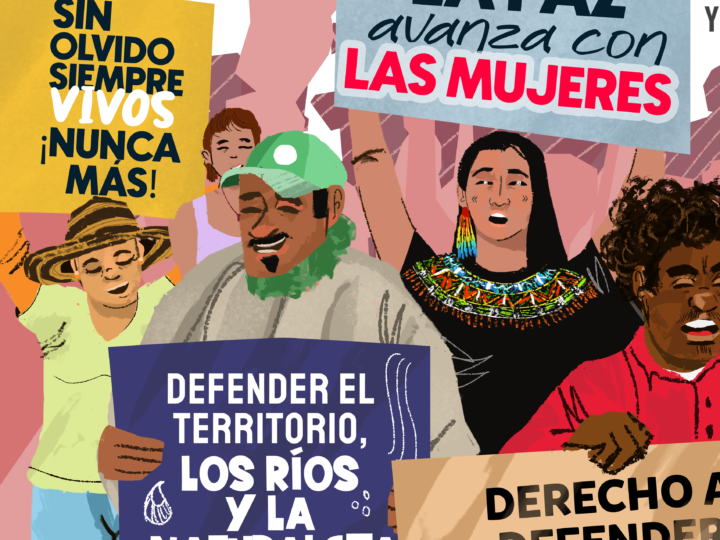
Indigenous environmental human rights defenders (IEHRDs) across Latin America face disproportionate levels of violence for protecting land, water, and territory. Of the 146 environmental defenders killed or disappeared in 2024, approximately one-third were Indigenous. This overrepresentation reveals the structural risks faced by Indigenous Peoples at the forefront of environmental defense.
A study by Nefeli Poulopati, Ezihe Chikwere and Paulina Macías Ortega for Kennedy Human Rights Centre published on 30 April 2026 explores who IEHRDs are, the legal protections available to them, the challenges they face, and cases that reflect their ongoing resistance and struggle across Latin America.
The study looks at Legal Frameworks, Violence against IEHRDs, Impacts of Extractivism, and looks Ahead: A Differentiated Approach…
States must adopt an intersectional approach in all measures taken to protect the rights of IEHRDs. A differentiated, preventive, and collective approach to protecting IEHRDs requires applying a gender, ethno-racial, and cultural perspective when determining the level of risk faced by an IEHRD. The ethnic reality of the territory and the traditional ways of Indigenous peoples need to be taken into account when designing protection schemes, to ensure they align with these communities’ practices. The special relationship of Indigenous Peoples to the land reinforces States’ obligation to protect IEDHRs.
One way to fulfill this obligation is to decide on protective measures for IEHRDs in consultation with Indigenous communities, a practice that is often not followed by States. It is particularly important for governments to consider the heightened risk that IEHRDs face when they oppose development megaprojects. States should adopt the necessary measures to establish or strengthen systems to monitor and control these practices in a manner consistent with their legal obligations.
However, as the cases above illustrate, formal recognition does not equal protection. Instead, it is the first step to rethink the colonial origins of the extractivist system that perpetuates power imbalances, thereby weakening safeguards at the regional and local levels.
To learn more about this work, visit the Civic Space Case Tracker, which maps leading ongoing judicial cases litigated by local organizations and lawyers in Asia, Africa, and the Americas.
On April 22, 2026 United Nations special rapporteurs raised serious concerns about Turkey’s use of counterterrorism laws to judicially harass and criminalize human rights defenders and lawyers, including what they described as the misuse of the terrorism financing law, the Stockholm Center for Freedom reported.
In a letter sent to the Turkish government on February 23, 2026, but published only recently, the rapporteurs said authorities were pursuing charges including membership in a terrorist organization and terrorism financing against rights defenders and lawyers, singling out the Human Rights Association (İHD) as a particular target.
The rapporteurs pointed to the case of İHD member Hatice Onaran, who was convicted in 2024 of “violating the law on financing terrorism” after sending small amounts of money to poor and sick prisoners. They also cited the cases of four other members —Osman Süzen, Suna Bilgin, Tuğba Kahraman and Mehmet Acettin — who were charged with membership in a terrorist organization. Süzen was subsequently acquitted at a January 2026 hearing.
A fifth İHD member, İsmail Boyraz, was investigated on accusations of participating in an unlawful assembly after taking part in a teachers’ union protest. The rapporteurs also cited the case of lawyer Sabri Güngen, who was allegedly assaulted by police while meeting with a client.
The rapporteurs expressed concern over what they described as Turkey’s “apparent misuse” of terrorism financing laws in Onaran’s case, noting that providing small sums of money to support the basic needs of ill and financially disadvantaged prisoners, in line with prison regulations and under prison administration supervision does not constitute terrorism financing under international law. Onaran, who is undergoing cancer treatment, was released in February 2025 after his sentence was suspended for six months on health grounds.
They also warned that physical assault and intimidation reportedly faced by lawyers Bilgin, Süzen and Güngen while carrying out their professional duties may have been acts of retaliation for their human rights work.
The rapporteurs raised the same concern in a following statement on March 31, which warned that Turkey’s counterterrorism legislation is being used to criminalize legitimate rights advocacy and restrict fundamental freedoms.
The letter was signed by Mary Lawlor, the UN special rapporteur on human rights defenders; Gina Romero, the special rapporteur on freedom of peaceful assembly and of association; Tlaleng Mofokeng, the special rapporteur on physical and mental health; Margaret Satterthwaite, the special rapporteur on the independence of judges and lawyers; and Ben Saul, the special rapporteur on protection of rights and freedoms while countering terrorism.
Every day, human rights defenders risk their lives to safeguard the freedoms we often take for granted. They face threats, violence, and relentless pressure simply because they choose to stand on the side of justice. Every year, different NGOs monitor the situation for human rights defenders globally and publish evidence of the attacks they are facing. Yet behind the headlines and statistics are real people – exhausted, targeted, and often left without adequate protection. For many, a safe space to take a break is not a luxury; it is a lifeline. It is the difference between burnout and resilience, between silencing and survival.
Human rights defenders work under constant pressure, facing political hostility, economic hardship, and systemic threats. The risks are severe and growing. Globally, Front Line Defenders reported at least 324 killings across 32 countries in 2024. These are not merely numbers; they reveal great risks and ongoing rights violations. Such realities underscore the urgent need for temporary relocation programs to offer defenders safety and space to continue their work.
Beyond the physical risks, defenders also face severe burnout and psychological strain. The emotional toll of their work is immense: constant exposure to threats and stories of violence can lead to secondary trauma, chronic exhaustion, and deep isolation, especially for those working without strong support systems. Temporary relocation programs help address these often‑invisible harms by offering a protected space for rest, reflection, and psychological support. As one participant from the Oslo as a Breathing Space City (Oslo Breathing Space City) program explained,
“The learnings related to well-being, stress management, and sustainable engagement have influenced how I interact with colleagues and community members. I have helped normalise conversations around mental health and burnout within my professional circles”Naghma Iqtidar, Pakistani human rights defender and Oslo Breathing Space City guest during Spring 2023.
This is precisely where temporary relocation initiatives play a crucial role. Similar to other rest and respite temporary relocation programmes, Oslo Breathing Space City offer defenders a three‑month stay in Oslo tailored to their individual needs. These initiatives provide psychosocial support, opportunities to connect with other organisations, and a safer environment in which defenders can continue their activism. Importantly, they take a holistic approach to protection, addressing not only immediate security needs but also the emotional, psychological, and relational dimensions of a defender’s wellbeing in the long term. Because of this broader focus, they can create different forms of impact, which are complementary to more traditional protection tools. They not only offer safety but also create the conditions for sustainable, long‑term resilience...
Finally, the impacts of supporting individual human rights defenders with a holistic and long-term approach can have great benefits for their organisations, movements and communities at home, as the learnings and networks on an individual level can lead to concrete initiatives that are positive for many people or be passed on to colleagues and ultimately impact the organisational or community resilience. Some examples have been shared by previous participants of Breathing Space City:
Why are temporary relocation programs for human rights defenders essential?
They serve as an essential fallback when other protections fall short, giving defenders the space to step away from immediate danger, regain perspective, and gather the clarity and energy they need to continue their work more effectively once they return home.
They help prevent burnout and psychological harm, allowing them to sustain their activism with greater resilience over the long term.
They strengthen global networks and solidarity, creating long-term impact beyond the relocation period.
They contribute to stable and resilient human rights communities in regions where defenders face systemic violence and persecution.
Expanding relocation support as a lifeline for human rights defenders
Supporting them through relocation programs is not just an act of solidarity; it is a lifeline that enables them to continue their vital work with even more impact, resilience and sustainability.
There are currently numerous temporary relocation programmes worldwide, each with its own focus and reach. They need continuous funding and political support to be able to keep hosting human rights defenders. While programmes in safe countries of the Global South should be expanded, so that defenders facing stricter visa barriers can also access temporary protection, there is also a strong need to sustain programmes in the Global North. These locations often offer unique added value to guests, including access to international networks, advocacy spaces, and specialised resources. In addition, locations like Oslo support rest by providing security, easy access to nature, and a welcoming environment.
According to the latest report from ProtectDefenders.eu, about 30% of protection investment now goes to temporary relocation programs, showing that donors see relocation as a key mechanism within human rights defender protection efforts. While overall public funding for defenders remains very low relative to need, around 0.10% of total Official Development Assistance, the portion dedicated to protection, including relocation, has grown noticeably. This suggests donors recognise the urgency of investing in safety as a priority, even as broader funding remains constrained. Nonetheless, as the need is growing, more funding efforts are necessary to maintain and develop existing and new programmes. The EU Agency for Fundamental Rights recommends broadening relocation programs, increasing awareness about defenders’ work and risks, providing more adequate support during stays, and revising legal instruments to address their specific needs.
On 27 April 2026, Halya Coynash reported on the case of Crimean Tatar human rights defender Lutfiye Zudiyeva.
Russia’s Second cassation court of general jurisdiction cases has rejected Lutfiye Zudiyeva’s cassation appeal against her inclusion by the Russian justice ministry in its notorious register of so-called ‘foreign agents’. Russia is deploying all weapons to silence the courageous Crimean Tatar human rights defender and journalist, and it cannot be said that any other outcome was seriously expected. The lawlessness was, however, even more extreme than usual with Lutfiye’s lawyer arriving for the hearing only to be told that it had been held earlier than scheduled, behind closed doors, with the justice ministry’s decision upheld.
The ‘hearing’ took place on 19 March however it was only a month later, and on the lawyer’s second attempt and she and Lutfiye were able to receive a copy of the ruling. Lutfiye’s application to take part by video link had been rejected, with the court claiming that no object grounds had been given for why the human rights defender and mother of four should come from occupied Crimea to Moscow. The court also pointed out that her presence was not mandatory but failed to warn her that it would also speed up the hearing, thus preventing her lawyer from taking part. Quite the contrary, with the ruling claiming that neither Lutfiye Zudiyeva nor her lawyer had “appeared”. The one hearing, which was over before its scheduled commencement at 10.30 a.m., took place behind closed doors, before presiding ‘judge’ Yelena Regina and two colleagues, Yury Denisov and Yelena Karpacheva.
As reported, the Russian justice ministry announced that Lutfiye Zudiyeva had been added to its ever-increasing register of alleged ‘foreign agents’ on 16 May 2025. It claimed that the renowned human rights defender and Graty journalist had “circulated false information about decisions taken by the public authorities of the Russian Federation and the policies they carry out”; that she was “under foreign influence” and “involved in political activities.”
An appeal was lodged immediately, with this rejected on 11 August 2025 by ‘judge’ Iryna Kozlova from the Zamoskvoretsky district court in Moscow. On that occasion, Lutfiye’s application to participate by video link from Dzhankoi, in occupied Crimea, “got held up” in the Russian postal system, however her legal representative was able to take part, and present Lutfiye’s written objections. These were, predictably, ignored, as they were in the cassation court’s secretive hearing on 19 March 2026.
The claims that have now been upheld by two Russian ‘courts’ were that there was proof of Lutfiye Zudiyeva being ‘under foreign influence’ in her publications in the independent Ukrainian publication Graty, in her commentary to the media and international organizations, as well as her supposed ‘membership’ of Frontline Defenders. There would be nothing at all illegal about such membership, but it is a figment of some Russian ministry official’s imagination. Frontline Defenders have spoken out in Lutfiye’s defence, but so have many other human rights organizations, diplomats and journalists. [https://www.frontlinedefenders.org/en/profile/lutfiye-zudiyeva]
Another bizarre claim which none of the ‘judges’ found the courage to question was that Lutfiye Zudiyeva had received money from foreign sources. To justify this totally false claim, reference was made to money for day-to-day needs which Lutfiye’s husband had transferred to her account. He in turn is involved in selling agricultural goods and, according to the FSB, received money between February and August 2024, from three ‘foreign nationals’ (from Ukraine, Germany and Vietnam). In her written statement for the appeal, Lutfiye explained that in each of those cases, the person had had dual citizenship, with this something her husband could scarcely have known, as he had no right to demand a passport from buyers. She also disputed the Russian ministry’s claim that her human rights work and journalism were ‘political activities’.
On 27 July 2023, Zudiyeva and another journalist were illegally detained, together with 12 other Crimean Tatars for trying to attend a purportedly open court hearing into the appeal against the appalling sentences passed on Crimean Tatar Mejlis leader, journalist and human rights defender Nariman Dzhelyal and two cousins, Asan and Aziz Akhtemov. She was fined on a preposterous charge of having taken part in an unauthorized mass event, with the occupation ‘judge’, like the Russian-controlled ‘police’, ignoring the fact that she had been there as a journalist…
“I cannot calmly sit and watch as the multiple searches which take place all the time in Crimea result in children being deprived of their fathers; in elderly parents being left without their children, without care, and in women remaining without their husbands. I believe that it is my right to have the possibility of speaking publicly about this. And this is the least I can do as a member of society.”
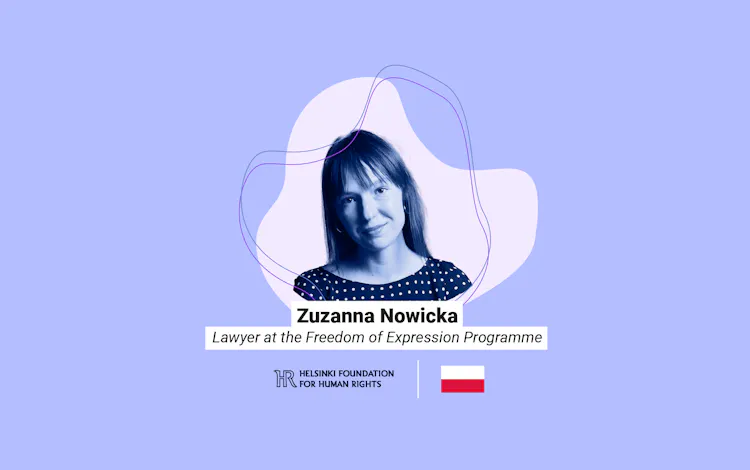
Mette Meyknecht on 21 April, 2026, makes us meet up Zuzanna Nowicka Lawyer (Freedom of Expression Programme) at the Polish Helsinki Foundation For Human Rights.
Meet Our Members is a series where Liberties introduces you to our network of human rights defenders. We hear the stories of the people behind the organisations and why they do the work they do. Liberties is an umbrella network which coordinates campaigns with its expanding network of national civil liberties NGOs in 18 EU Member States.
Zuzanna speaks about her work with quiet defiance. No grand declarations or sweeping ideals, but with persistence in the daily decision, to keep going. “I just think it’s important,” she says simply. “I couldn’t imagine doing something that is not for the public good.”
Zuzanna is a lawyer at the Helsinki Foundation for Human Rights in Poland, where she focuses on freedom of expression and strategic litigation. But her path into human rights law wasn’t linear. After studying law and working in various law firms, she realised something wasn’t quite right. “I was simply not feeling it,” she recalls. “I did not find myself comfortable working in those conditions.”
Despite early exposure to human rights work through internships, NGO roles, and advocacy campaigns, it took time to fully embrace it as a career. A formative moment came after graduating, when, uncertain about her next steps, a position at the Helsinki Foundation appeared unexpectedly. Her interview, she admits with a laugh, did not go well. “The internet connection was really bad… I couldn’t hear half of the things,” she says. “But for some reason, they trusted me, and I got hired.”
That was four years ago. She has been there ever since.
Zuzanna’s work today, defending freedom of expression, is deeply personal. She grew up surrounded by journalists: her parents, grandparents, and extended family all worked in the media. She explains that, from an early age, “I was a direct witness of the worsening situation in the media.” Although she initially wanted to study journalism, her parents encouraged her to pursue law instead. Today, her work spans litigation before national courts and the European Court of Human Rights, legal advocacy, training, and public engagement. She drafts opinions on legislation, contributes to coalitions, and even hosts a podcast discussing pressing issues in Poland. It’s everything,” she says of her role. “Litigation, advocacy, writing, training – all of it.”
When asked about her proudest achievement, Zuzanna does not point to a specific case. Instead, she speaks about endurance. “I think what I’m most proud of is the persistence,” she says. “I just keep going.” It is a job that demands constant adaptation, from juggling multiple areas of law, responding to rapidly changing political developments, and managing a heavy workload. At any given time, she may be handling around 20 ongoing cases, alongside urgent advocacy work.
Several organisations came out with annual reports, including
Predatory attacks on multilateralism, international law and civil society marked 2025
The alternative on offer is a racist, patriarchal, unequal and anti-rights world order
Protesters, activists and global bodies are working to resist, disrupt and transform
The world is on the brink of a perilous new era Amnesty International warned on 21 April 2026 with the launch of its annual report, The State of the World’s Human Rights. The organisation called on governments, including Australia, to reject the politics of appeasement and collectively resist attacks on multilateralism, international law and civil society, before this emerging order takes hold.
In its assessment of the human rights situation across 144 countries, the report documents widespread violations by governments and other actors throughout 2025, alongside persistent failures of accountability, with only limited areas of progress. Many of these patterns have continued into 2026, as the international rules-based order faces sustained and coordinated pressure.
“We are confronting the most challenging moment of our age. Humanity is under attack from transnational anti-rights movements and predatory governments determined to assert their dominance through unlawful wars and brazen economic blackmail,” said Agnès Callamard, Secretary General of Amnesty International.
“World leaders have been far too submissive in the face of attacks on international law and the multilateral system. Their silence and inaction are inexcusable.”Agnès Callamard, Secretary General of Amnesty International
“The vast majority of states have been unwilling or unable to consistently denounce predatory acts by the USA, Russia, Israel or China, or to chisel out diplomatic solutions.
“World leaders have been far too submissive in the face of attacks on international law and the multilateral system. Their silence and inaction are inexcusable. It is morally bankrupt and will bring nothing but retreat, defeat and the erasure of decades of hard-fought human rights gains.
“To appease aggressors is to pour fuel on a fire that will burn us all and scorch the future for generations to come,” said Agnès Callamard…
“For the sake of humanity, the time to make history is now.”Agnès Callamard
The Inter-American Commission on Human Rights (IACHR) presents its Annual Report 2025, documenting the work it has done in compliance with the mandate to promote and protect human rights in the Americas. The report—showing, over six chapters, the results attained by IACHR mechanisms—is an instrument for institutional transparency and a reference for States, civil society, and regional and international organizations.
In a year that was full of challenges including weaknesses in democratic institutions, violence in various national contexts, the effects of climate change, and issues concerning vulnerable individuals and groups, among others, the IACHR strengthened its mechanisms and each of those mechanisms has achieved concrete results.
Our country is facing a grave threat as those in power leverage bias and disinformation to push rights-restricting legislation through at the state and federal levels. Our communities, schools, libraries, elections, and individual freedoms are being placed at risk by escalating assaults on our rights. In response, Human Rights First launched Democracy Watch in 2025, to track and expose legislative trends that endanger our civil and human rights and undermine democratic processes and institutions. Since its launch, we have tracked a proliferation of authoritarian tactics targeting our states and hurting our communities. This year we saw a wide range of legislative strategies, including rollbacks on reproductive freedom, immigrant and refugee rights, free speech, LGBTQ+ equality, voting rights, and public education.
Presenting his 2025 Annual Activity Report to the Parliamentary Assembly of the Council of Europe today, the Council of Europe Commissioner for Human Rights, Michael O’Flaherty, warned that Europe, and the rest of the world, is no longer merely in an “era of change” but is experiencing a profound “change of era” that threatens the very foundations of human rights law and practice.
“We are living in a context where our stable cultural framework is being shattered by rapid social and technological advances that surpass our capacity to grasp them,” the Commissioner stated. Highlighting the impact of artificial intelligence, the triple planetary crisis, and worsening inequality, he noted a widespread diminishment of trust between citizens and the state, as well as between generations and an increasing pressure on institutions and civil society across the continent. “Unimaginably, we risk losing our invaluable acquis of human rights law. This is the duty of our generation: to act and ensure these rights survive this transition intact”.
reminds us that Mr Surendra Gadling is a lawyer specialising in the defence of human rights and marginalised communities, particularly Dalits and indigenous peoples in India. He has been held in detention for nearly eight years in connection with the Bhima Koregaon case. He is now the only defendant still in prison – the other fifteen people prosecuted in this case have been released on bail.
Gadling was arrested in 2018 and is one of a group of human rights defenders prosecuted for their alleged involvement in violence that occurred in Bhima Koregaon. Several organisations believe that these prosecutions are in fact targeting committed activists and denounce the charges as baseless. [see also: https://www.frontlinedefenders.org/en/case/surendra-gadling-arrested]
Mr Gadling is also being prosecuted in another case linked to a fire at a mining site in Surajgarh. According to several lawyers, inconsistencies have been identified in the complaint (including the absence of evidence linking him directly to the incident).
In both cases, the key evidence used against him is the purported discovery of incriminating documents found on his PC. Independent Cyber forensic analysts have observed that these documents were planted using a Remote Access Trojan unknown to Mr. Gadling. Several lawyers’ organisations have called for his immediate release and condemned the use of the Unlawful Activities Prevention Act (UAPA), which is considered particularly repressive. The prolonged detention of Mr Surendra Gadling raises serious concerns regarding respect for the right to liberty and a fair trial. It also raises questions about the protection of lawyers and human rights defenders, particularly when they are involved in sensitive cases.
The Observatory calls on the Indian authorities to ensure that Surendra Gadling’s fundamental rights are respected, in particular his right to a fair trial within a reasonable time.
Women human rights defenders (WHRDS) are taking enormous daily risks to help vulnerable people living on the frontline of Russia’s war on Ukraine. Some deliver humanitarian aid to those in desperate need of food and clothes, while others evacuate elderly and infirm residents from communities under fire. Some do this work full-time, others join these efforts when they can. Few had any experience of activism before Russia’s full-scale invasion in February 2022.
Human Rights First has regularly worked alongside women activists around the northeastern region of Kharkiv, and sometimes in the Donetsk region further south, and has seen firsthand the lifesaving work they do, and the risks involved.
Across the world, women – including women activists – experience war differently from men. In a 2023 report, the UN Special Rapporteur on the situation of human rights defenders described these environments as the “hypermasculinized context of war”. In these contexts, the role of WHRDs becomes more essential even as they face additional challenges “because of [their] work and because of who they are.”
WHRDs often face the same risks as their male counterparts, including restrictions on their rights, but also face additional and distinct risks shaped by entrenched stereotypes and expectations about women’s roles. They are stigmatized and criticized for actions for which men are praised, frequently stereotyped not as agents of change, but as vulnerable individuals in need of protection.
These are not new prejudices. A 2019 report by the UN Special Rapporteur on Human Rights Defenders also found that women defenders working in conflict and post-conflict are “particularly exposed to gender-based violence, including sexual violence,” and are “more directly affected by breakdowns in health-care services.” Their legitimacy as defenders continues to be challenged and they remain largely excluded from decision-making.
In Ukraine, WHRDs evacuate civilians, deliver humanitarian assistance, and document war crimes, often at significant physical and mental risk. Yet, they are excluded from effective decision-making spaces. In March 2022, UN special procedure mandate holders drew attention to the absence of Ukrainian women from peace negotiations, despite their central role in the humanitarian response.
Human Rights First is part of the Women Human Rights Defenders International Coalition a global network supporting WHRDs facing harassment, threats, surveillance, arbitrary detention and other forms of retaliation. Through this coalition and our own Human Rights Defenders program, we promote the work of WHRDs and work toward their protection. [https://whrdic.org/]
In 2022, Human Rights First supported the production of a guide for journalists on responsibly reporting war-related sexual violence, authored by three Ukrainian women experts in gender issues.
Human Rights First has worked alongside WHRDs in Ukraine since the Russian invasion of 2014. Since the full-scale invasion in 2022, the organization has made dozens of visits to the front-line region of Kharkiv. This has involved assisting WHRDs with evacuations from frontline areas, documenting war crimes, and reporting on the work of local activists providing humanitarian aid, countering corruption and disinformation, and those responding to the mental health crisis.
This report (by Brian Dooley and Suchita Uppal) draws on interviews with WHRDs working in frontline areas of northeastern Ukraine, highlighting their work during the conflict, the risks they face, and the critical role they have played in sustaining communities under fire. Published on April 10, 2026
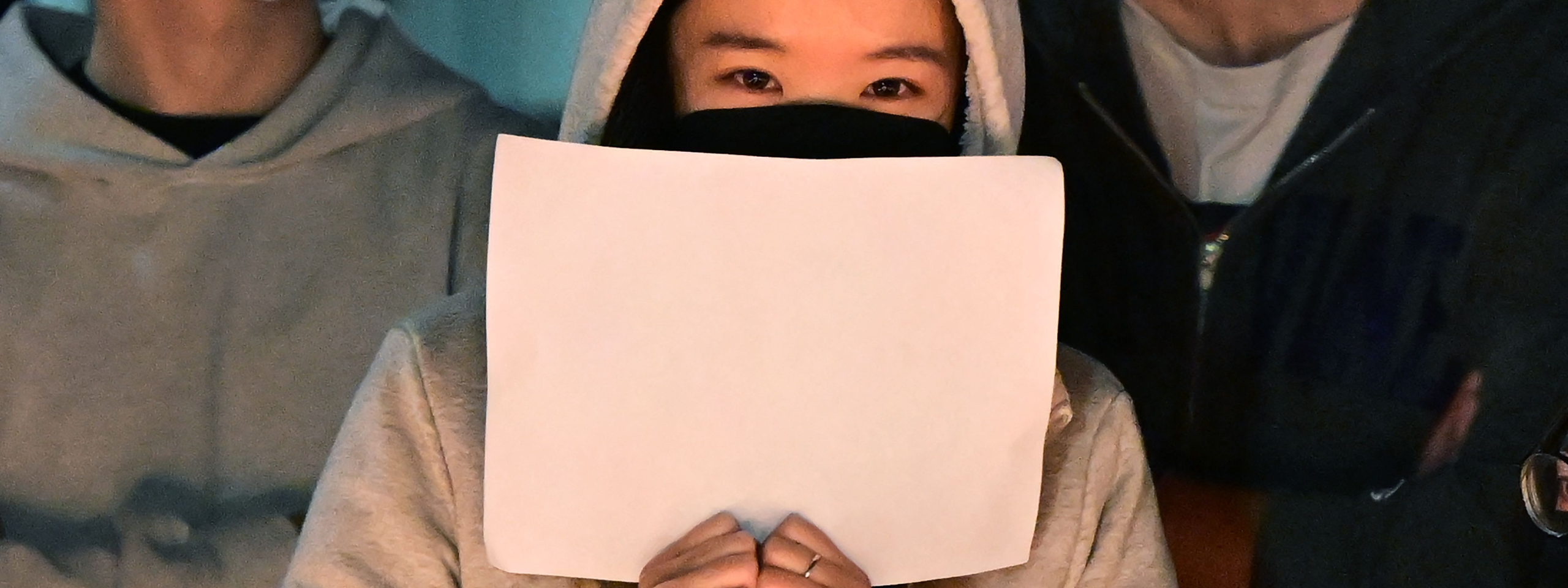
A woman holds up a blank sheet of paper during a demonstration against China’s strict COVID-19 lockdown measures following the deadly apartment fire in Urumqi, Xinjiang. (Photo by Frederic J. BROWN / AFP via Getty Images)
Democracy activists often face arrest, exile, harassment, or retaliation against their families. This essay explains why NED protects sensitive information about grantees, how that duty of care supports the people advancing freedom, and how NED balances discretion with accountability.
Imagine living in a place where a knock at the door in the middle of the night could mean imprisonment, or worse. This is the daily reality for countless democracy and human rights activists around the world. Their bravery makes their work not only meaningful, but also deeply consequential.
The National Endowment for Democracy (NED) supports those working to strengthen fundamental freedoms in transitional and fragile democracies, as well as those bravely advancing freedom in closed societies. Our grantmaking focuses on the building blocks of democratic life—free elections, independent media, and the freedoms of association, speech, and belief. Just as important, however, is our responsibility to protect the individuals who make that work possible.
This primer offers an overview of why NED carefully manages information about its grantees, including what is shared publicly, what is provided to Congressional oversight bodies, and how discretion underpins the safety and viability of those we support. Activists face vastly different risks depending on their location, visibility, and the tactics of the regimes they confront. Supporting democracy means protecting those who fight for it, including respecting their choices about public visibility to ensure their safety.
Why Public Exposure Can Be Dangerous
Speaking out in many parts of the world can mean risking arrest, exile, or death. According to Freedom House, only about one in five countries around the world is rated “free,” while The Economist’s Intelligence Unit has found that only 25 countries today qualify as full democracies. For the vast majority living under authoritarian or hybrid regimes, even symbolic acts of dissent, like holding up a blank piece of paper, can lead to life-disrupting consequences.
Authoritarian regimes understand the power of dissent and the threat posed by those who dare to speak. That’s why they’ve developed increasingly sophisticated methods to target activists, journalists, human rights lawyers, and civil society leaders, both inside their borders and abroad. Their reach extends across continents, threatening those in exile through transnational repression and those at home through direct prosecution.
The following stories from grantees illustrate why NED’s approach to protection must adapt to the risks posed by both transnational repression and direct prosecution.
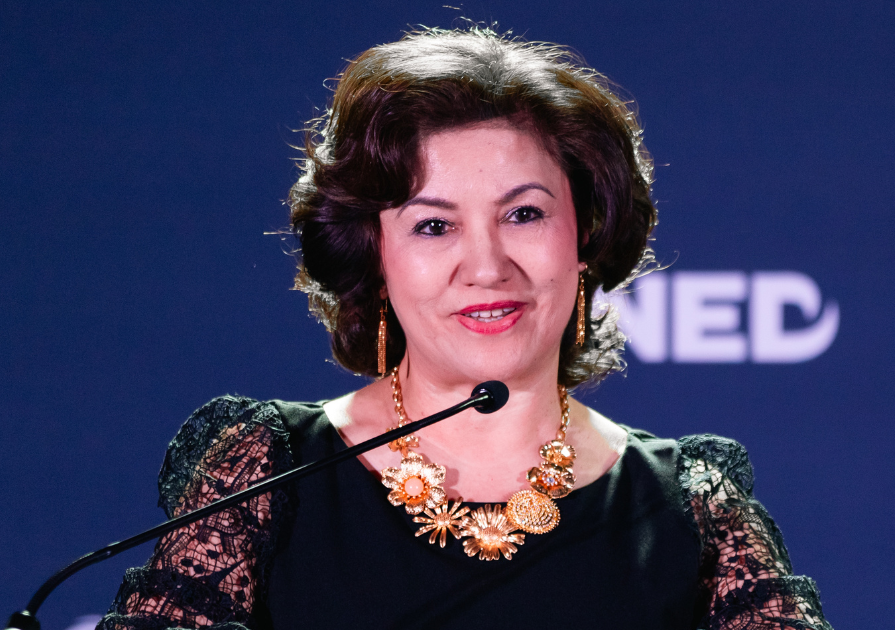
Rushan Abbas at the 2025 Democracy Awards. (Photo: M.K. Mindful Media)
Case Study: Rushan Abbas and the CCP’s Hostage Diplomacy
Rushan Abbas, founder of Campaign for Uyghurs and a NED grantee, gave her first public speech about China’s abuses in Xinjiang in 2018. Her husband’s entire family had already vanished in the 2017 crackdown. Just six days after her speech, her sister, Dr. Gulshan Abbas, a retired medical doctor with no political ties, also disappeared.
“She was being targeted because of my advocacy,” Abbas said. “Every day I wake up with her eyes in my mind. Of course, I feel guilty. Speaking out in the United States as an American citizen cost my sister her freedom.”
To this day, Dr. Gulshan Abbas remains missing in China’s vast detention system—her only ”crime” being related to someone who exposed the CCP’s abuses. This brutal form of hostage diplomacy forces exiled activists into an impossible choice: stay silent or risk their loved ones’ safety.
Case Study: Natalia Arno and the Kremlin’s Transnational Reach
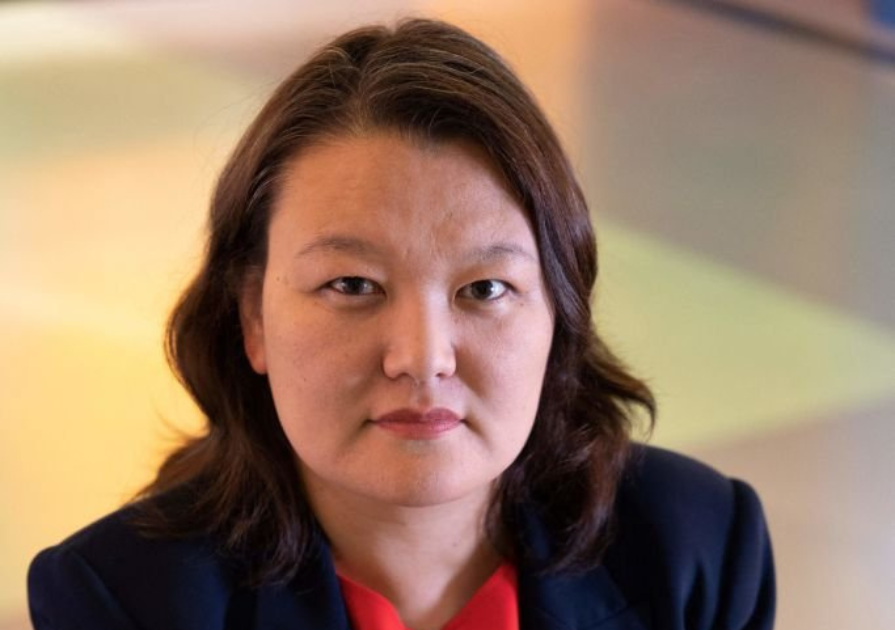
Natalia Arno (Photo by THOMAS SAMSON/AFP via Getty Images)
Natalia Arno, president of the Free Russia Foundation and a longtime NED partner, was forced into exile from Russia in 2012. Since then, she’s been a leading voice in exile activism, advocating for political prisoners, supporting democratic leaders, and coordinating programs to hold the Putin regime accountable.
But in May 2023, after a private event in Prague, she returned to her hotel to find the door ajar and a strange scent inside the room. Hours later, she experienced numbness, pain, and blurred vision. Doctors in Washington, D.C. confirmed exposure to nerve toxins.
“I never could have believed the scale and brazenness and how long the Kremlin tentacles are into the West,” she said. Despite years of surveillance and intimidation, Arno continues her work. “You could lose your life,” she said, listing examples of poisoned, tortured, and murdered activists. “I have been in this game for 20 years, and I can write a book about all the kinds of attacks against me in Russia.”
Activism in Exile and Under Authoritarian Rule
Authoritarian regimes target democracy advocates in two primary ways. Activists working inside authoritarian states face direct repression: denial of employment, education or housing to surveillance, interrogation, imprisonment, or death. Activists living in exile, such as members of the diaspora, confront transnational repression: intimidation, harassment, cyberattacks, and retaliation against relatives still living under dictatorship.
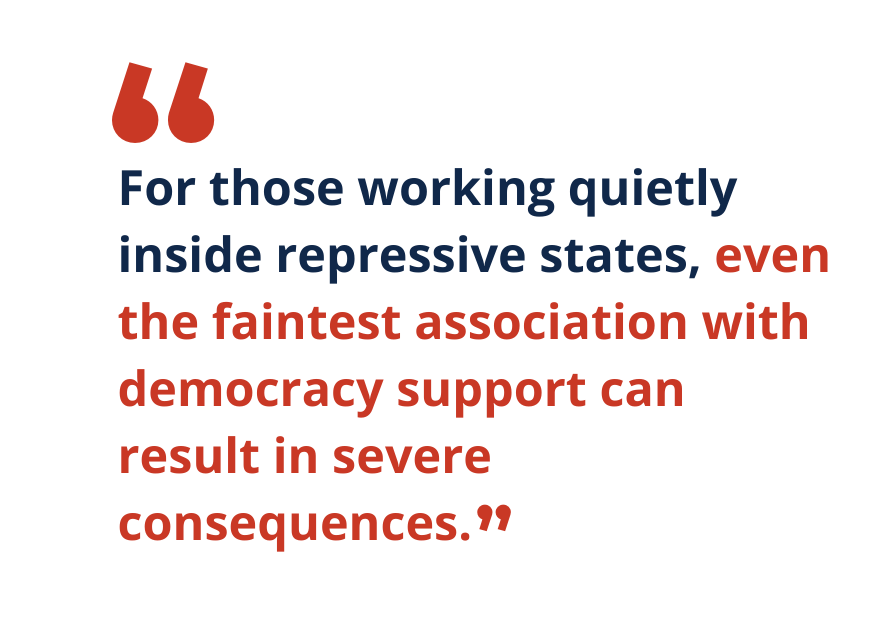
While both forms of courage are vital to the cause of freedom, they require different kinds of protection. For activists in exile like Abbas and Arno, visibility can be both a tool and a vulnerability—they use their public platforms to build international support while enduring harassment and threats from afar. For those working quietly inside repressive states, even the faintest association with democracy support can result in severe consequences. NED’s Duty of Care and Do-Not-Disclose policies reflect this spectrum of risk, providing flexible protections appropriate to different contexts, roles, and levels of exposure.
Visibility and Risk in Democracy Activism
Activists face difficult decisions about how visible they can afford to be. For some who live in exile, like Abbas and Arno, activism is essential to raising awareness and building international support. As public figures in free societies, they can testify before lawmakers, engage journalists, and speak on behalf of silenced communities. But even in freedom, visibility comes with the danger of transnational repression.
Abbas has faced smear campaigns, online harassment, and death threats requiring FBI involvement. Her family in China has been targeted. “Those kinds of things actually became so normal because we face this almost weekly or monthly,” she said. “And we just laugh at it and take it as the impact of our work.”
Arno’s risks didn’t end after fleeing Russia. “Being in NATO or EU countries doesn’t save us from this huge Kremlin machine,” she said. “Surveillance is still huge, cyberattacks are huge, but also physical attacks.”
These cases illustrate the first front of transnational repression: authoritarian regimes projecting power beyond their borders to intimidate, threaten, or attack critics abroad.
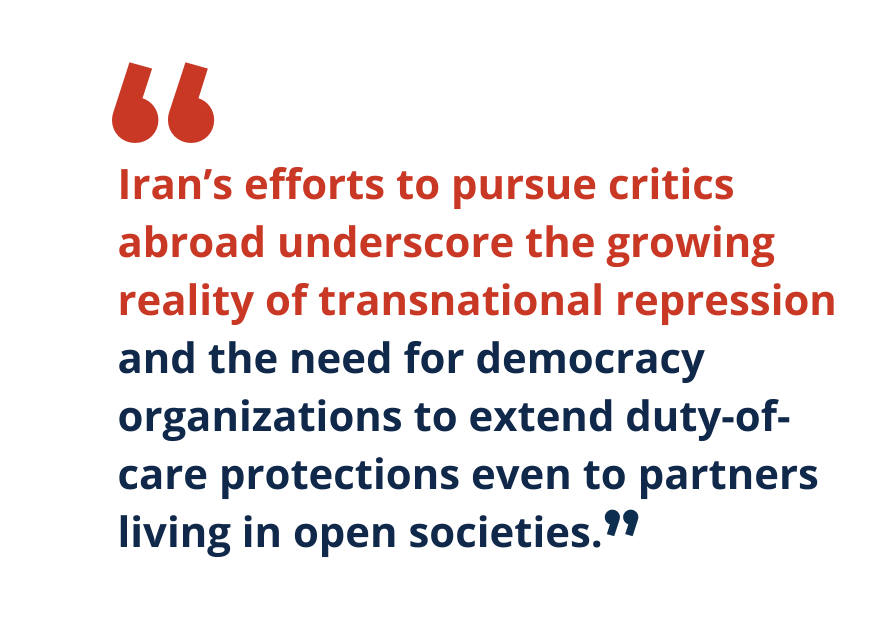
Iran has become one of the clearest examples of how far authoritarian regimes are willing to go to silence dissent beyond their borders. Iranian democracy activists, journalists, and human rights defenders living in exile have faced kidnapping plots, assassination attempts, surveillance, and harassment across Europe and North America. Multiple Western governments have linked Iranian intelligence services to plots targeting exiled dissidents, leading to disrupted operations, criminal prosecutions, and sanctions. Iran’s efforts to pursue critics abroad underscore the growing reality of transnational repression and the need for democracy organizations to extend duty-of-care protections even to partners living in open societies.
At the same time, this external pressure is inseparable from the repression activists face at home. For those still inside authoritarian states, the threat is direct and unrelenting. These activists continue their work at great personal risk, operating under surveillance, harassment, and the constant threat of arrest or imprisonment while pushing for democratic change.
In response to these dangers, many activists adopt a lower profile. How public they are in their work is an intentional choice to protect themselves, their families, and their networks from retaliation. While the steps they take to remain safe in authoritarian environments may mean their activism lacks the visibility of public campaigns, it is no less vital. Activists in authoritarian environments take great risks to build the infrastructure of democracy movements—documenting abuses, organizing communities, and informing international action.
In China, the Chinese government has systematically stigmatized international democracy funding. Even tenuous connections to external support and collaboration can carry severe consequences. As one activist working with international human rights and democracy organizations explained, “Me, myself, my family members, were interrogated by police officers in China.” Others have been detained and prosecuted for similar work. The Chinese government has also targeted the family members of human rights defenders in an effort to deter continued activism.
As a result, discretion is essential. “We prefer NED to not mention our names publicly,” the activist said, “in order to protect staff members and board members and even former colleagues, former members, and our families.”
Public activism draws global attention and builds coalitions, but it also brings heightened risk. Regimes often target public figures to intimidate or silence them—and to send a warning to others.
Activism that seeks to engage in quieter and less confrontational forms of engagement, by contrast, can provide greater security and sustainability, particularly in repressive settings. “While of course it’s much more dangerous for those activists who are inside Russia to speak out,” one Russian activist explained, “it’s much safer for those working in exile and most continue their work quietly.”
Human rights work in authoritarian environments demands different operational and political strategies. While the work often seeks to expose gross human rights abuses and expose corrupt networks, the ability to gather and verify the information requires close cooperation between groups that are in exile and networks that are in country.
In Tibet, NED-supported partners have documented China’s campaign to erase Tibetan identity through colonial-style boarding schools. In Venezuela and Cuba, investigative journalists have exposed corruption and human rights violations while keeping low profiles to stay safe. While international and exile organizations are often the face of the work, the networks on the ground are equally essential to what they achieve.
As Arno put it, “People are our biggest value, our biggest treasure. When activists are facing such dangerous things like imprisonment, torture, murder, we have to protect them with all possible measures.”
Supporting Activists Safely and Effectively
Since its founding in 1983, NED has supported democracy activists and citizen leaders—whether operating in exile or inside closed societies—to advance human rights and democratic values in some of the world’s most repressive contexts. NED’s Founding Statement of Principles and Objectives notes that in “societies where even [these] independent institutions are prohibited or severely restricted, the immediate objective is to enlarge whatever possibilities exist for independent thought, expression, and cultural activity. … [The Endowment] will not neglect those who keep alive the flame of freedom in closed societies.”
As a congressionally mandated independent nonprofit, NED was designed to provide support to its partners in a way that is impactful, secure, and accountable. Few donors are structured to do this work with the same level of care and discretion, which is why frontline democracy advocates consistently place their trust in NED.
Key to NED’s approach is the principle of protection through discretion. As NED’s Board of Directors approve grantmaking strategy and individual projects, the identifying details of grantees are made available to them. However, we avoid public disclosures that could expose partners to government reprisal. This is not only an ethical commitment—it is a key operating principle rooted in NED’s Duty of Care and Public Disclosure Policies, which obligates the organization to do no harm.
Without this policy of protection, many activists could not safely engage with international support. “It’s very difficult to build reputation and trust” one democracy activist said. “How you treat your grantees, with special care and understanding of the particularities of each region, should be the gold standard that all donors take as an example.”
NED’s Approach to Public Disclosure of Grantees
NED publishes listings of its current grantees twice a year on its website and includes a comprehensive listing of grantees in its annual report, complete with grant descriptions, grant amounts, and grant durations, organized by country and region. However, we do not publicly disclose personally identifiable information in these listings to avoid placing individuals at risk, now or in the future.
Some have asked why NED does not publish the personally identifying details of its grantees on its website. The reason is simple: in many cases, doing so would put a target on the backs of those we support and compromise their ability to do their work.
NED’s Duty of Care and Public Disclosure policies seek to balance the ability of our partners to operate as freely and securely as possible with our transparency requirements. At the same time, our relationship with our grantees is fully transparent. Organizations must take the initiative themselves to seek support from the Endowment. They know who we are, where our funds come from, and the values that guide our support. Activists seek out NED’s assistance precisely because it is open, accountable, and trusted.
NED respects the agency of its grantees to decide whether it is safe to publicly disclose their relationship with NED. Organizations regularly and proudly share their partnership with NED as a mark of credibility and support. Others, particularly those operating in hostile environments, often request confidentiality to safeguard their security and effectiveness. In all cases, NED ensures our partners are aware of our policies and procedures so that they can make informed decisions about their own public posture.
This approach is an ethical obligation as much as it is a matter of organizational policy. We know about the persecution of Uyghurs and underground Christians in China, the protests in Cuba and Iran, the continued repression in Belarus and Nicaragua, and human rights abuses in Burma and North Korea because courageous individuals risk their lives to report them. Supporting democracy means more than funding programs or issuing statements—it means protecting the people behind the work.
With that responsibility comes a duty: to minimize risk, not add to it through careless exposure. In a world where authoritarian regimes are increasingly sophisticated, coordinated, and ruthless in targeting dissent, discretion becomes an essential safeguard.
Transparency and Accountability
Even as NED protects grantee confidentiality in public settings, it maintains rigorous transparency and accountability to the NED Board, Congress, and U.S. oversight bodies. The NED Board reviews and approves both grantmaking strategy and individual grants. As outlined in our Duty of Care, we submit comprehensive annual plans and updates to congressional committees that outline our strategy and grantmaking priorities. We maintain active communication with Members and their staff, respond promptly to official requests for information, and create opportunities for elected officials to engage directly with our grantees—both in Washington and abroad—to better understand the real-world impact of NED-supported efforts. We likewise provide an annual report to the executive branch as a formal accounting of our work, priorities, and impact. NED consults regularly with representatives of the legislative and executive branches on our work, both in Washington and in the field, and responds to Freedom of Information Act information requests.
NED upholds strict due diligence and financial oversight procedures to ensure that resources are used responsibly and for their intended purpose. Our grantmaking is governed by the standards of all federal spending, with clear agreements, financial reporting requirements, and independent audits to ensure funds are used for their intended purpose.
In addition, the Endowment is subject to comprehensive oversight, including Government Accountability Office (GAO) investigations, State Department Inspector General reviews, and annual independent audits.
By combining discretion abroad with transparency at home, NED fulfills its dual responsibility: protecting those who advance freedom in repressive environments while remaining transparent and accountable. As authoritarian threats grow more complex and far-reaching, we will continue strengthening our Duty of Care so those who defend democracy can pursue their work safely, effectively, and with confidence in the support behind them.
Front line Defenders on 27 March 2026 shared an update on human rights defender Makhabat Tazhibek Kyzy:
On 23 March 2026, the Leninskii District Court of the City of Bishkek, Kyrgyzstan, ordered the release of a woman human rights defender Makhabat Tazhibek Kyzy from prison. At the preliminary session of the retrial in her case, the Court changed the measure of restraint and granted her release from the penal colony where she had been detained. Her release is conditional upon an order not to leave the country. The retrial is scheduled to begin on 7 April 2026.
Makhabat Tazhibek Kyzyis a woman human rights defender and journalist. She is the director of Temirov Live and Ayt Ayt Dece. Temirov Live is a YouTube-based media outlet that investigates and reports on corruption by state and non-state actors in Kyrgyzstan, founded in 2020 by Bolot Temirov, a prominent Kyrgyzstani human rights defender and journalist. Ayt Ayt Dese is a YouTube-based project aimed at popularising human rights issues through the performance and publication of folk songs on human rights topics. Among other topics, Ayt Ayt Dese has covered investigations by Temirov Live.
On 23 March 2026, Leninskii District Court of the city of Bishkek commenced the retrial of the case of Makhabat Tazhibek Kyzy with a preliminary session. The retrial was set following a decision of the Supreme Court of Kyrgyzstan on 10 March 2026. Based on Opinion No. 52/2025 by the UN Working Group on Arbitrary Detention, the Supreme Court ordered a retrial and overturned the previous rulings that sentenced the woman human rights defender to six years in prison.
At the preliminary session, Makhabat Tazhibek Kyzy’s lawyers filed three motions. First, the defence attorneys requested the Court to declare the expert witness evidence from previous trials as inadmissible, arguing that authorities had pressured the expert witnesses into giving false testimonies. The issue of evidence tampering by the authorities was previously highlighted in the case of human rights defender and whistleblower Zhoomart Karabaiev, who was on trial for reporting that authorities pressured expert witnesses to provide statements supporting the prosecution. The second motion requested that the Court immediately and unconditionally ceases all judicial proceedings against Makhabat Tazhibek Kyzy. The third motion sought a change in her measure of restraint, from detention in the penal colony to release under the condition that she remains in the country. While the Court denied the first two motions, it agreed to change the measure of restraint for Makhabat Tazhibek Kyzy, leading to her release later that day.
Upon her release, Makhabat Tazhibek Kyzy expressed gratitude for the support she has received since the beginning of the prosecution against her in 2024. However, she also shared that she was subjected to psychological pressure and violence from the authorities in the penal colony, which aimed at exacerbating her isolation from the community supporting and defending her rights.
Front Line Defenders welcomes the Court’s decision to release Makhabat Tazhibek Kyzy, who has been targeted solely for her peaceful and legitimate human rights work. The organisation continues to call upon the authorities in Kyrgyzstan to immediately and unconditionally cease all types of persecution targeting the woman human rights defender and drop all charges against her.