In the USSR, writers often became defenders of human rights. They were people of various ages and backgrounds, yet their works exposed injustice and reflected personal courage to speak the truth — for which many paid with exile and labor camps. Why did the authorities fear writers so much? And why should they be honored today?
One such figure was the Soviet-Ukrainian writer and poet Lina Kostenko, who, through her works and personal stance, inspired resistance, standing proudly for freedom and against the oppressive system, despite multiple attempts to push her out of cultural and literary life. Her novel Notes of a Ukrainian Madman, written in the 1970s, was long banned and circulated only through underground self-publishing (samizdat). Through this work, Kostenko protested the totalitarian regime and shed light on the lives of those who could not live in good conscience under Soviet rule. The novel symbolized the fight for the right to be oneself.
Lina Kostenko was part of the “Sixtiers” (Shistdesyatnyky) movement, a generation that opposed Soviet propaganda stereotypes, aimed to restore historical memory, protect national culture, and resist ideological control in Ukraine. As a writer and poet, Kostenko not only used her works to critique the totalitarian regime but also supported the core values of the movement: personal freedom, the right to cultural expression, and the condemnation of repression.
“We are warriors. Not idlers. Not slackers. And our cause is righteous and holy. For while others fight for whatever, We fight for independence. That’s why it’s so hard for us.” “A human seemingly cannot fly… But has wings. Has wings!”
Her contribution to the cultural revival of Ukraine and the preservation of free speech values is immeasurable. Today, Lina Kostenko still resides in Ukraine. In 1987, she was awarded the Shevchenko National Prize for her novel Marusia Churai.
One of Lina Kostenko’s close friends and fellow Sixtiers was the poet, translator, and dissident Vasyl Stus. They actively supported each other in their fight against censorship during the most difficult times of repression.
Stus openly criticized the Soviet regime for human rights violations, which led to his repeated persecution. In 1972, he was arrested and sentenced for “anti-Soviet agitation and propaganda.” Despite the harsh conditions of his imprisonment, he continued to write, and his works were distributed through samizdat, inspiring many to resist oppression.
After five years in a Mordovian labor camp and two years in exile in the Magadan region, Stus returned to Kyiv in September 1979. There, he resumed his human rights activities, supporting “prisoners of conscience” with the help of Western organizations. In 1978, he was made an honorary member of the English PEN Club. However, in early 1980, he was arrested again. Vasyl Stus died in a maximum-security labor camp in 1985. His life and works became symbols of the relentless struggle for freedom and human dignity under totalitarianism.
The stories of Lina Kostenko and Vasyl Stus remind us that words can be powerful weapons in the fight for truth and dignity. Their courage, dedication to the ideals of freedom, and love for Ukrainian culture prove that even under the harshest conditions, there is always room for bravery and resistance. Today, as issues of freedom of speech and cultural identity remain pressing, their legacy continues to inspire us to remember that truth is a value worth fighting for.
“The idea is not to change the world, but to spark the mind that will change the world, because leadership is in delegation.”
Willie Oeba is an African poet who empowers young people to fight inequality and foster social justice through spoken word. He currently leads a team of 24 young “artivists” in his community who use their creativity to create social change. Through his own poems, he has also reached millions of people worldwide.
As CEO of ISM Academy, an organization that trains young leaders to create art that combats inequality, Willie develops the tools for marginalized artists to champion social justice, economic equity, and democracy. In 2021, he was awarded the Upcoming Human Rights Defender award by the Defenders Coalition, a national human rights organization in Kenya. He also won the East Africa Spoken Word Battle in 2018.
Willie works to bridge the poverty gap within the arts by empowering artists from marginalized communities and by championing economic structures that allow artists from every background to achieve financial independence. He believes that activism through art requires people to stand in the gap between what is real and what is possible, and to respond to challenges by expanding whose stories get told.
I still stubbornly refuse to die The sad thing is that They don’t know how to kill me because I love so much The sound of growing grass
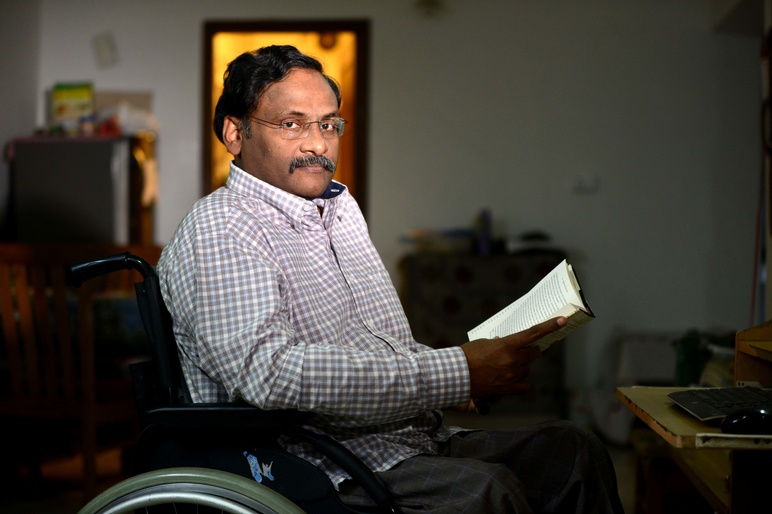
OMCT published this impressive story in calling for the immediate release of G. N. Saibaba:
These are the defiant words of Gokarakonda Naga “G. N.” Saibaba, written from his cell in Nagpur Central Jail in the Indian state of Maharashtra. A wheel-chair using, human rights activist and former university lecturer of English, Sai has endured years of cruel, inhumane solitary confinement. Still, his irrepressible resilience shines through. And Sai’s poetry fills a recently published anthology. But he did not write it in verse. In order to evade the prison’s punishing censors, and to disguise his messages of equality, positivity and love, Sai penned letters to friends and his partner of 30 years. These were transcribed, and became his book entitled, Why Do You Fear My Way So Much?
Prison conditions
Now, G. N. Saibaba is much less able to write. Since his erroneous conviction for terrorism-related crimes in 2017, and a sentence of life imprisonment, Sai’s health has progressively deteriorated. Suffering from a heart condition, a brain cyst, a lump in the abdomen and breathing difficulties, his multiple medical conditions require specialised treatment only available in New Delhi. And his disability as a result of childhood polio has been compounded by untreated nerve damage in his left arm, that has spread to his right, leaving him with no strength in his upper limbs. Sai needs support to perform any simple human function like sitting up, eating, drinking or using the toilet, a task which has been assigned to two fellow detainees. His dependency has been underlined by the constant monitoring of his cell. It was only recently – after Sai went on another hunger strike – that the prison authorities agreed to change the direction of CCTV cameras, giving him some semblance of privacy. Before that, his bed and toilet were recorded 24/7. This was a small victory. Despite repeated advocacy by the UN and human rights groups on G. N. Saibaba’s behalf, he is forced to inhabit a small, egg-shaped cell exposed to extreme weather conditions and with little space to move, particularly for someone in a wheelchair as Sai. Given his disability, some commentators believe the conditions of his detention may amount to torture.
Arrest in Delhi
It was 9th May 2014, and G. N. Saibaba was returning home for lunch from his lecturing duties at Delhi University. Without warning, a van jack-knifed in front of the car he was travelling in, forcing it to stop. Sai’s driver was pulled roughly from the vehicle, and replaced by a man in civilian clothing. Two others flanked their captive in the back. G N Saibaba was driven directly to the airport. He was never shown an arrest warrant, and nobody informed Sai’s relatives about his arrest. He was put on a plane to Nagpur, Maharashtra. On arrival, he was transported in an anti-landmine vehicle, in a convoy of commandos armed with automatic weapons. The military clearly wanted to send a message they had detained a hard-core terrorist – not a committed campaigner who has fought most of his life against discrimination and caste-based oppression, and for the rights of women and indigenous Indians.
Activism
G. N. Saibaba grew up in a small, rural community in southern India. Disabled by polio as a young child, he understood early on how unfairness and prejudice are perpetrated. Excelling in school, Sai went on to university where he became involved in student politics. His appointment as a professor of English did not dilute his outspoken criticisms of injustice.
In particular, he became a leading detractor of what became known as ‘Operation Green Hunt’ – a military campaign in central India, home to a large population of several indigenous communities (known as Adivasis), to eliminate Maoists, also called Naxals. Central India has witnessed numerous people’s movements opposing forceful occupation of indigenous land, and the exploitation of ancient forests and rich mineral resources. This military campaign against Naxals was used to quash such movements, leading to numerous human rights violations against civilians.
Conflict in this region dates back to the 1960s. ‘Operation Green Hunt’ began in 2009 – an all-out, on-going offensive by the Indian armed forces to rid the area of Naxals. G. N. Saibaba led the Forum Against War on the People – a solidarity organisation, and an attempt to shine a light on human rights abuses in the region. These atrocities – committed for the most part by the military and paramilitaries – have been well documented. They include extrajudicial killings, multiple rapes, and the deeply disturbing desecration of civilian corpses. It has been estimated more than 2,000 people have lost their lives since 2009.
Conviction
G. N. Saibaba’s advocacy certainly gave pause for thought to national and transnational mining corporations thinking about investing in the region. So, it was inevitable perhaps he would become a target. His persecution began under the Congress government – his Delhi home was raided more than once – and then continued under the BJP, and the prime ministership of Narendra Modi.
At G. N. Saibaba’s trial in 2017, with the courthouse fortified by hundreds of police officers to reinforce the impression of a dangerous extremist, he was tried under India’s anti-terror legislation – the Unlawful Activities (Prevention) Act. With five others, Sai was convicted of alleged links to the banned Maoist organisation.
Judicial rollercoaster
In October this year, the Nagpur Bench of the Bombay High Court ruled G. N. Saibaba’s initial trial had been flawed. The case against him was discharged. The elation he, his family and supporters felt quickly turned to disbelief. The government – infuriated, no doubt by the court’s decision to release an ‘urban Naxal’, a term regularly used to stigmatise human rights defenders – applied for a special sitting of the Supreme Court. The very next day, on a non-working day the special bench of the Supreme Court suspended the decision of the Bombay High Court. This leaves G N Saibaba still in that heavily monitored isolation cell, struggling to negotiate its curved walls in his wheelchair.
Above all, love
G. N. Saibaba’s hope of liberty has once more been dashed. Even so, his spirit is strong. The untreated infections in his hands, and the pain he experiences, means Sai cannot write more than two or three pages a month. But letters from home, especially from his partner, help sustain him.
I defeat the purpose of the solitary confinement by drowning myself in your letters of love.
On 8 January 2022 the Iranian poet Baktash Abtin died in Tehran after contracting COVID-19 in Evin Prison. Abtin, who died after being put into an induced coma while hospitalized, is the second known political prisoner to die in Iran in the first week of 2022. On January 1, Kian Adelpour died after going on hunger strike to protest being imprisoned without a fair trial.
“This is a preventable tragedy and more prisoners’ deaths are inevitable because there is no accountability in the Iranian government,” said Hadi Ghaemi, executive director of the Center for Human Rights in Iran (CHRI). “Abtin was imprisoned in Iran because the government wanted to muzzle him with a jail cell; the state killed him.” Abtin had been serving a five-year prison sentence on the charge of “assembly and collusion against national security.”
A group of main NGOs had addressed a joint letter to Ayatollah Ali Hosseini Khamenei on 7 January repeating their call that Abtin be given access to the best possible medical care as he battles for his life. In addition, we urge that: he and all those unjustly detained for their writing or expression be immediately and unconditionally released; that authorities refrain from summoning political prisoners to serve their sentences while the conditions inside Evin and other Iranian prisons remain unsafe; and that any who do contract COVID-19 or other serious illnesses while in jail be granted speedy access to all needed medical care or a medical parole on humanitarian grounds.
While offering condolences to Abtin’s family and friends, the Iranian Writers Association (IWA) where Abtin, 48, was a board member, released a statement on January 8 on the “injustice that was committed against Abtin”: “Baktash Abtin is alive because the spirit of freedom-seeking and the fight against tyranny and injustice is alive,” said the statement.
Fellow IWA board member Reza Khandan Mahabadi was also sentenced to five years in prison and Keyvan Bajan to three years and six months. An international chorus has condemned the IWA writers’ imprisonment, with dozens of high-profile writers and artistic figures including Nobel laureates calling for the writers’ acquittal.
At least 11 writers are known to be either currently imprisoned or living with an unserved prison sentence hanging over their heads in Iran as they await an appeal or to be summoned to jail, according to a list compiled by CHRI.
In an interview with CHRI in May 2019 after his trial, Abtin forcefully said the charge of “assembly and collusion against national security” was for statements published by the IWA, articles in the organization’s internal newsletter, and holding memorial ceremonies for IWA members Mohammad Mokhtari and Mohammad Jafar Pouyandeh, who were murdered in 1998 as part of a concerted state policy to eliminate political and cultural dissidents inside and outside of Iran.
“Nowhere in the world is it necessary to get a permit to gather around someone’s grave,” Abtin told CHRI. “But that’s what we’ve been charged with.”
Neil Gaiman launches a crowdsourced animated film to help raise funds for Syrian refugees battling freezing temperatures and icy winds amid threat of Covid-19.
Neil Gaiman – celebrated author and Goodwill Ambassador for UNHCR – has joined forces with hundreds of fans and artists to release a new animated version of his poem What You Need To Be Warm.
The animated film aims to raise much needed funds for UNHCR’s Winter Appeal providing vital support for refugees in the Middle East including Syrian and Iraqi refugees, many of whom are battling their ninth winter away from home. This year is the hardest yet as refugees face snow, rain and freezing temperatures, as well as the impact of Covid-19 which has dramatically affected vulnerable families, put health at risk, devastated livelihoods, and pushed more refugees out into the cold.
Neil Gaiman said: “This animated film was a chance for people to come together to help raise awareness and life-saving funds to protect these families. I was blown away by the response and quality of drawings submitted online. People really care and want to help and they still can by making a donation“
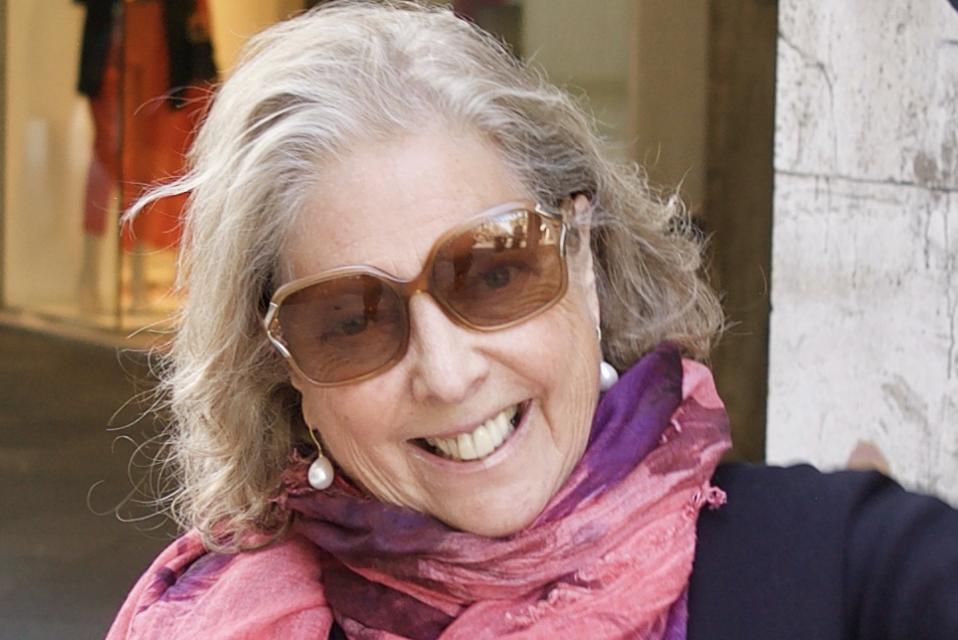
Jackie Abramian, contributor of ForbesWomen of 5 November 2020, gives a voice to Chilean-American poet, novelist, and human rights activist Marjorie Agosin. The piece is too rich to summarize, so here it is in full:
Chilean American Poet, Marjorie Agosin. John Wiggins
Like a beam of light piercing through the darkest tunnels of human destitute, Chilean-American poet, novelist, and human rights activist, Marjorie Agosin unveils the misery of the marginalized, weaving Latin America’s brutal history with her own Jewish traditions of survival and endurance. Memory and remembrance surface and resurface as a constant in Agosin’s writing. She flirts with her ancestral ghosts to unveil universal pain, desperation of loss and exile, and a yearning to belong.
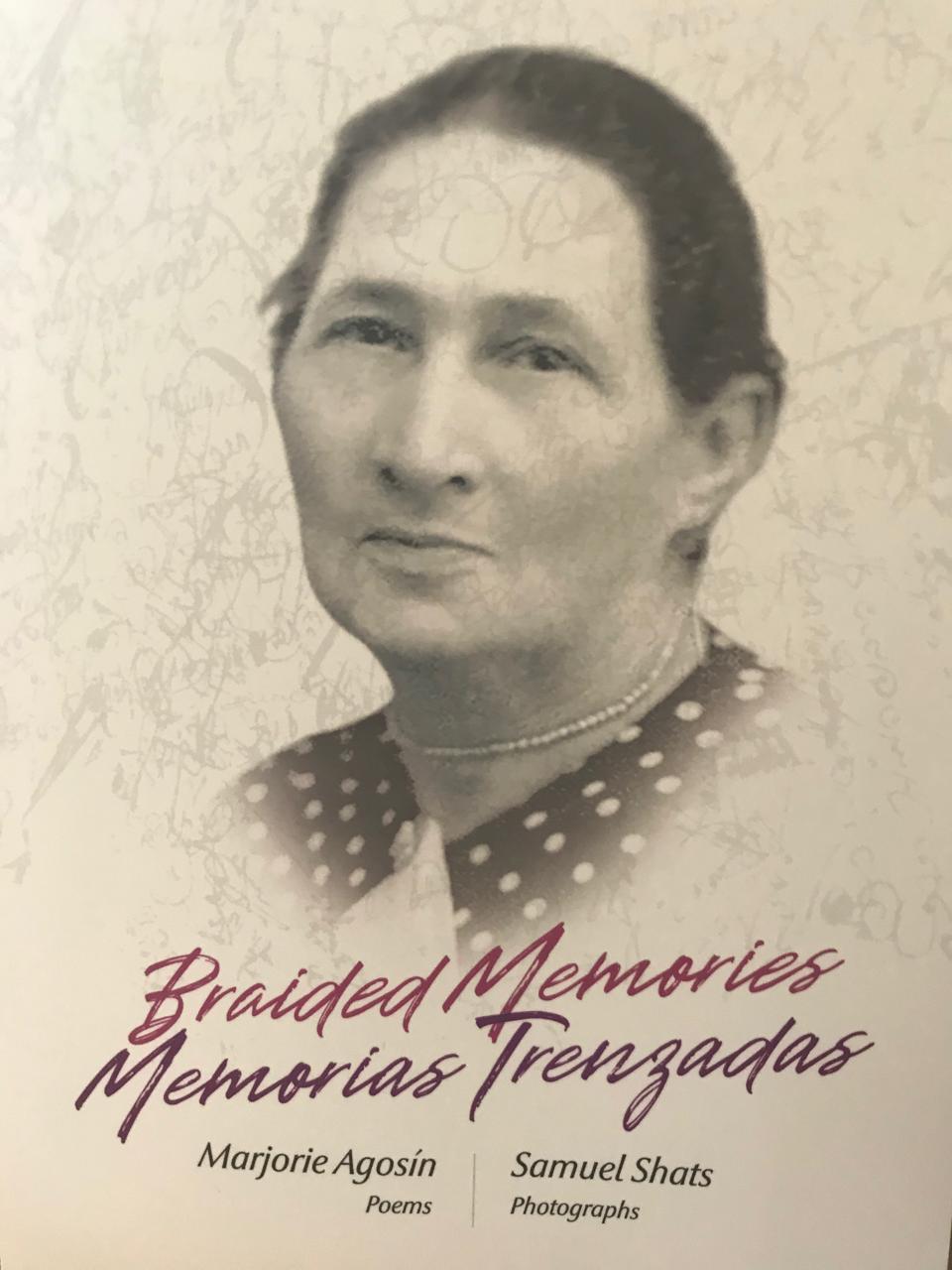
In Braided Memories (Solis Press, 2020), Marjorie Agosin awakens her great-grandmother, Helena … [+] Marjorie Agosin
Her most recent poetry collection, Braided Memories (Solis Press, 2020), with photographer Samuel Shats, awakens her great-grandmother, Helena Broder’s memory, and escape from Vienna for Chile after the 1938 “Night of Broken Glass.” Agosin journeys to Prague and Vienna to shed light on her ancestors–finding their Stolperstein–stumbling stones of brass plate inscriptions of Holocaust victims’ name and life dates, set before their homes. Her great grand cousins’ spirits fly over Vienna “like a Chagall dream.” In Helena’s imprisoned “silent gaze” she imagines her train ride from Vienna with strangers “familiar in the knowledge of certain escape.” We learn how Helena taught Agosin to “leave glasses of wine before the vacant places” of the dead, how she “acquired the blessing of forgetfulness” and left to “roam on the other side of imaginary spaces.” Agosin, grateful for the remembering gift, becomes Helena’s “tranquil memory.
“The hand that writes knows before the actual writing foreshadows. I hear a voice, a spirit that comes to me—call it intuition or God. You either suppress it or follow it for the magic of discovery,” speaking in her gentle Chilean accent, Agosin is alone with her creative thoughts in spaces that make poetry happen. “Poetry is the soul of life, the language of sentiments. Poetry is not in a hurry—the world is in a hurry and that’s why we fail to see the most important problems of our civilization.”
As a human rights activist, Agosin’s 84 works of poetry, fiction, and literary criticisms have earned her the Pura Belpré Award, Letras de Oro Prize, Latino Literature Prize, Jeannette Rankin Award in Human Rights, U.N. Leadership Award for Human Rights, the Gabriela Mistral Medal for Lifetime Achievement from the Chilean government, and the Fritz Redlich Human Rights Award by the Harvard Program on Refuge and Trauma. She holds a BA from the University of Georgia, an MA and a Ph.D. from Indiana University–and has been a Professor in Latin American studies and Spanish at Wellesley College for over 30 years.
Born in the U.S., Agosin spent her childhood in Chile before the rumbles of a U.S.-backed coup sent her family fleeing the país de poetas (land of poets) to settle in the U.S. The coup overthrew the democratically elected socialist leader, Salvador Allende and on September 11, 1973 brought Augusto Pinochet to power. During the 17-year rule, Pinochet imprisoned, tortured and killed some 130,000 Chileans–and thousands “disappeared.”
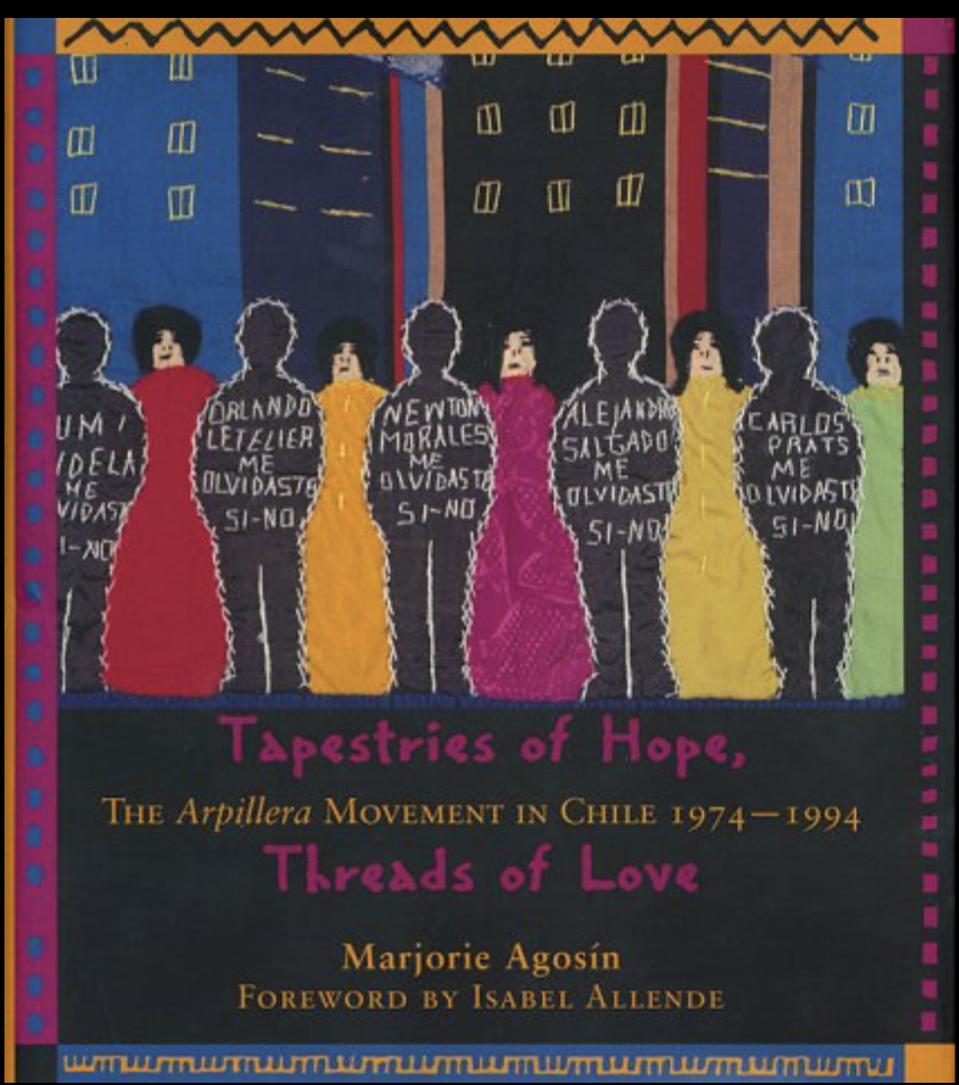
Tapestries of Hope, Threads of Love (U. of New Mexico Press, 1996) is Agosin’s landmark work with a … [+] Marjorie Agosin
Tapestries of Hope, Threads of Love (U. of New Mexico Press, 1996) is Agosin’s landmark work with a foreword by Isabel Allende. It spans 30-years of interviews with members of Latin America’s most influential women’s resistance the Arpilleras (burlapin Spanish) movement. The tapestries of embroidered cloth scraps made by impoverished women memorialize the “disappeared” loved ones under Pinochet’s rule. Agosin worked with the initial group of 12 women and brought their stories to the world. They were part of the anti-Pinochet art workshops, funded by Vicarâia de Solidaridad human rights organization of the Chilean Catholic Church. The embroideries, smuggled and sold abroad, provided income for the destitute women. {see also: https://humanrightsdefenders.blog/2020/02/22/arpilleras-making-a-come-back-as-blankets-that-protect/]
“As a woman and a mother, this is the most important work I’ve done–it changed my life,” Agosin was 24 when she first saw an Arpillera shown by the Chilean National Literature Prize-winning writer, Antonio Skármeta–whose book Ardiente paciencia inspired Academy Award-winning movie on Neruda, “IL Postino”.
Arpillera, means burlap in Spanish, a patchwork picture made by the women, became popular in Chile … [+] Marjorie Agosin
Like poetry, women’s distinct resistance movement reaches the core of what it means to be human, Agosin believes. The tapestries reveal an innate grief, immortalize memory, unfulfilled yearning to reunite with loved ones, and the trauma of lifelong scars.
In her most favorite poem The Most Unbelievable Part, Agosin explores how power corrupts and turns ordinary people into torturers. How in 1973 Pinochet designated La Esmeralda, the 1400 feet-long Chilean navy training vessel, into a detention and torture center for the “disappeared.”..
“Poetry is the intimacy of memory–it transcends history. The poem wrote the story of the tortures on La Esmeralda, not the other way around,” explains Agosin. “Torture is a metaphor for how power works—how a woman of privilege treats her maid.”
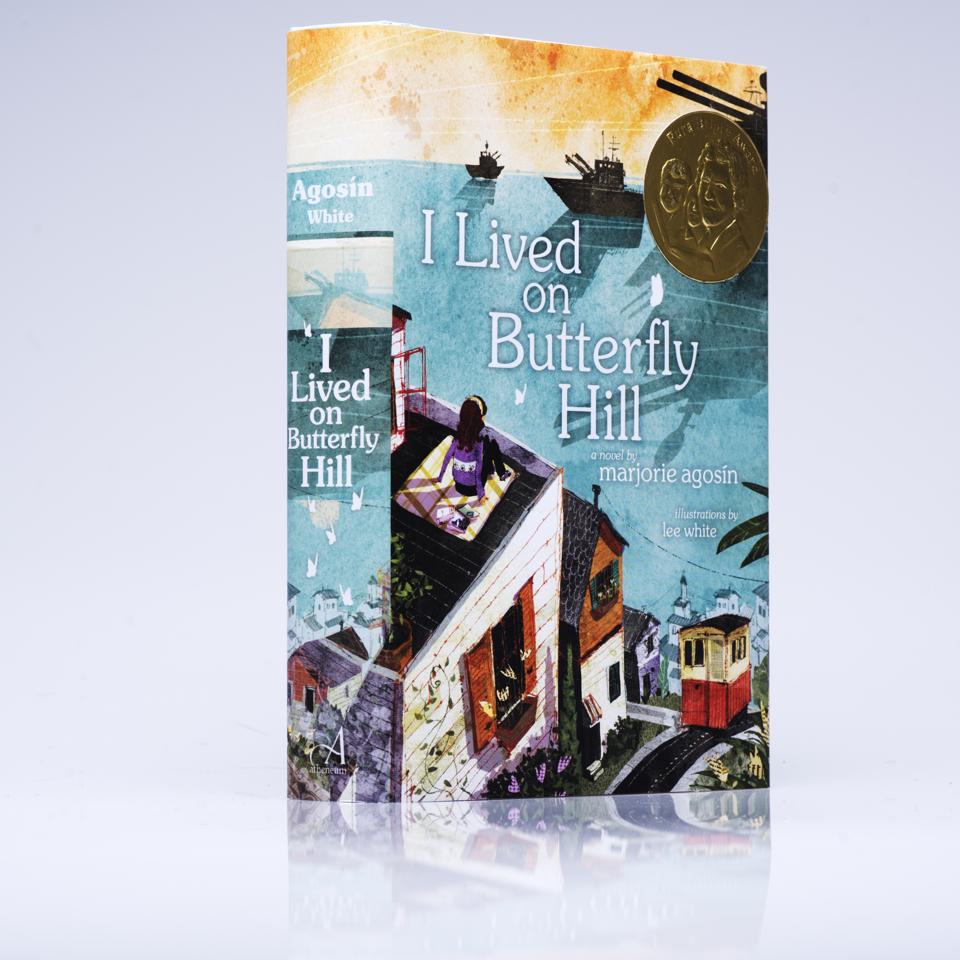
Considering Chile her home that gave her “a beautiful language” (she still writes in Spanish), and refuge to her family when they came on ships from war-torn Europe, Agosin’s exilic yearning of the familiar stranger expresses the constant pangs of un-belonging. In her Pura Belpré Award–winning young adult novel, I Lived on Butterfly Hill (Atheneum Books 2014)
WASHINGTON DC – JUNE 01: I Lived on Butterfly Hill by author Marjorie Agosin is one of the Kids … [+] The Washington Post via Getty Images
and its sequel, The Maps of Memory: Return to Butterfly Hill (Atheneum Books2020), Agosin recreates her happy childhood in Chile through the 11-year-old Celeste Marconi’s life. Her peaceful life, extended family, deep ties with the sea and the pelicans of the hill-town of Valparaiso unravel with the political shift to dictatorship. Celeste goes into exile to Maine and returns years later to find her country scarred by the brutality of dictatorship, and is determined to find her displaced classmates, re-build and heal her town and country. Like Celeste, Agosin is not totally at home in Chile.
“I’m home in books, poems, writings, friendships, history, travels–in places where Jews lived, and among trees and nature–human beings are not exiled from the beauty of the world,” Agosin immerses herself in her seacoast Maine home–which reminds her of Chile– surrounded by her garden dotted with quaint alcoves that invite the visitor to stop, rest, and embrace nature. “I’m at home in sacred places, from mosques to churches to synagogues.”
In A Cross and a Star: Memoirs of a Jewish Girl in Chile (Feminist Press, 1997)and Always from Somewhere Else: A Memoir of My Chilean Jewish Father (Feminist Press, 2000)–Agosin meets her parents at history’s crossroads. Her father, as an infant with chickenpox, was hidden, crossed the ocean and was named Moisés. He became a medical doctor in Chile and later emigrated to the U.S., becoming a foreigner once again. Her blond, blue-eyed mother could only attend an impoverished rural school–not a Catholic school because she wasn’t baptized, nor the German school run by the Nazis.
“My mother’s story explains what’s it like to be a minority in south of Chile when the Nazi’s arrived–how Chile denied and marginalized its minorities and its indigenous people,” Agosin wonders why vast majority of Chile’s Jewish community stood in silence against Pinochet’s atrocities as she explores human rights abuses from Latin America to the unfair partition of Israel which offered a refuge for the Jewish people displaced by the Holocaust–and in process displaced the Palestinians.
“Unfortunately Israel continues to suppress the Palestinian people that deserve the right of self-determination. To continue with the occupation of their lands violates the spirit of Israel as a vibrant democracy. Only a two state solution will allow Israelis and Palestinians to live in peace and with the dignity each one deserves,” Agosin states.
Agosin is inspired by her “amazing group of politically engaged” students at Wellesley College whose worldview, commitment to academic learning, open expression, and internships across the world to engage with the vulnerable reflects in their “gratitude for the possibility of learning as they face economic and emotional challenges amidst a pandemic.” Her immense empathy and loyalty to amplify all injustices reveals an undeniable allegiance to the spiritual and universal values of preserving memory.
“Memory is the active cause. Memory will not remember itself, like the Stolperstein tiles. Memory is a process, a constant commitment; without it we won’t remember the future. Memory is the future of the past,” Agosin confirms.
Ketty Nivyabandi is a Burundian activist and poet who led the first women-only demonstrations against Burundi’s president in 2015. She defied police beatings, tear gas, and a water cannon to make women’s voices heard.
In this podcast THE HUMAN RIGHTS FOUNDATION dives into Burundi’s authoritarian regime and Ketty’s resistance to Burundi’s dictatorship. What role can women play in protesting and organizing? How do you survive police brutality? How can people remain hopeful and support protestors in Burundi?
On 22 October 2013 the Office of the United Nations High Commissioners for Human Rights called for the immediate release of a well-known Qatari poet who it says was harshly sentenced for a poem considered to be encouraging the overthrow of the ruling system of the country. Mohammed al Ajami – also known as Ibn al Dheeb – was initially sentenced to life in prison on 29 November 2012 for the poem, which was also considered insulting to the nation’s symbols. His sentence was reduced to 15 years last February during a second appeal. On 20 October, Qatar’s highest court, the Court of Cassation, decided to uphold the 15-year sentence. Mr. al Ajami’s only recourse now is to appeal for clemency to the Emir of Qatar, the home country of Al-Jazeera. “This sentence is clearly disproportionate,” OHCHR spokesperson Cécile Pouilly told reporters in Geneva. “Last January, we already publicly expressed our concerns about the harsh sentencing, the fairness of his trial and about the many months Mr. al Ajami had spent in solitary confinement,” she added.


 Hans Thoolen on Human Rights Defenders and their awards