Posts Tagged ‘meeting’

First World Congress on Enforced Disappearances 15 – 16 January in Geneva

January 15, 2025

The first World Congress on Enforced Disappearances will convene from 15 – 16 January in Geneva, marking a pivotal step in the global fight to prevent and eradicate this egregious human rights violation.

This event will bring together governments, victims, civil society organisations, and international bodies to foster dialogue and chart a collective path forward to end enforced disappearances worldwide. Over the course of the two-day event, panel discussions will be held on topics such as international responsibility for the forcibly disappeared, strengthening search procedures, and protecting victims, rights defenders, lawyers and journalists.

See also https://www.trueheroesfilms.org/thedigest/laureates/5E526725-F43B-83FB-3B7E-2B3C56D01F60

and https://www.trueheroesfilms.org/thedigest/laureates/81468931-79AA-24FF-58F7-10351638AFE3

The Congress, open to the press and the public, is co-organised by the UN Committee on Enforced Disappearances (CED), the UN Working Group on Enforced or Involuntary Disappearances (WGEID), the UN Human Rights Office, and the Convention Against Enforced Disappearances Initiative (CEDI).

Details of the programme are available online. The event will take place at the Geneva International Conference Centre (CICG). Onsite registration is open at the venue.

The Committee on Enforced Disappearances monitors States parties’ adherence to the International Convention for the Protection of all Persons from Enforced Disappearance, which as of to date, has been ratified by 77 States parties. The Committee is made up of 10 members who are independent human rights experts drawn from around the world, who serve in their personal capacity and not as representatives of States parties.

The Working Group on Enforced or Involuntary Disappearances comprises five independent experts from all regions of the world. The Chair-Rapporteur is Ms. Gabriella Citroni (Italy); and the Vice-Chair is Ms. Grażyna Baranowska (Poland); other members are Aua Balde (Guinea-Bissau); Ms. Ana Lorena Delgadillo Perez (Mexico); and Mr. Mohammed Al-Obaidi (Iraq).

https://www.ohchr.org/en/press-releases/2025/01/first-world-congress-enforced-disappearances-chart-course-collective-action

https://www.dailyparliamenttimes.com/2025/01/13/worlds-first-congress-on-enforced-disappearances-kashmirs-silenced-voices/

https://www.icj.org/wced-1st-world-congress-on-enforced-disappearances/

The report: https://www.icj.org/world-congress-on-enforced-disappearance-preventing-and-ending-impunity-for-a-global-scourge/

ODIHR: human rights defenders in exile should be allowed to continue their work

October 8, 2023

Experts and representatives of civil society shared their assessments of the needs of human rights defenders in exile at an ODIHR event that took place in the margins of the 2023 Warsaw Human Dimension Conference. 6 October 2023. (OSCE/Piotr Dziubak) Photo details

The situation of human rights defenders forced to work outside their countries to avoid danger or persecution at home was the topic of an event organized by the OSCE Office for Democratic Institutions and Human rights (ODIHR) on 5 October 2023 in the margins of the Warsaw Human Dimension Conference.[see:https://humanrightsdefenders.blog/2023/10/03/osce-leaders-speak-the-right-language-about-hrds/ ]

Human rights defenders play a legitimate and important role in our societies,” said Andrew Gardner, ODIHR’s Deputy Head of the Human Rights Department. “It is essential that they can operate in a free and safe environment when this does not exist in their own countries.”

Experts and representatives of civil society, some who had themselves relocated to safer countries, shared their assessments of the needs of human rights defenders in exile, including rapid access to safe third countries, overall safety and a secure legal status, and their ability to continue their human rights work.

Participants stressed the importance of being able to form associations, seek and receive funding and travel as part of their human rights work. They also discussed the impact of being uprooted on human rights defenders’ well-being.

Defenders are determined to continue their human rights work,” said Tamar Beria of the International Partnership for Human Rights (IPHR). “But states and donor organizations must do more to make this work viable in the long term by tackling pervasive issues such as visa access, inflexible funding and a lack of institutional support.”   

Participants stressed that decision-makers must address protection gaps which exist for exiled human rights defenders and ensure the fulfilment of their fundamental rights and freedoms.

https://www.osce.org/odihr/554482

Impressive list of speakers at Oslo Freedom Forum 23-25 May 2022

March 10, 2022

Every year, human rights defenders bring their stories to the Oslo Freedom Forum stage to shed light on the struggle for freedom around the world.

The 2022 theme, CHAMPION OF CHANGE, captures the idea that celebrates both activists – who are themselves champions – and their causes, to promote positive change.

At the Oslo Konserthus, you’ll listen to talks that will expose you to a breadth of human rights issues, pro-democracy causes, and inspiring stories of nobility and triumph against monumental odds.

OFF 2022 Speakers

Areej al-Sadhan Activist & Sister of Jailed Saudi Dissident and Humanitarian Worker Abdulrahman Al-Sadhan

Bektour Iskender Kyrgyz Journalist & Free Speech Activist

Chemi Lhamo Tibetan Activist & Community Organizer

Roman Dobrokhotov Russian Investigative Journalist

Carine Kanimba Daughter of Imprisoned “Hotel Rwanda” Hero Paul Rusesabagina

Matthew Caruana Galizia Director of the Daphne Caruana Galizia Foundation

see https://www.trueheroesfilms.org/thedigest/laureates/840cf16d-c095-4033-b931-c1533f87e665

Zarifa Ghafari Exiled Afghan Activist & Politician [see: https://www.trueheroesfilms.org/thedigest/laureates/154a0717-54d4-448c-8055-cbb2bb7b7a85]

Omar Alshogre Director of Detainee Affairs at the Syrian Emergency Task Force

Agnès Callamard Secretary General of Amnesty International

see also: https://humanrightsdefenders.blog/2021/03/30/new-sg-for-amnesty-international-agnes-callamard/

Filmon Debru Eritrean Human Trafficking Survivor

Glacier Kwong Hong Kong Political & Digital Rights Activist

More details about the speakers on https://oslofreedomforum.com/oslo-freedom-forum-2022/?mc_cid=a33c5d0c01&mc_eid=f80cec329e#2022speakers

10 December: Launch of the Freedom of Thought Report 2020 by Humanists International

November 10, 2020

International Human Rights Day 2020 is coming up and here is an early save the date for the Humanists International.

Since 2012 Humanists International has published the Freedom of Thought Report to monitor the rights and treatment of humanists, atheists and non-religious people in every country in the world. This year, the thematic focus of the Report is COVID-19, and its impact on the non-religious people globally. In particular we have seen the establishment of restrictions on:

– Women’s rights
– Media freedom, protest and access to information
– Individuals at risk

Here is the list of the event speakers:- Andrew Copson
President of Humanists International

Dr Ahmed Shaheed
UN Special Rapporteur on Freedom of Religion or Belief

Emma Wadsworth-Jones
Humanists International’s Casework & Campaigns Manager

Mohamed Cheikh Ould Mkhaitir
Mauritanian blogger and anti-slavery activist

Debbie Goddard,
Vice-President of American Atheists

Rev. Fred Davie,
Commissioner of The United States Commission on International Religious Freedom

The event will be live-streamed on Facebook on 10 December at 15.00 UTC.No registration is needed. Access is free. We are going to share the link of the live streaming with you in due time.Confirm your participation
to the event on Facebook now!

See also: https://humanrightsdefenders.blog/2016/06/15/humanists-calls-on-un-to-stop-reprisals-against-human-rights-defenders/

4 June 2020 Webinar on business and human rights in the context of COVID-19

May 27, 2020

Having just posted a report on the prolifiration of intergovernmental responses to the Corona virus pandemic [https://wp.me/pQKto-4ob], it perhaps good to point to the webinar that Business & human rights is organising on 4 June 2020 on Risks and Protection of Human Rights Defenders.

This webinar will have a focus on the risks and protection of HRDs, particularly labour rights and land/environmental defenders and ensuring their participation in the post-pandemic recovery.

Date & Time: 4 June, 4.15 – 5.15 (ICT) / 10.15 – 11.15 (BST)

It will have two parts: a closed and an open session. The closed session – happening on Jitsi – will be a safe space for civil society organisations, human rights defenders, including labour rights and land and environmental defenders, labour unions, and journalists to jointly define practical recommendations on what governments and companies can do to address human rights situation, particularly of labour, land, environmental defenders and civic freedoms, in the context of COVID-19. This part of the webinar is invite-only.

The second part – happening on Zoom – will be an open session, will be an opportunity for civil society, defenders, and journalists to interact with government and business representatives and discuss how companies, governments and civil society can work together to ensure all stakeholders are able to shape recovery efforts, and make sure they are human rights compliant. Anyone is free to join us in the public session by RSVP-ing below.

UN Special procedures discuss human rights and Covid-19

May 2, 2020

On 30 April 2020 the UN Human Rights Council held a virtual informal conversation on the human rights implications of the COVID-19 crisis with representatives of the Coordination Committee of Special Procedures mandate holders.

The special procedures of the Human Rights Council are independent human rights experts with the mandates to report and advise on human rights from a thematic or country-specific perspective. The Coordination Committee, composed of six Special Procedures mandate holders, aims to enhance coordination among mandate holders and to act as a bridge between them, the Office of the High Commissioner for Human Rights, the broader United Nations human rights framework and civil society.

….Anita Ramasastry, Chairperson of the Coordination Committee of Special Procedures, noted that the Coordination Committee had helped create a dedicated COVID-19 web page, which it hoped would become over time a living repository of guidance and advice to States on good practice. The Special Procedures mandate holders had risen to the challenge and through their powerful statements, actions and innovations promoted a human rights-based approach to addressing this crisis, said Ms. Ramasastry. They attempted to help States to ensure that policies and decisions taken during the crisis were consistent with human rights.

Dainius Pûras, Special Rapporteur on the right to health said advances in biomedical sciences were very important to realize the right to health during this pandemic, but equally important were human rights. The way to the effective management of the pandemic was the application of the principles of non-discrimination, participation, empowerment and accountability to all policies. He also stressed the importance of access to reliable and accurate information and the protection of the right to privacy, including in the use of technologies to track the spread of the virus.

In the ensuing discussion, speakers welcomed the guidance provided by the Office of the High Commissioner for Human Rights to ensure that States’ responses complied with human rights obligations. They asked what steps had been taken to ensure the lifting of unilateral and illegal coercive measures, which violated human rights. Any measures to counter the pandemic should be necessary and proportionate, pursue legitimate purposes, and comply with international norms. Respect for human rights was vital, not only for the emergency response phase, but also during the post-crisis recovery. Speakers noted that emergency powers had been used to enact repressive measures that may have the effect of silencing dissent. They stressed the importance of upholding economic, social and cultural rights, including issues related to access to housing and food. It was hard to find a more striking example of the interconnectedness of rights than this crisis.

In conclusion, Mr. Pûras said lessons still had to be drawn from this pandemic. However, lots of lessons learned from previous public health crises could be applied today to address the current crisis. The AIDS epidemic, for instance, had shown that a human rights-based approach was most effective. It should also be noted that the current crisis had revealed the weakness of healthcare systems, including in some developed countries, which would have to be addressed.

The webcast of this informal virtual conversation is available on demand on UN Web TV, while summaries of the discussion in English and French can be found on the United Nations Office at Geneva News and Media page.

https://reliefweb.int/report/world/human-rights-council-discusses-human-rights-implications-covid-19-crisis-its-special

High level European meeting on fight against COVID-19 and its impact on human rights

April 10, 2020
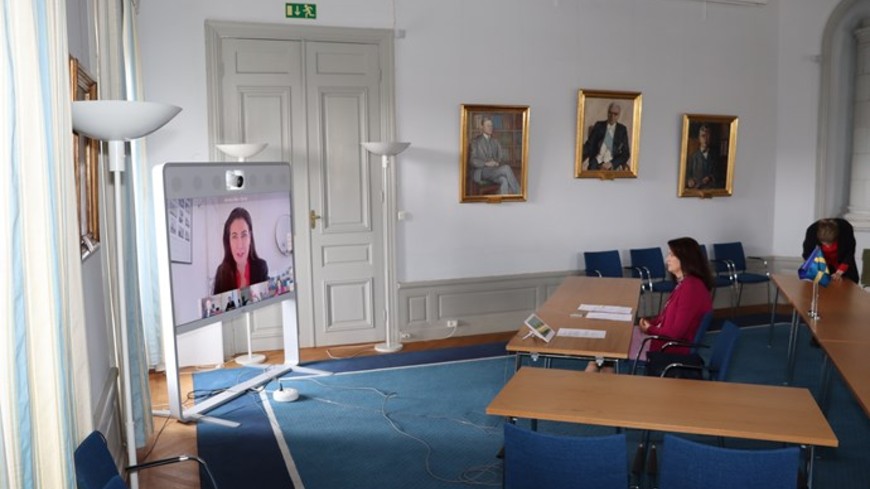
Christian Ugge/Regeringskansliet

Christian Ugge/Regeringskansliet

A “digital meeting” was organised by the Swedish Ministry of Foreign Affairs to discuss the fight against COVID-19 and its impact on democracy and human rights.

“The major social, political and legal challenge is our democracies’ ability to respond to the COVID-19 sanitary crisis effectively, without undermining Europe’s founding values of Democracy, Human Rights and Rule of Law. The Council of Europe, through its statutory organs and all its competent bodies and mechanisms will ensure that measures taken have a legal basis and remain proportional to the threat posed by the spread of the virus and limited in time“, said Christos Giakoumopoulos, Council of Europe Director General of Human Rights and Rule of Law, at a digital meeting organised by the Swedish Ministry for Foreign Affairs.

The topic of the meeting was the fight against COVID-19 and its impact on democracy: the participants aimed at contributing to the global conversation about the risk of the COVID-19 response leading to, or being used as a pretext for, undue restrictions on human rights, democracy and the rule of law.

Christos Giakoumopoulos took part in the meeting with the Swedish Minister for Foreign Affairs Ann Linde and Minister for International Development Cooperation Peter Eriksson, as well as with other three representatives of key intergovernmental organisations: Michelle Bachelet, UN High Commissioner for Human Rights, Eamon Gilmore, EU Special Representative for Human Rights and Ingibjörg Sólrún Gísladóttir, Director of the OSCE Office for Democratic Institutions and Human Rights.

https://www.coe.int/en/web/human-rights-rule-of-law/-/digital-meeting-with-the-swedish-mfa-on-the-fight-against-covid-19-and-its-impact-on-democracy


What kind of lawyers will attend the ‘Global Lawyers Forum’ in Guangzhou on Human Rights Day?

December 5, 2019
Lawyer Wang Yu is taken to a studio for TV denunciation of the ABA award. Pictorial rendition is based on Wang Yu’s account. Source: Safeguard Defenders.

The government has invited, according to its official website,more than 600 important international guests from governments, judicial departments, financial circles, international lawyers’ associations, other bar associations and well-known law firms, etc.”………to uphold the rule of law spirit of building a community of shared future for humanity, create an international platform for lawyers from all countries for exchange and cooperation, further consolidate the consensus of the international legal profession, etc…

We know that since July 2015, Chinese human rights lawyers have been suppressed on a large scale [ see https://humanrightsdefenders.blog/2015/07/29/the-remarkable-crackdown-on-lawyers-in-china-in-july-2015/ and https://humanrightsdefenders.blog/2019/06/26/lawyers-key-to-the-rule-of-law-even-china-agrees-but-only-lip-service/]. To this day, many lawyers, including Wang Quanzhang [see https://humanrightsdefenders.blog/2018/12/05/li-wenzu-wife-of-wang-quanzhang-wins-2018-edelstam-award/], Zhou Shifeng, Yu Wensheng, Chen Wuquan, Chen Jiahong, Qin Yongpei, and others are in prison. Lawyer Gao Zhisheng disappeared on August 13, 2017, and his whereabouts still are unknown. Lawyer Jiang Tianyong, who was released from prison earlier this year, has since been under illegal house arrest [see also: https://humanrightsdefenders.blog/2017/11/21/jiang-tianyong-chinese-defender-of-defenders-sentenced-to-2-years-jail/].

China Change asked a number of Chinese human rights lawyers to express their views on this “Global Lawyers Forum”. Here a selection:

“…..If the purpose of the conference, as the government claims, is to “consolidate the international consensus of the lawyers’ profession,” what then is the consensus of the legal profession? It is the UN’s “Basic Principles on the Role of Lawyers.” Domestic law should be amended on the basis of these principles.  (Liu Shuqing, Jinan, deprived of his lawyer’s license in 2016)

This rhetoric can be deceptive domestically and internationally, giving those who don’t know the true nature of the CCP and the reality on the ground the wrong impression that China has rule of law, so much so that it is a world leader in the area.” (Jiang Tianyong, Beijing, 709 detainee, and still under house arrest since his release at the end of February 2019.)

Lawyer Jiang Tianyong

“I think it is a ridiculous thing for China to host such an event. As everyone knows, the Chinese government has always opposed constitutional democracy and the rule of law. It disregards human rights and blatantly infringes upon every right of the people. Such a conference is only a cover-up for the CCP.”   (A lawyer who wishes to remain anonymous)

“The All China Lawyers’ Association (ACLA) is the same as the Chinese government; it is a part of the government. ACLA contributes little to defending human rights in China, and more often than not it is an accomplice in suppressing human rights. Such a country holding such a conference and urging lawyers from all over the world ‘to jointly promote the rule of law around the world’ –– how could anyone believe this? How could anyone attend and support such a meeting? Are the participants burying their heads in the sand or just being ignorant?” (Liang Xiaojun, Beijing)

“Nearly without exception, any Chinese lawyer who has participated in any international exchange meeting, including meetings with Hong Kong and Taiwanese lawyers, has been interrogated and threatened by China’s national security agents or domestic security police after they returned home to the mainland. In such a ‘police state,’ how can there be normal international exchanges?” (Chen Jiangang, Hubert H. Humphrey Fellow 2019, who fled China in the summer after being threatened with “disappearance” by a director of Beijing’s Judicial Bureau)

“The choice to hold the ‘Global Lawyers Forum’ in Guangzhou is ironic in light of the purpose of the gathering. The retrogression of the legal system in China over the past decade, and the persecution of lawyers who dare to speak out, has reached a shocking point. And the crackdown and persecution of lawyers in Guangzhou is the most severe in the country. Therefore, the selection of Guangzhou for the ‘Global Lawyers Forum’ is an affront to the spirit of rule of law.” (Liu Zhengqing, Guangzhou, license revoked in 2019)

“I really am not inclined to criticize any lawyers or officials who will attend the conference. I just want them to be clear-headed when they are in China. What they will see is definitely not all of China, or even the most important part. If they aren’t hoodwinked and if they observe the Chinese legal profession with clear eyes, a greater number of ordinary Chinese lawyers may have heartfelt admiration for them.” (Wen Donghai, Changsha)

“I hope attendees from foreign bar associations won’t just listen to the officials’ big empty words and propaganda but pay more attention to the actual human rights situation in China. I hope they learn more about religious groups, ethnic minorities, dissidents and human rights activists. These groups have suffered cruel persecution in China; I hope the foreign attendees will speak on their behalf at the conference and raise questions.” (An anonymous Beijing lawyer)

“I hope the participants can hear the voices of lawyers not sanctioned by the CCP government, and especially look into the real reasons for the revocation of so many lawyers’ licenses.” (Liu Zhengqing, Guangzhou)

…….


China Has Invited 600 International Lawyers and Judicial Officials to its ‘Global Lawyers Forum,’ But These Chinese Lawyers Won’t Be Welcome

FIDH makes fresh start with Congress in Taiwan and new Board and President

October 28, 2019

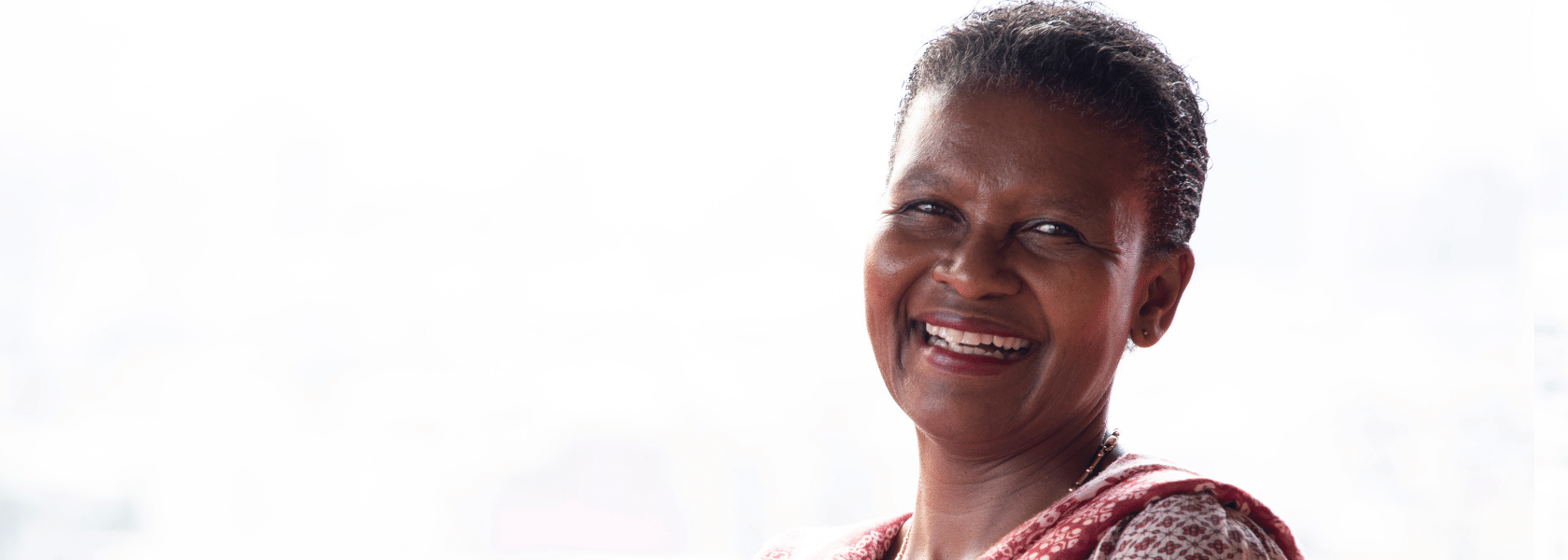
Botswana human rights defender Alice Mogwe, newly elected president of the FIDH, says: “The universality of human rights is under attack – we must fight back!

The member organisations of the International Federation for Human Rights (FIDH) elected their new president during its 40th Congress in Taiwan. Alice Mogwe, will lead the Federation for the next three years, ushering in its 100th anniversary in 2022. In December 2018 Alice Mogwe was the first civil society leader to address the United Nations General Assembly on behalf of over 250 human rights defenders from around the world. [https://humanrightsdefenders.blog/2018/12/17/tuesday-18-december-first-time-a-human-rights-defender-addresses-un-general-assembly/] As founder and director of DITSHWANELO – the Botswana Centre for Human Rights – she has spearheaded efforts to advance human rights in Botswana and its Southern African neighbours.
Our fellow human rights defenders the world over are criminalised, disappeared, threatened, and even killed. The space given to us to express ourselves is shrinking. It is thus more important than ever to emphasize that our values are universal and that we must fight back!” declared Alice Mogwe. Ms. Mogwe’s academic background in law, public policy, African studies, and mediation has served her well in advocating for the rights of indigenous peoples, women, LGBTI+ communities, children, migrants and refugees. She also fought for the abolition of the death penalty in Botswana and Africa, and for demanding accountability from the extractive industry in her native country. “We must amplify local voices at regional and international levels. Member organisations are the lifeblood of FIDH; our strength lies in our diversity.

During her three-year mandate, Ms. Mogwe’s priorities will include:
• Strengthening the work of FIDH to raise attention and protect human rights defenders, who face an unprecedented wave of attacks all over the world. Responding to the closure of civic space through programmes providing rapid and practical support for human rights defenders;
• Protecting human rights defenders from digital surveillance and tracking, fostering safe and effective use of technology by human rights defenders, indigenous communities, ethnic, religious, linguistic minorities, and others;
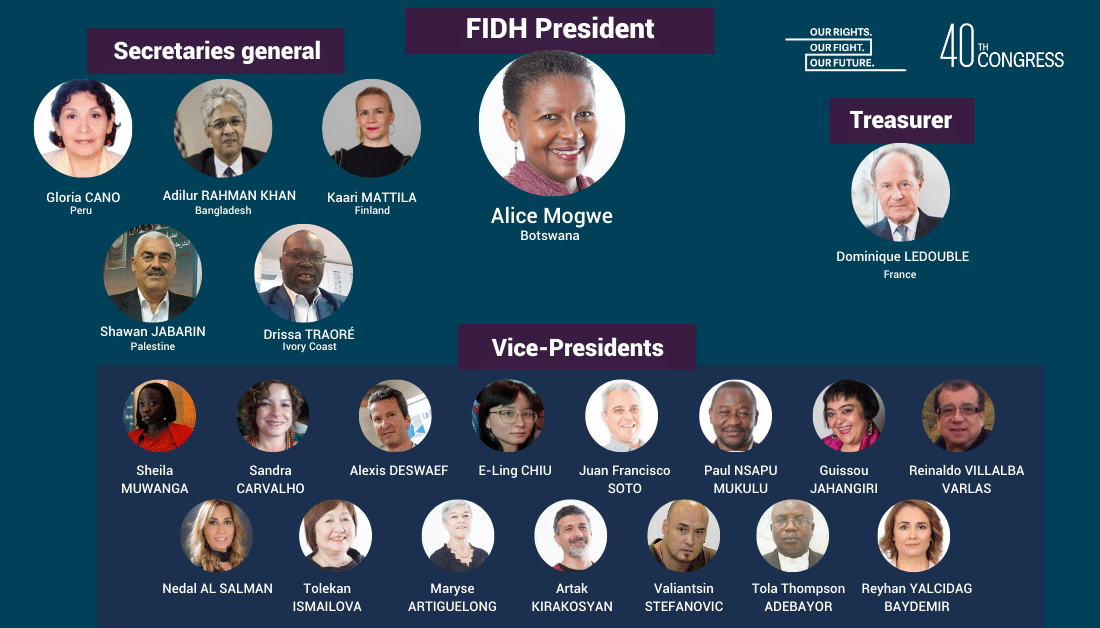
• Strengthening horizontal cooperation between the Federation’s members, both intra- and inter-regionally, to fully utilise their collective power and capabilities. During the Congress, 16 new organisations were approved to join FIDH, increasing its membership to 192. The newly elected International Board is composed of 22 activists from 21 countries.

Composition of the new FIDH International Board:

President
Alice MOGWE

Treasurer
Dominique LEDOUBLE

Secretaries General:
Kaari MATTILA
Gloria CANO
Shawan JABARIN
Adilur RAHMAN KHAN
Drissa TRAORE

Vice Presidents
Sheila MUWANGA
Sandra CARVALHO
Alexis DESWAEF
Reinaldo VILLALBA VARGAS
E-Ling CHIU
Juan Francisco SOTO
Tola Thompson ADEBAYOR
Paul NSAPU MUKULU
Guissou JAHANGIRI
Reyhan YALCINDAG BAYDEMIR
Nedal AL SALMAN
Tolekan ISMAILOVA
Maryse ARTIGUELONG
Artak KIRAKOSYAN
Valiantsin STEFANOVIC

https://www.fidh.org/en/region/asia/taiwan/botswana-activist-alice-mogwe-elected-new-fidh-president-the

The Asma Jahangir legacy

October 22, 2019

Asma Jahangir is rightly considered one of the foremost human rights defenders of our time [see: https://humanrightsdefenders.blog/2018/02/11/asma-jahangir-one-of-the-worlds-most-outstanding-human-rights-defenders-dies-at-age-66/]. So, the two-day ‘Asma Jahangir Conference 2019Roadmap for Human Rights’ which concluded in Lahore, Pakistan on 20 October 2019 is fully justified. The News carries a long report on the meeting in which some 120 jurists, politicians, human rights defenders and media people acted as panellists from Pakistan, England, America, Sri Lanka, Bangladesh, Ireland, Sweden and Afghanistan. Thousands of students, attended the sessions. They all resolved to carry forward the legacy of Asma Jahangir, who fought relentlessly against dictatorial forces and always sought due process of law, equality for women and protection of minorities in the country.

(Former) Politicians dominated the panels but other speakers at the sessions paid tribute to Asma Jahangir and appreciated her commitment to human rights with a resolve to uphold the rule of law and struggle for women’s rights. Munaza Hassan spoke of women’s right to inheritance. Daughter of Asma Jahangir and journalist Munizae Jahangir, who conducted the session, said: “It is a rare moment when all political parties are seen on the same platform.” She said that politicians conveniently forget to protect fundamental rights and right to expression when in they assume power. She said: “We are convinced that without freedom of the media, the rule of law and guarantees of security to human rights defenders, neither democracy nor justice, is possible. The main challenge to development of Pakistan and the rights of its citizens is a national security state. Until the national security is subservient, no other initiative in economy, health, education and rule of law can find success.

The day began with a short film on Asma Jahangir receiving the Right Livelihood Award, produced by True Heroes Films, where she spoke of growing expectations of citizens as far as what the governments should deliver. And governments falling ever further behind, internationally this gap of creative impulses of society on one side and governments dragging their feet on the other, has been the key engine of human rights challenges. Despite threats to her life, she spoke of never leaving Pakistan as it is a place where she has received most love and affection.

As a continuation of the discussion on ‘Art inspires politics’, Munizae Jahangir conducted a panel discussion on ‘How women can build bridges for peace in South Asia’. Former foreign minister Hina Rabbani Khar, Afghan politician Fawzia Koofi, human rights lawyer from Sri Lanka Bhavani Fonseka, Swedish Ambassador Ingrid Johansson and former Afghan ambassador to Pakistan Omar Zakhilwal opined that peace in South Asia was a prerequisite to securing women’s fundamental rights and the resources should be directed towards socio-economic areas rather than the military. Human Rights Ambassador of the Kingdom of the Netherlands, H. E. Dr Bahia Tahzib-Lie, Award-winning novelist Mohammad Hanif, Christian Caryl of the Washington Post, Wusat Ullah Khan, Ms Aisha Sarwari and Iqbal Khattak participated in the discussion on the role of social media.

Dr Bahia talked about the centrality of human rights in a thriving democratic society, and also the role of her government in supporting human rights initiatives all-over the world, including Pakistan. Aisha Sarwari talked about how women are systematically excluded from law-making process and, therefore, law-making concerning social media. She said it is essential for the social and economic development of all countries for women to be able to use the media as disruptive technology and end permission culture. Wusat Ullah Khan mentioned that the social media gives space to freedom, but also makes people extremely vulnerable. He said freedom of speech is part of a bouquet – you cannot talk about freedom of speech without talking about right to life and education and freedom of religion.

Iqbal Khattak, country representative of Reporters without Borders (RSF), spoke about the need for digital safety training and how one should protect oneself by disengaging with trolls. He particularly highlighted threats, accusations of blasphemy as threats that should be taken very seriously. He strongly encouraged use of PICA laws for individuals to seek online protection. He also highlighted Pakistan’s considerable investment in controlling social media spaces and vigilance on part of civil society. The Government of Pakistan should take social media as fundamental right.

On fighting the culture of shame and silence, woman rights activist Uzma Noorani, British professor of human rights Ms Siobhan Mullally, provincial Ombudsperson Khyber-Pakhtunkhwa Rukshanda Naz, Pakistan People’s Party leader Nafisa Shah, former chairperson of the Punjab Commission on the Status of Women Fouzia Viqar said that there should be universality of rights, for all excluded communities including women and marginalised remote communities.

..

On ‘Silencing civil society’, Ms Fareeda Shahid moderated the session of Knut Ostby, United Nations Resident and Humanitarian Coordinator for Pakistan. Ms Zohra Yusuf, human rights activist and council member of HRCP, Mohammad Tehsin, convener of Pakistan Civil Society National Forum, law expert Asad Jamal said registered civil society organisations should be allowed to function, 2013 policy of banning CSOs should be challenged. Mass communication needed to change narratives.

https://www.thenews.com.pk/print/544102-thousands-resolve-to-carry-forward-asma-jahangir-legacy