The World Organisation Against Torture <http://www.omct.org> (OMCT) and the Committee Against Torture from Nizhny Novgorod <http://pytkam.net/eng> organize a panel discussion on 9 November 2017 from 6:30–8:30 p.m.
The topic is “Can the media help promote human rights and fight torture in Russia and elsewhere?”
Panellists:
Ms. Olga Sadovskaya, Committee Against Torture from Nizhny Novgorod, Deputy Director
Ms. Therese Obrecht Hodler, journalist and former President of Reporters sans frontières <https://rsf.org>
Mr. MaksimKurnikov, Editor-in-Chief of radio EkhoMoskvy
Mr. Protsenko Nikita, Editor at Mediazone <zona.media>
Moderator: Mr. Gerald Staberock, OMCT Secretary General
—————
The panel discussion will be followed by a cocktail
Free entrance. Maison international des associations, Salle Gandhi, Rue des Savoises, 15. Geneva
With elections coming up in Germany this weekend it is interesting to alert you to three items that may have escaped attention:
(1) A report by Deutsche Welle states that Germany granted asylum to 196 Turkish diplomats:
In response to a parliamentary question by Left Party, Germany’s Interior Ministry said 196 Turkish nationals, who applied for asylum in Germany following a botched coup attempt in July, 2016, were recognized. According to the ministry statement, 80% of 249 Turkish applicants with diplomatic status and their families were given asylum. Members of Turkish Armed Forces (TSK) are also among those seeking asylum, said the ministry. The number of asylum applications from Turkey has been significantly increasing. There were 433 applications in June while this number rose to 620 in July and 962 in September.
(2) On 20 September Human Rights Watch made public its assessment of the ‘human rights’ content of the political platforms of the different parties. It concludes that the parties differ on human rights approach and in migration policy.
“The election platforms of the main German parties offer a clear roadmap for voters when it comes to making sure their elected representatives will protect human rights,” says Wenzel Michalski, Germany director at Human Right Watch. “Of course, what matters is the actual political work after the elections, which we will closely monitor.” Three parties, the SPD (Social Democratic Party of Germany), Bündnis90/Die Grünen (Alliance 90/The Greens) and FDP (Free Democratic Party) devote separate sections of their platforms to human rights in foreign policy.
Separately, a German newspaper publisher said it filed an appeal to Turkey’s highest court against the incarceration for the past five months of a German-Turkish reporter, the Associated Press has reported. Deniz Yücel, who works for the daily Die Welt, was arrested Feb. 14 in Istanbul. He was accused of disseminating terrorist propaganda and inciting hatred, as well as espionage and ties to the outlawed Kurdistan Workers’ Party (PKK) – allegations Yücel denies. He hasn’t been formally charged.
On 3 July 2017 the Right Livelihood Foundation made public the list of Grantees of its 2017 Reporting Right Livelihood journalism programme. Journalists will receive grants to shine the light on ‘under-reported‘ stories linked to the work of ‘Alternative Nobel’ Laureates. The grantees of the inaugural Reporting Right Livelihood journalism programme were selected from among 93 applicants from 48 countries. The grants, ranging from €200 to €5,000, cover essential travel, subsistence and communication costs to enable reporting on the selected stories over the next six months. The decision was made by a committee comprised of journalists and media experts from Germany, Sweden, Switzerland, Turkey, and the UK.
This year’s grantees are:
Ms Aissatou Barry (Guinea), to produce a multimedia report on fighting impunity in Chad, Senegal and Burkina Faso, linked to the work of Laureate Jacqueline Moudeina (€ 4,800)
Mr Bikash Bhattacharya (India), to report on Indonesia’s logging sector corruption, an issue constantly raised by late Laureate Munir Said Thalib (€4,500)
Ms Fabiola Ortiz (Brazil), to provide a multimedia report on how Brazilian martial art Capoeira became a powerful tool to promote peace among men, women and children in the Democratic Republic of Congo, linked to the work of Dr Denis Mukwege (€5,000).
Ms Mervis Elebe (Nigeria) and Mr Ray Mwareya (Zimbabwe) will share a grant to report on the current situation with maternal health in Nigeria and Zimbabwe, linked to Dr Catherine Hamlin’s work on eliminating obstetric fistula in Ethiopia (€ 2,500 each, €5,000 in total).
Mr Philipp Lichterbeck (Germany) to report on the ’slow genocide’ of a little known Guarani-Kaiowa indigenous group in Brazil, linked to Laureate Survival International‘s work (€ 1,500).
Mr Roger Anis (Egypt), to produce a photo report on Egypt’s current housing crisis, linked to the legacy of Right Livelihood Award’s inaugural Laureate Hassan Fathy (€4,000).
In addition, the selection committee made a discretionary allocation of €200 to Ms Zofeen Ebrahim (Pakistan) who applied for a grant of US $57 to cover fuel costs in order to report on Pakistan’s home-based workers rights, linked to the work of Laureate Asma Jahangir.
The announcement comes with quotes from grantees and selection committee members. Such as:
“I was impressed by the variety, the creativity and relevance of proposals which made our decision so challenging and difficult. The projects we chose show a strong commitment to report on under-covered issues addressed by the Right Livelihood Award Laureates through their personal engagement. This shows how important it is to support journalistic coverage of these issues in order to improve the lives of people who suffer because of injustice, poverty, sickness or political pressure,” Adelheid Feilcke, Deutsche Welle, selection committee member
“Partout dans le monde des femmes et des hommes courageux se battent contre les injustices. L’engagement des journalistes est indispensable, pour faire echo à ces combats. Ces bourses vont pouvoir faire avancer les causes défendues et honorer les lauréats du Prix Right Livelihood,” Romaine Jean, Radio Télévision Suisse (RTS), selection committee member
On 27 February 2017 the new Secretary General, António Guterres, addressed for the first time the UN Human Rights Council. For 10 years, he was the “other” High Commissioner (for Refugees), just down the road from the Palais des Nations where he was speaking. Some of his remarks are quoted here (from SG/SM/18456-HRC/25), especially the last paragraph dedicated to human rights defenders and journalists: Read the rest of this entry »
Nadhir Al-Majid is a well-known 40-year-old writer and teacher who has published many articles in various Arabic newspapers and electronic websites.
On 18 January 2017, the Specialised Criminal Court in Riyadh held its hearing in the presence of Nadhir Al-Majid, who was sentenced to seven years imprisonment followed by seven years of a travel ban in addition to a fine. Reports have confirmed that the writer was alone during the hearing and not accompanied by his family or his lawyer. He was taken immediately after the verdict to Al-Ha’ir prison in Riyadh. There are fears that the authorities will refuse to officially deliver a copy of the verdict to him or his family, which might prevent them from seeking an appeal of the sentence at the Court of Appeal. The Public Prosecutor directed many charges against Al-Majid including failing to obey the ruler, participating in demonstrations, writing articles supporting protests (dating back to the year 2007), in addition to having contact with correspondents of foreign news agencies – namely Reuters, AFP, and CNN.
He was previously jailed on 13 April 2011 after he was arrested and his electronic equipment was confiscated. He was beaten, kicked and ordered to stand for hours and then placed in solitary confinement for five months. He was then placed in a cell with convicted drug dealers and weapons traders. The reason for his arrest is related to his writings, including an article entitled “I protest, I am a human being” which supports the right to demonstrate. He was released on 27 June 2012. The Gulf Centre for Human Rights (GCHR) believes that the prison sentence of Nadhir Al-Majid is solely related to his work in defence of human rights.
==============================
Saudi Arabian human rights defender Essam Koshak has been detained since 8 January 2017 for his online activism.
On 8 January 2017, Essam Koshak received a phone call from the Criminal Investigation Department (CID) in Mecca, summoning him to al-Mansour police station. On arrival, at 5pm the same day, he was interrogated by the Bureau of Investigation and Prosecution (BIP) about his Twitter account, which he uses to highlight human rights issues in Saudi Arabia, including the detention of human rights defenders and activists. During the first three days of interrogation, his request to have his lawyer present was denied. On 12 January, Essam Koshak’s detention was extended by four days and his lawyer was finally allowed to be present during his interrogations. He was transferred on the same day to Mecca General Prison where he is currently being held. Essam Koshak is a computer engineer and human rights activist who uses social media to call for reform and respect for human rights in Saudi Arabia.
============================
In the meantime the organization ALQST – through Samar Badawi [see: https://humanrightsdefenders.blog/2016/01/13/saudi-arabia-arrest-of-human… ] – draws attention to their “Human Rights Situation in Saudi Arabia 2016. Annual review” (for the full report: https://t.co/ACWlRfOFRu – for inquiries, yahya.i.assiri@gmail.com).
The report contains a chapter on Human Rights Defenders describing several cases in more detail. It states that “Many of the political prisoners in Saudi Arabia are known to be prisoners of conscience. A large number of them have been swept up in the Authorities’ so-called War on Terror, but are in fact being held for their peacefully held and expressed political or religious views. This includes calls for social reform and in defence of human rights. They are tried in the Specialised Criminal Court, which is neither legitimate nor independent of the government, and was set up for the purpose of trying terrorism cases. Most human rights defenders are also charged and found guilty under the 2014 Counter-Terrorism Law. Today the majority of Saudi Arabia’s human rights activists are in prison, on trial, or being subjected to intense harassment.”
15 major human rights rights groups have written a joint letter to the U.N. Human Rights Council urging an immediate halt to “excessive” use of force by Ethiopian security forces. The letter dated Thursday 8 September also calls for an independent investigation into the reported killings of hundreds of people in Ethiopia’s Amhara and Oromia states since November 2015 amid protests. “Authorities have also arbitrarily arrested thousands of people throughout Oromia and Amhara during and after protests, including journalists and human rights defenders,” the letter says. The Human Rights Council convenes next week in Geneva.
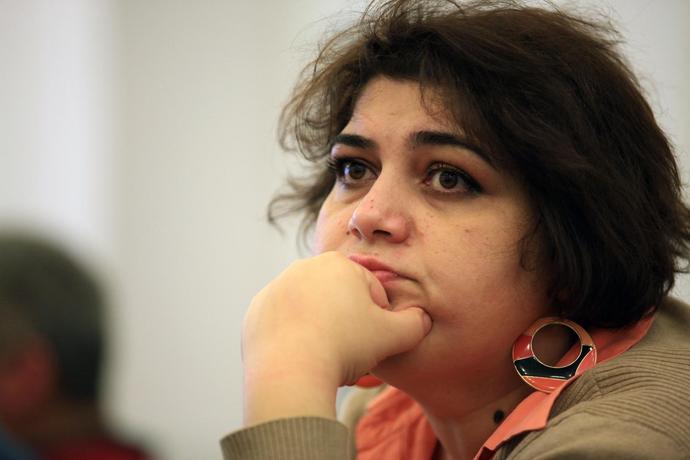
On Wednesday 25 May 2016 Azerbaijan finally released investigative journalist Khadijah Ismayilova[https://thoolen.wordpress.com/2015/12/18/azerbaijan-khadija-ismayilova-remains-in-jail-but-council-of-europe-takes-exceptional-step/] after a number of other human rights defenders were released bit by bit over the last months. Ismayilova was serving a seven-and-a-half year sentence on charges which included embezzlement, illegal business activities and tax evasion. The Supreme Court has now amended her imprisonment to 3 1/2 years of suspended sentence and released her from prison. She vowed to continue to fight to clear her name. “I will continue to fight until complete acquittal,” Ismayilova told reporters after her release. “I will also continue to work as a journalist.” The British-Lebanese lawyer Amal Clooney is representing Khadija Ismayilova at the European Court of Human Rights.
As an independent reporter and journalist of the Azerbaijani radio Azadliq (“Radio Freedom”) she has shown great courage (see: https://thoolen.wordpress.com/2014/12/11/khadija-ismayilova-azerbaijan-is-not-deterred/), and received several international prizes, such as the 2015 Alison Des Forges Award for Extraordinary Activism (HRW), the 2015 Freedom to Write Award, the 2012 Fritt Ord/Zeit Press Prize, and the 2012 Courage of Journalism Award by the Washington-based International Women’s Media Foundation.
Although there are still human rights defenders and journalists in prison, Azerbaijan provides a fine example of how awards and the combined international pressure from a variety of sources (States, NGOs and international organizations) can have an impact:
Giselle Portenier (CNW Group/Canadian Journalism Forum on Violence and Trauma)
Independent documentary-makers and freelance journalists working to expose human rights abuses can compete for a bursary to help them obtain hostile environment training, more usually made available to journalists working in war zones. The 2016 Portenier Human Rights Bursary competition, offered by the Canadian Journalism Forum on Violence and Trauma, opened on 16 May and closes on June 30. The annual bursary, introduced last year, is sponsored by the documentary-maker Giselle Portenier. Read the rest of this entry »
When writing about human rights awards, I often talk about better-known international awards [https://www.deepdyve.com/lp/oxford-university-press/human-rights-awards-for-the-protection-of-human-rights-defenders-qqq8FI0qeN]. However, there are quite a few local ones that can play an important role in shaping the work of human rights defenders. Here the case of Moldova where the “Promoting Human Rights in Moldova” competition was established by the United Nations in 2004. The prizes are awarded annually to journalists or human rights defenders who have made a genuine contribution to the promotion and protection of human rights in Moldova. The prizes were awarded by the Association for Independent Press in Moldova, with the financial support of Civil Rights Defenders in Sweden.
Radio Free Europe reported proudly on 23 March 2016 that their journalists working with RFE/RL’s Moldova Service were recognized for excellence in audio and video reporting on local community and human rights issues. Reporters Mihaela Gherasim and Eugenia Pogor took first and third place in the television program category, with programs on HIV and LGBTI questions.
The World Organisation Against Torture <http://www.omct.org> (OMCT) and the Committee Against Torture from Nizhny Novgorod <http://pytkam.net/eng> organize a panel discussion on 9 November 2017 from 6:30–8:30 p.m.




 Hans Thoolen on Human Rights Defenders and their awards