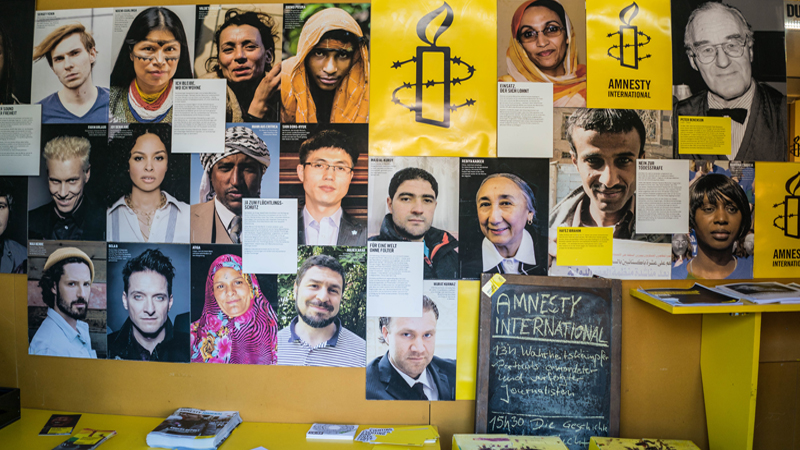
Over 50 NGOs have signed a joint letter to Aung San Suu Kyi requesting the immediate and unconditionally release of Wa Lone and Kyaw Soe Oo.
TO: Aung San Suu Kyi, State Counsellor, Myanmar
share information on human rights defenders, with special focus on human rights awards and laureates
Over 50 NGOs have signed a joint letter to Aung San Suu Kyi requesting the immediate and unconditionally release of Wa Lone and Kyaw Soe Oo.
TO: Aung San Suu Kyi, State Counsellor, Myanmar

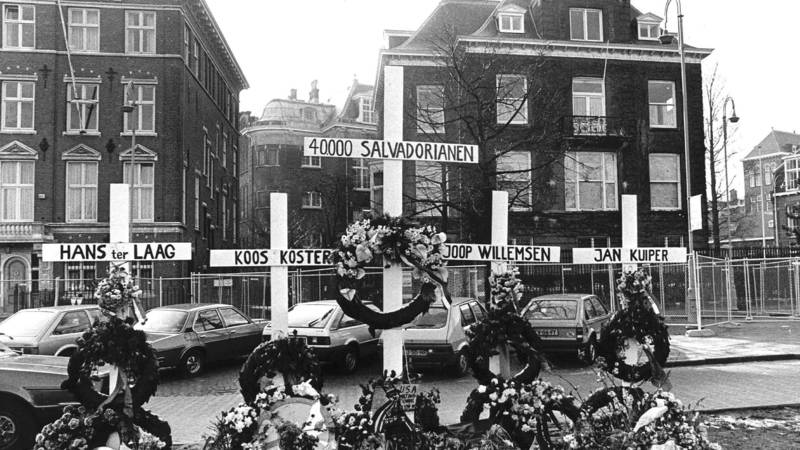
In the Dutch media a lot of attention is being paid at the moment to the 35-year old story of the IKON journalists who were killed in El Salvador in 1982. Some years ago I started to write up ‘human rights stories’ that I had been closely involved in, with the idea that some day they would be of interest. This seems a good moment to ‘publish’ for the first time the chapter on my involvment with the case of the IKON journalists:
1982 IKON journalists killing and El Salvador
…On 17 March 1982, three months before I took up my post as thea first director of the new Netherlands Institute for Human Rights (SIM), the world – and especially the Netherlands – were shocked by the kiliing of a team of television journalists of the TV channel IKON in El Salvador. The very uncivil conflict there had already costs thousands of people their lives including the internationally known cases of the 4 American nuns and the progressive bishop Oscar Romero 1980. The USA under Reagan had clearly changed course and was openly supporting the Duarte regime against the left-wing rebels. The Dutch government – especially its ‘atlanticist’ Minister of Foreign Affairs Hans van de Broek[1]– was caught between its desire to appease the US government and to respond to the public outcry back home. The compromise reached was that the Dutch Ambassador from a neighbouring country (Jan Willem Bertens) was exceptionally allowed to undertake an investigation on Salvadoran territory, but – if no evidence of government involvement was found – that would be the end of the affair. The fact-finding mission by the Dutch Ambassador did not find any strong evidence; the report was left with the Salvador government and submitted to the Dutch parliament.
One of the first visitors to SIM was Yata Matsuzaki who was the partner of one of the journalists killed and on behalf of the families – who were not convinced by the inconclusive Bertens report. She asked me to take on the case and see whatever else could to done to keep the matter alive. There was even some money set aside for this by the families which was very useful as later – when the Dutch Minister Van der Stoel queried whether this kind of activity (i.e. second-guessing him) was within SIM’s mandate – I was able to refer to the fact that SIM was supposed to find externally funded projects and this had been one of them.
In fact, I had to scratch the bottom of the barrel to find ways to keep the case alive but fortunately the UN had just establish a “Special Rapporteur on extrajudicial, summary or arbitrary executions”and I submitted the case there. With the help of the Lawyers Committee for Human Rights in NY I also tried to obtain copies of relevant telexes from the US State Department but most was blacked out.
This involvement with El Salvador led SIM to start a project on how to count human rights violations in general (with initial focus on Central America) and we tried to solve difficult issues such as killings by non-state actors and defining indirect victims. One of the persons helping in El Salvador was Marianella Garcia Villas who had come to SIM in early 1983. I offered to help her with obtaining political asylum in the Netherlands, but she insisted on going back as she was most needed there. I felt not just sad and shocked but also ‘guilty’ when soon after her return she was murdered.
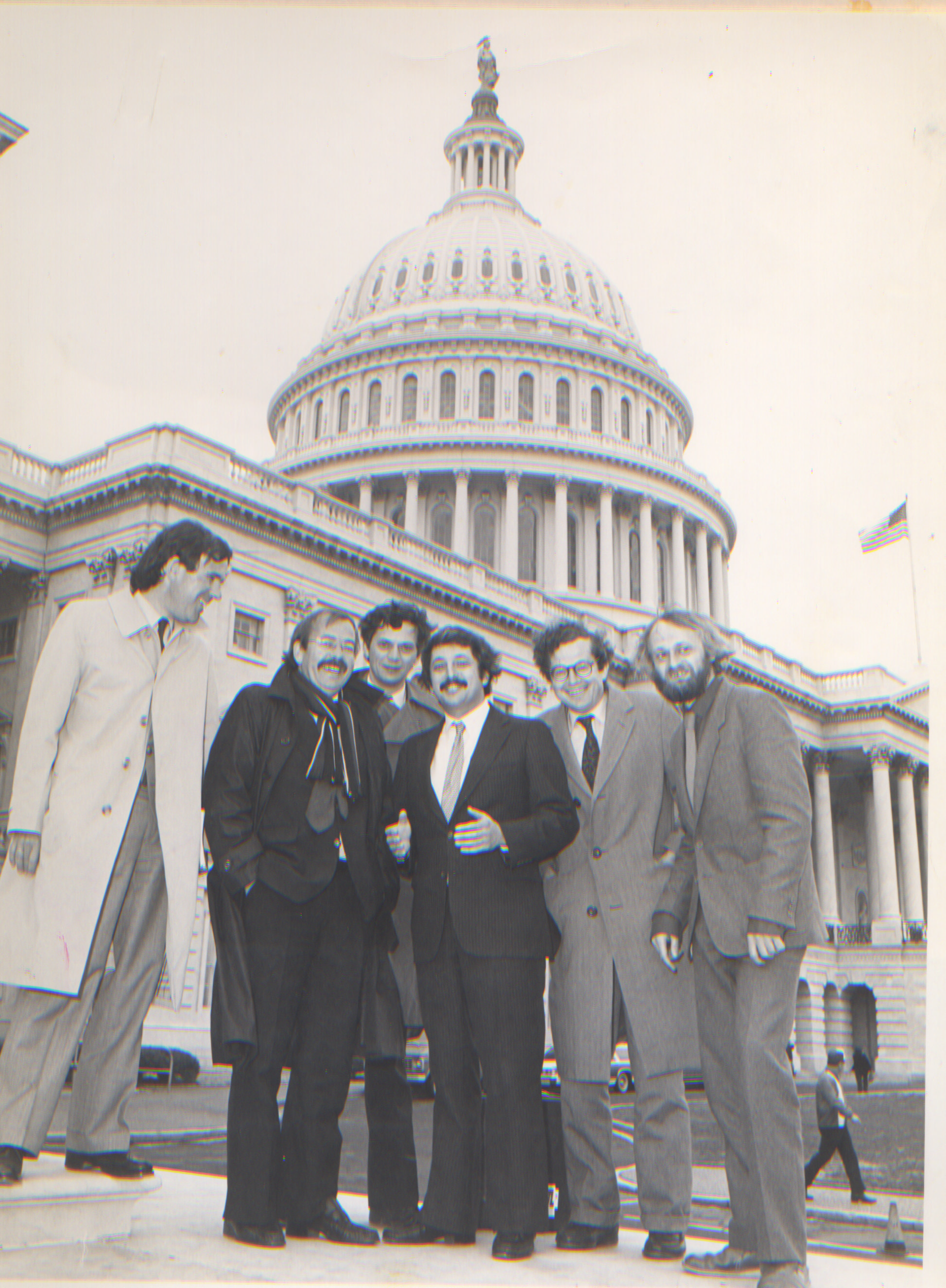
Then in May 1984 three Dutch parliamentarians (one from each main party) accepted to go on a mission to Central America (and the USA see picture) and I was asked to join as an independent ‘expert’. It became a memorable trip, including a shooting incident on the road in Nicaragua, but what crowned it was that in El Salvador I got a chance to meet with the Prosecutor’s office that was in charge of the IKON investigation. They kindly showed me the file and I was shocked to see that it contained almost nothing and especially that the report by the Dutch Ambassador – 2 years later! – had not been translated into Spanish.
Upon arrival in Schiphol airport, there was a well-attended press conference and when there were questions about the IKON investigation the parliamentarians agreed that I should answer as an independent expert. The journalists had clearly not forgotten their colleagues and fielded many questions. When asked what the Dutch government should do now, I replied that it is was time to re-open the investigation and that my colleagues on the mission representing a majority in parliament were well placed to formally ask for it, which they promptly said they would. When soon afterwards a majorly in parliament adopted a motion requesting this, the Minister of Foreign Affairs was not pleased and initially refused to carry out the motion. However, as this was not worth a government crisis the Prime Minster Lubbers engineered a compromise under which the Dutch government would follow up and at least translate the text.
In 1993 a Report of the Truth Commission of the United Nations on El Salvador concluded that the journalists had been killed in a planned ambush, that Reyes Mena was responsible and that El Salvador so far had failed to do research in order to sentence and punish those responsible. That same year an amnesty law was passed in El Salvador,…
and now (September 2018) I can add a final chapter:
A team of the Dutch television programme Zembla has traced the former colonel of the Salvadoran army, Mario Reyes Mena, who ordered the killings. The now 79-year-old Reyes Mena has been living in the United States for four years. Zembla found him through his three adult children, who are active on social media.
When confronted he claimed that the amnesty pronounced by the government of El Salvador covers his actions. However this amnesty law was cancelled in 2016. In August 2017, the investigation into the murders was already reopened administratively. Two Salvadoran human rights organizations, ‘Fundación Comunicándonos’ and ‘Associacíon de Derechos Humanos’, urged the Salvadoran judiciary to carry out the investigation and the ensuing prosecution.Gert Kuiper, de brother of one of the killed journalists has also started a procedure against the colonel and the Dutch Ambassador in El Salvador supports the move.
It is not known where we stand with this investigation but interesting is to note that in November 2017 another former Salvadoran army colonel, Inocente [SIC] Orlando Montano, was extradited from the USA to Spain to face charges relating to the 1989 killings of the 6 Jesuits priests.
Killings cannot have happy endings but justice is the next best thing.
Sources:
https://nltimes.nl/2018/09/25/investigation-ongoing-dutch-journalists-murders-el-salvador-1982
https://nos.nl/artikel/2251835-brein-achter-moord-op-ikon-journalisten-opgespoord.html
On Monday 21 May 2018, the Lesotho High Court (sitting as a Constitutional Court), in a unanimous judgment declared the offence of criminal defamation unconstitutional with retrospective effect. The case of Basildon Peta v Minister of Law, Constitutional Affairs and Human Rights and 2 Others. The case was brought by Basildon Peta, the owner and publisher of the Lesotho Times. He was charged with the offence of criminal defamation after the Lesotho Times in 2016 published a satirical column (the Scrutator) relating to the then-Commander of the Lesotho Defence Force, Tlali Kamoli.
Section 104 of the Penal Code provides that a person who publishes defamatory matter concerning another person commits the offence of criminal defamation. Mr Peta submitted that the offence constituted an unjustifiable limitation of the right to freedom of expression. The Court in its judgment confirmed that the onus of proving that the impairment of a right was justified rests on the government. Of concern to the Court was the over breadth of the offence, with a charge being possible even if no person other than the complainant became aware of the supposedly defamatory statement, and with the offence further extending to defamation of deceased persons. The Court further held that the defence that a defamatory publication was for the public benefit was too vague and could lead, as in this instance, to cases where satirical comments are criminalised.
The Court held that criminalising defamation has a chilling effect on journalistic freedom of expression, resulting in self-censorship by journalists and a less informed public. The Court cited with approval calls by the African Commission and United Nations Special Rapporteur on Freedom of Expression which encouraged states to repeal criminal defamation laws. The Court’s judgment follows in the footsteps of other African courts, including the ECOWAS Court, the Zimbabwe Constitutional Court and the Kenya High Court, which recently declared that the offence of criminal defamation violated the right to freedom of expression.
“We commend the Lesotho Constitutional Court bench for its brave decision, which makes a significant contribution to freedom of expression jurisprudence in the region,” said Anneke Meerkotter, Litigation Director of the Southern Africa Litigation Centre. “We are concerned by the ongoing use of criminal defamation laws against journalists and human rights defenders and hope that this decision will also send a message to other governments to reform their laws.“
The judgment is available online at http://www.southernafricalitigationcentre.org/2018/02/13/lesotho-challenging-the-offence-of-criminal-defamation/
The Society of Publishers in Asia (SOPA) was established in 1982 to recognize and celebrate the highest standards of journalistic quality and integrity in Asia. Today, the SOPA Awards for Editorial Excellence are regarded as the gold standard against which Asia’s best journalists and publishers are measured. There are several categories and one of them is: Excellence in Human Rights Reporting, honoring the work that demonstrates high standards of reporting on a human rights topic of significance
The 2018 finalists include:
Reuters, Duterte’s war falters
The Associated Press, The Rohingya Exodus
The New York Times, A Humanitarian Crisis Unfolds
Frontier Myanmar, “We eat the same rice”
The Phnom Penh Post, The sky became white’
This Week In Asia, Rohingya: nowhere like home.
[The 2017 winners were:
https://www.sopawards.com/awards/award-categories/
https://frontiermyanmar.net/en/frontier-shortlisted-for-five-regional-media-awardshttps://frontiermyanmar.net/en/frontier-shortlisted-for-five-regional-media-awards
Yesterday, 3 May 2018, was World Press Freedom Day and many noteworthy activities took place. The Economist and many other newspapers of course paid attention with grisly statistics from the Committee to Protect Journalists and other sources. It was also a time to award courageous journalists and cartoonist; just to mention a few:
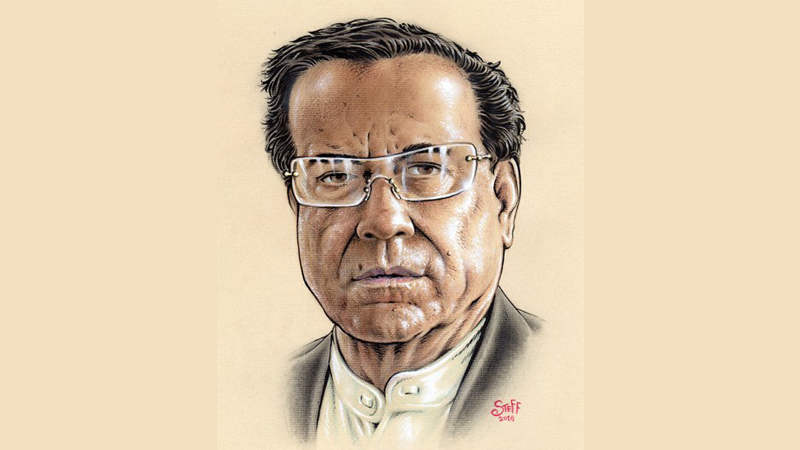
Musa Kart was announced as the 2018 laureate of the International Press Cartoon Prize by Cartooning for Peace.
The 2018 International Press Cartoon (or Drawing) Prize, presented biannually in Geneva, was awarded to the Turkish cartoonist who was recently sentenced to almost four years in prison for “aiding terrorism”. He is a 64-year-old artist working with the Turkish daily newspaper Cumhuriyet and was described as a “free spirit and a remarkable artist” by Swiss cartoonist Chappatte, a member of the jury.
It was also the day of the presentation of the first Ari Rath Prize for Critical Journalism (established to honour journalists who have rendered outstanding services to critical reporting on immigration, expulsion and asylum, committed to respect for human rights, in the spirit of the former editor-in-chief of the Jerusalem Post, who died in January 2017). Austrian journalist Alexandra Föderl-Schmid was the laureate.
For more on the many human rights awards for the media and journalists see: http://trueheroesfilms.org/thedigest/
The Stockholm Center for Freedom (SCF) partnered with the London-based International Observatory of Human Rights (IOHR) to commemorate World Press Freedom Day in Stockholm with an event focused on Turkey, which leads the world in the highest number of journalists in jail. According to SCF data, 258 journalists and media workers were in jail as of today, with 59 of them already convicted on dubious charges of terrorism, defamation and coup plotting. In addition, 142 Turkish journalists who were forced to go into exile or still remain at large in Turkey are wanted for arrest by authorities.


In his article, Tashi Wangchuk insisted that his language advocacy was peaceful and non-political. His attempts to persuade the Chinese government to guarantee Tibetan language instruction were conducted through official channels and he made it clear that he was not advocating Tibetan independence. Instead, his main focus was ending the destruction of Tibetan language and culture. Despite taking these precautions, Tashi Wangchuk was arrested on 27 January 2016, held in an unknown location and later stood trial in a closed session. See also:
https://humanrightsdefenders.blog/2018/03/07/china-and-the-un-human-rights-council-really-win-win/

And then there were many smaller events all around the globe that also deserves attention, such as Amnesty International Nepal voicing support to journalists as human rights defenders (such as Charan Kumar Prasai and Subodh Pyakurel and Rajan Prasad Kuikel).
Reporters Without Borders (better known under its French acronym RSF) published its WORLD PRESS FREEDOM INDEX 2018. The rankings you can find by clicking here READ MORE. The regional chapters below give a quick overview of the main trends, including the disturbing downward turn in the USA, the further sinking in ex-sovjet states and China’s nefarious example in Asia.
North Africa’s performance in the 2018 World Press Freedom Index reflects the different pressures to which journalists are exposed. Restrictive laws, reporting problems (especially at protests), and subjects that are off limits all prevent journalists from being free to provide independently reported and pluralist news and information.
Despite having strong constitutional protections to the contrary, the latest World Press Freedom Index findings on the US and Canada reveal two countries whose journalists and media workers face constant challenges to the very freedom to exercise their profession.
The 2018 Index shows a slight overall improvement in respect for press freedom in Latin America but this should not divert attention from the continuing problems of violence, impunity, and authoritarian policies towards journalists in many Latin American countries.
The Chinese model of state-controlled news and information is being copied in other Asian countries, especially Vietnam and Cambodia. North Asia’s democracies are struggling to establish themselves as alternative models. Violence against journalists is increasingly worrying in Afghanistan, India, Pakistan and the Philippines.
SUB-SAHARAN AFRICA HAS MAINTAINED ITS THIRD PLACE IN THE RANKING BY GEOGRAPHICAL REGION, WITH A SLIGHTLY BETTER OVERALL INDICATOR THAN IN 2017. BUT THERE IS A WIDE RANGE OF SITUATIONS WITHIN THE REGION, AND JOURNALISTS ARE OFTEN THE VICTIMS OF INTIMIDATION, PHYSICAL VIOLENCE, AND ARREST.
THE FORMER SOVIET COUNTRIES AND TURKEY CONTINUE TO BE AT THE FOREFRONT OF THE WORLDWIDE DECLINE IN PRESS FREEDOM. ALMOST TWO-THIRDS OF THE REGION’S COUNTRIES ARE RANKED SOMEWHERE NEAR OR BELOW THE 150TH POSITION IN THE INDEX. THE REGION’S OVERALL INDICATOR HAS SUNK ALMOST AS LOW AS THAT OF MIDDLE EAST/NORTH AFRICA, THE REGION THAT IS LAST IN THE RANKING BY REGION.
The European model’s erosion, a trend visible in RSF’s most recent Indexes, has continued in the 2018 Index. The region has been shaken by two murders, as well as by threats to investigative reporters and unprecedented verbal attacks on the media. Even the countries at the top of the Index are affected by this alarming climate.
The Middle East’s countries are yet again at the bottom of RSF’s World Press Freedom Index. Armed conflicts, terrorism charges against independent journalists and media, and growing online surveillance and censorship make reporting extremely dangerous for the region’s journalists.
https://rsf.org/en/rsf-index-2018-hatred-journalism-threatens-democracies
As part of the global Celebration of World Press Freedom Day, the winner of the “UNESCO/Guillermo Cano World Press Freedom Prize” will be announced on 3 May 2018. for last year’s award: https://humanrightsdefenders.blog/2017/05/04/eritrean-born-journalist-dawit-isaak-awarded-2017-unescos-guillermo-cano-world-press-freedom-prize/
For more on this award and some 20 other international awards protecting freedom of speech and the media see: http://trueheroesfilms.org/thedigest/awards/unesco-guillermo-cano-world-press-freedom-prize.
The jury on Monday 23 April awarded the honor to Mahmoud Abu Zeid, known as Shawkan, who has been in jail since he was arrested in Cairo in August 2013 for covering a demonstration at Rabaa Al-Adawiya Square. Egypt’s Foreign Ministry strongly warned UNESCO against the move Sunday, saying that Shawkan faces terror-related charges. The U.N. Working Group on Arbitrary Detentions says Shawkan’s arrest is arbitrary and his continued detention infringes his human rights.
On Tuesday 17 April 2018 the European Commission released its most critical report on talks with Turkey since the country launched its bid to join the EU over a decade ago. The European Commission has warned that Turkey is taking “major steps” in the wrong direction and also warned that years of progress are being lost.
The report stated that “The state of emergency declared in the wake of the attempted coup of 15 July 2016 remains in force, aiming at dismantling the Gülen movement, designated by the government as a terror organisation responsible of the coup attempt, as well as at supporting the fight against terrorism, against the background of repeated attacks in Turkey, overall a traumatic period in Turkey.” The EU, while recognising Turkey’s legitimate need to take swift and proportionate action, said “However, the broad scale and collective nature, and the disproportionality of measures taken since the attempted coup under the state of emergency, such as widespread dismissals, arrests, and detentions, continue to raise serious concerns. Turkey should lift the state of emergency without delay.”
Turkish National Security Council (MGK)’s advice to extend the state of emergency will likely be approved by parliament. The state of emergency has so far been approved six times since the attempted coup in July 2016. ..Turkey “continues to take huge strides away from the EU, in particular in the areas of rule of law and fundamental rights,” European Commissioner Johannes Hahn in charge of negotiations told a news conference. “The Commission has repeatedly called on Turkey to reverse this negative trend as a matter of priority and makes very clear the recommendations on this in today’s report,” he said.
Among the key findings of the European Commission’s 2018 Report on Turkey are the following:
..
Since the introduction of the state of emergency, over 150 000 people were taken into custody, 78 000 were arrested and over 110 000 civil servants were dismissed whilst, according to the authorities, some 40 000 were reinstated of which some 3 600 by decree.
A State of Emergency Appeal Commission became operational and received altogether some 107 000 appeal requests. This Commission only started to take decisions in December 2017 and it has so far provided redress to only few applicants. Its decisions are open to judicial review. It still needs to develop into an effective and transparent remedy for those unjustly affected by measures under the state of emergency.
Beyond the Appeal Commission, the capacity of Turkey to ensure an effective domestic legal remedy in the sense of the European Court of Human Rights (ECtHR) has been further undermined by a number of unfortunate precedents. In one instance a lower court refused to observe a ruling of the Constitutional Court regarding an emblematic case; a follow up ruling by the Constitutional Court for one of the defendants was eventually abided with by a lower court. Several court rulings favorable to prominent defendants, including Human Rights Defenders, were swiftly reversed by another or even by the same court, in some instances following comments from the executive.
Key recommendations of the Council of Europe and its bodies are yet to be addressed by Turkey. Allegations of wrongdoing need to be established by transparent procedures and on an individual basis. Individual criminal liability can only be established with full respect for the separation of powers, the full independence of the judiciary and the right of every individual to a fair trial. Turkey should lift the state of emergency without delay.
……
Civil society came under increasing pressure, notably in the face of a large number of arrests of activists, including human rights defenders, and the recurrent use of bans of demonstrations and other types of gatherings, leading to a rapid shrinking space for fundamental rights and freedoms. Many rights‑based organisations remained closed as part of the measures under the state of emergency and an effective legal remedy has not been available with respect to confiscations…
The situation in the south-east has continued to be one of the most acute challenges for the country. The deteriorated security situation has in part shifted to rural areas. The government’s pledge to continue security operations, against the background of recurrent violent acts by the Kurdistan Workers’ Party (PKK), which remains on the EU list of persons, groups and entities involved in acts of terrorism, remained as a defining element of the situation in the region.While the government has a legitimate right to fight against terrorism, it is also responsible for ensuring the respect for human rights, rule of law, fundamental freedoms and the proportionate use of force. The government’s investment plan for the reconstruction of damaged areas in the south-east has resulted in the ongoing construction of thousands of dwellings but only few internally displaced persons received compensation so far. There were no developments on the resumption of a credible political process which is needed to achieve a peaceful and sustainable solution.
…
Turkey’s judicial system is at an early stage of preparation. There has been further serious backsliding in the past year, in particular with regard to the independence of the judiciary. The Constitutional amendments governing the Council of Judges and Prosecutors (CJP) entered into force and further undermined its independence from the executive. The CJP continued to engage in large-scale suspensions and transfers of judges and prosecutors. No efforts were made to address concerns regarding the lack of objective, merit‑based, uniform and pre-established criteria in the recruitment and promotion of judges and prosecutors.
The Turkish legal framework includes general guarantees of respect for human and fundamental rights, which have however been further challenged and undermined by a number of emergency decrees. The serious backsliding on the freedom of expressioncontinued, an area where Turkey is at an early stage of preparation. The scope of actions taken under the state of emergency has been extended over time to many critical voices, in media and academia amongst others, in contradiction with the principle of proportionality.
Criminal cases against journalists – more than 150 of them remain detained – human rights defenders, writers, or social media users, withdrawal of press cards, as well as the closure of numerous media outlets or the appointment by the government of trustees to administer them, are of serious concern and are mostly based on selective and arbitrary application of the law, especially provisions on national security and the fight against terrorism.
The Internet Law and the general legal framework continue to enable the executive to block online content without a court order on an inappropriately wide range of grounds. There was also serious backsliding in the areas of freedom of assembly, freedom of association, procedural and property rights. Freedom of assembly continues to be overly restricted, in law and practice. Measures adopted under the state of emergency also removed crucial safeguards protecting detainees from abuse thereby augmenting the risk of impunity, in a context where allegations of ill-treatment and torture have increased.
Emergency decrees imposed additional restrictions to procedural rights including on the rights of defence. The enforcement of rights is hindered by the fragmentation and limited mandate of public institutions responsible for human rights and freedoms and by the lack of an independent judiciary. Extreme poverty and a lack of basic necessities remain common among Roma households in Turkey. The rights of the most vulnerable groups and of persons belonging to minorities should be sufficiently protected. Gender-based violence, discrimination, hate speech against minorities, hate crime and violations of human rights of LGBTI persons are still a matter of serious concern.
…
Turkey made good progress in the area of migration and asylum policy and remained committed to the implementation of the March 2016 EU-Turkey Statement effective management of migratory flows along the Eastern Mediterranean route. As regards the implementation of the Visa Liberalisation Roadmap, at the beginning of February, Turkey submitted to the European Commission a work plan outlining how Turkey plans to fulfil the seven outstanding visa liberalisation benchmarks. The Commission is assessing Turkey’s proposals and further consultations with the Turkish counterparts will follow
..
Turkey needs to commit itself unequivocally to good neighbourly relations, international agreements, and to the peaceful settlement of disputes in accordance with the United Nations Charter, having recourse, if necessary, to the International Court of Justice. In this context, the EU has expressed serious concern and urged Turkey to avoid any kind of threat or action directed against a Member State, or source of friction or actions that damages good neighbourly relations and the peaceful settlement of disputes.

On 14 February 2018 the Economic Community of West African States (ECOWAS) Regional Court of Justice found that Jammeh-era media laws violated the right to freedom of expression in The Gambia. The Federation of African Journalists and four Gambian journalists filed a case in the court in December 2015. They argued that their rights, including their rights to freedom of expression, had been violated by Gambia through the enforcement of laws criminalising libel, sedition and false news in the country. Two of the journalists were also subject to torture whilst in the custody of the then notorious National Intelligence Agency following their arrests under these laws.
Arguments were heard by the court in October 2016. The case was supported by the Media Legal Defence Initiative (MLDI). Amnesty International filed an amicus brief in the case along with other freedom of expression organisations. Although press freedom has improved under the new government of President Barrow, who was inaugurated in January 2017, these restrictive laws are still in place.
The ruling will set an important precedent as many countries within West Africa continue to use similar repressive laws to silence freedom of expression, and hinder the vital work of journalists, in violation of international and regional human rights law. The ball is now in the court of the Adama Barrow government to repeal the said laws in order to realign the law to respect media freedoms. Amnesty International’s West Africa researcher has hailed the ruling as a historic day for The Gambian media landscape. “Today is an historic day for Gambia’s journalists and human rights defenders who, for decades, have suffered torture, imprisonment or exile just for exercising their right to freedom of expression,”Sabrina Mahtani said.