Posts Tagged ‘journalists’

3 May World Press Freedom Day: awards for journalists

April 20, 2018

Banner Webpage April

As part of the global Celebration of World Press Freedom Day, the winner of the  “UNESCO/Guillermo Cano World Press Freedom Prize” will be announced on 3 May 2018.  for last year’s award: https://humanrightsdefenders.blog/2017/05/04/eritrean-born-journalist-dawit-isaak-awarded-2017-unescos-guillermo-cano-world-press-freedom-prize/

For more on this award and some 20 other international awards protecting freedom of speech and the media see: http://trueheroesfilms.org/thedigest/awards/unesco-guillermo-cano-world-press-freedom-prize.

The jury on Monday 23 April awarded the honor to Mahmoud Abu Zeid, known as Shawkan, who has been in jail since he was arrested in Cairo in August 2013 for covering a demonstration at Rabaa Al-Adawiya Square. Egypt’s Foreign Ministry strongly warned UNESCO against the move Sunday, saying that Shawkan faces terror-related charges. The U.N. Working Group on Arbitrary Detentions says Shawkan’s arrest is arbitrary and his continued detention infringes his human rights.

http://www.tampabay.com/jailed-egyptian-photographer-wins-unesco-press-freedom-prize-ap_worlda917dda4d8b3494b885425c516bbc1ce

https://www.ghanaweb.com/GhanaHomePage/NewsArchive/The-UNESCO-Guillermo-Cano-World-Press-Freedom-prize-643081

European Commission states that Turkey is taking “major steps” away from the EU

April 18, 2018

On Tuesday 17 April 2018 the European Commission released its most critical report on talks with Turkey since the country launched its bid to join the EU over a decade ago. The European Commission has warned that Turkey is taking “major steps” in the wrong direction and also warned that years of progress are being lost.

The report stated that “The state of emergency declared in the wake of the attempted coup of 15 July 2016 remains in force, aiming at dismantling the Gülen movement, designated by the government as a terror organisation responsible of the coup attempt, as well as at supporting the fight against terrorism, against the background of repeated attacks in Turkey, overall a traumatic period in Turkey.” The EU, while recognising Turkey’s legitimate need to take swift and proportionate action, said “However, the broad scale and collective nature, and the disproportionality of measures taken since the attempted coup under the state of emergency, such as widespread dismissals, arrests, and detentions, continue to raise serious concerns. Turkey should lift the state of emergency without delay.”

Turkish National Security Council (MGK)’s advice to extend the state of emergency will likely be approved by parliament. The state of emergency has so far been approved six times since the attempted coup in July 2016. ..Turkey “continues to take huge strides away from the EU, in particular in the areas of rule of law and fundamental rights,” European Commissioner Johannes Hahn in charge of negotiations told a news conference. “The Commission has repeatedly called on Turkey to reverse this negative trend as a matter of priority and makes very clear the recommendations on this in today’s report,” he said.

Among the key findings of the European Commission’s 2018 Report on Turkey are the following:

..

Since the introduction of the state of emergency, over 150 000 people were taken into custody, 78 000 were arrested and over 110 000 civil servants were dismissed whilst, according to the authorities, some 40 000 were reinstated of which some 3 600 by decree.

A State of Emergency Appeal Commission became operational and received altogether some 107 000 appeal requests. This Commission only started to take decisions in December 2017 and it has so far provided redress to only few applicants. Its decisions are open to judicial review. It still needs to develop into an effective and transparent remedy for those unjustly affected by measures under the state of emergency.

Beyond the Appeal Commission, the capacity of Turkey to ensure an effective domestic legal remedy in the sense of the European Court of Human Rights (ECtHR) has been further undermined by a number of unfortunate precedents. In one instance a lower court refused to observe a ruling of the Constitutional Court regarding an emblematic case; a follow up ruling by the Constitutional Court for one of the defendants was eventually abided with by a lower court. Several court rulings favorable to prominent defendants, including Human Rights Defenders, were swiftly reversed by another or even by the same court, in some instances following comments from the executive.

Key recommendations of the Council of Europe and its bodies are yet to be addressed by Turkey. Allegations of wrongdoing need to be established by transparent procedures and on an individual basis. Individual criminal liability can only be established with full respect for the separation of powers, the full independence of the judiciary and the right of every individual to a fair trial. Turkey should lift the state of emergency without delay.

……

Civil society came under increasing pressure, notably in the face of a large number of arrests of activists, including human rights defenders, and the recurrent use of bans of demonstrations and other types of gatherings, leading to a rapid shrinking space for fundamental rights and freedoms. Many rights‑based organisations remained closed as part of the measures under the state of emergency and an effective legal remedy has not been available with respect to confiscations…

The situation in the south-east has continued to be one of the most acute challenges for the country. The deteriorated security situation has in part shifted to rural areas. The government’s pledge to continue security operations, against the background of recurrent violent acts by the Kurdistan Workers’ Party (PKK), which remains on the EU list of persons, groups and entities involved in acts of terrorism, remained as a defining element of the situation in the region.While the government has a legitimate right to fight against terrorism, it is also responsible for ensuring the respect for human rights, rule of law, fundamental freedoms and the proportionate use of force. The government’s investment plan for the reconstruction of damaged areas in the south-east has resulted in the ongoing construction of thousands of dwellings but only few internally displaced persons received compensation so far. There were no developments on the resumption of a credible political process which is needed to achieve a peaceful and sustainable solution.

…

Turkey’s judicial system is at an early stage of preparation. There has been further serious backsliding in the past year, in particular with regard to the independence of the judiciary. The Constitutional amendments governing the Council of Judges and Prosecutors (CJP) entered into force and further undermined its independence from the executive. The CJP continued to engage in large-scale suspensions and transfers of judges and prosecutors. No efforts were made to address concerns regarding the lack of objective, merit‑based, uniform and pre-established criteria in the recruitment and promotion of judges and prosecutors.

The Turkish legal framework includes general guarantees of respect for human and fundamental rights, which have however been further challenged and undermined by a number of emergency decrees. The serious backsliding on the freedom of expressioncontinued, an area where Turkey is at an early stage of preparation. The scope of actions taken under the state of emergency has been extended over time to many critical voices, in media and academia amongst others, in contradiction with the principle of proportionality.

Criminal cases against journalists – more than 150 of them remain detained – human rights defenders, writers, or social media users, withdrawal of press cards, as well as the closure of numerous media outlets or the appointment by the government of trustees to administer them, are of serious concern and are mostly based on selective and arbitrary application of the law, especially provisions on national security and the fight against terrorism.

The Internet Law and the general legal framework continue to enable the executive to block online content without a court order on an inappropriately wide range of grounds. There was also serious backsliding in the areas of freedom of assembly, freedom of association, procedural and property rights. Freedom of assembly continues to be overly restricted, in law and practice. Measures adopted under the state of emergency also removed crucial safeguards protecting detainees from abuse thereby augmenting the risk of impunity, in a context where allegations of ill-treatment and torture have increased.

Emergency decrees imposed additional restrictions to procedural rights including on the rights of defence. The enforcement of rights is hindered by the fragmentation and limited mandate of public institutions responsible for human rights and freedoms and by the lack of an independent judiciary. Extreme poverty and a lack of basic necessities remain common among Roma households in Turkey. The rights of the most vulnerable groups and of persons belonging to minorities should be sufficiently protected. Gender-based violence, discrimination, hate speech against minorities, hate crime and violations of human rights of LGBTI persons are still a matter of serious concern.

…

Turkey made good progress in the area of migration and asylum policy and remained committed to the implementation of the March 2016 EU-Turkey Statement effective management of migratory flows along the Eastern Mediterranean route. As regards the implementation of the Visa Liberalisation Roadmap, at the beginning of February, Turkey submitted to the European Commission a work plan outlining how Turkey plans to fulfil the seven outstanding visa liberalisation benchmarks. The Commission is assessing Turkey’s proposals and further consultations with the Turkish counterparts will follow

..

Turkey needs to commit itself unequivocally to good neighbourly relations, international agreements, and to the peaceful settlement of disputes in accordance with the United Nations Charter, having recourse, if necessary, to the International Court of Justice. In this context, the EU has expressed serious concern and urged Turkey to avoid any kind of threat or action directed against a Member State, or source of friction or actions that damages good neighbourly relations and the peaceful settlement of disputes.

https://stockholmcf.org/report-by-european-commission-urges-turkish-govt-to-lift-state-of-emergency-without-delay/#prettyPhoto

New national award to honor slain Mexican journalists

March 24, 2018
Miroslava Breach, a correspondent for Mexican daily La Jornada in the state of Chihuahua, on the US border, was a celebrated investigative journalist known for hard-hitting reports on links between politicians and organized crime (AFP Photo/HERIKA MARTINEZ)
Journalists take part in a protest outside the State Government building in Ciudad Juarez, Mexico to mark one year since the murder of journalist Miroslava Breach (AFP Photo/HERIKA MARTINEZ)

The UN and AFP launched an award Thursday 22 March 2018 to honor journalists who risk their lives to cover human rights abuses in Mexico, in tribute to two celebrated reporters murdered last year. The Breach-Valdez Prize will honor journalists who follow in the footsteps of their slain colleagues Miroslava Breach and Javier Valdez, two of the more than 100 reporters murdered since 2000 in one of the world’s most dangerous countries for the press. (see also: https://humanrightsdefenders.blog/2018/01/05/front-lines-2017-report-confirms-worst-expectation-over-300-hrds-killed/)

Its aim is “to recognize the careers of Mexican journalists who have distinguished themselves in defending human rights,” said Giancarlo Summa, director of the United Nations Information Center in Mexico.

Valdez, an award-winning journalist who covered Mexico’s powerful drug cartels, was gunned down last May in broad daylight outside the offices of Riodoce, the newspaper he co-founded in Culiacan, the capital of his native Sinaloa state. He was also a long-time AFP collaborator.

Miroslava Breach, a correspondent for Mexican daily La Jornada in the state of Chihuahua, on the US border, was a celebrated investigative journalist known for hard-hitting reports on links between politicians and organized crime. She was shot dead in broad daylight last March as she drove her son to school.

The annual prize is also co-sponsored by UNESCO, the Ibero-American University and the French embassy in Mexico. The first edition will be awarded on May 3 in Mexico City. The winner will receive a grant and a trip to France to take part in a series of events on free speech.

(Breach and Valdez were among at least 11 journalists murdered in Mexico last year, making it the deadliest country in the world for the press after Syria, according to watchdog group Reporters Without Borders. The latest murder came just Wednesday, when journalist Leobardo Vazquez was gunned down outside his house in Veracruz state — the second killed in 2018.)

“There is no indication these crimes are going to stop. Let’s hope this prize will help all the country’s brave journalists keep up the fight,” Valdez’s widow, Griselda Triana, said at the launch of the award.

This is a national award. There are many awards for journalists and for freedom of expression at the international level, see: http://trueheroesfilms.org/thedigest/

https://www.yahoo.com/news/un-afp-launch-prize-honor-slain-mexican-journalists-034757524.html

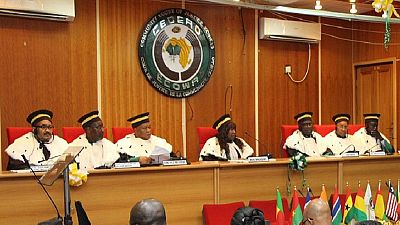
(ECOWAS) Regional Court of Justice gives historical ruling for media freedom in West Africa

February 15, 2018

On 14 February 2018 the Economic Community of West African States (ECOWAS) Regional Court of Justice found that Jammeh-era media laws violated the right to freedom of expression in The Gambia. The Federation of African Journalists and four Gambian journalists filed a case in the court in December 2015. They argued that their rights, including their rights to freedom of expression, had been violated by Gambia through the enforcement of laws criminalising libel, sedition and false news in the country. Two of the journalists were also subject to torture whilst in the custody of the then notorious National Intelligence Agency following their arrests under these laws.

Arguments were heard by the court in October 2016. The case was supported by the Media Legal Defence Initiative (MLDI). Amnesty International filed an amicus brief in the case along with other freedom of expression organisations. Although press freedom has improved under the new government of President Barrow, who was inaugurated in January 2017, these restrictive laws are still in place.

The ruling will set an important precedent as many countries within West Africa continue to use similar repressive laws to silence freedom of expression, and hinder the vital work of journalists, in violation of international and regional human rights law. The ball is now in the court of the Adama Barrow government to repeal the said laws in order to realign the law to respect media freedoms. Amnesty International’s West Africa researcher has hailed the ruling as a historic day for The Gambian media landscape. “Today is an historic day for Gambia’s journalists and human rights defenders who, for decades, have suffered torture, imprisonment or exile just for exercising their right to freedom of expression,”Sabrina Mahtani said.

(see also: https://humanrightsdefenders.blog/2018/01/17/gambia-yahya-jammehs-ex-minister-continues-his-detention-in-switzerland/)

http://www.africanews.com/2018/02/15/jammeh-era-media-laws-violated-freedom-of-expression-ecowas-court/

Call for Nominations for the 2018 Lorenzo Natali Media Prizes

February 6, 2018

Applications for the European Commission‘s 2018 Lorenzo Natali Media Prize, which recognises journalists doing outstanding reporting on development topics, are open from 5 February to 9 March for online, print and audio-visual works.

Commissioner for International Cooperation and Development Neven Mimica said: “In an era of disinformation, fake news and digital algorithms, we need professional and fact-based journalism more than ever. The important work of journalists is not only crucial for democracy across the globe, but also gives visibility and a voice to those who would otherwise not be heard. Through their stories they inform, inspire, and call for much-needed change. With this prize, we thank them for their determination and encourage them to keep up the fight.”

The Lorenzo Natali Media Prize is awarded to journalists reporting on issues such as poverty eradication and the economic, social and environmental dimensions of sustainable development. Journalists are invited to submit their work, be it in print, digital, radio or TV broadcast format. Deadline: 9 March 2018. Detailed information on the specific rules and criteria are available online. The prize has two categories based on age groups: 21 to 26 years, and 27 years plus. For each category there will be a winner from each region: Africa; the Arab World and the Middle East; Asia and the Pacific; Latin America and the Caribbean; and Europe.

A “Grand Winner” will be selected among the regional winners [this is the award listed in the Digest: http://trueheroesfilms.org/thedigest/awards/lorenzo-natali-grand-prize-for-development-and-human-rights] and an additional thematic prize will be awarded for work focused on the elimination of violence against women and girls.

The selection will be carried out by a “Grand Jury” composed of renowned journalists from across the world. This year’s jury members include Bruce Shapiro from the Columbia School of Journalism, Peruvian reporter and founder of “Panorámica Lationamericana” Isabel Recavarren, New Delhi-based journalist and President of the Commonwealth Journalists Association Mahendra Ved, Le Soir’s Maroun Labaki, and Mary Harper, the BBC World Service’s Africa Editor.

All 11 winners will receive their awards at a ceremony during the 2018 European Development Days in Brussels this June.

Application

New Shahnoush Award for women human rights defenders in prison

January 26, 2018

Ayşenur Parıldak, a 27-year-old reporter from Turkey’s now-closed Zaman newspaper who has been behind bars for 13 months, was named the recipient of the first Shahnoush Award by the Oslo-based Vigdis Freedom Foundation (VFF). [for more on this and other awards: http://trueheroesfilms.org/thedigest/awards/shahnoush-award]

“I was subjected to violence and sexual abuse. I was interrogated day and night for eight days. They [police officers] were questioning me while they were under the influence of alcohol […] I am afraid of being forgotten here,” Parıldak said in a letter to the Cumhuriyet newspaper in October 2016.

“The Shahnoush Award will be given every year to a female prisoner of conscience whose courage has not been internationally acknowledged. By doing so, Vigdis brings attention to the suffering of women who languish behind bars for speaking out and whose human rights have been violated. They are not forgotten; they are not alone. Hope is sometimes the difference between life and death. May the [Shahnoush] Award give hope to those who need it most.” said Marina Nemat, a board member of VFF.

Parıldak, also a law student at Ankara University’s faculty of law, was detained while taking exams on Aug. 11, 2016. She was released by the court on May 2, 2017 but was later rearrested by the same court before being freed since a prosecutor objected to the initial ruling. During her trial, she told judges that she had thought of committing suicide several times while in prison. Behind bars since last year, Parıldak faces 15 years in jail under Turkey’s broad anti-terror laws based on her tweets and alleged use of the ByLock mobile app. Turkish authorities believe ByLock indicates links to the Gülen movement, which the government accuses of masterminding the abortive coup last year. The movement denies all involvement.


https://turkeypurge.com/jailed-journalist-aysenur-parildak-given-courage-award-by-norwegian-rights-group

Can the media help promote human rights and fight torture in Russia and elsewhere?

November 5, 2017

The World Organisation Against Torture <http://www.omct.org> (OMCT) and the Committee Against Torture from Nizhny Novgorod <http://pytkam.net/eng> organize  a panel discussion on 9 November 2017 from 6:30–8:30 p.m.

The topic is “Can the media help promote human rights and fight torture in Russia and elsewhere?”

Panellists:

Ms. Olga Sadovskaya, Committee Against Torture from Nizhny Novgorod, Deputy Director

Ms. Therese Obrecht Hodler, journalist and former President of Reporters sans frontières <https://rsf.org>

Mr. MaksimKurnikov, Editor-in-Chief of radio EkhoMoskvy

Mr. Protsenko Nikita, Editor at Mediazone  <zona.media>

Moderator: Mr. Gerald Staberock, OMCT Secretary General

—————

The panel discussion will be followed by a cocktail

Free entrance. Maison international des associations, Salle Gandhi, Rue des Savoises, 15. Geneva

Contact: +41 78 733 9595

Eyes on Germany: human rights in the election campaign

September 21, 2017

With elections coming up in Germany this weekend it is interesting to alert you to three items that may have escaped attention:

(1)  A report by Deutsche Welle states that Germany granted asylum to 196 Turkish diplomats:

In response to a parliamentary question by Left Party, Germany’s Interior Ministry said 196 Turkish nationals, who applied for asylum in Germany following a botched coup attempt in July, 2016, were recognized. According to the ministry statement, 80% of 249 Turkish applicants with diplomatic status and their families were given asylum. Members of Turkish Armed Forces (TSK) are also among those seeking asylum, said the ministry. The number of asylum applications from Turkey has been significantly increasing. There were 433 applications in June while this number rose to 620 in July and 962 in September.

(2) On 20 September Human Rights Watch made public its assessment of the ‘human rights’ content of the political platforms of the different parties. It concludes that the parties differ on human rights approach and in migration policy.

201709eca_germany_campaignposters
Election campaign posters for the upcoming general election are pictured in Berlin, Germany, September 12, 2017. © 2017 Reuters
Separately, a German newspaper publisher said it filed an appeal to Turkey’s highest court against the incarceration for the past five months of a German-Turkish reporter, the Associated Press has reported. Deniz Yücel, who works for the daily Die Welt, was arrested Feb. 14 in Istanbul. He was accused of disseminating terrorist propaganda and inciting hatred, as well as espionage and ties to the outlawed Kurdistan Workers’ Party (PKK) – allegations Yücel denies. He hasn’t been formally charged.

Sources:

Germany grants asylum to 196 Turkish diplomats: report | Turkey Purge

https://www.hrw.org/news/2017/09/20/germany-parties-differ-human-rights-approach

http://www.hurriyetdailynews.com/germanys-merkel-criticizes-turkey-over-arrest-of-german-human-rights-activist.aspx?pageID=238&nID=115678&NewsCatID=351

Posted in HRW, human rights, Human Rights Defenders | Leave a Comment »
Tags: , , , , , , , , , , , ,

List of grantees for the inaugural ‘Reporting Right Livelihood’ made public

August 3, 2017

grantees

On 3 July 2017 the Right Livelihood Foundation made public the list of Grantees of its 2017 Reporting Right Livelihood journalism programme.  Journalists will receive grants to shine the light on ‘under-reported‘ stories linked to the work of ‘Alternative Nobel’ Laureates. The grantees of the inaugural Reporting Right Livelihood journalism programme were selected from among 93 applicants from 48 countries. The grants, ranging from €200 to €5,000, cover essential travel, subsistence and communication costs to enable reporting on the selected stories over the next six months. The decision was made by a committee comprised of journalists and media experts from Germany, Sweden, Switzerland, Turkey, and the UK.

This year’s grantees are:

The announcement comes with quotes from grantees and selection committee members. Such as:

“I was impressed by the variety, the creativity and relevance of proposals which made our decision so challenging and difficult. The projects we chose show a strong commitment to report on under-covered issues addressed by the Right Livelihood Award Laureates through their personal engagement. This shows how important it is to support journalistic coverage of these issues in order to improve the lives of people who suffer because of injustice, poverty, sickness or political pressure,” Adelheid Feilcke, Deutsche Welle, selection committee member

“Partout dans le monde des femmes et des hommes courageux se battent contre les injustices. L’engagement des journalistes est indispensable, pour faire echo à ces combats. Ces bourses vont pouvoir faire avancer les causes défendues et honorer les lauréats du Prix Right Livelihood,” Romaine Jean, Radio Télévision Suisse (RTS), selection committee member

Fo more information: Xenya Cherny-Scanlon, Director of Communications, mobile: +41 76 690 8798, xenya@rightlivelihood.org,  www.rightlivelihoodaward.org #RightLivelihood #AlternativeNobel

Source: Reporting Right Livelihood 2017 Grantees AnnouncedThe Right Livelihood Award

Posted in awards, human rights, Human Rights Defenders | Leave a Comment »
Tags: , , , , , , , ,

New Secretary-General at Human Rights Council tells human rights defenders: “And I am on your side”

February 28, 2017

On 27 February 2017 the new Secretary General, António Guterres, addressed for the first time the UN Human Rights Council. For 10 years, he was the “other” High Commissioner (for Refugees), just down the road from the Palais des Nations where he was speaking. Some of his remarks are quoted here (from SG/SM/18456-HRC/25), especially the last paragraph dedicated to  human rights defenders and journalists: Read the rest of this entry »

Posted in human rights, Human Rights Council, Human Rights Defenders, UN | 2 Comments »
Tags: , , , , , , ,