Cressida Kuala lives in a small gold mining town in the Highlands Region of Porgera District in the Enga Province of Papua New Guinea. In 2011, Cressida founded the Porgera Red Wara (River) Women’s Association, and she started speaking out about issues such as environmental degradation, chemical waste, pollution, expropriation of land, and the impact on the local community.
Chinese authorities harassed several dozen Chinese film directors and producers, as well as their families in China, causing them to pull films from the inaugural IndieChina Film Festival in New York City. On November 6, 2025, the festival’s organizer, Zhu Riku, announced that the film festival, scheduled for November 8-15, had been “suspended.”
“The Chinese government reached around the globe to shut down a film festival in New York City,” said Yalkun Uluyol, China researcher at Human Rights Watch. “This latest act of transnational repression demonstrates the Chinese government’s aim to control what the world sees and learns about China.”
Chiang Seeta, a Chinese artist and activist, reported that nearly all participating directors in China faced intimidation. Even directors abroad, including those who are not Chinese nationals, reported that their relatives and friends in China were receiving threatening calls from police, said Chiang.
On November 1, the organizers issued an announcement on social media saying they had received messages from some film directors and producers and their families about Chinese government harassment: “We are deeply concerned about the situation. … [I]f you are under pressure not to attend the festival … we fully understand and respect it.” By November 4, more than two-thirds of participating films had cancelled their screenings.
After the festival was suspended, Zhu issued a statement that the decision was not out of fear, but rather to “stop harassment of … directors, guests, former staff, and volunteers associated with the festival, including my friends and family.”
Independent film festivals in China have faced intensifying crackdowns over the past decade, Human Rights Watch said. The Chinese authorities have shut down all three major independent film festivals in China: Yunfest, founded in 2003; the China Independent Film Festival, founded in 2003; and Beijing Independent Film Festival, founded in 2006.
When the authorities shut down the last screening of the Beijing Independent Film Festival in 2014, they cut off electricity from the venue, confiscated documents from the organizer’s office, and forced the organizers to sign a paper promising not to hold the festival. Many festival organizers have tried without success to adapt, for instance by changing their format to screenings at multiple venues.
The 14th China Independent Film Festival was shuttered in 2018, the last time such a festival took place in China.
A court in January 2025 sentenced Chen Pinlin, known as Plato, to three-and-a-half years in prison for allegedly “picking quarrels and provoking trouble” after he made a documentary about the “white paper protests” during Covid-19 lockdowns. Transnational repression can be defined as government efforts to silence or deter dissent by committing human rights abuses against their own nationals living abroad, their families at home, or members of the country’s diaspora. [see also: https://humanrightsdefenders.blog/2025/10/17/un-report-highlights-chinas-targeting-of-human-rights-defenders-abroad/]
The Chinese government’s transnational repression of the arts has not been limited to film. Chinese officials interfered with an exhibition in Bangkok and censored artwork by Uyghur, Tibetan, and Hongkonger artists in August.
In a first-of-its-kind investigation into the closed-door negotiations of the UN’s budget in New York, ISHR uncovers how a small group of States – led by China and Russia – have coordinated efforts to block and slash funding for the UN’s human rights work through political manoeuvring and influence. At a moment of sweeping UN reform and financial crisis, these efforts – compounded by the US failure to pay their UN membership fees and outstanding debts – pose an existential threat to the UN’s human rights system.
…The UN’s historically underfunded human rights work now faces an existential threat due to budget cuts under the UN80 Initiative and the UN’s liquidity crisis, fuelled by the failure of the United States, China and other countries to pay their contributions in full and on time. Drawing from dozens of interviews and combing through official documents and internal budget negotiation documents from 2019 to 2024, ISHR’s report ‘Budget Battles at the UN: How States Try to Defund Human Rights’ finds that China and Russia have led a sustained effort to build influence, disrupt proceedings, and politicise technical discussions at the UN General Assembly’s Fifth Committee (5C), where States negotiate the UN’s budget, and its little-known yet influential advisory body, the Advisory Committee on Administrative and Budgetary Questions (ACABQ). Over the past decade, Chinese influence within these bodies has expanded sharply, the report shows. Beijing has invested heavily in building its representation at the 5C, the ACABQ and other related bodies to push heavy budget cuts to human rights. Russia has frequently played the role of outspoken spoiler in negotiations, enabling China to deploy its influence more quietly but effectively behind closed doors.
Russian and Chinese diplomats have weaponised UN budget negotiations to serve their own interests and shield allies from scrutiny, at the expense of human rights. Budget negotiations should be solely guided by the goal of adequately funding the UN’s work, not serving as a political tool to weaken accountability and rights protection.‘ – Madeleine Sinclair, Director of ISHR’s New York office..
A deepening cash crisis The report finds that years of underfunding and attacks on the UN’s human rights budget are now being compounded by a severe liquidity crisis triggered by US and Chinese late or non-payment of dues, while the United Nations undergo urgent reform. Since taking office in January 2025, the Trump Administration has launched repeated assaults on UN bodies, often on grounds of an alleged ‘anti-Israel bias’, abruptly blocking the payment of overdue contributions from 2024 dues and all of the US contributions for 2025, while cutting nearly all voluntary funding to the UN. As the US, the largest contributor, withholds this vast portion of the UN budget, Beijing’s increasingly late payments risk depriving the UN of over 40% of its operational cash flow for 2025. Meanwhile, China’s paying in full but extremely late has a similar result to not paying contributions in full, as a little-known State-imposed UN rule perversely returns unspent cash – that could not be used as it came so late – to Member States in the form of credits to future dues. In 2024, China paid its contributions on 27 December, four days before the year’s end. The broader US withdrawal from multilateralism also enables China and Russia to further grow their influence in shaping a more State-centric UN, at the expense of civil society and the universality of human rights.
….
UN80 reform risks deepening the damage US cuts also forced the UN into an unprecedented race for reform through the UN80 Initiative, an internal reform drive to make the organisation more efficient and effective, yet so far focused primarily on austerity and cost-cutting. Initial cuts proposed by the Secretary-General in September slash the human rights budget by 15%, a higher percentage than cuts proposed for the UN’s development and peace and security work. Further cuts are expected once the ACABQ reviews the Secretary-General’s proposals, and States table additional reform proposals under UN80 in the coming months.
‘China and Russia have long exploited UN processes in order to spin a web of influence against human rights progress, and now the Trump administration is moving in that same direction. But this is not irreversible. The UN80 Initiative must be more than a hunt for ‘efficiency’: it should be a collective effort towards meaningful, human rights-driven reform. For this, States, and particularly Global South countries who have a clear stake in having strong, responsive UN human rights bodies, can still take back the space and ensure funding for a UN that advances human rights protection on the ground for all.’ – ISHR Executive Director Phil Lynch
Funding for the UN’s human rights work is on the brink of collapse at a time when it is most needed to address global crises…
On 25 September 2025, 11 States raised individual cases of intimidation and reprisal in 15 different countries and territories at the Human Rights Council‘s 60th session. The cases of Kadar Abdi Ibrahim (Djibouti) and Loujain Al-Hathloul (Saudi Arabia) were cited by States. Cases from ISHR’s 2022 and 2024 campaigns were also among the cases mentioned, as well as the case of Basma Mostafa (Egypt) facing transnational repression.
On 16 October 2025, at the Third Committee of the General Assembly‘s 80th session, specific cases and situations of intimidation and reprisal were raised again by Belgium, the Netherlands and Luxembourg during this dialogue with the Assistant Secretary-General. They raised the cases of Human Rights Center Viasna (Belarus), Chow Hang Tung (Hong Kong) and Pham Doan Trang (Viet Nam).
Additionally, 70 States joined the cross-regional statement on reprisals led by Ireland and Uruguay, delivered at the General Discussion on the promotion and protection of human rights (item 71) at the General Assembly’s Third Committee.
This is what happened to Loujain and Mohamed, prominent human rights defenders from Saudi Arabia and Egypt respectively.
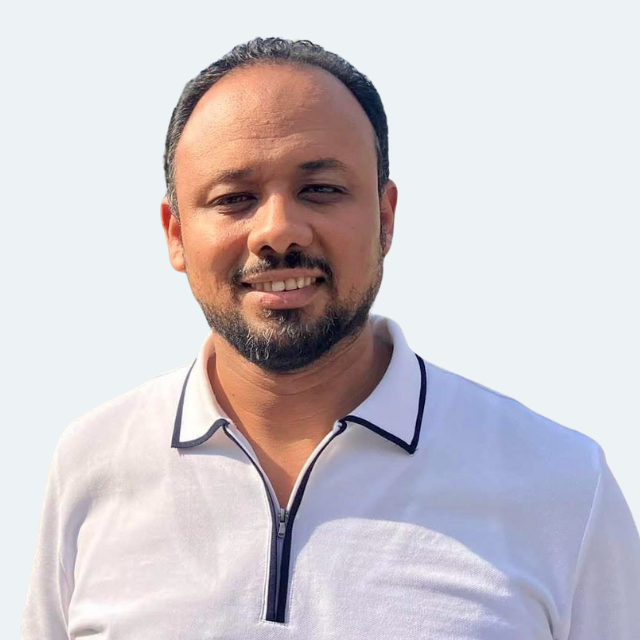
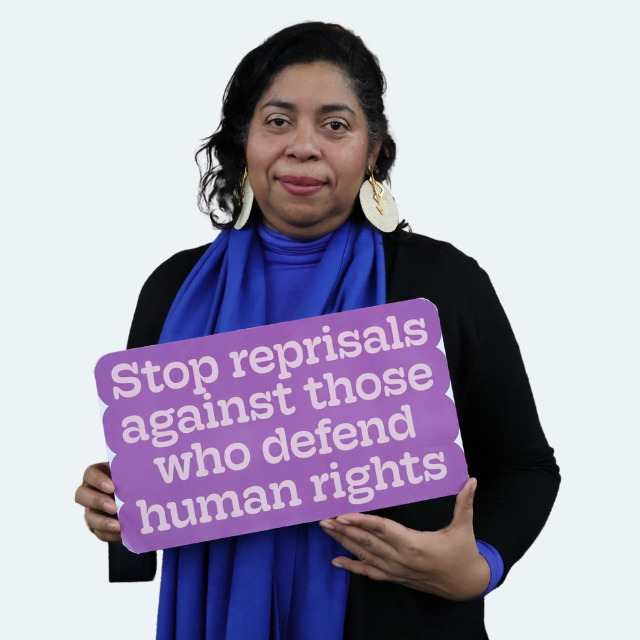
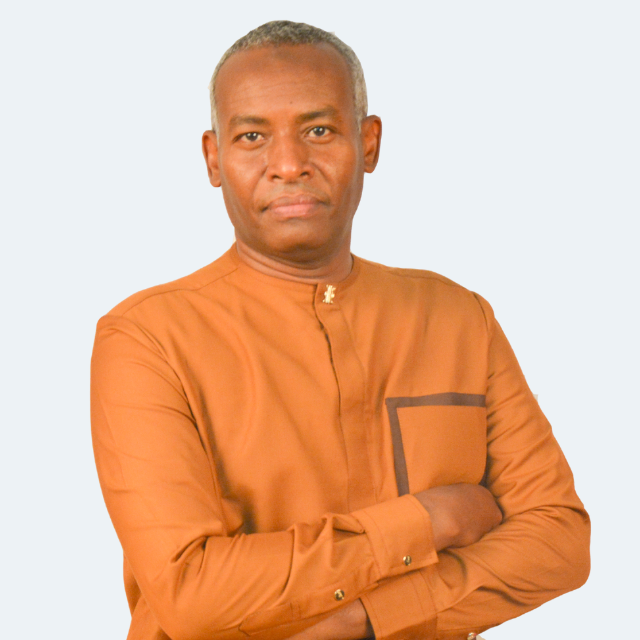
Meanwhile, Anexa, an Indigenous human rights defender, is unable to return to her home country of Nicaragua, and Kadar from Djibouti had his passport confiscated since 2018, preventing him from leaving the country and doing his work.
IThrough this campaign, we share their stories. These are not just cases of reprisals — they are real lives disrupted, silenced, and confined. But they are also stories of resilience and perseverance for social change.
Loujain Al-Hathloul
Loujain is an iconic figure in Saudi Arabia’s women’s rights movement. She has actively campaigned for women’s rights in the country and against the driving ban imposed on women. She has also publicly and consistently called for the dismantlement of the male guardianship system.
Mohamed El-Baqer is a human rights lawyer from Egypt. He is the director of the Adalah Center for Rights and Freedoms, founded in 2014. It is a non-governmental, independent legal and human rights organisation with a focus on four Programmes: 1) Criminal Justice 2) Student Rights and Academic Freedoms; 3) Refugees; 4) and Minorities. All these Programmes are implemented through legal support and strategic litigation, research, monitoring and documentation, advocacy activities and capacity-building. [https://www.trueheroesfilms.org/thedigest/laureates/a845697d-4b51-4e7f-b7d0-219c1e18ecd3]
Anexa Alfred Cunningham is a Miskitu Indigenous leader, woman human rights defender, lawyer and expert on Indigenous Peoples’ rights from Nicaragua. She defends the ancestral land and natural resources of Indigenous and Afro-descendant Peoples of the Caribbean Coast of Nicaragua. She has also worked with Indigenous and Afro-descendant communities to investigate the many abuses they suffer and denounce them to the United Nations. These Peoples face attacks by armed groups who seek to take away their ancestral territory with the State’s approval.
Kadar Abdi Ibrahim is a human rights defender and journalist from Djibouti. He has drawn inspiration from historic figures in the human rights movement in the hopes of building a solid and lasting democracy in his country. From 2015, Kadar was the co-director and chief editor of L’Aurore, Djibouti’s only privately-owned media outlet. In 2016, the newspaper was banned following the publication of a story on one of the victims of the Buldhuqo massacre, crackdown by Djibouti security forces on a religious celebration and a meeting of the opposition on 21 December 2015 that left at least 27 people dead. Kadar is also the president of the political party Movement for Democracy and Freedom (MoDEL) since December 2021. Over the years, Kadar has been arrested several times by the police in an attempt to silence him.
#EndReprisals
Join our campaign by writing a letter to State representatives so they publicly raise the cases of Kadar, Anexa, Loujain and Mohamed at the General Assembly’s Third Committee in New York.
ISHR’s #EndReprisals database
In order to assist stakeholders with research, analysis and action on cases of reprisals and intimidation, ISHR launched an online database compiling cases or situations of intimidation and reprisals documented by the United Nations (UN) Secretary-General between 2010 and 2024.
The Committee on Economic, Social and Cultural Rights (CESCR) recently published its General Comment on the environmental dimension of sustainable development. In addition to recognising human rights defenders, the Comment clarifies State obligations towards marginalized communities and notes the importance of transitioning away from fossil fuels. It also outlines States’ extraterritorial obligations.
ISHR provided two written inputs to the draft of this General Comment earlier this year – a standalone submission regarding the recognition and protection of environmental human rights defenders (EHRDs) based on the Declaration+25, a supplement to the UN Declaration on Human Rights Defenders, and a joint submission in partnership with the Center for International Environmental Law, Earthjustice, FIAN International, the Global Initiative for Economic, Social and Cultural Rights, Human Rights Watch and Oxfam.
‘States parties should respect, protect, and promote the work of environmental and indigenous human rights defenders, as well as other civil society actors who support people in marginalized and disadvantaged situations in realizing their Covenant rights.’ States parties should take all necessary measures to ensure that environmental human rights defenders and journalists can carry out their work, without fear of harassment, intimidation or violence, including by protecting them from harm by third parties.’
ISHR welcomes that priorities from the joint NGO submission to the CESCR are reflected in the General Comment, in particular Indigenous Peoples’ right to ‘free, prior and informed consent’ and the need to transition away from fossil fuels (including by reducing ineffective subsidies).
However, we regret that the Comment does not more explicitly acknowledge the critical role of EHRDs in promoting sustainable development or strategic lawsuits against public participation (SLAPPs) as an obstacle to their engagement. The CESCR has previously noted the risks faced by HRDs and provided guidance on their recognition and protection in the context of land issues in General Comment No. 26 and it should have extended this analysis to EHRDs in the context of sustainable development. The use of SLAPPs to silence HRDs has been acknowledged by other UN bodies, including in the most recent report of the Special Rapporteur on the Situation of Human Rights Defenders, Ms. Mary Lawlor, to the Third Committee of the General Assembly.
Some additional highlights from the General Comment are set out below.
The Committee found that ‘[t]he full realization of Covenant rights demands a just transition towards a sustainable economy that centres human rights and the well-being of the planet’.
States should supervise commercial activity, establish a legal obligation for businesses in respect of environment and human rights due diligence, and ensure that victims of human rights violations stemming from businesses have redress.
States have obligations to conduct human rights and environmental impact assessments, which are to be undertaken with ‘meaningful public participation’.
States have an extraterritorial obligation to ensure that any activities within the State or in areas under its control do not substantially adversely affect the environment in another country. This also extends to preventing businesses in the State from causing such harm in another jurisdiction. Even though the CESCR does not expressly mention it in the Comment, this should also apply to cases of attacks against EHRDs.
The CESCR also clarifies States’ obligations towards marginalized communities, spotlighting the concept of intersectionality. It also explicitly notes that equal exercise of economic, social and cultural rights by women and men is a prerequisite for sustainable development, encouraging States to redistribute the unpaid domestic work undertaken by women and girls.
Environment-related obligations have also been set out for States in the context of specific Covenant rights, for example, the right to self-determination , right to freely utilize natural resources , right to work , right to an adequate standard of living, right to the highest attainable standard of physical and mental health, right to education and other economic, social and cultural rights.
The General Comment recognises that certain communities are particularly vulnerable to the effects of environmental degradation – it calls on States to identify and protect those at risk. The CESCR focuses particularly on children (specifically calling for child rights defenders to be recognised and protected and for their participation in climate action to be facilitated), Indigenous Peoples, peasants, pastoralists, fishers and others in rural areas, and displaced persons.
‘Environmental degradation, including climate change, intensifies the vulnerabilities of individuals and groups who have historically experienced and/or experience marginalization. These vulnerabilities are shaped by intersecting factors such as socioeconomic status, race, ethnicity, gender, disability, age, migratory status, sexual orientation, and gender identity.’
‘Water is to protected. Water is not for sale. Water is to be defended.’
Doris Ramírez is a fisherwoman and a fisherfolk’s union representative from Guatemala’s southern coast. She told ISHR how her late husband’s passing drove her to embrace activism and described her aspirations for the future for her coastal community.
In March 2025, Doris attended the 58th session of the UN Human Rights Council, delivering a statement calling on Guatemala to abide by its obligations to secure the protection of marine biodiversity, the traditional rights of fisherfolk and the protection of those who are protecting the environment.
On 24 September, 2025, the United Nations (UN) Assistant Secretary-General for Human Rights (ASG), presented the annual report of the UN Secretary-General (UNSG) on intimidation and reprisals against those cooperating with the UN. The report highlights allegations of acts of intimidation and reprisals committed from May 2024 to April 2025, as well as updates on cases from previous reports.
Reprisals are acts of intimidation, harassment or retaliation against individuals or groups for cooperating with the UN. The annual report includes both newly documented cases from the reporting period and follow-up information on situations previously highlighted, such as changes in detention conditions, judicial or administrative measures, or recurring patterns of intimidation. see also: https://www.linkedin.com/pulse/20140603192912-22083774–crime-should-not-pay-in-the-area-of-international-human-rights
The UNSG report warns that “more than half of the States reviewed continue to enforce or adopt laws on civil society, counter-terrorism and national security that have the effect of deterring or obstructing cooperation with the United Nations”. In some cases, new or amended legislation has further tightened restrictions on NGOs, complicating their registration and operations, and creating additional obstacles to meaningful civil society engagement with the UN. This trend is particularly pronounced in the Middle East and North Africa (MENA), where more than 6 out of 10 cases of reprisals are linked to counter-terrorism or security measures.
On 18 September 2025, ISHR said that analysis of revised 2026 budget proposal for UN80 reform points to disproportionate cuts to the chronically-underfunded human rights pillar. Together with peace and development, human rights constitutes one of the three key areas of action for the UN and thus should be adequately funded.
On 16 September 2025, the UN Secretary-General published its report revising its earlier proposal for the UN’s 2026 budget (known as ‘Revised estimates’ report). The International Service for Human Rights (ISHR) has analysed the revised budget and is deeply concerned about proposed cuts to an already chronically under-resourced human rights pillar. While demands on the human rights system do not cease to grow to address mounting global conflicts and crises, further cuts will significantly reduce effectiveness and efficiency, and its capacity to deliver on human rights protection to individuals and populations on the ground.
‘The UN’s human rights pillar has historically received significantly less funds than development and peace and security, accounting for just 7% of the UN regular budget and less than 1% of UN’s total expenditure. Any cuts to it would result in minimal savings but have significant and disproportionate adverse consequences for the rights of people around the world – Phil Lynch, ISHR Executive Director
In recent years, a liquidity crisis fuelled by the late or non-payments of dues by the US and China had already prompted High Commissioner for Human Rights Volker Türk to suspend the delivery of reports, workshops and other activities mandated by the Human Rights Council (HRC). The HRC has also reduced the length of its sessions, limiting space for States, experts and civil society to address some of the world’s most pressing rights issues and crises.
Additional cuts to the human rights pillar would further undermine the ability of the UN’s human rights bodies to continue to investigate atrocity crimes such as in Gaza, Myanmar and the Democratic Republic of Congo, to support victims and human rights defenders, to assist States in improving their human rights policies, and to develop global human rights standards that protect us all.
UN Secretary-General Antonio Guterres stressed the cuts are ‘carefully calibrated’ and ensure balance between the UN’s three pillars (peace and security, development, and human rights). Yet, the proposed cuts to the budget of the Office of the High Commissioner for Human Rights (OHCHR) of around 15% run much deeper than the 2026 proposed budget on development (targeted for around 12% cut) and peace and security (targeted for a 13% cut, excluding peacekeeping operations).
Like a three-legged stool, if the human rights pillar is cut to the extent proposed then not only will it collapse, but the whole system will topple.
ISHR is campaigning for the UN80 Initiative to be more than a simple accounting overhaul for the UN, centred only on cost-cutting. On July 21, ISHR and 16 civil society organisations signed an open letter to the Secretary-General and High Commissioner Türk with concrete recommendations and proposals to ensure that the UN human rights system is streamlined, strengthened and sustainable, guided by the aim of support human rights defenders, providing justice to victims and ensuring accountability for rights abuses.
The cuts will next be reviewed by a UN budgetary committee traditionally hostile to human rights funding, whose conclusions will serve as a basis for States to negotiate.
For more information, please contact: Raphael Viana David, ISHR, Programme Manager r.vianadavid@ishr.ch
Listen to the stories of four human rights defenders who have been banned from travelling by their own governments simply for trying to cooperate with the United Nations. Can you guess which suitcase belongs to whom?
Location: Geneva, Switzerland Date: 16 September 2025, 10:00AM – 5:00PM CEST
Some States use travel bans as reprisals against human rights defenders who cooperate with the United Nations. These acts of retaliation are designed to isolate, intimidate, and silence them.
A travel ban may be less visible than a prison cell, but its impact is deeply damaging. It restricts defenders from attending UN meetings, carrying out their work, reuniting with family or seeking international protection.
Travel bans take many forms, including cancelling or confiscating passports, detaining defenders attempting to exit a country, denying defenders the right to leave or enter back into their own countries, and placing defenders on terrorist lists.
Through this exhibition, we unpack the stories of four human rights defenders who have been barred from entering or leaving in their own countries under arbitrary travel bans. These are not just about State reprisals against activists, they are stories of people whose lives have been disrupted, whose voices have been silenced, and whose basic freedoms have been trampled. They are also stories of resilience and perseverance in seeking positive social change.
Their voices defend human rights. Travel bans silence them: #EndReprisals!
Judi Aldalati is a Syrian journalist, a researcher and human rights defender. She told ISHR how seeing the early days of the Arab Spring led her to pursue the defence of human rights and shared her aspirations for the future of Syria amidst the uncertainty that has followed the collapse of the Assad regime.



 Hans Thoolen on Human Rights Defenders and their awards