Posts Tagged ‘ISHR’

CESCR General Comment: States should protect environmental and Indigenous HRDs

October 17, 2025

The Committee on Economic, Social and Cultural Rights (CESCR) recently published its General Comment on the environmental dimension of sustainable development. In addition to recognising human rights defenders, the Comment clarifies State obligations towards marginalized communities and notes the importance of transitioning away from fossil fuels. It also outlines States’ extraterritorial obligations.

ISHR provided two written inputs to the draft of this General Comment earlier this year – a standalone submission regarding the recognition and protection of environmental human rights defenders (EHRDs) based on the Declaration+25, a supplement to the UN Declaration on Human Rights Defenders, and a joint submission in partnership with the Center for International Environmental Law, Earthjustice, FIAN International, the Global Initiative for Economic, Social and Cultural Rights, Human Rights Watch and Oxfam.

States parties should respect, protect, and promote the work of environmental and indigenous human rights defenders, as well as other civil society actors who support people in marginalized and disadvantaged situations in realizing their Covenant rights.’ States parties should take all necessary measures to ensure that environmental human rights defenders and journalists can carry out their work, without fear of harassment, intimidation or violence, including by protecting them from harm by third parties.

ISHR welcomes that priorities from the joint NGO submission to the CESCR are reflected in the General Comment, in particular Indigenous Peoples’ right to ‘free, prior and informed consent’ and the need to transition away from fossil fuels (including by reducing ineffective subsidies).

However, we regret that the Comment does not more explicitly acknowledge the critical role of EHRDs in promoting sustainable development or strategic lawsuits against public participation (SLAPPs) as an obstacle to their engagement. The CESCR has previously noted the risks faced by HRDs and provided guidance on their recognition and protection in the context of land issues in General Comment No. 26 and it should have extended this analysis to EHRDs in the context of sustainable development. The use of SLAPPs to silence HRDs has been acknowledged by other UN bodies, including in the most recent report of the Special Rapporteur on the Situation of Human Rights Defenders, Ms. Mary Lawlor, to the Third Committee of the General Assembly.  

 Some additional highlights from the General Comment are set out below. 

  • The Committee found that ‘[t]he full realization of Covenant rights demands a just transition towards a sustainable economy that centres human rights and the well-being of the planet’. 
  • States should supervise commercial activity, establish a legal obligation for businesses in respect of environment and human rights due diligence, and ensure that victims of human rights violations stemming from businesses have redress. 
  • States have obligations to conduct human rights and environmental impact assessments, which are to be undertaken with ‘meaningful public participation’.
  • States have an extraterritorial obligation to ensure that any activities within the State or in areas under its control do not substantially adversely affect the environment in another country. This also extends to preventing businesses in the State from causing such harm in another jurisdiction. Even though the CESCR does not expressly mention it in the Comment, this should also apply to cases of attacks against EHRDs. 
  • The CESCR also clarifies States’ obligations towards marginalized communities, spotlighting the concept of intersectionality. It also explicitly notes that equal exercise of economic, social and cultural rights by women and men is a prerequisite for sustainable development, encouraging States to redistribute the unpaid domestic work undertaken by women and girls.
  • Environment-related obligations have also been set out for States in the context of specific Covenant rights, for example, the right to self-determination , right to freely utilize natural resources , right to work , right to an adequate standard of living, right to the highest attainable standard of physical and mental health, right to education and other economic, social and cultural rights.
  • The General Comment recognises that certain communities are particularly vulnerable to the effects of environmental degradation – it calls on States to identify and protect those at risk. The CESCR focuses particularly on children (specifically calling for child rights defenders to be recognised and protected and for their participation in climate action to be facilitated), Indigenous Peoples, peasants, pastoralists, fishers and others in rural areas, and displaced persons.

‘Environmental degradation, including climate change, intensifies the vulnerabilities of individuals and groups who have historically experienced and/or experience marginalization. These vulnerabilities are shaped by intersecting factors such as socioeconomic status, race, ethnicity, gender, disability, age, migratory status, sexual orientation, and gender identity.’

https://ishr.ch/latest-updates/cescr-general-comment-states-should-protect-environmental-and-indigenous-hrds-work-in-the-context-of-sustainable-development

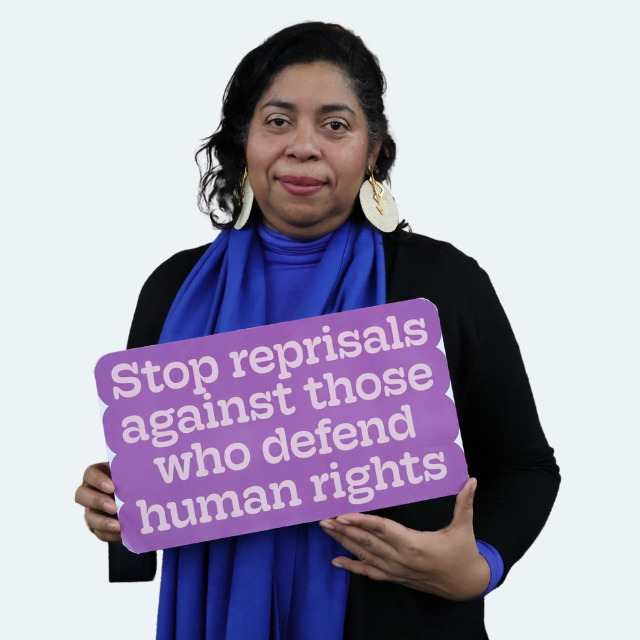
Guatemalan human rights defender: Doris Ramírez

October 3, 2025

‘Water is to protected. Water is not for sale. Water is to be defended.’

Doris Ramírez is a fisherwoman and a fisherfolk’s union representative from Guatemala’s southern coast. She told ISHR how her late husband’s passing drove her to embrace activism and described her aspirations for the future for her coastal community.

In March 2025, Doris attended the 58th session of the UN Human Rights Council, delivering a statement calling on Guatemala to abide by its obligations to secure the protection of marine biodiversity, the traditional rights of fisherfolk and the protection of those who are protecting the environment.

https://ishr.ch/defender-stories/human-rights-defenders-story-doris-ramirez-from-guatemala

UN Secretary-General’s 2025 report highlights reprisals against human rights defenders

October 1, 2025

 Ilze Brands Kehris, Assistant Secretary-General for Human Rights © Belgian Presidency of the Council of the EU 2024 licensed under CC BY 2.0

On 24 September, 2025, the United Nations (UN) Assistant Secretary-General for Human Rights (ASG), presented the annual report of the UN Secretary-General (UNSG) on intimidation and reprisals against those cooperating with the UN. The report highlights allegations of acts of intimidation and reprisals committed from May 2024 to April 2025, as well as updates on cases from previous reports.

Reprisals are acts of intimidation, harassment or retaliation against individuals or groups for cooperating with the UN. The annual report includes both newly documented cases from the reporting period and follow-up information on situations previously highlighted, such as changes in detention conditions, judicial or administrative measures, or recurring patterns of intimidation. see also: https://www.linkedin.com/pulse/20140603192912-22083774–crime-should-not-pay-in-the-area-of-international-human-rights

The UNSG report warns that “more than half of the States reviewed continue to enforce or adopt laws on civil society, counter-terrorism and national security that have the effect of deterring or obstructing cooperation with the United Nations”. In some cases, new or amended legislation has further tightened restrictions on NGOs, complicating their registration and operations, and creating additional obstacles to meaningful civil society engagement with the UN. This trend is particularly pronounced in the Middle East and North Africa (MENA), where more than 6 out of 10 cases of reprisals are linked to counter-terrorism or security measures.

https://ishr.ch/latest-updates/hrc60-un-flags-repression-of-human-rights-defenders-including-by-human-rights-council-members

https://www.ohchr.org/en/statements-and-speeches/2025/09/ensuring-safety-those-who-engage-united-nations-essential

2026 budget proposal for UN80 reform points to disproportionate cuts to human rights pillar.

September 22, 2025

On 18 September 2025, ISHR said that analysis of revised 2026 budget proposal for UN80 reform points to disproportionate cuts to the chronically-underfunded human rights pillar. Together with peace and development, human rights constitutes one of the three key areas of action for the UN and thus should be adequately funded.

On 16 September 2025, the UN Secretary-General published its report revising its earlier proposal for the UN’s 2026 budget (known as ‘Revised estimates’ report). The International Service for Human Rights (ISHR) has analysed the revised budget and is deeply concerned about proposed cuts to an already chronically under-resourced human rights pillar. While demands on the human rights system do not cease to grow to address mounting global conflicts and crises, further cuts will significantly reduce effectiveness and efficiency, and its capacity to deliver on human rights protection to individuals and populations on the ground. 

The UN’s human rights pillar has historically received significantly less funds than development and peace and security, accounting for just 7% of the UN regular budget and less than 1% of UN’s total expenditure. Any cuts to it would result in minimal savings but have significant and disproportionate adverse consequences for the rights of people around the world – Phil Lynch, ISHR Executive Director

In recent years, a liquidity crisis fuelled by the late or non-payments of dues by the US and China had already prompted High Commissioner for Human Rights Volker Türk to suspend the delivery of reports, workshops and other activities mandated by the Human Rights Council (HRC). The HRC has also reduced the length of its sessions, limiting space for States, experts and civil society to address some of the world’s most pressing rights issues and crises. 

Additional cuts to the human rights pillar would further undermine the ability of the UN’s human rights bodies to continue to investigate atrocity crimes such as in Gaza, Myanmar and the  Democratic Republic of Congo, to support victims and human rights defenders, to assist States in improving their human rights policies, and to develop global human rights standards that protect us all.

UN Secretary-General Antonio Guterres stressed the cuts are ‘carefully calibrated’ and ensure balance between the UN’s three pillars (peace and security, development, and human rights). Yet, the proposed cuts to the budget of the Office of the High Commissioner for Human Rights (OHCHR) of around 15% run much deeper than the 2026 proposed budget on development (targeted for around 12% cut) and peace and security (targeted for a 13% cut, excluding peacekeeping operations).

Like a three-legged stool, if the human rights pillar is cut to the extent proposed then not only will it collapse, but the whole system will topple.

ISHR is campaigning for the UN80 Initiative to be more than a simple accounting overhaul for the UN, centred only on cost-cutting. On July 21, ISHR and 16 civil society organisations signed an open letter to the Secretary-General and High Commissioner Türk with concrete recommendations and proposals to ensure that the UN human rights system is streamlined, strengthened and sustainable, guided by the aim of support human rights defenders, providing justice to victims and ensuring accountability for rights abuses.

The cuts will next be reviewed by a UN budgetary committee traditionally hostile to human rights funding, whose conclusions will serve as a basis for States to negotiate.

For more information, please contact: Raphael Viana David, ISHR, Programme Manager r.vianadavid@ishr.ch

https://ishr.ch/latest-updates/un80-initiative-proposed-budget-cuts-disproportionately-hit-the-human-rights-pillar

https://ishr.ch/latest-updates/unga80-over-270-civil-society-groups-urge-states-to-defend-human-rights-refugee-protections

Tomorrow (16/9/25) in Geneva: Packed with Courage – stories of human rights defenders banned from travelling

September 15, 2025

Listen to the stories of four human rights defenders who have been banned from travelling by their own governments simply for trying to cooperate with the United Nations. Can you guess which suitcase belongs to whom?

Location: Geneva, Switzerland Date: 16 September 2025, 10:00AM – 5:00PM CEST

Some States use travel bans as reprisals against human rights defenders who cooperate with the United Nations. These acts of retaliation are designed to isolate, intimidate, and silence them.  

A travel ban may be less visible than a prison cell, but its impact is deeply damaging. It restricts defenders from attending UN meetings, carrying out their work, reuniting with family or seeking international protection.   

Travel bans take many forms, including cancelling or confiscating passports, detaining defenders attempting to exit a country, denying defenders the right to leave or enter back into their own countries, and placing defenders on terrorist lists.   

Through this exhibition, we unpack the stories of four human rights defenders who have been barred from entering or leaving in their own countries under arbitrary travel bans. These are not just about State reprisals against activists, they are stories of people whose lives have been disrupted, whose voices have been silenced, and whose basic freedoms have been trampled. They are also stories of resilience and perseverance in seeking positive social change.

Their voices defend human rights. Travel bans silence them: #EndReprisals!

Their voices defend human rights. Travel bans silence them: #EndReprisals!

https://ishr.ch/events/packed-with-courage-stories-of-human-rights-defenders-banned-from-travelling

Judi Aldalati is a Syrian human rights defender

August 14, 2025

Judi Aldalati is a Syrian journalist, a researcher and human rights defender. She told ISHR how seeing the early days of the Arab Spring led her to pursue the defence of human rights and shared her aspirations for the future of Syria amidst the uncertainty that has followed the collapse of the Assad regime.

https://ishr.ch/defender-stories/human-rights-defenders-story-judi-aldalati-from-syria

New report: a retrospective on the Business frameworks and actions to support defenders

August 10, 2025

ISHR launched a new report  that summarises and assesses progress and challenges over the past decade in relation to initiatives to protect human rights defenders in the context of business frameworks, guidance, initiatives and tools that have emerged at local, national and regional levels. The protection of human rights defenders in relation to business activities is vital.

Defenders play a crucial role in safeguarding human rights and environmental standards against adverse impacts of business operations globally. Despite their essential work, defenders frequently face severe risks, including threats, surveillance, legal and judicial harassment, and violence.  

According to the Business and Human Rights Resource Centre (BHRRC), more than 6,400 attacks on defenders linked to business activities have been documented over the past decade, emphasising the urgency of addressing these challenges.  While this situation is not new, and civil society organisations have constantly pushed for accountability for and prevention of these attacks, public awareness of the issue increased with early efforts to raise the visibility of defenders at the Human Rights Council and the adoption of key thematic resolutions, as well as raising defenders’ voices at other foras like the UN Forum on Business and Human Rights. 

The report ‘Business Frameworks and Actions to Support Human Rights Defenders: a Retrospective and Recommendations’ takes stock of the frameworks, tools, and advocacy developed over the last decade to protect and support human rights defenders in the context of business activities and operations.

The report examines how various standards have been operationalised through company policies, investor guidance, multi-stakeholder initiatives, legal reforms, and sector-specific commitments. At the same time, it highlights how despite these advancements, the actual implementation by businesses remains inadequate. Effective corporate action remains insufficient, highlighting a critical gap that must be urgently addressed to ensure defenders can safely carry out their vital work protecting human rights and environmental justice. In order to address this, drawing on case studies, civil society tracking tools, and policy analysis, the report identifies key barriers to effective protection and proposes targeted recommendations
Download the report

59th Session of the Human Rights Council: what NGOs thought of the session

August 4, 2025

At the 59th Human Rights Council session, civil society organisations share reflections on key outcomes and highlight gaps in addressing crucial issues and situations. Full written version below.

We join others who have expressed grave concern about the UN’s financial situation throughout the session. We deplore that we are in this position primarily due to the failure of some States to pay their assessed contributions in full and on time. We regret that this crisis is currently affecting the Council’s ability to deliver its mandate. Today, UN Member States are sending a clear message that human rights and their implementation are optional and not inalienable. We call on all States to pay their dues to the UN in full and without delay, both now and in future years, and strengthen the human rights pillar of the UN by substantially increasing its regular budget. [see: https://humanrightsdefenders.blog/tag/united-nations/]

We welcome the Council’s decision to renew, once more, the Mandate of the Independent Expert on protection against violence and discrimination based on sexual orientation and gender identity, following a call from more than 1,259 organisations from 157 countries and territories.  While the mandate was supported by the overwhelming majority of Council members, we regret that a mandate focusing on core human rights issues such as freedom from violence and discrimination was once again put for a vote.

We welcome the adoption of the resolution on civil society space. The resolution acknowledges important civil society initiatives such as Declaration +25 and addresses key and emerging trends such as strategic lawsuits against public participation (SLAPPs), the phenomenon of transnational repression, and foreign funding legislation, as well as other restrictive legislation including counter-terrorism legislation. We regret, however, that language on transnational repression has been weakened throughout the negotiations and does not take a step forward in terms of defining the phenomenon and its patterns. ..

We welcome the adoption of the resolution on human rights and climate change in relation to climate finance. As acknowledged by the resolution, climate finance is a tool for addressing climate change and it is also important for the enjoyment of human rights when finance prioritises equity, climate justice, social justice, inclusion and just transition processes. … We also regret that, notwithstanding the support expressed by numerous delegations, this resolution is blatantly silent in recognising the positive, important, legitimate and vital role that environmental human rights defenders (EHRDs) play in the promotion and protection of human rights and the environment, particularly in the context of climate change. As recognised by the HRC resolution 40/11, EHRDs are one of the most exposed and at risk around the world. The Inter-American Court on Human Rights has recently ruled in its Advisory Opinion on “Climate Emergency and Human Rights” that EHRDs play a fundamental role due to the urgency, gravity and complexity to address the climate emergency. We will not have climate justice without consulting, listening and including EHRDs in climate actions and initiatives, including this annual resolution.

We express our support for a new strong resolution on the safety of journalists, adopted by consensus and co-sponsored by over 70 countries from all world regions, signalling a renewed international commitment to prevent, protect and remedy all human rights violations against journalists. The resolution becomes the first across the UN to recommend a range of concrete, specific measures to

It is concerning that the Council could not find consensus on the resolution on access to medicines, vaccines and other health products. States should acknowledge that intellectual property rights can be a barrier for access to health products, especially in public health emergencies and should act with a view to finding human-rights compliant solutions. States should further ensure that the benefits of scientific progress is available, accessible, acceptable and of good quality to all people, without discrimination. 

We welcome the resolution on new and emerging digital technologies and human rights. The resolution reaffirms the need for human rights due diligence and impact assessments throughout the life cycle of new and emerging digital technologies, and crucially calls upon States to refrain from or cease the use of artificial intelligence applications that are impossible to operate in compliance with international human rights law. The resolution importantly mandates OHCHR to expand its work on UN system-wide promotion, coordination, and coherence on matters related to human rights in new and emerging digital technologies.

We welcome the rejection by the Council of an unprecedented, harmful draft resolution (L.1/Rev.1) presented in bad faith by Eritrea to discontinue the mandate of the Special Rapporteur. The voting result (25 against, 4 in favour) is clear and will deter similar initiatives to terminate mandates. The Pandora’s Box remains closed for now. We welcome the adoption of resolution L.7, which extends the mandate of the Special Rapporteur and enables continued scrutiny of Eritrea‘s dire human rights situation.

We welcome the adoption by consensus of the resolution on the situation of human rights of Rohingya Muslims and other minorities in Myanmar—a strong signal of the Council’s continued prioritization of their plight. As violence between the Myanmar military and Arakan Army escalates, Rohingya face renewed existential threats. We recognize the efforts made to align the resolution closer to the evolving situation on the ground, including its recognition of the role of Arakan Army along with the Myanmar military in perpetuating violence and targeting Rohingya. We also welcome the resolution’s acknowledgment of the worsening humanitarian crisis due to dwindling aid that is driving more Rohingya to risk dangerous journeys by sea. The call for protection of Rohingya across borders and respect for non-refoulement is vital. We support the resolution’s emphasis on accountability and reparations as prerequisites for safe, voluntary, and dignified return of Rohingya refugees. However, we regret its failure to call for an end to arms and jet fuel sale and transfers that continue to fuel ongoing violence.

We emphasize the vital role of investigative mechanisms and, in the context of the UN’s liquidity crisis, we urge all those involved, including the Secretary-General and the High Commissioner, to allocate sufficient resources for these mechanisms to operate. All UN Member States must pay their dues in full and on time. As the conflict in Sudan, now in its third year, shows no sign of abating, resulting in the world’s largest displacement crisis and egregious atrocities against civilians, the work of the Fact-Finding Mission (FFM) should continue. At HRC60, extending its mandate will be a priority. 

We continue to deplore this Council’s exceptionalism towards serious human rights violations in China, including crimes against humanity. In his global update to this Council session, High Commissioner Türk indicated he remains ‘concerned about lack of progress on much-needed legal reform to ensure compliance with international human rights law’ and ‘regret[s] that there has not yet been a resolution to the individual cases [the OHCHR has] raised]’. It is imperative that the Council take action commensurate with the gravity of UN findings, by establishing a monitoring and reporting mechanism on China as repeatedly urged by over 40 UN experts since 2020. We urge China to genuinely engage with the UN human rights system to enact meaningful reform, and ensure all individuals and peoples enjoy their human rights, on the basis of recommendations from the OHCHR Xinjiang report, UN Treaty Bodies, and UN Special Procedures.

This Council’s continued silence on the human rights crisis in Egypt remains of major concern.  The human rights situation in Egypt is worse than at any point in its modern history and continues to deteriorate.  During its UPR process, Egypt rejected or dismissed as “already implemented” recommendations related to serious human rights violations 134 times.  In particular, Egypt either rejected or dismissed recommendations to release political prisoners and end arbitrary arrests 12 times, to stop attacks against independent civil society and journalists 19 times, and to end torture and ill-treatment 6 times. The goverment also refused to ensure accountability for those who have committed torture and other human rights violations 7 times, and rejected or dismissed recommendations to halt violance and discrimination against women, minorities and members of the LGBT+ community 25 times, including repeatedly rejecting calls to criminalize marital rape, as well as forced virginity and anal exams.  In this context, action by the HRC to address these violations is as important as ever. 

Watch the video of the statement below: 

Signatories:

  1. African Centre for Democracy and Human Rights Studies (ACDHRS)
  2. Asian Forum for Human Rights and Development (FORUM-ASIA)
  3. Cairo Institute for Human Rights Studies (CIHRS)
  4. CIVICUS
  5. Egyptian Initiative for Personal Rights (EIPR)
  6. Franciscans International 
  7. International Federation for Human Rights (FIDH)
  8. International Service for Human Rights (ISHR)
  9. World Uyghur Congress (WUC)

https://ishr.ch/latest-updates/hrc59-civil-society-presents-key-takeaways-from-the-session/?mc_cid=561653a6d3&mc_eid=d1945ebb90

https://www.fidh.org/en/international-advocacy/united-nations/human-rights-council/key-outcomes-of-the-59th-human-rights-council-session-progress-and

https://www.civicus.org/index.php/fr/medias-ressources/112-news/7777-key-highlights-civicus-at-59th-session-of-the-un-human-rights-council

16 defenders talk about ISHR’s Human Rights Defender Advocacy Programme

July 24, 2025

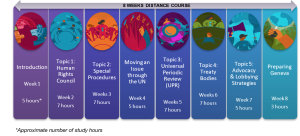
Sixteen activists completed the 2025 Human Rights Defender Advocacy Programme in Geneva to strengthen their advocacy skills. During the programme, they called for reforms to the UN human rights system, and helped secure the renewal of the expert mandate on sexual orientation and gender identity.

After two months of intensive online training, sixteen dedicated human rights defenders from across the globe came together to Geneva for the on-site part of ISHR’s 2025 Human Rights Defender Advocacy Programme (HRDAP25). Through learning, dialogue, and direct engagement with UN mechanisms, they strengthened their advocacy skills and built lasting connections with peers, UN experts, diplomats, and civil society allies. [see https://humanrightsdefenders.blog/2024/11/27/ishrs-training-for-human-rights-defenders-2025/]

Held from 9 to 20 June 2025, the on-site part of HRDAP25 took place during the 59th session of the UN Human Rights Council. The programme blended online learning with face-to-face sessions in Geneva. Defenders explored UN human rights mechanisms such as the Human Rights Council, Special Procedures, Universal Periodic Review, and Treaty Bodies. They practiced advocacy techniques, developed strategic roadmaps, and engaged directly with mechanisms to push for real change at home.

It was intensive but very good. The platform is so user friendly, everyone can learn and take time to revisit, consult, see examples, and ask questions. The possibility to have online sessions and work in groups was very useful for me. Elena Petrovska, LGBTI Equal Rights Association for Western Balkans and Turkey, North Macedonia

Participants came from a wide range of regions and contexts, including Colombia, Guatemala, Nigeria, Indonesia, Tunisia, Lebanon, Nepal, India, Uganda, Cameroon, Syria, North Macedonia, Tibet and Sierra Leone. Their work focuses on LGBTIQ+ rights, environmental justice, transitional justice, gender equality, protection of migrants, business and human rights, and the protection of communities at risk.

Each day was filled with learning opportunities, advocacy and reflection. In April and May, the group enjoyed online training and coaching sessions which were then built upon with a packed in-person programme that gave participants the background preparation needed to engage with the various mechanisms and relevant stakeholders while in Geneva. They applied and practiced the knowledge and skills gained in a few different ways, which included: an NGO breakfast with the High Commissioner for Human Rights, where participants could ask very detailed and pertinent questions about the current situation; a brown bag lunch with experts from the Committee on Civil and Political Rights, where the group received first person tips on how to submit information and engage with Treaty Bodies; and meetings with UN Special Procedures (Business and human rights, Climate Change, Enforced Disappearances, Extreme Poverty) and their staff, were participants could start personal relationships with those experts and share their advocacy journey and plans. 

Photo: ISHR

Defenders also participated in a powerful public side event about the reform of the UN human rights system. They shared lived experiences and challenges with over 30 States, calling for deeper access, stronger accountability, and genuine inclusion in the ongoing UN80 reform process. Laura Restrepo from Colombia reflected: ‘The UN must look inward and acknowledge its own colonial legacies — in who speaks, who decides, and whose knowledge counts. It must shift power toward grassroots and frontline communities.’

Throughout the programme, defenders stood up for key causes. Several participants joined the global campaign to #RenewIESOGI, advocating for the continuation of the UN mandate on Sexual Orientation and Gender Identity. Their voices contributed to a successful outcome: the Human Rights Council renewed the mandate for three more years, reaffirming its importance as a tool to combat discrimination and protect LGBTIQ+ communities. 

Photo: ISHR

The sense of care and community ran deep. HRDAP helped participants’ work grounded in the values of solidarity and justice, and built their confidence to keep advocating at all levels. HRDAP25 not only provided skills and relevant exposure but also created a space for collaboration and resilience. Speaking during the public side event on UN reform, Pooja Patel, ISHR’s Deputy Executive Director, reminded States: ‘Human rights defenders are not only on the front lines of crises, they are on the front lines of solutions.’

https://ishr.ch/latest-updates/16-defenders-participated-in-ishrs-flagship-training-to-advocate-influence-and-build-power-at-the-un

Human rights defender story: Judith Maroy, from the Democratic Republic of the Congo

July 16, 2025

What we need first is peace. (…) The international community, the UN, has the ability to end what’s happening in eastern RDC – what is happening today in the East is truly alarming.’

Judith Maroy is a Congolese journalist and human rights defender from Bukavu, in the South Kivu province of the Democratic Republic of the Congo.

Judith began her advocacy work through LUCHA, a youth-led citizen movement demanding social justice, democratic governance, and equality. She later became a journalist with La Prunelle RDC and co-founded a local organisation advocating for the rights of women, youth, and Indigenous communities.

She is calling for a just, peaceful Congo where young people have opportunities, women’s voices are heard, and no one is displaced in their own country.

https://ishr.ch/defender-stories/human-rights-defender-story-judith-maroy-from-the-democratic-republic-of-the-congo