Drivetime on RTE Radio of 13 March 2026 carries an interview with Mary Lawlor the departing UN Special Rapporteur on Human Rights Defenders about her work as a human rights activists.
Jawad Fairooz is a Bahraini human rights defender, Founder of OMCT’s SOS-Torture Network member organisation SALAM for Democracy and Human Rights. He is also a former Member of the Bahraini Council of Representatives, currently living in exile after years of persecution by the authorities, including detention, torture, and the revocation of his nationality. In Bahrain, severe restrictions on civic space persist alongside widespread impunity and ongoing allegations of torture. As the UN Committee Against Torture reviews Bahrain’s record, Jawad Fairooz reflects on the human rights climate in the country, the personal cost of his advocacy, and the urgent need for accountability, drawing on his experience and the findings highlighted by OMCT and partners’ Global Torture Index.Since the crackdown on the Arab Spring protests in 2011, Bahrain has been marked by grave human rights violations. .. More than 435 people have had their nationality revoked [see also: https://humanrightsdefenders.blog/2018/02/25/i-am-bahraini-website-launched-in-effort-to-stop-denationalizations/], and over 300 prisoners of conscience remain behind bars, including opposition leaders. Freedom of speech and assembly are criminalised, torture has not been systematically banned, and political and civil rights continue to be restricted. The core violations that began years ago are still continuing today.
What has been the cost of your advocacy in Bahrain?
From the moment I became active in public life, I knew there would be a high price to pay. In 2004, while leading a large protest against the US invasion of Iraq, I was shot in the head with a live bullet. Since then, I have been targeted repeatedly through detention, torture, and eventually the revocation of my nationality.
The Global Torture Index classifies Bahrain as facing a “very high risk” of torture. Why?
Torture is not taken seriously by the authorities. There are no accountability and no clear mechanism to hold senior officials responsible. Victims are denied remedies, redress, and rehabilitation. Even after release, former detainees struggle to regain basic civil and political rights. They face obstacles in obtaining employment, housing, and other services. International recommendations from bodies such as the UN Committee Against Torture have not been implemented. There have been no meaningful legal amendments to fully prohibit torture or establish independent investigations. Semi-government institutions lack independence and cannot be trusted to address these abuses. All of this shows a clear lack of political will.
What are the main obstacles facing survivors of torture when seeking justice?
The government focuses on public relations rather than real reform. Institutions like the National Institution for Human Rights, the Special Investigation Unit, and other bodies exist, but they are not independent. Cases referred to them rarely result in accountability or fair trials. Victims consistently report that justice is denied. Torture has evolved from overt physical abuse to psychological and “soft” methods, including deprivation of rights, travel bans, revocation of nationality, deportation, and denial of documents and services. These practices show that torture continues in different forms, and the authorities are not serious about ending it at its roots…
You have been in exile. How do defenders continue their work despite reprisals?
Human rights defenders in exile pay a heavy price. Many are banned from entering Bahrain or face fabricated cases, Interpol notices, travel restrictions, and harassment of their families. Smear campaigns label activists as terrorists or foreign agents. Despite this, defenders continue out of belief in the cause and responsibility toward victims. It is extremely difficult, but repression cannot last forever, especially under international scrutiny.
What gives you hope to continue your work?
Silence only strengthens repression. The resilience of victims and their families gives me hope. Standing with them is a moral and spiritual duty. I believe oppression has a short life, and that by continuing this work, we help ensure that future generations do not inherit a reality of torture, executions, statelessness, and detention.
On 23 April, 2025 OMCT made public this interview with Armel Niyongere, exiled Burundian lawyer and Secretary General of SOS-Torture Burundi, a member of the World Organization Against Torture (OMCT) SOS-Torture network. He continues to denounce human rights violations in his home country. Despite 10 years of threats and intimidation from the authorities, Mr. Niyongere continues his fight to promote and protect human rights. In this interview he talks about the difficulties of exile, the challenges facing those who defend human rights, and the role of the international community.
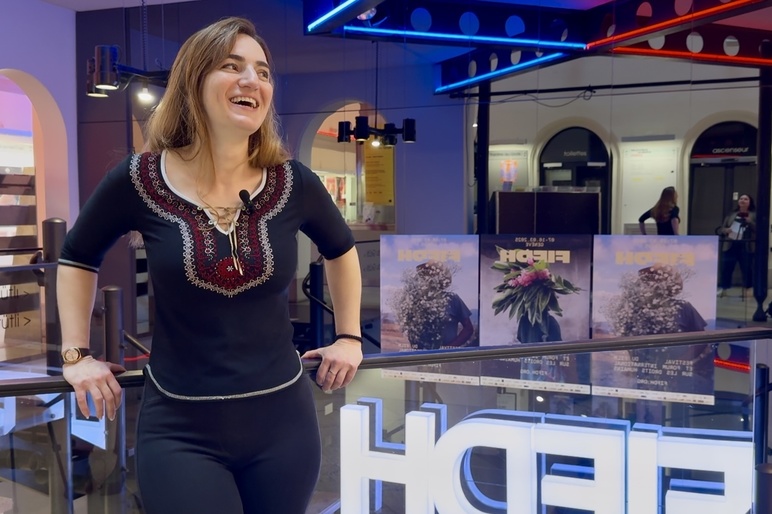
Born in Damascus, Syria, Lina is a filmmaker, journalist, and human rights defender, who in 2011 decided to pick up her camera and start filming, without a plan, but with the knowledge that she has a story to tell. What ensued are five years of conflict, arbitrary arrests, as well as torture and ill-treatment in detention, but also of hope that things would get better, despite a veto. Five Seasons of Revolution was recently screened at the International Film Festival and Forum on Human Rights in Geneva, in an event co-hosted by OMCT, partner of the festival. In this interview, Lina tells us more about her process and the challenges she encountered in the making of the film, as well as her hopes for the future of Syria.
What made you decide to start filming?
We started shooting in the summer of 2011, and a lot was already happening in Syria, but it was not clear how things were going to go. I was optimistic, thinking it would be over in six months, maybe a year, with a release within two years. It took 12 years.
It took more than five years of filming, and then many more to edit, because the country hadn’t stabilised, and the characters’ decision to participate in the film shifted with every new development, for their own safety. We had to go back, take characters out, then put them back in, and make amendments to the storyline. But it wasn’t all negative. During this time, deepfake technology improved and gave us a solution for the anonymity issue of some of the characters who chose to stay in Syria in a way that is safe and does not interfere with the visual narrative.
What was the most challenging part about the filming process?
Not knowing where it’s heading. As a filmmaker, you have, even in documentaries, a rough script, or an idea of where you are heading, but we couldn’t. It was like surfing, we just had to keep up with weird twists and turns. At some point, there were so many arrests in the group that I was filming, the characters just kept going in and out of jail, and at any given moment, we would lose one of them. I was arrested several times and the rest of the film crew had to come up with plan Bs for ‘what if we lose the director, who also happens to be the camera person and the sole contact to all the other characters, how do we finish the film?’ There was even one editing session that was held in my absence because I was detained, and they didn’t know when I would be released. It was really challenging.
What was the most challenging part about having to change your identity several times throughout filming?
It was very confusing, but it was also very necessary. In order to make it work, you have to internalise it to a certain extent, which was challenging. This confuses your relationships with the people you’re working with, with the people you’re socialising with, with the people that trust you, despite only knowing your fake name. Very strong bonds are formed under extremely difficult conditions and something always felt wrong about not being able to be fully honest with people. it also created these compartments of who I am because different parts of me had different names in different places… and they didn’t always get along. Walking out of it was also a challenge. Normalising being one person and only using one name, only answering to one name. It was quite a journey.
Towards the end of the documentary, you talk about your experience with your arrest. Did what you experienced in custody change your approach to the film, or your activism?
I did not encounter anything during my arrest that I did not previously know exists and happens. What was detrimental was the repetition of detentions because you know you might get away with it once, maybe twice, if you’re lucky three times. But when I was released for the third time, I realised I did not know anybody that survived a fourth arrest. I felt like a cat with seven lives and I was really running out of them. I think this affected not only my decision-making in the film, but decision-making in my life in general, which obviously had consequences.
What are three things you hope people remember after watching your film?
Number one is that simplistic reductionist scenarios of war into black and white, good and bad are never true. Number two is that nobody has a blueprint for what to do in these cases. People improvise, people try to find solutions on the spot under pressure, and these are not always ideal. But also, people can be much braver than they think, because at the end of the day we are survivors, all of us, and there is a lot more to us than we sometimes give ourselves credit for. And number three, friendship is really important.
You are a filmmaker, but also a human rights defender. What are your hopes now for Syria and its people?
I hope people will be able to recover. I hope people will be given a break, given a chance to process everything they went through, given a bit of time to find a way out of this gigantic mess. It will take generations to rebuild the country. I understand that people have endured so much for so long that they cannot take one more day of it, so there is understandably also a lot of emotions. I just hope that we have the ability to open our hearts a bit more, understand each other a bit more and that people will in return give us the chance to process everything….
Nonhlanhla Dlamini heads SWAGAA – the Swatini Action Group Against Abuse, a local Eswatini organisation whose primary focus is on ending gender-based violence in the country. Since 1990, SWAGAA has provided care, support, prevention, and access to justice for victims and survivors of gender-based violence, by working with community leaders, community members, and the Government, as well as providing counselling for GBV victims. For the International Day for Women Human Rights Defenders, Dlamini answers questions about GBV, her inspirations and why it was necessary for her to become one of the first women elected as a member of parliament in Eswatini.
1. What was that specific inspiring moment or experience that made you decide to focus on gender-based violence?
What actually motivated me was an incident where a relative of mine was raped at the age of six by a stranger. We didn’t find the person. SWAGAA already existed, but I didn’t know anything about them. Then in 1997, I saw an advertisement [for SWAGAA] in the newspaper. And when I learned about what they were doing, I asked myself why I didn’t know about the organization when I had this problem because I had no one to talk to. I had no one to support me. We reported the matter to the police, but nothing ever happened. We’re so frustrated. So, when I saw the position, I just knew this was my job. And my objective was, I want people to know about SWAGAA. I wanted SWAGAA to be a household name.
2. How do you stay motivated and have you ever questioned your journey?
I have several times, particularly when I get hurt, because, you know, sometimes this world can be very cruel. And I ask myself, how could people do such an evil thing? I do get depressed. And when I’m very depressed, I’m like, you know, out of all the jobs that I could be doing, why am I even doing this job? Then I get some motivation with some of the success stories. If I quit, who else is going to do it? I kind of feel I’m compelled to do it because there’s a whole lot of people that are looking up to me for help. So, I continue.
3. You were elected MP back in the early 2000s, the first woman ever for your constituency. What made you decide you had to run?
… The mistake that we make as advocates and women’s rights activists is that we’re always pushing for others to go and make the change that we want to see. So, I made a decision; I was going to stand for the next elections, which were in 2008. I realized that for years, I’ve been part of a vote for a woman campaign, pushing women to stand for elections. But I’ve never thought of myself one day running for elections. I ran the race to Parliament. I was nominated. I was widely supported. I won the primary elections. It was easy for the primary elections, but the secondary elections were not easy. And I was the only woman against seven men. It was very rough. It was very testing. But I pushed with everything that I had. And I won the elections, and I became a member of Parliament. And the first motion that I moved in Parliament, was that the Minister of Justice bring the sexual offenses and domestic violence bill within 30 days. And his response was no. I kept asking, and that is how the bill was finally seen by Parliament.
4. Let’s look to the future. If you could change one thing about the situation of gender-based violence in Eswatini, what would it be?
The most critical thing is prevention. Prevention, prevention, because once it happens, it’s difficult to pick up the pieces. …
5. Do you consider yourself a woman human rights defender? Why?
Of course I do, 100 percent. I consider myself a human rights defender because due to the nature of the work that I’m doing, I am continuously standing up for the rights of women and girls in Eswatini. And I have advocated for better legislation in the country. I have advocated for better services in the country, be it in the police, be it in the hospitals, be it in the justice system. I have done everything that I think needs to be done under the sun to make sure that I stand for the rights of the citizens of this country. And I’m saying this because I also know people believe in me. I’ve done all I possibly can to advocate for the rights of women and children in the country.
Meet Joey Siu, a Human Rights Foundation (HRF) Freedom Fellow and Hong Kong activist based in Washington, D.C. Siu played a vital role in Hong Kong’s 2019 pro-democracy protests, co-founding a student advocacy coalition and organizing city-wide demonstrations. After fleeing Hong Kong in 2020, Siu served as an advisor to the Inter-Parliamentary Alliance on China and a policy advisor to Hong Kong Watch. Siu is currently an Asia Pacific coordinator for the World Liberty Congress, an advisor to the Athenai Institute, and oversees the Hong Kong program at the National Democratic Institute.
In exile, Siu remains a dedicated advocate for Hong Kongers, Tibetans, Uyghurs, and other communities oppressed by the Chinese Communist Party (CCP). Learn more about her activism in the exclusive interview below.
Q: Tell us a little bit about yourself and your current projects.
A: I am a human rights activist from Hong Kong (HK). Back in 2019, when the pro-democracy movement in Hong Kong first started, I was one of the student leaders who led many of the on-campus activities and city-wide protests and demonstrations. In 2019, I also co-founded a student coalition with other student activists in HK to solidify international advocacy efforts for HK. I was forced to flee HK in late 2020 and settled in Washington, D.C. Since then, my efforts have been focused on international advocacy for HK’s democratic freedoms overseas.
I am establishing a regional activist network for women advocates to connect, amplify, and empower one another and to elevate women leaders in this space. Beyond that, I am very active in the HK diaspora community and working to foster cross-movement solidarity with other communities under the repression of the Chinese Communist Party (CCP).
Q: How do you feel about the bounty HK authorities placed on your head?
A: On Dec. 13, I woke up to the news that HK authorities issued an arrest warrant and a $1 million HK bounty on me. Ever since I fled, I knew this could happen given the Chinese and HK authorities’ efforts to silence dissent, not just from those in HK but from those in exile. But this bounty is like a death certification — I can really never go back. I was overwhelmed by the news and the actions I’ve had to take to step up my personal security.
I — and the 12 others with bounties on their heads — saw this coming. They issued the bounty to threaten us, to deter us from continuing our advocacy, to scare us, and to really intimidate us. But that will not work on me. I will not stop; I will continue my advocacy until I can return to HK.
Q: What tactics does the Chinese regime employ to suppress activists like yourself?
A: The overseas communities have lobbied for international attention on China and HK and all of the human rights atrocities committed by the CCP. That is why the CCP is trying so hard to silence us.
Over the past few years, the CCP and the HK authorities have stepped up their transnational repression. We’ve witnessed a wide variety of tactics employed by the CCP, from holding our loved ones back home as hostages to infiltrating our communities, setting up secret police stations all across the world, including in the United States, to coercing different stakeholders and industries to spy on their behalf.
These tactics have not been used just against Chinese and Hong Kongers but also against Uyghurs and Tibetans. And we’ve seen other authoritarian regimes copying the CCP’s tactics, including Russia, Iran, and Belarus. In fact, these regimes are working hand-in-hand to silence dissent overseas.
Q: Should democracies be paying more attention?
A: I want to stress that the impact of transnational repression extends beyond the activists. Beyond spying on dissidents overseas, tactics include economic coercion, brainwashing, and education through Confucius institutes in American universities and colleges. Those tactics impact every individual living in a democracy.
Democracies all across the world should pay attention to this and take concrete steps to combat transnational repression on their soil and in other democracies. Securing the safety and security of dissidents like me is an essential step to allowing us to have the freedom to continue speaking up and to continue confronting authoritarianism.
Q: How has the Freedom Fellowship supported you in your work?
A: The Fellowship allowed me to meet activists from communities I otherwise would not have been in touch with as actively or frequently. In my cohort, I met activists from Bolivia, Cuba, Myanmar, Morocco, Egypt, and more. I got to talk with them and learn the tactics they’ve used to overcome challenges and unite their communities. Fostering relationships and strategizing on campaigns together was the most valuable experience for me.
Building that cross-community solidarity is essential. We see dictators working together and it is of the utmost importance that we, human rights activists, are working together. Democratic backsliding is not an issue faced by one community alone; it is an issue faced by all communities under oppression.
Q: What have you recently been doing? What do you hope to achieve in 2024?
A: After the news about the HK bounty broke, I had several meetings with US congressional offices. I met with the House Foreign Affairs Committee, Chairman Mike Gallagher of the House Select Committee on the Chinese Communist Party, and Sen. Jennifer Sullivan. Hopefully, these meetings will lead to legislation to combat transnational repression, but we require a coordinated and bipartisan effort in Congress. I hope to see something like the Transnational Repression Policy Act advanced and adopted in this Congress.
With the ongoing reports of the bounty on me and other activists, Jimmy Lai’s case, and the upcoming sentencing of the 47 activists in HK, we can hopefully take advantage of the momentum. We can push the US government and other democracies to take action.
Additionally, during the 2023 Freedom Fellowship retreat, I came up with the idea of the regional women’s network. In the upcoming months, I want to turn this idea into something concrete—start inviting people to be founding members and board members, start the registration process, and establish a financial foundation and fundraising plan.
Meet HRF Freedom Fellow Volya Vysotskaia, a Belarusian human rights activist who exposes repression and torture by state officials.
Vysotskaia is currently part of the 2022 Freedom Fellowship, a programme of the Human Rights Foundation, a one-year program that provides hands-on, expert mentorship across seven critical areas: leadership, movement-building, organizing, fundraising, media, mental health, and digital security.
On September 27, the Investigative Committee of the Republic of Belarus announced that five people would be tried in absentia — Vysotskaia is one of them. She has since been denied information about the trial, and her request to appear virtually was rejected. Should she return to Belarus, a country where torture and inhuman treatment is routine, officials will likely detain her.
Learn more about Vysotskaia’s case.
Q: Can you tell us about your activism protecting democracy in Belarus?
A: From August 2020 to October 2021, I was an editor of the Telegram channel, the “Black Book of Belarus.” Our work “de-anonymized” or identified law enforcement officers and other government authorities who committed human rights violations, hiding behind their high-power statuses. We published the pictures and personal data of riot police officers, prosecutors, judges, and other officials to hold them accountable for their repression of Belarusian citizens demanding democracy and freedom.
Q: What led to the criminalization of the Black Book of Belarus’ editors and readers?
A: In October 2020, a special service agent infiltrated our team and leaked information about members. Previously, he was part of the special operation that hijacked a Ryanair flight in May 2021 to imprison Sofia Sapega, another team member. After we uncovered the agent, my team and I were chased down in Vilnius, and dozens of people in the Telegram group were also imprisoned.
Q: What is unique about your criminal case?
A: The case brought against my four colleagues and me is the first trial in absentia in the country’s history. We have been accused of “exasperation of enmity” and “social disagreement,” as well as illegal actions relating to private life and personal data. The Belarusian KGB has also added us to the list of individuals engaging in “extremist activities.” Belarusian courts recognize almost all civil society organizations as extremists, but we will be the first to be tried and sentenced without the opportunity to defend ourselves.
Belarusian authorities are undoubtedly denying us the right to a fair trial. Notably, I was denied access to information about my criminal case, and I never met the lawyer assigned to me, nor did the lawyer ever respond to my calls.
Q: What is the scope of legal harassment against Belarusian pro-democracy activists in exile?
A: The Lukashenko government changed the criminal procedural law back in July and invented a special proceeding for trying in absentia those who are engaged in “anti-state activities,” and living in exile. The addendum of this new procedural law provides that defendants are no longer aware of the content of their cases. It is sufficient for the legislative body to post this information on official websites, which clearly violates Article 14 of the International Covenant on Civil and Political Rights (ICCPR).
Q: What should the international community learn from your case?
A: The violations of the right to a fair trial, among other rights, didn’t start in Belarus with our case. It just brings back the attention of the international community to the fact that the repressions in Belarus haven’t stopped. They continue every day. The power, the judicial system, and the independence of Belarus with Lukashenko are fake. The regime represses and scares the Belarusians inside the country, and while the international community doesn’t react to the severe violations of human rights, the regime spreads its attention to those living in exile. Because silence allows them to do that.
The international community has to learn that there have to be efficient mechanisms for bringing perpetrators to trial until they destroy whole nations, as well as to guarantee the defense for the victims of violations. International justice can’t be built on the international ignorance of injustice. Being concerned doesn’t stop dictators.Repression in Belarus. HRF condemns the actions of Alexander Lukashenko’s regime and stands with Volya and all Belarusians who speak truth to power, even when their lives are at risk
The Freedom Fellowship is a one-year program that gives human rights advocates, social entrepreneurs, and nonprofit leaders from challenging political environments the opportunity to increase the impact of their work. Through mentorship and hands-on training sessions, fellows develop critical skills and join a growing community of human rights activists.
What inspires change and drives activism? Can anyone become a change-maker? These were questions we asked back in December, when 2021 Laureates Marthe Wandou, Vladimir Slivyak, Freda Huson and Legal Initiative for Forest and Environment came to Stockholm to be presented with the Right Livelihood Award. [See also: https://humanrightsdefenders.blog/2021/10/04/2021-laureates-of-the-right-livelihood-award/]
All four Laureates have succeeded in mobilising grassroots action and community-based models for change, so in an effort to learn more, we invited US journalist Dara Lind to sit down with them individually and take a deep dive into their stories. We are now happy to present “How to Mobilise Change”, a series of in-depth conversations in which we not only get to know the Laureates better and learn about what prompted them to take action but can also learn about how sustainable change can be achieved – based on their strategies and methods of action. Throughout the spring, we are releasing the recordings one by one. The series starts this week with the release of Cameroonian Laureate Marthe Wandou’s interview and a week of action to support children’s rights.
Ron Deibert is director of the Citizen Lab at the University of Toronto’s Munk School of Global Affairs. (Courtesy of Ron Deibert)
On 25 May 2021 Nathaniel Basen for TVO.org spoke with professor Ron Deibert about internet censorship, espionage, and getting threats from authoritarian regimes. It is a long but rich interview: In 2001, Ron Deibert, a professor at the University of Toronto, founded Citizen Lab to help understand and track the spread of digital human-rights abuses around the world.
In the 20 years since, the interdisciplinary lab has made headlines for protecting journalists and human-rights defenders from digital attacks; one of its researchers helped identify members of the group that attacked the United States Capitol earlier this year.
TVO.org: Let’s start at the beginning. How and why did Citizen Lab start, and what did it look like at the time?
Ron Deibert: Back in the late 1990s, I was doing what I would consider to be conventional academic research — the lone professor studying a topic. A lot of desktop research. A student was taking a course of mine proposed doing a paper where he would explore censorship in China. This was a new topic back then — there was not any evidence really that China was censoring the internet — but people assumed they would, and there was a lot of uncertainty about what was going on there.
He was kind of a self-taught hacker, and he put together this research paper where he connected to computers in China using some proxy servers and started comparing the results he got to what he could see here in Canada, doing it very systematically. It opened my eyes to the ways in which methods from computer science and engineering science — technical interrogation tools and techniques — could be used to surface real primary evidence about what’s going on beneath the surface of the internet around information control. Especially what governments, and also private companies, are doing that isn’t in the public domain. No one was really doing that at the time, and a lightbulb went on, where I realized that this is a really powerful way of surfacing primary evidence and data in a way that really no one else was doing.
So I put together a prospectus for a lab that would be interdisciplinary, that would bring together people who have these skills to work systematically on uncovering information-control practices and look at surveillance and censorship and information warfare, from the standpoint of risks to citizens from a human-rights perspective. I was very fortunate at the time to get support from the Ford Foundation — I got a grant from them in 2001 — and I put the proposal together for the Citizen Lab from that.
TVO.org: And at the time you were in a pretty small basement lab.
Deibert: Actually, it was my office in political science where it all got started. When I got the grant, the Munk Centre was just being established, and the building at Devonshire [at the University of Toronto] was under construction. I went over to that building and scoped out what I thought would be a room that no one else would want, to increase my chance of getting approval. I found this space, and I went to Janice Stein, the director, and said, “Hey, I’ve got this grant. I’ve got this idea. I need some space.” And she said, “Okay, you can have it.”
So she supported the idea and took a risk. Space is a very valuable asset on campus. And even though it sounds less glamorous, we were really happy to have that room.
After 10 years, we moved to the new Munk building, the observatory, where we’re located now, and that was really great, because we needed more space. Security is not perfect — where we are there are lots of problems — but it is much better than it was in the old building, where people would just wander in and could easily locate us. Now we’re wrapped behind several layers of access control…..
TVO.org: Let’s talk a little bit about your process. How does Citizen Lab decide what to look into next?
Deibert: It’s a combination of factors. First and foremost, we are looking at the topic, at the domain, broadly speaking, which for us is global in scope. We don’t have a particular regional focus. We’re looking at risks to human rights that arise out of information technology: that’s the broadest possible definition of what we do.
That also limits our selection of cases that we want to examine. We assume that, however problematic cybersecurity is for big banks or government, they have resources — they can go hire a private company. But journalists, human-rights defenders, people living in the global south who are human-rights defenders and are advocating for policy change, they really lack capacity. So we put our effort into identifying cases that present the highest risk to human rights and, ideally, affect the most vulnerable parts of the population.
We divide our work systematically. So there are certain teams that we organize around, though there’s a bit of overlap. It’s fluid, but we have some teams that are more interested in applying network-measurement techniques to uncovering internet censorship, let’s say, and that’s probably the area where we’ve doing the most work for the longest time. Then there’s what we call the targeted-threats group, which is really the most serious stuff around espionage, and it certainly has the highest risk and has gotten us in the crosshairs of some bad actors, to such an extent that we’ve now become a target. We also apply non-technical methods in an interdisciplinary way — we have people who are trained in law and policy. So we’ve done a lot of work around legislation of analyzing national security laws and practices in Canada.
I would say how things are chosen depends on the opportunities that come up. We may hear about something, some preliminary evidence, perhaps a journalist tips us off or a victim comes forward. Or the team itself decides, hey, this is something we should look into. A good example of that is Zoom. We knew about Zoom: it was a kind of obscure business, networking-communications platform, until the pandemic hit. Suddenly, everyone was on Zoom. So our researchers got together and said, “Hey, we better take a look at this” and indeed uncovered some highly problematic security and privacy issues.
TVO.org: Your work with Zoom is a good example of getting immediate results from your work. If I’m correct, after a public outcry, Zoom cleaned up a lot of what you found. How does that feel to have an immediate impact on the world in that way?
Deibert: It’s actually super-rewarding in a number of ways. First of all, there’s the gratification to get the message out. Ultimately, we see ourselves as a university-based watchdog group, so if you can publish something and the next day everybody’s reading about it because it’s on the front page of the New York Times? That’s phenomenal. We’ve been actually really fortunate to have high-profile coverage for our research. I think we’ve had, like, close to 30 front-page stories in the New York Times, the Washington Post, other global media, the Financial Times, about different reports of ours over the last 20 years.
Going further, ultimately, we don’t just want to get attention for what we’re doing — we want to see some change. So there have been so many cases now where we’ve seen consequences, actions taken, policy changes, or advocacy campaigns started as a result of the work that we’ve done.
Probably the biggest one was back in 2016, when we investigated a targeted espionage attack against a human-rights defender in the United Arab Emirates. He shared with us an SMS message that was tainted with malware that the UAE government was using to try to hack his phone, and when we reverse-engineered it, that malware infected our own device, our own iPhone. We realized that it was so sophisticated and involved what were then three software flaws in the Apple operating system, that even Apple itself didn’t know about. We did a responsible disclosure to them and, within two weeks, they pushed out a patch that affected directly the security of more than 1 billion people. So, to be able to say, “Hey, we were responsible for that” is, I think, quite an accomplishment.
TVO.org: On the flip side, there are people that don’t like the work you do. What has it been like for you to become a target? I can’t imagine when you started this thing that you pictured yourself coming under threat.
Deibert: Well, first of all, you’re right. I grew up studying world politics as something out there, and I’m a spectator. There were a couple of instances before this, but, really, when we published the GhostNet report in 2009, which was the first public-evidence-based report on cyber espionage, it was the one that involved the hacking of the office of His Holiness the Dalai Lama, and we uncovered this massive Chinese espionage operation.
It suddenly dawned on me, okay, we’ve gone from kind of just observing and recording to becoming a factor, because very quickly thereafter, we had all sorts of inquiries and veiled threats and concerns about physical security. From that point on, from 2009 to today, they’ve really only amplified. The worst is probably when we were targeted by Black Cube, the same private-intelligence firm made up of ex-Mossad agents that notoriously went after the accusers of Harvey Weinstein. Now, that’s really frightening to be in their crosshairs. We ended up actually exposing that operation, but to know that something like that is going on, frankly, is very disturbing. It really forces you to change your behaviour, think about practical issues: when you’re travelling, hotels, getting into elevators, who’s accessing the same building as you.
At the same time, though, I think it’s a mark of success. If we’re not successful, those people wouldn’t care. It’s just something you have to factor into your risk calculation and take all the precautions, and we’re most concerned about the risks to the subjects of our research. Frankly, we go to extraordinary lengths to protect the security in terms of the data we handle, how we interact with them and interview them. But, yeah, it’s just constant. Actually, every day there’s something, ranging from people who, unfortunately, maybe are mentally disturbed, and they read about us and want to visit us, all the way to, you know, the world’s worst authoritarian regimes that are trying to threaten us.
TVO.org: A lot of this work is global in nature, but some Ontarians might be surprised to know a lot of it is quite local. I’m thinking about your work with internet-filtering technology and Waterloo-based Netsweeper. What makes filtering technology so important, and what was Netsweeper up to?
Deibert: As the internet evolves, there are all sorts of reasons why people want to control access to certain content online — beginning, I would say, with schools and libraries. There are legitimate concerns among parents and teachers that children have access to pornography or other types of content. Service providers like Netsweeper fill the market niche, providing filtering technology to those clients.
But, very quickly, there grew a need among governments — national-level internet censorship. In the beginning, like I talked about with the Chinese, it was very rare in the 1990s or 2000s. I could count on one hand the number of governments that were doing this sort of thing. Now, it’s routine, and it’s big business. So with a company like Netsweeper, for us, it was, frankly, a no-brainer to zero in on it, and not even because they’re based in our own backyard. There’s certainly a motivating factor there because we’re Canadians, and we want to make sure that, as best we can, we identify businesses operating out of Canada to see if they’re in compliance with Canadian law or Canadian values. Here, we had a company that seemed to be not just kind of stumbling into selling internet-censorship services to some of the world’s worst violators of human rights, but actively courting them.
They were showing up all over the world, especially in the Middle East. The Middle East is where Netsweeper really profited from selling internet-censorship services to governments that routinely violate human rights and block access to content that would be considered protected legally here in Canada. And they were also doing this in a non-transparent way.
This is not something they openly advertised, and yet we knew, from our research and technical investigation, we could identify basically unquestionable proof that their technology was being used to filter access to content that would be legally protected here in Canada, in places like Bahrain and Yemen and in the Gulf.
So we did a report about Netsweeper’s technology in Yemen, and at this time, the main telco, YemenNet, was controlled by Houthi rebels, and of course there’s an ongoing civil war, which at that time was really quite intense. We simply documented that Netsweeper’s technology was being used to actually block the entire Israeli top-level domain — the only time we’d ever seen that in the world, with the exception of Iran.
We published this report, and we mentioned in the commentary around it that, in providing services to one participant in an armed conflict, who is censoring information, including information related to international news, they’re effectively inserting themselves in an armed conflict, and it raises all sorts of ethical, moral, and potentially even legal issues. Netsweeper sued me and the University of Toronto for defamation for over $3 million. Of course, we thought that was entirely baseless, and six months later, they simply withdrew the suit.
Coincidentally, their suit came shortly before the Ontario government passed anti-SLAPP legislation to prevent lawsuits that chill free expression, which in our opinion, is very much what it is, because as we were going through the litigation, we couldn’t report on Netsweeper. After the lawsuit was dropped, we then published several subsequent reports on Netsweeper…..
TVO.org: In your 20 years, what is the work you’re most proud of?
Deibert: What I’m most proud of is the staff. I’d say a skill that I have is, I think I would make a good NHL scout or a band manager. I have the ability, for what it’s worth, to identify talented people and give them the support they need. So there’s not a particular report that I’m proud of; I’m most proud of the people who work at the lab. I’m so fortunate to be surrounded by these extremely talented, ethical, dedicated people, most of whom have been with me for over 10 years. It’s rare to have that in a small university. And that’s what I’m most proud of.
TVO.org: The lab itself, as we talked about a little bit, is somewhat unique: you’re working outside of government or corporations and working in the interest of human rights. Others around the world have taken note of your model. Do you hope to export it?
Deibert: It’s beginning to be surprising to me that there aren’t more Citizen Lab–like organizations at other universities. To me, this is a field with such endless opportunity. There’s so much unfortunate malfeasance going on in the digital world.
And, yet, you have these extremely powerful methods and techniques, as we’ve demonstrated, that, by way of analogy, act like an X-ray on the abuse of power. That’s the way I think about it. It’s astonishing.
Sometimes I sit back and shake my head. A lot of the stuff we don’t even publish. It’s remarkable what you can see when you use these very precise, careful methods to uncover and track abuses of power. Why haven’t other university professors jumped on this and tried to mimic it? I don’t really know. I suppose there’s no one answer. There are risks involved with it, and it’s actually not easy to cross disciplinary boundaries.
So I think that we’re helping to build the field, at least I hope, and you’re right that there are a few other places where I’m seeing either professors or, in some cases, human-rights organizations, attempting to build something like this. That is fantastic. That’s really where my effort and the next phase of my career is, around really field-building by promoting that model and hoping that others build up centres like the Citizen Lab at other universities, while also ensuring the sustainability of the lab.
This is a bit “inside university,” but the reality is, as the only professor in the lab, I’m the weakest link. So if something happens to me, the lab would really fall apart. Not because I’m the wizard directing everything — purely because I’m the responsible principal investigator for the grant, and you need that at a university. What I hope to do is ensure the sustainability of the lab outside of me, and that means recruiting other professors to the lab. We’re actively fundraising to do that and to try to get more tenure-track positions connected to the lab so that it can continue once I move on.
TVO.org: And what will the next 20 years hold for the lab itself?
Deibert: Hopefully, we ‘ll be able to continue. We know we have the support from the University of Toronto; they’ve been incredible in a number of ways. We live in a time when big university bureaucracies are criticized, sometimes rightfully so — I’ve been critical of my own university in various areas. But one thing I can say, they have been so supportive of work that we do in a variety of real practical ways, including legal support.
I just want the lab to not be something that is tied to one profession. I want it to continue and to duplicate what we do globally. If we had 25 Citizen Labs sprinkled around the planet, it would be better for human rights overall, because there would at least be another protective layer, if you will, of dogged researchers who aren’t afraid to uncover abuses of power, no matter where they are.


 Hans Thoolen on Human Rights Defenders and their awards