On 28 March 2016 the New York based Human Rights Foundation strongly condemned the convictions and sentences handed down by a court in Angola against a group of 17 youth activists for reading a book that advocates nonviolent resistance to dictatorship. The court declared the activists — including prominent Angolan rapper Luaty Beirão — guilty of “rebellion against the president” and “planning a coup,” sentencing them to prison terms that range from two to eight years. Beirao, also known by his stage name Ikonoklasta, has been an outspoken critic of the government, calling for a fairer distribution of the southern African state’s oil wealth. His term is five-and-a-half years.
All the attention is on Turkey as the country where refugees will have to be processed. The more the question of fair trial becomes important. The following does not bode well:
In the early morning of 16 March 2016, police raided the houses of 9 lawyers in Istanbul, Turkey. After the search, lawyers Ramazan Demir, İrfan Arasan, Ayşe Acinikli, Hüseyin Boğatekin, Şefik Çelik, Adem Çalışçı, Ayşe Başar, Tamer Doğan and Mustafa Rüzgar were taken into custody. They are all members of the Libertarian Lawyers Association ÖHD). There has not been given any justification for these arrests and searches. The case file on the arrests is confidential. Allegedly the lawyers are arrested on suspicion of having ties with a terrorist organization. All the lawyers that were arrested represent the 46 lawyers who were arrested in 2011 on suspicion of “working for, or belonging to, a terrorist organization”. A hearing in the trial against these lawyers took place only one day after the arrests (!), on 17 March 2016. The arrest of their lawyers means that they are deprived from their legal defense.
Lawyers for Lawyersand Fair Trial Watchare extremely worried about the state of the rule of law in Turkey, which is quickly deteriorating. They sent a letter to the Turkish authorities in which they urge them to:
– Immediately release lawyers and drop the criminal investigation;
– Abstain from identifying lawyers with their clients or their clients’ causes;
– Put an end to all forms of harassment against lawyers in Turkey;
– Guarantee in all circumstances that all lawyers in Turkey are able to carry out their legitimate activities without fear of reprisals, intimidation, threats and free of all restrictions. For more information see: http://www.advocatenvooradvocaten.nl/11446/turkey-police-raid-on-and-arrest-of-9-lawyers
Meanwhile on 11 February, 2016 the Human Rights Foundation drew attention to the case of journalists Can Dündar and Erdem Gül, and urges the government of Turkey to drop the arbitrary charges imposed on them. On November 26, Dündar, the editor-in-chief of the newspaper Cumhuriyet, and Gül, the Ankara bureau chief, were arrested based on a criminal complaint filed against them by President Recep Tayyip Erdogan. The complaint stems from a report published in Cumhuriyet on May 29, 2015 with photos and video footage claiming that Turkey’s National Intelligence Organization secretly armed Islamist rebel groups in Syria. The two journalists are being held at the high-security Silivri prison west of Istanbul. They are currently awaiting trial and facing up to life in prison.
Source: Vedat Arik/AP
“The rise of authoritarianism in Turkey is blatant. Erdogan’s government crackdown on independent journalists is a step towards exerting dictatorial control over Turkey’s media,” said HRF president Thor Halvorssen.
On 2 March 2016) South Korea’s legislature passed the North Korean Human Rights Act. The new law mandates the promotion of freedom in North Korea by funding North Korean defector and and refugee organizations, creating a North Korean human rights foundation, and establishing an archive of human rights violations perpetrated against the North Korean people by the Kim regime. The US-based Human Rights Foundation welcomed the Act as the NGO has advocated for such an action and in 2015 established the Global Coalition for the North Korean Human Rights Act.
“This is an astonishing moment. The Republic of Korea has taken its head out of the sand and has finally confronted the cruelty and horror of the North Korean dictatorship. It is a victory for all who support human rights and human dignity,” said HRF chairman Garry Kasparov.“We in the Global Coalition are delighted that the South Korean government will—for the first time ever—finance the defector organizations that send films, e-books, radio broadcasts, and educational materials to the North Korean people.”
The North Korean Human Rights Act also establishes a public campaign to raise awareness about North Korea’s human rights violations and takes steps to ensure that South Korean humanitarian aid is not misused by the Kim regime. The goal of establishing the human rights archive, inspired by the post-war German model, is to monitor and document the crimes of the North Korean dictatorship. It is vital to note that no such archive or record has ever existed in South Korea.
The law’s passage comes at a time when the rest of the world unanimously agrees on the extent and gravity of the crimes of the North Korean dictatorship. Earlier today, the U.N. Security Council voted 15-0 to toughen sanctions on the regime. “People inside the North will know about the law’s enactment and it will put considerable pressure on the political elite in Pyongyang,” said South Korean politician Kim Moon-soo, who first drafted the law in 2005.
For more information contact: Noemi Gonzalo-Bilbao, (212) 246-8486, noemi@hrf.org
Nicki Minaj and Jose Eduardo dos Santos. Photo illustration by Sofya Levina. Images by Frazer Harrison/Getty Images and Alexander Joe/Getty Images.
The Human Rights Foundation (through Thor Halvorssen and George Ayittey) is asking whether Nicki Minaj will “take the high road or a blood diamond paycheck“? On Saturday afternoon the American rapper Nicki Minaj will bring her award-winning talent to the Angolan capital of Luanda. It isn’t a world tour stop, but a special engagement at a “Christmas Festival” sponsored by Unitel, a telecommunications company controlled by Angola’s dictatorship.
The situation of human rights defenders in Angola is most precarious:
15 pro-democracy activists were detained in June 2015 and their trial started only after almost five months of arbitrary detention. The persons on trial include rapper (!) Henrique Luaty Beirão (a.k.a. Brigadeiro Mata-Frakuxz), Manuel Nito Alves, Nuno Alvaro Dala, Nelson Dibango Mendes Dos Santos, Alfonso Jojo Matias (a.k.a. Mbanza Hamza), Sedrick de Carvalho, Fernando António Tómas (a.k.a. Nicola Radical), Hitler Chiconda (a.k.a. Samussuku), Italiano Arante Kivuvu, Benedito Dali (a.k.a. Dito Dali), Albano Bingobingo (a.k.a. Albano Liberdade), José Gomes Hata (a.k.a. Cheik Hata), Inocénio De Brito (a.k.a. Drux), Domingos da Cruz as well as of Osvaldo Caholo. (Ms. Rosa Kusso Conde and Ms. Laurinda Manuel Gouveia are also facing the same charges, but are not detained. [The Angola 15 are youth activists arrested in June 2015 for discussing democratic reforms and peaceful protest. Most of them are known pro-democracy activists, who have been organizing peaceful protests often repressed by the authorities against the 35-year-regime of Angolan President Eduardo Dos Santos since 2011. On September 16, 2015, they were charged with “preparatory acts of rebellion” and “plotting against the President and other institutions”, both of which constitute crimes against the security of the Angolan State. Several experts and international institutions have called for their release, including the European Parliament and the UN Special Rapporteur on the situation of human rights defenders, Michel Forst.]
On 15 December 2015 the Luanda Provincial Tribunal approved the request of the Public Prosecutor to place the pro-democracy activists detained since June 2015 under house arrest as of December 18. According to a public statement made by the General Attorney, this decision precedes the entry into force on December 18, 2015, of a new legislation on preventive measures adopted in September 2015, aimed at reducing prison overcrowding and excessive pre-trial detentions – and thus not the result of international pressure!. “The decision to place the Angola 15 under house arrest is a positive step towards the recognition of their rights. The Angolan authorities must now end all forms of judicial harassment against the activists and put an end to their ordeal by immediately and unconditionally releasing them”, FIDH President Karim Lahidji said.
On 18 June 2015 the Observatory for the Protection of Human Rights Defenders condemned the sentencing of journalist Rafael Marques de Morais to a six month suspended jail term, despite an out of court settlement previously announced. [see also: https://thoolen.wordpress.com/tag/rafael-marques-de-morais/]
Interesting is also to note here how two quasi-NGOs (in the NGO world, called GONGOs – Governmental Non-Governmental Organizations – masquerading as protectors of the rights of the people while working as the mouthpiece for the government) tried to block a resolution by the NGO forum surrounding the session of the African Commission on Human and Peoples’ Rights in November 2015.
Health and holidays (in that order) have slowed down my blog production somewhat this summer, but perhaps this was a welcome break for many of my readers for reasons of holiday and health (in that order I hope). Anyway, during these summer months I read quite some instances of HRD repression related to countries involved in major ‘geo-political’ progress and I started wondering whether this is coincidental. Take the following three cases: Colombia, Iran and Cuba. Read the rest of this entry »
At the 2015 Oslo Freedom Forum, on 27 May 2015, Tunisian human rights defender Amira Yahyaoui talks about the global youth as an underrepresented force in many governments. She draws attention to the fact that while the world’s citizenry is increasingly young, the global leadership remains old. She criticizes the lack of representation of women and youth by reminding us that these so-called “minorities” are, in fact, majorities in the world population. If we don’t fix this problem, she argues, more and more young people will be driven to extremist groups like the Islamic State where they are given the opportunity to lead.
At the 2015 Oslo Freedom Forum on 26 May there was a clarifying talk by Twitter vice-president Colin Crowell about how online platforms, like Twitter, play a key role in connecting people and spreading ideas. Crowell describes how Twitter, which allows for anonymity through the use of pseudonyms, encourages freedom of expression. He cautions that governments also try to limit this expression and control the flow of information by requesting that certain tweets be removed – or even by blocking Twitter completely. Crowell highlights how Twitter has been used to start various online social movements, citing several successful case studies from around the world.
At the 2015 Oslo Freedom Forum on 26 May Chilean economist, Andrés Velasco, in highly personal account describes how political, economic, and social unrest led to the collapse of Chilean democracy in the 1970s. Growing up under Augusto Pinochet’s military dictatorship, Velasco is familiar with stories of political prisoners, torture, intimidation, and exile. Velasco argues that the extreme brutality of the military dictatorship became too difficult for most Chileans to face, allowing the violence to continue unhindered. As Velasco reminds us, however, Chilean civil society eventually united behind an incredibly creative political campaign, and succeeded in voting Pinochet out of power. Velasco ends his speech on an optimistic note, arguing that the common sense of Chileans will prevent another democratic collapse.
At the 2015 Oslo Freedom Forum (26 May) Australian-Afghan media entrepreneur Saad Mohseni describes how in 2006 he returned to the country of his birth, where he and his brother started by setting up set up a radio station and then a television station in postwar Afghanistan. In a fascinating performance he argues that even after decades of unrest, the country can improve its human rights situation and build a more stable future. According to Mohseni, change has not come about through government or international action alone. Instead, media has played a transformative role in rebuilding Afghanistan. Mohseni tells us about the successes of soap operas in strengthening women’s rights, as well as televised football’s role in bringing citizens together and providing role models. Mohseni believes that Afghanistan has changed significantly due to radio, internet, and television, and that media will continue to play an important role in the future.

 Source: Vice News
 Source: Vedat Arik/AP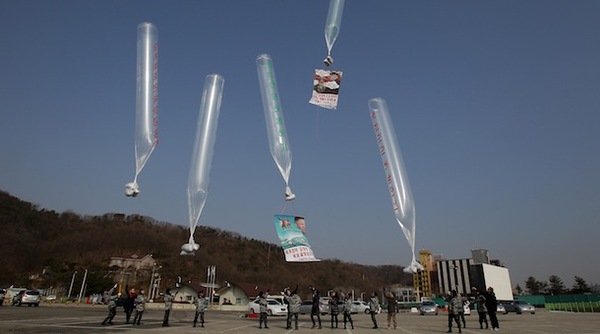

 Hans Thoolen on Human Rights Defenders and their awards