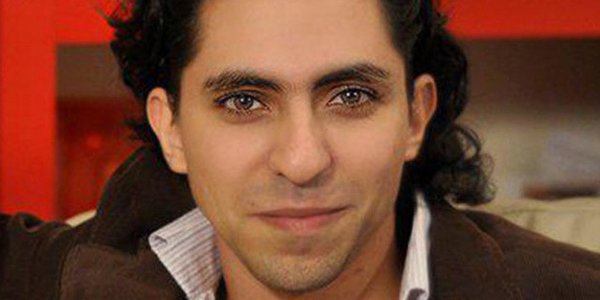
European Parliament President Martin Schulz urged Saudi King Salman “to free him, so he can accept the prize“. Mr Badawi’s wife Ensaf Haidar, now living Canada with their children, told AFP news agency that award was a “message of hope and courage”.
[Earlier this year Badawi also won the Pen Pinter Prize and the Moral Courage Award].
Badawi was one of three nominees for this year’s prize along with assassinated Russian opposition leader Boris Nemtsov and the Venezuelan opposition movement Mesa de la Unidad Democratica.
The 2015 Rafto Prize has been awarded to the Honduran priest, radio activist and human rights defender Ismael Moreno Coto, better known as Padre Melo. The Prize is awarded in recognition of his use of the media in defense of freedom of expression and fundamental rights in Honduras, a country plagued by extreme violence.
Activities around this important Norwegian prize are:
the 2015 Rafto Conference on Saturday 31 October 10 am at Radisson Blu Hotel Norge (the banquet hall) in Bergen [free of charge, but registration here before 28 October].
the 2015 Rafto Prize Award Ceremony on Sunday 1 November 6 pm at Den Nationale Scene, Bergen in honour of Laureate Padre Melo, with artistic contributions from Norwegian artists.
BREAKING NEWS: Ahmed Mansoor was just announced during the ceremony in Geneva as the 2015 MEA Laureate [6 October 2015]. Since 2006, Ahmed Mansoor (United Arab Emirates) has focussed on initiatives concerning freedom of expression, civil and political rights. He successfully campaigned in 2006-2007 to support two people jailed for critical social comments, who were released and the charges dropped. Shortly after, the Prime Minister of UAE issued an order not to jail journalists in relation to their work. Mr Mansoor is one of the few voices within the United Arab Emirates who provides a credible independent assessment of human rights developments. He regularly raises concerns on arbitrary detention, torture, international standards for fair trials, non-independence of the judiciary, and domestic laws that violate international law.
He has faced repeated intimidation and harassment, including imprisonment in 2011 after being convicted of “insulting officials” and sentenced to three years’ in prison, although he was released after eight months. Since being jailed in 2011, he has been denied a passport and banned from travelling. The Martin Ennals Jury has in vain urged the government of the UAE to lift this travel ban and allow him to travel. Martin Ennals Foundation Chair Micheline Calmy-Rey stated “ Ahmed Mansoor continues to pay the price for speaking out on human rights issues in his country, we urge his government to lift the travel ban.” [https://thoolen.wordpress.com/2015/09/15/fly-emirates-if-the-emirs-let-you/]
Ahmed Mansoor’s message (recorded on video before the ceremony):
The Martin Ennals Award for Human Rights Defenders (MEA) is a unique collaboration among ten of the world’s leading human rights organizations to give protection to human rights defenders worldwide. The Jury is composed of the following NGOs:
Martin Ennals Award for Human Rights Defenders
– Amnesty International,
– FIDH,
– Human Rights First,
– HURIDOCS,
– International Service for Human Rights,
– EWDE Germany,
– Front Line Defenders,
– Human Rights Watch,
– International Commission of Jurists,
– World Organisation Against Torture.
The two other finalists received Martin Ennals Prizes:
Robert Sann Aung (Myanmar)
Since 1974, Robert Sann Aung has courageously fought against human rights abuses. He has been repeatedly imprisoned in harsh conditions, physically attacked as well as regularly threatened. He was disbarred from 1993 – 2012. Currently, he represents students detained for peaceful protests.
Asmaou Diallo (Guinea)
Her human rights work started following the events of 28 September 2009 when the Guinean military attacked peaceful demonstrators. She founded l’Association des Parents et Amis des Victimes du 28 septembre 2009 (APIVA), which assists those affected, and supports them to testify in court proceedings.
On 16 July 2015 Assistant-Secretary of State for Democracy, Human Rights, and Labor – Tom Malinowski – presented the 2014 Human Rights Defenders Award to Azimjon Askarov of Kyrgyzstan and Foro Penal, a NGO from Venezuela, in the Treaty Room at the U.S. Department of State.
Azimjon Askarov is known for trying to bring together people of all ethnicities especially Uzbeks and Kyrgyz. He is serving a life sentence for alleged involvement in the killing of a police officer. He won the 2010 Homo Homini award and was a Final Nominee for the MEA in 2011. Due to Mr. Askarov’s imprisonment, his son, Sherzod, accepted the award on his behalf.
Foro Penal, a Venezuelan pro-bono network of over 200 lawyers and 1,000 human rights defenders, advocates for human rights and rule of law in Venezuela and abroad. With severe restrictions on the media and internet access, Foro Penal provided timely, critical, and independent information during the 2014 protests, and continues to defend and promote human rights despite risk of government suppression. Founder and Director Gonzalo Himiob and Executive Director Alfredo Romero accepted on behalf of Foro Penal.
For the backlash created in the case of Mr Askarov see my next post.
As many international NGOs (e.g.: Human Rights First, Front Line, the Human Rights Foundation, ISHR and several trade unions) have already welcomed the release of two human rights defenders in Swaziland, it is perhaps interesting to give the local take on it through an article in the Swaziland Observer of 2 July 2015 at hand of Noxolo Nkabinde: “Bheki, Thulani sacrifice not in vain– SCCCO”.
The Swaziland Coalition of Concerned Civic Organisations (SCCCO) says the sacrifices made by Nation Magazine Editor Bheki Makhubu and human rights lawyer Thulani Maseko were not in vain..“When they wrote those articles, Bheki and Thulani could not have imagined the events that were to follow. They, as concerned members of the public and as human rights defenders, were simply articulating the sentiments of a nation, frustrated and rapidly losing faith in the justice system. As we continue to stand with them, we believe the pain they and their families have gone through is another building-block towards freedom – their sacrifice has not been in vain,” SCCCO said in their statement. They added that their charge, arrest, conviction and imprisonment were never justified and believed they were vindicated.
Interestingly the NGO gives big credits to the judiciary “We commend the judges of the Supreme Court for this ruling. We welcome this, amongst their first acts in office, as a sign that perhaps our judiciary is turning a corner towards the better path of justice. The past few years have increasingly eroded our confidence in the judiciary – the impeachment proceedings of the former chief justice exposed but a fragment of the rot that had set in the judiciary. But as we all know, that situation has been created and nurtured over time, and it’s predilection for injustice has its roots in an environment that is hostile to free speech, in particular the speech that dissents with the status quo. And so our rejoicing is bitter-sweet: this is not about the individuals who previously occupied and abused judicial office; nor is it about their heinous conduct during this and other cases – the problem of the judiciary, just as with the other structures of governance, is systemic, and our new judges and their successors will remain vulnerable to outside influence as long as the structural flaws are not addressed.”
This was also an opportunity to restore both the dignity of and confidence in the judiciary. It could also serve as an opportunity to develop and grow the country’s jurisprudence in a way that promotes a culture of human rights and good democratic governance.
The SCCCO anticipates an era of respect for the rule of law under the new Supreme Court Judges Qinisile Mabuza and Mbutfo Mamba: “We note in the appointments the presence of judges such as Qinisile Mabuza and Mbutfo Mamba who have a proven track record of fairness and we look forward to an era where such judges are not punished for being principled…We call on all the judicial officers, even as they have taken the judicial oath/affirmation of office, to also recall the following constitutional provisions: Whereas all the branches of government are the Guardians of the Constitution, it is necessary that the Courts be the ultimate Interpreters of the Constitution”.
The article adds with a sad note that in the meantime the Swaziland Office of the Media Institute of Southern Africa (MISA) has been closed due to lack of funding.
On 26 May 2015, at the 2015 Oslo Freedom Forum, Thai journalist Pravit Rojanaphruk describes his fight for democracy in his home country following the May 2014 military coup. Talking about his own arrest, Rojanaphruk denounces the limitations to the right to assembly, expression and movement in Thailand, as well as the regime’s efforts to build the illusion of a happy Thailand. Rojanaphruk concludes his presentation by reminding us that tolerance and dialogue are essential if Thailand is to become a democracy again.
On 15 June 2015, 0ver 200 human rights NGOs urge the Democratic Republic of Congo to show respect for freedom of expression and assembly by freeing the “Filimbi activists“. Expression, Assembly The two activists were arrested three months ago, on 15 March during a pro-democracy youth workshop in the Democratic Republic of Congo. Fred Bauma and Yves Makwambala were arrested at the workshop organized to launch “Filimbi,” a platform to encourage Congolese youth to peacefully and responsibly perform their civic duties. Read the rest of this entry »
The International Humanistic and Ethical Union and the European Humanist Federation published this interactive map.
Go to the website below where you can then click a country to see a summary and then click “Read more” to see detailed information on that country’s “blasphemy” laws and accusations, and similar restrictions on free expression.
Rayma Suprani, one of the few female cartoonists in Venezuela, spoke at the 2015 Oslo Freedom Forum on 26 May about the role that humor plays in resisting tyranny, and how cartoons are the thermometers by which we measure freedom. She believes that critical drawings are crucial to testing the strengths of a democracy. Suprani worked at El Universal, one of Venezuela’s largest newspapers, for 19 years before she was fired last year after publishing a cartoon that mocked the legacy of Hugo Chávez and the state of the Venezuelan health care system. She remains defiant, and reminds us that humor is the key to ending repression: we should teach our children to wield pens, not guns.
At the 2015 Oslo Freedom Forum on 26 May there was a clarifying talk by Twitter vice-president Colin Crowell about how online platforms, like Twitter, play a key role in connecting people and spreading ideas. Crowell describes how Twitter, which allows for anonymity through the use of pseudonyms, encourages freedom of expression. He cautions that governments also try to limit this expression and control the flow of information by requesting that certain tweets be removed – or even by blocking Twitter completely. Crowell highlights how Twitter has been used to start various online social movements, citing several successful case studies from around the world.