Today, 20 January, a verdict is expected in the trial of Nabeel Rajab, an internationally recognized human rights defender in Bahrain. President of the Bahrain Center for Human Rights (BCHR), Deputy Secretary General of the International Federation for Human Rights (FIDH), and a member of Human Rights Watch’s Advisory Board, Rajab is charged with insulting public institutions via Twitter. A huge number of NGOs (see below) strongly condemn the politically motivated prosecution of Nabeel Rajab and call on the Government of Bahrain to drop all charges against the peaceful human rights defender. The video statement was prepared by True Heroes Films (THF).
On 1 October 2014, Rajab was arrested after hours of interrogation regarding one of his tweets. Rajab had just returned to Bahrain from a months-long advocacy tour, which included appearances at the 27th Session of the UN Human Rights Council in Geneva and the European Parliament in Brussels, as well as meetings with foreign ministries throughout Europe. Charged with insulting public institutions under article 216 of Bahrain’s penal code, Rajab was granted bail on 2 November 2014, but was banned from leaving the country.
[Rajab is one of many Bahrainis who have been victimized by the government’s intensified campaign to silence dissent: On 28 December, Sheikh Ali Salman, General-Secretary of Bahrain’s largest opposition party Al-Wefaq, was arrested for his political and human rights activism. Earlier in December, human rights defender Zainab al-Khawaja was sentenced to four years in prison for insulting the king and ripping up his picture, while her sister Maryam al-Khawaja, Director of Advocacy of the Gulf Center for Human Rights, was sentenced to one year in prison for allegedly assaulting a police officer during her arrest in August 2014. – https://thoolen.wordpress.com/2014/09/12/bahrain-travails-of-a-family-of-human-rights-defenders/]
Coinciding with the 30th anniversary of the UN Convention against torture, the OMCT HAS launched its Campaign “10 Days of Activism against torture and ill-treatment” from the 1st to the 10th of December 2014. This is the first episode figuring human rights defender Adilur Rahman Khan, from Bangladesh. He was one of the 3 final nominees of the MEA 2014.
The Solomon Islands do not figure prominently in any blogs on human rights. So this is special: An exhibition highlighting the recipients of the US Department of State International Women’s Award was held last Saturday at the King Solomon Hotel, as part of the 16 Days of Activism Against Violence Against Women Campaign, which started last Tuesday. It was organised by SEIF PLES (Gender-based Violence Crisis and Referral Centre) to mark International Women Human Rights Defenders Day (IWHRD).
(Police stand inside the theatre in Bangkok where two student activists were arrested in connection with the showing of ‘The Hunger Games: Mockingjay – Photo by Pattarachai Prechapanich)
If there was any evidence needed that symbols from films travel fast, the Bangkok Post reports that on Thursday 20 November three students outside two Bangkok theatres. They were released without charges, but in the meantime the discussion had already started. On Friday Prime Minister Prayut Chan-o-cha of Thailand said he felt unthreatened by The Hunger Games’ three-fingered protest against totalitarian rule, but nonetheless warned people against using it. “I don’t know whether it is illegal or not but it could jeopardise their futures,” Gen Prayut told reporters at Government House. “I appreciate their courage but they should use their courage in the right ways”.
His comments came as the UN Office of the High Commissioner for Human Rights (OHCHR) in Southeast Asia criticised the authorities for a recent spate of instances in which people were led away for questioning after making the salute that has become a symbol of defiance for anti-coup protesters. The United Nations on Friday criticised the country’s military leaders for arresting students flashing the signature protest gesture from The Hunger Games while the film’s makers said they are concerned for the young activists. Director of The Hunger Games, Francis Lawrence, felt honoured that the film has become an inspiration but added: “My goal is not for kids to be out there doing things that are getting them arrested,” (in a Friday interview with Buzzfeed). “”In a sense, part of it is an honour that there (are) ideas in the movies that we’re making that (have) become so important to people that they are willing to risk something and use that symbol,” he continued. “But it’s so scary.”
“I didn’t want to punish [the students] so they were merely reprimanded, released and told not to do it again because it’s of no benefit to anyone,” Gen Prayut told reporters. The general also denied any role in Apex’s decision to pull the film from its Scala and Lido theatres.
The ceremony of the Martin Ennals Award 2014 is over (7 October 2014). It was again very impressive to hear and see 3 courageous Human Rights Defenders being honored. Some 450 people (my estimate) gave standing ovations to the 3 nominees whose work was shown in impressive films produced for the occasion. The film portraits are already available on the website: http://www.martinennalsaward.org where there is also a short summary of the whole evening.
Martin Ennals Award for Human Rights Defenders
Especially the film on Chinese HRD Cao Shunli is a masterpiece given that the film makers had almost no images to work with due to the modesty of the human rights defender as well as her untimely death in detention only 2 days after her nomination in March 2014.
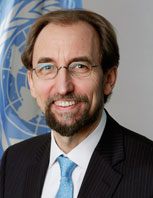
One of the nicest surprises was the address by Zeid Ra’ad Al Hussein, the United Nations High Commissioner for Human Rights at one of his first public appearances outside the UN. The High Commissioner gave a moving and almost poetic description of the sorry state of affairs left to human rights defenders to correct: He said inter alia: Read the rest of this entry »
On 22 September 2014 will be shown the film “The Rights of Others” by Chris Kelly [https://thoolen.wordpress.com/tag/chris-kelly/] on work done by human rights defenders in Cambodia, especially those who fight against forced evictions, a common feature of Cambodia’s ‘development model’ as demonstrated also by the work of the monk Luon Sovath who became the Laureate of the Martin Ennals Award 2012. Read the rest of this entry »
[Krishna Upadhyaya and Ghimire Gundev are British citizens working to investigate the conditions of migrant labourers who are constructing facilities for the 2022 World Cup in Qatar.]
In this new video produced by ISHR and True Heroes Films [THF] you hear about 4 cases (from Russia, China, Sri Lanka and DRC) of reprisals against human rights defenders who have bravely engaged at the UN. It would seem that the political costs of silencing and intimidating HRDs is not high enough for certain States to desist from this terrible practice. [for more posts on reprisals: https://thoolen.wordpress.com/tag/reprisals/]
Many newspapers, including the Guardian of 21 August, carry the news of the demise of human rights defender and early member of Amnesty International,Helen Bamber. She died aged 89. Bamber was a psychotherapist who began helping victims of torture and atrocities aged 20 when she started working with survivors of the Holocaust.
She used her vast experience to work with actor Colin Firth on his film The Railway Man, an account of a British officer captured by the Japanese during the second world war and made to work on the Thai-Burma railway. Firth said his encounter with Bamber was life-changing and the compassion she showed had touched him for life. He said that even in old age and ill-health Bamber continued to be determined to do all she could to help those affected by slavery, torture and human rights abuses: “Her courage, wisdom and pragmatism were formidable – and what she did worked.”
Actress Emma Thompson, who is president of the Helen Bamber Foundation, said: “Not only is she a great listener and an incredible interpreter, but she never lets her imagination run dry…She resists institutionalism. She knows which borders should be crossed and melds them together.”
(Photo credit: WITNESS, used under Creative Commons)
Kelly Matheson of WITNESS and the New Tactics community organise an online conversation on the Using Video for Documentation and Evidence from 21 to 25 July, 2014. User-generated content can be instrumental in drawing attention to human rights abuses. But many filmers and activists want their videos to do more. They have the underlying expectation that footage exposing abuse can help bring about justice. Unfortunately, the quality of citizen video and other content rarely passes the higher bar needed to function as evidence in a court of law. This online discussion is an opportunity for practitioners of law, technology and human rights to share their experiences, challenges, tools and ideas to help increase the chances that the footage citizens and activists often risk their lives to capture can do more than expose injustice – it can also serve as evidence in the criminal and civil justice processes.


.png)




 Hans Thoolen on Human Rights Defenders and their awards