Posts Tagged ‘crackdown’

Human Rights Watch and Amnesty International condemn Tunisia’s ‘assault on the rule of law’

November 15, 2025

On 14 November 2025, Al Jazeera (Mariamne Everett) and other media reported that international NGOs, such as Human Rights Watch and Amnesty International, have decried a sharp decline in civil liberties and a pervading “injustice” in Tunisia since President Kais Saied came to power in 2019, as authorities escalate their crackdown on the opposition, activists and foreign nongovernmental organisations.

Tunisian authorities have increasingly escalated their crackdown on human rights defenders and independent non-governmental organizations (NGOs) through arbitrary arrests, detention, asset freezes, bank restrictions and court-ordered suspensions, all under the pretext of fighting ‘suspicious’ foreign funding and shielding ‘national interests’,” Amnesty International said in a statement on Friday.

Tunisia’s crackdown on civil society has reached an unprecedented level, according to Amnesty, as six NGO workers and human rights defenders from the Tunisian Council for Refugees are “being criminally prosecuted on charges solely related to their legitimate work supporting refugees and asylum seekers”. The trial’s opening session, initially scheduled for October 16, has been adjourned to November 24.

Within the past four months, Tunisia has temporarily suspended the activities of at least 14 Tunisian and international NGOs, said Amnesty, including the Tunisian Association of Democratic Women and the World Organisation against Torture.

Human Rights Watch said in a statement on Friday that Tunis’s Court of Appeal will hear on November 17 the appeal of more than 30 people “unjustly sentenced to heavy prison terms in a politically motivated ‘Conspiracy Case’” mass trial in April.

Four of those detained are on hunger strike, including one who, according to his lawyers, was subjected to physical violence in prison on November 11.

The defendants were charged with plotting to destabilise the country under various articles of Tunisia’s Penal Code and the 2015 Counterterrorism Law. Human Rights Watch, which reviewed the judicial documents, said the charges are unfounded and lack credible evidence. The NGO has called on the court to immediately overturn the convictions and ensure the release of all those detained.

The 37 people detained include opponents of Saied, lawyers, activists and researchers. Their prison terms range from four to 66 years for “conspiracy against state security” and terrorism offences. Jawhar Ben Mbarek – cofounder of Tunisia’s main opposition alliance, the National Salvation Front – began a hunger strike on October 29 to protest his arbitrary detention. Ben Mbarek was sentenced to 18 years behind bars on charges of “conspiracy against state security” and “belonging to a terrorist group”.

Note that on 10 November the Martin Ennals Award announced that Saadia Mosbah, a leading Tunisian human rights activist and co-founder of Mnemty (‘My Dream’), was selected as a runner up. [see https://humanrightsdefenders.blog/2025/11/10/breaking-news-women-human-rights-defenders-recognised-with-the-2025-martin-ennals-award/]

https://www.aljazeera.com/amp/news/2025/11/14/rights-groups-decry-tunisias-injustice-crackdown-on-activists

https://www.ft.com/content/15a04a32-f975-4f5e-9748-874f8e26cbe5

https://www.rfi.fr/en/africa/20251130-prominent-tunisian-activist-chaima-issa-arrested-as-hundreds-protest-clampdown-on-dissent

https://thearabweekly.com/tunisia-calls-eu-parliament-rights-resolution-blatant-interference-releases-high-profile-lawyer

NGOs demand end to crackdown on peaceful Human Rights Defenders in Turkey

April 10, 2025

On 4 April 2025 a joint statement by 13 international, regional and national civil society organisations, strongly condemned violations of the right to protest in Turkey, including police brutality, ill-treatment that may amount to torture, mass arbitrary detentions, and the systematic persecution of human rights defenders. 

Mass protests erupted across Turkey on 19 March 2025, following the detention of more than 100 individuals —including the Mayor of Istanbul, Ekrem İmamoğlu. These arrests, made as part of investigations into allegations of “corruption” and “terrorism”, and their timing have raised widespread concerns that the charges are politically motivated – just days before İmamoğlu’s    expected presidential candidacy. 

In the immediate aftermath of the arrests, authorities imposed sweeping restrictions, including days-long blanket bans on gatherings across multiple cities, restricted access to several social media platforms curbing access and preventing the dissemination of information, and shut down major public transportation routes in İstanbul, all in a systematic effort to suppress dissent and mobilisations. 

Despite these measures, thousands have continued to gather in protest across the country since 19 March. While protests have been overwhelmingly peaceful, journalists and civil society organisations have documented grave human rights violations in several locations, and particularly in Saraçhane, Istanbul, including an indiscriminate and disproportionate display of police violence and brutality that may amount to torture and other ill-treatment, including beatings with batons, demonstrators being kicked while subdued on the ground, close-range targeting with Kinetic Impact Projectiles (KIPs), as well as the indiscriminate use of chemical irritants and water cannons. Based on widely circulated footage and public testimonies, and in line with the UN Committee Against Torture’s recommendations to Turkey following its periodic review in 2024, the Human Rights Foundation of Turkey (TİHV) has also denounced the use of restraint methods that inflict unnecessary pain, such as prolonged handcuffing behind the back and stress positions. These practices, known to cause serious health consequences, have at times been publicised by police officers themselves via personal accounts, seemingly as a tactic of intimidation.

Reports have stated that protesters who have been met with excessive police force have suffered grave and long-lasting injuries such as head trauma and eye damage due to tear gas cartridges and KIPs, burns and respiratory issues due to the indiscriminate and widespread use of tear gas and water cannons, which in some cases resulted in their hospitalisation. The full extent of the injuries, as well as the physical and psychological toll on protesters’ health, will only become clear in the following months. 

According to the report of Human Rights Association (İHD), as of 27 March 2025, a total of 1,879 people—including children, lawyers, journalists, students, union leaders and human rights defenders—have been taken into custody during protests and house raids on the grounds of inciting protests, engaging in violence, concealing their faces with masks, and using bats or other objects. Over 260 of them have been placed in pre-trial detention, while judicial control measures have been imposed on 468 individuals simply for exercising their right to peaceful protest. Istanbul Bar Association Child Rights Committee reported that among the arrested in İstanbul, 20 were under the age of 18

Progressive Lawyers Association (ÇHD) also highlights incidents of torture, ill-treatment and sexual violence in detention facilities.  Lawyers have denounced the treatment of seven female detainees who were subjected to beatings as well as unjustified strip searches while in custody. According to a released testimony, another female victim reported being groped by a police officer while handcuffed behind the back and forcefully pinned to the ground and that she soiled herself out of fear during the ordeal. She was reportedly placed under house arrest after her testimony. The Turkish Medical Association has recalled the importance of medical examinations upon entry in custody and detention to prevent and document torture and other ill-treatment.

Human rights defenders, including those monitoring the protests, have also become targets of State repression during the protests. Journalists and media organisations covering protests have also been persecuted, infringing on the right to freedom of expression and the right to information. As of 28 March, at least 14  journalists were detained after covering the protest. 

Lawyers representing those who were arbitrarily detained in the context of protests, were also targeted. At least 14 lawyers were detained, including the lawyer of İmamoğlu, demonstrating the State authorities’ disregard for the rule of law and the right to defence, due process and justice. In the midst of the protests as part of the general intimidation strategy against lawyers, on 21 March the Istanbul Bar Association’s executive board was dismissed by the decision of İstanbul 2nd Civil Court of First Instance- a move that raises serious concerns of further attacks on the independence of the legal profession and the detainees’ right to legal representation. Following the decision, police interfered as lawyers attempted to march from the courthouse in Çağlayan to the Istanbul Bar Association building in Taksim to protest the decision.

Signatories:

  • ARTICLE 19
  • Asociación Unidad de Defensa Jurídica, Registro y Memoria para Nicaragua (AUDJUDRNIC)
  • CIVICUS: World Alliance for Citizen Participation
  • EuroMed Rights
  • Front Line Defenders
  • Gulf Centre for Human Rights (GCHR)
  • ILGA-Europe
  • United Against Torture Consortium (UATC), through its following members:
    • The International Rehabilitation Council for Torture Victims (IRCT)
    • Omega Research Foundation
    • Redress
    • And the World Organisation Against Torture (OMCT)
  • Unidad de Protección a Defensoras y Defensores de Derechos Humanos – Guatemala (UDEFEGUA)
  • Within the framework of the Observatory for the Protection of Human Rights Defenders:
    • International Federation for Human Rights (FIDH)
    • World Organisation Against Torture (OMCT)

see also: https://humanrightsdefenders.blog/tag/turkey/

https://www.frontlinedefenders.org/en/statement-report/end-brutal-crackdown-peaceful-protest-and-human-rights-defenders
Joint civil society statement on the fifth anniversary of the “Xiamen gathering” crackdown

February 11, 2025

On the fifth anniversary of the “Xiamen Gathering” crackdown, 34 civil society organisations (on 10 February 2025) across the world reaffirm their solidarity with Chinese human rights defenders and lawyers persecuted for advocating for human rights:

26 December 2024 marked the fifth anniversary of the crackdown on the “Xiamen gathering”, a private gathering that about 20 Chinese human rights defenders and lawyers convened in Xiamen, China in December 2019 to discuss the situation of human rights and civil society in China. In the weeks after, Chinese authorities interrogated, harassed, detained and imprisoned every participant who was not able to leave China then and subjected almost all of them, including some families and friends, to travel bans, up to the present day, under the pretext of national security.

Among those detained were legal scholar Xu Zhiyong and human rights lawyer Ding Jiaxi. Both are leading human rights defenders who spearheaded the “New Citizens’ Movement”, empowering citizens as rights-bearers to advocate for a more equal, rights-respecting and free society, and to combat corruption, wealth inequality and discrimination in access to education. In 2014, Xu and Ding were both sentenced to four years and three and a half years in prison, respectively, for participating in the New Citizens’ Movement and charged with “gathering a crowd to disturb public order”.

From 26 December 2019, and over the weeks that followed, the Chinese authorities forcibly disappeared both under Residential Surveillance at a Designated Location (RSDL), a criminal procedure allowing secret detention for up to six months without access to legal counsel or family. RSDL is considered by UN Special Procedures experts to constitute secret detention and a form of enforced disappearance, and may amount to torture or other ill-treatment. While held under RSDL, both men were subjected to torture and other ill-treatment, before being charged with the national security crime of “subversion of State power”. They were subsequently convicted in a secret trial and handed severe prison sentences of 14 and 12 years, respectively, in April 2023. Despite multiple calls from the UN High Commissioner for Human Rights Volker Türk and from UN Special Procedures’ experts as recently as November 2024, China has failed to address these grave violations.

These cases are emblematic of a broader and alarming trend of persecution  of human rights defenders and lawyers in China. Authorities systematically employ RSDL, harsh national security charges, torture and other ill-treatment, prolonged detention, travel bans and harassment to silence dissent and dismantle independent civil society. The use of vague charges such as “subversion of State power” or “picking quarrels and provoking trouble” has become a routine tactic to criminalise human rights work, despite UN human rights experts’ repeated call for them to be repealed. Victims often face prolonged pre-trial detention, lack of due process, restricted access to lawyer and adequate healthcare, and torture or other ill-treatment aimed at extracting forced ‘confessions’.

This systematic repression is further reflected in the cases of human rights lawyers Xie Yang and Lu Siwei, feminist activist Huang Xueqin, labour activist Wang Jianbing, and citizen journalist Zhang Zhan, all of whom are currently subjected to arbitrary detention or imprisonment  . UN Special Procedures’ experts have recently described these cases as part of “recurring patterns of repression, including incommunicado detention and enforced disappearance aimed at […] silencing human rights defenders and dissenting or opposing views critical of the Government”.

As we commemorate the fifth anniversary of the crackdown, we, organisations and activists from all over the world, continue to stand in solidarity with all human rights defenders and lawyers in China who courageously advocate for justice despite knowing the risks of doing so.

We urge the Chinese government to:

  1. Immediately and unconditionally release all human rights defenders and lawyers arbitrarily detained or imprisoned for their human rights work, including Xu Zhiyong and Ding Jiaxi;
  2. End the systematic crackdown on civil society, including harassment, unjustified detention, enforced disappearance, and imprisonment of human rights defenders and lawyers;
  3. Amend laws and regulations, including national security legislation, the Criminal Law and the Criminal Procedure Law, to bring them fully in line with international human rights standards;
  4. Rescind the travel bans imposed on the gathering participants as well as their friends and families immediately.

Signatories:

  1. Alliance for Citizens Rights
  2. Amnesty International 
  3. Asian Lawyers Network (ALN) (Japan)
  4. CIVICUS: World Alliance for Citizen Participation
  5. Free Tibet (United Kingdom)
  6. Human Rights in China
  7. India Tibet Friendship Society Nagpur Maharashtra (India)
  8. International Bar Association’s Human Rights Institute (IBAHRI)
  9. International Campaign for Tibet
  10. International Federation for Human Rights (FIDH), within the framework of the Observatory for the Protection of Human Rights Defenders
  11. International Service for Human Rights (ISHR) 
  12. International Tibet Network
  13. Judicial Reform Foundation (Taiwan) 
  14. Lawyers for Lawyers (Netherlands)
  15. LUNGTA – Active for Tibet (Belgium)
  16. PEN America (United States)
  17. Safeguard Defenders (Spain) 
  18. Swiss Tibetan Friendship Association (Switzerland)
  19. Taiwan Association for Human Rights (Taiwan)
  20. The 29 Principles (United Kingdom)
  21. The Network of Chinese Human Rights Defenders 
  22. The Rights Practice (United Kingdom)
  23. Tibet Justice Center (United States)
  24. Tibet Solidarity (United Kingdom)
  25. Voluntary Tibet Advocacy Group (V-TAG) (Netherlands)
  26. World Organisation Against Torture (OMCT), within the framework of the Observatory for the Protection of Human Rights Defenders
  27. Acción Solidaria (Venezuela)
  28. Amnistía Internacional Chile (Chile)
  29. CADAL (Argentina)
  30. Centro de Derechos Humanos Fray Francisco de Vitoria OP, A.C. (Mexico)
  31. CONTIOCAP – Coordinadora Nacional de Defensa de Territorios Indígenas Originarios Campesinos y Áreas Protegidas en Bolivia (Bolivia)
  32. Movimiento Autónomo de Mujeres (Nicaragua)
  33. Red Nacional de Organismos Civiles de Derechos Humanos Todos los Derechos para todas, todos y todes (Mexico)
  34. Voces de Tíbet (Mexico)

https://ishr.ch/latest-updates/joint-civil-society-statement-on-the-fifth-anniversary-of-the-xiamen-gathering-crackdown

https://safeguarddefenders.com/en/blog/fifth-anniversary-xiamen-gathering-crackdown

Human rights defender Şebnem Korur Fincancı in Turkey now also jailed

October 31, 2022
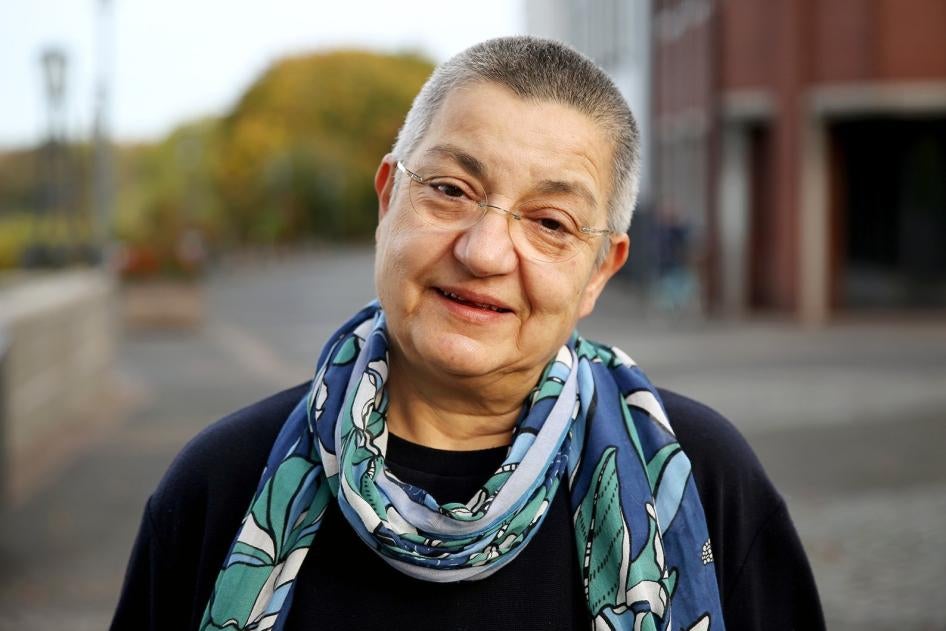
Şebnem Korur Fincancı
Şebnem Korur Fincancı © 2022 TİHV

On 28 October 2022 HRW reports on the continuing crackdown on human rights defenders in Turkey, where Şebnem Korur Fincancı is the latest human rights defender to be jailed as authorities pursue a bogus investigation against her for “spreading terrorist propaganda.” Korur Fincancı is head of the Turkish Medical Association, former head of the Human Rights Foundation of Turkey, and a retired professor of forensic pathology. Her work was central to the creation of the United Nations’ “Istanbul Protocol,” a landmark manual on how to identify and document signs of torture. She has also worked on the exhumation of mass graves and forensic documentation of war crimes in different countries. See also: https://humanrightsdefenders.blog/2018/11/05/turkish-human-rights-defender-and-forensic-doctor-sebnem-korur-fincanci-honoured/

Korur Fincancı’s arrest and pre-trial detention followed an interview she gave to pro-Kurdish TV on October 19. Responding to allegations that the Turkish military had used chemical weapons against the armed Kurdistan Workers’ Party (PKK) in the Kurdistan Region of Iraq, Korur Fincancı said the video footage she had seen suggested use of toxic gases affecting the nervous system and that there should be a full investigation. Turkish pro-government media and President Recep Tayyip Erdoğan accused Korur Fincancı and the Turkish Medical Association of slandering the Turkish military. Prosecutors and courts rapidly responded by ordering her investigation and detention.

Korur Fincancı’s arrest is the latest in a pattern of politically motivated cases as the Erdoğan government continues its crackdown on critics and opponents. Just this week, police also detained 10 Kurdish journalists on top of 16 incarcerated in June. The Turkish authorities show all the signs of being determined to silence the voices of experts like Korur Fincancı as well as the journalists who report their words.

Authorities also appear focused on a broader plan of reshaping and taking over professional bodies that have been critical of government policies. On October 27, Turkey’s justice minister announced a plan to restructure both the Turkish Medical Association, from which Korur Fincancı will be removed as head, and the Union of Chambers of Turkish Engineers and Architects. Mücella Yapıcı, a prominent member of the latter, was convicted and jailed in April along with rights defender Osman Kavala and six others for her alleged role in the 2013 Gezi Park protests.

In the run-up to the 2023 presidential and parliamentary elections, the Turkish government is likely to continue to misuse criminal charges and detention against individuals it wants to silence and attempt to seize institutions outside its control.

https://www.hrw.org/news/2022/10/28/turkey-jails-another-human-rights-defender

UN expresses deep concern over Egypt using special terror courts to silence human rights defenders

October 9, 2020

Cairo accused of ‘gravely endangering’ activists and infringing on their fundamental rights by imprisoning them during pandemic

Egypt has jailed more than 60,000 dissidents (AFP/File photo) By MEE staff

The Middle East Eye of 8 October 2020 reported that the UN Human Rights Council said in a statement on Friday that Cairo was treating free speech as terrorism.

“Terrorism charges and exceptional courts are being used to target legitimate human rights activities, and have a profound chilling effect on civil society as a whole,” according to 10 international specialists, including the UN rapporteurs on counter-terrorism and extrajudicial killings.

The use of terrorism courts to target and harass civil society is inconsistent with the rule of law.

The statement came days after Egypt executed 15 political prisoners who had been in detention since 2014.

The UN experts slammed the terrorism courts, saying that they undermine defendants’ basic legal rights, including the presumption of innocence. The special courts were created in 2013 after a Sisi-led coup overthrew the elected government of then-president Mohamed Morsi.

Defendants do not enjoy the right to confer safely and confidentially with their lawyer,” said the experts. 

See also: https://humanrightsdefenders.blog/2020/09/25/rafto-prize-for-2020-goes-to-the-egyptian-commission-for-rights-and-freedoms-ecrf/

“In addition, when the accused are put on trial from behind glass or inside metal cages, sometimes cut off from proceedings at the discretion of the presiding judge, they cannot effectively use their right to be present at their own trial.”

Egypt has embarked on a brutal crackdown on dissent since 2013, jailing more than 60,000 activists and imposing strict censorship measures on public discourse.

Sisi has consistently denied that there are political prisoners in Egypt, framing the crackdown as part of the fight against terrorism. After coming to power, he outlawed Morsi’s Muslim Brotherhood and blacklisted it as a terror group.

On Thursday, the UN advocates cited the case of Bahey El-Din Hassan, director and co-founder of the Cairo Institute for Human Rights Studies, who was sentenced to 15 years in absentia in August over his criticism of the government. See: https://humanrightsdefenders.blog/2020/08/27/egypt-15-year-term-for-human-rights-defender-bahey-el-din-hassan/

“It is an act of reprisal, seemingly punishing [him] for his cooperation with the United Nations,” the statement said. 

“The exercise of free speech and human rights work are being treated as terrorism, and it appears that the Terrorism Circuit Court is being used to retaliate against human rights activity protected by international law.”

—–

https://www.middleeasteye.net/news/egypt-terrorism-courts-jail-activists-un-experts

Policy response by human rights to COVID-19: the Human Rights Foundation

April 5, 2020

Further in the series of posts on this topic: On 13-14 April 2020, the New York based Human Rights Foundation will host COVIDCon, a virtual Oslo Freedom Forum event focused on how tyranny sparked and is exploiting the novel coronavirus pandemic to crack down on civil liberties. For earlier posts: https://humanrightsdefenders.blog/tag/covid-19/

This two-day event, open to global audiences, will feature presentations and panels about the current pandemic and its relationship to state censorship, disinformation, surveillance, and the future of civil liberties. COVIDCon sessions will showcase the difference in the responses of authoritarian regimes and democratic governments to the outbreak of the novel coronavirus.

Confirmed speakers include former Chinese prisoner of conscience Yang Jianli; Iranian journalist and human rights activist Masih Alinejad; Russian democracy advocate Garry Kasparov; recently expelled Wall Street Journal deputy China bureau chief Josh Chin; entrepreneur and angel investor Naval Ravikant; Hong Kong pro-democracy activist Joshua Wong; futurist and “After On” author Rob Reid; Pulitzer Prize-winning author Anne Applebaum; Ideas Beyond Borders’ Melissa Chen; China-U.S. expert Kyle Bass; and others.

Day 1 of the conference will focus on how tyranny sparked the pandemic. Sessions will include:

  • Censorship in China: The Pandemic Spark
  • How Democracies and Dictatorships are Reacting to the Virus
  • China: Savior or Culprit?
  • Reporting on COVID-19: State Censorship and Surveillance
  • What the Pandemic has Revealed about Chinese Economic Dominance
  • The Increasing Risk of Synthetic Biology

Day 2 of the conference will focus on how tyranny exploits the pandemic. Sessions will include:

  • Iran’s Criminal Negligence: COVID-19’s Gateway to the Middle East
  • Pandemic Power Grab: State Abuse of Emergency Laws
  • Trampling on the Rule of Law and Undermining Public Health
  • Keeping Protest Movements Alive During The Pandemic
  • How the Pandemic Changes the Relationship Between Citizen, Technology, and State

REGISTER

https://mailchi.mp/dcbac9797509/authoritarian-regimes-ill-equipped-for-public-health-emergencies-287692?e=f80cec329e

Today: Tiananmen Square 30 years ago was ‘correct’ but singing about it still not allowed

June 4, 2019

As many news outlets report today it is 30 years ago that China cracked down on Tiananmen Square. China tries mostly to forget about it and make others forget it about it too. Still, it recenty came out to defend it as the “correct policy”. “That incident was a political turbulence and the central government took measures to stop the turbulence which is a correct policy” Defence minister Wi Fenghe Wei told a regional security forum in Singapore. “The 30 years have proven that China has undergone major changes,” he said, adding that because of the government’s action at that time “China has enjoyed stability and development“. On the other hand Wu Qian, a spokesman for the defence ministry, decried the use of the word “suppression” to describe the crackdown.

But it does cover Chinese rock musician Li Zhi, who has been outspoken and sung songs about social issues including the Tiananmen Square crackdown, and has not been seen for three months. The South China Morning Post of 2 June has a detailed piece on what happened to this singer: His upcoming tour has been cancelled and his social media accounts taken down. Then his music was removed from all of China’s major streaming sites – as if his career had never existed at all. “Now this square is my grave,” Li sang. “Everything is just a dream.”

The disappearance of Li, the musician, has left fans searching for answers. On February 20, the official Weibo social media account for the 40-year-old’s concert tour posted a photograph of its team in front of a truck about to embark on scheduled performances in Sichuan province in China’s southwest. Just two days later, however, the account posted an image of a hand wearing what appeared to be a hospital wrist band and the words: “Very sorry.” The next post, published the same day, announced without explanation that the tour was cancelled and that ticket purchasers would shortly receive a refund. Fans flooded the comment section with wishes for a speedy recovery.

But the suggestion that a health issue was behind the cancellations was later thrown into doubt. A statement published in April by Sichuan’s culture department said it had “urgently halted” concert plans for a “well-known singer with improper conduct” who was previously slated for 23 performances – the same number of concerts which Li had scheduled in the province. It said 18,000 tickets were fully refunded.

..Li’s presence on the Chinese internet was completely erased. An April 21 central government directive ordered all websites to delete any audio or video content relating to five of Li’s songs, according to China Digital Times, an organisation that publishes leaked censorship instructions. The authenticity of the directive could not be independently verified.

“There’s pretty much a consensus” among those working in the industry that Li’s disappearance from public view is due to the sensitive anniversary, said a music industry professional who spoke on condition of anonymity because of fear of government retribution. “He did a number of songs that were considered politically risky, making references to June 4, 1989, and so he’s been out of the picture,” the industry professional said.

Li’s current whereabouts could not be confirmed. His company and record label did not respond to repeated interview requests. Li’s songs alluding to the Tiananmen Square protests – The Square, The Spring of 1990 and The Goddess, in honour of the Goddess of Democracy that students erected – were part of his earlier works. In recent years, the bespectacled singer has avoided making public political statements, focusing more on promoting his performances. In 2015, state-run China Daily newspaper published a profile of Li, describing him as a performer who easily sells out concerts. After years of working as an independent artist, he signed last autumn with Taihe Music Group, a major Chinese record label. Fans who knew Li as a largely apolitical entertainer expressed bewilderment online about his disappearance. Others made veiled references to China’s internet censorship. On Zhihu, a question-and-answer website similar to Quora, one user wrote that people posed questions every day about what might have happened to Li, but these posts always disappeared the next morning “as if nothing had happened at all”.

Another user said: “I don’t dare to say it, nor do I dare to ask.” A fan who has been sharing Li’s music on his personal account spoke on condition of anonymity because he feared his employers would punish him for discussing the subject. “Everyone knows the reason for Li Zhi’s disappearance,” the fan said. “But I’m sorry, I can’t tell you, because I follow China’s laws and also hope that Li Zhi can return.” Quoting one of Li’s lyrics, the fan added: “The world will be all right.” Fans continue to circulate videos of Li’s performances online. His complete discography has been uploaded onto file-sharing websites, with back-up links in case the original ones are shuttered. Some users shared tribute art, including a black T-shirt with the words “improper conduct”. A few years ago, in a performance in Taiwan, Li bounced around on stage, strumming his guitar and repeating a chorus in apparent tribute to the spirit of Chinese propaganda.

Foreign companies are not immune. Apple Music has removed from its Chinese streaming service a song by Hong Kong singer Jacky Cheung Hok-yau that references the Tiananmen crackdown. Tat Ming Pair, a Hong Kong duo, have been deleted entirely from the app. They released a song this month called Remembering is a Crime in memory of the protests.

Music by Tat Ming Pair – Anthony Wong Yiu-ming (left) and Tats Lau Yi-tat – has been deleted from the Apple Music app. Photo: K.Y. Cheng

Wikipedia also announced this month that the online encyclopaedia is no longer accessible in China. While the Chinese-language version has been blocked since 2015, most other languages could previously be viewed, Wikipedia said.

The Human Rights Foundation publised this video about China’s Million Person Muslim Prison Camps:

For the 25th anniversary see: https://humanrightsdefenders.blog/2014/06/13/25-years-tiananmen-celebrated-with-over-100-detentions/

See also: https://humanrightsdefenders.blog/2019/05/31/on-4-june-streets-around-chinese-embassy-to-be-renamed-tiananmen-square/

https://uk.news.yahoo.com/china-says-tiananmen-square-crackdown-1989-correct-policy-093500064.html

https://www.scmp.com/news/china/politics/article/3012782/outspoken-folk-rock-singer-li-zhi-disappears-china-tightens

UN Rapporteurs urge Ethiopia to end violent crackdown and impunity

February 10, 2016

On 21 January 2016 a group of United Nations Rapporteurs (Maina Kiai, Special Rapporteur on the rights to freedom of peaceful assembly and of association; David Kaye, Special Rapporteur on the promotion and protection of the right to freedom of opinion and expression; Michel Forst, Special Rapporteur on the situation of human rights defenders; Christof Heyns, Special Rapporteur on extrajudicial, summary or arbitrary executions; and the Working Group on Enforced or Involuntary Disappearances) called on the Ethiopian authorities to end the ongoing crackdown on peaceful protests by the country’s security forces, who have reportedly killed more than 140 demonstrators and arrested scores more in the past nine weeks. “The sheer number of people killed and arrested suggests that the Government of Ethiopia views the citizens as a hindrance, rather than a partner,” the independent experts said, while also expressing deep concern about allegations of enforced disappearances of several protesters.

The current wave of protests began in mid-November, in opposition to the Government’s ‘Addis Ababa Integrated Development Master Plan’ to expand the capital’s municipal boundary. The ‘Master Plan’ could reportedly lead to mass evictions and the seizure of agricultural land in the Oromia region, as well as extensive deforestation. The UN experts welcomed the Government’s announcement on 12 January 2016 suspending the implementation of the ‘Master Plan’, but were concerned about continuous reports of killings, mass arrests, excessive use of force and other abuses by security forces. “The Government’s decision is a positive development, but it cannot be seen as a sincere commitment until the security forces stop their crackdown on peaceful protests,” they said. “The role of security forces should be to protect demonstrators and to facilitate peaceful assemblies, not suppress them.”

We call on the Government to immediately release protesters who seem to have been arrested for exercising their rights to freedom of peaceful assembly and expression, to reveal the whereabouts of those reportedly disappeared and to carry out an independent, transparent investigation into the security forces’ response to the protests,” the experts said.  “Impunity, on the other hand, only perpetuates distrust, violence and more oppression.

The UN independent experts also expressed grave concern over the Ethiopian Government’s application of the Anti-Terrorism Proclamation 652/2009 to arrest and prosecute protesters, labelling them as ‘terrorists’ without substantiated evidence. This law authorises the use of unrestrained force against suspects and pre-trial detention of up to four months. “Ethiopia’s use of terrorism laws to criminalize peaceful dissent is a disturbing trend, not limited to the current wave of protests,” they experts noted. “The wanton labelling of peaceful activists as terrorists is not only a violation of international human rights law, it also contributes to an erosion of confidence in Ethiopia’s ability to fight real terrorism. This ultimately makes our world a more dangerous place.”

How the law was used recently is clear from the case of the “Zone 9” bloggers. Fortunately, on 16 October 2015 Front Line was able to report that all “Zone 9” bloggers were cleared of terrorism charges by the Federal Court in Addis Ababa. All bloggers and journalists whose terrorism charges have been dropped are members of the “Zone 9” and prominent social media activists. With the exception of Soliana Shimelis, the other human rights defenders, namely Mss Mahlet Fantahun and Edom Kassaye and Messrs Natnael Feleke, Befekadu Hailu, Atnaf Birhane, Zelalem Kibret, Abel Wabela, Tesfalem Weldyes and Asmamaw Haile Giorgis, were arrested on 25 and 26 April 2014 and remained in detention for over a year before being freed.  The human rights defenders’ lawyer stated that “all the evidence presented was very weak to prove they were planning any kind of terrorism”. However, charges of inciting violence remain pending against Befekadu Hailu, who might face a ten-year imprisonment sentence if convicted. See: https://www.frontlinedefenders.org/node/29137

On Ethiopia: https://thoolen.wordpress.com/2015/02/14/suffocating-dissent-in-ethiopia-counterpunch-tells-the-facts-and-names-the-names/

http://www.ohchr.org/en/NewsEvents/Pages/DisplayNews.aspx?NewsID=16977&LangID=E

Unlike his Chinese colleagues human rights defender Peter Dahlin can go home

January 26, 2016

After more than 20 days of detention and a public confession that sounded forced, Swedish human defender Peter Dahlin has been expelled from China, and is on his way home. The Chinese foreign ministry and Swedish embassy in Beijing confirmed Peter Dahlin, 35, had been released from detention and expelled from the country on Monday 15 January 2016.

[What Dahlin actually admitted to in his televised confession, and what a voice-over in Chinese said he had admitted to, were two very different things, as Quartz reported earlier. Discrepancies included his alleged “funding” of Chinese activists (Dahlin said “support” in his confession, which was in English), and an accusation that he had embezzled money from foreign NGOs, which Dahlin never admitted to.] https://thoolen.wordpress.com/2016/01/21/confessions-abound-on-chinese-television-first-gui-minhai-and-now-peter-dahlin/

Another Swedish citizen, Hong Kong-based bookseller Gui Minhairemains in custody in Beijing after his suspected abduction from Thailand by Chinese authorities. Swedish officials are “very concerned about the detained Swedish citizen Gui Minhai. Our efforts to bring clarity to his situation and be granted the opportunity to visit him continue with unabated intensity,” the Swedish embassy said in its statement.

Source: Human rights activist Peter Dahlin has been expelled from China, and is headed home to Sweden – Quartz

Confessions abound on Chinese television: first Gui Minhai and now Peter Dahlin

January 21, 2016
Peter Dahlin appears on China state TV for his confession. CCTV/Twitter/Tom Phillips

The Hong Kong bookseller Gui Minhai, after being kidnapped by Chinese security services, made a confession on CCTV earlier this week. Now also Peter Dahlin a Swede working for a NGO [CUAWG] in China has made a “scripted” television confession following his detention earlier this week. [https://thoolen.wordpress.com/2016/01/13/the-plight-of-human-rights-defenders-in-china-just-two-weeks-into-the-new-year/] In a TV appearance on the state-run CCTV news channel, Dahlin said: “I violated China’s law through my activities here.  I’ve caused harm to the Chinese government. I’ve hurt the feelings of the Chinese people. I apologise sincerely for this and I am very sorry that this ever happened. I have been given good food, plenty of sleep and I have suffered no mistreatments of any kind.

Cases the CUAWG have worked on include that of Qi Chonghuai, a journalist and writer who was imprisoned for reporting on Communist party corruption, and Tulip Award winner Ni Yulan, a lawyer who opposed illegal demolitions and was beaten, harrased and imprisoned by police.

Source: Peter Dahlin: Swedish human rights law activist detained in China makes a ‘scripted’ confession | Asia | News | The Independent