Archive for the 'UN' Category

Human Rights Day 2021

December 10, 2021

The United Nations has chosen for Human Rights Day 2021: the theme “All human, all equal” [for some action last year, see: https://humanrightsdefenders.blog/tag/international-human-rights-day-2020/]

At the heart of human rights lie the principles of equality and non-discrimination. Equality has the power to help break cycles of poverty; it can give young people the world over the same opportunities; it can help in advancing the right to a healthy environment; it can help tackle the root causes of conflict and crisis.

Equality “means that we embrace our diversity and demand that all be treated without any kind of discrimination,” says UN Human Rights High Commissioner Michelle Bachelet. On Human Rights Day, we are calling for a new social contract. This means addressing pervasive inequalities and structural discrimination with measures grounded in human rights. It requires renewed political commitment, the participation of all, especially the most affected, and a more just distribution of power, resources and opportunities.

Equality and non-discrimination are the key to prevention of some of the biggest global crises of our time. Human rights have the power to tackle the root causes of conflict and crisis, by addressing grievances, eliminating inequalities and exclusion and allowing people to participate in decision-making that affects their lives. Societies that protect and promote human rights for everyone are more resilient and sustainable, and stand better equipped to weather unexpected crises such as pandemics and the impacts of the climate crisis. As we continue on the path towards the 2030 Agenda for Sustainable Development, and countries’ commitments to leave no one behind, we must strive for a world where a life of equality in dignity and rights is a lived reality for all.

—–

Bertrand G. Ramcharan on this occasion wrote for the Universal Human Rights Group in Geneva a blog post: Human Rights Day 2021: protect the right to be as well as the right to become

..What the Universal Declaration sought to do, seventy-three years ago, was to invite all governments to pursue human rights strategies of governance. That is to say, government policies and laws should take the precepts of the Universal Declaration as their basic starting point, and governments should be held accountable against those standards.

Human Rights Day this year is being commemorated at a time when the present and the future are joined together as perhaps at no other time in the history of the UN. The world is simultaneously facing a range of critical human rights crises, including a global pandemic, a biodiversity crisis, a pollution crisis, and a climate crisis. The human rights challenges presented by these crises overlay existing discrimination and inequality.

Regarding climate change, the recent Glasgow conference witnessed the tensions between those who fervently believe that the use of fossil fuels must be halted and those who equally fervently plead that they cannot feed and take care of their peoples if they precipitously stop the use of fossil fuels.

The Universal Declaration of Human Rights provides the reference points, the frame of principles, for thinking through, formulating, and implementing policies on challenges such as these. It is a crucial document for every country.

The fourth principle is the rule of law, enshrined, among others, in article 10 of the Universal Declaration: ‘Everyone is entitled in full equality to a fair and public hearing by an independent and impartial tribunal.’ The rule of law must be respected everywhere. In many countries it is not.

He then describes and discusses 8 cardinal principles and ends by quoting a leading drafter of the Universal Declaration, the Lebanese Philosopher Charles Habib Malik [see: https://www.trueheroesfilms.org/thedigest/laureates/b5b948da-a4a2-45d7-9ccc-6fd4d938fb24] ‘The very essence of freedom is the right to become, not only the right to be.’

In our times, both the right to be and the right to become are under serious threat. On this Human Rights Day, the eight principles of the Universal Declaration enumerated above can help humanity protect the right to be as well as the right to become.

———-

For Human Rights Day 2021, award-winning filmmaker Shred Shreedhar has planned to release his animated short Reena Ki Kahaani which talks about human trafficking. The short is made for all age groups and is based on a real-life incident. Directed by Shreedhar, animation and creative direction was done by Ashish Wagh and PS Jayahari took care of the music.

“Reena Ki Kahaani is based on the true story of Reena (name changed), a survivor of human trafficking. She got sold into the market of flesh trade on grounds of false promises only to be rescued later by Vihaan, the anti human trafficking NGO,” Shred Creative Lab director Shreedhar told AnimationXpress in an email interview. 

He revealed that they chose ‘folk as an art style to connect to the region from where the story originated’. “It helped in making the story more relatable.  The former National Geographic Channel India creative VP hopes that with this film, a heinous crime like human trafficking gets talked about more in the mainstream media.

About choosing animation as a medium, Shreedhar said, “Animation as a format is visually appealing to children as well as adults. The purpose was for the film and its message to reach out to not only adults and caregivers but children as well; so a difficult topic was made palatable for all age groups through an animated film so that the dangers are understood.”

According to him, there wouldn’t have been a better day to highlight this reassuring story of courage and human grit in the face of a brutal violation of human rights and spirit. “Nothing celebrates Human Rights Day as the rise and triumph of the human spirit in Reena’s story,” he concluded.

Reena Ki Kahaani, the animated short film of nearly 10 minutes will be released on Shred Creative Lab’s YouTube Channel and other social media handles. 

https://www.standup4humanrights.org/en/2021/highlights_09.html

https://www.animationxpress.com/animation/set-to-release-on-human-rights-day-animated-short-reena-ki-kahaani-aims-to-create-awareness-about-human-trafficking/

TODAY: International Day for the Elimination of Violence against Women,

November 25, 2021

Women and girls everywhere continue to be subjected to multiple forms of gender-based violence, including femicide, online violence and domestic violence, UN and regional experts (for impressive list see below) said today. They call on States to exercise due diligence and to fight pushbacks on gender equality.

On the International Day for the Elimination of Violence against Women, they issue the following statement: [see also: https://humanrightsdefenders.blog/2019/11/19/16-days-of-activism-against-gender-based-violence-start-on-25-november-2019/]

“Although they represent more than half the world’s population, women and girls the world over are still at risk of being killed and subject to violence, intimidation and harassment when they speak out – for the simple fact of being women and girls. Violence against women and girls is the result of intersectional forms of social, political, economic, racial, caste and cultural discrimination perpetrated daily against women and girls in all of their diversity, including in the context of armed conflict, and States and the international community have the obligation mandated by international human rights law and standards to address this violence. Together, these forms of discrimination not only aggravate the intensity and frequency of violence but also sharpen the impunity that exists against it and increase societal and individual readiness to allow it.

Of particular concern is the fact that not only women and girls continue to be subjected to multiple manifestations of violence but that the spaces where this violence takes place have also multiplied. Nowhere is this more apparent than within online spaces, including social media. Governments, private companies and others may seek to hide their responsibilities behind the seemingly “borderless” nature of the internet. But human rights are universal and, as such, there is one human rights regime that protects the rights of women and girls offline as well as online, and that demands zero tolerance for violence against women and girls in the digital space. Violence against women and girls flourishes because those who seek to silence women and girls and facilitate their exploitation, abuse, maiming and killing are not firmly prevented from and held accountable for their actions.

It is unacceptable that in today’s world where humanity and life on this planet faces the existential threats of climate change and toxic pollution amidst a proliferation of conflict; the COVID-19 pandemic has killed at least 5 million people and infected at least 250 million worldwide in less than two years, also causing an increase in domestic violence against women, that women and girls are unable to participate fully in responding to these threats or in the search for solutions because they are discriminated, abused and continue to suffer violence, including sexual violence, exploitation and death on the basis of their sex, gender, sexual orientation and gender identity. These global crises interact with and further deepen pre-existing inequalities as well as legal, institutional and policy gaps to eliminate gender-based violence against women and girls, which in many cases, worsen them. Indigenous women, internally displaced women, women with disabilities, lesbian and transgender women and women belonging to other vulnerable or marginalized groups are particularly affected by the failure of these policies to prevent such violence, as well as protect and assist survivors.

While a number of States, non-state actors and other stakeholders have stepped up their interventions and resource allocations to prevent and respond to gender-based violence against women and girls, more effort in terms of both financial and non-financial interventions is needed to make these approaches truly transformative, particularly with regards to prevention, to avoid that policies remain ‘gender blind’, ‘gender exploitative’ or ‘race neutral’. Many of these policies do not disaggregate data based on social and racial constructs which discriminate, marginalize, exclude, and violate women and girls. These policies need to transform the prevailing social, economic and political systems that produce, nurture, and maintain gender inequality and drive violence against women and girls everywhere, through increased investment in their education and skills development, access to information, social services and financial resources, and support for positive representation and images in public discourse and social media. Collectively, they need to do more to challenge the patriarchal social norms and constructs of masculinity, femininity, racism and casteism that are based on extremely harmful stereotypes and which can cause psychological, physical, emotional and economical harm, including for women of colour, including those of African descent. These stereotypes pervade state institutions as evidenced by the lack of accountability for many cases before law enforcement and justice systems. States must also ensure access to comprehensive physical and mental care for survivors of gender-based violence, as part of the full range of quality sexual and reproductive health care that must be available for all.

Collective effort is required to stop the reversal of progress made in ending violence against women across the world and to counter the backlash against gender equality and the tenets of human rights-based legislation and governance. Those responsible for these regressive steps often begin by attempts to co-opt the justice system, change or issue new legislation and curtail fundamental rights and freedoms for women and girls, such as their freedom of thought, expression and association, their right to peaceful assembly, freedom of association, freedom of thought and, in particular, their sexual and reproductive rights. All human rights are inalienable, interdependent and exist without a hierarchy, despite the efforts of some actors to sacrifice some of these rights at the expense of others, often in the name of their own cultural or religious norms and their particular perception of societal harmony.

Women and girls around the world need to be heard; their voices should not be silenced nor their experiences go unnoticed. Women will never gain their dignity until their human rights are protected. Women’s rights are human rights. Women and girls’ agency and participation in all processes that affect their rights and lives need to be promoted and protected at all costs. States should ensure and create an enabling environment for women to exercise their fundamental freedoms of expression, association, peaceful assembly and public participation free from intimidation and attacks. States must exercise their due diligence obligation and protect women human rights defenders, activists and women’s organizations who are regularly harassed, intimidated and subjected to violence for defending their rights and promoting equality. The level and frequency of violence against them should raise alarm bells everywhere. It is, and should be, a public policy and a human rights priority.

If we want to gauge the underlying health, security and prosperity of a society, we all need to address our duty to play a part in the respect and furtherance of women and girls’ rights. There will be no prosperity without ending violence against women and girls in the public as well as in the private sphere.

There will be no ending of violence against women and girls if we don’t recognize and protect the dignity, rights and security of women and girls everywhere and at all times.” ENDS

*The experts:

Platform of independent expert mechanisms on the elimination of discrimination and violence against women (EDVAW Platform): Reem Alsalem*, Special Rapporteur on violence against women, its causes and consequences; ****Melissa Upreti ****(Chair), **Dorothy Estrada Tanck **(Vice-Chair), Elizabeth Broderick, Ivana Radačić, and **Meskerem Geset Techane, ***Working Group on discrimination against women and girls*; ****Gladys Acosta Vargas, ***Chairperson of the UN Committee on the Elimination of Discrimination against Women;* Margarette May Macaulay******, ****Rapporteur on the Rights of Women of the Inter-American Commission on Human Rights**; Iris Luarasi, President of the Group of Experts on Action against Violence against Women and Domestic Violence of the Council of Europe; Tatiana Rein Venegas**, President of the* Committee of Experts of the Follow-up Mechanism to the Belém do Pará Convention*; Maria Teresa Manuela, Special Rapporteur on the Rights of Women in Africa.*

Obiora Okafor*, Independent Expert on human rights and international solidarity; Javaid Rehman, Special Rapporteur on the situation of human rights in the Islamic Republic of Iran; Fabian Salvioli, Special Rapporteur on the promotion of truth, justice, reparation and guarantees of non-recurrence; Marcos A. Orellana, Special Rapporteur on the implications for human rights of the environmentally sound management and disposal of hazardous substances and wastes; Francisco Cali Tzay, Special Rapporteur on the rights of indigenous peoples; Vitit Muntarbhorn,*Special Rapporteur on the situation of human rights in Cambodia*; Mama Fatima Singhateh, Special Rapporteur on the sale and sexual exploitation of children; Mary Lawlor, Special Rapporteur on the situation of human rights defenders; **Victor Madrigal-Borloz, ***Independent Expert on Protection against violence and discrimination based on sexual orientation and gender identity*; ****Alioune Tine****, Independent Expert on the situation of human rights in Mali; **Sorcha MacLeod (Chair-Rapporteur), Jelena Aparac, Ravindran Daniel, Chris Kwaja, ***Working Group on the use of mercenaries*; Gerard Quinn****, ****Special Rapporteur on the rights of persons with disabilities*; Livingstone Sewanyana*, Independent Expert on the promotion of a democratic and equitable international order; ****Fionnuala Ní Aoláin****, Special Rapporteur on the promotion and protection of human rights while countering terrorism; Cecilia Jimenez-Damary, Special Rapporteur on the human rights of internally displaced persons;** Saad Alfarargi, Special Rapporteur on the right to development; **Tomoya Obokata, Special Rapporteur on contemporary forms of slavery, including its causes and consequences; Fernand de Varennes****, Special Rapporteur on minority issues; Yao Agbetse, Independent Expert on the situation of Human Rights in the Central African Republic; **Nils Melzer, ***Special Rapporteur on torture and other cruel, inhuman or degrading treatment or punishment*; Felipe González Morales, Special Rapporteur on the human rights of migrants; Balakrishnan Rajagopal, Special Rapporteur on the right to adequate housing; Tlaleng Mofokeng, Special Rapporteur on the right to health; Attiya Waris, Independent Expert on debt, other international financial obligations and human rights; Pedro Arrojo Agudo, Special Rapporteur on the human rights to safe drinking water and sanitation;****Elina Steinerte**** (Chair-Rapporteur), ****Ms. Miriam Estrada-Castillo**** (Vice-Chair), ****Ms. Leigh Toomey****, ****Mr. Mumba Malila****, ****Ms. Priya Gopalan****, Working Group on arbitrary detention;** Michael Fakhri, Special Rapporteur on the right to food; Ahmed Shaheed, Special Rapporteur on freedom of religion or belief; Muluka Anne Miti-Drummond,Independent Expert on the enjoyment of human rights by persons with albinism; Siobhán Mullally, Special Rapporteur on trafficking in persons, especially women and children; Clément Nyaletsossi Voule, Special Rapporteur on the rights to freedom of peaceful assembly and of association**; **Isha Dyfan, ***Independent Expert on the situation of human rights in Somalia* ; ****Luciano Hazan (****Chair-Rapporteur),**** Aua Balde ****(Vice-Chair),**** Gabriella Citroni, Henrikas Mickevicius**** and ****Tae-Ung Baik, ***Working Group on Enforced or Involuntary Disappearances*; ****Alexandra Xanthaki, ***Special Rapporteur in the field of cultural rights;* **Morris Tidball-Binz ***Special Rapporteur on extrajudicial, summary or arbitrary executions*; Anais Marin, Special rapporteur on the situation of human rights in Belarus; Surya Deva (Chairperson), Elżbieta Karska (Vice-Chairperson), Githu Muigai, Fernanda Hopenhaym, and Anita Ramasastry, Working Group on Business and Human Rights; David Boyd, Special Rapporteur on human rights and the environment; Ms. Dominique Day (Chair), Ms. **Catherine S. Namakula (Vice-Chair), Ms. Miriam Ekiudoko,** Mr. Sushil Raj, Ms. Barbara G. Reynolds Working Group of Experts on People of African Descent; **Irene Khan, ***Special Rapporteur on the right to freedom of opinion and expression.

See also:

https://www.coe.int/en/web/commissioner/-/combating-violence-against-women-in-a-digital-age-utilising-the-istanbul-convention-grevio-general-recommendation-no-1-on-the-digital-dimension-of-vio

https://www.unhcr.org/news/stories/2021/11/619e0ae14/refugee-women-lead-combating-gender-based-violence.html

https://reliefweb.int/report/world/violence-targeting-women-politics-trends-targets-types-and-perpetrators-political

UNHCR dismayed by deportation of Cambodian refugees by Thailand

November 23, 2021

When the United Nations High Commissioner for Refugees (UNHCR), feels the need to speak out publicly – as it did on 22 November 2021 – it must be serious: It said that it deplored Thailand’s deportation of a Cambodian refugee, which occurred only ten days after the authorities deported two other Cambodian refugees. This action contravenes the principle of non-refoulement, which obliges States – including Thailand – not to expel or return people to a territory where their life or freedom would be threatened.

On 19 November, the Cambodian refugee was arrested. UNHCR immediately notified the authorities of the individual’s refugee status and urged the Government not to return the individual to Cambodia over serious concerns for the safety of the refugee. The refugee was held in a detention centre in Aranyaprathet overnight and deported to Cambodia the following day, on 20 November.

“We are extremely alarmed by this trend of forcibly returning refugees to Cambodia, where they face a serious risk of persecution. Given recent developments, we are very concerned about the safety of UNHCR recognised Cambodian refugees in Thailand,” said Gillian Triggs, UNHCR’s Assistant High Commissioner for Protection.

“We urge the Royal Thai Government to refrain from deporting recognized refugees and to abide by its international obligations, particularly the principle of non-refoulement. UNHCR continues to offer its full support to the Government in ensuring the protection of those in need in Thailand,” she added.

UNHCR is seeking urgent clarification from the Thai authorities regarding the circumstances leading to this most recent deportation and the fate of those returned in Cambodia. UNHCR exhorts Cambodian authorities to uphold international human rights standards and to allow human rights organisations access to the deportees.

See also: https://humanrightsdefenders.blog/2021/05/11/three-democratic-voice-of-burma-journalists-and-two-activists-risk-refoulement-by-thailand/

https://www.unhcr.org/news/press/2021/11/619ba8da4/unhcr-dismayed-deportation-third-cambodian-refugee-thai-authorities-month.html

India arrests Khurram Parvez again

November 23, 2021

The National Investigation Agency (NIA) of India arrested on Monday, 22 November 2021 prominent human rights defender Khurram Parvez after a day of extensive searches at his residence and office in Jammu and Kashmir capital Srinagar. He is an internationally recognized human rights defender, see: https://www.trueheroesfilms.org/thedigest/laureates/81468931-79AA-24FF-58F7-10351638AFE3

A family member told The Wire that Khurram’s residence in the city’s Sonawar locality was raided by NIA officials who were accompanied by local police and paramilitary troopers, on Monday morning. Another raid was carried out later in the day at his office in the Amira Kadal locality.

The raids were carried out in connection with a case (RC 30/2021) filed by the agency earlier this year.

Sources said the investigators confiscated Khurram’s mobile phone, laptop, some books and documents from his office and residence before taking him to the agency’s camp office in Srinagar’s Church Lane on Monday afternoon. “In the evening, we got a call to bring his clothes,” said a family member, adding that his wife and their son went to the office and handed his clothes to the officials there.

The NIA has not so far issued any statement on the arrest of Khurram, who is also the chairman of Asian Federation Against Involuntary Disappearances. Sources said his family was handed the arrest memo on Monday evening and he is likely to be flown to New Delhi on Tuesday.

The United Nations said it was disturbed by the reports of Khurram’s arrest, “I’m hearing disturbing reports that  Khurram Parvez was arrested today in Kashmir & is at risk of being charged by authorities in #India with terrorism-related crimes. He’s not a terrorist, he’s a Human Rights Defender,” Mary Lawlor, UN Special Rapporteur on Human Rights Defenders, tweeted. David Kaye, a former UN Special Rapporteur, said Khurram’s arrest under terrorism charges was “yet another extraordinary abuse in Kashmir.”

World Organisation Again Torture (OMCT), a Geneva based non-profit which works with groups across the world to fight for human rights, said it was “deeply concerned” by Khurram’s arrest, “We are deeply concerned about the high risk of torture while in custody. We call for his immediate release,” OMCT said in a tweet.
One of the most prominent rights defenders from Kashmir, Khurram has extensively worked on documenting the abuses allegedly committed both by security forces and militants in Kashmir as coordinator of Jammu Kashmir Coalition of Civil Society (JKCCS), a rights group based in Srinagar. See also: https://humanrightsdefenders.blog/2016/12/01/human-rights-defender-khurram-parvez-reluctantly-released-in-india/

The JKCCS has published more than a dozen reports on human rights abuses in Kashmir and its last report, ‘Kashmir’s Internet Siege’ focused on the mass detentions and the reported breakdown of the judicial system in Jammu and Kashmir in the aftermath of the reading down of Article 370. See also: https://humanrightsdefenders.blog/2020/02/09/forgotten-kashmir-something-has-to-be-done/

Khurram’s last tweet on August 30 this year was about a programme organised by Asian Federation Against Involuntary Disappearances and its members countries across Asia who pledged “that truth will not be buried, disappeared won’t be ever forgotten & perpetrators will never be forgiven.”

However, India’s government resists any notion of having acted wrongly:

Ministry of External Affairs (MEA) spokesperson Arindam Bagchi said that the [UN] statement makes “baseless and unfounded allegations” against Indian security forces. “It also betrays a complete lack of understanding on the part of the OHCHR of the security challenges faced by India from cross-border terrorism and its impact on the most fundamental human right ‘the Right to Life’ of our citizens, including in Jammu and Kashmir,” he said.

Asserting that all actions are undertaken in accordance with the law, he said, “We urge the OHCHR to develop a better understanding of the negative impact of terrorism on human rights.”

https://www.sbs.com.au/news/prominent-human-rights-activist-arrested-by-india-s-top-anti-terrorism-agency/9b91bc37-0dd2-48d4-aedc-b020fb36ea54

https://www.telegraphindia.com/india/valley-rights-activist-khurram-parvez-detained-by-nia/cid/1840157

https://thewire.in/rights/khurram-parvez-nia-arrest

https://www.reuters.com/world/india/un-criticises-disturbing-arrest-rights-activist-indian-kashmir-2021-11-23/

https://www.thehindu.com/news/national/other-states/global-rights-bodies-call-for-release-of-kashmir-based-activist-khurram-parvez/article37640132.ece

https://thewire.in/diplomacy/un-ohchr-khurram-parvez-arrest-india-dismiss

Abdulhadi al-Khawaja goes on hunger strike after ban on family calls

November 17, 2021

Jailed Bahraini human rights defender Abdulhadi al-Khawaja has started a hunger strike after being informed that he has been banned from receiving calls from family, his daughter Zaynab said on Tuesday 16 November 2021.

“My father, Abdulhadi al-Khawaja, has started a hunger strike today. The prison administration informed him that he is not allowed to make any calls. Having had no visitation rights for the past two years, these calls were his only communication with us,” Zaynab al-Khawaja wrote on Twitter.

Khawaja, who turned 60 in April, is a prominent human rights defender and the former president of the Bahrain Centre for Human Rights. He has been in prison for 10 years, serving a life sentence for “organising and managing a terrorist organisation”, among other charges. See: https://www.trueheroesfilms.org/thedigest/laureates/4d45e316-c636-4d02-852d-7bfc2b08b78d

His case was one of the first high-profile arrests following the beginning of pro-democracy protests in 2011 that sparked a widespread government crackdown in Bahrain. Tens of thousands of people poured out onto the streets at the time, calling for democratic reforms, an end to discrimination against the majority Shia Muslim population and, eventually, the end of the 245-year rule of the Khalifa monarchy.

Mary Lawlor, the UN special rapporteur on the situation of human rights defenders, has called for the release of Khawaja on his 60th birthday, but her calls have been unheeded. See also: https://humanrightsdefenders.blog/2020/04/24/martin-ennals-award-laureates-rally-to-demand-freedom-for-their-imprisoned-fellow-award-winners/

“He’s serving a life sentence in prison for peacefully defending the rights of others,” Lawlor said.  

Earlier this year, Khawaja’s other daughter, Maryam, told Middle East Eye that his family’s access to him had been sporadic.

“You can never expect what’s going to happen; you might have a call this week but then next week there isn’t a call. So nothing is ever set in stone,” she said during an interview in February.

Maryam has herself become one of the most prominent voices internationally for the Bahraini democracy movement. It’s a profile that has forced her to live in exile due to a sentence she received in absentia for allegedly assaulting a police officer.

“What we see today is what you could call a stalemate, but it goes beyond that because it’s a situation that cannot continue the way that is it. There is absolute control over everything with regards to public space, access to freedoms and so on,” she said at the time.

A report compiled in February by the London-based campaign group Bahrain Institute for Rights and Democracy for the 10th anniversary of the uprising said that, since 2011, at least 51 people had been sentenced to death in Bahrain.

According to the report, mass trials have become “commonplace” in the country, with 167 people sentenced in a single day in February 2019. Hundreds of activists have seen their citizenship stripped by the kingdom, with an estimated 300 currently denaturalised.

https://www.middleeasteye.net/news/bahrain-jailed-activist-abdulhadi-khawaja-hunger-strike-ban-family-calls

Lawlor calls on Kyrgyzstan to stop harassment of human rights defender Kamilzhan Ruziev

November 12, 2021

Kyrgyzstan must investigate death threats against human rights defender Kamilzhan Ruziev instead of harassing him for making complaints against the police, said Mary Lawlor, the UN Special Rapporteur on the situation of human rights defenders “It is extremely disturbing that authorities began laying criminal charges against Mr. Ruziev after he exposed police torture and ineffectiveness, when they should actually be investigating the death threats made against him,”

As director of the non-governmental human rights organisation Ventus, Ruziev defends victims of torture, domestic violence, and discrimination. In 2019, a police investigator, whom Ruziev exposed for committing torture, reportedly threatened to kill him. When the State Committee for National Security and the Prosecutor’s Office failed to investigate the threats, Ruziev took them to court, only to find himself facing seven criminal charges.

“Kyrgyz authorities must give Mr. Ruziev a fair trial and effectively investigate all allegations of threats and ill-treatment against him and other human rights defenders,” she said. The next hearing on Mr. Ruziev’s case will be on 11 November 2021.

Lawlor said she was also disturbed by reports that Mr. Ruziev was ill-treated while held in detention for 48 hours in May 2020, and denied access to his lawyer.

“Now I hear that his health is deteriorating, and complaints to the authorities about violations committed against him continue to fall on deaf ears,” she added.

In a report to the Human Rights Council earlier this year on threats and killings of human rights defenders, Lawlor warned: “when a human rights defender receives death threats, swift action must be taken to prevent the threats from escalating. Impunity fuels more murders.”

Lawlor is in contact with the authorities of Kyrgyzstan on this issue, and stressed that “Kyrgyzstan must do better to safeguard the environment for human rights defenders to carry out their work.”

Her call was endorsed by: Ms. Tlaleng Mofokeng, Special Rapporteur on the right to physical and mental health.

https://www.miragenews.com/investigate-death-threats-against-human-rights-664761/

Cartoonist Hani Abbas draws for refugees

November 5, 2021

To mark the UN Refugee Agency’s 70th anniversary, award-winning cartoonist Hani Abbas has created seven images that will be sold as digital assets to raise funds for Afghanistan.

Syrian-Palestinian cartoonist Hani Abbas, 44, was born and grew up in Yarmouk, a Palestinian refugee camp in the southern suburbs of the Syrian capital Damascus. From the late 1990s his cartoons appeared in publications and exhibitions in Syria and across the Middle East, before he and his family fled the conflict in 2012 and eventually settled in Switzerland as refugees.

Since then, Abbas’s work – which tackles themes of injustice, loss, and the human cost of conflict – has featured in publications including Le Temps and La Liberté in Switzerland and France’s Le Monde. He is also a member of the Cartooning for Peace organization, a network of press cartoonists committed to promoting freedom and democracy. In 2014, Abbas received the International Editorial Cartoon Prize in Geneva. [see: https://www.trueheroesfilms.org/thedigest/laureates/01DCF77A-3DEA-97F4-CE95-6BD185538207]

To mark the 70th anniversary of UNHCR, the UN Refugee Agency, Abbas has teamed up with national partner association Switzerland for UNHCR to launch the agency’s first-ever NFT (non-fungible token) fundraising sale. Abbas has created seven cartoons, from which ten copies of each will be converted into unique digital assets and sold as NFTs on the OpenSea online marketplace to raise funds for UNHCR’s Afghanistan crisis response.

Ahead of the start of the sale on 4 November, UNHCR spoke with Abbas and asked him about his life in Syria, his experiences as a refugee, and the meaning behind the images he has created.

What was your early life like growing up in Yarmouk camp?

Yarmouk is called a camp, but it’s really a part of the city with buildings, streets, and all the normal services. Growing up there was something nice and something hard. A lot of people in a small area; many pupils in the school. We had a beautiful, funny life – hard, but beautiful. Sometimes hard memories become nice when you look back. When I remember it now, I have nostalgia about that time. I remember my friends, my neighbourhood, my street, my family home.

When did you first show a talent for drawing?

When I was a child, I loved to draw. I drew everything, and I drew on everything – I was drawing on the walls, in school textbooks, on my body – everywhere. This is a child’s job! I loved drawing and when I was in school, my art teacher supported me and entered my work in a UN children’s drawing prize which I won twice, when I was 13 and 14. Those prizes gave me the power and the belief to continue drawing – I felt like I had something to say through my drawing. You can explain your story, your feelings, your ideas.

Did you always want to be a cartoonist?

No. At first it was anything, but when I was around 18, I started thinking about cartoons because I saw a lot in the newspapers, and on the walls of the camp. The walls were like our newspaper in the camp. Yarmouk was one big newspaper. In 1998 I published my first cartoon in a Palestinian magazine, then had exhibitions in the camp, in Damascus, Aleppo and Lebanon. I started connecting with newspapers – that’s how it goes. At the same time, I was also a teacher in an elementary school in Damascus.

What themes do you address in your cartoons?

My early cartoons were about Palestine, Palestinian refugees in the Middle East. More political than funny because it was difficult for me to draw something funny. I always go towards tragedy and darkness because I draw what I’m feeling. I’m trying to explain about myself and my people. At that time, I was just drawing and there was no problem for me, but when the conflict started, you had to take your life in your hands when you drew.

I’m still drawing now. Drawing in a safe place like Switzerland is good, you have total freedom. But you lose the sense of danger, the challenge. For me I did my best drawings under the bombs. I lost a big part of my power when I left Syria, but I still have the power of memory.

“The memories occupy my mind all the time.”

How did the conflict affect you personally?

I moved many times in Syria starting from March 2011 until December 2012 when I left. The last six months were very difficult to live under the bombs all the time. At that time, we would hear three sounds. The first was the sound of the shell when it was launched. The second was the sound of the shell above us in the sky. The third sound was the sound the of the explosion on the ground, or in a building. I was drawing all the time, but when I heard that first sound, I would lift my pencil and wait, thinking: ‘maybe this is my last drawing’. If I heard the third sound, that meant I was still alive. I’m lucky because I always heard all three sounds, but many thousands of Syrian people around me never heard the third sound.

You managed to escape Syria, first to Lebanon and then Switzerland. How did your life change?

Before, my family was all in the same place, now everyone is spread around the world. I’m here in Switzerland, in Geneva, my brother is in Cologne in Germany, my parents and two other brothers are in Sweden, and another brother is in Madrid, in Spain. It’s not easy to connect with them. It’s good we have social media and video calls, but it’s not the same. My kids are speaking French now, my brother’s kids are speaking German, Swedish, another Spanish. When they meet now it’s not easy to connect with so many languages, different cultures, different educations. We will lose our family tree. The branches have been cut off and are drifting down the river in different directions. But Switzerland is very good for my kids, without any problems and without any bad memories, without any dangers in the future. For me, it’s okay. I’m working here, I’m still drawing, I’m feeling good – life is good – but the memories occupy my mind all the time.

The images you’ve created for the NFT sale are part of a series you call “Windows”. What significance do windows have in your work?

What is the meaning of windows in my heart? They are our windows to see the country, to see people – to connect with them and hear them. In 2011, after four months of the conflict I drew the first window – a destroyed building with just a window still standing, and a young man waiting outside with a flower to see his love, who was gone. It represents what we’ve lost. I’ve drawn other figures who have left everything else behind but take a window with them, because the window is their memory. I have my own ideas and feelings about the images, but I hope everyone who looks at them can see the effect of war on people.

“I hope all the people who have problems in their countries can get out.”

The money raised in the sale will be used to support the people of Afghanistan. How did you feel watching recent events there?

It felt familiar for me because we were – we’re still – like them. The same problems, the same feelings, the same stories. In the news we always heard about the politics, but we didn’t know what was happening to normal people. For me, I hope all the people who have problems in their countries can get out. I support people who want to get out if they have dreams, if they want to protect their kids.

You’re used to publishing your cartoons in newspapers. How do you feel about them being turned into unique digital assets and sold as NFTs instead?

I don’t have any experience of this – I just do the drawings! But every cartoonist wants their work to be seen, and I support these new ideas. Anything that will help people and explain the hard conditions and problems they face, and allow other people to support them. It’s a new idea, and when I heard about it, I loved it. We hope now it succeeds in focusing attention on the problems of [Afghans], and makes money for them of course, because they need it. Sometimes, to make a little bit of change in people’s lives they just need a tent or a little bit of food, a bit of support or a little education.

https://www.unhcr.org/news/stories/2021/11/6183b7be4/meet-syrian-cartoonist-behind-unhcrs-first-ever-nft-fundraiser.html

Pham Doan Trang: UN experts call for release of Vietnamese human rights defender

November 1, 2021

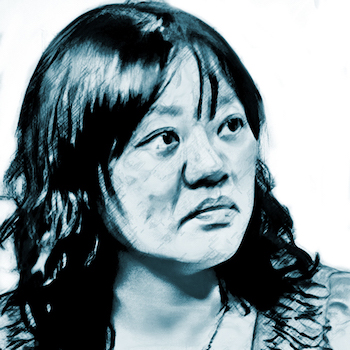
On 30 October 2021 AFP reported that a group of UN human rights experts called for the immediate release of Vietnamese activist Pham Doan Trang (pic), who is awaiting trial after a year in detention. The prominent Vietnamese author, who campaigns for press freedom and civil rights, was arrested in October last year. [see: https://www.trueheroesfilms.org/thedigest/laureates/fe8bf320-1d78-11e8-aacf-35c4dd34b7ba]

Trang has pushed for change on a host of controversial issues, including land grabs and LGBTQ rights. “Pham Doan Trang is only the latest victim of the authorities’ use of vaguely-defined propaganda charges to persecute writers, journalists and human rights defenders,” the experts said in a statement.

The UN experts said the charges against her stem from at least three human rights reports she co-authored, plus interviews with foreign media. They accuse the authorities of “criminalising the exercise of their right to freedom of opinion”.

“We urge the authorities to immediately and unconditionally release Ms Pham Doan Trang.“

The UN experts included the special rapporteurs on the right to freedom of opinion, on human rights defenders, and on the right to physical and mental health.

See also: https://humanrightsdefenders.blog/2020/10/08/vietnam-detaines-human-rights-defender-pham-doan-trang-just-after-concluding-its-annual-human-rights-dialogue-with-the-usa/

https://www.thestar.com.my/aseanplus/aseanplus-news/2021/10/30/un-experts-call-for-release-of-vietnamese-activist

Aarhus Convention gets new mechanism to protect environmental defenders

October 26, 2021

The United Nations Economic Commission for Europe (UNECE) Convention on Access to Information, Public Participation in Decision-Making and Access to Justice in Environmental Matters was adopted on 25 June 1998 in the Danish city of Aarhus. The Aarhus Convention establishes a number of rights of the public (individuals and their associations) with regard to the environment. The Parties to the Convention are required to make the necessary provisions so that public authorities (at national, regional or local level) will contribute to these rights to become effective. See also: https://humanrightsdefenders.blog/2021/10/11/new-right-to-healthy-environment-ngos-urge-action/

Now (on Thursday 21 October 2021) the 46-strong group of countries across the wider European region has agreed to establish a new legally binding mechanism that would protect environmental defenders.

It takes the form of Special Rapporteur – or independent rights expert – who will quickly respond to alleged violations and take measures to protect those experiencing or under imminent threat of penalization, persecution, or harassment for seeking to exercise their rights under the Convention. As time is of the essence to buttress the safety of environmental defenders, any member of the public, secretariat or Party to the Aarhus Convention, will be able to submit a confidential complaint to the Special Rapporteur, even before other legal remedies have been exhausted. The agreement delegates setting up the new mechanism to the United Nations, or another international body. See also: https://humanrightsdefenders.blog/2019/11/28/cop25-climate-defenders-also-needed-to-be-shielded/

“I remain deeply concerned by the targeting of environmental activists”, said Secretary-General Antonio Guterres, welcoming the rapid response mechanism as “an important contribution to help advance my Call to Action for Human Rights”. 

“This landmark decision is a clear signal to environmental defenders that they will not be left unprotected”, said UNECE chief Olga Algayerova. “It demonstrates a new level of commitment to upholding the public’s rights under the Aarhus Convention, as well as Parties’ willingness to respond effectively to grave and real-time challenges seen in the Convention’s implementation on the ground”.   

A report to the Human Rights Council by Mary Lawlor, Special Rapporteur on the situation of human rights defenders, found that one-in-two human rights defenders who were killed in 2019 had been working with communities around issues of land, environment, impacts of business activities, poverty and rights of indigenous peoples, Afrodescendants and other minorities. See also: https://humanrightsdefenders.blog/2021/09/13/global-witness-2020-the-worst-year-on-record-for-environmental-human-rights-defenders/  

Since January 2017, among the Parties to the Aarhus Convention, incidents of persecution, penalization and harassment of environmental defenders have been reported in 16 countries. 

48th session of the Human Rights Council: outcomes

October 19, 2021

On 11 October 2021 14 NGOs shared reflections on the key outcomes of the 48th session of the UN Human Rights Council, as well as the missed opportunities to address key issues and situations [See also: https://humanrightsdefenders.blog/2021/09/13/human-rights-defenders-issues-in-the-48th-session-of-he-un-human-rights-council/]:

We welcome the adoption of the resolution on the establishment of the UN Special Rapporteur on human rights and climate change, who will focus on the interdependence between human rights, a healthy environment, and combating climate change and we welcome the Council’s historic recognition of the human right to a clean, healthy and sustainable environment. These are vital steps towards addressing the climate crisis and achieving environmental justice.

Ensuring a safe and enabling environment for civil society participation at the national and international levels is essential.

We welcome the adoption by consensus of the resolution on cooperation with the UN in the field of human rights, in particular the invitation to the Secretary-General to submit his annual reprisals report to the General Assembly, which will ensure greater attention to the issue and contribute to a more coherent system-wide response across the UN.

We express concern over the reclassification of NGO written statements submitted to the 48th session of the HRC from Agenda Item 4 to Agenda Item 3 without informing or consulting with the submitting organizations, and without transparency for the reasons or scope of this reclassification.

We welcome that the resolution on equal participation in political and public affairs puts an important focus on the context of elections and on the impact of COVID-19, underscoring the importance of protecting civil society participation at every level  as part of an effective response to the pandemic, in post-pandemic recovery and as a vital component of democratic electoral processes. We regret that, in this and other resolutions, there has been systematic pushbacks against the inclusion of references to children’s right to participate in public affairs, in particular girls, in contravention of international human rights standards.

We also welcome the resolution on privacy in the digital age. Among other issues, the resolution responds to recent Pegasus revelations and includes new commitments on the use of privately-developed surveillance tools against journalists and human rights defenders. It is now essential that the Council goes further and champions the call made by various UN human rights experts to implement a global moratorium on the sale, export, transfer, and use of private surveillance technology without proper human rights safeguards. We also welcome new language in the text on privacy violations and abuses arising from new and emerging technologies, including biometric identification and recognition technologies. In future iterations of the text, we encourage the core group to go further in calling for a ban on technologies that cannot be operated in compliance with international human rights obligations.

With the withdrawal of the resolution on the realisation of a ‘better life’, we are glad to see that the Council’s mandate and resources will not be diverted to efforts that would distract from its core work or dilute human rights standards.

We regret that it was not possible to schedule the briefing by the Peacebuilding Commission (PBC) as per resolution 45/31 – and look forward to future opportunities for exchanges between the HRC and the PBC to learn from one another in efforts to address common contemporary challenges.

We deplore the abandonment of the Yemeni people by the HRC member States who did not support the renewal of the Group of Eminent Experts on Yemen. This failure of the HRC gives the green light to all parties to the conflict to continue their campaign of death and destruction in Yemen. We demand an international criminal investigative mechanism. Anything less is unacceptable.

We regret that the HRC has not responded to the calls of civil society and the evidence of widespread violations in countries including China, Egypt and Saudi Arabia where the situations manifestly warrant the establishment of international investigation and accountability mechanisms.

The establishment of a Special Rapporteur on the situation of human rights in Afghanistan supported by additional and dedicated expertise in OHCHR should bring much needed scrutiny. While we are disappointed that the Council did not establish the full-fledged investigative and monitoring mechanism that the situation warrants, we hope this decision represents a first step towards a stronger response to ensure accountability for human rights violations and crimes under international law in Afghanistan.

While the extension of international scrutiny in Burundi, including through ongoing documentation of violations, is welcome, we regret the absence of a clear strategy post-Commission of Inquiry. As the Burundian government continues to reject cooperation with the Council and its mechanisms and to deny violations, and given that the newly-created Special Rapporteur will not have access to the country for the foreseeable future, it is vital for the Council to rely on benchmarks to design the next steps of its action on, and engagement with, Burundi. We thank the COI for its important work since 2016. It has set the bar high for investigative mechanisms.

We welcome the extension of the mandate of the Special Rapporteur on the situation of human rights in Cambodia with a mandate to provide an additional oral update to the Council. However, the resolution falls short of the minimum action required to credibly address the increasing regression in democratic space and civil and political rights and to put in place necessary measures to create an environment conducive for free, fair and inclusive elections in 2022 and 2023, including mandating enhanced monitoring and reporting by the High Commissioner.

More than four years after the beginning of the conflict in the North-West and South-West regions in Cameroon, we deeply regret States’ failure, once again, to collectively address the country’s human rights crisis. As other international and regional bodies remain silent, the Council has a responsibility to act, including through the creation of an investigative and accountability mechanism. 

We welcome the renewal of the mandate of the Fact-Finding Mission (FFM) on Libya but regret that the mandate has only been extended for a 9-month period. The severity of ongoing and past violations and abuses in Libya, including war crimes, requires an FFM with a sustained and properly resourced mandate.

We welcome a second joint statement on Nicaragua, and urge concerned States to step up collective action in light of increasing repression ahead of the November 7 elections. Should the Government not revert course, it is fundamental that the Council takes stock and provides an adequate, strong response, including the establishment of an international mechanism at its 49th session.

We welcome the High Commissioner’s oral updates on the Philippines.  While the UN Joint Program on Human Rights (UNJP) might provide a framework for improvements, we remain concerned that the UN Joint Programme on Human Rights is instrumentalized by the Government only to please the international community. The national accountability mechanism fails to show meaningful progress. We continue to urge the Council to consider establishing a Commission of Inquiry on the Philippines, to eventually start the long-overdue independent and transparent investigation into the human rights violation in the country.

We welcome the robust resolution that extends the mandate of the Independent Expert on Somalia for a further year. 

While human rights advancements since 2019 in Sudan should be recognized, Sudan still faces significant human rights challenges including threats of the militarization of the State which is also the most challenging peril for women’s rights and WHRDs in Sudan. The transition is not complete, and political uncertainty remains. Against this backdrop, the Council’s decision to discontinue its formal monitoring of and reporting on Sudan is premature as the military establishment continues to pose a threat to democracy and stability in Sudan. We urge the Sudanese authorities to fully cooperate with the UN human rights system to address ongoing violations including sexual and gender based violence and the legacy of 30 years of dictatorship, including impunity for crimes under international law.

Signatories: International Service for Human Rights (ISHR), Cairo Institute for Human Rights Studies; DefendDefenders (East and Horn of Africa Human Rights Defenders Project); Commonwealth Human Rights Initiative (CHRI); FIDH; ARTICLE 19; International Commission of Jurists; FORUM ASIA; International Bar Association; Franciscans International; CIVICUS: World Alliance for Citizen Participation; Association of Progressive Communications – APC; child rights connect; Gulf Center for Human Rights

https://ishr.ch/latest-updates/hrc48-civil-society-presents-key-takeaways-from-human-rights-council/