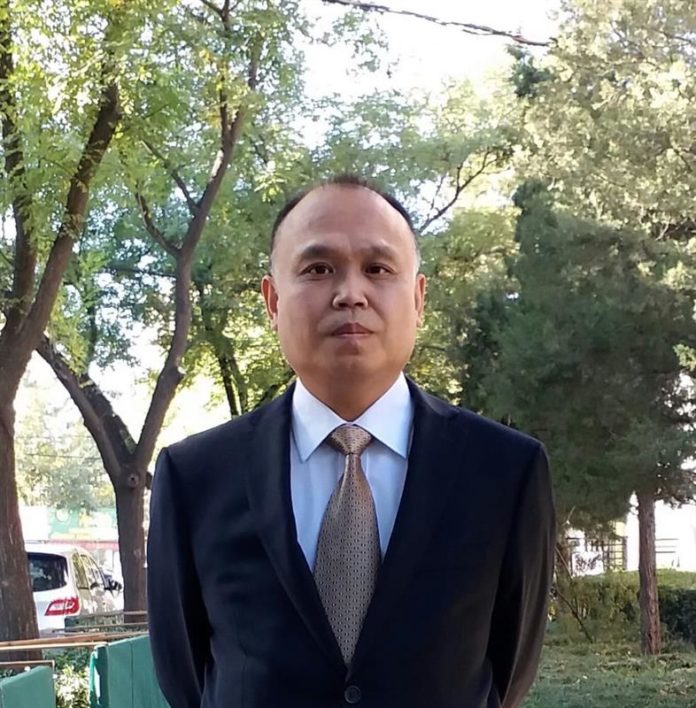
Yu was just another corporate lawyer in a fast-rising Chinese economy. But when he decided to take on human rights cases and ask for constitutional reform in his country, he drew the ire of one of the most powerful regimes in the world. Yu has been detained, harassed, and convicted in secret. While in custody, he has been tortured and denied medical care and family visits. His wife, Xu Yan, who Yu has not seen in person for 3 years, herself has become an icon. She has taken up the mantel of human rights defense and is currently studying law. Yu’s fight for due process has completely upended his life. [https://humanrightsdefenders.blog/2021/01/21/mea-nominee-yu-wensheng-in-poor-health-after-years-in-prison/]
With the launching of the new Digest of human rights laureates by True Heroes Films (THF) today, 2 February 2021, I have decided to centre my blog more on human rights awards and laureates. It will give the blog more focus and this will also help the Digest to stay up to date. After many years of work, True Heroes Films (THF) has made public its gateway to human rights awards and their laureates at www.trueheroesfilms.org/thedigest. The Digest is a new free online tool that gives everybody access to information on human rights awards, including the list of people who received such awards. Over the last 20 years, the human rights movement has discovered the value of awards. The Digest tells that story and makes human rights defenders more visible as an encouragement and role model for others.
Here some specialised user comments: The Digest “will help us demonstrate to the world how many human rights defenders there are in the world and the different human rights they defend and fight for” stated Guadalupe Marengo, Head of Global Human Rights Defenders Programme at Amnesty International.
“It is a useful resource that places individuals, the laureates, at the heart of the search process,” commented Eleanor Davies of the Centre of Applied Human Rights at York University.
“With a simple and straightforward way to find what you are looking for, it helps initiate partnerships,” says Friedhelm Weinberg, Executive Director of HURIDOCS, an organisation specialised in information technology.
For human rights defenders, the Digest allows finding awards and people concerned with similar causes worldwide. Award givers can quickly check their candidates. For media, the Digest means instant access to information on human rights defenders or an award announcement to complete their story.
The Digest was created during 8 years with support from the City of Geneva, Brot für die Welt and the Permanent Mission of the Netherlands to the United Nations Office.
The Court of Appeal held on Friday 29 January 2021 that a group of activists who broke into Stansted Airport in an act of protest should “never have been prosecuted” for an “extremely serious” terror-related offence under s.1(2)(b) of the Aviation and Maritime Security Act 1990 (“AMSA”).
It overturned the Stansted 15’s convictions.
Lord Burnett said the protestors should not have been prosecuted for the extremely serious offence … because their conduct did not satisfy the various elements of the offence. “There was, in truth, no case to answer.”
This case has been controversial, drawing attention both nationally and internationally. Following the initial convictions, a joint letter was sent to the Government by UN experts, including the Working Group on Arbitrary Detention, the Special Rapporteur in the promotion and protection of the right to freedom of opinion and expression, the Special Rapporteur on human rights defenders, and the Special Rapporteur on the promotion and protection of human rights and fundamental freedoms when countering terrorism. The UN experts urged the UK government not to use security and terrorism-related legislation to prosecute peaceful protesters.
The failure of the ground relating to necessity, duress and s.3 CLA are unlikely to surprise those with experience of defending protestors in direct action cases. Nevertheless, it is notable that the actions of the appellants did prevent the deportation of five persons on the flight who have consequently been able to establish their legal right to remain in the UK, including three on human rights grounds. One of those has been granted asylum as a victim of human trafficking. In total, of the 60 persons due to be on the deportation flight, eleven reportedly remain in the country.
Amongst the human rights group who have celebrated the ruling are Amnesty UK, who welcomed “a good day for justice” and Liberty, who hailed “a major victory for protest rights” and deprecated the now-quashed convictions, calling them “part of a sustained attack on the right to protest.”
The UN Human Rights Council (UNHRC) must take urgent steps to address the worsening human rights situation in Sri Lanka, said Amnesty International, on 27 January 2021 following the release of a damning UN report on the country’s efforts to ensure accountability for crimes committed during the civil conflict.
In February 2020, the Sri Lankan government announced that it would no longer cooperate with the UNHRCs landmark resolution 30/1, which promotes reconciliation, accountability, and human rights in the country, and would instead pursue its own reconciliation and accountability process. This report lays bare Sri Lanka’s abject record on delivering justice and accountability and the decaying effect this has had on human rights in the country David Griffiths, Director of the Office of the Secretary General at Amnesty International
“This report lays bare Sri Lanka’s abject record on delivering justice and accountability and the decaying effect this has had on human rights in the country. The seriousness of these findings highlights the urgent need for the UN Human Rights Council to step up its efforts in Sri Lanka,” said David Griffiths.
“For more than a decade, domestic processes have manifestly failed thousands of victims and their families. Given the government’s decision to walk away from resolution 30/1, and regression on the limited progress that had been made, the Human Rights Council must send a clear message that accountability will be pursued with or without the cooperation of the government.”
Amnesty International is calling on the UN Human Rights Council to implement the report’s key recommendations to put in place more stringent oversight on Sri Lanka, including more robust monitoring and reporting on the human rights situation, and the collection and preservation of evidence for future prosecutions.
“UN member states should learn from past experience, and this time heed the early warning indicators identified by the UN’s top human rights official.” said David Griffiths
The OHCHR report, published on 27 January 2021, is available to download here:. The Human Rights Council will meet for its 46th session from 22 February to 23 March, during which Canada, Germany, Montenegro, North Macedonia and the UK – the current core group of states leading on Sri Lanka – are expected to present a resolution in follow-up to the OHCHR report.
Amnesty International published an assessment of the situation in Sri Lanka, setting out clear expectations for HRC action, earlier this month. The High Commissioner’s report supports the call for more robust monitoring and reporting on the situation, as well as the collection and preservation of evidence for future prosecutions.
The human rights organization Amnesty International published a scathing report on 25 January 2021 decrying the inhumane conditions in Egyptian prisons. The report comes a decade after the Arab Spring uprising.
The report detailed the experiences of 67 individuals in detention, 10 of whom died in custody and two who died shortly after being released. It was carried out primarily between February 2020 and November 2020 and focused on 16 prisons. It found that:
Prisoners were kept in squalid conditions and received unhealthy food;
There was no proper access to health care, which may have resulted in death;
Overcrowding, poor ventilation and limited access to water and toilets led inevitably to outbreaks of coronavirus.
The report also found that some prisoners were deliberately denied access to health care due to their political affiliations. Activists, politicians and human rights defenders were denied basic treatments available to other inmates. There was also evidence of prison authorities “targeting prisoners critical of the government and denying them adequate food or family visits,” Markus Beeko, Secretary General of Amnesty International in Germany, asserted. According to UN estimates, there are 114,000 people incarcerated in the north African country.
On 22 January 2021 Mary Lawlor also deplored the arrest and prolonged pre-trial detention of human rights defenders and bloggers, and their accusation of being members of a terrorist organisation, continuing Egypt’s practice to intimidate and criminalise human rights defenders, journalists and their families.
“I am extremely concerned by the seemingly unrelenting efforts of the Egyptian authorities to silence dissent and shrink civic space in the country, despite repeated calls from UN mechanisms and the international community,” said Mary Lawlor, UN Special Rapporteur on the situation of human rights defenders.
The Special Rapporteur said she was disturbed by the detention since 2018 of human rights defender and blogger Mohamed Ibrahim Radwan, also known as ‘Mohamed Oxygen’, on charges of “membership of a terrorist organisation” and “misuse of social media” in retaliation for his posts and videos reporting on human rights issues. He was granted conditional release by the Cairo Criminal Court in November last year but was attached to a new case on charges of joining a terrorist organisation and kept in detention. He remains in pre-trial detention in Al-Aqrab Prison, south of Cairo.
Lawlor said that human rights defenders such as researcher and post-graduate student Patrick Zaki, who was arrested in February last year, have endured repeated renewals of detention without trial. “Pre-trial detention should only be used as the exception to the rule, rather than the default approach,” said Lawlor.
“Not only are these human rights defenders, journalists and other civil society actors unduly targeted for their legitimate and peaceful defence of human rights and fundamental freedoms, they are wrongfully accused of belonging to terrorist organisations and portrayed as a national security threat under vague legal provisions,” the Special Rapporteur said. “This is an issue which I and a number of UN experts have previously communicated our concern about to the Egyptian authorities.”
Ten years after the Tahrir square protests in Cairo, Egypt’s human rights record is disastrous. On the occasion of the anniversary of the 2011 revolution, several international campaigns are calling for the release of imprisoned activists writes Sofian Philip Naceur in Qantara.de Violent, authoritarian and extremely paranoid: since his bloody takeover in 2013, Egypt’s President Abdul Fattah al-Sisi has restored a regime whose brutality far outstrips even the reign of long-term ruler Hosni Mubarak. Hopes for real political and social change after the mass uprising that forced Mubarak out of office after 30 years in power have faded away, leaving a disillusionment that is omnipresent.
Egyptian opposition figures are using the current media attention around the tenth anniversary of the “25 January Revolution” to highlight the fate of those currently in prison for their political engagement. Some have been sentenced to heavy jail terms, while others are subjected to pre-trial detention lasting years by the Egyptian security forces and the country’s judiciary. European opposition politicians are also participating in corresponding campaigns.
Eight politicians from Germany’s left-wing party – Die Linke – have signed a solidarity statement calling for the immediate release of all political detainees, which explicitly highlights the fate of six detained leftist activists, journalists and trade unionists. Although the campaign specifically highlights six individual cases, it expresses solidarity not only with Egyptian leftists, but with all those “who are resisting Sisi’s dictatorship”. In addition to journalist Hishem Fouad, who advocated for striking workers and independent trade unions long before 2011, the German politicians are also calling for the release of novelist Ayman Abdel Moati, lawyer and trade union activist Haitham Mohamadeen and trade unionist Khalil Rizk. All four are detained on flimsy, terrorism-related charges.
The Danish government should renew and strengthen efforts to secure the immediate and unconditional release of prominent human rights defender and dual Danish-Bahraini citizen, Abdulhadi Al-Khawaja, 108 international and Bahraini rights groups said on 24 January 2021 in a joint letter to Prime Minister Mette Frederiksen of Denmark. As reported by the AhlulBayt News Agency (ABNA).
The human rights defender, Abdulhadi Al-Khawaja, 59, is serving a life sentence in Bahrain’s Jaw prison for his peaceful political and human rights activities, in violation of his right to freedom of expression. [see also https://humanrightsdefenders.blog/tag/abdulhadi-al-khawaja/]
“There is no doubt that the conviction and sentencing of Abdulhadi al-Khawaja was unfair and oppressive and tried to silence his prominent voice demanding the rights of Bahrainis,” said Joe Stork, deputy Middle East director at Human Rights Watch. “Al-Khawaja should not have had to spend a single minute behind bars, yet he has been unjustly detained for almost a decade.”
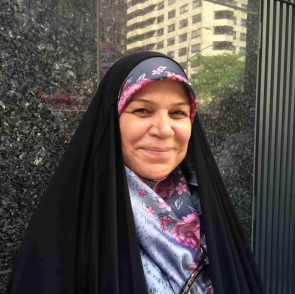
It has now been made public that Fatima Al-Bahadly, a human rights defender from the city of Basra, has received the 2020 Frontline Defenders Award.
The award was granted to Al-Bahadly for her role in founding Al-Firdaws Society, an organisation that focuses on protecting women affected by war and strengthening their role in peace building.
Today 18 January 2021, the Martin Ennals Foundation announced that three outstanding human rights defenders based in authoritarian states are nominated for the 2021 Martin Ennals Award.
In isolated Turkmenistan, Soltan Achilova documents human rights violations and abuses through photojournalism.
Imprisoned in Saudi Arabia, Loujain AlHathloul is a leading advocate for gender equality and women’s rights.
A lawyer, Yu Wensheng defended human rights cases and activists before his conviction and imprisonment in China.
The Finalists distinguish themselves by their bravery and deep commitment to the issues they defend, despite the many attempts to silence them by respective governmental authorities. The 2021 Martin Ennals Award Ceremony will celebrate their courage on 11 February during an online ceremony hosted jointly with the City of Geneva which, as part of its commitment to human rights, has for many years supported the Award. “Every year thousands of human rights defenders are persecuted, harassed, imprisoned, even killed. The Martin Ennals Foundation is honored to celebrate the 2021 Finalists, who have done so much for others and whose stories of adversity are emblematic of the precarity faced by the human rights movement today”, says Isabel de Sola, Director of the Martin Ennals Foundation.
“Authoritarian states tend to believe that by jailing or censoring human rights defenders, the world will forget about them. During the COVID-pandemic, it seemed like lockdowns would successfully keep people from speaking out. This year’s Finalists are a testament to the fact that nothing could be further from the truth”, says Hans Thoolen, Chair of the Jury.
In Turkmenistan, one of the world’s most isolated countries, freedom of speech is inexistent and independent journalists work at their own peril. Soltan Achilova (71), a photojournalist, documents the human rights abuses and social issues affecting Turkmen people in their daily lives. Despite the repressive environment and personal hardships, she is one of the very few reporters in the country daring to sign independent articles.
In Saudi Arabia, women still face several forms of gender discrimination, so much so, that the Kingdom ranks in the bottom 10 places according to the World Economic Forum’s Global Gender Gap Report 2020. Loujain AlHathloul (31) was one of the leading figures of the Women to drive movement and advocated for the end of the male guardianship system. She was imprisoned in 2018 on charges related to national security together with several other women activists. Tortured, denied medical care, and subjected to solitary confinement, Loujain was sentenced to 5 years and 8 months in prison on 28 December 2020. [see: https://humanrightsdefenders.blog/tag/loujain-al-hathloul/]
In China, more than 300 human rights activists and lawyers disappeared or were arrested in 2015 during the so called 709 Crackdown. A successful business lawyer, Yu Wensheng (54) gave up his career to defend one of these detained lawyers, before being arrested himself. Detained for almost three years now, Yu Wensheng’s right hand was crushed in jail and his health is failing. [see also: https://humanrightsdefenders.blog/2019/06/26/lawyers-key-to-the-rule-of-law-even-china-agrees-but-only-lip-service/]
Online Award Ceremony on 11 February 2021
The 2021 Martin Ennals Award will be given to the three Finalists on 11 February 2021 at an online ceremony co-hosted by the City of Geneva (Switzerland), a long-standing supporter of the Award. “The City of Genevareaffirmsits support to human rights, especially during these times of crisis and upheaval. Human rights are the foundation of our society, not even the pandemic will stop us from celebrating brave persons who have sacrificed so much”, says Member of the executive Alfonso Gomez.
HUMAN RIGHTS DEFENDERS are people who promote and protect the human rights of others, whether individually or in association with others. They are people who act with humanity, serve humanity and bring out the best in humanity. For all of these defenders, international and regional human rights mechanisms can protect and amplify their work and impact on the ground. This strategy has been developed in a context characterised by uncertainty and change, including a worsening climate emergency, a global pandemic and associated financial crisis, deepening inequalities, worsening authoritarianism and populism, as well as the erosion of multilateralism, and the rule of law. It is also a context characterised by increased awareness and action at the local, national, regional and international levels. Human rights defenders are mobilising around issues such as environmental justice, racial justice, gender equality, freedom of For many defenders working in restrictive national contexts, regional and international mechanisms may be the only platforms available. For these mechanisms to be effective, however, they need to be credible, accessible and responsive to defenders, providing them with a safe and influential platform from which to demand justice, push for accountability, and contribute to positive change. freedom of expression and association, access to information, democratic representation and participation, the redistribution of economic and political power, and state and corporate accountability for intersecting human rights violations and abuses.
On many of these issues, we are at an inflection point; a point at which the work of human rights defenders is perhaps more imperilled but more important than ever. For example:
ENVIRONMENTAL ACTIVISTS AND INDIGENOUS PEOPLES, whose knowledge is vital to live more responsibly and sustainably, are being killed and displaced for their work to prevent exploitation and to protect precious forests and oceans.
STUDENTS AND WORKERS mobilising online and offline to call for democratic freedoms and protest against authoritarianism are being surveilled, harassed and criminalised under abusive counter- terrorism laws.
SOCIAL MOVEMENTS taking to the streets to demand racial justice are being met with disproportionate force from police and security forces.
WOMEN’S RIGHTS ACTIVISTS are being detained and tortured in retaliation for their work to challenge patriarchy and demand an end to discrimination and violence.
AT-RISK MIGRANT ACTIVISTS AND HUMANITARIAN WORKERS who support migrant rights are being criminalised and prosecuted as threats to national security.
The freedom, safety and work of these and many other human rights defenders is vital to build a better future for all. The purpose of this Strategic Framework is to guide the effective pursuit of ISHR’s Vision, Mission and Values, and the achievement of ISHR’s Overall Goals. It articulates Strategic Goals and a framework for identifying priorities, and maps an organisational structure and working methods that will ensure agility and sustainability in a fast changing world. The strategy was developed through a highly consultative process over a 10 month period with extensive and invaluable inputs from human rights defenders, NGOs working at the national, regional and inter-national levels, human rights experts, and diplomatic and financial partners, as well as ISHR Board and staff. It is complemented with a results framework, and implemented through an annual activity plan and budget, and reviewed and updated on a biennial basis to ensure it remains relevant, responsive, ambitious and agenda setting. The framework provides the structure for our planning, monitoring, evaluation and learning process.
On 13 January 2021) the Human Rights Foundation announced the opening of “In Pursuit of Freedom,” a digital art exhibit featuring 15 protest movements from around the globe. Street protests were a defining feature of recent civil and political resistance despite the spread of the novel coronavirus worldwide. Authoritarian regimes were exposed for using the COVID-19 pandemic as an excuse for repression, stricter restrictions, and power grabs instead of protecting their citizens’ lives. Nevertheless, people took the streets to make their voices heard, and as they adapted to champion social and political change in the face of the outbreak, art was a vigorous medium of protest and creative expression to expose the deception of tyranny. “In Pursuit of Freedom: A Year in Global Protest Art” showcases moving examples of protest art from 15 countries across regions, and attests to how art can be a powerful tool for activism and protest. From Belarus to Hong Kong, visit the exhibit to see striking works of protest art by artists who committed their talent in 2020 to push for change across 15 countries ruled by authoritarian regimes.


 Hans Thoolen on Human Rights Defenders and their awards