Archive for the 'organisations' Category

Premier League Football and human rights: continuing saga

March 25, 2022
Newcastle United players warm up before the Premier League match at the Amex Stadium, Brighton, United Kingdom on July 20, 2020.
Newcastle United players warm up before the Premier League match at the Amex Stadium, Brighton, United Kingdom on July 20, 2020. © 2020 AP Images

The English Premier League should immediately adopt and implement human rights policies that would prohibit governments implicated in grave human rights abuses from securing stakes in Premier League clubs to whitewash their reputations, Human Rights Watch said 0n 23 March 2022. The ban should be extended to state entities that they control, abusive state leaders, and individuals funding or otherwise assisting in serious abuses. See also: https://humanrightsdefenders.blog/2020/08/07/human-rights-compliance-test-for-football-clubs/

On March 14, 2022, media reported that a consortium led by a Saudi media group closely connected to the Saudi government had expressed interest in purchasing Chelsea Football Club. This reinforces the urgent need for the Premier League to adopt policies to protect clubs and their supporters, before any sale takes place, from being implicated in efforts to whitewash rights abuses. The Premier League’s approval of the sale of Newcastle United to a business consortium led by the Saudi Arabia’s Public Investment Fund (PIF), a government-controlled entity implicated in serious human rights abuses, was conducted in an opaque manner and without any human rights policy in place. The Premier League should reconsider the approval of the Newcastle United sale. [see also: https://humanrightsdefenders.blog/2020/01/30/newcastles-takeover-bid-from-saudi-arabia-welcomed-by-many-fans-but-it-remains-sportswashing/]

Allowing Newcastle United to be sold to a business consortium led by Saudi Arabia’s sovereign wealth fund, an institution chaired by a state leader linked to human rights abuses, has exposed the farcical inadequacies of the Premier League’s Owners and Directors Test,” said Yasmine Ahmed, UK advocacy director at Human Rights Watch. “As another consortium with Saudi government links eyes acquiring Chelsea, the Premier League should move fast to protect the league and its clubs from being a fast-track option for dictators and kleptocrats to whitewash their reputations.”

Human Rights Watch wrote to the Premier League CEO, Richard Masters, on March 15, to express concerns over the Newcastle United decision and to raise further concerns about the involvement of Saudi Arabia’s Public Investment Fund in facilitating human rights abuses.

The October 7, 2021 Premier League statement announcing the sale said that the league had “received legally binding assurances that the Kingdom of Saudi Arabia will not control Newcastle United Football Club.” The league did not disclose what these assurances were, nor explain how they would be legally binding. Instead, the Premier League appears to have acquiesced to the notion that the Public Investment Fund is separate from the Saudi state, even though its chairman is the de facto Saudi ruler, Crown Prince Mohammed bin Salman, its board members are nearly all currently serving ministers and other high-level officials, and it is a sovereign wealth fund that reports to the government’s Council of Economic and Development Affairs…

Human Rights Watch has significant concerns around the role of the investment fund itself in facilitating human rights abuses. Human Rights Watch wrote to the fund’s governor, Yasir al-Rumayyan, who, according to a LinkedIn page attributed to al-Rumayyan and various media reports, was managing director of the fund between 2015 and 2019, on December 21, 2021, and again on March 15 requesting his response to allegations of serious human rights violations associated with the fund. He has not responded. Al-Rumayyan is also Newcastle United’s new nonexecutive chairman.

Human Rights Watch has reviewed internal Saudi government documents submitted to a Canadian court as part of an ongoing legal claim filed by a group of Saudi companies against a former intelligence official. The documents showed that in 2017, one of Mohammed bin Salman’s advisers ordered al-Rumayyan, then the fund’s “supervisor,” to transfer 20 companies into the fund as part of an anti-corruption campaign. There is a risk that these companies were “transferred” from their owners without due process.

..

The Premier League has a responsibility to respect human rights throughout all its operations. The UN Guiding Principles on Business and Human Rights sets out these responsibilities, including the expectation that businesses will adopt specific policies and conduct due diligence to identify any risks of contributing to human rights harm. Such harm may include conferring reputational benefits that help cover up human rights abuses. The Premier League’s handbook does not include human rights under its “owners and directors test,” even though ownership of prominent football clubs by state entities or individuals close to state leaders is on the rise throughout Europe. This gap has allowed Saudi Arabia to employ its “sportswashing” strategy in the Premier League.

On March 3, the Premier League said it was considering adding a human rights component to its owners’ and directors’ test as it reviews its governance and regulations, and Masters told the Financial Times that this had come under “a lot of scrutiny” and league officials were looking to see if “we need to be more transparent and whether those decisions should be approved by an independent body.” The Premier League should also investigate the allegations of involvement of the fund’s and al-Rumayyan’s involvement in abuses, including Khashoggi’s murder, and publish its findings.
 
Potential purchase of Chelsea FC by Saudi-led consortium
The Saudi-led consortium that has reportedly made a £2.7bn bid to purchase Chelsea is being spearheaded by the Saudi Research and Media Group (SRMG), one of the largest publishing companies in Middle East, headed by a prominent Saudi media executive, Mohammed al Khereiji. The company owns more than 30 media outlets including Asharq Al-Awsat, Asharq News, and Arab News – media outlets with an apparently pro-Saudi government bias – and has its headquarters in Saudi Arabia where there are almost no independent media. Al- Khereiji is the only name mentioned in any reports regarding the Chelsea bid, and it is unclear who else is involved in the consortium.

While the media company has reportedly gone out of its way to deny any direct links to the Saudi government, it has repeatedly been reported that the group has longstanding close ties to former and current Saudi rulers. Between 2002 and 2015, three of King Salman’s sons chaired it. The position was then filled by Prince Badr bin Abdullah bin Mohammed bin Farhan, who is reported to have close ties to Crown Prince Mohammed bin Salman, until 2018, when he was appointed culture minister. Prince Badr is also chairman of the Misk Art Institute, a subsidiary of the crown prince’s non-profit Misk Foundation.

In 2020, Al-Khereiji who holds several high-level positions, was appointed board chairman of MBC Media Solutions, a commercial advertising and sales unit created in partnership between MBC Group, a media conglomerate owned by the Saudi government, and Engineer Holding Group (EGH), the media company’s parent company which al-Khereiji also heads.

Given how closely connected the media company is to Saudi state-controlled entities, how little independence the Saudi-based media outlets under its control have, and how much influence it wields – it claims it has a combined monthly reach of 165 million people – it contributes heavily to promoting the image of the Saudi government.  

The Saudi government has gone all-out in the past years to bury its human rights abuses under public spectacles and sporting events,” Ahmed said. “Until there is real accountability for these abuses by the Saudi leadership, those silently benefiting from the kingdom’s largess risk being an accomplice in whitewashing their crimes.

https://www.hrw.org/news/2022/03/23/english-premier-league-urgently-adopt-human-rights-policy
Late alert: Panel on gender rights: 24 March

March 23, 2022

On Thursday 24 March 2022, from 1:30pm – 2:30pm (CET) will take place the panel “Fighting for equality: Working together to combat violence and discrimination on the basis of sexual orientation and gender identity

Over the last two decades, UN human rights bodies and mechanisms have been at the forefront of promoting equality and fair treatment of lesbian, gay, bisexual, trans, gender-diverse and intersex (LGBTI) people.

These contributions have led to considerable progress regarding decriminalisation of same-sex consensual acts and diverse gender identities, enactment of progressive laws and the promotion of international standards on the rights of LGBTI persons.

While these advances have been, and continue to be, integral in the promotion and protection of equal rights for LGBTI persons, the stories of those relentlessly fighting for that progress often remain untold. Indeed, everywhere around the world human rights defenders working on issues of sexual orientation and gender identity and expression (SOGIE) play a central role in the fight for equality for LGBTI persons.

This side event aims to shed light on the success stories of human rights defenders working to combat violence and discrimination based on SOGIE, bringing together defenders as well as two UN mandate holders that focus on human rights defenders and on SOGIE. The panel will reflect on opportunities and risks for LGBTI human rights defenders, nation-level developments towards equality for LGBTI persons, progress of the current UN standards on these issues, and what can be done to address challenges.
SPEAKERS: 

Victor Madrigal-Borloz, Independent Expert on violence and discrimination on the basis of sexual orientation and gender identity

Mary Lawlor, Special Rapporteur on the situation of human rights defenders

Other speakers will be confirmed soon

Welcoming and closing remarks by the Permanent Mission of the Netherlands and the Permanent Mission of Mexico

MODERATOR: Julia Ehrt, ILGA World’s Executive Director 

You are welcome to join this discussion, which will be held in English with simultaneous interpretation in Spanish. Click here to register to the event. 

https://mailchi.mp/ishr/749qlxejj6-33453?e=d1945ebb90

Civil Rights Defenders’ Emergency Fund gives insight over 2021

March 18, 2022

Zinaida Muradova, Head of Rapid Response at Civil Rights Defenders

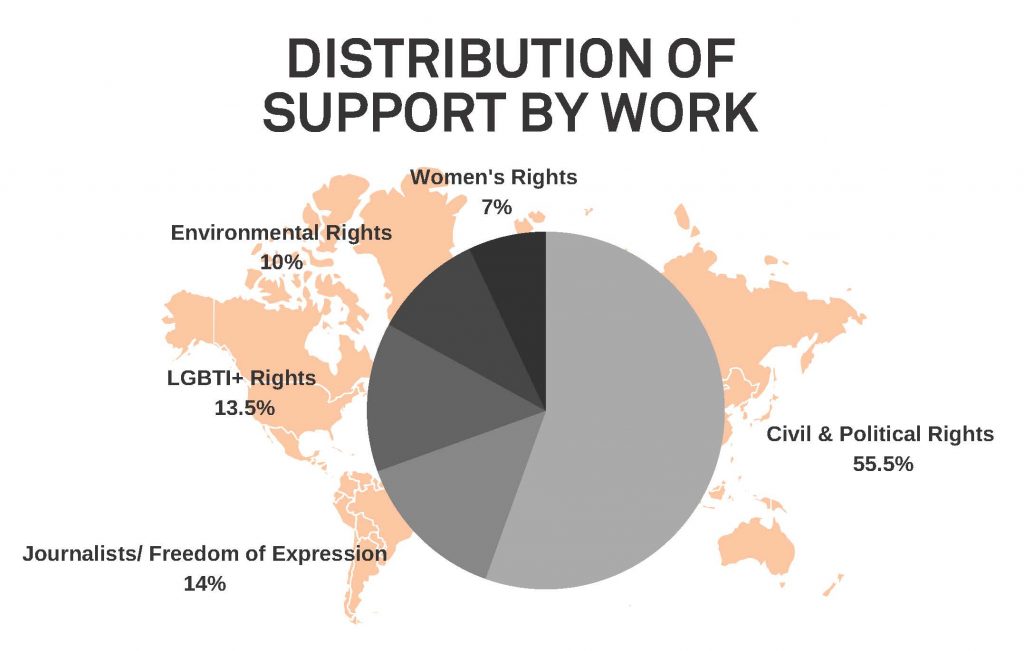
Defending human rights has become increasingly dangerous in many parts of the world. Many of those who do, face numerous risks and threats on a daily basis. When a threat towards a human rights defender escalates, Civil Rights Defenders’ Emergency Fund provides rapid assistance to strengthen the defender’s security as quickly as possible. 

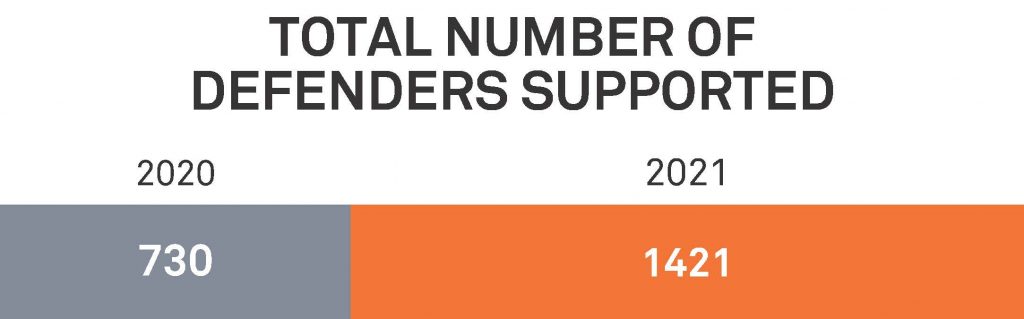
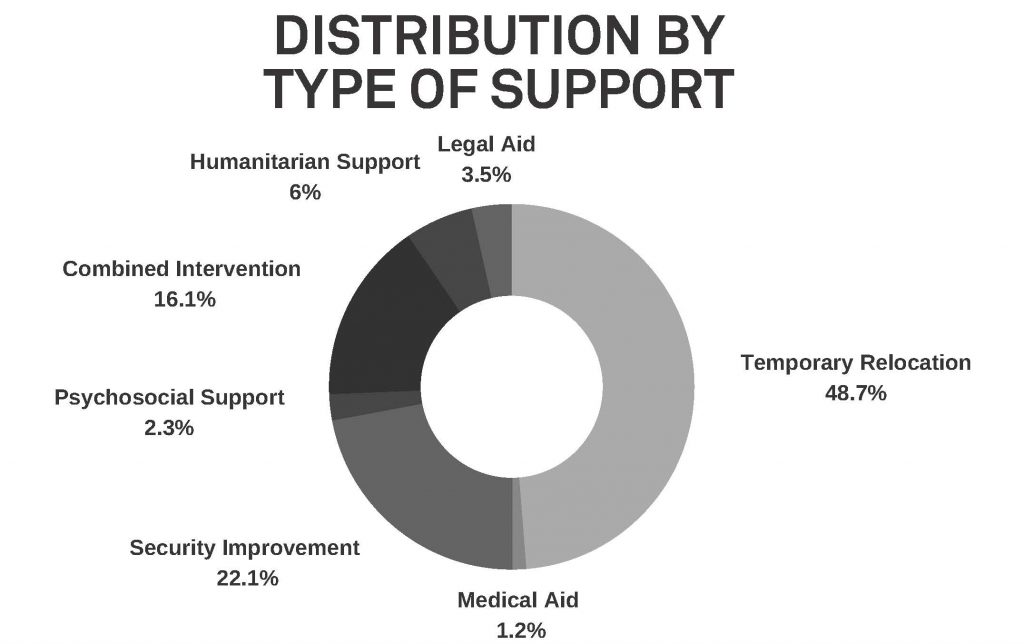
On 7 March 2022 it provided a breakdown of its use. The fund can, for example, provide legal aid or temporarily relocate people who suffer persecution, as well as provide preemptive efforts such as security trainings and digital security solutions. In 2021, the fund supported a total of 1421 human rights defenders in 30 countries. 

Emergency support doubled in 2021

In 2021, Civil Rights Defender’ Emergency Fund has received and processed the largest number of applications since the inception of the fund in 2012. We have supported a total of 1.421 Human Rights Defenders (HRD:s) and/or members of their families at risk through a total of 171 grants in 30 countries. The number of applications and granted support have thus both doubled compared to 2020.  

The world is becoming an increasingly dangerous place for human rights defenders, which is a significant explaining factor behind this increase. The CRD Emergency Fund has seen and reacted to the global backsliding of democracy and a number of emerging conflicts in 2021. The aftermath of the war between Armenia and Azerbaijan, the military coup in Burma, the spring protests in Colombia, the witch-hunt on civil society in Belarus, the civil war in Ethiopia and the Taliban’s takeover in Afghanistan are only a few of the conflicts that have deteriorated the security situation for human rights defenders in 2021. Many human rights defenders cannot continue their work for human rights and democracy without the support of the outside world.

Although the number of applications has doubled, so has the number of Emergency Fund applications granted. This increase is much thanks to the additional resources that Civil Rights Defenders has been able to put into processing fund applications. 

We are humbled to have been able to support so many human rights defenders in 2021. The need for emergency support is greater than ever, with the war in Ukraine the number of applicants is likely to keep increasing in the immediate future”, says Zinaida Muradova.

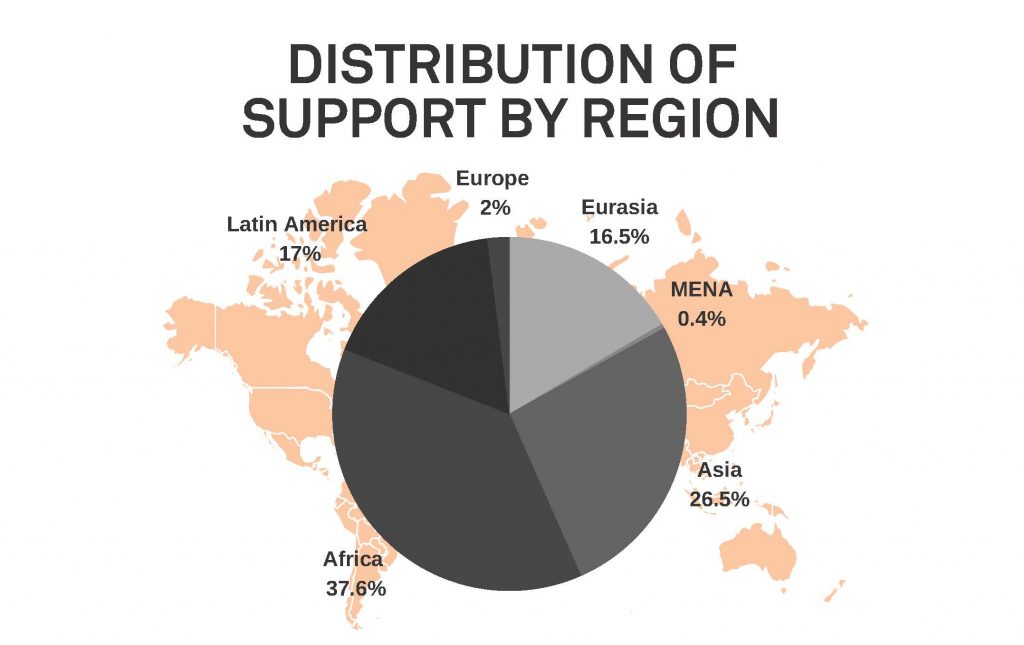
Emergency support to Burma and Asia has significantly increased in 2021, although the majority of human rights defenders who received emergency support continued to be from Africa. Additionally, the Emergency Fund continued to expand its global reach in five more regions – Eurasia, Europe, Africa, Latin America and MENA. In total, support was provided to human rights defenders in 30 countries during the course of 2021. 

Further advancing gender sensitivity 

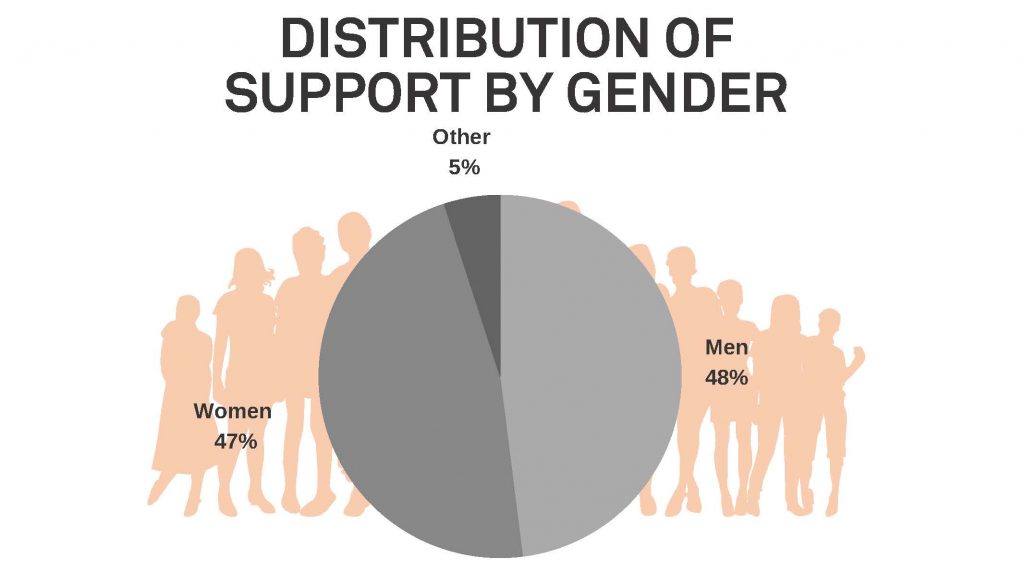
The Emergency Fund continued to build on gender work started in 2019 to ensure a good gender balance and representation amongst the beneficiaries of support. We have been working to increase the accessibility of the mechanism for the most vulnerable groups. We see an improvement in gender balance, for example the percentage of non-conforming people supported doubled compared to 2020.

An increasing demand for legal aid and psychological support  

Despite the Covid 19 pandemic and continued strict restrictions on travel around the world, temporary relocations, where human rights defenders can reside safely for a short period, remained by far the most requested type of support in 2021. The majority of relocations were related to the major crises in countries mentioned above. Requests for preventive security measures to improve home, office or digital security, such as installing security cameras or digital security software, remained to be in high demand as well. Many HRD:s needed so called combined interventions, meaning a combination of several of the above mentioned support types. 

In 2021 The Emergency Fund has seen a noteworthy increase in requests for humanitarian and psychological support. Many HRDs also request legal aid due to an increasing trend of arbitrary arrests and charges.

Democracy and human rights cannot be achieved without human rights defenders. Through the Emergency Fund we ensure that they feel safe enough to continue their work which ultimately helps ensure that the fight for democracy can continue worldwide”, says Zinaida Muradova. 

See also: https://humanrightsdefenders.blog/2020/12/11/civil-rights-defender-of-the-year-award-2020-goes-to-naw-ohn-hla/

UN experts urge Bangladesh to end reprisals against human rights defenders

March 17, 2022

On 14 March 2022 a group of UN human rights experts today called on Bangladesh to immediately cease reprisals against human rights defenders and relatives of forcibly disappeared persons for their activism and co-operation with international human rights bodies and UN mechanisms.

Following the announcement of sanctions imposed by the United States of America against top Rapid Action Battalion (RAB) officials on 10 December 2021, Bangladeshi authorities have reportedly launched a campaign of threats, intimidation and harassment against relatives of forcibly disappeared persons, human rights defenders, and civil society actors. See also: https://humanrightsdefenders.blog/2014/05/12/bangladesh-chains-of-corruption-strangle-nation-asian-human-rights-commission/

In the period between December 2021 and February 2022, the homes of at least 10 relatives of forcibly disappeared individuals were reported to have been raided late at night.

During the raids, relatives were intimidated, threatened and forced to either sign blank sheets of paper or pre-written statements indicating that their family member was not forcibly disappeared and that they had deliberately misled the police. This is unacceptable,” the experts observed.

The experts noted with concern the increasingly challenging situation relatives, human rights defenders and civil society are facing in Bangladesh. Repeated accusations by senior Government officials against some civil society organizations of providing “false information” to the UN mechanisms risk undermining the civil society’s key role.

Bangladesh must ensure that relatives and human rights defenders are able to carry out their legitimate work in a safe and enabling environment without fear of threats, intimidation or reprisals of any kind,” the experts stressed. They expressed their concern that the reported reprisals may have a chilling effect and deter others from reporting on issues of public interest, including human rights, and from cooperating with the UN, its representatives and mechanisms.

Since 2009, the RAB has reportedly been involved in the perpetration of the majority of cases of enforced disappearance in the country, as noted in several reports by the UN Working Group on Enforced or Involuntary Disappearances.**

“Bangladeshi authorities are obliged under international law to promptly launch ex officio, independent, impartial and thorough investigations into these serious allegations, complemented by a thorough and comprehensive search for disappeared persons. At the same time, the RAB and other security agencies should not be shielded from scrutiny and criminal responsibility.”

The experts also reiterated their request to the Government of Bangladesh to take effective steps to protect and uphold the rights of victims and their families to truth, justice, reparation, and guarantees of non-recurrence.

On 17 March HRW stated that the Bangladesh government should meaningfully respond to United Nations concerns regarding grave allegations of torture, enforced disappearance, and extrajudicial killings in the country.

https://www.hrw.org/news/2022/03/17/bangladesh-stop-flouting-un-rights-concerns

100 NGOs join Amnesty International’s call for Biden to pardon Steven Donziger

March 16, 2022
Amnesty International Logotype

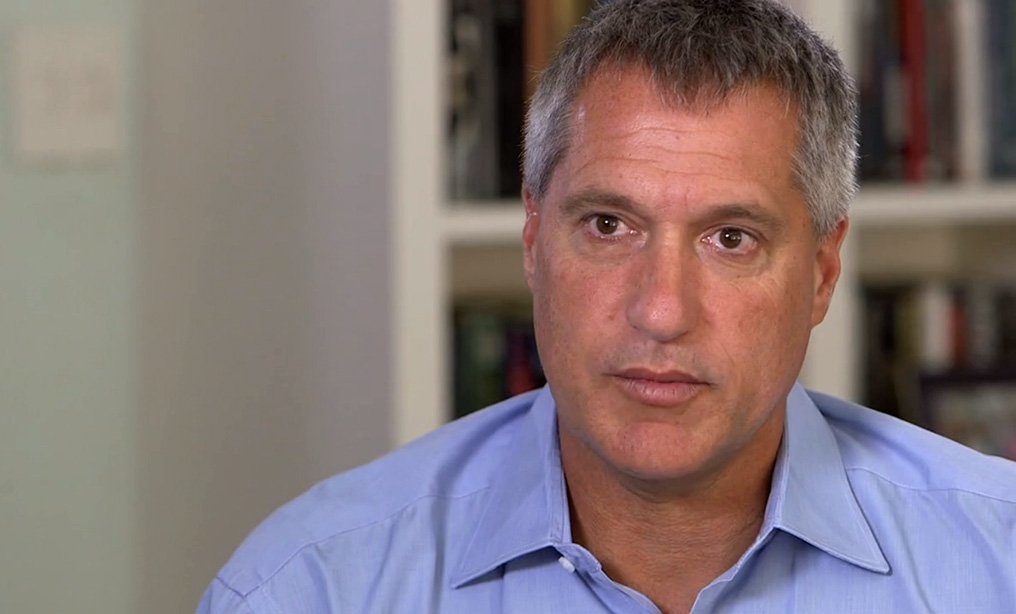
For more than two years, human rights lawyer Steven Donziger – currently serving the remainder of a six month sentence on house arrest – has been arbitrarily detained in apparent retaliation for his work to hold Chevron accountable for its deliberate dumping of more than 16 billion gallons of toxic oil waste into the Amazon rainforest. Despite repeated calls from human rights advocates and governmental authorities for Donziger’s release, the Department of Justice has refused to respond or take any action to remedy this human rights violation. Today, over 100 human rights and environmental organizations from around the world joined Amnesty International, Greenpeace USA, Amazon Watch, Global Witness, Rainforest Action Network, HEDA Resource Center, ReCommon, and the Pachamama Alliance to call on President Biden to exercise his clemency powers to pardon Steven Donziger as a way to ensure his immediate release.

In a letter to President Biden, the organizations state: “More than four months since a discerning opinion by the UN Working Group on Arbitrary Detention that found Steven Donziger’s detention to be arbitrary, U.S. judicial authorities have thus far failed to take any action to remedy the situation and implement the Working Group’s call to ensure Mr. Donziger’s  immediate release.”  See also: https://humanrightsdefenders.blog/2020/08/17/steven-donziger-speaks-out-himself-about-being-targetted-by-chevron

In a statement in October 2021, President Biden promised the U.S. would “stand in solidarity with, and continue to work tirelessly in support of, the activists, human rights defenders, and peaceful protestors on the front lines of the struggle between freedom and tyranny.”All the while, the administration has failed to side with the brave human rights defenders within the United States and respond to the demand of the U.N. Working Group on Arbitrary Detention, Congress, and the international community to free Steven Donziger. 

Steven Donziger is a human rights defender that bravely stood up against one of the most powerful corporations in the world,” said Daniel Joloy of Amnesty International. “In response, he has endured years of harassment, intimidation, smear campaigns and more than two years in arbitrary detention. President Biden must now listen to the over 100 human rights and environmental organizations calling to pardon Steven Donziger and ensure he is released immediately and unconditionally. Allowing this ordeal to continue only sends a chilling message that corporations around the world can continue attacking human rights defenders without consequences.”

Paul Paz y Miño of Amazon Watch said “Instead of supporting the people of Ecuador who were poisoned by Chevron’s admitted deliberate dumping of billions of gallons of toxic waste, Biden has turned a blind eye to the persecution of a key lawyer who worked to win a historic judgment against Chevron. The U.S. government’s responsibility should be to make Chevron clean up its waste and support efforts to hold the fossil fuel company accountable, not allow the appointment of a private prosecutor with ties to the very same oil company to imprison human rights lawyer Steven Donziger. This travesty has gone on for over two years, and Biden has ignored members of the E.U. parliament, members of the House and Senate, and even the United Nations High Commissioner for Human Rights. Well over 100 organizations are now demanding action, and Biden’s lack of action continues to be a dark stain on his alleged claims to respect human rights. Oil companies do not prosecute and imprison people in the U.S. This must end now.”

Chevron’s legal attack on Donziger is not the first, nor will it be the last case of its kind. Right now, the right to dissent is being repressed by both our government and corporations

Annie Leonard, co-Executive Director Greenpeace USA

Simon Taylor, Co-Founder & Director, Global Witness said “I have spent much of the past 25 years seeking accountability of the fossil fuel industry for its gross human rights abuses and other crimes. Amongst the judicial authorities we have liaised with during this time, the Southern District of New York has stood as a beacon in this fight against criminality. Shockingly, just as Biden gears up this struggle, New York’s judicial authorities seem instead intent on destroying their reputation, thanks to their apparent complicity in the unprecedented corporate prosecution and judicial harassment of Steven Donziger. These acts, in my experience, are more what I would expect from one of the ‘Banana Republics’ we have investigated around the world. These are shameful acts. If Biden is serious about tackling the climate crisis, he cannot allow the fossil fuel industry to weaponise the US judicial system to go after its detractors – Biden must act now and release Steven Donziger.”

https://www.commondreams.org/news/2022/03/15/100-groups-urge-biden-pardon-human-rights-lawyer-steven-donziger

Exiled Nicaraguan Human Rights Defenders in Costa Rica

March 15, 2022

A recent case study by Freedom House focuses on programming that offers holistic protection, support, and services, tailored to the needs of human rights defenders in their host country. This case study focused on the most current wave of migration of HRDs and CSOs who were forced to flee after anti-government protests in April 2018.

The Nicaraguan government continues to violate freedoms of expression, assembly and information and thwart the work of HRDs, including journalists and CSOs. Ortega-Murillo’s recent actions against potential presidential candidates and opposition figures demonstrate that the country will continue to see an outpouring of critics, activists, and HRDs to Costa Rica, among other countries. Nicaraguans continue to flee based on the attacks and harassment they face as HRDs and members of CSOs that champion democracy and human rights. See also: https://humanrightsdefenders.blog/2022/02/21/nicaragua-death-in-detention-and-sham-trial/

Of those 20 Nicaraguan HRDs who were surveyed, almost 90% stated that harassment and surveillance was a primary reason for leaving Nicaragua, followed by violence (65%) and threats (50%).
Costa Rica provides comparatively ample protection for migrants, and recently launched a new asylum category for those fleeing from authoritarian regimes in Venezuela, Cuba, and Nicaragua. The flow of migration since 2018 has persisted until March 2020 when the border shut due to the COVID-19 pandemic. Yet, migrant flows have begun to increase in recent months. However, Costa Rica is struggling to recover economically from the pandemic, particularly within the tourist, service, and commercial industries where most migrants and refugees find work. Most Nicaraguan refugees find themselves in a precarious economic situation, unable to find steady work, forcing many to resort to informal work with low salaries. HRDs are often not recognized as having different needs or characteristics from the larger refugee population, either by organizations or the Costa Rican population in general. Even for those who continue to work in human rights describe their ability to
continue work is difficult, and many express experiencing severe trauma as an exile, with remorse for not being able to stay and remain fighting for human rights at home. [see also: https://humanrightsdefenders.blog/2021/12/24/vilma-nunez-human-rights-defender-who-stays-in-nicaragua/]
However, many Nicaraguan HRDs try to carry out their work by investigating the laws and procedures in Costa Rica, accompanying their compatriots in their efforts, sharing knowledge, and giving advice. There are support and protection options for HRDs and CSOs in exile in Costa Rica, including a network of organizations and institutions facilitated by the United Nations High Commissioner for Refugees (UNHCR) that provide access to vital services.

All available support and protection options for Nicaraguan HRDs are operating at full capacity and cannot keep pace with the growing demand. We believe that it is necessary to seek support and accompaniment mechanisms for HRDs that facilitate their subsistence and enhance the
implementation of their work to defend the human rights of exiles and other Nicaraguan migrants who lack mechanisms for complaint and demand for their rights in Costa Rica.

https://freedomhouse.org/article/fighting-democracy-exile-my-story-nicaraguan-activist

later: https://thegaltimes.com/daniel-ortegas-regime-outlawed-another-25-ngos-in-nicaragua/87071/

Human Rights Prize of AI Germany honours Ethiopian Human Rights Council EHRCO

March 14, 2022

The Ethiopian Human Rights Council (EHRCO) receives the Human Rights Award 2022 from the German section of Amnesty International. For more on this and similar awards, see: https://www.trueheroesfilms.org/thedigest/awards/1270FFCC-C0FA-4C95-822C-219533587262

For over 30 years, the independent Ethiopian Human Rights Council (EHRCO) has been the voice of human rights in Ethiopia. The employees investigate human rights violations, provide legal advice for those affected and are involved in human rights education. Their use is often associated with reprisals and personal dangers. The outbreak of the armed conflict in 2020 in the north of the country, especially in the Tigray region, makes EHRCO’s human rights work indispensable.

The EHRCO is the voice of the unheard in Ethiopia,” says Markus N. Beeko, Secretary General of Amnesty International in Germany. “For 30 years, EHRCO has been fighting for those affected by human rights violations: its supporters have been insulted, imprisoned, tortured and even killed for this. Nevertheless, EHRCO has never allowed itself to be intimidated. Amnesty International is honoring this courage and commitment with the eleventh Amnesty Human Rights Prize.

Receiving the award and working with international human rights organizations such as Amnesty International are of great importance to us. Human rights are universal and require cooperation and solidarity to improve human rights and democracy,” said Dan Yirga Haile, Executive Director of EHRCO.

We now know that if something happens to us, others will raise their voices and stand up for us in solidarity. In Ethiopia, the government and politicians suppress many popular voices in various ways. These voices do not receive the attention they deserve. The human rights award of Amnesty International is helping to make these voices heard by recognizing EHRCO’s tireless commitment to human rights over the past thirty years.”

Since the armed conflict in northern Ethiopia began in November 2020, Amnesty International has observed that all parties to the conflict are responsible for gross human rights violations, including extrajudicial executions and sexualised violence against women and girls. These constitute violations of international humanitarian law, war crimes and, in some cases, possible crimes against humanity, according to Amnesty International. Millions of people have been internally displaced and millions of people in Tigray and neighboring regions are being denied humanitarian assistance. Clashes between the armed groups claimed at least 1,500 lives, according to Amnesty. Police have been arbitrarily detaining people coming from Tigray or working on the conflict since early 2021.

You will find extensive press material here.

https://california18.com/germany-amnesty-human-rights-prize-2022-goes-to-ethiopian-human-rights-council-ehrco/3879812022/

https://allafrica.com/stories/202203150064.html

https://www.dw.com/en/ethiopia-human-rights-abuses-amid-tigray-conflict/a-61134938

Saudi human rights defender Raif Badawi freed after 10 years!

March 12, 2022

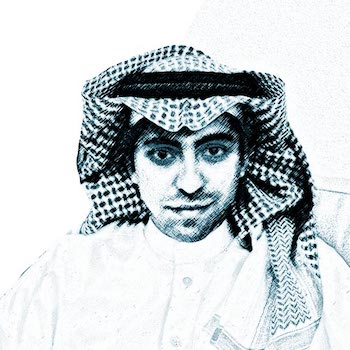
On Friday 11 March 2022, AFP reported that Saudi blogger Raif Badawi has been released from prison in Saudi Arabia after serving a 10-year sentence for advocating an end to religious influence on public life.

Raif called me. He is free,” his wife, Ensaf Haidar, who lives in Canada with their three children and had been advocating for his release, told AFP. Badawi’s release was also confirmed by a Saudi security official who said on condition of anonymity that Badawi “was released today”. “I jumped when I found out. I couldn’t believe it. I can’t wait to see my dad, I’m so excited,” one of his daughters, Nawja Badawi, 18, told AFP. Badawi’s son Terad Raif Badawi tweeted: “After 10 years my father is free!

Badawi won 5 international awards according to THF’s digest: https://www.trueheroesfilms.org/thedigest/laureates/33454B83-61A6-180A-27D6-7FFDEC25D330

Raif Badawi, human rights defender in Saudi Arabia, has finally been released!” Amnesty International tweeted. “Thousands of you have mobilized alongside us in the defense of Raif Badawi for 10 years. A big thank you to all of you for your tireless support.

Every Friday for almost seven years, Haidar – who fled to Canada after Badawi’s arrest and has since become a Canadian citizen – had held a public vigil for him. Quebec has paved the way for Raif Badawi to come to the country if he chooses by placing him on a priority list of possible immigrants for humanitarian reasons.

No details of his release conditions were immediately available. But Amnesty noted that the Saudi blogger could still face a 10-year ban on all travel outside Saudi Arabia following his release.

Raif Badawi’s sister, Samar Badawi, as well as activist Nassima al-Sadah, released in 2021, remain stranded in the kingdom. See also: https://humanrightsdefenders.blog/2016/01/13/saudi-arabia-arrest-of-human-rights-defender-samar-badawi/

https://www.theguardian.com/world/2022/mar/11/raif-badawi-saudi-blogger-freed

https://mailchi.mp/hrf.org/hrf-welcomes-release-of-saudi-writer-and-activist-raif-badawi?e=f80cec329e

Naty Castro, human rights defender in the Philippines arbitrarily detained

March 10, 2022

On 8 March 2022 the Observatory for the Protection of Human Rights Defenders, a partnership of the World Organisation Against Torture (OMCT) and the International Federation for Human Rights (FIDH), requests an urgent intervention in the Philippines.

The Observatory has been informed by Karapatan Alliance Philippines (Karapatan) about the arbitrary detention and judicial harassment of Dr. Maria Natividad Marian “Naty” Castro, a public health practitioner and human rights defender. Ms. Castro has worked in the poorest and most marginalised areas in the Philippines as a community-based health worker. She has also worked for the defence of community rights of the indigenous Lumad and is a former National Council member of Karapatan.

In February 18, 2022, officials of the Philippine National Police (PNP) and the Philippine Army (PA) arbitrarily arrested Ms. Castro at her residence in San Juan City, Manila. The members of the PNP and PA presented an arrest warrant issued by the Regional Trial Court Branch 7 of Bayugan City, Agusan del Sur, in January 2020, on charges of “kidnapping” and “serious illegal detention” (Criminal Case No. 6527), filed by public prosecutor Genesis Efren in March 2019. Ms. Castro, together with 540 other individuals, is being accused of kidnapping and detaining an unknown individual in Barangay Kolambungan, Sibagat, Agusan del Sur Province, on December 29, 2018.

Following her arrest, Ms. Castro was taken to the San Juan City Police Station and then moved to the Quirino Memorial Medical Center in Quezon City to undergo medical examination. She was subsequently brought to the PNP’s headquarters in Camp Crame. However, neither her family members nor legal counsels were allowed to have contact with her, and their requests to bring her medicine for hypertension and diabetes were dismissed.

On the same day in the afternoon, Ms. Castro was flown to the island of Mindanao without her family or legal representatives being informed. On February 19, 2022, the authorities held Ms. Castro incommunicado. Only after multiple calls from her family and legal representatives, the PNP disclosed that Ms. Castro was being held at the Bayugan City Police Station in Agusan del Sur Province.

On the afternoon of February 20, 2022, Ms. Castro’s family and legal counsel were able to visit her and bring her medicines. On February 22, 2022, the Regional Trial Court Branch 7 of Bayugan City ordered her transfer to the Agusan del Sur Provincial Jail, where she was still being detained pending trial at the time of publication of this Urgent Appeal.

Ms. Castro’s lawyers filed a petition for bail and a motion to dismiss the charges against her. Both requests were pending before the court at the time of publication of this Urgent Appeal.

The Observatory for the Protection of Human Rights Defenders notes that since November of 2020, Ms. Castro has been a victim of red-tagging. Her name and picture have been circulated on social media platforms in Lianga, Surigao del Sur Province, falsely accusing her of being a “communist”, a “terrorist”, and a member of the New People’s Army (NPA).

Human rights defenders in the Philippines have been subjected to trumped-up charges and lengthy pre-trial arbitrary detention. Karapatan members have been subject to frequent harassment, criminalisation, and attacks, including the killing of Ms. Zara Alvarez and the arbitrary detention of Teresita Naul, Alexander Philip Abinguna, Nimfa Lanzas, and Renayn Tejero. Ms. Naul was released on October 28, 2021, after 18 months of arbitrary detention. Mr. Abinguna and Mses. Lanzas and Tejero remain detained. See also: https://humanrightsdefenders.blog/2021/05/27/william-zabel-human-rights-award-2021-to-philippines-ngo-karapatan/

https://www.fidh.org/en/issues/human-rights-defenders/philippines-arbitrary-detention-of-rights-defender-and-health

Amnesty Nairobi seeks urgently short-term consultant

March 10, 2022

The Nairobi Office of Amnesty International’s Regional Office for East and Southern Africa (ESARO) is seeking an enthusiastic, and strategic campaigner with substantial experience in developing and implementing campaigns for a short-term consultancy. Under the supervision of, the Deputy Regional Director – Campaigns, the consultant will provide support to ongoing campaigns in Tanzania and Uganda whose thematic focus include freedom of expression, association and assembly, gender justice, right to health, right to housing among others and will do this using an intersectional
approach.

This is a four-month contract (March to June 2022) and the consultant could be based in Nairobi or remotely in Tanzania or Uganda.
Consultant profile includes:
– Very good knowledge of the human rights and the political context in East Africa with specific knowledge of Tanzania and/or Uganda.
– Knowledge of and experience working with the UN mechanisms, African Union institutions, sub-regional and national authorities is also essential.
– Excellent oral and written communication skills and ability to understand and express ideas in English. Ability to communicate in Swahili is also desirable.

To apply for the role, please provide your CV (three pages maximum) and a cover letter outlining how your skills and profile are aligned to the role as described above. Please send applications to amnesty.earo@amnesty.org 2022.

The deadline has been extended to Thursday 17 March 2022.