Prosecutors in Thailand should immediately withdraw the criminal defamation cases brought by Thammakaset Company Ltd. against three prominent human rights defenders for their support of other activists facing criminal charges, Human Rights Watch said on 16 March 2023. The Thai government should act to repeal criminal defamation provisions and introduce strong safeguards to prevent the use of frivolous, vexatious, or malicious legal actions that would have chilling effects on free speech.
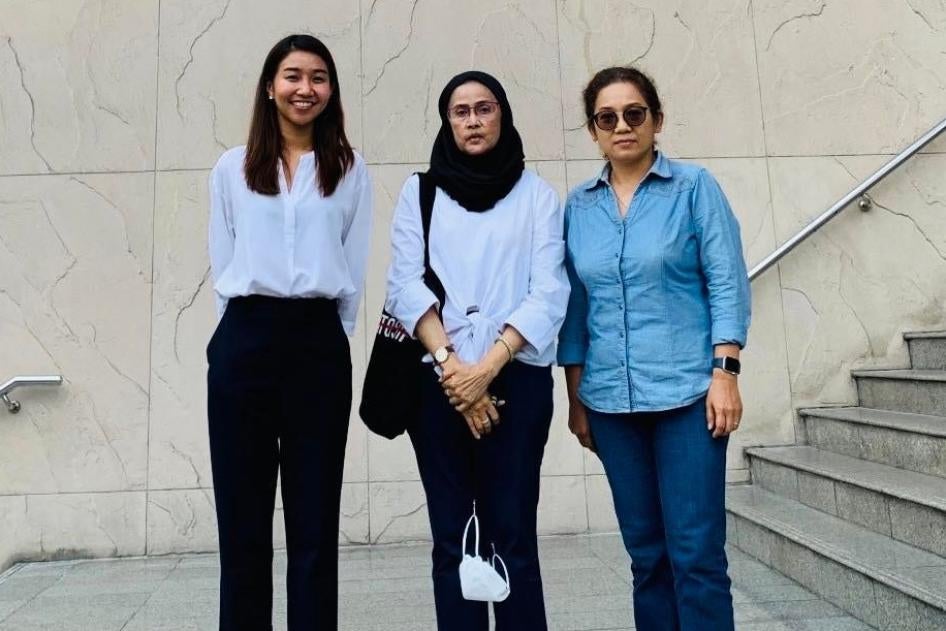
On March 14, 2023, the Bangkok South Criminal Court began the trial that involves 28 counts of alleged criminal defamation under Thailand’s Criminal Code sections 326 and 328. The charges stem from posts or re-posts on social media by Angkhana Neelapaijit, Puttanee Kangkun, and Thanaporn Saleephol expressing solidarity with other human rights defenders already facing lawsuits brought by Thammakaset for alleging labor rights abuses at the company’s chicken farm in Lopburi Province. The company has filed at least 37 civil and criminal cases against rights defenders, journalists, and workers since 2016.
“The Thai authorities should not help companies use criminal defamation or other legal avenues to silence workers from filing complaints about their working conditions or human rights defenders or journalists for reporting about alleged abuses at the company,” said Elaine Pearson, Asia director at Human Rights Watch. “The charges against Angkhana, Puttanee, and Thanaporn should be immediately dropped, and Thai authorities should act to prevent similar cases from being filed in the future.”
The United Nations Human Rights Committee has stated in its General Comment No. 34 on freedom of expression that governments “should put in place effective measures to protect against attacks aimed at silencing those exercising their right to freedom of expression, including persons who engage in the gathering and analysis of information on the human rights situation who publish human rights-related reports.”
On December 16, 2022, the UN Working Group on Business and Human Rights urged Thai authorities to take action to stop the Strategic Litigation Against Public Participation (SLAPP) lawsuits increasingly used by Thai companies to intimidate reporters and human rights advocates.
The Working Group specifically mentioned Thammakaset, stating that: “The cases filed by companies, such as Thammakaset Company Limited, against human rights defenders are a clear example of businesses abusing the legal system in order to censor, intimidate, and silence criticism through SLAPPs as a method of judicial harassment.” See also: https://humanrightsdefenders.blog/2022/04/28/eu-finally-moves-on-law-to-protect-media-from-legal-abuse-slapps/
Thai Prime Minister Prayut Chan-ocha has repeatedly emphasized the importance of companies respecting human rights in their operations and upholding the UN Guiding Principles on Business and Human Rights. In October 2019, Thailand was the first country in Asia to announce a National Action Plan on Business and Human Rights, committing to protect human rights defenders and prevent judicial harassment. But the charges against Angkhana, Puttanee, and Thanaporn, as well as the failure to assist those still facing many of the other civil and criminal cases filed by Thammakaset, stand in stark contradiction to the Thai government’s pledges to take action to protect rights, Human Rights Watch said.
In 2018, the National Assembly amended the Criminal Procedure Code to prevent the misuse of criminal cases. While that is a useful step, the Thai government should repeal all criminal defamation provisions. Neither prosecutors nor courts in Thailand have actually carried out, much less considered, amended section 161/1, which allows judges to dismiss and forbid the refiling of a criminal complaint by a private individual if the complaint is filed “in bad faith or with misrepresentation of facts to harass or take advantage of a defendant.” Furthermore, section 165/2 allows the presentation of evidence to show that the complaint “lacks merit.”
These reform provisions of the Criminal Procedure Code remain unused and untested, though. It is also crucial to provide prosecutors with adequate resources and support to exercise their powers under section 21 of the 2010 Public Prosecutor Organ and Public Prosecutors Act to screen out frivolous cases.
Human Rights Watch, along with an increasing number of governments and international agencies, has consistently called for the repeal of criminal defamation laws because they are an inherently disproportionate punishment for expressions of speech judged to damage reputations. Civil defamation laws, when supplemented by strong anti-SLAPP safeguards, balance the need for fair reporting in the public interest with concerns about reputational harm to private actors. In addition, as the charges against Angkhana, Puttanee, and Thanaporn show, criminal defamation laws in Thailand are easily abused and can have adverse impacts on free expression in the public interest.
Thailand should enact comprehensive anti-SLAPP legislation to strengthen safeguards to protect freedom of speech and expression and prevent retaliation against workers, human rights defenders, and journalists, Human Rights Watch said.
The UN special rapporteur on rights of freedom of peaceful assembly and association recommended that “States should protect and facilitate the rights to freedom of expression, assembly and association to ensure that these rights are enjoyed by everyone” including by “enacting anti-SLAPPs legislation, allowing an early dismissal (with an award of costs) of such suits and the use of measures to penalize abuse.”See also: https://humanrightsdefenders.blog/tag/strategic-lawsuits-against-public-participation-slapps/
“The UN and governments from around the world should share with Thailand their reform efforts to strengthen anti-SLAPP protections and point out that criminal defamation laws coupled with the absence of strong anti-SLAPP protections impede the ability of businesses to conduct essential human rights and environmental due diligence,” Pearson said. “Unless the Thai government moves now to protect Angkhana, Puttanee, and Thanaporn from retaliation, the promises that Thai officials made on business and human rights will ring hollow.”
On 7 March 2023 EuroMed Rights issued the following statement regarding the situation in Tunisia:
For several weeks now, Kaïs Saïed’s presidentialist regime has been conducting a relentless campaign of arrests, intimidation, denigration and targeted attacks against political opponents, journalists, trade unionists and civil society representatives, under the pretext of an alleged conspiracy to undermine state security, accusations of corruption or contacts with foreign diplomats. International trade union activists who have come to participate in activities of the Tunisian General Labour Union (UGTT), such as Esther Lynch, the General Secretary of the European Trade Union Confederation, have been expelled and any other trade union representatives are now persona non grata in Tunisia.
“These arrests based on the crime of opinion and the widespread repression of freedom of expression in all its forms constitute a serious breach of the rule of law. They raise fears of a return to the practices of the authoritarian regime that preceded the January 2011 revolution. The national dialogue that the UGTT has initiated in partnership with the Tunisian League for Human Rights (LTDH), the National Bar Association and the Tunisian Forum for Economic and Social Rights (FTDES), towards a roadmap to overcome the political, economic and social crisis, must be supported,” said Wadih Al-Asmar, President of EuroMed Rights.
A justice system at the orders
Accused of being “traitors” and “terrorists”, the opponents of the regime put in place, month after month, by President Kaïs Saïed since his power grab of 25 July 2021, are challenging the concentration of powers, in particular the supervision of the Ministry of Justice and the dismissal of many judges and prosecutors. Controlling the judicial power is a weapon that the Tunisian authorities no longer hesitate to use and abuse to silence critics.
“The rule of law in Tunisia is on the brink of collapse,” added Wadih Al-Asmar. “The presumption of innocence is being flouted. Moreover, to declare that anyone who exonerates those prosecuted would be considered an accomplice is a denial of the role and independence of judges and prosecutors. The ban on demonstrations and the desire to isolate Tunisian civil society from its international contacts are other symptoms of the regime’s autocratic drift.”
Attacks on migrants
On 21 February, President Kaïs Saïed continued his diatribe by calling for “urgent measures” against the “hordes” of sub-Saharan migrants, endorsing the conspiratorial theory of the “Great Replacement,” which asserts the existence of a plot to change the demographic composition of the country. As a result, racist and violent attacks, both official and unofficial, against migrants from sub-Saharan Africa continue, leading to arrests and deportations.
“Migrants have been expelled from their homes and fired from their jobs; children have been removed from their schools; women of sub-Saharan origin have been reportedly raped. Fear is growing among migrants who have been living in Tunisia, some for years, causing many families to leave the country to avoid facing violence,” said Rasmus Alenius Boserup, Executive Director of EuroMed Rights. “The European Union and its Member States, in their bilateral relations with Tunisia, must make clear that arbitrary repression and incitement to racial hatred are unacceptable, and should express solidarity with all those arrested, defamed and subjected to violence.”
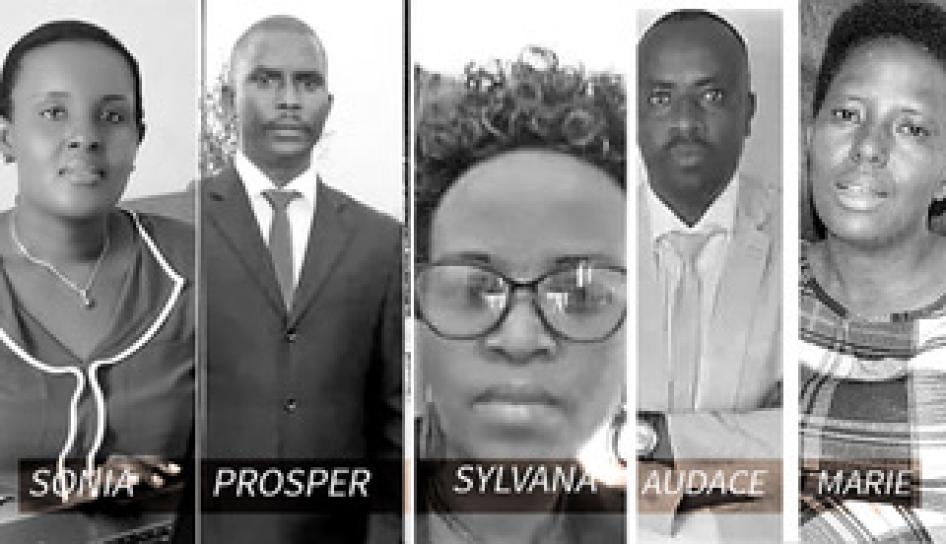
Burundian authorities should immediately and unconditionally release five human rights defenders arbitrarily arrested on February 14, 2023, and drop the baseless charges against them, Amnesty International, the Burundi Human Rights Initiative, and Human Rights Watch said on 14 March 2023.
The five human rights defenders are accused of rebellion and of undermining internal state security and the functioning of public finances. The charges appear to relate only to their relationship with an international organization abroad and the funding they have received from this organization. Two of the defenders work for the Association of Women Lawyers in Burundi (Association des femmes juristes du Burundi, AFJB) and three for the Association for Peace and the Promotion of Human Rights in Burundi (Association pour la paix et la promotion des droits de l’Homme, APDH).
“The arrests of the five human rights defenders and the serious charges brought against them signal a worsening climate for independent civil society in Burundi,” said Clémentine de Montjoye, Africa researcher at Human Rights Watch. “If working in partnership with or receiving funding from international groups is treated as a criminal offense and a threat to state security, what little space was left for civil society to operate in Burundi will be closed.”
On February 16, Martin Niteretse, Minister of Interior, Community Development and Public Security, accused the organizations of working with an international nongovernmental organization. Intelligence agents arrested four of the defenders – Sonia Ndikumasabo, president, and Marie Emerusabe, general coordinator, of AFJB; Audace Havyarimana, legal representative, and Sylvana Inamahoro, executive director, of APDH – on February 14 at Bujumbura’s Melchior Ndadaye Airport as they were preparing to fly to Uganda for a meeting with partners.
Prosper Runyange, the APDH land project coordinator, was arrested in Ngozi on February 14 and transferred to Bujumbura the next day. The five defenders were held at the National Intelligence Service (Service national de renseignement, SNR) headquarters in Bujumbura, then transferred to Mpimba central prison in Bujumbura, on February 17. On March 2, the high court of Ntahangwa in Bujumbura confirmed their pretrial detention.
The two organizations work on gender-based violence and land rights and are officially registered in Burundi. They help some of the most marginalized groups in Burundian society. The judicial authorities’ decision to pursue prosecution of the defenders, apparently solely on the grounds of their organizations’ partnership with and funding from an international organization, has triggered fears of another civil society crackdown in Burundi and undermines the president’s stated reform agenda, the organizations said. In October 2018, the authorities suspended the activities of most foreign organizations in Burundi and forced them to re-register, which included submitting documentation that stated the ethnicity of their Burundian employees.
The government policy, based on a law on foreign nongovernmental organizations, adopted in January 2017, caused some international organizations to close their offices in Burundi because they disagreed with government-imposed ethnic quotas and objected to the requirement to provide information on the ethnicity of their staff. Some said they feared that submitting this information could put their employees at risk of ethnic profiling and targeting.
“The charges of endangering state security and rebellion against these five human rights defenders are absurd,” said Carina Tertsakian from the Burundi Human Rights Initiative. “If the authorities have questions about their sources of funding, these can be solved through normal administrative channels, as provided for by the law.”
During late President Pierre Nkurunziza’s third and final term, from 2015 to 2020, independent civil society and media were often targeted, and their members attacked, forcibly disappeared, detained, and threatened. Scores of human rights defenders and journalists fled the country and many remain in exile. There has been almost total impunity for these crimes.
Since President Évariste Ndayishimiye came to power in June 2020 and despite his promises to restore freedom of expression and association, the government’s hostility toward Burundi’s once thriving civil society and media remains. The arrests of the five rights defenders followed the conviction, on January 2, 2023, of an online journalist, Floriane Irangabiye, to 10 years in prison, on charges of “undermining the integrity of the national territory” in violation of her rights to free speech and to a fair trial.
These latest arrests and Irangabiye’s conviction reverse a brief moment of optimism after the acquittal and release, in December, of Tony Germain Nkina, a lawyer and former human rights defender who spent more than two years unjustly imprisoned on unsubstantiated charges of collaboration with a rebel group. Twelve human rights defenders and journalists in exile were convicted in June 2020 of participating in a May 2015 coup attempt. The verdict, which was only made public in February 2021, came after a deeply flawed trial during which the defendants were absent and did not have legal representation, flouting the most basic due process principles. The 12 were found guilty of “attacks on the authority of the State,” “assassinations,” and “destruction.”
The arrest of Ndikumasabo, Emerusabe, Havyarimana, Inamahoro, and Runyange appears to be designed to punish the human rights defenders and their organizations for collaborating with an international organization, obstruct their organizations’ activities, and intimidate other activists. Such behavior belies Burundian authorities’ claims that they respect human rights and further stains the image of openness and reform that they try to project internationally, the organizations said.
“Actions speak louder than words,” said Flavia Mwangovya, Deputy Regional Director at Amnesty International. “If the Burundian authorities want their human rights promises to be taken seriously, they should allow civil society to do its valuable work – including defending and assisting victims of human rights violations – without harassment.”
Azin Mohajerin and Hina Jilal at OMCT’s offices on International Women’s Day, 8 March 2023. (Geneva Solutions/Michelle Langrand)
Michelle Langrand in Geneva Solutions of 10 March 2023 speaks with two human rights defenders, from Iran and Pakistan.
Iran’s crackdown on women’s rights protests that erupted in September and the Taliban recently banning women from working in NGOs or from attending university have served as a reminder of how fast women’s rights are sliding back in the region and other parts of the world. But despite widespread arrests, allegations of torture and the execution of four protesters in Iran, the women-led movement refuses to back down. For Azin Mohajerin, 36, it means that change is a little more within grasp. Mohajerin left Iran in 2010, following the wave of post-electoral protests that swept the country.
This time around she is supporting rights campaigners in the country, specifically from minority groups, through Miaan, an NGO in Texas she co-founded in 2019 and where she works as senior human rights officer.
Hina Jilani, an advocate of Pakistan’s Supreme Court and president of the World Organisation Against Torture (OMCT), who fought against sharia laws in Pakistan back in the 80s, views it as another illustration of women’s resistance on the path to obtaining change.
Mohajerin and Jilani were in Geneva for international women’s day for an event organised by OMCT. Geneva Solutions spoke to the activists about the challenges women face in their countries and the lessons they can draw from each other.
Born in Lahore, the capital of Pakistan’s Punjab region, Hina Jilani grew up hearing about courtrooms and prisons. At that time, Pakistan was under martial law and her father’s political opposition would often land him into trouble. Rather than being traumatised, Jilani was empowered by the environment in which she was raised. Later in life as a lawyer, her work would also land her in those same courtrooms and prisons. Jilani passed the bar exam in 1977, the same year Sharia law was imposed on Pakistan. One of the new laws made adultery a crime against the state. See also: https://www.trueheroesfilms.org/thedigest/laureates/705AB196-BD5E-4EC2-B6C1-96AC5DDB353E .“While now Pakistan has a fit and reasonably good, protective legal framework for women, we have not gotten rid of the notorious practices like child marriage or honour killings. Gender-based violence is one of our biggest issues in Pakistan,” she pointed out. Pakistan reported around 63,000 cases of gender-based violence in the past three years according to Pakistan’s National Commission of Human Rights.
In Iran, the women-led movement for the freedom to choose what they wear and what to do with their bodies has been shaking the country for the past few months. But observers are cautious about the chances of the current uprising spurring real change in Iran as previous ones have failed to do so. Mohajerin, who cannot return to her country because of the sensitive nature of her work, sees it as one more step in the long path towards the respect of human rights.
The protests in Iran have brought out Iran’s ethnic minorities to march along with the Persian majority. Mahsa Amini, whose death in custody of the morality police last September triggered mass unrest, was a 22-year-old Kurdish woman from Saqqez, in the Kurdistan province of Iran.
Mohajerin, who works with minority groups in Iran, sees that cultural change has seeped into some of the most conservative communities. “Women in Balochistan bravely went to the street in one of the rare moments that they have spoken up about their rights,” said Mohajerin.“There is a recognition that there is a gap that needs to be filled in terms of ethnic equality and gender equality.”
But Iran has also come down hard on these groups. “After Tehran, the top places in terms of arrests were minority populated areas: the Kurdish area, the Turkic and then Balochistan,” said Mohajerin. Many of them remain behind bars, she said.
“Culture can help people to break the chains,” said Jilani. “Not everything is because of what the leadership or the ruling elite do. Unfortunately, the ruling elite act in a certain manner because that is the national psyche.”
Mohajerin noted that Iranians have been fighting for their freedom for a long time now. “It’s not a new movement, it is not something that started in September or even last year. It has been a long-lasting fight,” said Mohajerin.
She recalled when women first marched against the mandatory hijab after it was introduced by the Islamic revolution in Iran 44 years ago. “In Iran, the woman cannot have custody of the child after a certain age and they don’t have the right to divorce. But they do not just give up and say okay, this is how we should live. They’ve been fighting to get their rights and finding loopholes in the system,” she said.
“The cultural change that has been achieved during the past decades is way more significant than the law that exists,” said Mohajerin.
The situation in Iran has drawn international outcry, with western powers condemning Iran’s violent response to the protests. Like many activists, Jilani and Mohajerin see international solidarity as essential to their causes.
“Voices from the outside can help when the environment inside the country is very difficult,” said Jilani. “I’m alive today because of international public opinion and the pressure of the international community,” said Jilani. She recalls former US president Jimmy Carter and former president of Ireland Mary Robinson pleading for her release from prison at one time.So many world leaders sent letters to Pakistan, protesting against my incarceration, that when they released me they showed me this thick file and said we don’t know why people around the world are so worried about you.”
When Iranian foreign minister Hossein Amir-Abdollahian was in Geneva last week to speak before the Human Rights Council, campaigners called for diplomats to stage a walkout during his speech. Mohajerin recognised it as a “significant symbolic gesture to condemn the human rights abuses in Iran”. “However, it is crucial for the international community to engage in dialogue with the Iranian government regarding human rights violations, particularly in cases of executions, at the highest level,” she added.
But both Jilani and Mohajerin are adamant about something: change has to come from within. “The voice should come from the people inside the country. They are the ones who live in the country, and they are the ones who have to decide for their future,” said Mohajerin, noting that views within her country are not a monolith.
To mark the 25th anniversary of the adoption of the UN Declaration on human rights defenders in 1998, the UN Special Rapporteur on human rights defenders, Mary Lawlor, will focus on successes achieved by human rights defenders in her upcoming thematic report to the Human Rights Council. The report will demonstrate how the work of defenders is crucial in helping achieve more just and equitable societies.
This side event, which is co-sponsored by a number of States and organisations, including ISHR, will take place a day before the Special Rapporteur’s presentation of the report to the Human Rights Council and in addition to the Special Rapporteur herself, the panel will include a State representative who will outline how that State collaborated with defenders to bring about human rights gains. It will also include two defenders who will speak about successes they have achieved.
Speakers:
Mary Lawlor, UN Special Rapporteur on the situation of Human Rights Defenders
Gustavo Gallon, Permanent Representative of Colombia to the United Nations Office at Geneva
Tara Houska, US-based citizen of Couchiching First Nation, Environmental & Indigenous rights defender
Daniel Goinic, Human Rights Program Director at Legal Resources Centre in Moldova
Moderator: Imogen Foulkes, BBC Correspondent in Geneva
Due to space limitation, registration is mandatory to attend the event in-person: please click here to register.
“Bahrain’s hosting of sporting and high-level international events is a transparent attempt to launder its decades-long campaign to crush political opposition and suffocate the country’s vibrant civil society,” said Tirana Hassan, Human Rights Watch’s acting executive director. “Its unilateral reversal of Human Rights Watch’s access to the IPU conference is a blatant example of its escalating repression. Governments, organizations with influence, and key officials should speak out loudly against Bahrain’s abuses so they are not complicit in its efforts to whitewash its horrific rights record.”
Bahrain is hosting the meeting of the IPU, a global organization of national parliaments, from March 11-15. The organization’s slogan is “For democracy. For everyone,” and the theme of the 146th Assembly is “Promoting peaceful coexistence and inclusive societies: Fighting intolerance.” These statements are in stark contrast to the extensive record of serious human rights abuses in Bahrain that Human Rights Watch and other rights organizations have documented, Human Rights Watch said. This includes the continued detention of the prominent human rights activist and Danish-Bahraini dual citizen Abdulhadi Al-Khawaja. Al-Khawaja is reportedly suffering serious health problems while being denied adequate medical care. He is this year’s laureate of the MEA [see: https://humanrightsdefenders.blog/tag/abdul-hadi-al-khawaja/]
….. Two of Bahrain’s former parliament members are in prison for exercising their freedom of expression, and the government has forced many more into exile and stripped them of their citizenship.
On March 5, Bahrain hosted Formula One’s (F1) opening season race. Twenty-one groups, including Human Rights Watch, sent a letter to F1’s president to raise “serious concerns over F1’s ongoing role in ‘sportswashing’ amidst a deterioration in Bahrain’s human rights situation.” An F1 driver, Lewis Hamilton, recently said that he is “not sure [the human rights situation] has got better while we have been coming all these years” to countries like Bahrain and Saudi Arabia.
“With local civil society severely restricted by Bahrain’s autocratic government, members of the IPU Assembly should live up to its organizational values and speak out on behalf of Bahrain’s victims of repression,” Hassan said.
Protection of human rights defenders The mandate of the UN Special Rapporteur on the situation of human rights defenders is to be renewed at the HRC’s March session through a resolution led by Norway.
Reprisals
ISHR remains deeply concerned about reprisals against civil society actors who engage or seek to engage with UN bodies and mechanisms. We call on all States and on the Council to do more to address the situation. General Debate Item 5 is a key opportunity for States to raise concerns about specific cases of reprisals and demand that Governments provide an update on any investigation or action taken toward accountability. An increasing number of States have raised concerns in recent Council sessions about individual cases of reprisals, including at HRC sessions 39, 41, 42, 43, 45, and 51.
ISHR believe that States raising cases is an important aspect of seeking accountability and ending impunity for acts of reprisal and intimidation against defenders engaging with the UN. In September 2022, ISHR ran a campaign regarding five specific cases of reprisals (#EndReprisals). We continue to urge perpetrator States to resolve these cases and other States to raise these cases in their statements: Ibrahim Metwally Hegazy (Egypt), the co-founder and coordinator of the Association of the Families of the Disappeared. Jiang Tianyong (China), a lawyer and legal rights activist working at grassroots level to defend land and housing rights, promote the rights of vulnerable social groups and expose root causes of systemic rights abuses. The Human Rights Center ‘Viasna’ (Belarus), which works towards the development of civil society and the promotion of human rights in Belarus and provides legal aid to people in defending their rights and public interests. Comité de Familiares de Víctimas del Caracazo (COFAVIC); Observatorio Venezolano de Conflictividad Social (OVCS); Centro de Justicia y Paz (CEPAZ); Control Ciudadano (and its director Ms. Rocío San Miguel); and Espacio Público (and its director Mr. Carlos Correa) (Venezuela): a group of five NGOs and two individuals working for the promotion of human rights in Venezuela and who have a history of cooperating with the UN, including the Fact-Finding Mission on Venezuela. Human rights lawyers and defenders Armel Niyongere,Dieudonné Bashirahishize, Vital Nshimirimana and Lambert Nigarura (Burundi), four prominent and well-respected figures within Burundian civil society and their local communities. In addition, we urge States to raise individual cases of reprisals in the country-specific debates taking place at this session: Nicaragua, Sudan, Israel and occupied Palestine, Myanmar, Iran, Venezuela, Belarus, Democratic Republic of the Congo. Further information on these cases can be found here or by contacting the ISHR team at s.hosseiny@ishr.ch.
Other thematic debates At this 52nd session, the Council will discuss a range of economic, social and cultural rights in depth through dedicated debates with: The Special Rapporteur on the right to food The Independent Expert on the effects of foreign debt The Special Rapporteur on the right to adequate housing The Special Rapporteur in the field of cultural rights The Council will discuss a range of civil and political rights through dedicated debates with: The Special Rapporteur on freedom of religion or belief The Special Rapporteur on torture The Special Rapporteur on the right to privacy In addition, the Council will hold dedicated debates on the rights of specific groups including: The Special Rapporteur on the sale and sexual exploitation of children The Special Representative of the Secretary-General on violence against children and the Special Representative of the Secretary-General on children and armed conflict The Special Rapporteur on the rights of persons with disabilities The Special Rapporteur on minority issues The Independent Expert on the enjoyment of human rights of persons with albinism The Council will hold dedicated debates on the interrelation of human rights and thematic issues including: The Special Rapporteur on the promotion and protection of human rights while countering terrorism The Special Rapporteur on human rights and the environment The High Commissioner’s report on access to COVID-19 vaccines
Country-specific developments
Afghanistan: The mandate of the Special Rapporteur on Afghanistan is a crucial mechanism for ongoing monitoring and documentation of the situation in the country, as well as enabling discussion and dialogue amongst States on its findings. It remains an important channel for communication between human rights defenders and survivors inside Afghanistan with the intergovernmental decision-making spaces. However, it falls short due to the overwhelming evidence of gross violations and abuses in Afghanistan. The HRC must respond to the calls from Afghan human rights defenders, especially women human rights defenders, and civil society and establish an independent accountability mechanism with a mandate and resources to investigate the full scope of violations abuses that continue to be committed in Afghanistan by all parties and to preserve evidence of these violations for future accountability. The Council will hold an interactive dialogue with the Special Rapporteur on 6 March.
China On 24 November 2022, the CERD issued an Urgent Action decision on Xinjiang stressing the ‘scale and nature’ of the repression of Uyghurs and Muslim minorities, as evidenced by the Xinjiang Police Files leaks. The Committee urged China to release all those arbitrarily detained, stop harassing Uyghurs abroad, and fully review its national security framework. For the first time ever, the Committee referred the matter to the Special Adviser of the Secretary-General on the Responsibility to Protect, while reminding ‘all States of their responsibility to cooperate to bring to an end through lawful means any serious breach of human rights obligations.’ States should ensure sustained visibility on the broader human rights situation across China, raising root causes of violations that commonly affect Uyghurs, Tibetans, Hong Kongers and mainland Chinese human rights defenders, including the abuse of national security as documented by the OHCHR’s Xinjiang report and Special Procedures, and ask for the prompt release of human rights defenders, including feminist activists Huang Xueqin and Li Qiaochu, human rights lawyers Chang Weiping and Ding Jiaxi, legal scholar Xu Zhiyong, Uyghur doctor Gulshan Abbas, Hong Kong lawyer Chow Hang-tung, and Tibetan climate activist A-nya Sengdra.
Mali. In 2020, Mali finally adopted its implementation decree for the HRD law. While it was a long awaited achievement, especially as it establishes the defenders protection mechanism within the National Human Rights Institution, the text also provides that in order to be recognised as such, any defender must carry a card or badge issued in advance by the Minister responsible for human rights. This provision was later reinforced by the decision adopted by the Malian government in September 2020, which establishes the characteristics and procedures for granting and withdrawing the professional card of human rights defenders. During the last presentation of the report of the independent expert on the human rights situation in Mali, ISHR delivered a statement asking the independent expert what support he planned to give to the Malian government to ensure the full implementation of the defenders law and its protection mechanism. The HRC must keep the scrutiny on Mali to ensure that defenders in the country are protected in line with the UN Declaration and not restricted by the limitation imposed by a card defining the status of defenders. The Council will hold an interactive dialogue with the independent expert on 30 March.
DRC The DRC has noticeably improved the protection of human rights in the Kasaï region but progress remains slow and action is still needed towards transitional justice and the protection of defenders in this region. In December 2022, the national assembly of the DRC adopted the draft law for the protection and promotion of defenders. The last step is for the text to be adopted by the Senate, which would strengthen the protection of defenders at the national level after the adoption in February 2016 of an edict for the protection of human rights defenders and journalists in the South Kivu province and a similar text adopted in November 2019 on the Protection of Human Rights Defenders in the North Kivu Province. The United Nations Joint Human Rights Office (UNJHRO) must support the calls of civil society and ensure the protection and promotion of defenders is part of its support to the government of the DRC. The Council will consider oral updates and hold an enhanced interactive dialogue with the High Commissioner and the team of international experts on the DRC on 30 March.
Egypt Notwithstanding the launch of a national human rights strategy, the fundamental purpose of which is to deflect international scrutiny rather than advance human rights, there has been no significant improvement in the human rights situation in Egypt since the joint statement delivered by States in March 2021. Since that time no consequential follow-up has occurred at the HRC, while the situation has further deteriorated on the ground. As witnessed by the world during COP27, the brutal crackdown on civil society in Egypt continues to intensify. Sustained, coordinated action on Egypt at the Council is more necessary than ever. Egypt continues to carry out widespread and systematic violations of human rights, including freedom of expression and freedom of assembly and association. The Egyptian authorities have for years employed draconian laws, including laws on counterterrorism, cybercrimes, and civil society in order to subdue the civilian populations and stifle all forms of peaceful dissent and mobilisation. Under the current government, Egypt ranks among the worst three countries in the world in the numbers of jailed journalists and almost all independent media has been forced to shut down or threatened into silence. Hundreds of websites continue to be banned. Scores of civil society and media representatives continue to be disappeared, tortured and arbitrarily detained under the pretense of counter-terrorism and national security.
While the release of a few select arbitrarily-detained activists is a sign that international pressure works, the number of releases pales in comparison to the vast numbers of individuals newly detained by the National Security Prosecution, or whose arbitrary detention was renewed in 2022. Between the reactivation of the Presidential Pardons Committee in April 2022 and the end of 2022, the authorities released around 900 people held for political reasons, but almost triple that number of suspected critics and opponents were interrogated by prosecutors and arbitrarily detained. ISHR reiterates the calls of more than 100 NGOs from around the world urging the HRC to create a monitoring and reporting mechanism on the ever-deteriorating human rights situation in Egypt.
Israel / OPT This session will consider a number of resolutions associated with the human rights situation in Israel and the Occupied Palestinian Territories, including with respect to the right of Palestinian’s to self-determination, as well as expanding and illegal Israeli settlements. Israeli policies and practices against Palestinian people have been found to constitute acts of apartheid by UN experts as well as by both international and national NGOs, while a HRC-mandated commission of inquiry has found that Israel’s permanent occupation and de facto annexation of Palestinian territory is likely unlawful. ISHR calls on all States to engage with these resolutions on their human rights merits, applying objective criteria in a principled and consistent way which upholds the right of self-determination as well as freedom from violence and discrimination. The Council will hold an interactive dialogue with the High Commissioner on ensuring accountability and justice in the Occupied Palestinian Territory, including East Jerusalem on 3 March.
Nicaragua A year after the adoption of resolution 49/3, the UN system has continued to document a steady deterioration of the country’s multi-pronged human rights crisis: UN and IACHR documentation compiled by the Colectivo 46/2 point to the absence of any step taken to implement any of the 14 recommendations from resolution 49/3. Instead, the ruling party has seized absolute control over the country’s 153 municipalities in a 2022 electoral process characterised by ‘repression of dissenting voices and undue restriction of political rights and civil liberties,’ according to the OHCHR; canceled the legal status of more than 2500 civil society organisations; detained political prisoners in inhumane conditions; and allowed for the continuation of widespread attacks, including 32 killings since 2018, by armed settlers against indigenous peoples of the Northern Caribbean Coast. The Nicaraguan government has confirmed its diplomatic isolation by refusing to cooperate with six UN Treaty Bodies within a year prompting an unprecedented public condemnation by the UN’s two anti-torture committees. It has also retaliated against EMRIP member and Nicaraguan citizen Anexa Cunningham, by denying her entry into the country on July 9. We urge the Human Rights council to renew, for a period of two years, resolution 49/3 establishing the mandate of the Group of Human Rights Experts on Nicaragua, and the monitoring mandate of the OHCHR. We call on all governments to support such a resolution and reinforce its intersectional approach, by bringing particular attention to the situation of indigenous peoples and afro-descendants, migrants and forcibly displaced persons, those detained for political reasons and the families of victims.
Saudi Arabia According to ALQST‘s 2022 annual report, the Saudi authorities’ unleashed a new wave of repression in 2022. Familiar patterns of abuse continued, including arbitrary arrests, enforced disappearances and harsh restrictions on prisoners of conscience released from prison, including travel bans. However from mid-year onwards in particular, the Saudi courts started imposing jail sentences of unprecedented severity for peaceful, legitimate activity on social media, further deepening the climate of fear in the kingdom. Use of the death penalty increased sharply after a lull during the COVID period, with the biggest mass execution in recent times (of 81 men in a single day), and executions for non-violent drugs-related offences made a dramatic comeback. This intensification of repression went hand in hand with the progressive diplomatic rehabilitation of Saudi Arabia’s crown prince and de facto ruler, Mohammed bin Salman. We call on the HRC to respond to the calls of NGOs from around the world to create monitoring and reporting mechanism on the ever-deteriorating human rights situation in Saudi Arabia.
Sudan The Sudanese military and some political parties and civic groups signed a framework agreement to pave the way for a power transition to civilian forces in December 2022. But the agreement was not widely welcomed by local resistance movements, including resistance committees and some women’s groups. The protests continued across the country demanding a comprehensive transitional process that respects the people’s demands for accountability, peace, and justice. In the meantime, the security forces crackdown on protests is sustained, while the violations of freedoms of assembly, expression, and association continues. Following the political framework agreement, attacks on women human rights defenders (WHRDs) and women groups continued as the violence in conflict areas escalated. The HRC must ensure continued reporting on Sudan and to urge the international community to prioritise justice and accountability in any upcoming political solution. The Council will consider an oral update and hold an interactive dialogue with the High Commissioner and designated Expert on 3 March.
Ukraine In the face of overwhelming evidence of war crimes and crimes against humanity associated with Russia’s war of aggression against Ukraine, ISHR calls on the HRC to renew the mandate of the Commission of Inquiry on human rights in Ukraine associated with Russia’s war of aggression, including the mandate of the Commission to examine the root causes of the conflict such as the repression and criminalisation of human rights defenders and independent journalists in Russia. The Council will hold an interactive dialogue with the Commission of Inquiry on 20 March. The Council will also hold an interactive dialogue on the OHCHR report on Ukraine on 31 March.
Venezuela ISHR joins Venezuelan and international organisations in urging states to speak out against the NGO bill currently passing through the National Assembly in Venezuela. The ‘Law of Supervision, Regularization, Performance and Financing of Non-Governmental and Related Organizations’ seeks to criminalise and further restrict the work of NGOs in the country. During the HRC session, there will be two agenda items specifically focusing on Venezuela: the update from the High Commissioner on 21 March, and an oral update by the UN fact-finding mission on 23 March, which will be their first since their mandate was renewed by the Council, last September. The High Commissioner’s update will no doubt include impressions and recommendations drawn from his recently concluded first visit to Venezuela. These updates will take place at a time of ongoing political flux in the country, upcoming elections and – critically – further threats to civic space. During the interactive dialogues on Venezuela, States must continue to express concern at ongoing human rights and humanitarian crises in the country, at the introduction of the NGO bill and call for the release of the arbitrarily detained including human rights defender Javier Tarazona who has now been held for almost 600 days, wholly without justification.
Yemen ISHR joins civil society organisations from Yemen and around the world in urging the HRC to establish an independent international criminally focused investigative mechanism on Yemen. Before its untimely dissolution in 2021, the UN Group of Eminent Experts (GEE), established by the HRC in 2017, recommended that UN member States refer the situation in Yemen to the International Criminal Court (ICC), support the establishment of an international criminally focused investigative mechanism, and stressed the need to realise victims’ right to reparation. In late 2021, HRC members narrowly rejected a resolution that would have renewed the GEE’s mandate following lobbying by Saudi Arabia and the UAE. In September 2022, Saudi Arabia and Yemen rejected attempts by States to ensure continued discussion at the HRC of the ongoing human rights crises in Yemen. The international community should not stand by and allow the vote to disband the GEE to be the HRC’s last word on the situation, nor should they allow warring parties to continue to block formal discussions of large-scale human rights abuses, war crimes and the urgent need for accountability. A new, HRC-mandated mechanism is required to ensure that potential avenues of criminal accountability and reparative justice are effectively explored for Yemen and may be pursued now and in the future to address impunity and provide effective redress to victims.
Guatemala Guatemala’s recent UPR put a spotlight on the fast deterioration of democratic spaces in the country. Over twenty States raised attacks against indigenous, environmental, and other human rights defenders, and journalists. There has been a steady increase in attacks, with a record high of 1000 attacks by 2021 according to local groups. The government, meanwhile, made no reference to the issue during the review. States also shared concern about the erosion of judicial independence, an issue repeatedly highlighted by UN experts and officials. Over the past years, UN experts have exposed interference or blocking in the appointment of high level court judges. High Commissioner Volker Türk recently condemned a 70% increase in cases of intimidation and criminal charges against justice officials fighting impunity and corruption. A growing number of judges and legal professionals have fled the country since the government closed the UN’s International Commission Against Impunity in Guatemala (CICIG) in 2019. In 2021, UN and OAS experts denounced a ‘choking’ law that gave the government ‘wide scope to control NGOs’. In this context, space for Guatemalan civil society to safely advocate for human rights and expose violations, and for the judicial authorities to respond to abuses and uphold the rule of law has become dangerously narrow. These patterns create serious risks of further deterioration – in a trend that is also seen in neighbouring Central American countries – in the lead-up to the June 2023 presidential elections. High Commissioner Türk’s presentation of his Office’s report on Guatemala to the HRC in March will provide a critical window of opportunity for States to collectively urge Guatemala to engage with the OHCHR to meaningfully address and put an end to attacks against human rights defenders and justice officials, ensure judicial independence, and review laws and policies that restrict civil society space.
Other country situations
The High Commissioner will provide an oral update to the Council on 7 March. The Council will consider updates, reports and is expected to consider resolutions addressing a range of country situations, in some instances involving the renewal of the relevant expert mandates. These include: Enhanced interactive dialogue with the Special Rapporteur on Eritrea Oral briefing and interactive dialogue with the International Commission of Human Rights Experts on Ethiopia ID with the Special Rapporteur on the Democratic People’s Republic of Korea and a presentation of the report of the High Commissioner Interactive Dialogue with the High Commissioner on Belarus Interactive dialogue with the High Commissioner, and interactive dialogue with the Special Rapporteur on Myanmar Interactive Dialogue with the Special Rapporteur on Iran Interactive Dialogue with the Commission of Inquiry on Syria Enhanced interactive dialogue with the Commission on Human Rights in South Sudan with the participation of the High Commissioner, and an interactive Dialogue on the OHCHR report on South Sudan High-level Dialogue with the Independent Expert on the Central African Republic Interactive dialogue with the Fact-Finding Mission on Libya #HRC52 | Council programme, appointments and resolutions During the organisational meeting for the 52nd session, held on 13 February, the President of the Human Rights Council presented the programme of work. It includes 7 panel discussions. States also announced at least 39 proposed resolutions.
Adoption of Universal Periodic Review (UPR) reports
During this session, the Council will adopt the UPR working group reports on Bahrain, Ecuador, Tunisia, Morocco, Indonesia, Finland, the United Kingdom, India, Algeria, Philippines, Brazil, Poland, the Netherlands, and South Africa.
Panel Discussions:
During each Council session, panel discussions are held to provide member States and NGOs with opportunities to hear from subject-matter experts and raise questions. 7 panel discussions are scheduled for this upcoming session: Biennial high-level panel discussion on the question of the death penalty. Theme: Human rights violations relating to the use of the death penalty, in particular with respect to limiting the death penalty to the most serious crimes High-level meeting commemorating the thirty-fifth anniversary of the Declaration on the Right to DevelopmentHigh-level panel discussion on UPR Voluntary Funds: achievements, good practices and lessons learned over the past 15 years and optimized support to States in the implementation of recommendations emanating from the fourth cycle Annual full-day meeting on the rights of the child [two accessible meetings]. Theme: Rights of the child and the digital environment Annual interactive debate on the rights of persons with disabilities. Theme: Support systems to ensure community inclusion of persons with disabilities, including as a means of building forward better after the COVID-19 pandemic Debate in commemoration of the International Day for the Elimination of Racial Discrimination. Theme: The urgency of combating racism and racial discrimination 75 years after the adoption of the Universal Declaration of Human Rights Annual high-level panel discussion on human rights mainstreaming. Theme: A reflection on five years of the United Nations Youth Strategy (Youth 2030): mapping a blueprint for the next steps Read here the three-year programme of work of the Council with supplementary information.
Read here ISHR’s recommendations on the key issues that are or should be on the agenda of the UN Human Rights Council in 2023.
You can now relive the MEA ceremony which was held on 16 February 2023 and get inspired by the 2023 Laureates, three outstanding human rights defenders:
On 14 February, 2023 Louis Charbonneau, HRW United Nations Director, reported that the UN General Assembly achieved a funding breakthrough by agreeing to fully fund UN human rights mechanisms that China, Russia, and their allies had sought to defund in the 2023 budget. All these efforts failed. The Czech Republic as European Union president countered by proposing full funding for human rights mechanisms at the level proposed by Secretary-General António Guterres. The resolution passed by a sizable majority.
There’s more good news. Not only did the defunding efforts fail, but the highly problematic recommendations put forward by the UN Advisory Committee on Administrative and Budgetary Questions were rejected. The Advisory Committee is supposed to be an independent body of experts, but in recent years, its “experts” from countries like China and Russia have been pushing their governments’ anti-human rights agendas and advocating for sharp cuts in funding for human rights work, with no good reasons. Due to divisions between western countries and developing states, the standard UN funding compromise had become accepting the non-binding Advisory Committee recommendations. For example, if its recommendations had been adopted, the staff and budget for the Iran commission of inquiry would have been cut in half.
This should set a precedent for UN human rights funding in the future.
Eric Goldstein, Deputy Director, Middle East and North Africa Division of Human Rights Watch, wrote on 8 February 2023 about the demise of Algeria’s first independent human rights league, and do so with a personal touch.
“Shortly after I started my first human rights job in 1986, Amnesty International issued an alert about a group of Algerians sentenced to up to three years in prison for creating the country’s first independent human rights league.” The league became a fixture of the transnational Arab human rights movement in the early 1990s. Those events came to mind as I learned of an Algerian court’s decision, issued in 2022 but made public in January 2023, to dissolve the league, in response to a petition by the ministry of interior. The court found that the group had violated Algeria’s regressive law on associations by failing to “respect national constants and values” when it met with nongovernmental organizations “hostile to Algeria” and engaged in “suspicious activities” such as “addressing … the issue of illegal migration” and “accusing the authorities of repression of protests.”
The LADDH loudly denounced abuses during the bloody 1990s. After the terrorism and savage repression of that decade subsided, the League accompanied families of the disappeared in demanding answers and justice. Recently, it supported protesters of the peaceful Hirak movement that burst onto the scene in 2019, demanding political reform. Ali Yahia Abdennour, who was among those arrested in 1985 and served as president of the LADDH for decades, died at 100 in 2020.
The LADDH is the latest of several independent organizations authorities have shut on flimsy pretexts. They have jailed hundreds of Hirak protesters for peaceful expression and practically obliterated Algeria’s independent media – another product of the 1989 reforms – most recently by arresting on December 24 Ihsane Kadi and sealing the offices of his two online outlets, Radio M and Maghreb Emergent.
Fearing arrest, activists have been fleeing the country when they have not been arbitrarily blocked at the border, including three prominent League figures now in exile in Europe.
The pretexts used to shut Algeria’s flagship human rights organization are no less absurd than those used to convict its founders four decades ago. Though much has changed since the 1988 protests, Algeria is governed once again by those who brook almost no dissent.


 Hans Thoolen on Human Rights Defenders and their awards