On August 18, 2026 Swissinfo, in their series Summer profiles, featured the ISHR and its director and deputy, Phil Lynch and Pooja Patel.
Please listen to this week’s episode:
share information on human rights defenders, with special focus on human rights awards and laureates
On August 18, 2026 Swissinfo, in their series Summer profiles, featured the ISHR and its director and deputy, Phil Lynch and Pooja Patel.
Please listen to this week’s episode:
As Taliban rule in Afghanistan continues, UN experts and many others warned that normalisation continues despite increasing restrictions imposed on the population, including women and girls, over the past year. They urged States to accelerate steps towards accountability.
“Five years may be a short period in the life of a country, but it is a long one in a child’s life,” the experts said. “A generation of girls has now been denied secondary education. A girl who was in grade six when the ban began is reaching adulthood without another day in school.”
Over the past year, the Taliban have further entrenched their institutionalised gender-based repression. The experts reiterated that the Taliban’s intentional and targeted gender-based deprivation of fundamental rights amounts to the crime against humanity of persecution on gender grounds. As this repression forms part of an institutionalised system of gender-based discrimination, oppression and domination, the experts said it can also be characterised as gender apartheid. They urged States to actively support the codification of gender apartheid as a distinct crime against humanity…
Enforcement measures, some involving cruel and inhuman punishment, have also intensified, the experts said. In 2025 alone, more people were publicly flogged than in all the previous years of Taliban rule combined.
“Women have been turned away from hospitals on account of their attire or for lacking a male guardian, denying them their right to access health care. In June 2026, at least 30 women and girls were jailed in Herat for allegedly violating the Taliban’s dress code. When residents protested, security forces opened fire, killing at least two people, including a boy.”
They called for strengthened support for the International Criminal Court, warning that “the newly mandated Independent Investigative Mechanism for Afghanistan must not remain only an achievement on paper; it must also be properly and swiftly resourced.”
“Afghanistan is not a safe country: mass returns and forced deportations in violation of the obligation of non-refoulement must stop, particularly for those who face heightened protection risks, including religious or ethnic minorities and LGBT persons,” the experts said.
“There should be no moves to normalise the Taliban de facto authorities, including by accepting diplomats or holding meetings in capitals, without demonstrated, measurable progress against human rights benchmarks, particularly for women and girls,” the experts said. “For five years, Afghans’ human rights have been systematically violated, yet many continue to strive bravely and against the odds to restore them. The international community must not let them down again.”
The full statement is available here.
HRW calls for release of six rights workers from Taliban prison
https://8am.media/eng/five-years-taliban-world-misunderstand
On 11 August 2026 the Guardian and other media reported that four prominent US human rights organizations have accused the Trump administration of using its “crippling” sanctions regime against the international criminal court (ICC) to undermine global efforts to prosecute war crimes and crimes against humanity.
In a lawsuit filed in federal court on Tuesday, the groups – the American Friends Service Committee, the Center for Constitutional Rights, Human Rights Watch and the Open Society Institute – argued that the administration’s targeting of the ICC, as well as of groups and individuals affiliated with it or assisting its work, amounts to a “blatantly illegal attack on international justice”, the groups said.
The suit challenges Trump’s February 2025 executive order, which authorized sanctions on ICC officials, judges and others working to support its investigation of Israeli crimes in Palestine – one of 18 investigations into war crimes and crimes against humanity the Netherlands-based tribunal is overseeing.
The US state department and justice department did not immediately respond to requests for comment.
Tuesday’s lawsuit follows one filed last month by Democracy in the Arab World Now (Dawn), a Washington-based advocacy group focused on US foreign policy in the Middle East, and the New York-based Taxpayer Alliance Against Genocide, as well as legal challenges brought by some of the sanctioned individuals themselves, including Albanese’s family and three sitting ICC judges.
James Goldston, executive director of the Open Society Justice Initiative, a program of Open Society Foundations, which the Trump administration also explicitly threatened last year, called the sanctions “an assault on the rule of law, independent judges and prosecutors, and civil society in the United States and around the world”.
“Independent courts can function only when judges, prosecutors and rights advocates are free to do their work without fear of political retaliation. We believe that no one is above the law,” he said in the press conference on Tuesday. “The executive order shields the perpetrators of war crimes from scrutiny while punishing those who pursue accountability. Justice must be fair and impartial, not only directed at America’s adversaries.”
https://www.theguardian.com/us-news/2026/aug/11/human-rights-groups-trump-lawsuit-icc-sanctions
https://www.hrw.org/news/2026/08/11/rights-groups-sue-trump-administration-over-targeting-icc
https://www.hrw.org/news/2026/08/18/us-sanctions-2-more-international-criminal-court-officials
https://www.opensocietyfoundations.org/voices/icc-sanctions-lawsuit-justice-initiative
https://newscord.org/watchdog/article/078b10fe-0aad-41a0-b17c-c3d880132938
This year’s EU Report on Human Rights and Democracy in the World is looking back at a year that has been remarkable for the persistence and variety of conflicts, and for widespread shifts away from an international rules-based order to one based on autocratic power, where self-interest takes precedence over solidarity.
There is a stark contrast between current geo-political trends and the achievements recounted in this year’s EU Report on Human Rights and Democracy in the World report. Made up of many stories, the report outlines the positive results of people in countries all over the world coming together to make a positive difference. We want to tell these stories because the principles enshrined in the founding EU treaties are noble and universal, and because today it takes strong resolve to speak difficult truths and keep the European Union (EU) on the right side of history.
The EU continues to act in a world characterised by fear and uncertainty. For the EU, the compass of universal human rights has kept us on a steady course, charted in the EU Action Plan on Human Rights and Democracy, and the EU Report on Human Rights and Democracy follows the same structure. The report presents stories about protecting and empowering individuals, building resilient, inclusive and democratic societies, promoting a global system for human rights and democracy, harnessing opportunities and addressing challenges and ensuring we deliver by working with our partners.
Amid these challenges, and as this report makes clear, the European Union remains a steady force for good in the world, not least because our interests and values – grounded in universal norms – are one and the same. That is why we are still the partner of choice for those who want to foster cooperation for human rights and democracy globally. This report contains many examples of our positive work that I hope can serve as inspiration to others.
The last 12 months have brought innumerable small victories for human rights and democracy, from the many moves away from the death penalty, to the new generation rising to the challenge of public participation, online and in the streets, in Gen Z movements across the globe. We can see that democracy, human rights and justice remain an aspiration and a source of hope. Several elections in 2025 resulted in peaceful transfers of power, demonstrating the resilience of democratic institutions.
The EU accompanied many of these high points, whether through election monitoring, capacity building, or celebrations and public statements, just as it lent a hand to shed light on human rights violations and democratic backsliding by giving voice to victims, supporting human rights defenders at risk, leading efforts in multilateral fora or manoeuvring through quiet diplomacy.
The 2025 EU Report on Human Rights and Democracy shows that human rights are not just words for us, but take the form of actions of all kinds by our countless partners around the world as well of course as EU actors, whether in Brussels or in EU Delegations, offices and missions.
As this report attests, promoting and defending human rights and democracy around the world is a long-term commitment for the EU, requiring collective efforts that often need time to bring results. But working with partners to preserve and improve human dignity, basic freedoms and justice contributes to creating a solid and lasting foundation on which we can all build prosperity through sustainable development.
Learning from the unprecedented challenges of 2025, the EU carries on working to uphold human rights and democracy, and is proud to continue to promote these important stories of hope and impact.
Read the 2025 EU Report on Human Rights and Democracy Annual Report

© iLaw
On 22 July 2026, Prime Minister Anutin Charnvirakul announced that he would file a criminal defamation complaint against Yingcheep Atchanont, the director of the Thai non-governmental organisation Internet Law Reform Dialogue (iLaw), an FIDH member organisation, over allegations linking the Prime Minister to irregularities in the election of the 200-member Senate, which was held between 9 and 26 June 2024. On 4 August 2026the International Federation for Human Rights (FIDH) and the World Organisation Against Torture (OMCT), within the framework of the Observatory for the Protection of Human Rights Defenders, urge Thailand’s Prime Minister Anutin Charnvirakul to refrain from filing a criminal defamation complaint against Thai human rights defender Yingcheep Atchanont, in connection with his legitimate work of monitoring public affairs and promoting democratic accountability.
The legal action stemmed from Yingcheep Atchanont’s submission of a petition to the opposition coalition in the House of Representatives on 21 July 2026, seeking a parliamentary examination of allegations that nine politicians from the Bhumjaithai Party, including Prime Minister Anutin, five cabinet ministers, and three senior figures, were involved in vote manipulation during the June 2024 Senate election.
According to iLaw’s investigation, evidence and witness statements suggested irregularities including candidate arrangements, the distribution of voting instructions, and the provision of financial incentives to candidates by networks linked to the Bhumjaithai Party, across different stages of the election process, which raised serious concerns over the integrity and transparency of the polls.
The Observatory recalls that since its founding in 2009, iLaw has played a prominent role in advancing democratic participation, freedom of expression, and a fair justice system in Thailand. The organisation has documented the impact of repressive laws and decrees adopted following the 2006 and 2014 military coups d’état and campaigned for their reform through public engagement and online advocacy. It has also worked to support citizen participation in legislative and constitutional reform processes, particularly through campaigns to collect signatures for proposed legislation and initiatives to amend Thailand’s military-backed 2017 Constitution. In addition, iLaw has contributed to strengthening electoral transparency by systematically documenting voting irregularities and mobilising citizens to participate in election observation.
The June 2024 Senate election gave rise to allegations of systemic fraud and vote-buying. Under the new selection system, more than 40,000 candidates voted among themselves through multiple rounds of selection at the district, provincial, and national levels to determine the 200-member Senate. The results led to public scrutiny particularly due to the disproportionately high number of successful candidates from provinces where the Bhumjaithai Party enjoyed strong electoral support.
A separate investigation conducted jointly by the Election Commission (EC) and the Department of Special Investigation (DSI) was concluded in July 2025. The investigation found sufficient evidence to prosecute 229 individuals, including 138 senators and 91 political figures associated with the Bhumjaithai Party, in connection with fraudulent practices during the June 2024 Senate election, in violation of the 2018 Organic Act on the Acquisition of Senators. However, in March 2026, an EC subcommittee voted to overturn the earlier finding. The conflicting recommendations were subsequently submitted to the EC for a final decision, which is expected in late August 2026.
The Observatory denounces the criminal lawsuits against Yingcheep, which appear to be in retaliation against the peaceful exercise of his right to freedom of expression, as enshrined in international human rights law, in particular in Article 19 of the International Covenant on Civil and Political Rights (ICCPR), to which Thailand is a state party.
The Observatory calls upon the Thai authorities to ensure that all complaints are dropped and urges them to take concrete steps towards the decriminalisation of defamation under Articles 326 and 328 of the Criminal Code, which are used to intimidate, silence, and harass human rights defenders in Thailand.
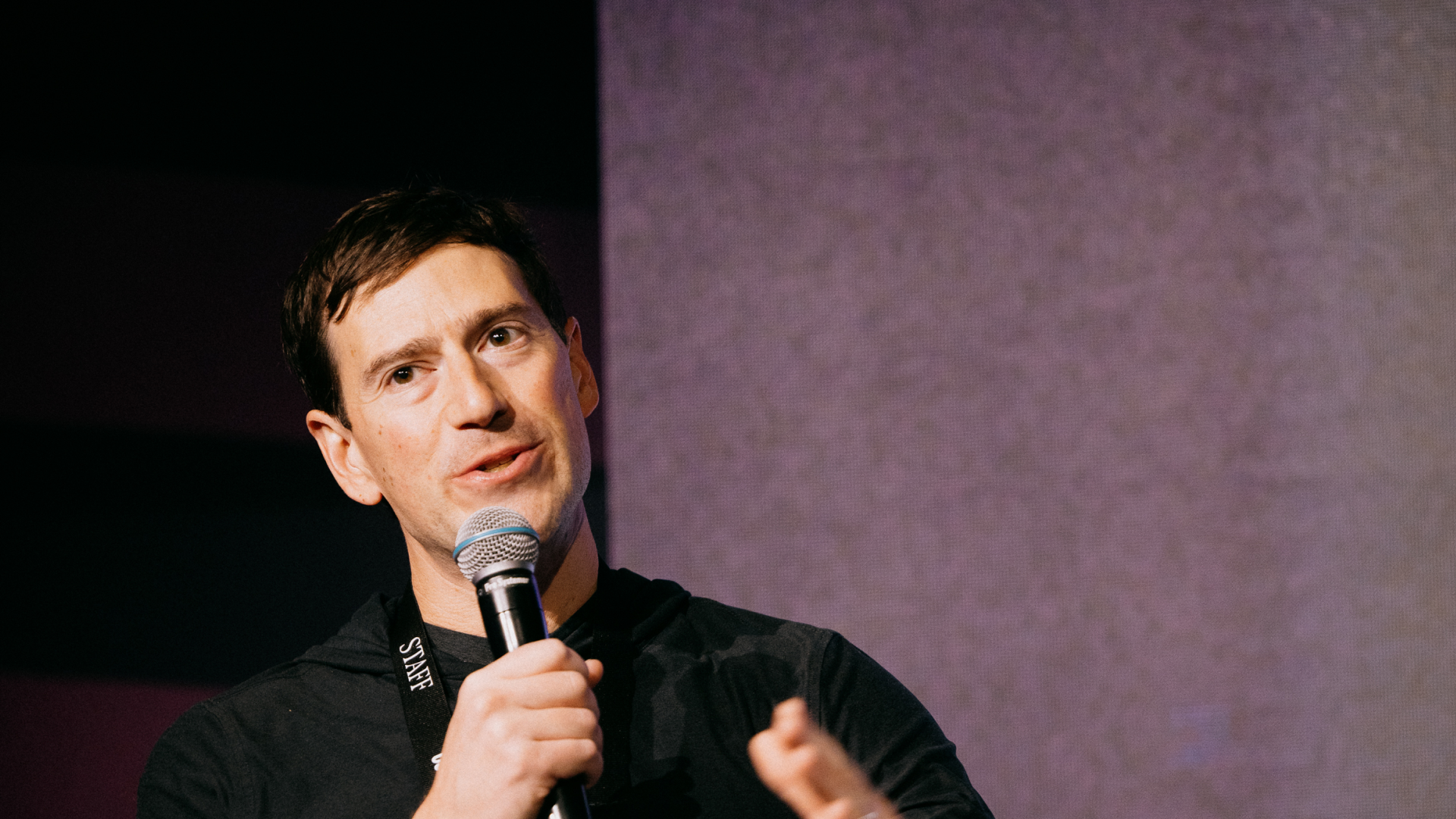

What if AI could be a tool for freedom? In conversation with Owen Clegg from BBC World Service, Alex Gladstein, Chief Strategy Officer at the Human Rights Foundation, explores how artificial intelligence can empower human rights activists, expand access to information, and help counter authoritarian uses of technology.
While AI is often framed through the lens of risk, Alex explores how the technology can also empower activists, journalists, and opposition movements around the world by supercharging their work through personal and organizational agents. He points to Venezuela, where opposition groups responding to a humanitarian crisis have used AI to quickly build crowdfunding infrastructure that would otherwise have required significant time, technical expertise, and resources helping deliver aid. Listen to the full conversation below.
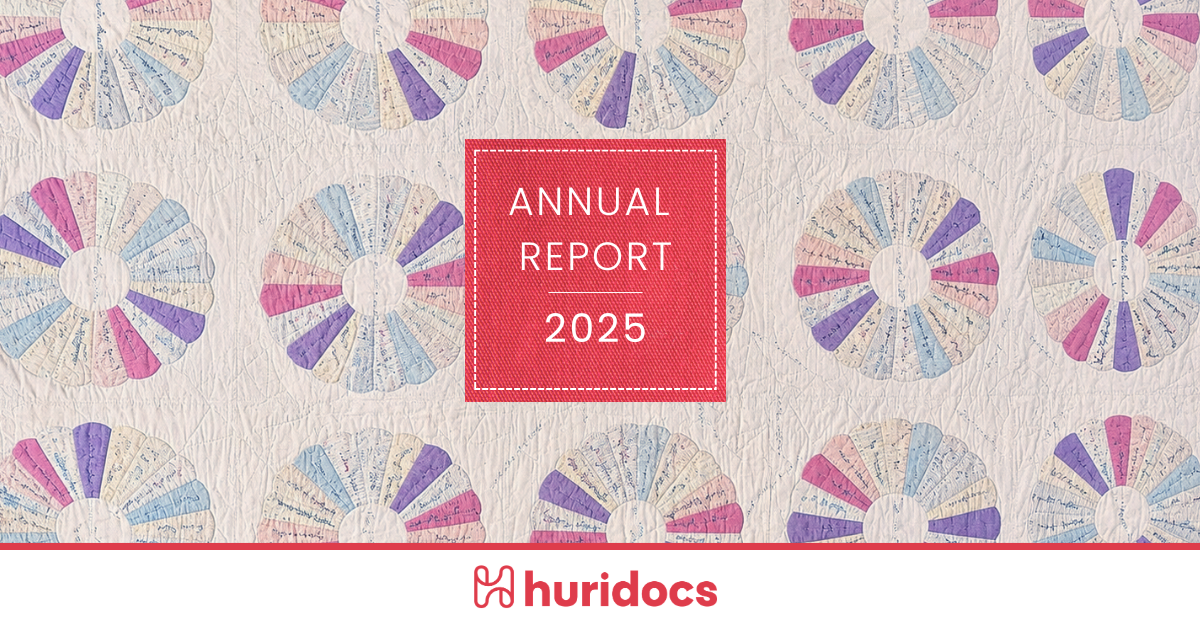
In 2025, the human rights sector faced extraordinary pressure. Across the world, civic space continued to shrink, funding landscapes shifted, and the communities that defenders serve faced mounting threats. Yet people, organisations, and movements chose to stay together, reinforce what matters, and keep the threads of accountability intact.
This year’s annual report is built around that idea. Civil society is a fabric, held together not by any single institution but by the many hands that choose to show up, stitch by stitch, in pursuit of justice. HURIDOCS’ role is to strengthen that fabric, through three interconnected areas of work:
Partnerships: Patchwork of purpose
Working alongside human rights defenders and civil society organisations worldwide to co-build the tools and systems they need.
Technology: Loom of innovation
Building open, accessible tools designed to outlast the moment, helping changemakers collect, protect, and make sense of information.
Research: Threads of learning
Shaping wider conversations on documentation, technology, and justice through thought leadership and active engagement with academic and practitioner communities.
HURIDOCS remained committed to strengthening that fabric in 2025, supporting 47 projects across 38 countries to ensure that documentation work could continue, evidence could be preserved, and the pursuit of justice would not be interrupted.
“Civil society is a quilt. Organisations are not isolated pieces. People move between them, ideas travel, partnerships form, and when one part of the fabric wears thin, others help mend it. The strength of civil society has never come from any one institution. It comes from the fabric we create together.”
— Danna Ingleton, HURIDOCS Executive Director
HURIDOCS supported 47 projects across 38 countries, from transitional justice in the Somali Region of Ethiopia to civil liberties monitoring in Indonesia, from death penalty defence across Asia to economic, social and cultural rights advocacy in Türkiye. Each partnership was shaped by the needs, expertise, and context of the communities our partners serve, ranging from long-term collaborations to rapid responses to crisis documentation needs.
Now in its third year, the Documentation Fund provided pro bono or subsidised support to 18 projects across a wide range of human rights, environmental, and humanitarian contexts, ensuring that under-resourced defenders could access the tools and expertise they need to document safely and effectively.
In 2025, Uwazi became faster, smarter, and more resilient. When a series of sophisticated distributed denial-of-service attacks disrupted traffic to a number of public instances early in the year, the team responded swiftly and emerged stronger. Five new machine learning capabilities were developed, reducing the manual burden of documentation work and enabling partners to process complex information with greater speed and accuracy. A comprehensive redesign of the user interface and a foundational data layer upgrade are well underway, making Uwazi more powerful and more intuitive than ever.
For over four decades, HURIDOCS has shaped wider conversations on documentation, technology, and justice. We hosted Dr Tomiwa Ilori as part of the OTF Information Controls Fellowship Program, culminating in a joint research report on digital security tools for human rights defenders in Sub-Saharan Africa. We also contributed to academic initiatives, delivered guest lectures, and participated in international forums, reinforcing our role as a thought leader and field shaper in global discussions on human rights documentation.
HURIDOCS continued to navigate a complex funding landscape in 2025, strengthening existing partnerships and exploring new avenues for collaboration. We remain deeply grateful to our donors and supporters whose commitment made this work possible.

Paris, 24 July 2026. “Never in recent years have human rights been attacked with such brutality.” These are the words with which FIDH President Alexis Deswaef opens the editorial that sets the tone for the 2025 activity report.
FIDH brings together nearly 200 human rights organisations from around the world. Despite a global context increasingly hostile to human rights and in the face of rising authoritarianism on every continent, FIDH is stepping up its proactive work through the documentation of violations, advocacy initiatives and strategic litigation, as well as by mobilising its network to support the work of human rights defenders.
Among the notable achievements of 2025, mention may be made of the contribution to:
the release of 99 human rights defenders, thanks to the joint action of FIDH and its member organisations;
the recognition by the Inter-American Court of Human Rights of the severity of the crisis in Nicaragua;
the conviction by French courts, under universal jurisdiction, of a leader of a Syrian armed group;
the inclusion, for the first time, of human rights in the final texts of COP 30 in Belem.
By filing a complaint against Franco-Israeli soldiers and raising the alarm over the crackdown on the Palestine solidarity movement in France, Germany, the United Kingdom and the United States, FIDH also remained engaged on the situation in Gaza and is committed to a long fight for justice.
In the face of multiple attacks, refusing to give up is what drives the Federation forward. Guided by the same vision for over a century — the absolute universality of human rights — and the conviction that to act is the best way to hope, FIDH will continue to turn warnings into action wherever it can.
Read the full report here.
Khurram Parvez, coordinator of the Jammu Kashmir Coalition of Civil Society (JKCCS) and Chair of the Asian Federation Against Involuntary Disappearances (AFAD), has spent decades documenting human rights violations in Indian-administered Kashmir, including enforced disappearances, torture and extrajudicial killings. Irfan Mehraj, a journalist and human rights defender associated with JKCCS, has similarly contributed to documenting and reporting on human rights concerns in the region.
Both human rights defenders have faced prosecution under spurious allegations related to terrorism and secessionism that human rights organisations have consistently characterised as politically motivated and unsupported by credible evidence. The charges against both defenders remain in place, and the conditions attached to Khurram Parvez’s release continue to impose severe restrictions on his rights and freedoms. The international community, including the UN human rights system, must remain closely engaged until all charges are dropped and any restrictions on their work and freedom come to an end.
22 July 2022: The case in which Khurram Parvez, a prominent Kashmiri human rights defender, and Irfan Mehraj, a Kashmiri journalist and human rights defender – both associated with the Jammu Kashmir Coalition of Civil Society (JKCCS) – have been granted bail involves trumped-up charges of “funding terror activities” and “propagation of secessionist agenda” in retaliation for their widely respected and recognised human rights documentation and accountability work through JKCCS. On 18 July 2026, a New Delhi District Court held the bail hearing in this case.
In June 2023, the UN Working Group on Arbitrary Detention (UNWGAD), in its Opinion No. 8/2023, determined that Khurram Parvez’s detention was arbitrary and called on the Indian authorities to immediately and unconditionally release him.
Although the conditional release of the two defenders comes as a relief, after a prolonged period of arbitrary pre-trial detention, the harassment through legal means against them continues, in a context of longstanding and ongoing grave violations of human rights and fundamental freedoms in Jammu and Kashmir.
The Observatory calls on the Indian authorities to drop all charges against Khurram and Irfan, as they are part of politically motivated proceedings aimed at discrediting their legitimate work and the JKCCS.
https://www.fidh.org/en/region/asia/india/india-khurram-parvez-and-irfan-mehraj-released-on-bail
On 29 June 2026, Amnesty published a roundup of what can be achieved when we stand together in solidarity. Despite the increasingly fractious state of the world, governments and civil society have come together to pass important laws and resolutions to tackle human rights harms, following protests and petitions from activists and campaigners.
Here a few examples but the list is worth reading in total:
In January, human rights defender Sean Binder and 23 others connected to a Search and Rescue NGO were acquitted in Greece after years on trial. Amnesty International has been campaigning in support of Sean’s case since 2018.
Eleven members of the Istanbul Bar Association’s executive committee were acquitted on 9 January, after facing charges for “spreading terrorist propaganda” and “publicly disseminating misleading information”. The 11 had been on trial over a statement issued by the Bar Association on 21 December 2024 about the killing of two journalists in northern Syria and the arrest of journalists and lawyers at a related peaceful protest in Istanbul the day before.
Human rights defenders who had been arbitrarily detained in Venezuela were released between January and May 2026. They included Javier Tarazona, Rocío San Miguel, Kennedy Tejeda, Carlos Julio Rojas and Eduardo Torres, Darío Estrada, Rosa Chirinos, and Yevhenii Trush.
Eight years after the murder of human rights defender Marielle Franco and her driver Anderson Gomes in Rio de Janeiro, and the attempted murder of Fernanda Chaves, a press officer working for Marielle, those responsible for orchestrating these crimes have finally been convicted. The conviction is a major step forward in the fight against political violence and impunity in Brazil. It is also a testament to the persistence of Marielle’s family, social movements and civil society organizations, such as Amnesty International, in demanding truth and justice over the years. Amnesty International Brazil is continuing to call for broader measures to prevent political violence and ensure effective protection for human rights defenders, especially Black leaders, women and those who challenge entrenched systems of inequality and discrimination.
Adamu Oseni (aka Hussaini Oseni) was released on 18 February 2026 after years of campaigning by Amnesty International Nigeria. Oseni had been sentenced to life imprisonment by the Ondo State High Court, for possessing a phone linked to an armed robbery, despite evidence he was not involved in the crime. After Amnesty International Nigeria submitted a pardon request on his behalf in 2024, his sentence was reduced to 20 years before he was finally released.
Million Beyene, a journalist and managing editor at Addis Standard, was abducted from the newsroom in on 15 April, by three men wearing plain clothes. It is believed he was targeted because of his work as a journalist. Amnesty International launched an Urgent Action on 27 April and he was released to his family on 28 April. Upon his release, he said: ”I am currently receiving medical treatment and doing my best to recover. The experience has been difficult, and I am still coping with its impact, but I remain strong. I am deeply grateful for all your support and efforts on my behalf. It truly means a lot to me.”
A Norwegian court rejected Greece’s request to extradite Tommy Olsen, founder of the NGO Aegean Boat Report, who is wanted on criminal charges connected to his work documenting human rights violations against refugees and migrants at Europe’s borders. Following his initial arrest in Norway, Amnesty launched an Urgent Action calling on Norway to reject his extradition and stating that the charges against him were not supported by evidence and were an abuse of anti-smuggling legislation. Olsen still faces criminal proceedings against him in Greece and is subject to a European arrest warrant. Amnesty International will continue to campaign against the criminalization of solidarity with refugees and migrants.

