Srinagar: A coalition of international human rights organizations has called for the immediate release of Kashmiri journalist Irfan Meraj, three years after his arrest by India’s National Investigation Agency (NIA).
According to Kashmir Media Service, nearly three dozen human rights groups, including Amnesty International, Human Rights Watch and the Committee to Protect Journalists, said Meraj’s continued detention is based on charges they believe are politically motivated and linked to his work documenting human rights issues in occupied Jammu and Kashmir.
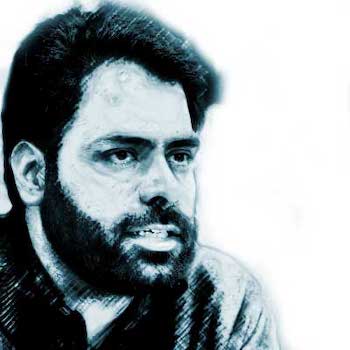
The organizations said that the case reflects growing pressure on journalists and researchers working on sensitive issues in the territory. The advocacy groups highlighted the detention of Kashmiri human rights defender Khurram Parvez, coordinator of the Jammu Kashmir Coalition of Civil Society (JKCCS), who has been held since 2021. Investigators previously described Mehaj as an associate of Parvez, a fact that rights organizations say forms part of the basis for the charges against him.
The coalition urged the Indian government to end what they described as reprisals against journalists and human rights defenders in occupied Jammu and Kashmir and to reconsider laws that allow extended detention without trial. They also criticized the Modi-led Indian government for failing to respond to several inquiries previously raised by UN human rights experts regarding alleged violations in the region.
The groups called on the international community to monitor the situation closely and encourage greater protection for journalists and civil society organizations, stating that continued attention from international institutions may be necessary to ensure that press freedom and basic civil liberties are upheld in the territory.
Meraj was arrested in March 2023 during an investigation conducted by India’s National Investigation Agency for uploading posts on brutalities of Indian forces in the territory.
The Human Rights Center “Viasna” published a joint photo of three of its employees — Marfa Rabkova, Nasta Loika, and Valiantsin Stefanovich — who were released.
Belarusian leader Alexander Lukashenko released 250 political prisoners on 19 March 2026, the largest group freed so far, as the United States moved to lift more sanctions, The releases are part of a broader effort by Minsk to improve ties with Washington after years of isolation and sanctions. Among those freed was Katsyaryna Andreyeva, a journalist with Polish Belarusian-language broadcaster Belsat, according to reports.
Also released was Marfa Rabkova, an activist with Belarusian human rights group Viasna who was arrested in September 2020 and sentenced to 14 years and nine months on charges including “extremism,” the Reuters news agency reported.
Coale – an envoy for US President Donald Trump – said he expected all remaining political prisoners to be released by the end of the year, adding that Washington would lift all sanctions imposed over the 2020 crackdown on protesters if that happens, Reuters reported. He also said Lukashenko had been urged to halt further arrests. The United States has agreed to lift sanctions on several Belarusian banks and the country’s finance ministry, as well as fertiliser producers, according to the AFP news agency.
Exiled Belarusian opposition leader Sviatlana Tsikhanouskaya welcomed the latest prisoner release as a moment of “great joy” and “huge relief.”
Civil Rights Defenders welcomes the news that human rights defender Nasta Loika has been released from prison in Belarus as part of the country’s largest mass release of political prisoners to date. Nasta is a longstanding advocate for human rights in Belarus and an alarm bearer in the Natalia Project, the world’s first alarm and positioning system for human rights defenders at risk.
“We are deeply relieved that Nasta Loika is finally free. Her courage, resilience, and commitment to human rights have inspired countless people in Belarus and beyond. While we celebrate her release, it comes after years of unjust persecution. No one should ever be imprisoned for defending fundamental rights,” says Gabrielle Gunneberg, Global Department Director at Civil Rights Defenders.
Reacting to the release of 250 individuals imprisoned in Belarus on politically motivated grounds, including human rights defenders Marfa Rabkova and Nasta Loika, as a part of a deal with the United States, Marie Struthers, Amnesty International’s Eastern Europe and Central Asia Director, said:
“While the release of hundreds of individuals unjustly detained on politically motivated charges is a welcome step, it must not be mistaken for justice. Marfa Rabkova, Nasta Loika, Valiantsin Stefanovich and others should not have spent a day in prison. Freedom should never be the product of geopolitical bargaining in human beings. Justice will not be served until those responsible for their unlawful imprisonment are held accountable.
Human rights activist and Nobel Peace Prize laureate Ales Bialiatski reacted to the release of fellow human rights defenders:
“I am immensely happy, like all my colleagues, about the release of our friends, our colleagues: Valiantsin Stefanovich, Marfa Rabkova, and Nasta Loika. The thing that we expected — I have been expecting it for the last three months, and my colleagues have been expecting it for more than five years — has come true. Because Marfa Rabkova served five and a half years, Valiantsin Stefanovich served four and a half years, and Nasta Loika served several years. And it was an absolute injustice, it shouldn’t have been like this.
Military coups, violence against peaceful protesters, and efforts to weaken constitutional safeguards in 2025 drove the 20th consecutive year of decline in global freedom, according to a new report released on 19 March by Freedom House. The report, Freedom in the World 2026: The Growing Shadow of Autocracy, found that 54 countries experienced deterioration in their political rights and civil liberties, while only 35 registered improvements. Today just 21 percent of the world’s people live in countries rated Free, down from 46 percent two decades ago.
“Even as 2026 has brought new opportunities for those living under authoritarian rule from Venezuela to Iran, the last 20 years have been a dark period for global freedom,” said Jamie Fly, chief executive officer of Freedom House. “Armed conflict, coups, attacks on democratic institutions, and crackdowns on rights by authoritarians have now resulted in two full decades of decline. Those who still enjoy the blessings of freedom must do more to counter authoritarianism and provide more effective support for the democratic aspirations of people standing up to repression around the world, or this persistent decline will continue.”
In addition to deepening repression among authoritarian regimes, the past year featured a chequered performance among the world’s democracies. Of the 88 countries rated Free, the United States experienced the sharpest decline, with a drop of 3 points to a score of 81 on the report’s 100-point scale; it was matched in this group only by a decline in Bulgaria (−3), closely followed by Italy (−2). Worsening gridlock in Congress and escalating assertions of unilateral executive authority—combined with a multiyear rise in threats and reprisals for nonviolent speech, and a weakening of anti-corruption safeguards—brought the US score to its lowest level since Freedom in the World began publishing 0–100 scores in 2002. The United States’ decline for 2025 contributed to a 12-point erosion over the past two decades, under both Republican and Democratic administrations.
Key report findings:
Global freedom declined for the 20th consecutive year in 2025. A total of 54 countries experienced deterioration in their political rights and civil liberties during the year, while only 35 countries registered improvements.
Largest increases and best overall scores: On Freedom in the World’s 100-point scale for political rights and civil liberties, Syria (+5), Sri Lanka (+5), Bolivia (+4), and Gabon (+4) recorded the largest gains for 2025. The best overall country scores were those of Finland (100), Sweden (99), Norway (99), and New Zealand (99).
Largest declines and worst overall scores: Guinea-Bissau (−8), Tanzania (−7), Burkina Faso, (−5), Madagascar (−5), and El Salvador (−5) had the largest one-year score declines.The countries with the worst overall scores were South Sudan (0), Sudan (1), and Turkmenistan (1).
Status changes: Three countries—Bolivia, Fiji, and Malawi—improved from Partly Free to Free status thanks to competitive elections, growing judicial independence, and the strengthening of the rule of law.
Deepening and persistent authoritarian repression: Conditions for freedom continued to deteriorate in Iran in 2025, with authorities arresting more than 21,000 people as part of a crackdown on alleged espionage and collaboration following the regime’s 12-day war with Israel in June, and expelling some 1.8 million Afghan migrants and refugees without regard for their basic rights. The country’s score fell by 1 point to 10 out of 100. The scores for Russia and China remained unchanged at 12 and 9, respectively, but Russian authorities took further steps to suppress antiwar speech and independent journalism, while Chinese officials cracked down on small but multiplying protests.
Although the scores for many rights and liberties deteriorated over the last two decades, media freedom, freedom of personal expression, and due process have suffered the heaviest impacts. Coups, armed conflicts, attacks on democratic institutions by elected leaders, and intensified repression by authoritarian regimes have been the main drivers of global decline during this 20-year period.
Since 2005, the group of countries with Partly Free status has shrunk substantially. Of the 59 countries that were rated Partly Free as of 2005, a total of 19 have dropped to Not Free, swelling the ranks of the world’s autocracies, whereas just 9 have improved to Free.
Most democracies remain resilient in the face of daunting challenges. Despite internal pressures and threats from foreign powers, democracies continue to demonstrate that their domestic political systems are responsive and capable of course correction. Of the 87 countries rated Free in 2005, a total of 76—more than 85 percent—have remained Free throughout the two-decade period of global decline.
Delivering a statement under General Debate item 5, a group of human rights organisations has raised concerns about ongoing discussions at the Human Rights Council to reduce the frequency with which Special Procedures report to the General Assembly.
These reports play a critical role in informing all UN Member States about pressing human rights issues and their links to peace, security, and sustainable development. They also help maintain visibility and political support for the UN’s human rights work in New York.
The statement emphasised that efforts to improve efficiency cannot be separated from the broader liquidity and budgetary crises affecting the UN, urging States to ensure that mandates are adequately resourced, to defend the independence of mandate holders, to protect civil society participation, and to ensure that those most at risk can continue to engage with this Council safely and meaningfully.
The written version of the statement can be found here
After delivering the statement, ISHR, Amnesty International and partner organisations outlined their concerns and recommendations in a letter sent to states.
One-size-fits-all approach: Several initiatives proposed during this 61st session appear to adopt a standardised approach with the aim of addressing a variety of objectives, including the Third Committee’s workload, cost-saving and rationalisation, rather than pursuing a strategic and mandate-specific assessment of impact and opportunities.
Lack of consultation: Proposals have also been advanced without meaningful consultation with the directly affected communities and concerned mandate holders, with sufficient time ahead of the Human Rights Council session, around the implications of reduced reporting to the General Assembly, and possible alternatives.
Resources and extraordinary character: Initiatives to shift to biannual or triennial reporting to the General Assembly, without recognising the temporary and exceptional nature of such measures, risk entrenching this practice over the long term. This could also lead to a reduction in Regular Budget resources, in line with decreased General Assembly reporting.
The purpose of Front Line Defenders Rest & Respite Programme is to enable human rights defenders to take some time out and to recharge their batteries in a safe environment while at the same time enhancing their skills so that they can work more effectively when they return home.
The programme has a flexible approach and tries to respond to the needs of the HRD. Some human rights defenders are hosted in Ireland, others choose a destination closer to home, where they have a particular interest or existing contacts. It is generally for short stays ranging from one week to three months.
Human rights defenders can take some well-earned rest and escape the stressful and difficult circumstances in which they work for a short time. They can focus exclusively on their health and well-being or spend some quality time with their family. They can also choose to work on a specific project, learn about digital security or improve other skills relevant to their work.
Rest & Respite opportunities are offered on an invitation-only basis.
“This programme is great for women human rights activists who have been subjected to stressful, tense and often dangerous and threatening situations in their work.“ – HRD, Afghanistan, Rest & Respite Programme
“Before the support, I had serious burnout caused by the stress from my work, especially from a domestic violence case I was working on when I was attacked and my computer and phones taken. I had a constant headache and was very stressed, but I’m feeling well again and am back to work.“ – HRD, Cameroon, Rest & Respite Programme
Doja Cat would be headlining a concert organized by Global Citizen in partnership with the regime of Rwanda’s warmongering dictator Paul Kagame, just two weeks after the US imposed sanctions on Rwanda’s army and senior Rwandan officials for their continued fuelling of a bloody war and humanitarian catastrophe in eastern DRC, in violation of a peace agreement brokered in December 2025.
Doja Cat’s appearance would offer Kagame an opportunity to grandstand and project a deceptive image of unity, progress and normalcy. It would be the perfect distraction from the sanctions, the prisons filled with Rwandan dissidents like opposition leader Victoire Ingabire, or Rwanda’s role in causing tremendous human suffering in DRC through its deployment of troops and support for the M23 militia — which is linked to massacres and rapes, forced recruitment and exploitation of civilians, and the use of child soldiers.
Doja Cat would follow John Legend, who headlined the 2025 #MoveAfrika Kigali concert amid public outcry. Legend performed after Nigerian Grammy-winning artist Tems canceled her concert over concerns after Rwandan troops and M23 seized eastern DRC’s two largest cities and imposed a reign of terror, exploitation, and plunder of strategic minerals.
Doja Cat has previously used her platform to advocate for vulnerable populations and has encouraged her audience to support civilians, women, and children fleeing violence, including in DRC. High-profile cultural events risk being used by Kagame’s regime to project an image of openness and legitimacy while political freedoms remain tightly restricted. In our letter, we urge Doja Cat to reconsider performing and to avoid allowing her platform to be used to legitimize a dictatorship which persecutes artists, crushes dissent, and continues to cause grave human suffering beyond its borders.
My ordeal started at about 2am one morning in February 2018, when I was arrested by the Greek police. People were fleeing conflicts at home and coming to Europe seeking safety in unseaworthy boats and I was helping the Emergency Response Center International to conduct search and rescue activities.
I was detained without understanding what exactly was happening; we were provided neither a lawyer nor an interpreter. After two nights, we were released “pending further investigation.” We continued to do search and rescue. After all, we had done nothing wrong. In fact, we continued to cooperate with the very authorities that had arrested us.
Then, in August 2018, six months after our initial arrest, my colleague and I were detained again. This time, we were charged with serious crimes, including forgery, the illegal use of radio frequencies, espionage, money laundering, being members of a criminal organization, and facilitating illegal entry….Finally, on 15 January this year, I was acquitted. The prosecutor at trial stated there was no evidence of criminality, and the panel of judges unanimously agreed that my 23 co-defendants and I were motivated by, and engaged in, legal humanitarianism.
Whilst I am delighted not to be returning to prison, it has taken far too long for this absurd prosecution to collapse. In the interim, the damage has already been done. EU states’ authorities have obstructed civilian rescue efforts, and over 32,000 lives have been lost at Europe’s borders since 2014. Meanwhile, dozens of humanitarians across Europe face similar prosecutions, obstruction, intimidation and harassment. Sadly, my case was not the exception but part of a wider pattern of states criminalizing humanitarian work.
The current effort to reform EU anti-smuggling legislation, the so-called “Facilitators Package” offers an opportunity to address some of the issues that have led to our baseless prosecution. However, the proposed revisions to the legislation might inadvertently increase the risk of criminalizing rescue workers – meaning future prosecutions will still be possible and may not end in acquittals like mine. They will also impact migrants, people of migrant origin and racialized people who all too often suffer from these policies.
As Amnesty International has highlighted, the proposal’s broad and vague provisions risk perpetuating the criminalization of refugees, migrants and human rights defenders. Any reform should clarify explicitly and in a binding manner that acts of humanitarian assistance or solidarity should be exempted from prosecution or punishment. Migrants who may have been smuggled themselves, or people assisting their family members should also be protected from criminal liability.
Through this reform, the EU has an opportunity to align with the EU Charter, UN Conventions and Smuggling Protocols, and treaties on maritime search and rescue, and to explicitly protect the right to life, the right to seek asylum, and the duty to render assistance.
As it stands, the proposal tries to expand the avenues to pursue humanitarian workers by introducing the crime of “public instigation” of irregular migration. This vague new provision could be misconstrued to harm refugees and migrants, advocates and activists protesting unjust migration laws or professionals providing legal information or assistance.
Prosecutors should focus on exploitation and violence, including by authorities summarily force people across land or sea borders.
Last year, the European Court of Human Rights found “serious evidence” of systematic pushbacks in Greece. Evidence of similar practices has been mounting across European borders. Without border monitoring, this already opaque crime becomes ever more obscure. Finally, trafficking, another cross-border crime, is arguably exacerbated by EU policy. A UN report published in 2018 found that asylum seekers in Libya face “unlawful killings, torture, arbitrary detention, gang rape, slavery, forced labour and extortion,” with apparent complicity by State actors. Nevertheless, the EU has for years financed the so-called Libyan Coast Guard.
Whether in the Facilitators Package or in its wider border policies, the EU must respect the rule of law and human rights.
The way to stop people taking dangerous journeys is providing safe and legal pathways for protection, commensurate in scale with the need for protection, and channels for regular migration for those seeking a better life. By denying safe routes, the EU pushes people into the arms and boats of smugglers and traffickers.
All the while, EU laws and narratives on stopping smugglers continue being used to criminalize migrants and people doing what they can to save lives or offer assistance. Unless the reform of the Facilitators package takes serious steps to uphold the duty to rescue and defend humanitarians, people will continue to risk jail for doing what is normal, human behaviour: helping others at risk.
Watch Seán as he discusses his case, his reflections and hopes for the future.
Listen to Séan’s full story in the first season of Amnesty’s podcast ‘On the Side of Humanity’.
Drivetime on RTE Radio of 13 March 2026 carries an interview with Mary Lawlor the departing UN Special Rapporteur on Human Rights Defenders about her work as a human rights activists.
On 13 the Havana Times follows up on Amnesty International’s international campaign for Indigenous Leader Brooklyn Rivera of Nicaragua.
Brooklyn Rivera, former deputy of the indigenous YATAMA political party. File photo: Confidencial
The Mechanism for the Recognition of Political Prisoners is demanding that the regime of Daniel Ortega and Rosario Murillo provide “proof of life” in the case of Brooklyn Rivera, the Miskito indigenous leader. Rivera was abducted by police on September 29, 2023, and has been in a state of “forced disappearance” ever since.
Sources linked to the Nicaraguan Army told CONFIDENCIAL that the indigenous leader, who until his arrest served as National Assembly representative for the indigenous YATAMA party, is in “dangerously poor health.” According to these sources, Rivera is currently “in police custody at a state-run hospital in Managua.”
On Thursday, March 12, 2026, the Mechanism reported that since his detention, his family members “haven’t heard anything from him. They have not been able to see him or obtain information on his whereabouts.” To date, his family has gone “895 days without knowing where he is,” and, according to that organization, concern is “even greater due to his delicate state of health.”
The 73-year-old indigenous leader was arrested at his home in Bilwi (Puerto Cabezas), on Nicaragua’s North Caribbean Coast. Since then, there has been no official information regarding his whereabouts, and his family has been unable to see him or communicate with him. “Rivera reportedly suffers from high blood pressure and, following his arrest, was reportedly transported by ambulance due to his medical condition,” the Mechanism noted.
The lack of official information has left his condition unclear. Since his arrest, his family has been subjected to threats, harassment, and persecution by the National Police and prison authorities.
For decades, Rivera was one of the most prominent voices in the defense of the territorial, political, and cultural rights of the Miskito people and other indigenous communities in the region. In July 2025, Tininiska Rivera, daughter of the Miskito indigenous leader, denounced the repression against indigenous leaders to the UN Expert Mechanism on the Rights of Indigenous Peoples. “As a daughter, I have been forced into exile after receiving threats and living under a constant atmosphere of persecution,” she reported.
The human rights organization Amnesty International included Rivera in an international campaign calling for the release of three prisoners of conscience worldwide, including lawyer Sonia Dahamani of Tunisia and photojournalist Sai Azael Thaike of Myanmar.
Front Line, Amnesty International, Forum Asia and several newspapers reported on this shocking event: On the evening of 12 March 2026, human rights defender Andrie Yunus became the victim of a targeted acid attack by two unidentified perpetrators in Central Jakarta. The human rights defender sustained severe chemical burns, including on his hands, face, chest, and eyes. The attack occurred immediately after Andrie Yunus participated in a podcast on ‘Remilitarism and Judicial Review in Indonesia’, a central topic of his human rights work. The human rights defender fell from his motorcycle, experiencing severe pain. He was immediately brought to the nearest hospital for emergency treatment. Medical examination confirmed burns on approximately 24% of his body.
Andrie Yunus is a human rights defender and the Deputy Coordinator for External Affairs of KontraS, the Commission for the Disappeared and Victims of Violence (Komisi untuk Orang Hilang dan Korban Tindak Kekerasan). Founded in 1998, it is one of Indonesia’s leading human rights organisations. KontraS monitors human rights situation in Indonesia and documents cases of enforced disappearances and state violence. Andrie Yunus was among the human rights defenders and activists who participated in the Fairmont Protest in March 2025. Since then, he has repeatedly been targeted with intimidation and harassment in connection with his human rights work. At the Fairmont Protest, Andrie Yunus was part of the efforts to oppose the revision of Indonesia’s Military Law (RUU TNI), which allows active-duty military officers to hold positions in 14 state institutions without needing to resign. The ratification of this law in March 2025 led to a significant expansion of the military into civilian and political affairs.
According to KontraS, none of Andrie Yunus’s belongings were stolen during or after the attack, indicating that robbery was not the motive. The organisation affirms that the attack was premeditated as the perpetrators selected the specific time and location immediately after Andrie Yunus’s public engagement on militarism in Indonesia. This attack has been the most severe incident in the series of intimidation attempts and violations against KontraS and its staff members. Since March 2025, KontraS’s office in Jakarta has been surveiled by unidentified persons and on multiple occasions in March and April 2025, army vehicles were observed stopping outside the office and photographing the premises.
Front Line Defenders strongly condemns the acid attack against human rights defender Andrie Yunus and asserts that it was a reprisal for his legitimate and peaceful work in the promotion and protection of human rights in Indonesia. Front Line Defenders is gravely concerned that this attack forms part of a broader and escalating pattern of intimidation targeting KontraS and other human rights defenders in the country.
Moreover: Unidentified assailants ambushed Veronika Lumban Tobing in Jakarta, beating her and warning her to halt activism on corruption and indigenous land rights. This violence directly ties to her exposés on elite-driven encroachments in North Sumatra, mirroring patterns where Human Rights advocates face retaliation for public interest work.